
Search
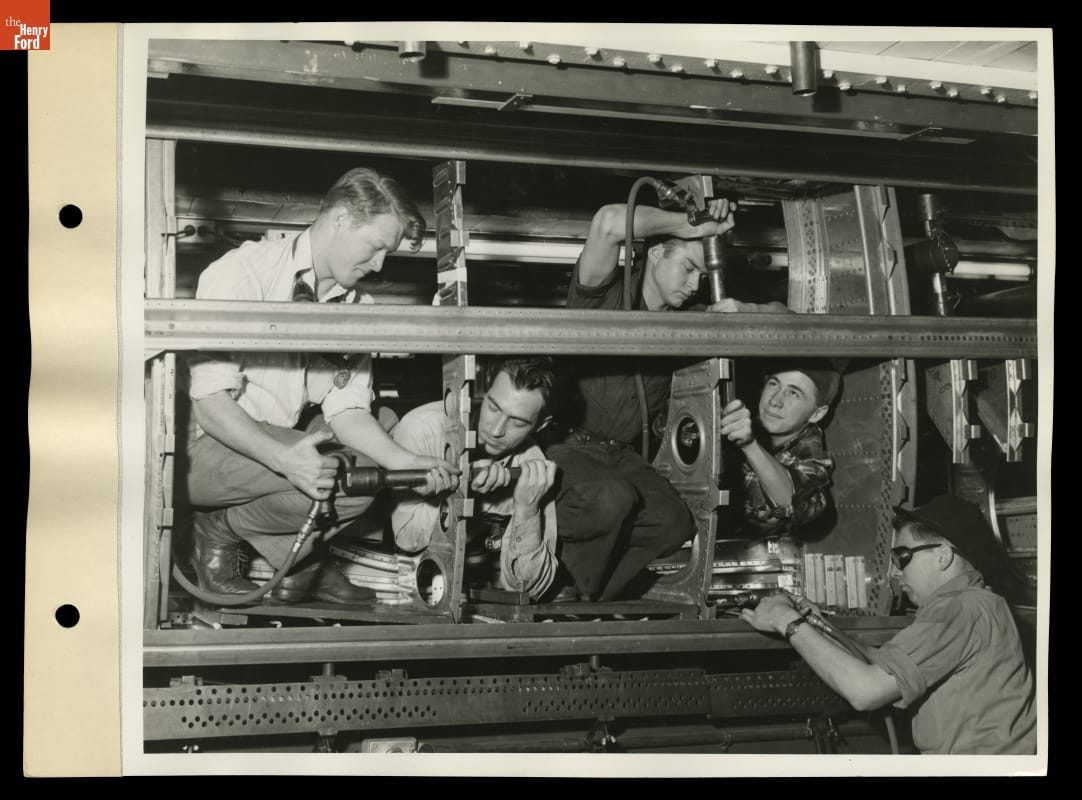
- Building the B-24 Center Wing in Record Time, Willow Run Bomber Plant, 1942 - At Willow Run, Ford Motor Company built B-24 bomber planes for World War II using automobile mass production techniques. Airplanes were much more complex than cars. They required constant design changes poorly suited to a standardized assembly line. Ford overcame these difficulties and, at the plant's peak, Willow Run crews produced an average of one bomber every 63 minutes.
- November 30, 1942
- Collections - Artifact
Building the B-24 Center Wing in Record Time, Willow Run Bomber Plant, 1942
At Willow Run, Ford Motor Company built B-24 bomber planes for World War II using automobile mass production techniques. Airplanes were much more complex than cars. They required constant design changes poorly suited to a standardized assembly line. Ford overcame these difficulties and, at the plant's peak, Willow Run crews produced an average of one bomber every 63 minutes.
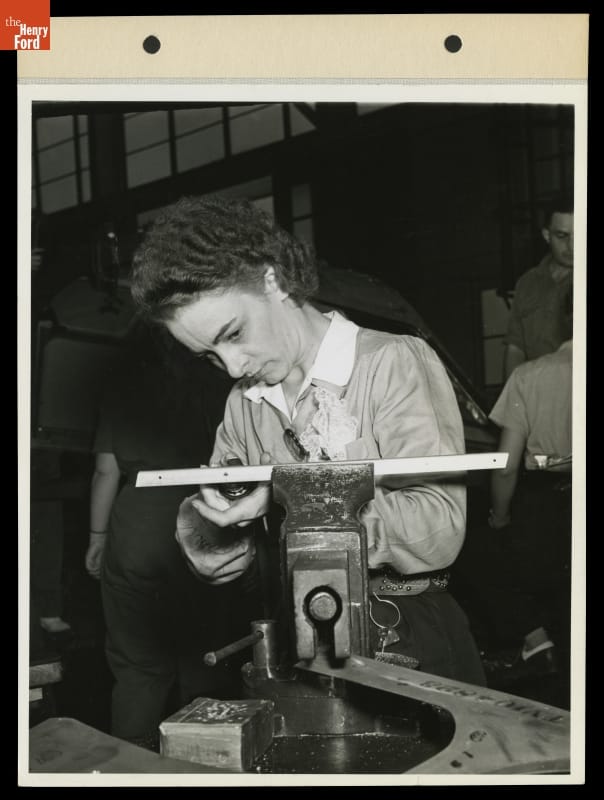
- Employee Florence Nightingale Working at Willow Run Bomber Plant, 1942 - At Willow Run, Ford Motor Company built B-24 bomber planes for World War II using automobile mass production techniques. Airplanes were much more complex than cars. They required constant design changes poorly suited to a standardized assembly line. Ford overcame these difficulties and, at the plant's peak, Willow Run crews produced an average of one bomber every 63 minutes.
- July 25, 1942
- Collections - Artifact
Employee Florence Nightingale Working at Willow Run Bomber Plant, 1942
At Willow Run, Ford Motor Company built B-24 bomber planes for World War II using automobile mass production techniques. Airplanes were much more complex than cars. They required constant design changes poorly suited to a standardized assembly line. Ford overcame these difficulties and, at the plant's peak, Willow Run crews produced an average of one bomber every 63 minutes.
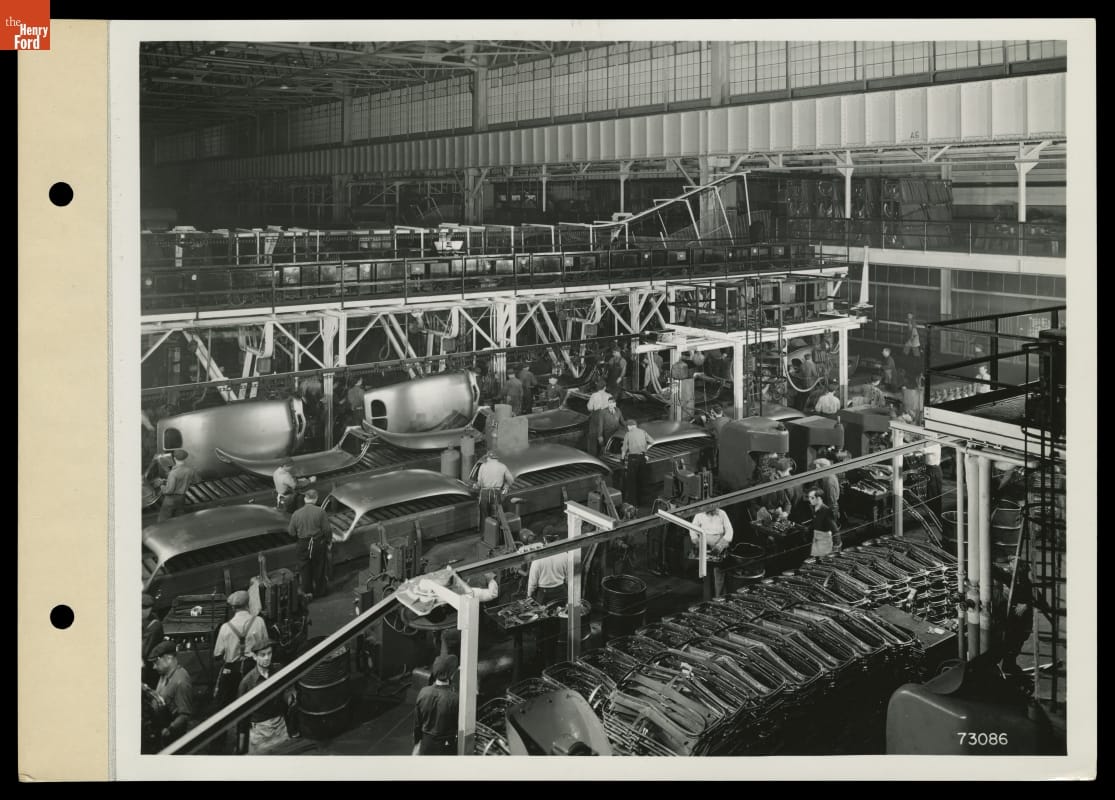
- Inside the Ford Rouge Plant Pressed Steel Building, Conveyors Moving New Parts to Body Assembly Area, 1940 - The pressed-steel building at Ford Motor Company's Rouge plant produced steel components like automobile fenders, body panels, and roof sections. In the late 1930s, the building had more than 4,000 presses, and 10,000 workers turned out more than 2,000 different parts. Some of those parts were used at the Rouge, and some were shipped to other Ford assembly plants.
- February 08, 1940
- Collections - Artifact
Inside the Ford Rouge Plant Pressed Steel Building, Conveyors Moving New Parts to Body Assembly Area, 1940
The pressed-steel building at Ford Motor Company's Rouge plant produced steel components like automobile fenders, body panels, and roof sections. In the late 1930s, the building had more than 4,000 presses, and 10,000 workers turned out more than 2,000 different parts. Some of those parts were used at the Rouge, and some were shipped to other Ford assembly plants.
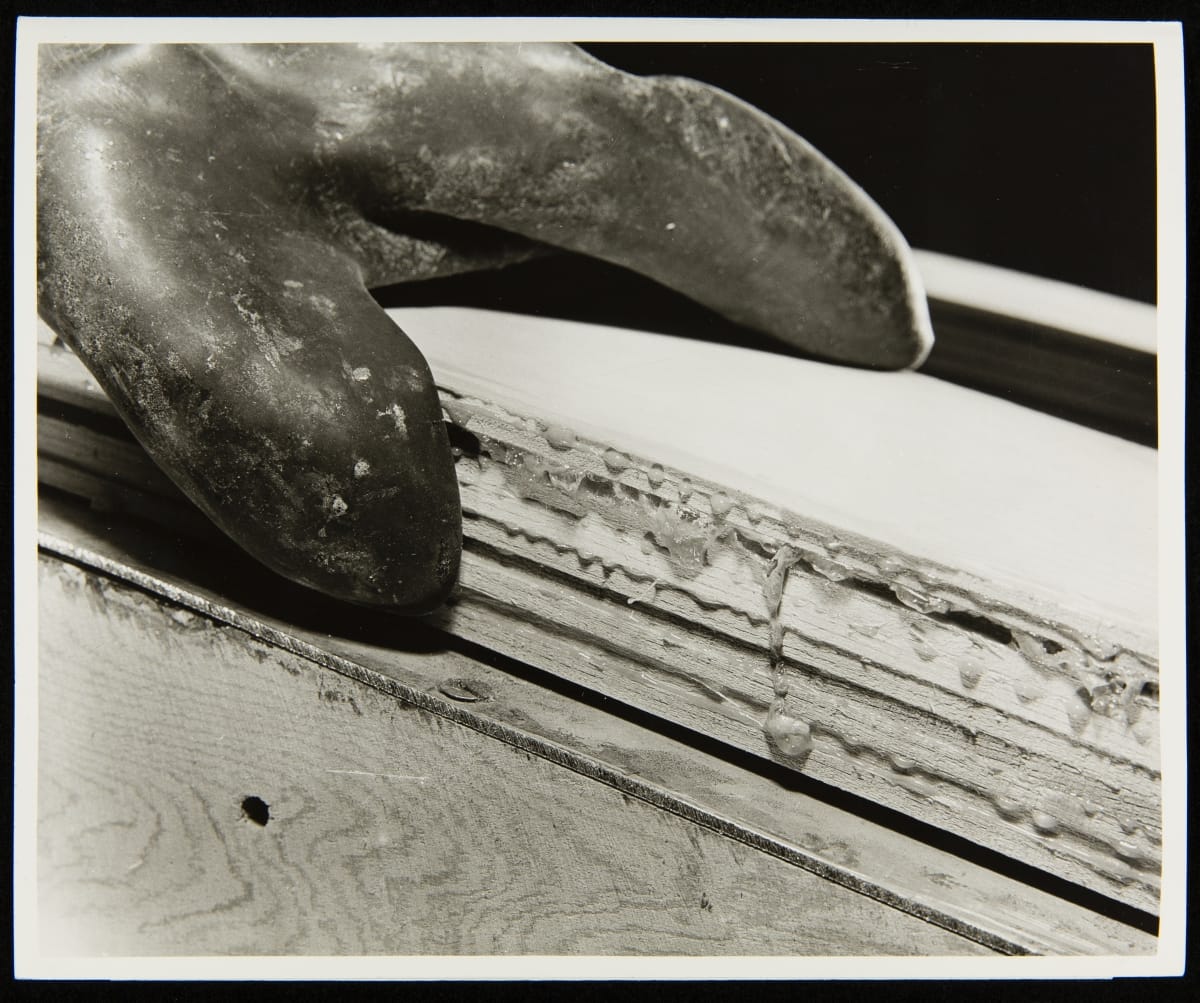
- Close-up of Adhesive on Wood Veneer Door Frame Pillar for Ford Station Wagons, Iron Mountain Plant, March 1949 - Ford Motor Company built wood station wagon bodies at its Iron Mountain plant in Michigan's Upper Peninsula. For 1949, Ford eliminated wood framing from its wagons in favor of steel. Wood was still used on the wagons, but in the form of specially laminated paneling bolted onto the steel frames. Iron Mountain closed when Ford switched to all-steel wagons in 1952.
- circa 1949
- Collections - Artifact
Close-up of Adhesive on Wood Veneer Door Frame Pillar for Ford Station Wagons, Iron Mountain Plant, March 1949
Ford Motor Company built wood station wagon bodies at its Iron Mountain plant in Michigan's Upper Peninsula. For 1949, Ford eliminated wood framing from its wagons in favor of steel. Wood was still used on the wagons, but in the form of specially laminated paneling bolted onto the steel frames. Iron Mountain closed when Ford switched to all-steel wagons in 1952.
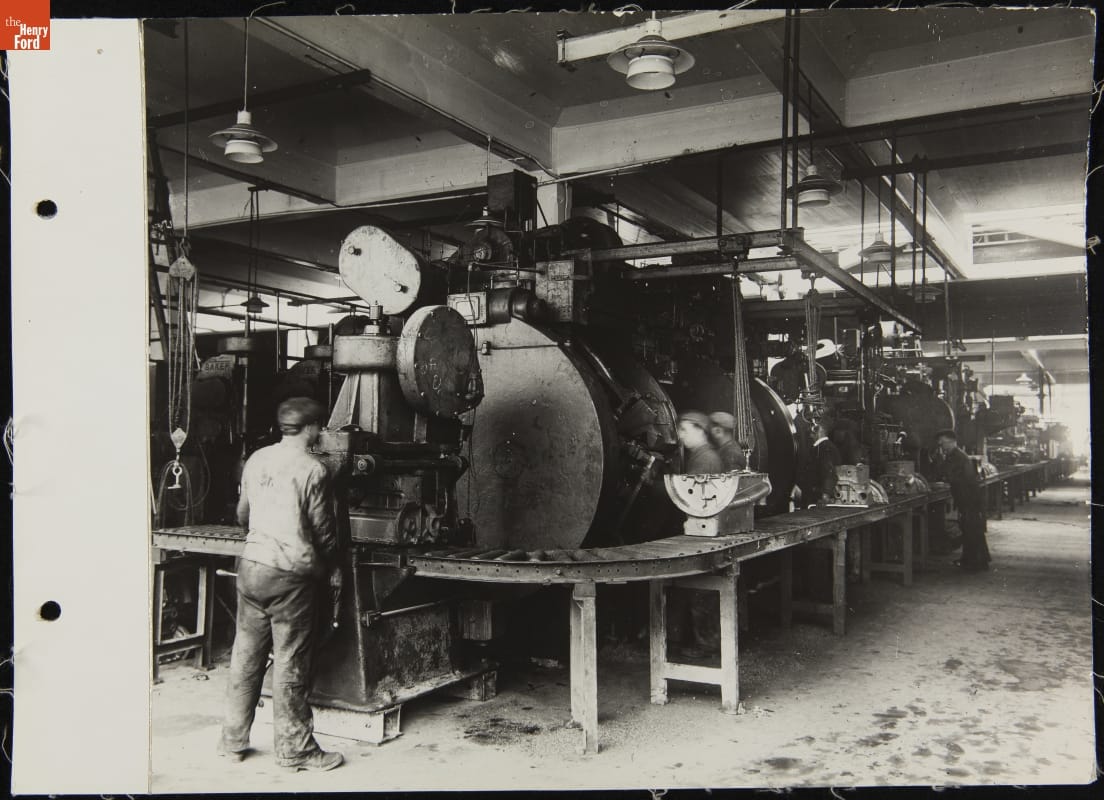
- Cylinder Block Line, Ford Plant in Cork, Ireland, February 1929 - Henry Ford formed an Irish subsidiary company, Henry Ford & Son Limited, in 1917. Two years later, he opened a tractor plant in County Cork, Ireland -- his father's birthplace. Soon the factory began producing automobile engines and parts for Ford factories in England. Apart from a temporary closure during World War II, the plant remained in operation until 1984.
- February 12, 1929
- Collections - Artifact
Cylinder Block Line, Ford Plant in Cork, Ireland, February 1929
Henry Ford formed an Irish subsidiary company, Henry Ford & Son Limited, in 1917. Two years later, he opened a tractor plant in County Cork, Ireland -- his father's birthplace. Soon the factory began producing automobile engines and parts for Ford factories in England. Apart from a temporary closure during World War II, the plant remained in operation until 1984.
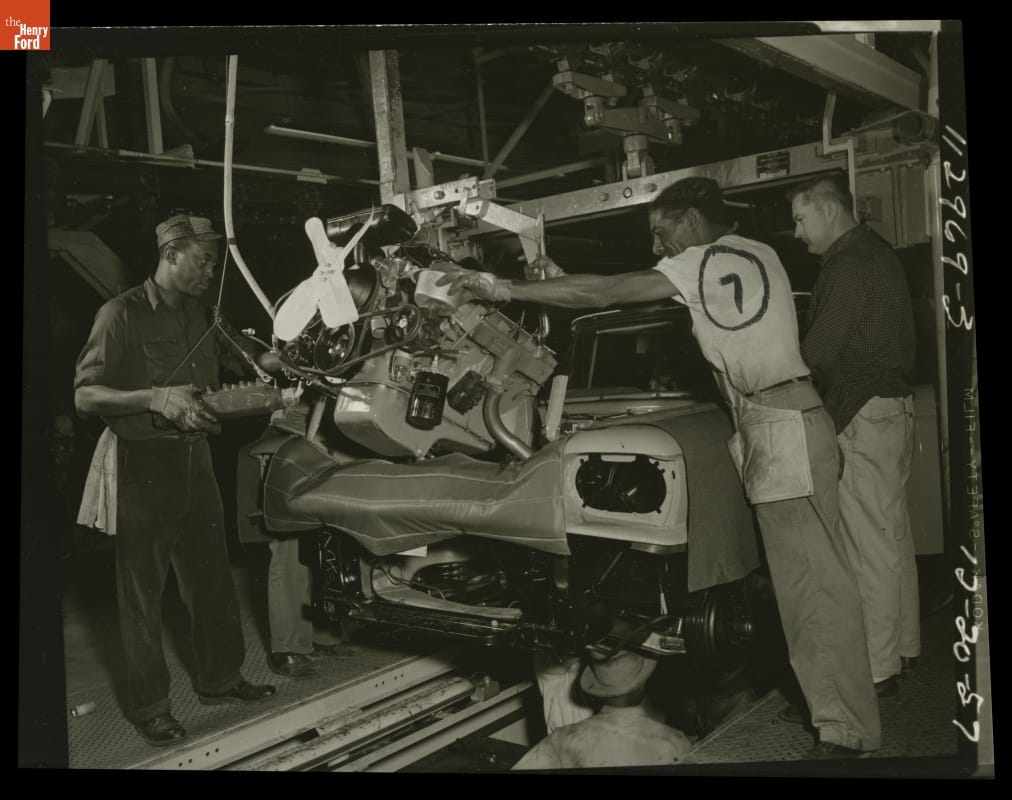
- Workers Dropping Engine into 1958 Ford Thunderbird Body on Assembly Line, 1957 - Ford's two-seat Thunderbird was a hit when it debuted for 1955, but vice president Robert McNamara reasoned that adding more seats would sell even more cars. The 1958 model year brought the four-seat "Squarebird" -- so nicknamed for its boxy proportions. Aesthetic arguments aside, McNamara was right. Ford sold nearly 16,000 more Thunderbirds for 1958 than it had the year before.
- December 20, 1957
- Collections - Artifact
Workers Dropping Engine into 1958 Ford Thunderbird Body on Assembly Line, 1957
Ford's two-seat Thunderbird was a hit when it debuted for 1955, but vice president Robert McNamara reasoned that adding more seats would sell even more cars. The 1958 model year brought the four-seat "Squarebird" -- so nicknamed for its boxy proportions. Aesthetic arguments aside, McNamara was right. Ford sold nearly 16,000 more Thunderbirds for 1958 than it had the year before.
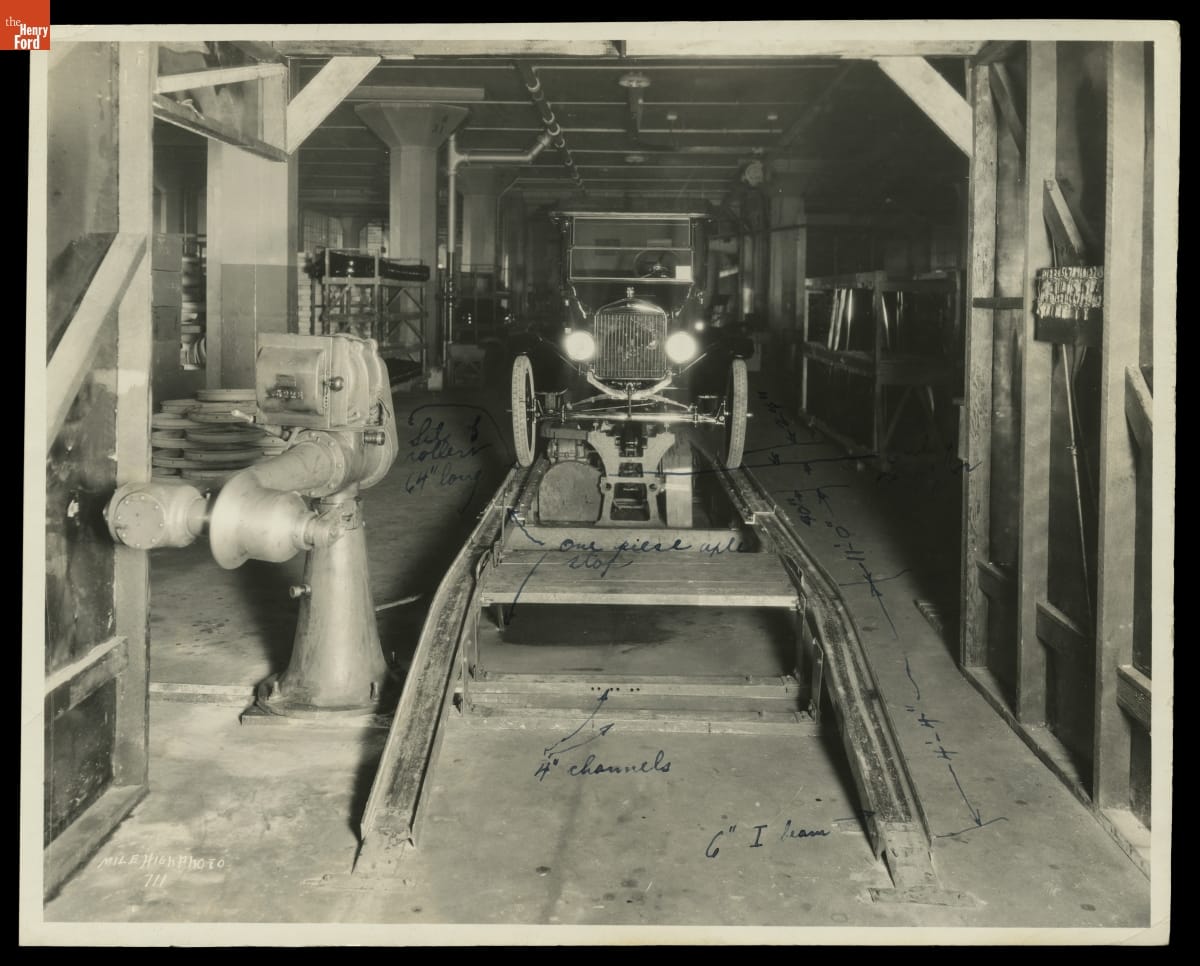
- Ford Model T on Assembly Line Conveyor, 1926-1927 - Starting in the early 1910s, Ford Motor Company opened domestic assembly plants throughout the United States. These plants allowed the company to better serve its customers, with facilities located in most major American cities. Ford opened this multi-story plant in Denver, Colorado, in 1914. Production at the plant ceased in 1933.
- 1926-1927
- Collections - Artifact
Ford Model T on Assembly Line Conveyor, 1926-1927
Starting in the early 1910s, Ford Motor Company opened domestic assembly plants throughout the United States. These plants allowed the company to better serve its customers, with facilities located in most major American cities. Ford opened this multi-story plant in Denver, Colorado, in 1914. Production at the plant ceased in 1933.
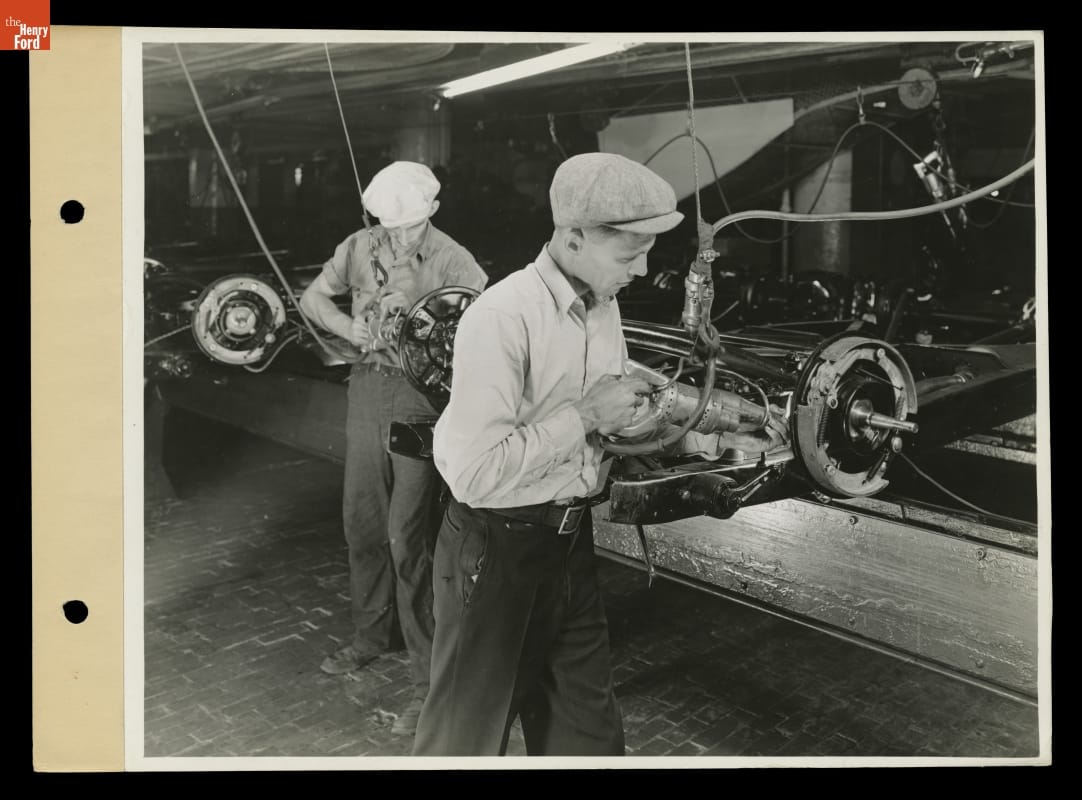
- Assembling Brakes on Ford V-8 Automobiles, 1937 - While other automakers adopted hydraulic brakes for their cars in the 1920s and early 1930s, Ford used mechanical brakes until the 1939 model year. Ford's mechanical units relied on cables and linkages to transmit pressure from the brake pedal to the brakes. Hydraulic units used fluid to transmit -- and multiply -- that pressure for more effective braking.
- September 21, 1937
- Collections - Artifact
Assembling Brakes on Ford V-8 Automobiles, 1937
While other automakers adopted hydraulic brakes for their cars in the 1920s and early 1930s, Ford used mechanical brakes until the 1939 model year. Ford's mechanical units relied on cables and linkages to transmit pressure from the brake pedal to the brakes. Hydraulic units used fluid to transmit -- and multiply -- that pressure for more effective braking.
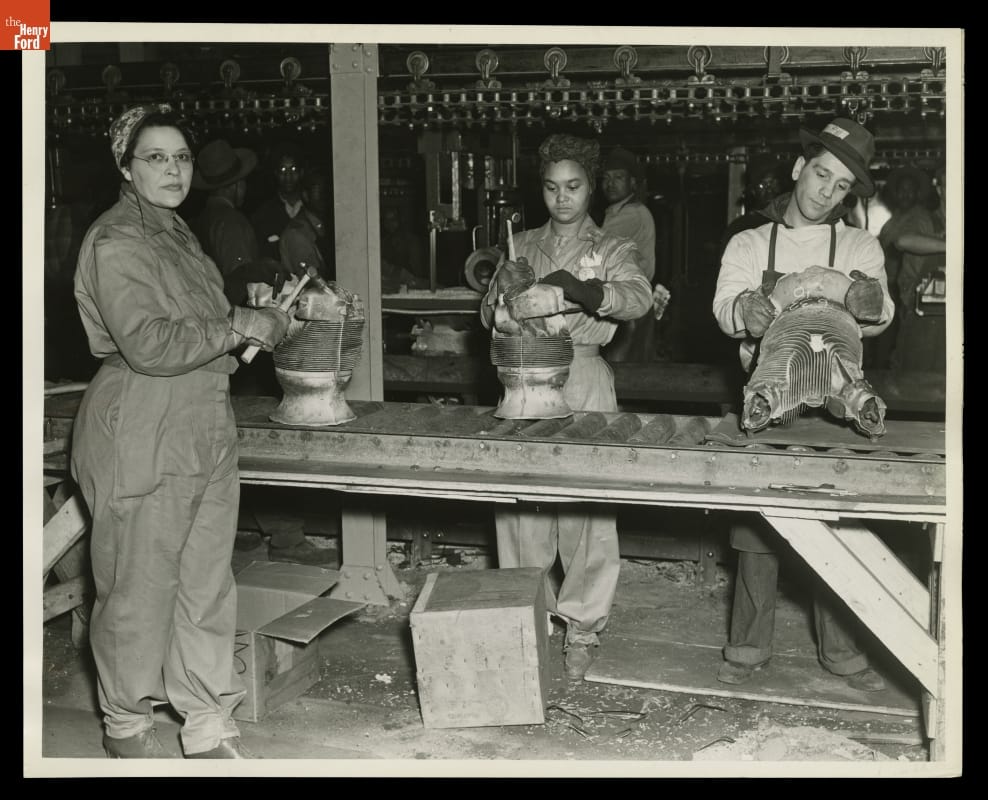
- Working on the Assembly Line at the Ford Rouge Plant, Dearborn, Michigan, 1943 -
- March 17, 1943
- Collections - Artifact
Working on the Assembly Line at the Ford Rouge Plant, Dearborn, Michigan, 1943
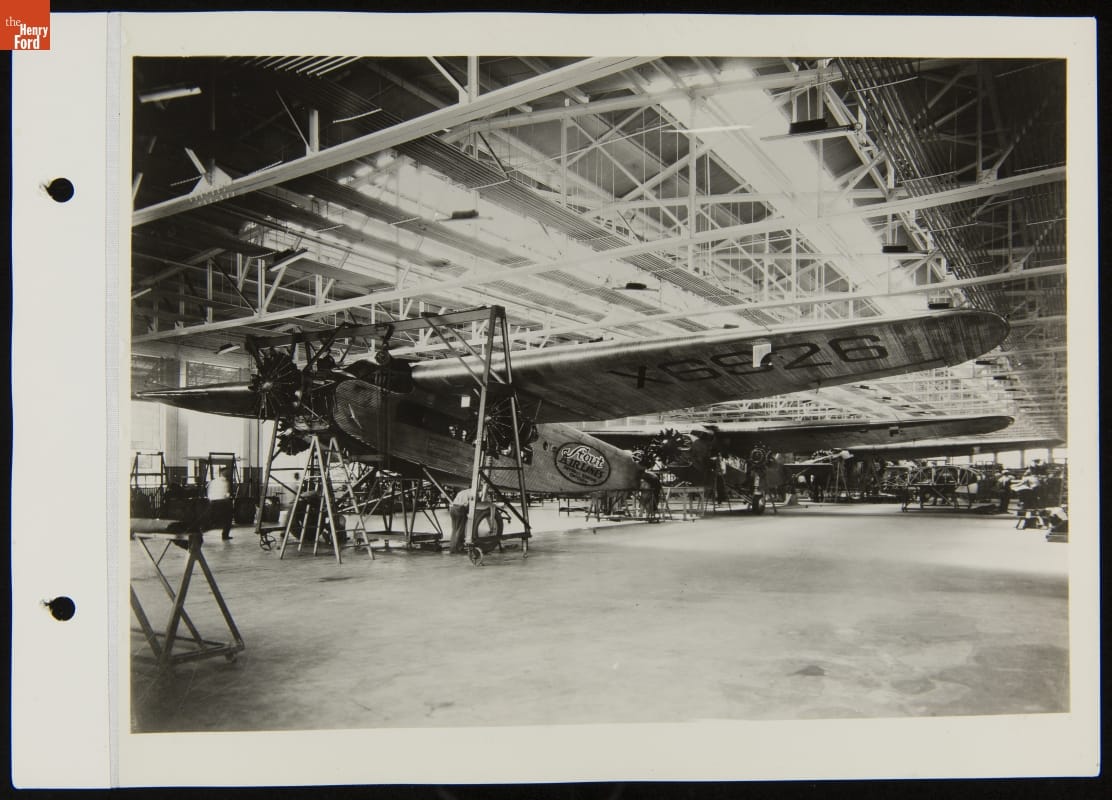
- Ford Tri-Motor Airplane Being Constructed at the Stout Factory, Dearborn, Michigan, February 1929 - Ford Motor Company's Tri-Motor, built from 1926-1933, flew in many early American airline fleets. The all-metal airplane was rugged, dependable, and equally adaptable to passenger and freight service. Tri-Motors were built with some of the same mass production techniques used in Ford's automobile plants. In this photo, the propellers are being connected to the fuselage or the main body of the airplane.
- February 19, 1929
- Collections - Artifact
Ford Tri-Motor Airplane Being Constructed at the Stout Factory, Dearborn, Michigan, February 1929
Ford Motor Company's Tri-Motor, built from 1926-1933, flew in many early American airline fleets. The all-metal airplane was rugged, dependable, and equally adaptable to passenger and freight service. Tri-Motors were built with some of the same mass production techniques used in Ford's automobile plants. In this photo, the propellers are being connected to the fuselage or the main body of the airplane.