
Search
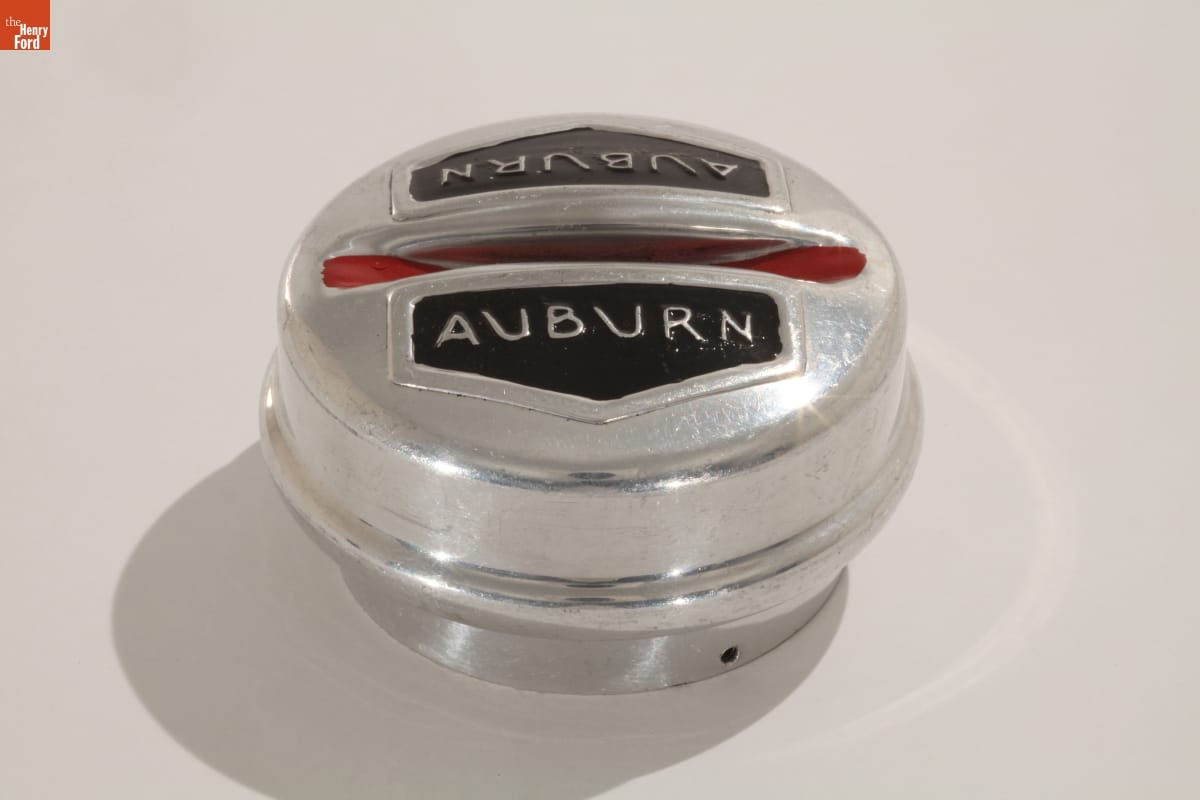
- Auburn Hubcap, 1925-1930 - Early automobile wheels had a central hub with a greased wheel bearing. Hub caps kept grease in and dust out. As wheels evolved and hubcaps became functionally unnecessary, they remained important to both manufacturers -- who branded wheel covers with maker names or logos -- and consumers -- who identified with hubcaps as statements about their cars and themselves.
- 1925-1930
- Collections - Artifact
Auburn Hubcap, 1925-1930
Early automobile wheels had a central hub with a greased wheel bearing. Hub caps kept grease in and dust out. As wheels evolved and hubcaps became functionally unnecessary, they remained important to both manufacturers -- who branded wheel covers with maker names or logos -- and consumers -- who identified with hubcaps as statements about their cars and themselves.
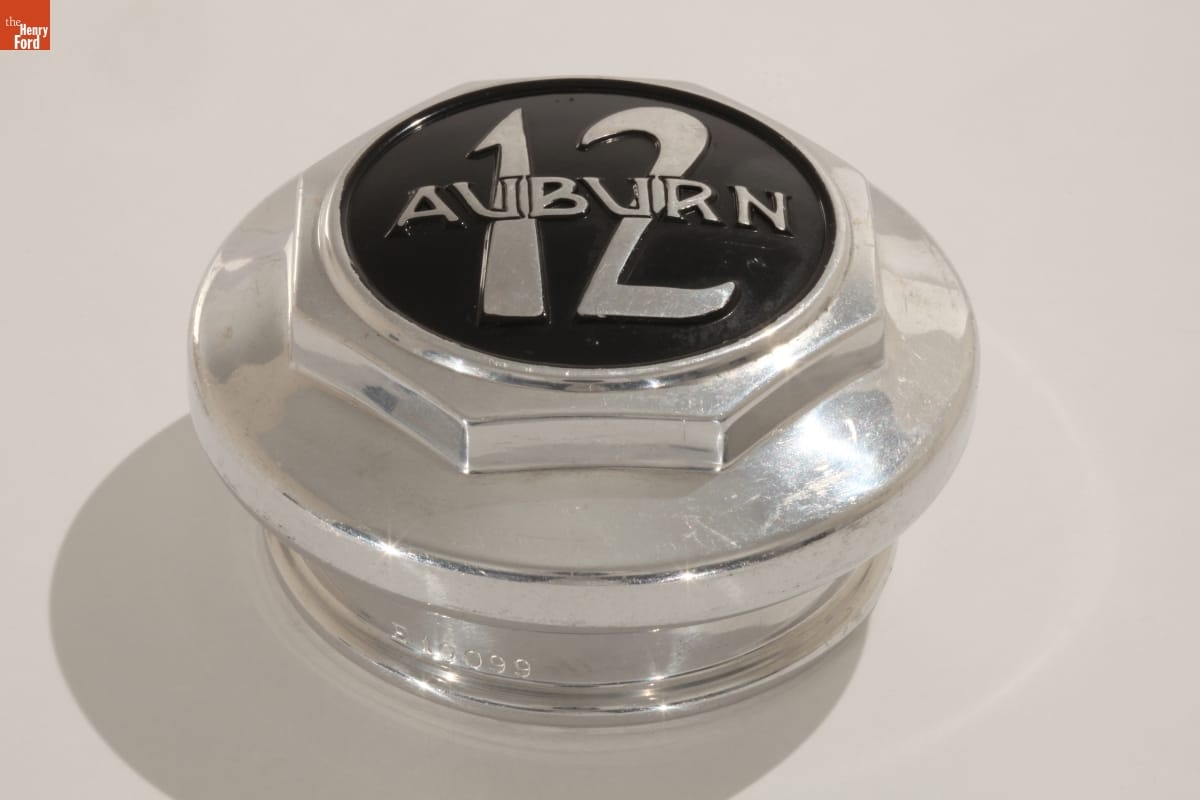
- Auburn Model 12 Hubcap, 1932-1933 - Early automobile wheels had a central hub with a greased wheel bearing. Hub caps kept grease in and dust out. As wheels evolved and hubcaps became functionally unnecessary, they remained important to both manufacturers -- who branded wheel covers with maker names or logos -- and consumers -- who identified with hubcaps as statements about their cars and themselves.
- 1932-1933
- Collections - Artifact
Auburn Model 12 Hubcap, 1932-1933
Early automobile wheels had a central hub with a greased wheel bearing. Hub caps kept grease in and dust out. As wheels evolved and hubcaps became functionally unnecessary, they remained important to both manufacturers -- who branded wheel covers with maker names or logos -- and consumers -- who identified with hubcaps as statements about their cars and themselves.
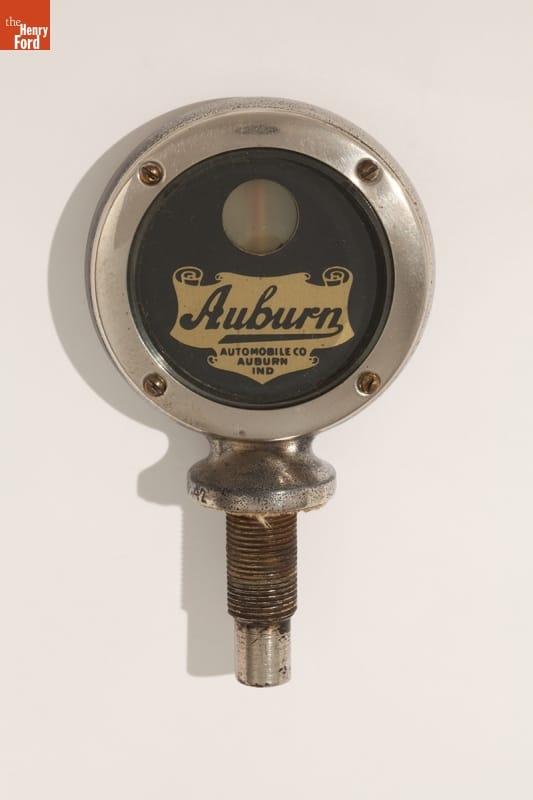
- Auburn Motometer, circa 1925 - Automobiles often came without temperature gauges before the early 1930s, so enterprising manufacturers sold aftermarket motometers. Mounted on a car's radiator, these devices measured and displayed coolant water vapor temperature, notifying drivers if their automobiles were in danger of overheating. Moto-Meter Co. Inc. dominated the American market, producing the popular Boyce motometer and others featuring an automotive manufacturer's name or logo.
- circa 1925
- Collections - Artifact
Auburn Motometer, circa 1925
Automobiles often came without temperature gauges before the early 1930s, so enterprising manufacturers sold aftermarket motometers. Mounted on a car's radiator, these devices measured and displayed coolant water vapor temperature, notifying drivers if their automobiles were in danger of overheating. Moto-Meter Co. Inc. dominated the American market, producing the popular Boyce motometer and others featuring an automotive manufacturer's name or logo.
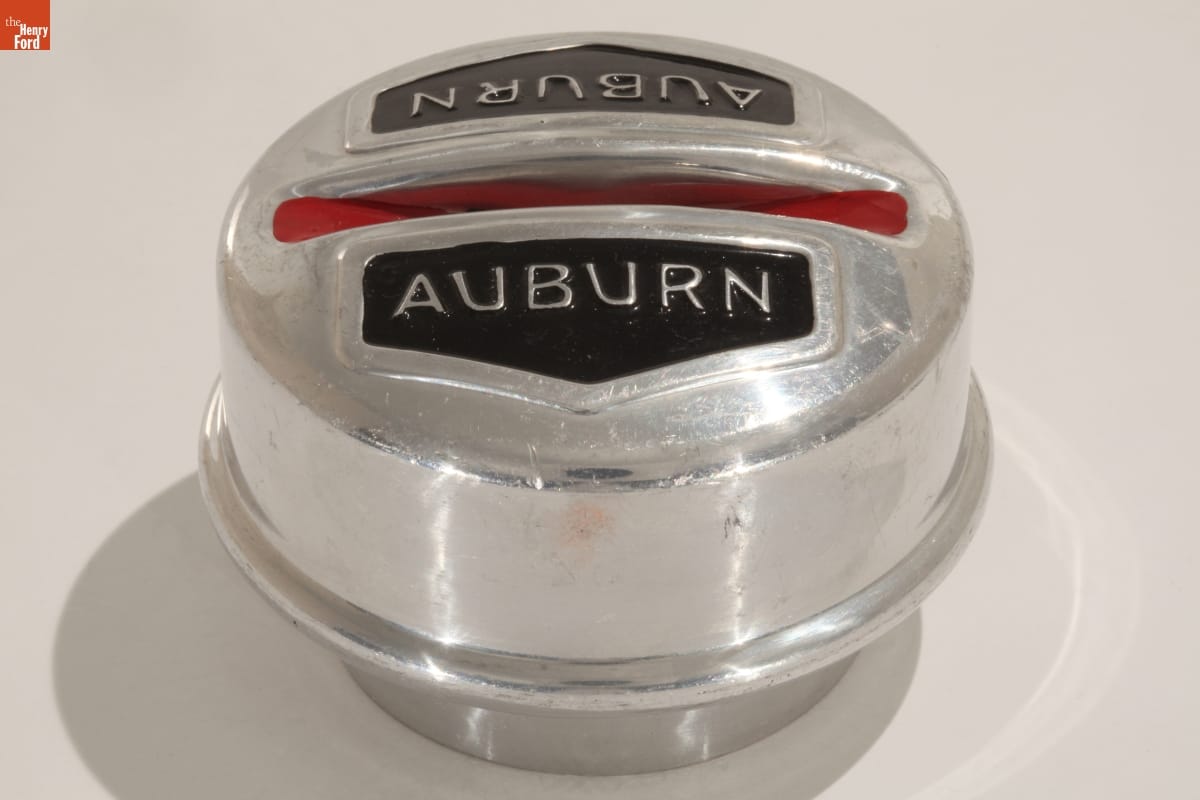
- Auburn Hubcap, 1925-1930 - Early automobile wheels had a central hub with a greased wheel bearing. Hub caps kept grease in and dust out. As wheels evolved and hubcaps became functionally unnecessary, they remained important to both manufacturers -- who branded wheel covers with maker names or logos -- and consumers -- who identified with hubcaps as statements about their cars and themselves.
- 1925-1930
- Collections - Artifact
Auburn Hubcap, 1925-1930
Early automobile wheels had a central hub with a greased wheel bearing. Hub caps kept grease in and dust out. As wheels evolved and hubcaps became functionally unnecessary, they remained important to both manufacturers -- who branded wheel covers with maker names or logos -- and consumers -- who identified with hubcaps as statements about their cars and themselves.
- Auburn Hubcap, 1918-1924 - Early automobile wheels had a central hub with a greased wheel bearing. Hub caps kept grease in and dust out. As wheels evolved and hubcaps became functionally unnecessary, they remained important to both manufacturers -- who branded wheel covers with maker names or logos -- and consumers -- who identified with hubcaps as statements about their cars and themselves.
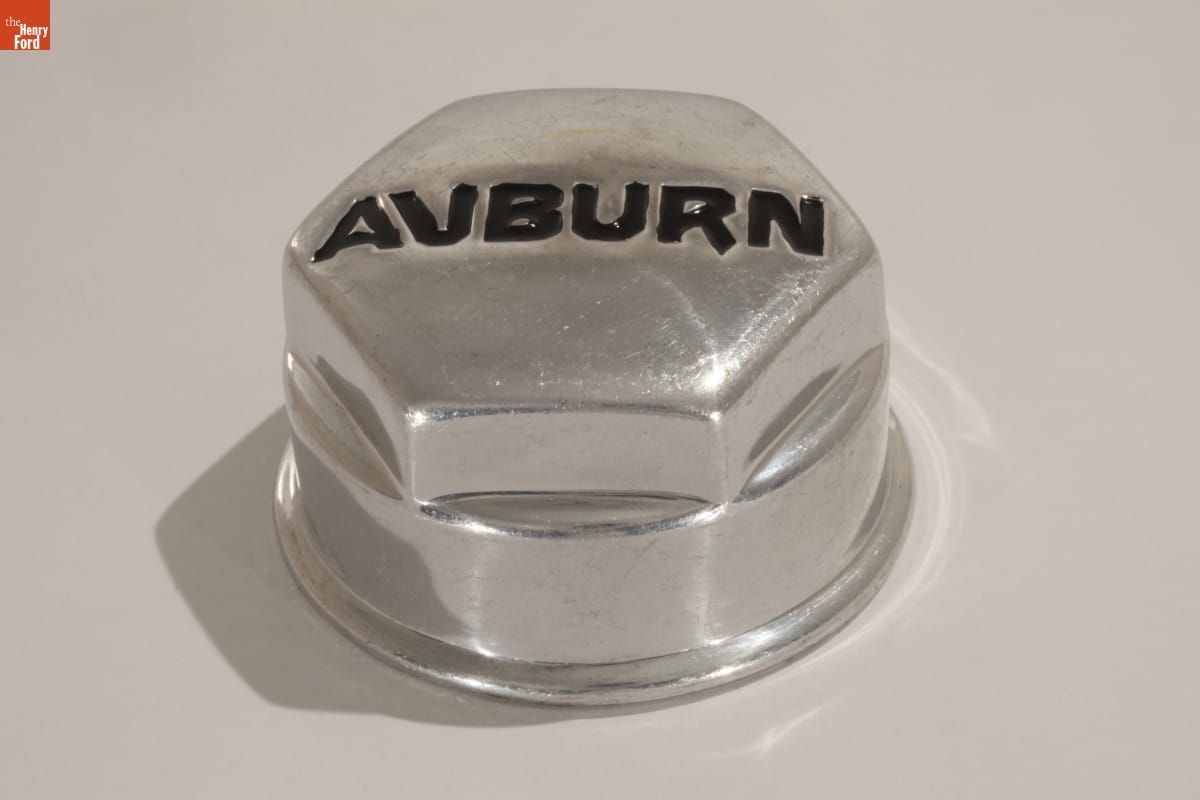
- 1918-1924
- Collections - Artifact
Auburn Hubcap, 1918-1924
Early automobile wheels had a central hub with a greased wheel bearing. Hub caps kept grease in and dust out. As wheels evolved and hubcaps became functionally unnecessary, they remained important to both manufacturers -- who branded wheel covers with maker names or logos -- and consumers -- who identified with hubcaps as statements about their cars and themselves.