
Search
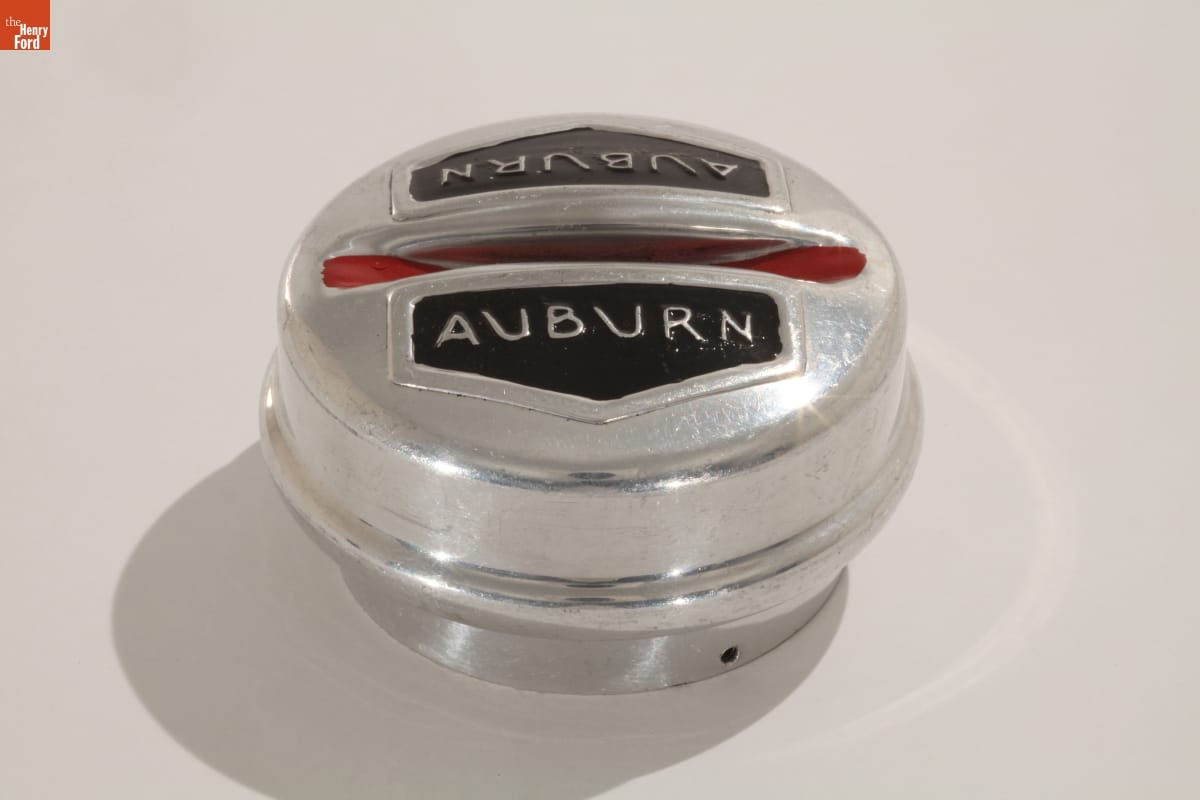
- Auburn Hubcap, 1925-1930 - Early automobile wheels had a central hub with a greased wheel bearing. Hub caps kept grease in and dust out. As wheels evolved and hubcaps became functionally unnecessary, they remained important to both manufacturers -- who branded wheel covers with maker names or logos -- and consumers -- who identified with hubcaps as statements about their cars and themselves.
- 1925-1930
- Collections - Artifact
Auburn Hubcap, 1925-1930
Early automobile wheels had a central hub with a greased wheel bearing. Hub caps kept grease in and dust out. As wheels evolved and hubcaps became functionally unnecessary, they remained important to both manufacturers -- who branded wheel covers with maker names or logos -- and consumers -- who identified with hubcaps as statements about their cars and themselves.
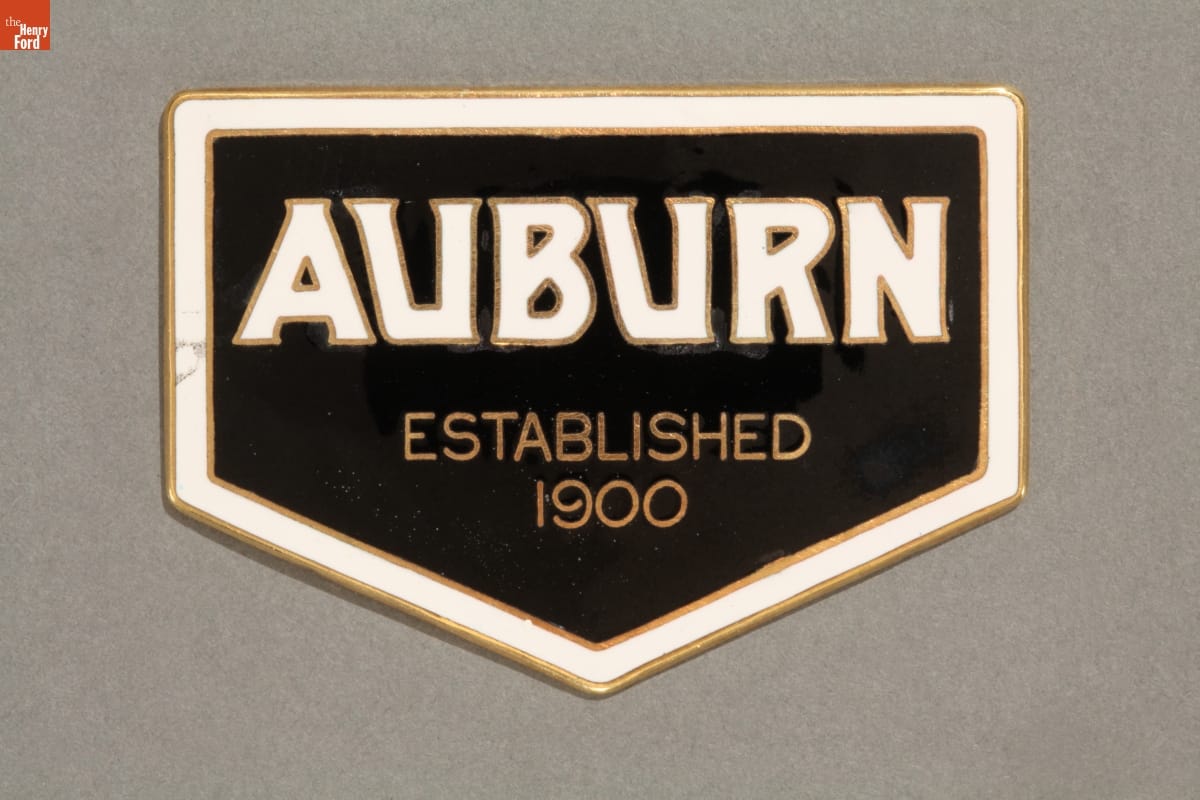
- Auburn Automobile Emblem, circa 1925 - Auburn Automobile Company, based in namesake city Auburn, Indiana, began regular automobile production in 1903. The cars were a moderate success until Errett Lobban Cord took the helm in 1924. He gave Auburn's models fresh styling and advanced engineering, turning the company around. But the Great Depression reversed Cord's sales gains and Auburn ended production in 1937.
- circa 1925
- Collections - Artifact
Auburn Automobile Emblem, circa 1925
Auburn Automobile Company, based in namesake city Auburn, Indiana, began regular automobile production in 1903. The cars were a moderate success until Errett Lobban Cord took the helm in 1924. He gave Auburn's models fresh styling and advanced engineering, turning the company around. But the Great Depression reversed Cord's sales gains and Auburn ended production in 1937.
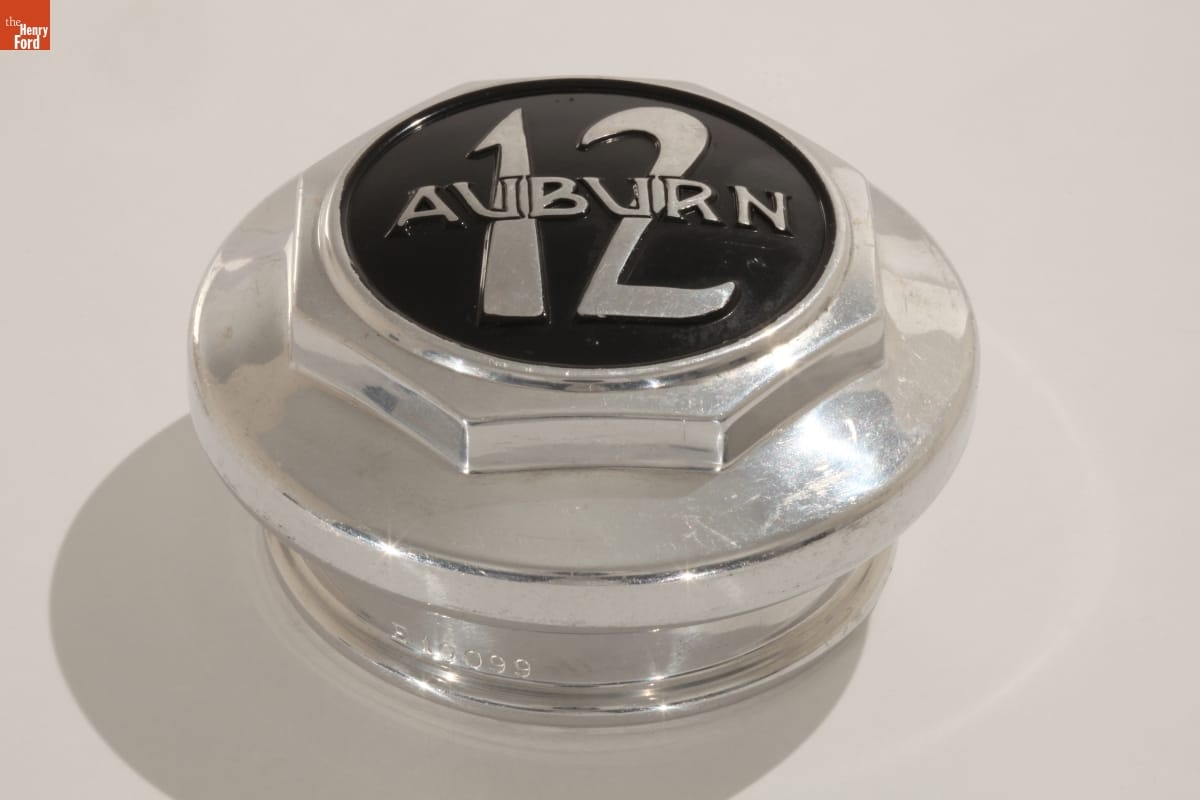
- Auburn Model 12 Hubcap, 1932-1933 - Early automobile wheels had a central hub with a greased wheel bearing. Hub caps kept grease in and dust out. As wheels evolved and hubcaps became functionally unnecessary, they remained important to both manufacturers -- who branded wheel covers with maker names or logos -- and consumers -- who identified with hubcaps as statements about their cars and themselves.
- 1932-1933
- Collections - Artifact
Auburn Model 12 Hubcap, 1932-1933
Early automobile wheels had a central hub with a greased wheel bearing. Hub caps kept grease in and dust out. As wheels evolved and hubcaps became functionally unnecessary, they remained important to both manufacturers -- who branded wheel covers with maker names or logos -- and consumers -- who identified with hubcaps as statements about their cars and themselves.
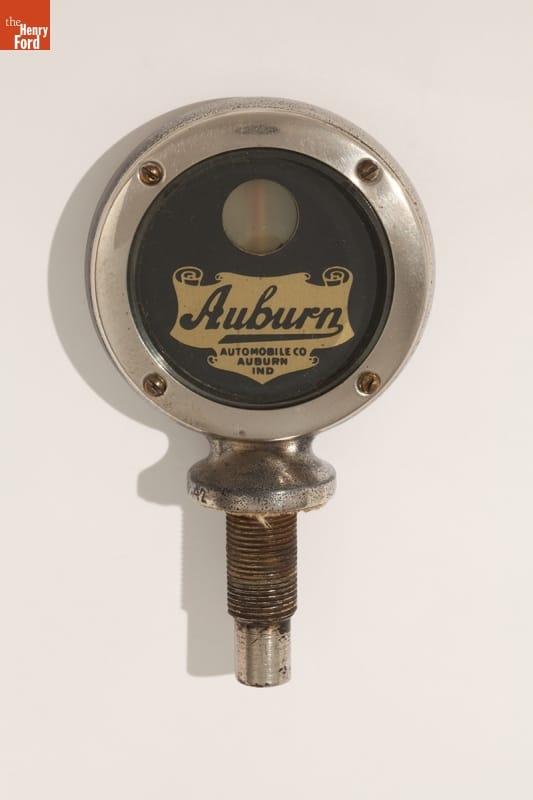
- Auburn Motometer, circa 1925 - Automobiles often came without temperature gauges before the early 1930s, so enterprising manufacturers sold aftermarket motometers. Mounted on a car's radiator, these devices measured and displayed coolant water vapor temperature, notifying drivers if their automobiles were in danger of overheating. Moto-Meter Co. Inc. dominated the American market, producing the popular Boyce motometer and others featuring an automotive manufacturer's name or logo.
- circa 1925
- Collections - Artifact
Auburn Motometer, circa 1925
Automobiles often came without temperature gauges before the early 1930s, so enterprising manufacturers sold aftermarket motometers. Mounted on a car's radiator, these devices measured and displayed coolant water vapor temperature, notifying drivers if their automobiles were in danger of overheating. Moto-Meter Co. Inc. dominated the American market, producing the popular Boyce motometer and others featuring an automotive manufacturer's name or logo.
- Auburn Hubcap, 1925-1930 - Early automobile wheels had a central hub with a greased wheel bearing. Hub caps kept grease in and dust out. As wheels evolved and hubcaps became functionally unnecessary, they remained important to both manufacturers -- who branded wheel covers with maker names or logos -- and consumers -- who identified with hubcaps as statements about their cars and themselves.
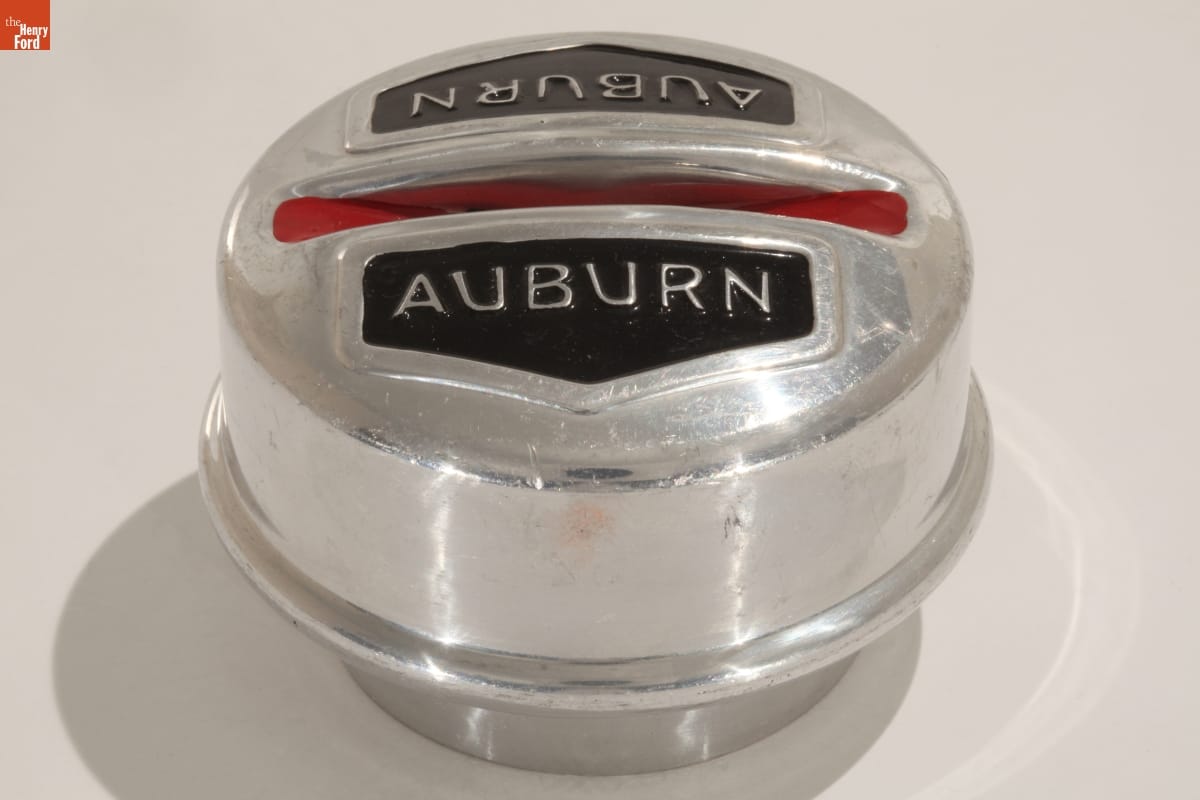
- 1925-1930
- Collections - Artifact
Auburn Hubcap, 1925-1930
Early automobile wheels had a central hub with a greased wheel bearing. Hub caps kept grease in and dust out. As wheels evolved and hubcaps became functionally unnecessary, they remained important to both manufacturers -- who branded wheel covers with maker names or logos -- and consumers -- who identified with hubcaps as statements about their cars and themselves.
- Hallmark "Vintage Roadsters Series: 1935 Auburn Speedster" Easter Ornament, 2000 - Hallmark introduced a line of Christmas ornaments in 1973. These ornaments appealed to customers' interest in marking memories, commemorating milestones, and expressing one's personality and unique tastes. This success led the company to produce ornaments for other holidays. Hallmark marketed and sold Easter and springtime ornaments in several series dating back to the 1990s.
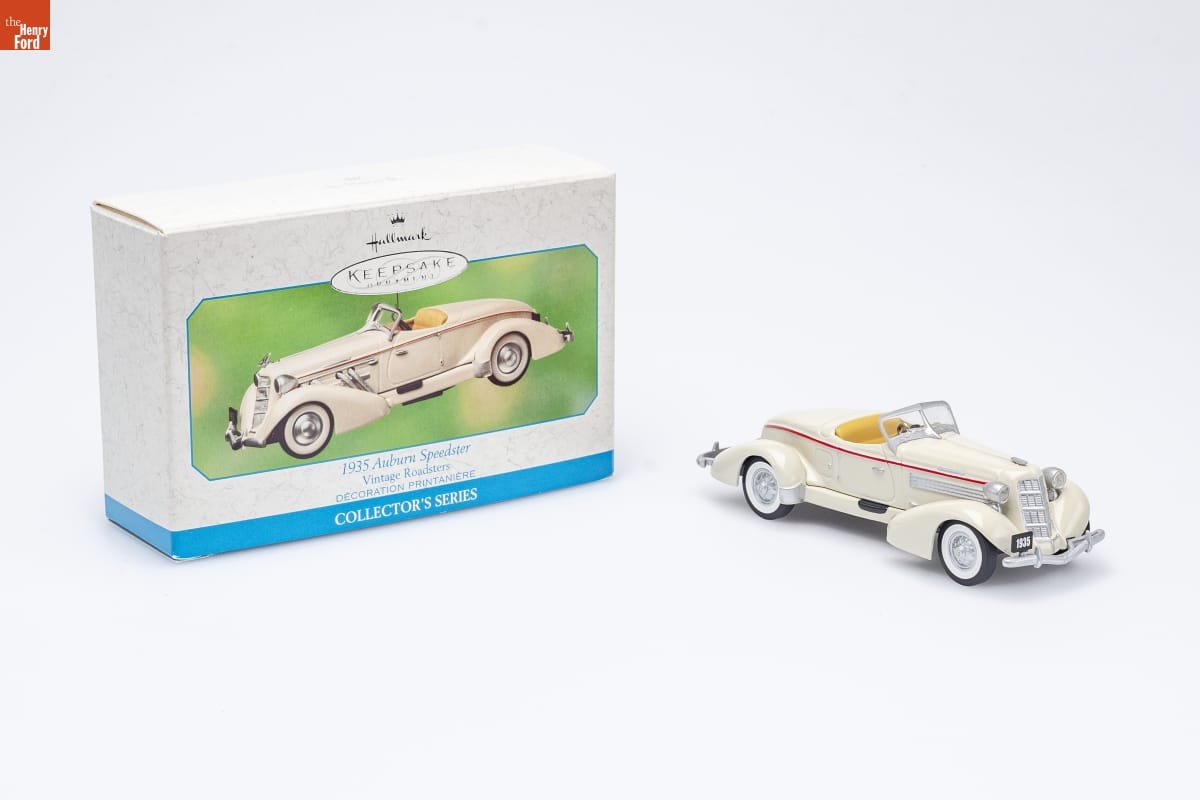
- 1935
- Collections - Artifact
Hallmark "Vintage Roadsters Series: 1935 Auburn Speedster" Easter Ornament, 2000
Hallmark introduced a line of Christmas ornaments in 1973. These ornaments appealed to customers' interest in marking memories, commemorating milestones, and expressing one's personality and unique tastes. This success led the company to produce ornaments for other holidays. Hallmark marketed and sold Easter and springtime ornaments in several series dating back to the 1990s.
- Hallmark "1937 Steelcraft Auburn by Murray" Collector's Club Christmas Ornament, 1996 - Already known for greeting cards, Hallmark introduced a line of Christmas ornaments in 1973. The company's annual release of an increasing array of ornaments revolutionized Christmas decorating, appealing to customers' interest in marking memories and milestones as well as expressing one's personality and unique tastes.
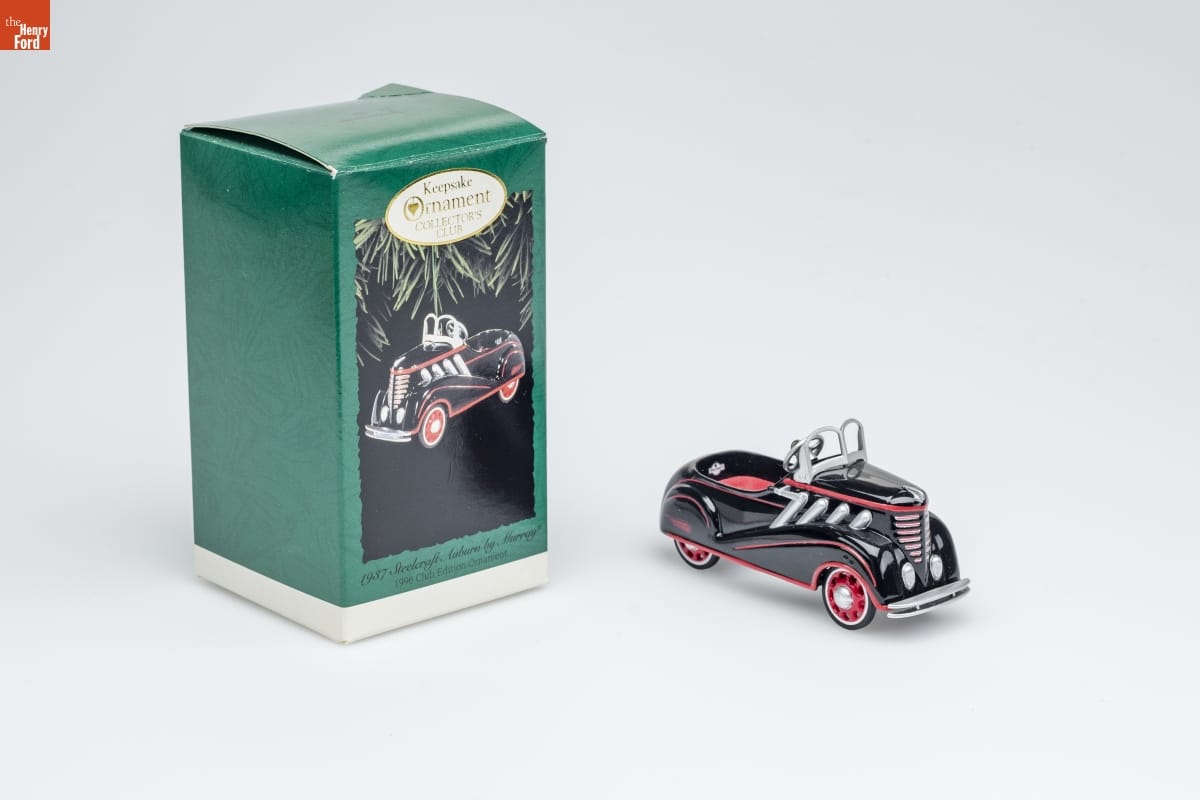
- 1937
- Collections - Artifact
Hallmark "1937 Steelcraft Auburn by Murray" Collector's Club Christmas Ornament, 1996
Already known for greeting cards, Hallmark introduced a line of Christmas ornaments in 1973. The company's annual release of an increasing array of ornaments revolutionized Christmas decorating, appealing to customers' interest in marking memories and milestones as well as expressing one's personality and unique tastes.
- 1930 Auburn Convertible Sedan - The Auburn Automobile Company, based in namesake Auburn, Indiana, began regular auto production in 1903. Errett Lobban Cord took the helm in 1924 and gave Auburn cars modern styling and advanced engineering. This 1930 Model 8-95 phaeton boasted an eight-cylinder engine good for 95 horsepower. Auburn could not survive the Great Depression, and the company ended operations in 1937.
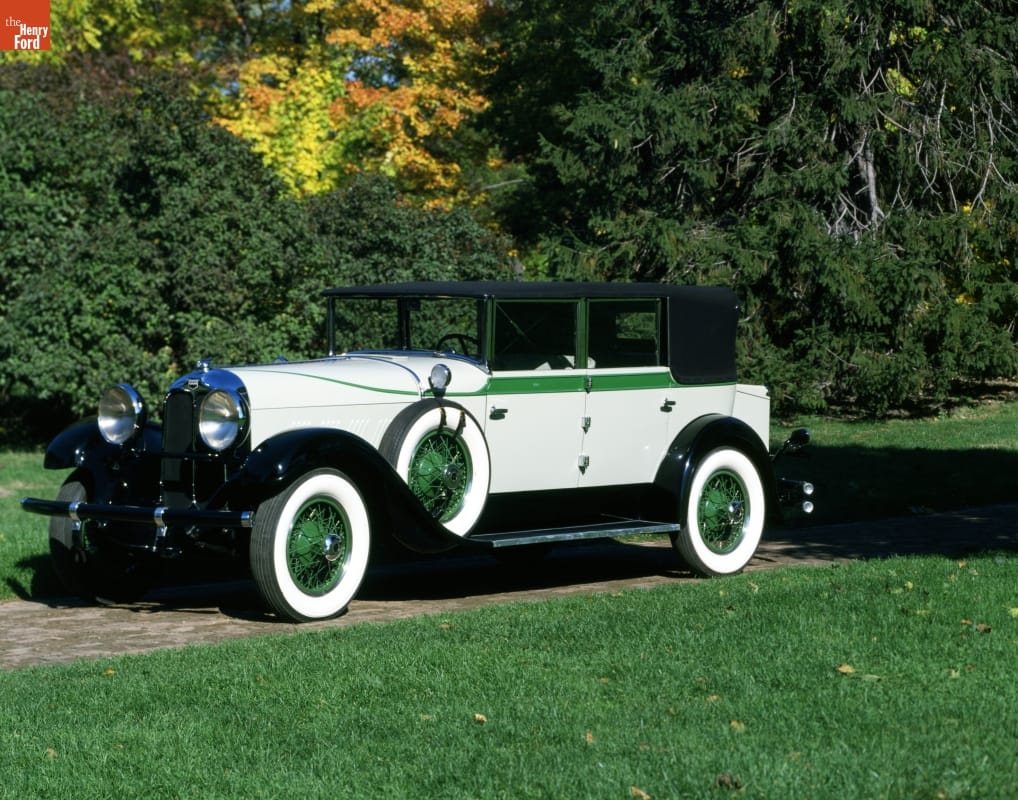
- 1930
- Collections - Artifact
1930 Auburn Convertible Sedan
The Auburn Automobile Company, based in namesake Auburn, Indiana, began regular auto production in 1903. Errett Lobban Cord took the helm in 1924 and gave Auburn cars modern styling and advanced engineering. This 1930 Model 8-95 phaeton boasted an eight-cylinder engine good for 95 horsepower. Auburn could not survive the Great Depression, and the company ended operations in 1937.
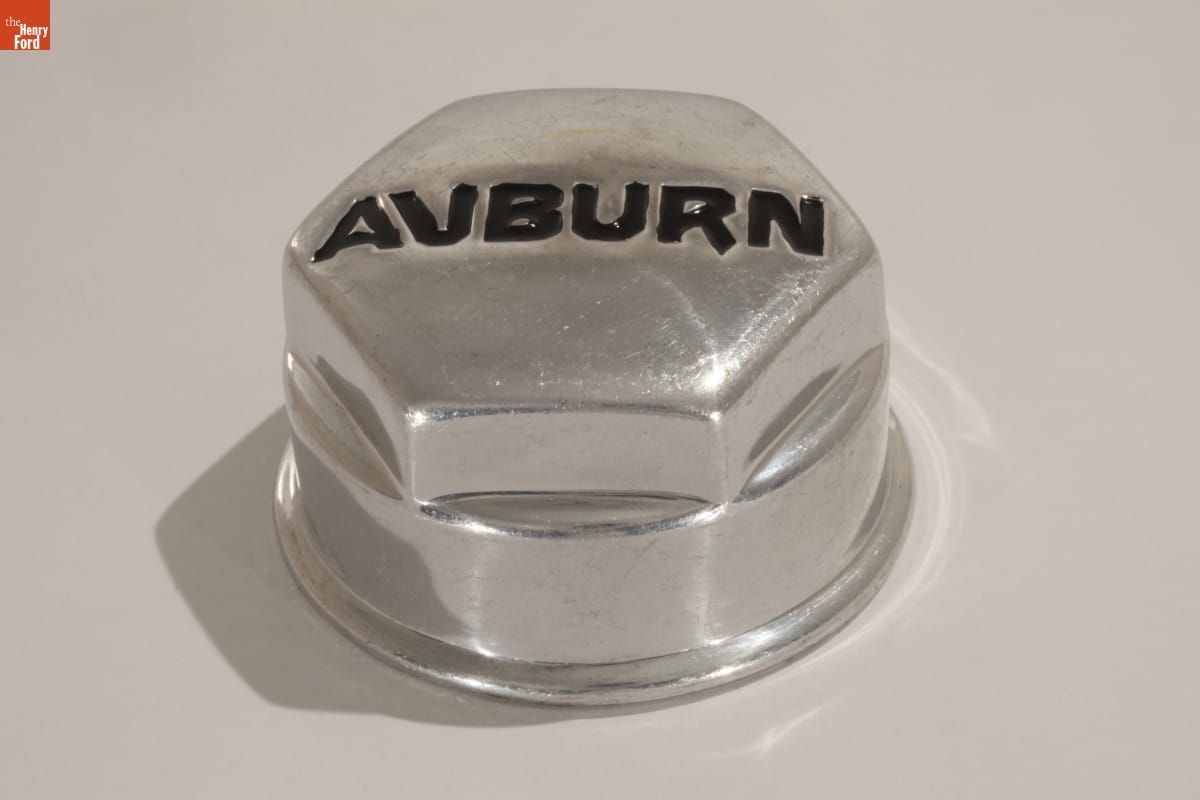
- Auburn Hubcap, 1918-1924 - Early automobile wheels had a central hub with a greased wheel bearing. Hub caps kept grease in and dust out. As wheels evolved and hubcaps became functionally unnecessary, they remained important to both manufacturers -- who branded wheel covers with maker names or logos -- and consumers -- who identified with hubcaps as statements about their cars and themselves.
- 1918-1924
- Collections - Artifact
Auburn Hubcap, 1918-1924
Early automobile wheels had a central hub with a greased wheel bearing. Hub caps kept grease in and dust out. As wheels evolved and hubcaps became functionally unnecessary, they remained important to both manufacturers -- who branded wheel covers with maker names or logos -- and consumers -- who identified with hubcaps as statements about their cars and themselves.