
Search
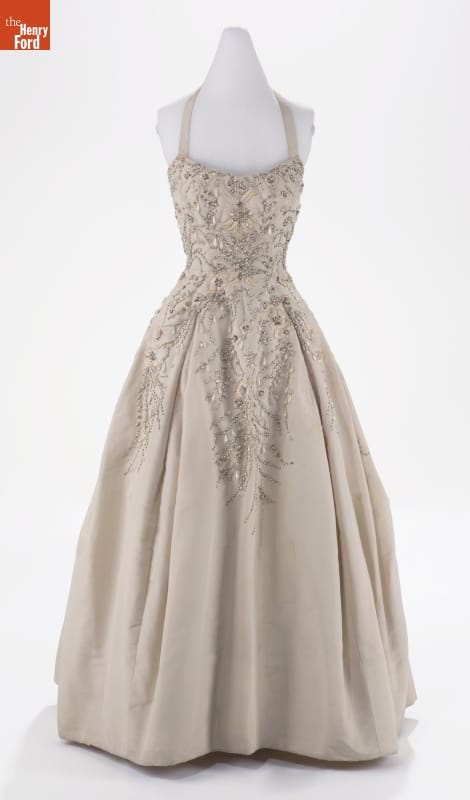
- Christian Dior Evening Dress, "Fontainebleau Adaptation," Worn by Anne Firestone to the 1955 Reopening of the Vienna Opera House, 1954 -
- 1955
- Collections - Artifact
Christian Dior Evening Dress, "Fontainebleau Adaptation," Worn by Anne Firestone to the 1955 Reopening of the Vienna Opera House, 1954
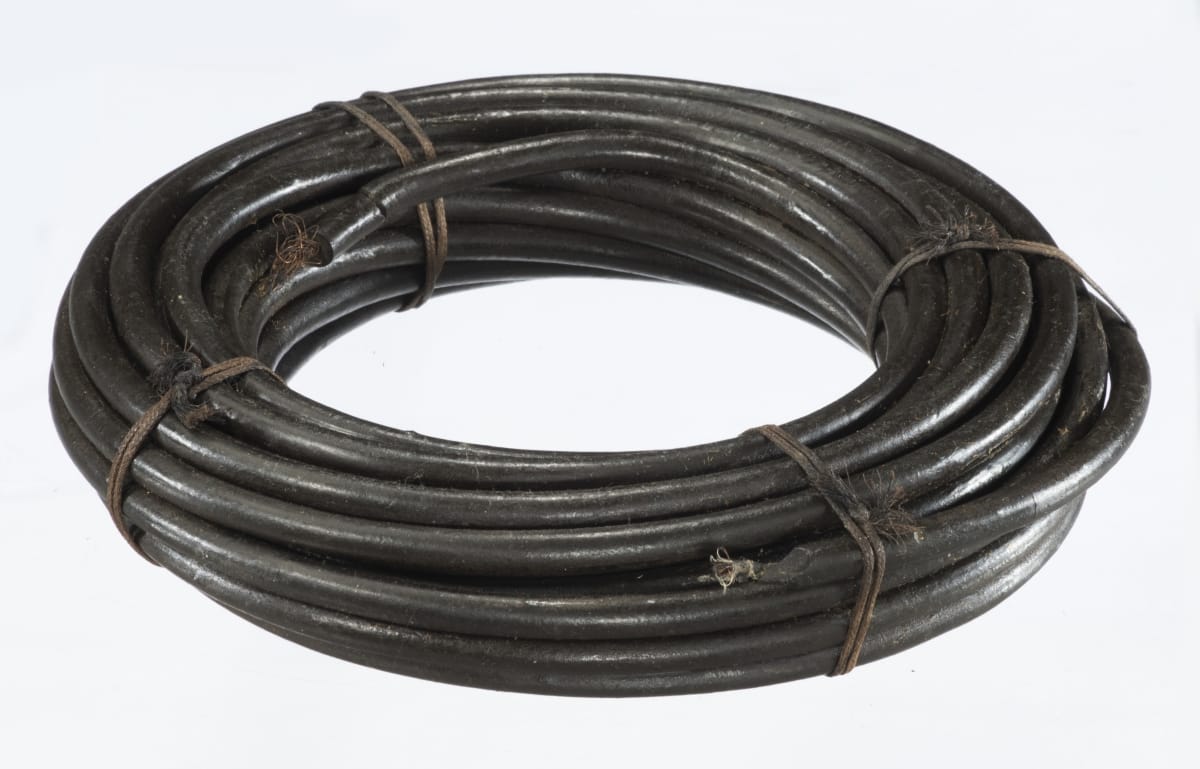
- Electric Cable, Used in Austrian and Hungarian Submarines during World War I, circa 1914 -
- circa 1914
- Collections - Artifact
Electric Cable, Used in Austrian and Hungarian Submarines during World War I, circa 1914
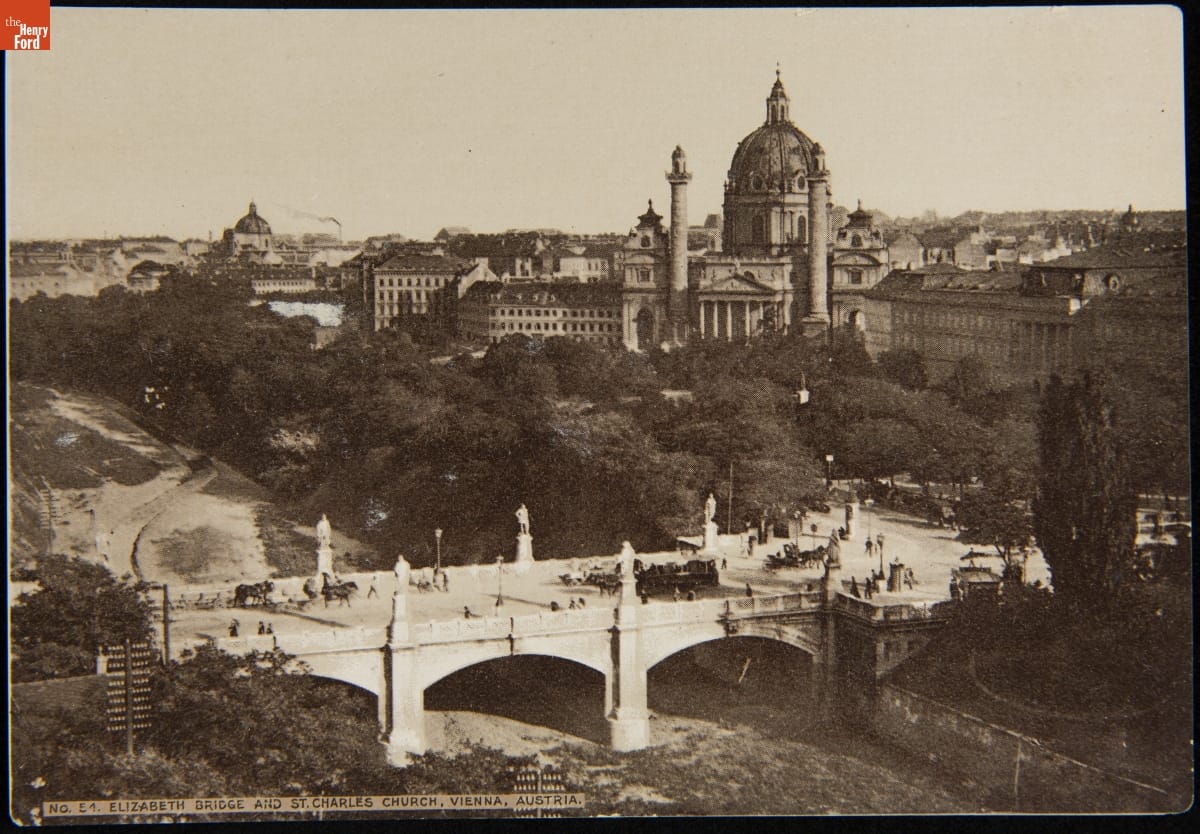
- Trade Card for C.I. Hood & Co. with Hood's Photos of the World, "Elizabeth Bridge and St. Charles Church, Vienna, Austria," 1890-1910 - In the late 19th century, trade cards were a major means of advertising goods and services. Patent medicine producer, C.I. Hood & Co., had its own advertising department, creating cookbooks, calendars, and, most abundantly, trade cards. The trade card series, "Hood's Photos of the World," became popular among consumers, as it offered views of far-away places, providing a window to the broader world.
- 1890-1910
- Collections - Artifact
Trade Card for C.I. Hood & Co. with Hood's Photos of the World, "Elizabeth Bridge and St. Charles Church, Vienna, Austria," 1890-1910
In the late 19th century, trade cards were a major means of advertising goods and services. Patent medicine producer, C.I. Hood & Co., had its own advertising department, creating cookbooks, calendars, and, most abundantly, trade cards. The trade card series, "Hood's Photos of the World," became popular among consumers, as it offered views of far-away places, providing a window to the broader world.
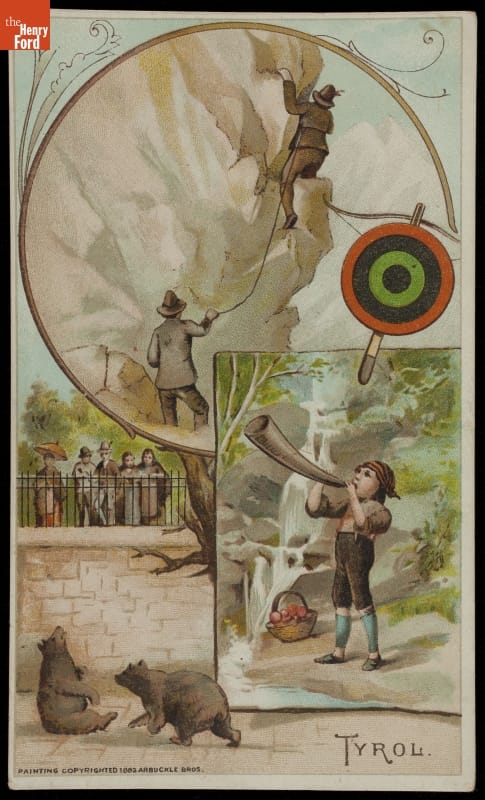
- Trade Card for Ariosa Coffee, Arbuckle Bros., "Tyrol," 1893 - Grocers sold coffee in bulk when John and Charles Arbuckle came up with an innovative process for individually packaging different grades of coffee. Their popular Ariosa coffee beans were glazed with a sugar and egg coating supposedly to improve quality and flavor. This trade card, from the Chicago Columbian Exposition, was in a series depicting different nations' sports and pastimes.
- 1893
- Collections - Artifact
Trade Card for Ariosa Coffee, Arbuckle Bros., "Tyrol," 1893
Grocers sold coffee in bulk when John and Charles Arbuckle came up with an innovative process for individually packaging different grades of coffee. Their popular Ariosa coffee beans were glazed with a sugar and egg coating supposedly to improve quality and flavor. This trade card, from the Chicago Columbian Exposition, was in a series depicting different nations' sports and pastimes.
- Trade Card for Singer Sewing Machines, 1892 - As color printing gained momentum in the late 19th century, trade cards became a major means of advertising goods and services. Americans enjoyed and often saved the vibrant little advertisements found in product packages or distributed by local merchants. The Singer Sewing Machine Company had a series of trade cards, like this one, offering images of Singer machine users from around the world in their national dress.
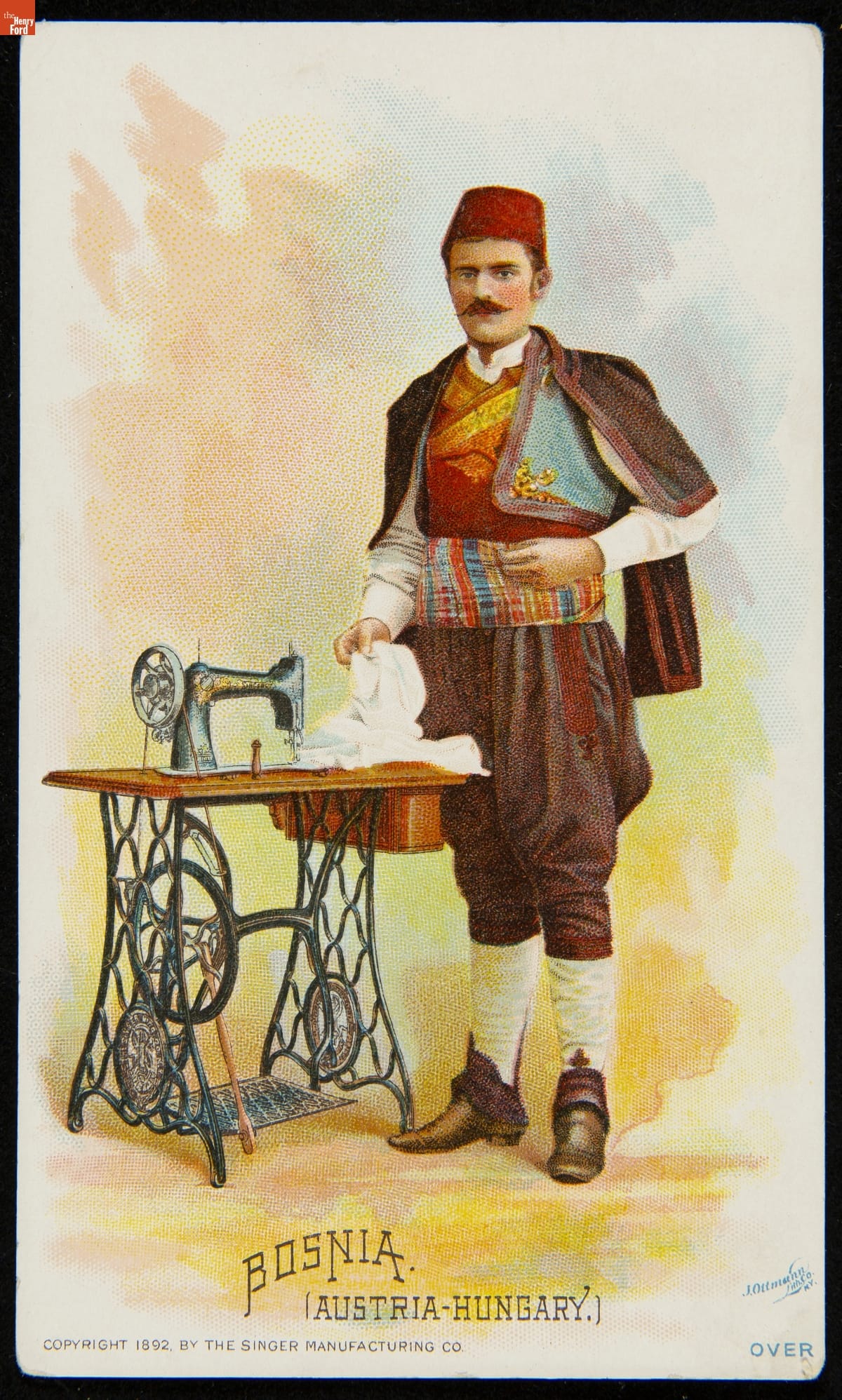
- circa 1892
- Collections - Artifact
Trade Card for Singer Sewing Machines, 1892
As color printing gained momentum in the late 19th century, trade cards became a major means of advertising goods and services. Americans enjoyed and often saved the vibrant little advertisements found in product packages or distributed by local merchants. The Singer Sewing Machine Company had a series of trade cards, like this one, offering images of Singer machine users from around the world in their national dress.
- Trade Card for Singer Sewing Machines, 1892 - As color printing gained momentum in the late 19th century, trade cards became a major means of advertising goods and services. Americans enjoyed and often saved the vibrant little advertisements found in product packages or distributed by local merchants. The Singer Sewing Machine Company had a series of trade cards, like this one, offering images of Singer machine users from around the world in their national dress.
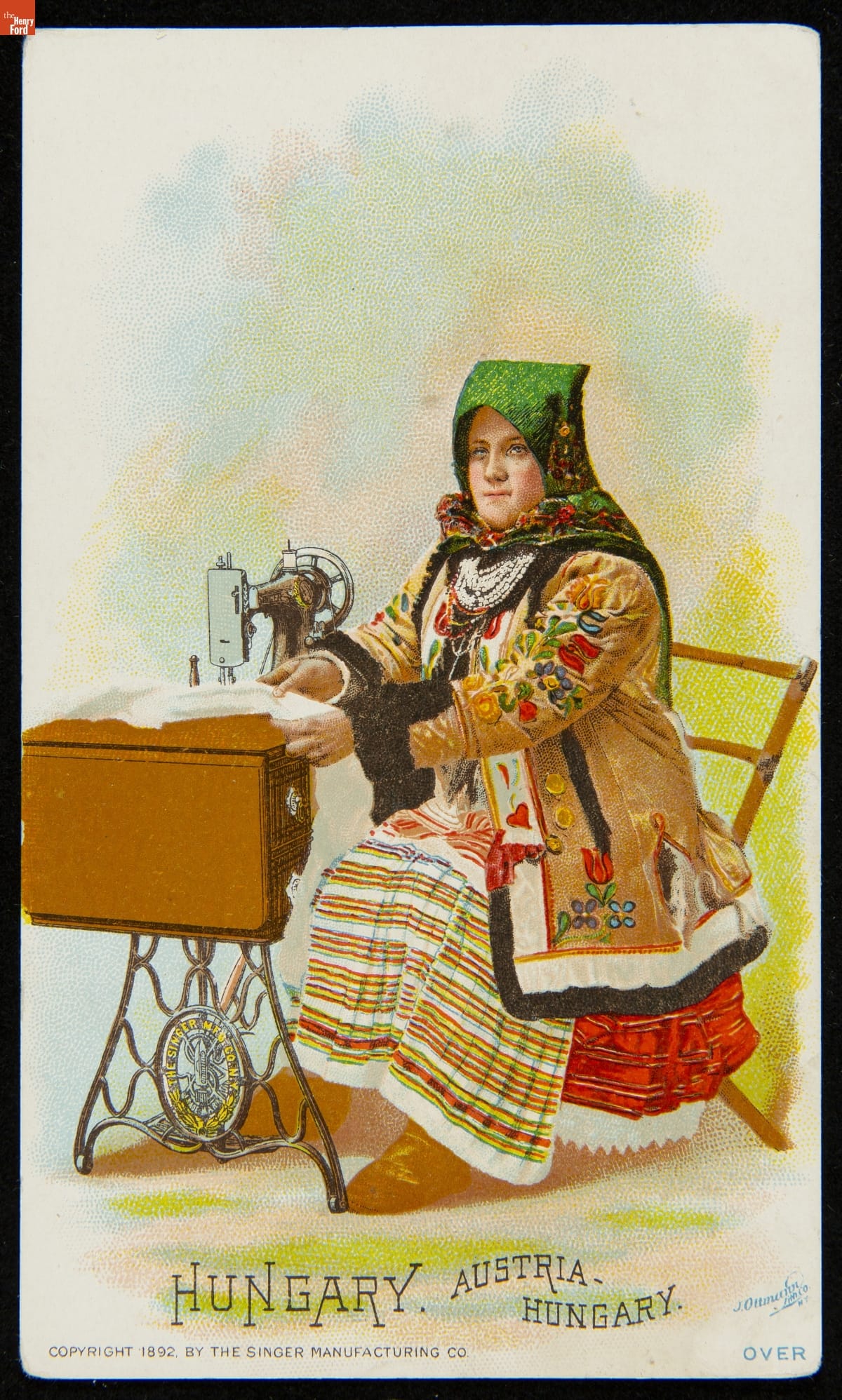
- circa 1892
- Collections - Artifact
Trade Card for Singer Sewing Machines, 1892
As color printing gained momentum in the late 19th century, trade cards became a major means of advertising goods and services. Americans enjoyed and often saved the vibrant little advertisements found in product packages or distributed by local merchants. The Singer Sewing Machine Company had a series of trade cards, like this one, offering images of Singer machine users from around the world in their national dress.
- Trade Card for Singer Sewing Machines, 1892 - As color printing gained momentum in the late 19th century, trade cards became a major means of advertising goods and services. Americans enjoyed and often saved the vibrant little advertisements found in product packages or distributed by local merchants. The Singer Sewing Machine Company had a series of trade cards, like this one, offering images of Singer machine users from around the world in their national dress.
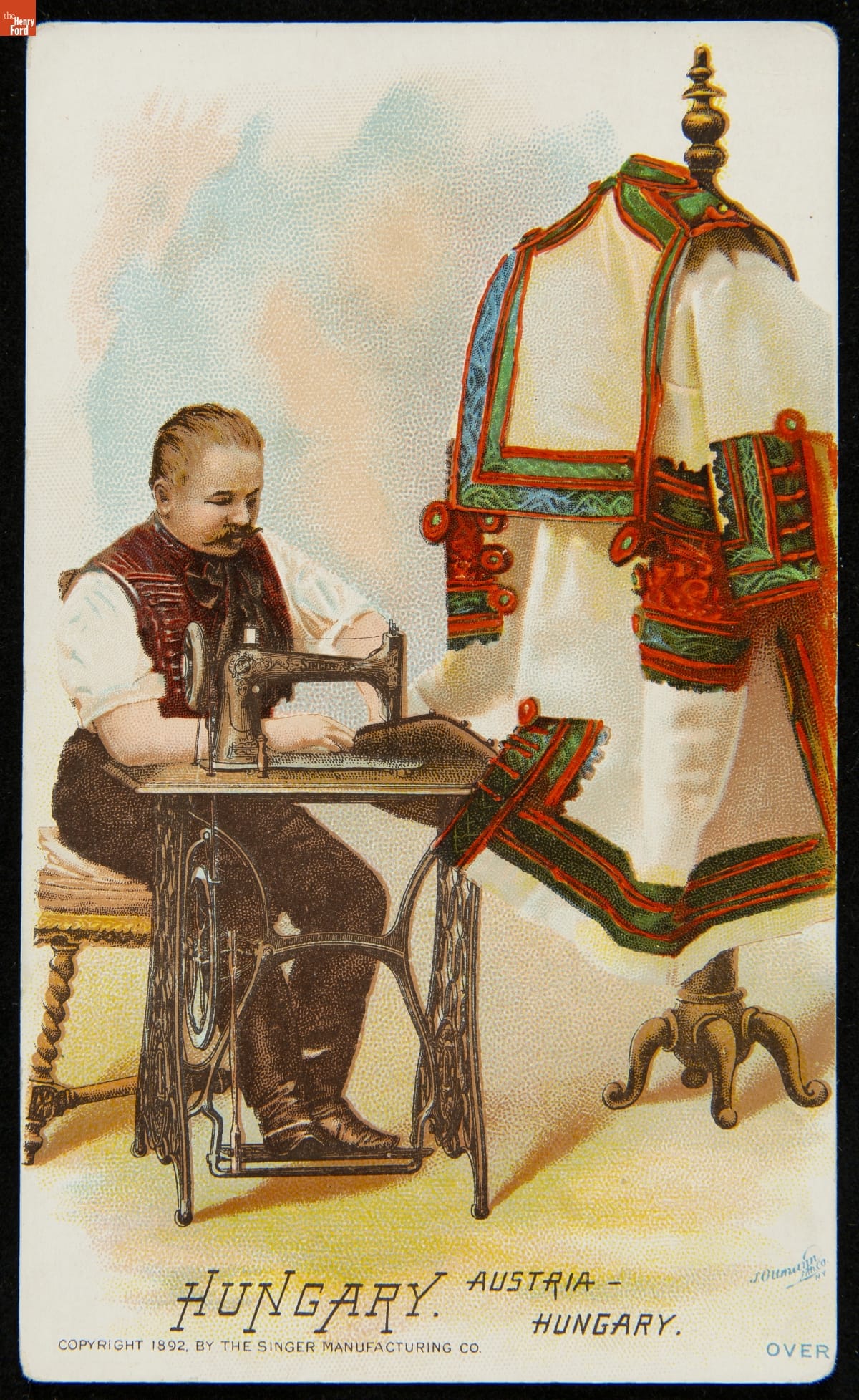
- circa 1892
- Collections - Artifact
Trade Card for Singer Sewing Machines, 1892
As color printing gained momentum in the late 19th century, trade cards became a major means of advertising goods and services. Americans enjoyed and often saved the vibrant little advertisements found in product packages or distributed by local merchants. The Singer Sewing Machine Company had a series of trade cards, like this one, offering images of Singer machine users from around the world in their national dress.
- Road Between Innsbruck and Landeck, Austria, circa 1935 - In 1913, Henry Ford established Ford Motor Company's photographic department. Though few internal records describe company photography, remaining photographs reveal a wide range of departmental activity. Over nearly 100 years, Ford photographers documented company ventures, personal affairs, and daily life around the world. This photograph shows a dirt road between two cities in the Austrian state of Tyrol.
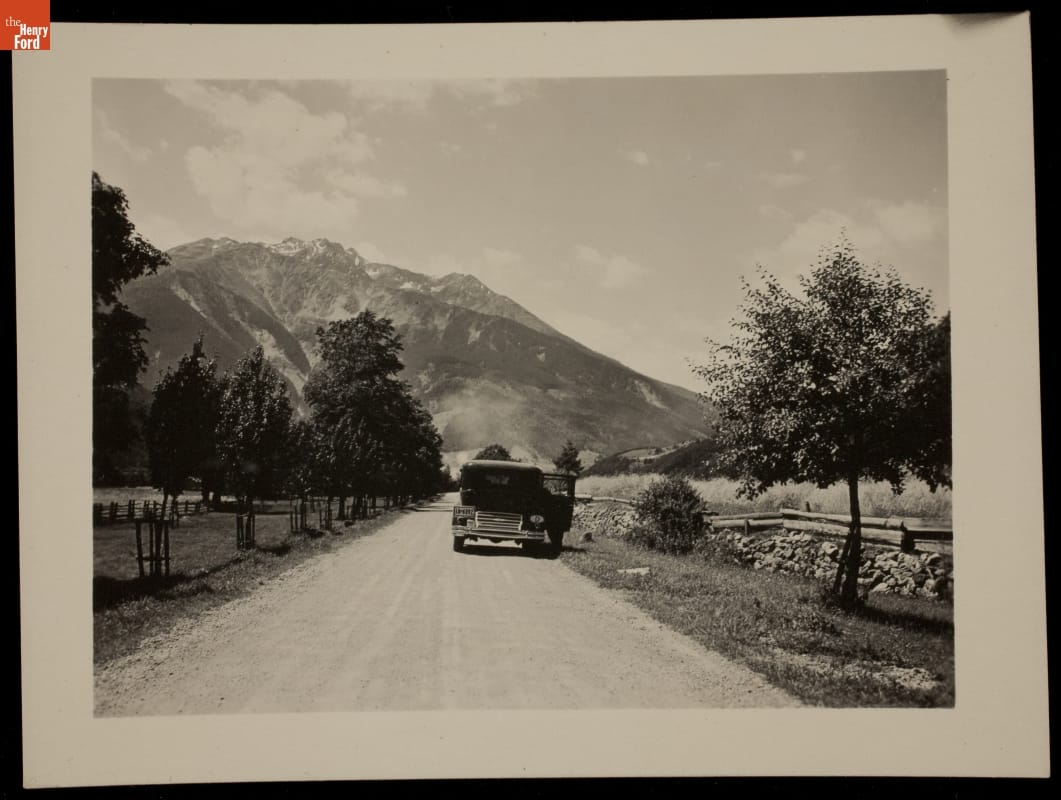
- circa 1935
- Collections - Artifact
Road Between Innsbruck and Landeck, Austria, circa 1935
In 1913, Henry Ford established Ford Motor Company's photographic department. Though few internal records describe company photography, remaining photographs reveal a wide range of departmental activity. Over nearly 100 years, Ford photographers documented company ventures, personal affairs, and daily life around the world. This photograph shows a dirt road between two cities in the Austrian state of Tyrol.
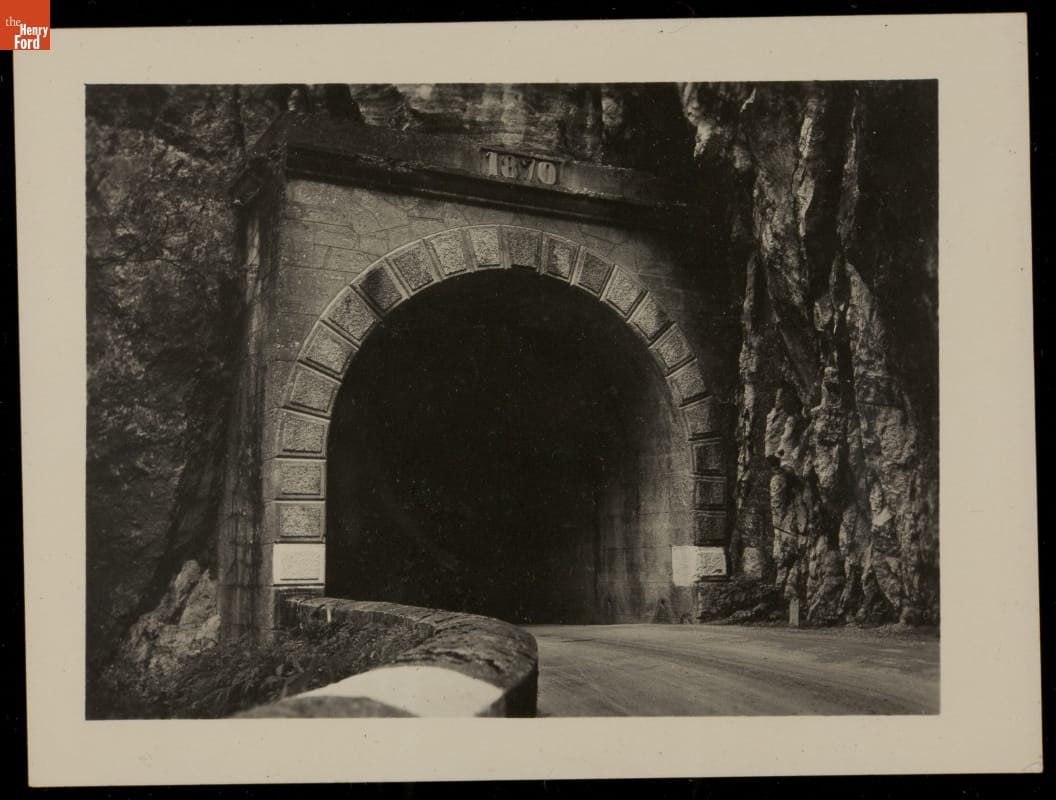
- "Tunnel near Traunkirchen on the Traunsee, Austria," circa 1935 - In 1913, Henry Ford established Ford Motor Company's photographic department. Though few internal records describe company photography, remaining photographs reveal a wide range of departmental activity. Over nearly 100 years, Ford photographers documented company ventures, personal affairs, and daily life around the world. This photograph shows a tunnel for road vehicles near Traunsee, a large lake in Austria.
- circa 1935
- Collections - Artifact
"Tunnel near Traunkirchen on the Traunsee, Austria," circa 1935
In 1913, Henry Ford established Ford Motor Company's photographic department. Though few internal records describe company photography, remaining photographs reveal a wide range of departmental activity. Over nearly 100 years, Ford photographers documented company ventures, personal affairs, and daily life around the world. This photograph shows a tunnel for road vehicles near Traunsee, a large lake in Austria.
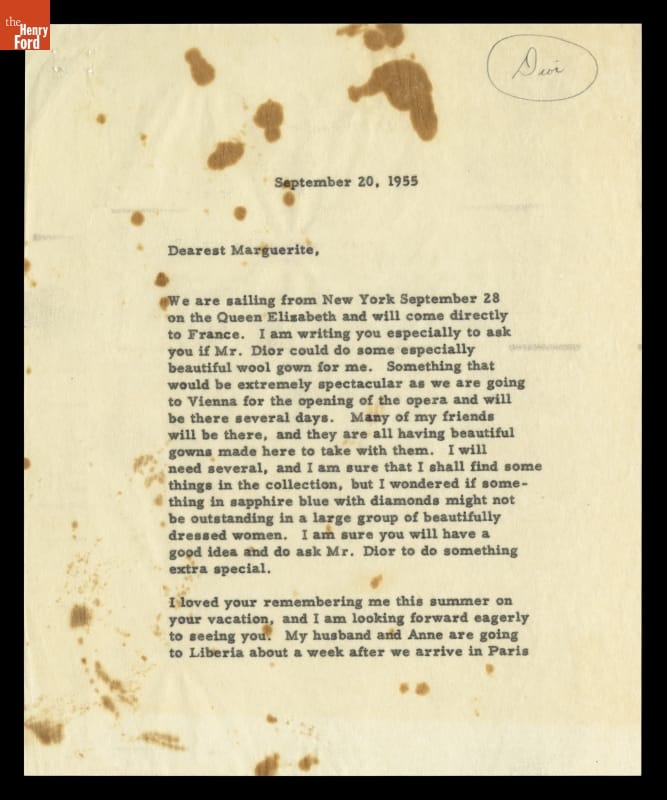
- Letter from Elizabeth Parke Firestone to Christian Dior (Through Marguerite Carre), September 20, 1955 - Elizabeth Parke Firestone's refined sense of fashion reflected years of interest in clothing design and collaboration with world-renowned couturiers. For the 1955 Vienna Opera House reopening, Firestone requested a custom gown from the design house of Christian Dior. The finished product was indeed "something extra special." Firestone's blue-grey ball gown with metallic embroidery and iridescent rhinestones was featured in Paris newspapers and <EM>LIFE</EM> magazine.
- September 20, 1955
- Collections - Artifact
Letter from Elizabeth Parke Firestone to Christian Dior (Through Marguerite Carre), September 20, 1955
Elizabeth Parke Firestone's refined sense of fashion reflected years of interest in clothing design and collaboration with world-renowned couturiers. For the 1955 Vienna Opera House reopening, Firestone requested a custom gown from the design house of Christian Dior. The finished product was indeed "something extra special." Firestone's blue-grey ball gown with metallic embroidery and iridescent rhinestones was featured in Paris newspapers and LIFE magazine.