
Search
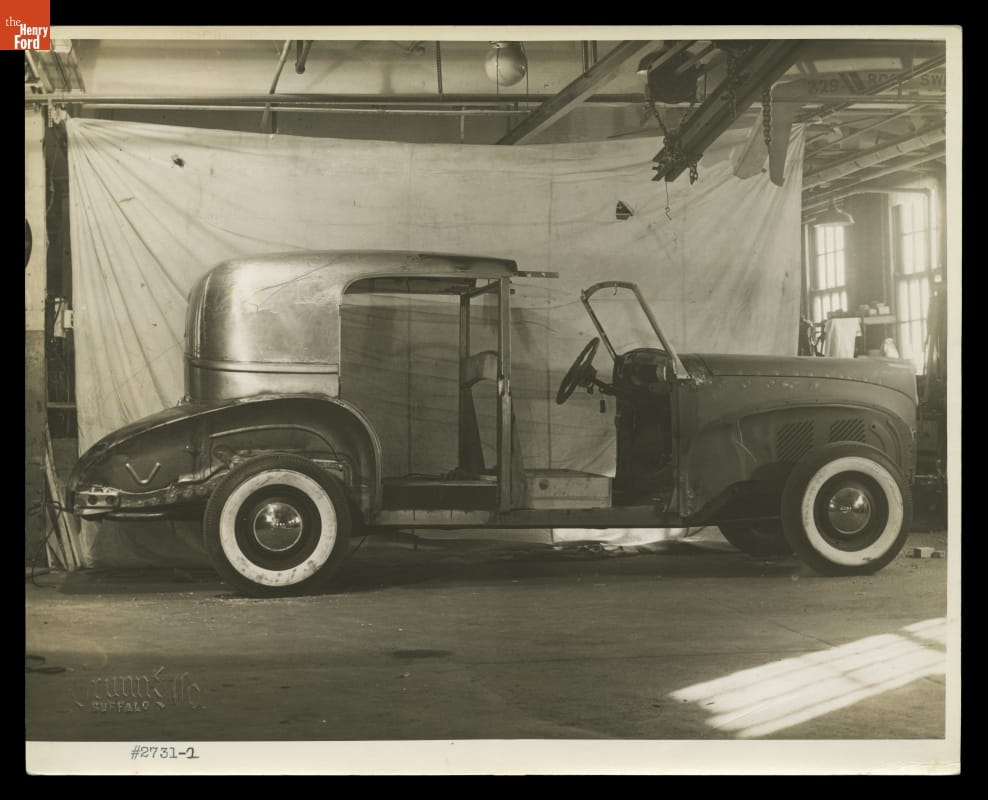
- Photograph of Automobile with Brunn Body in Progress, circa 1938 -
- circa 1938
- Collections - Artifact
Photograph of Automobile with Brunn Body in Progress, circa 1938
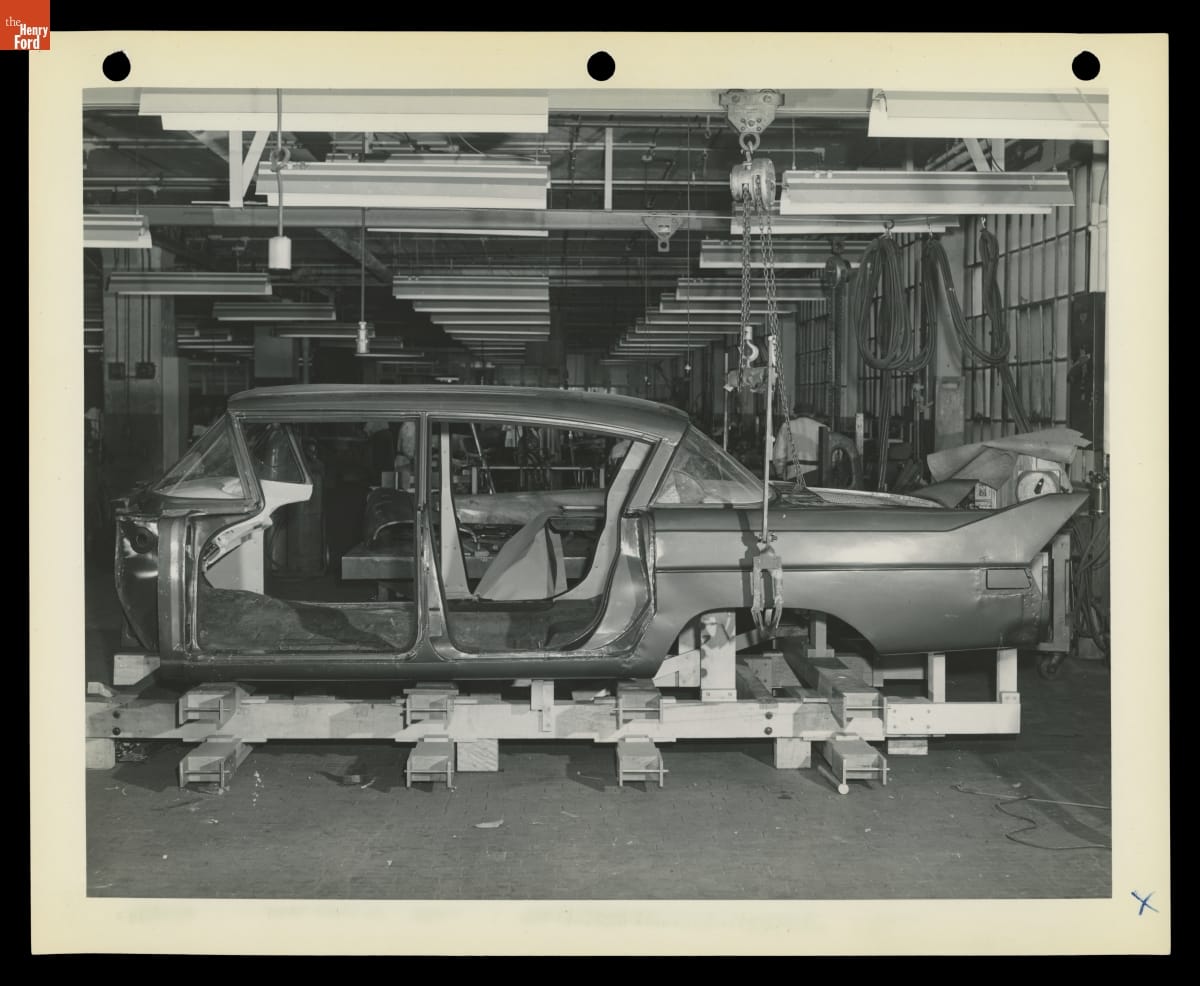
- Pre-Prototype Body Construction, Studebaker-Packard Corporation 57th Series Product Program, 1951-1956 - Studebaker and Packard merged in 1954, hoping to solve financial problems at both companies. The new corporation marketed its cars as two distinct brands until 1958, though by 1957 Packard cars were essentially rebadged Studebakers. This photo shows work on the 57th series -- continuing Packard's tradition of series designations rather than model years.
- 1951-1956
- Collections - Artifact
Pre-Prototype Body Construction, Studebaker-Packard Corporation 57th Series Product Program, 1951-1956
Studebaker and Packard merged in 1954, hoping to solve financial problems at both companies. The new corporation marketed its cars as two distinct brands until 1958, though by 1957 Packard cars were essentially rebadged Studebakers. This photo shows work on the 57th series -- continuing Packard's tradition of series designations rather than model years.
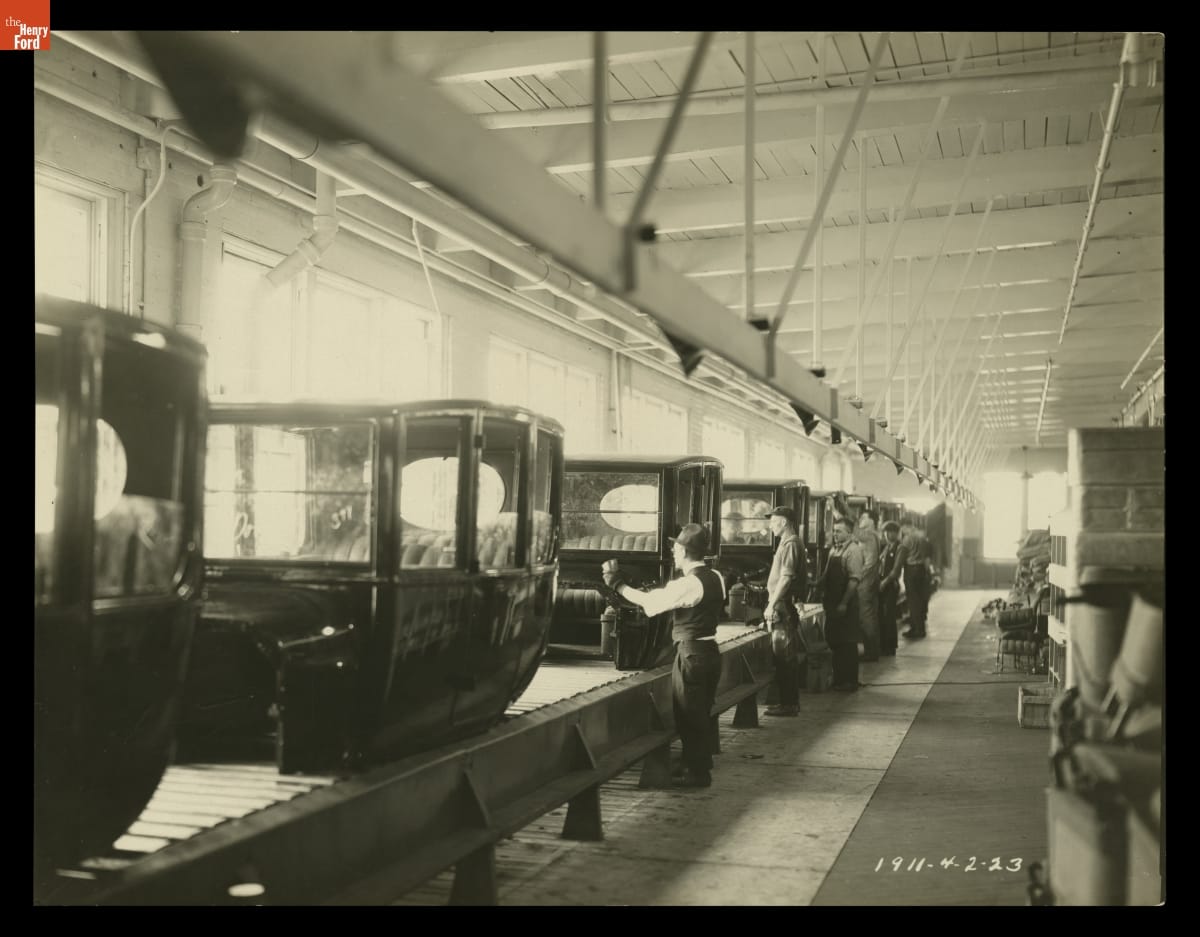
- Ford Model T Sedan Bodies on Finish Trim Assembly Line at Holden Avenue Plant, Detroit, Michigan, April 2, 1923 - Included in Ford Motor Company's 1922 purchase of Lincoln Motor Company was a building on Holden Avenue in Detroit. Ford used the Holden Avenue Plant to assemble two-door Model T sedan bodies. Here, workers apply final trim on the paint line.
- April 02, 1923
- Collections - Artifact
Ford Model T Sedan Bodies on Finish Trim Assembly Line at Holden Avenue Plant, Detroit, Michigan, April 2, 1923
Included in Ford Motor Company's 1922 purchase of Lincoln Motor Company was a building on Holden Avenue in Detroit. Ford used the Holden Avenue Plant to assemble two-door Model T sedan bodies. Here, workers apply final trim on the paint line.
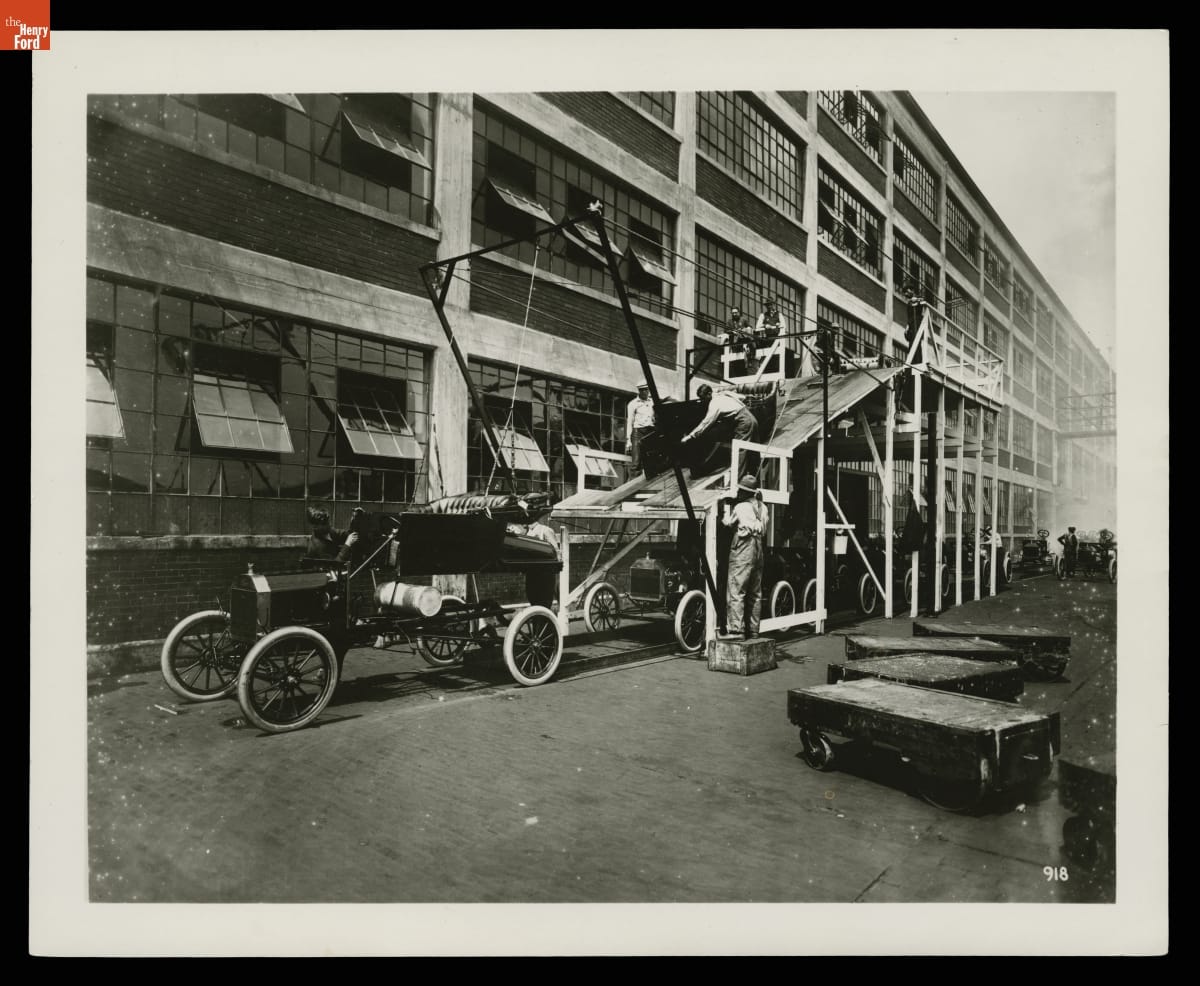
- Ford Model T Body Drop at the Highland Park Plant, circa 1914 - When a Model T leaving the assembly lines at Ford's Highland Park plant was going to be shipped by rail, it was not fully assembled. In this photograph, workers temporarily place bodies onto chassis. At the loading dock, bodies and wheels would be removed and packed separately to conserve freight car space. Full assembly took place at branch plants closer to the vehicles' final destination.
- circa 1914
- Collections - Artifact
Ford Model T Body Drop at the Highland Park Plant, circa 1914
When a Model T leaving the assembly lines at Ford's Highland Park plant was going to be shipped by rail, it was not fully assembled. In this photograph, workers temporarily place bodies onto chassis. At the loading dock, bodies and wheels would be removed and packed separately to conserve freight car space. Full assembly took place at branch plants closer to the vehicles' final destination.
- Pre-Prototype Body Construction, Studebaker-Packard Corporation 57th Series Product Program, 1951-1956 - Studebaker and Packard merged in 1954, hoping to solve financial problems at both companies. The new corporation marketed its cars as two distinct brands until 1958, though by 1957 Packard cars were essentially rebadged Studebakers. This photo shows work on the 57th series -- continuing Packard's tradition of series designations rather than model years.
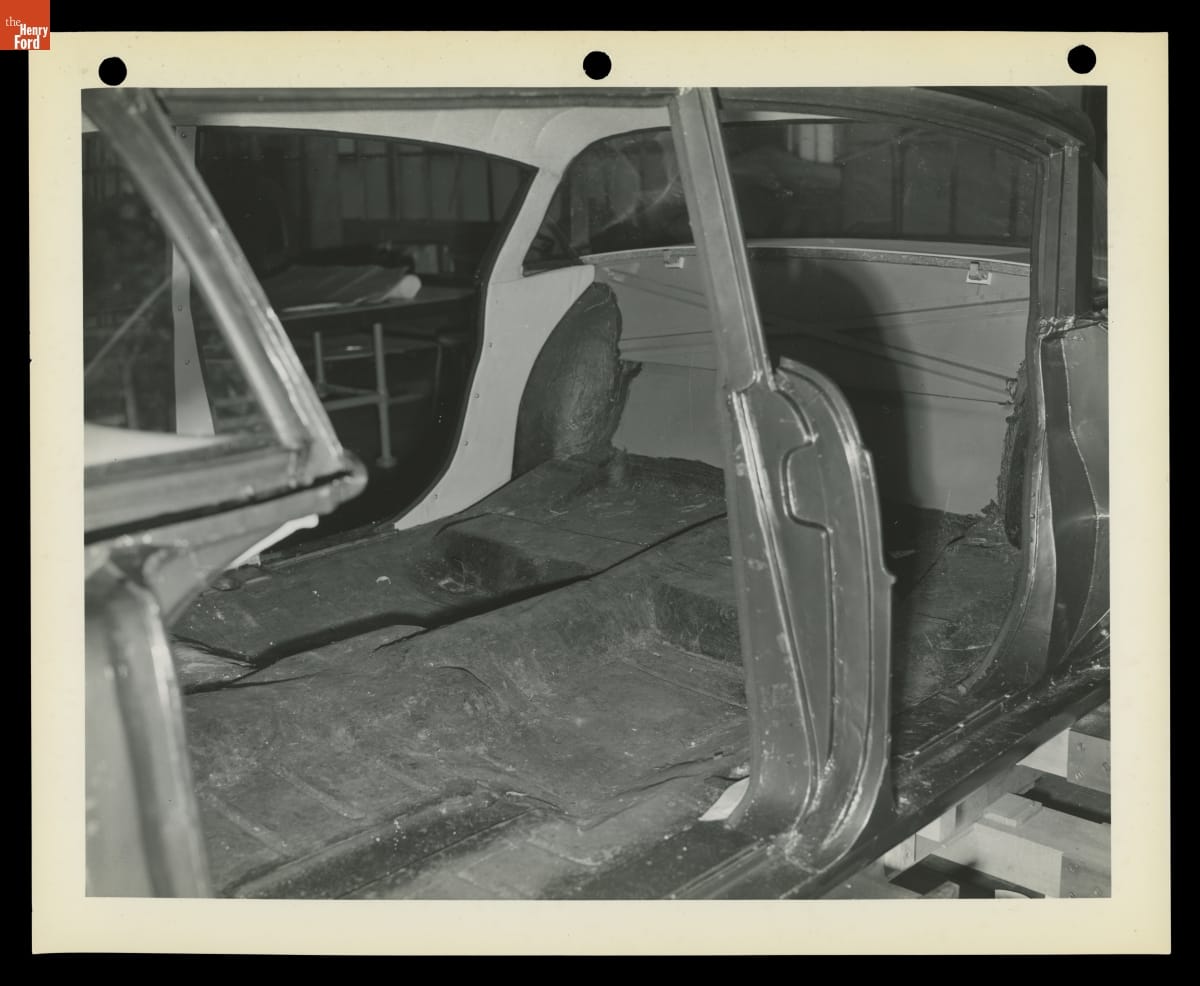
- 1951-1956
- Collections - Artifact
Pre-Prototype Body Construction, Studebaker-Packard Corporation 57th Series Product Program, 1951-1956
Studebaker and Packard merged in 1954, hoping to solve financial problems at both companies. The new corporation marketed its cars as two distinct brands until 1958, though by 1957 Packard cars were essentially rebadged Studebakers. This photo shows work on the 57th series -- continuing Packard's tradition of series designations rather than model years.
- Pre-Prototype Body Construction, Studebaker-Packard Corporation 57th Series Product Program, 1951-1956 - Studebaker and Packard merged in 1954, hoping to solve financial problems at both companies. The new corporation marketed its cars as two distinct brands until 1958, though by 1957 Packard cars were essentially rebadged Studebakers. This photo shows work on the 57th series -- continuing Packard's tradition of series designations rather than model years.
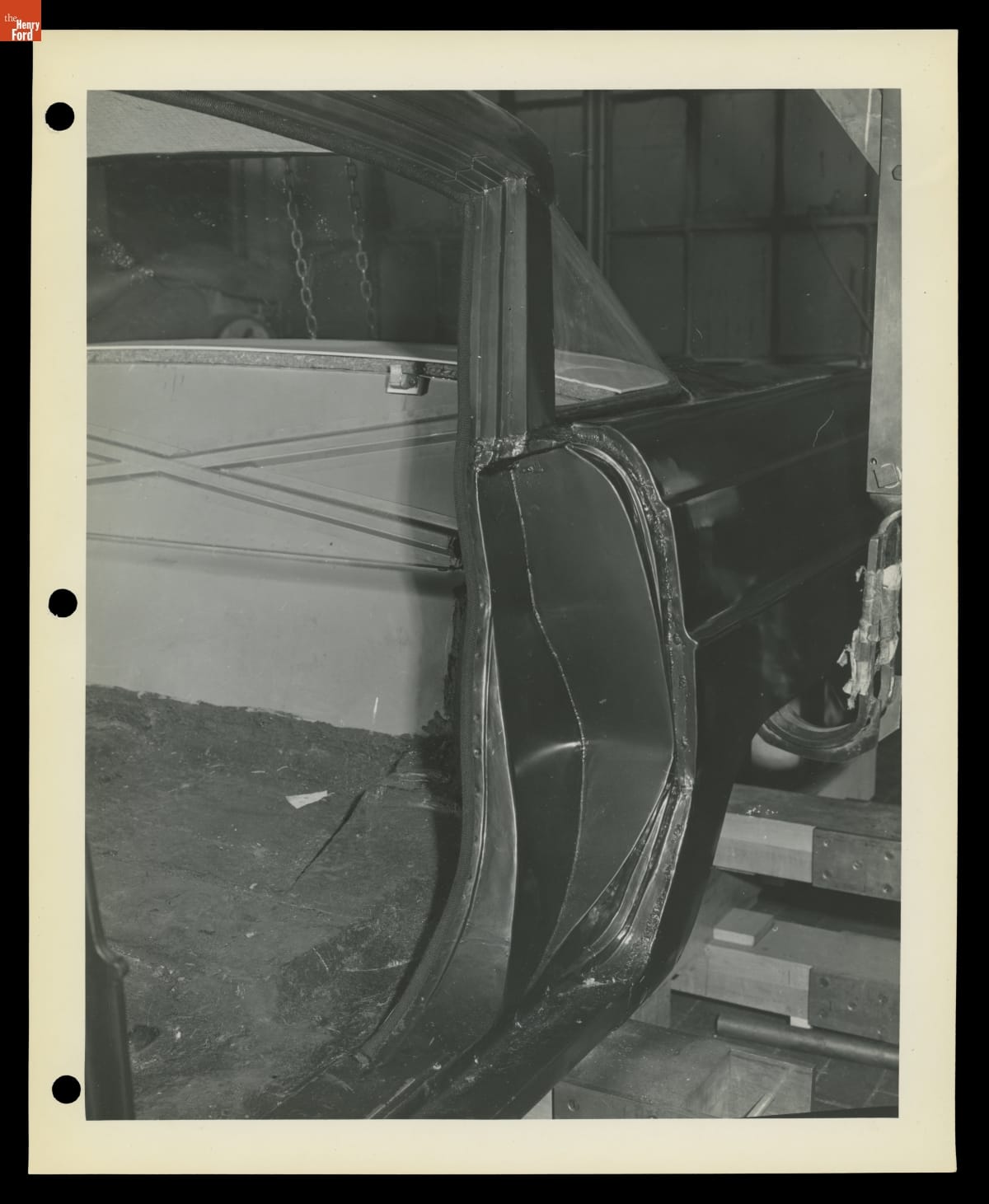
- 1951-1956
- Collections - Artifact
Pre-Prototype Body Construction, Studebaker-Packard Corporation 57th Series Product Program, 1951-1956
Studebaker and Packard merged in 1954, hoping to solve financial problems at both companies. The new corporation marketed its cars as two distinct brands until 1958, though by 1957 Packard cars were essentially rebadged Studebakers. This photo shows work on the 57th series -- continuing Packard's tradition of series designations rather than model years.
- Ford Model T Car Bodies Being Delivered to the Highland Park Plant, 1913-1914 - For many years, Ford Motor Company purchased bodies for its Model T cars from outside suppliers. Ten touring car bodies are on this delivery wagon, with an eleventh on the conveyor in the background. These unpainted and unupholstered bodies were finished at Ford's Highland Park plant. Suppliers included American Body, Briggs Manufacturing, Fisher Body, Milburn Body, and others.
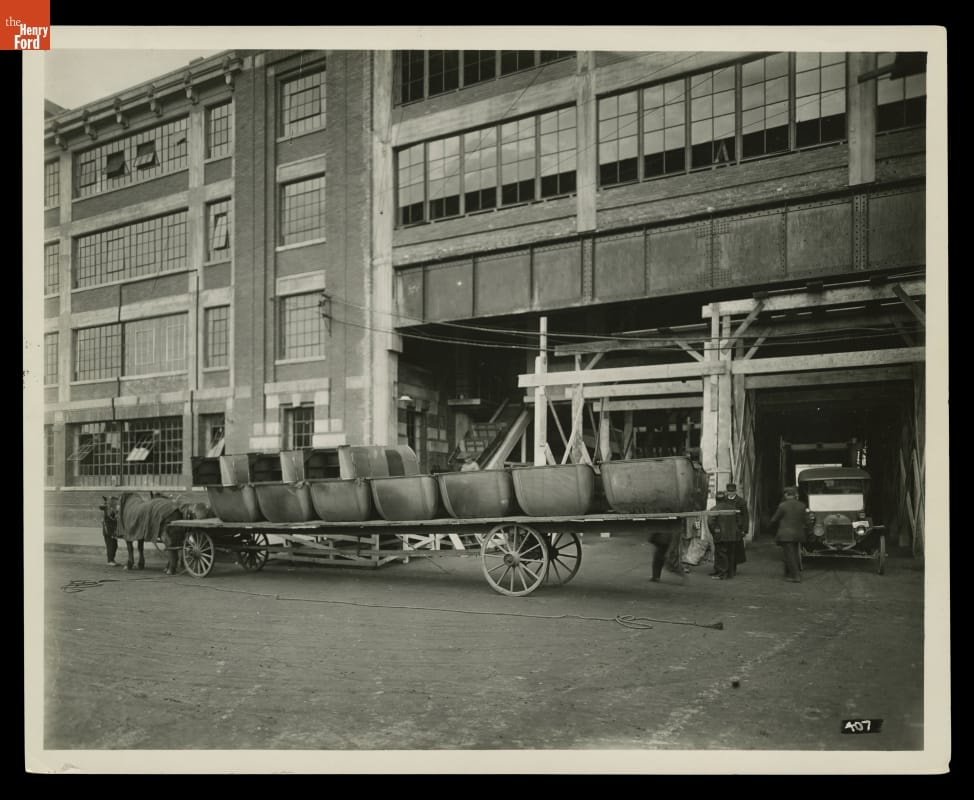
- 1913-1914
- Collections - Artifact
Ford Model T Car Bodies Being Delivered to the Highland Park Plant, 1913-1914
For many years, Ford Motor Company purchased bodies for its Model T cars from outside suppliers. Ten touring car bodies are on this delivery wagon, with an eleventh on the conveyor in the background. These unpainted and unupholstered bodies were finished at Ford's Highland Park plant. Suppliers included American Body, Briggs Manufacturing, Fisher Body, Milburn Body, and others.
- 1961 Lincoln Continental Presidential Limousine, Rebuilding Body during "Quick Fix," 1964 - After President John F. Kennedy's assassination on November 22, 1963, the Hess & Eisenhardt Company of Cincinnati, Ohio, rebuilt the 1961 Lincoln Continental Presidential Limousine into an armored car. Titanium armor, bullet-resistant glass and tires, and a permanent roof improved the president's security. The modified car returned to the White House in May 1964 and remained in service until 1977.
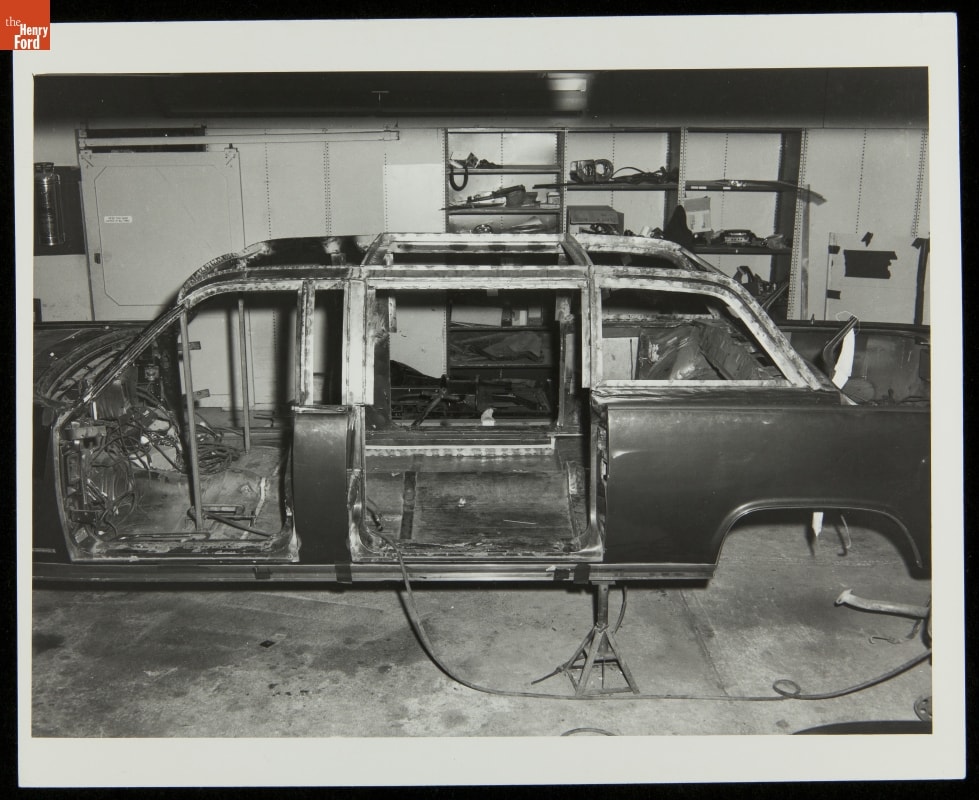
- March 01, 1964
- Collections - Artifact
1961 Lincoln Continental Presidential Limousine, Rebuilding Body during "Quick Fix," 1964
After President John F. Kennedy's assassination on November 22, 1963, the Hess & Eisenhardt Company of Cincinnati, Ohio, rebuilt the 1961 Lincoln Continental Presidential Limousine into an armored car. Titanium armor, bullet-resistant glass and tires, and a permanent roof improved the president's security. The modified car returned to the White House in May 1964 and remained in service until 1977.
- Pre-Prototype Body Construction, Studebaker-Packard Corporation 57th Series Product Program, 1951-1956 - Studebaker and Packard merged in 1954, hoping to solve financial problems at both companies. The new corporation marketed its cars as two distinct brands until 1958, though by 1957 Packard cars were essentially rebadged Studebakers. This photo shows work on the 57th series -- continuing Packard's tradition of series designations rather than model years.
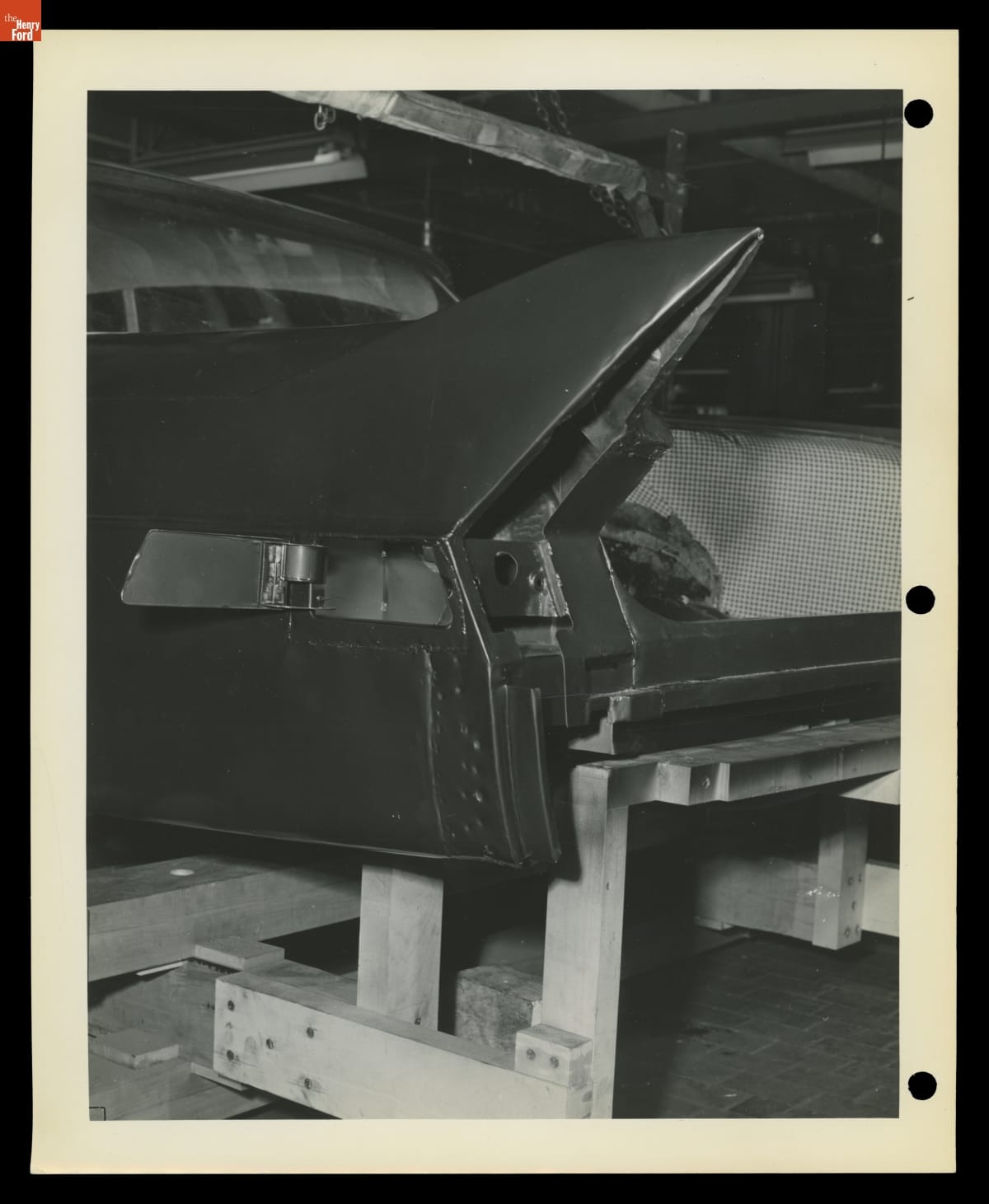
- 1951-1956
- Collections - Artifact
Pre-Prototype Body Construction, Studebaker-Packard Corporation 57th Series Product Program, 1951-1956
Studebaker and Packard merged in 1954, hoping to solve financial problems at both companies. The new corporation marketed its cars as two distinct brands until 1958, though by 1957 Packard cars were essentially rebadged Studebakers. This photo shows work on the 57th series -- continuing Packard's tradition of series designations rather than model years.
- Workers Moving Automobile Bodies at Ford Motor Company Highland Park Plant, 1914 -
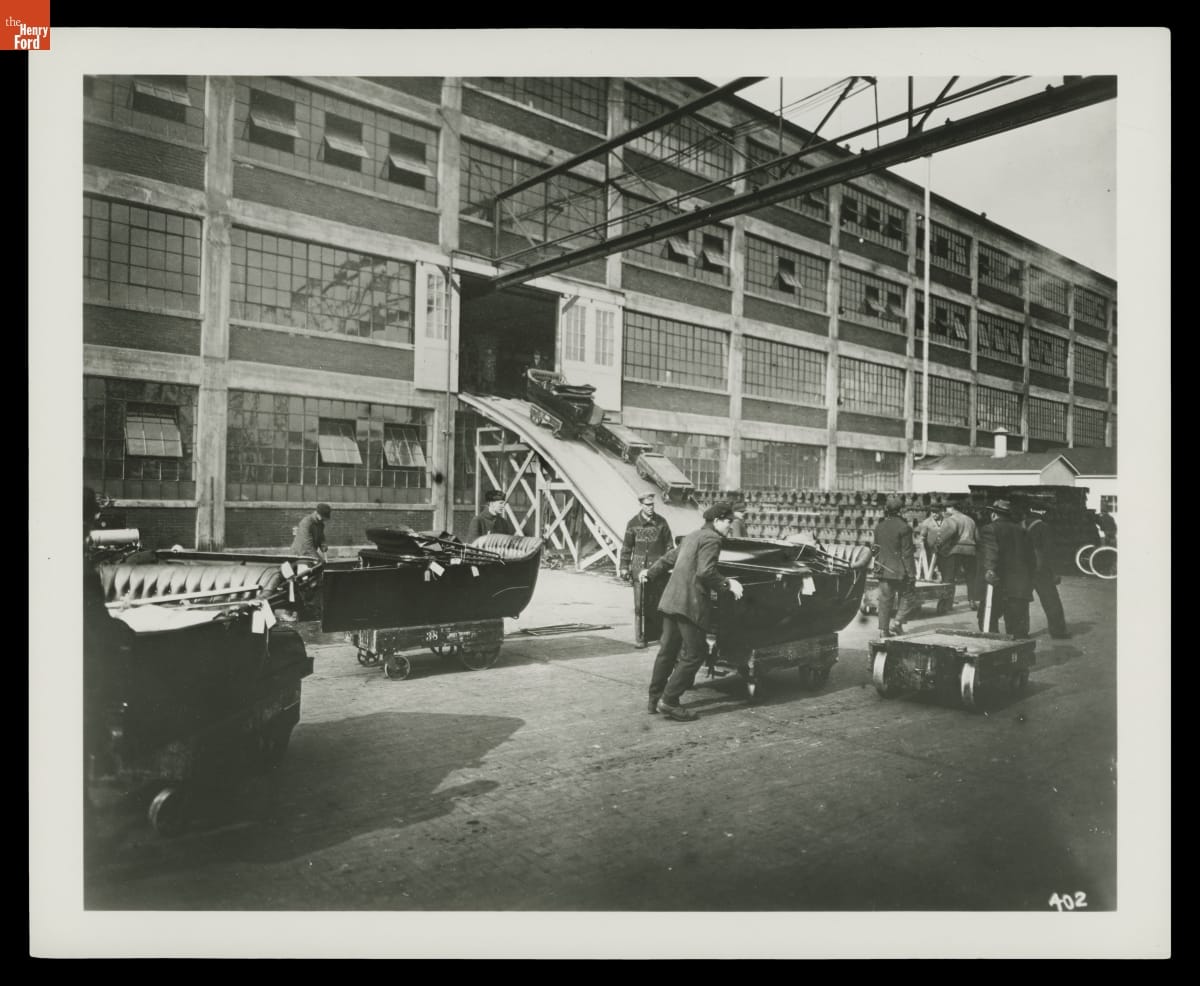
- 1914
- Collections - Artifact
Workers Moving Automobile Bodies at Ford Motor Company Highland Park Plant, 1914