
Search
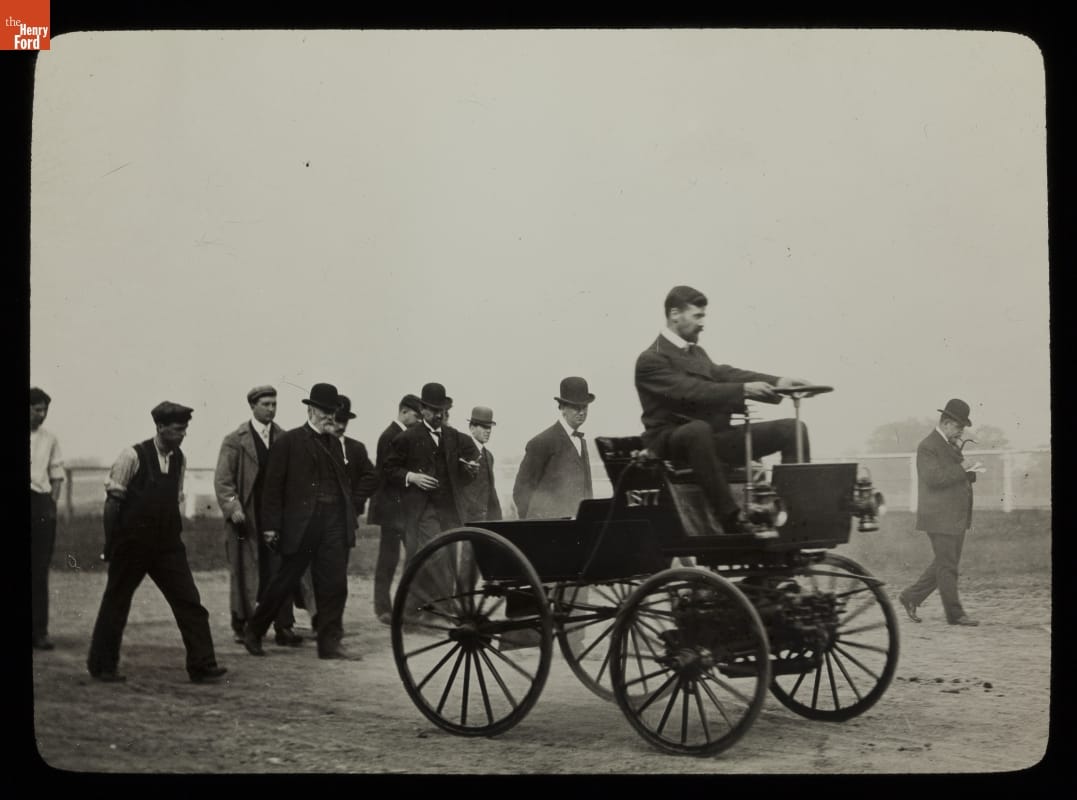
- Driving the Selden Motor Buggy during the Selden Patent Suit - George Selden conceived -- but didn't build -- a self-propelled gasoline-powered vehicle in 1877 and patented the idea in 1895. The Association of Licensed Automobile Manufacturers enforced Selden's patent, but Henry Ford fought ALAM in court. This car was completed for Selden in 1907 as evidence for the legal battle. Ford ultimately won, freeing himself and other automakers from paying royalties to ALAM.
- 1907-1911
- Collections - Artifact
Driving the Selden Motor Buggy during the Selden Patent Suit
George Selden conceived -- but didn't build -- a self-propelled gasoline-powered vehicle in 1877 and patented the idea in 1895. The Association of Licensed Automobile Manufacturers enforced Selden's patent, but Henry Ford fought ALAM in court. This car was completed for Selden in 1907 as evidence for the legal battle. Ford ultimately won, freeing himself and other automakers from paying royalties to ALAM.
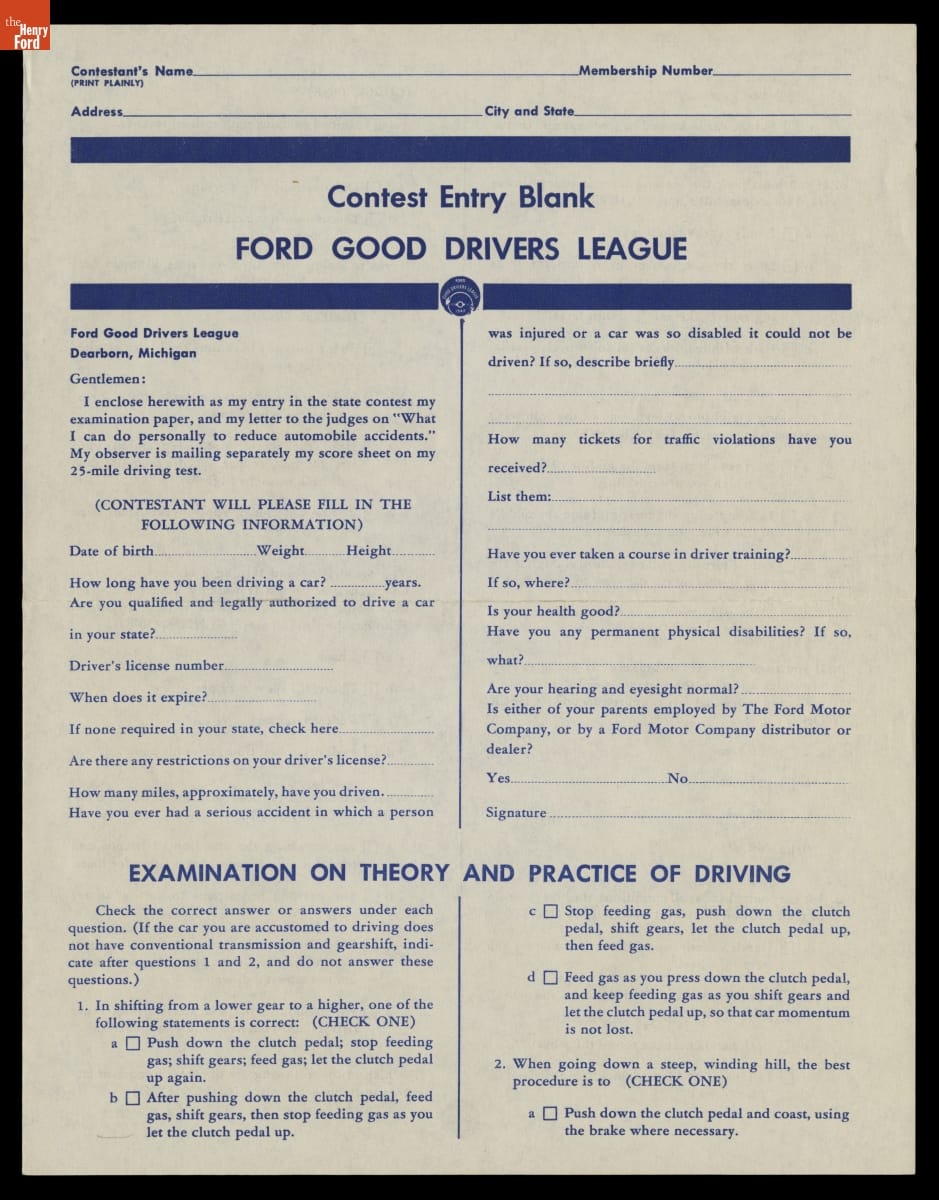
- Ford Good Drivers League Contest Entry Blank, April 1940 - Ford Motor Company created the Good Drivers League in 1940. Headed by Edsel Ford, the League promoted safe driving habits among high school students. The League initially invited boys to compete in state and national championships--girls would join in 1941. Contestants wrote essays and participated in driving tests. National champions won trophies and scholarships. America's entry into World War II ended the program.
- April 01, 1940
- Collections - Artifact
Ford Good Drivers League Contest Entry Blank, April 1940
Ford Motor Company created the Good Drivers League in 1940. Headed by Edsel Ford, the League promoted safe driving habits among high school students. The League initially invited boys to compete in state and national championships--girls would join in 1941. Contestants wrote essays and participated in driving tests. National champions won trophies and scholarships. America's entry into World War II ended the program.
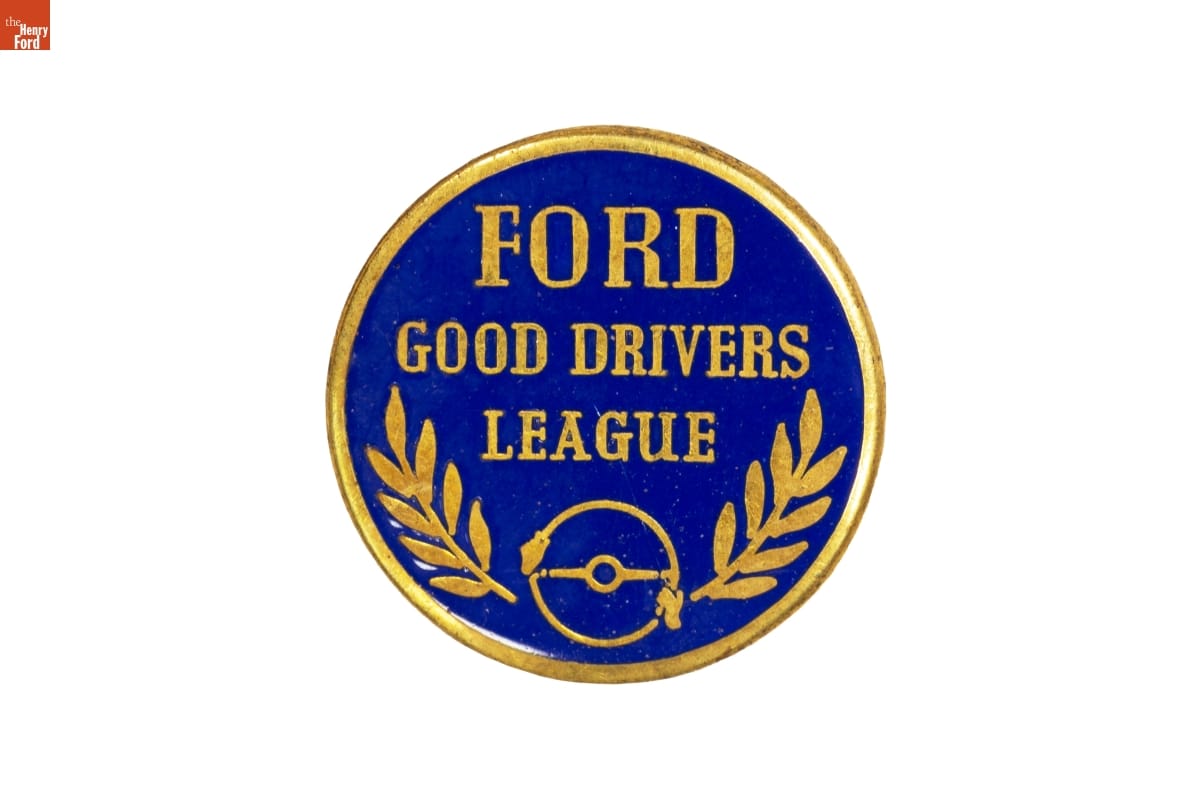
- "Ford Good Drivers League" Pin, 1940-1942 - Ford Motor Company created the Good Drivers League in 1940. Headed by Edsel Ford, the League promoted safe driving habits among high school students. The League initially invited boys to compete in state and national championships--girls would join in 1941. Contestants wrote essays and participated in driving tests. National champions won trophies and scholarships. America's entry into World War II ended the program.
- 1940-1942
- Collections - Artifact
"Ford Good Drivers League" Pin, 1940-1942
Ford Motor Company created the Good Drivers League in 1940. Headed by Edsel Ford, the League promoted safe driving habits among high school students. The League initially invited boys to compete in state and national championships--girls would join in 1941. Contestants wrote essays and participated in driving tests. National champions won trophies and scholarships. America's entry into World War II ended the program.
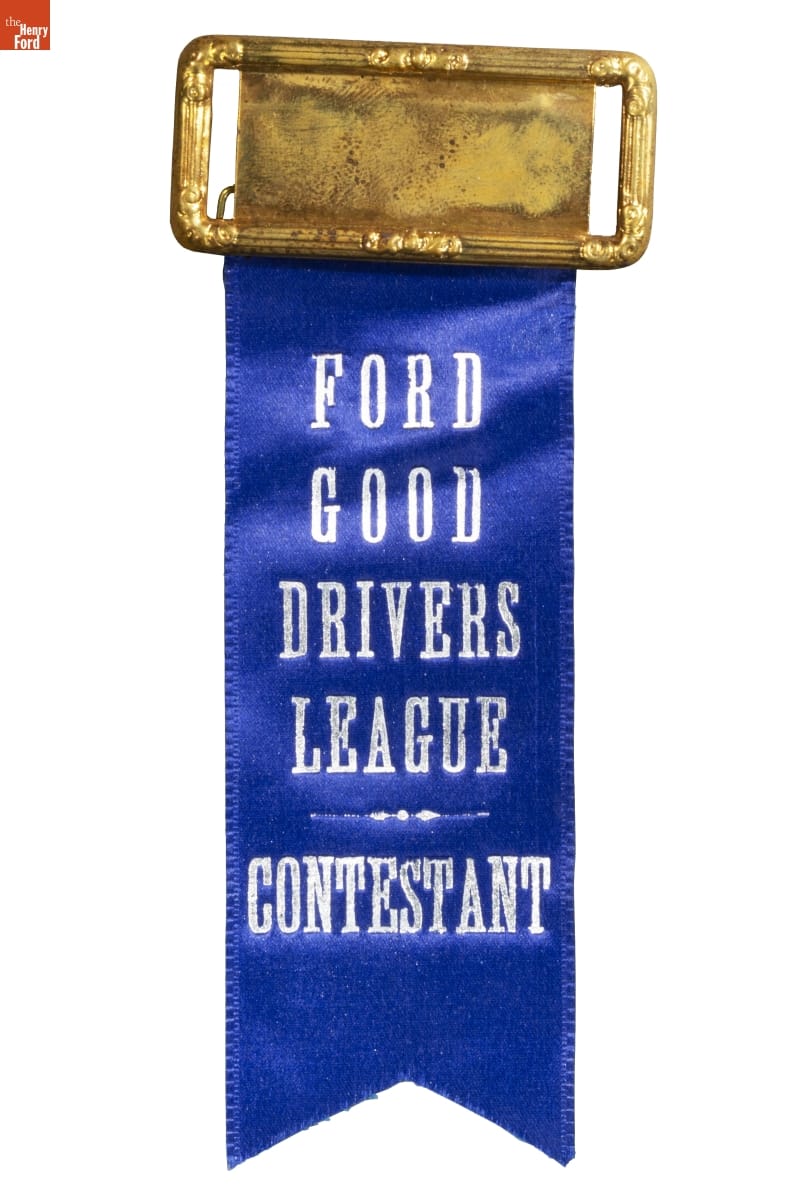
- Ford Good Drivers League "Contestant" Badge, 1940-1942 - Ford Motor Company created the Good Drivers League in 1940. Headed by Edsel Ford, the League promoted safe driving habits among high school students. The League initially invited boys to compete in state and national championships--girls would join in 1941. Contestants wrote essays and participated in driving tests. National champions won trophies and scholarships. America's entry into World War II ended the program.
- 1940-1942
- Collections - Artifact
Ford Good Drivers League "Contestant" Badge, 1940-1942
Ford Motor Company created the Good Drivers League in 1940. Headed by Edsel Ford, the League promoted safe driving habits among high school students. The League initially invited boys to compete in state and national championships--girls would join in 1941. Contestants wrote essays and participated in driving tests. National champions won trophies and scholarships. America's entry into World War II ended the program.
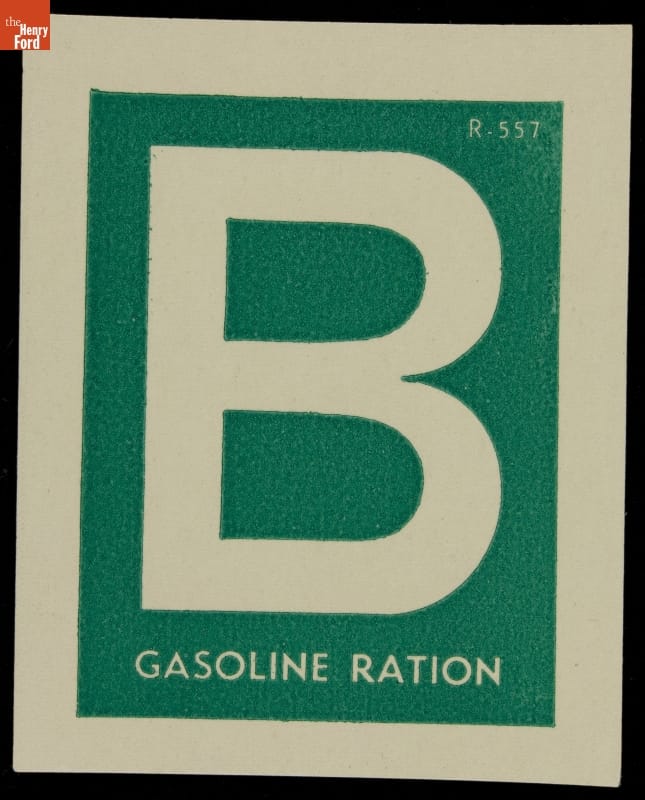
- World War II Gasoline Rationing Sticker, Series "B," 1941-1945 - The amount of gasoline you received during World War II depended on whether your job was essential to the war effort. Drivers received a windshield sticker and ration coupons for gasoline. Essential war workers received "B" stickers, like this one, allowing them up to eight gallons of gasoline a week.
- 1941-1945
- Collections - Artifact
World War II Gasoline Rationing Sticker, Series "B," 1941-1945
The amount of gasoline you received during World War II depended on whether your job was essential to the war effort. Drivers received a windshield sticker and ration coupons for gasoline. Essential war workers received "B" stickers, like this one, allowing them up to eight gallons of gasoline a week.
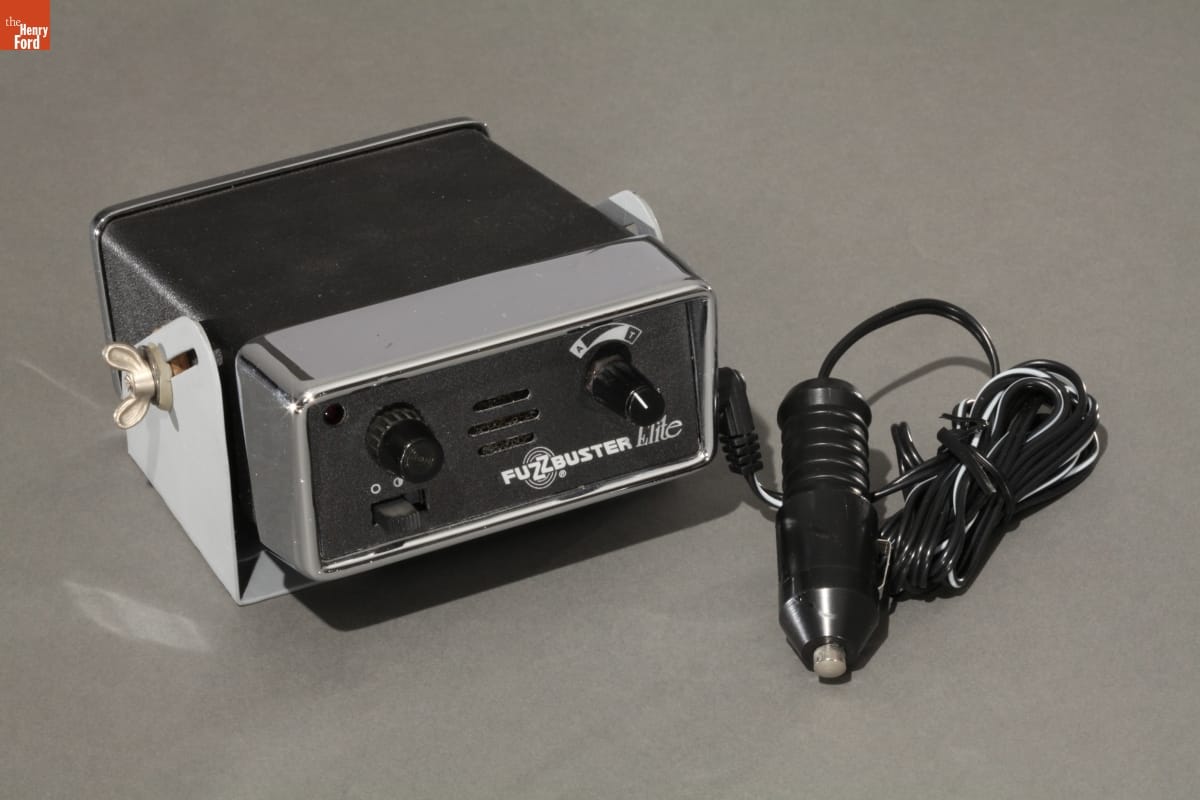
- Fuzzbuster Elite Radar Detector, 1979-1980 - This Fuzzbuster Elite helped motorists detect police radar as they sped down America's highways. The original Fuzzbuster had been around since the late 1960s and its name has become synonymous for police radar detectors. Radar detectors caught on when the 1970s energy crisis led to a nationwide 55-mph speed limit to reduce gasoline consumption.
- 1979-1980
- Collections - Artifact
Fuzzbuster Elite Radar Detector, 1979-1980
This Fuzzbuster Elite helped motorists detect police radar as they sped down America's highways. The original Fuzzbuster had been around since the late 1960s and its name has become synonymous for police radar detectors. Radar detectors caught on when the 1970s energy crisis led to a nationwide 55-mph speed limit to reduce gasoline consumption.
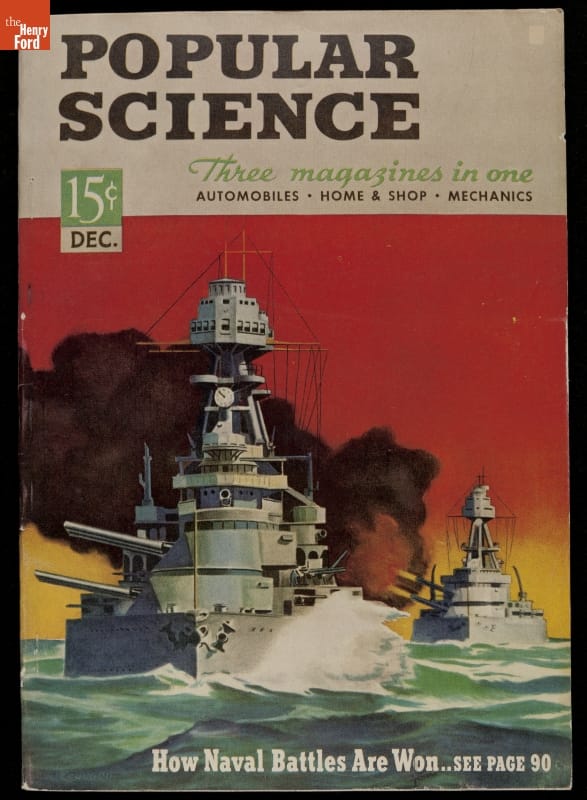
- "Popular Science," December 1940 - <EM>Popular Science</EM> provided information about scientific and technological advancements. In the early 1900s articles about the automobile -- and its driver -- became commonplace in the monthly's pages. In this December 1940 issue, readers learned about new car models, gained maintenance and safety tips, and discovered how drivers cope with 'traffic jitters.'
- December 01, 1940
- Collections - Artifact
"Popular Science," December 1940
Popular Science provided information about scientific and technological advancements. In the early 1900s articles about the automobile -- and its driver -- became commonplace in the monthly's pages. In this December 1940 issue, readers learned about new car models, gained maintenance and safety tips, and discovered how drivers cope with 'traffic jitters.'
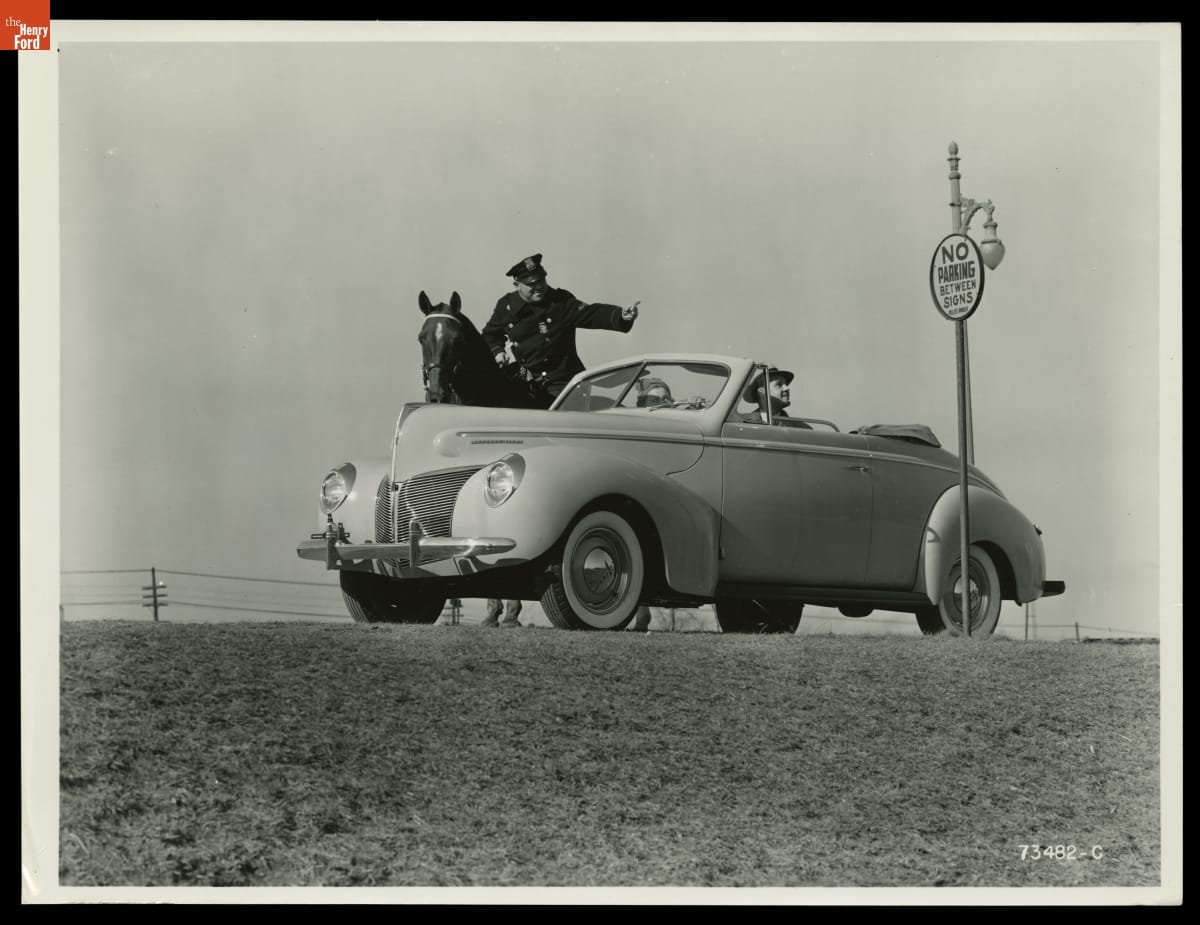
- Police Officer on Horseback Showing a Driver the "No Parking" Sign on a Lamp Post, April 1940 - Ford Motor Company launched its Mercury line for 1939. The medium-priced car fit neatly between the basic Ford and the upmarket Lincoln. Ford promoted Mercury as a larger car that was economical to operate. The 1940 model seen here featured a 116-inch wheelbase -- four inches longer than a comparable Ford -- and fuel economy of up to 20 miles per gallon.
- April 01, 1940
- Collections - Artifact
Police Officer on Horseback Showing a Driver the "No Parking" Sign on a Lamp Post, April 1940
Ford Motor Company launched its Mercury line for 1939. The medium-priced car fit neatly between the basic Ford and the upmarket Lincoln. Ford promoted Mercury as a larger car that was economical to operate. The 1940 model seen here featured a 116-inch wheelbase -- four inches longer than a comparable Ford -- and fuel economy of up to 20 miles per gallon.
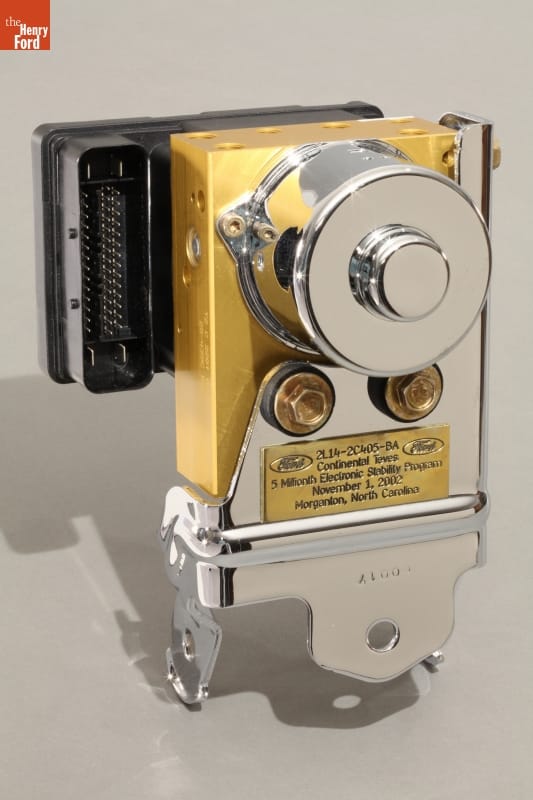
- Continental Teves' Five-millionth Electronic Stability Control Module, 2002 - Modern cars contain electronic devices and microprocessors to help drivers safely operate their vehicles. One such device is an electronic stability program unit. The unit uses computers, sensors and other car safety features to help control the car though sudden turns and stops, and to help prevent rollovers. Continental Teves, Inc., manufactured this five-millionth module in 2002.
- November 01, 2002
- Collections - Artifact
Continental Teves' Five-millionth Electronic Stability Control Module, 2002
Modern cars contain electronic devices and microprocessors to help drivers safely operate their vehicles. One such device is an electronic stability program unit. The unit uses computers, sensors and other car safety features to help control the car though sudden turns and stops, and to help prevent rollovers. Continental Teves, Inc., manufactured this five-millionth module in 2002.
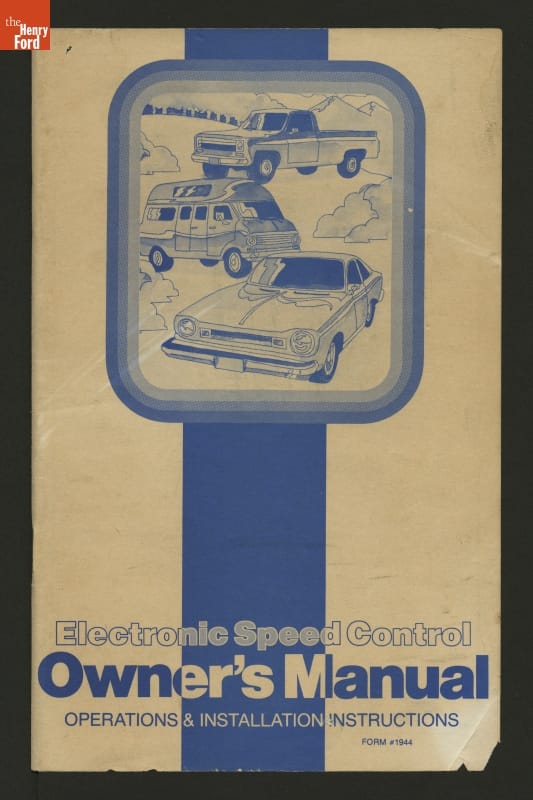
- Owner's Manual for Electronic Speed Control, 1979 - Modern cruise control devices were first offered on high-end automobiles in the late 1950s. Later, aftermarket devices became available. This manual for a 1979 Speedostat provided installation and operating instructions for the motorist.
- 1979
- Collections - Artifact
Owner's Manual for Electronic Speed Control, 1979
Modern cruise control devices were first offered on high-end automobiles in the late 1950s. Later, aftermarket devices became available. This manual for a 1979 Speedostat provided installation and operating instructions for the motorist.