
Search
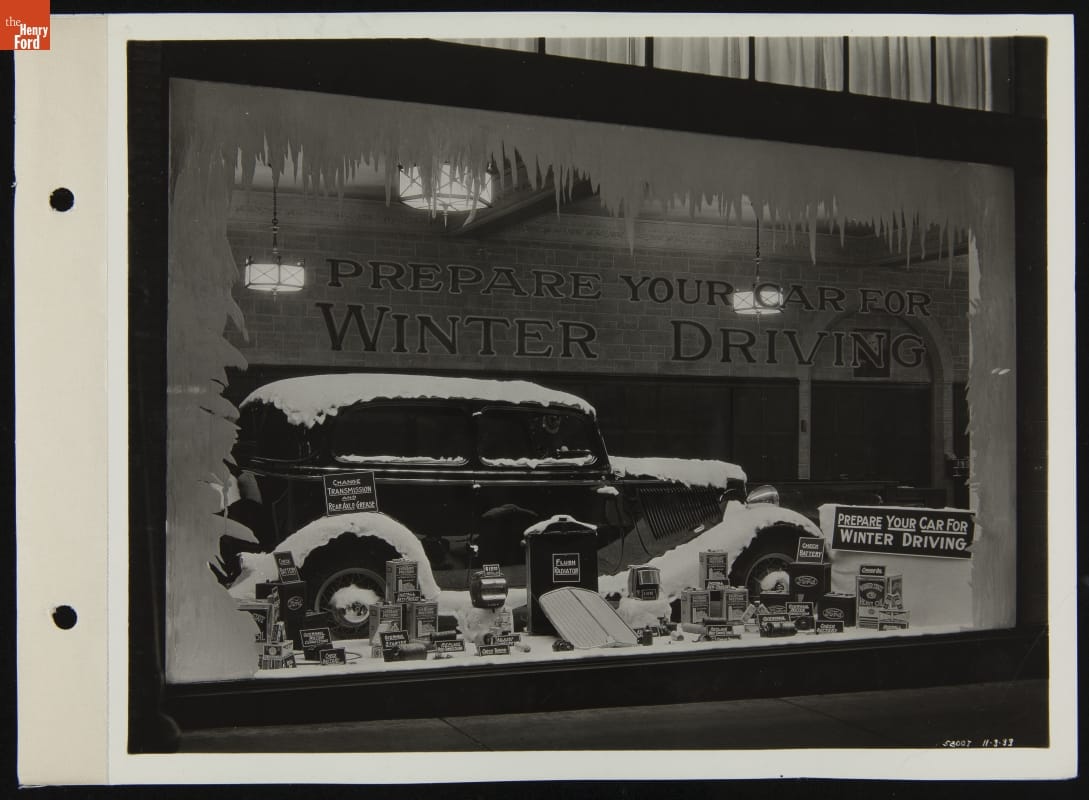
- "Winter Driving" Window Display at Stark Hickey Ford Dealership, Detroit, Michigan, November 1933 - Ford Motor Company offered a variety of accessories for its cars, trucks and engines in the 1930s. Some improved performance and economy, others added comfort and convenience, and some simply enhanced a vehicle's appearance. Wintertime advertisements and displays suggested Ford accessories as holiday gifts or emphasized items useful for cold-weather driving.
- November 03, 1933
- Collections - Artifact
"Winter Driving" Window Display at Stark Hickey Ford Dealership, Detroit, Michigan, November 1933
Ford Motor Company offered a variety of accessories for its cars, trucks and engines in the 1930s. Some improved performance and economy, others added comfort and convenience, and some simply enhanced a vehicle's appearance. Wintertime advertisements and displays suggested Ford accessories as holiday gifts or emphasized items useful for cold-weather driving.
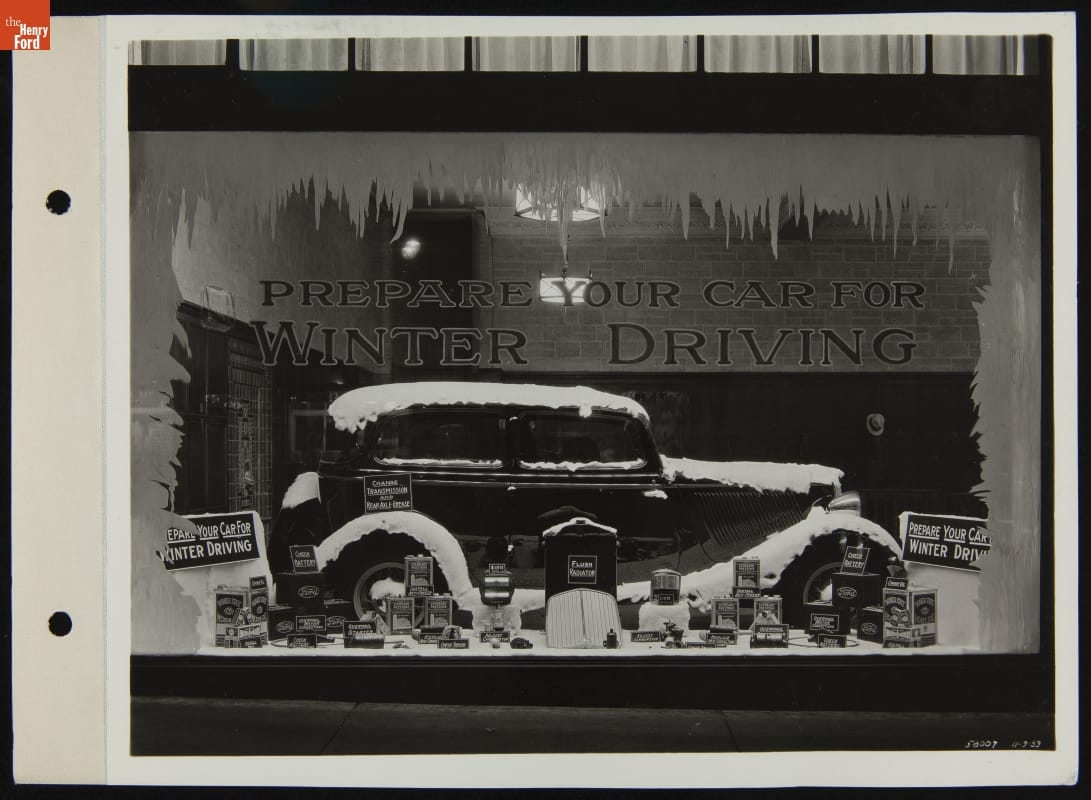
- "Winter Driving" Window Display at Stark Hickey Ford Dealership, Detroit, Michigan, November 1933 - Ford Motor Company offered a variety of accessories for its cars, trucks and engines in the 1930s. Some improved performance and economy, others added comfort and convenience, and some simply enhanced a vehicle's appearance. Wintertime advertisements and displays suggested Ford accessories as holiday gifts or emphasized items useful for cold-weather driving.
- November 03, 1933
- Collections - Artifact
"Winter Driving" Window Display at Stark Hickey Ford Dealership, Detroit, Michigan, November 1933
Ford Motor Company offered a variety of accessories for its cars, trucks and engines in the 1930s. Some improved performance and economy, others added comfort and convenience, and some simply enhanced a vehicle's appearance. Wintertime advertisements and displays suggested Ford accessories as holiday gifts or emphasized items useful for cold-weather driving.
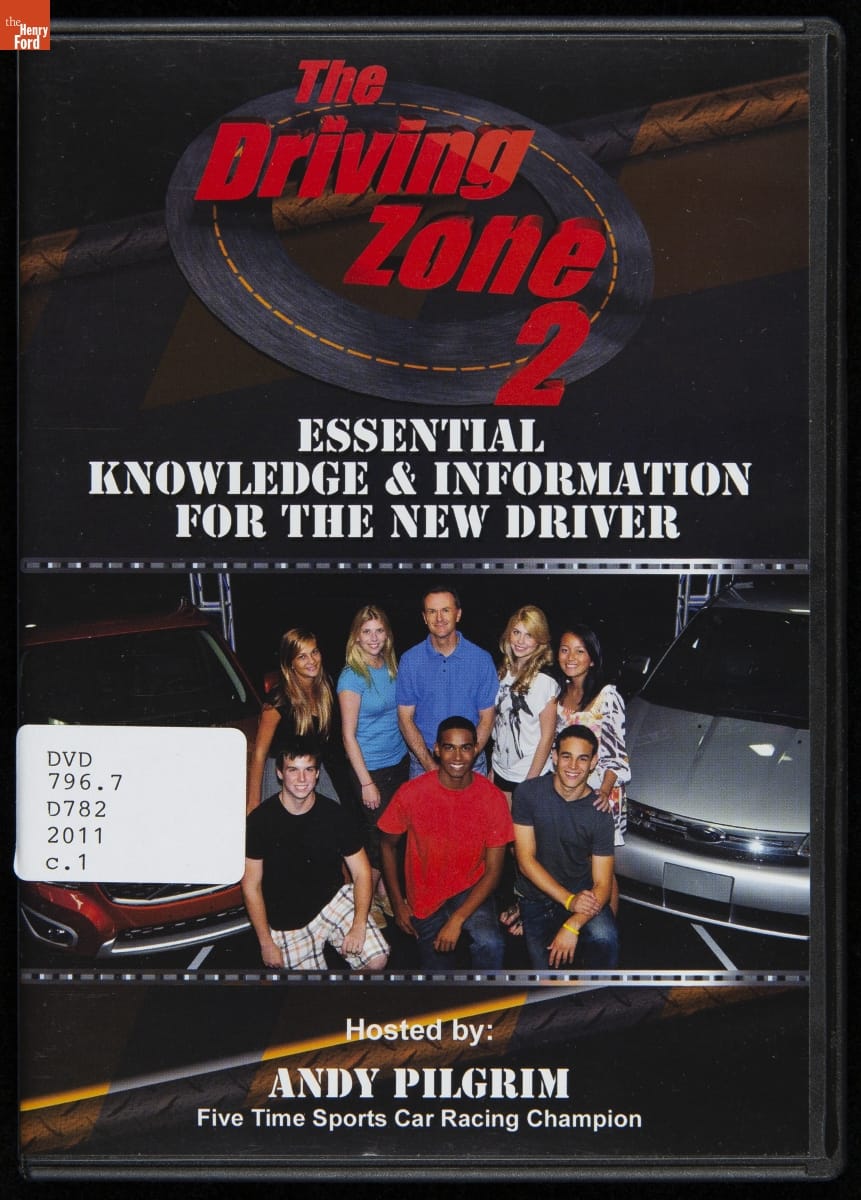
- The Driving Zone 2: Essential Knowledge & Information for the New Driver, 2011 - Andy Pilgrim earned more than 80 wins in professional racing series over a four-decade career. In the mid-1990s, he began speaking to high school students about the dangers of distracted driving. Pilgrim established the Traffic Safety Education Foundation, which encouraged safe driving through DVDs and public service announcements provided to school districts across the United States.
- 2011
- Collections - Artifact
The Driving Zone 2: Essential Knowledge & Information for the New Driver, 2011
Andy Pilgrim earned more than 80 wins in professional racing series over a four-decade career. In the mid-1990s, he began speaking to high school students about the dangers of distracted driving. Pilgrim established the Traffic Safety Education Foundation, which encouraged safe driving through DVDs and public service announcements provided to school districts across the United States.
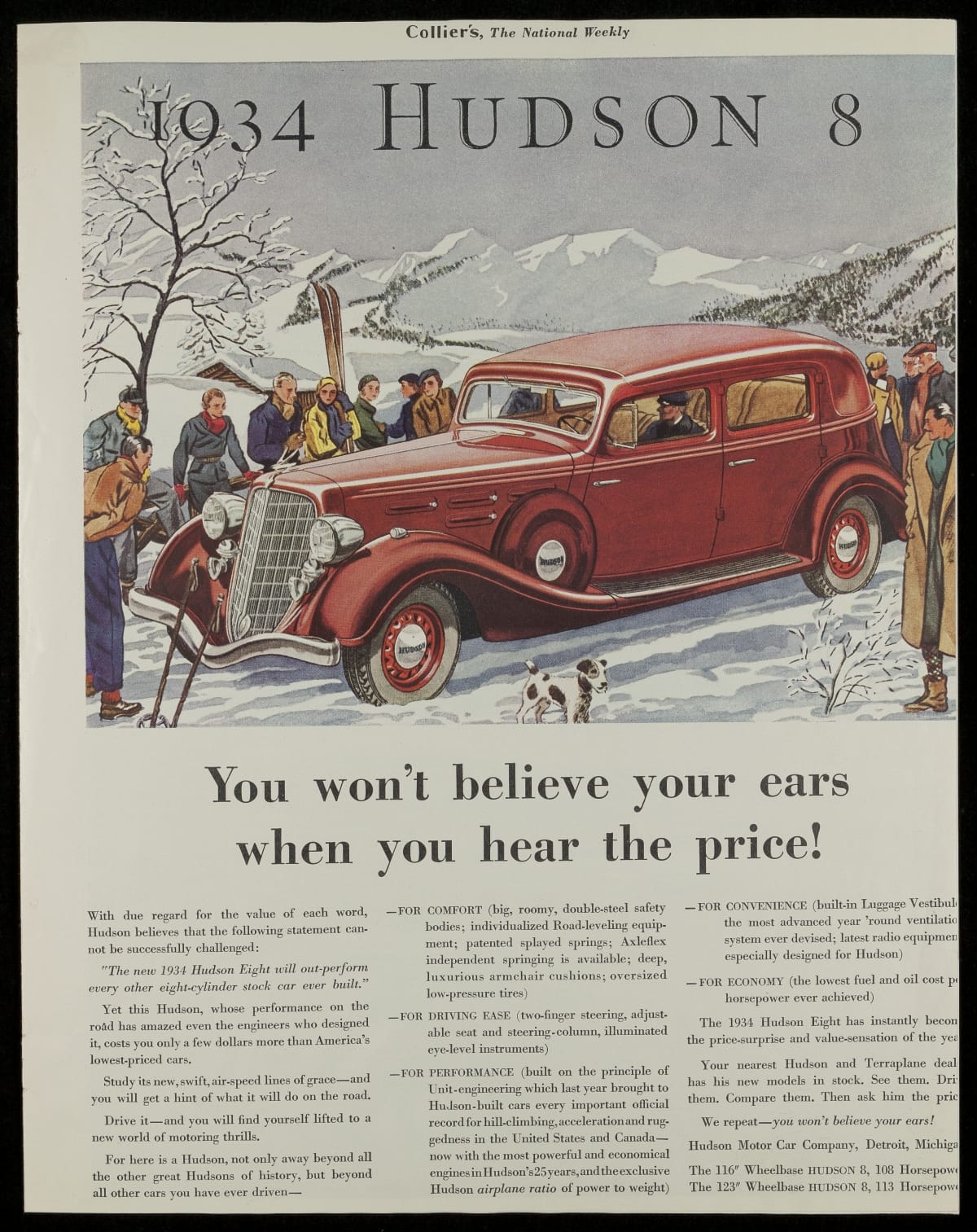
- 1934 Hudson 8 "You Won't Believe Your Ears When You Hear The Price!" - Hudson's 1934 models featured new styling accented by wide fenders, long hoods, and -- on sedan and coach models -- space inside the body to store the spare tire. Hudson that year offered eight-cylinder cars, in standard and deluxe trims, on 116-inch and 123-inch wheelbases. The company's total production in 1934 was somewhere around 27,000 cars.
- 1934
- Collections - Artifact
1934 Hudson 8 "You Won't Believe Your Ears When You Hear The Price!"
Hudson's 1934 models featured new styling accented by wide fenders, long hoods, and -- on sedan and coach models -- space inside the body to store the spare tire. Hudson that year offered eight-cylinder cars, in standard and deluxe trims, on 116-inch and 123-inch wheelbases. The company's total production in 1934 was somewhere around 27,000 cars.
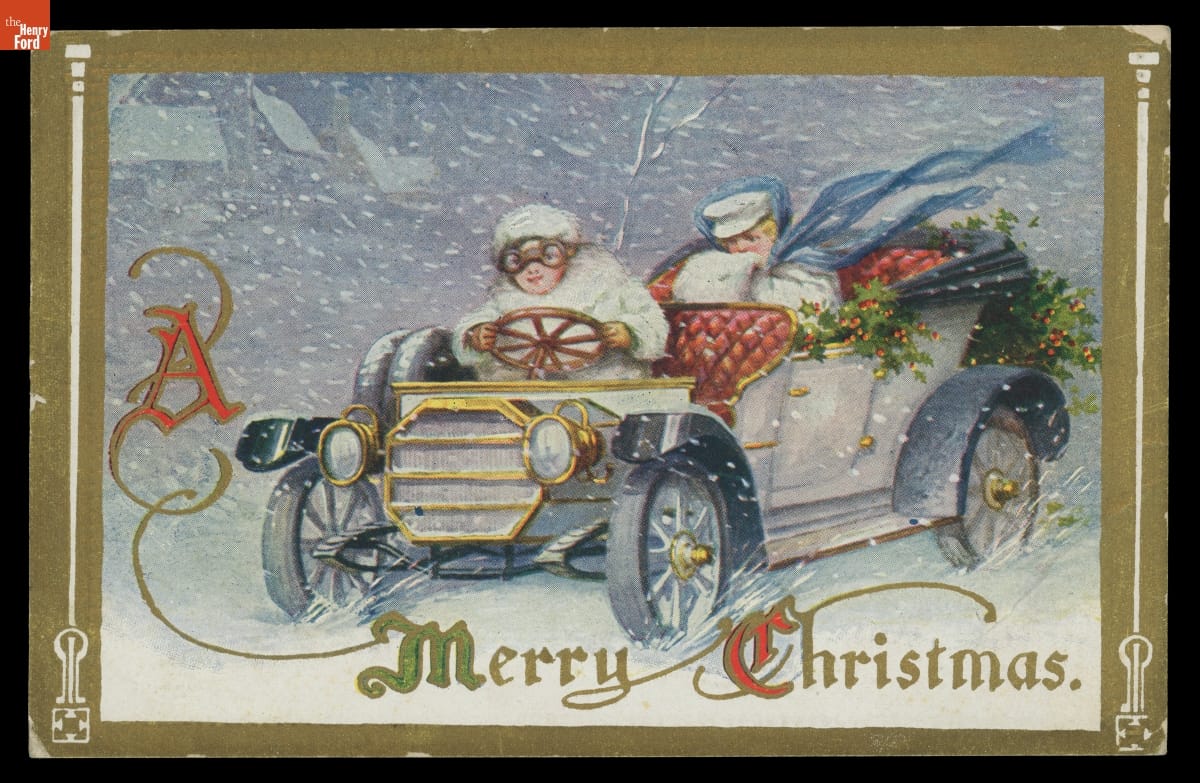
- "A Merry Christmas," 1910 - Mailing colorful, commercially designed greeting cards was a 20th-century American tradition. During the holidays, friends and neighbors commonly exchanged cards wishing the recipient a merry Christmas or happy New Year. Sometimes, as with this example, holiday cards combined seasonal decoration with contemporary, non-traditional imagery.
- December 18, 1910
- Collections - Artifact
"A Merry Christmas," 1910
Mailing colorful, commercially designed greeting cards was a 20th-century American tradition. During the holidays, friends and neighbors commonly exchanged cards wishing the recipient a merry Christmas or happy New Year. Sometimes, as with this example, holiday cards combined seasonal decoration with contemporary, non-traditional imagery.
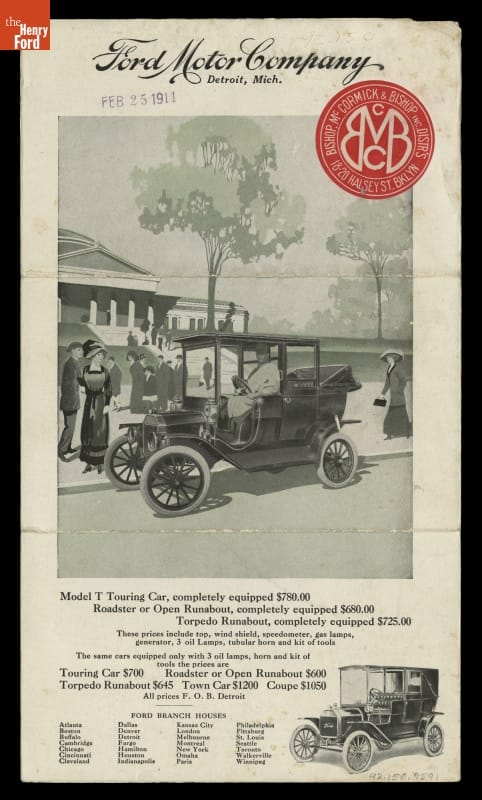
- 1911 Ford Model T Sales Leaflet, "Ford Motor Cars: The Good Car for Bad Roads" - This 1911 advertising brochure illustrates the dependability of the Ford Model T to potential customers. It reproduces photographs sent by Model T owners from across the United States, showing the car being driven in bad weather and rough roads. Considering the poor state of American roads in the early days of its production, the Model T's reliability was no small advantage. Early ads for the Model T all emphasized the car's capacity to absorb shock, thanks to its innovative features -high ground clearance, strong Vanadium steel and a flexible chassis.
- 1911
- Collections - Artifact
1911 Ford Model T Sales Leaflet, "Ford Motor Cars: The Good Car for Bad Roads"
This 1911 advertising brochure illustrates the dependability of the Ford Model T to potential customers. It reproduces photographs sent by Model T owners from across the United States, showing the car being driven in bad weather and rough roads. Considering the poor state of American roads in the early days of its production, the Model T's reliability was no small advantage. Early ads for the Model T all emphasized the car's capacity to absorb shock, thanks to its innovative features -high ground clearance, strong Vanadium steel and a flexible chassis.
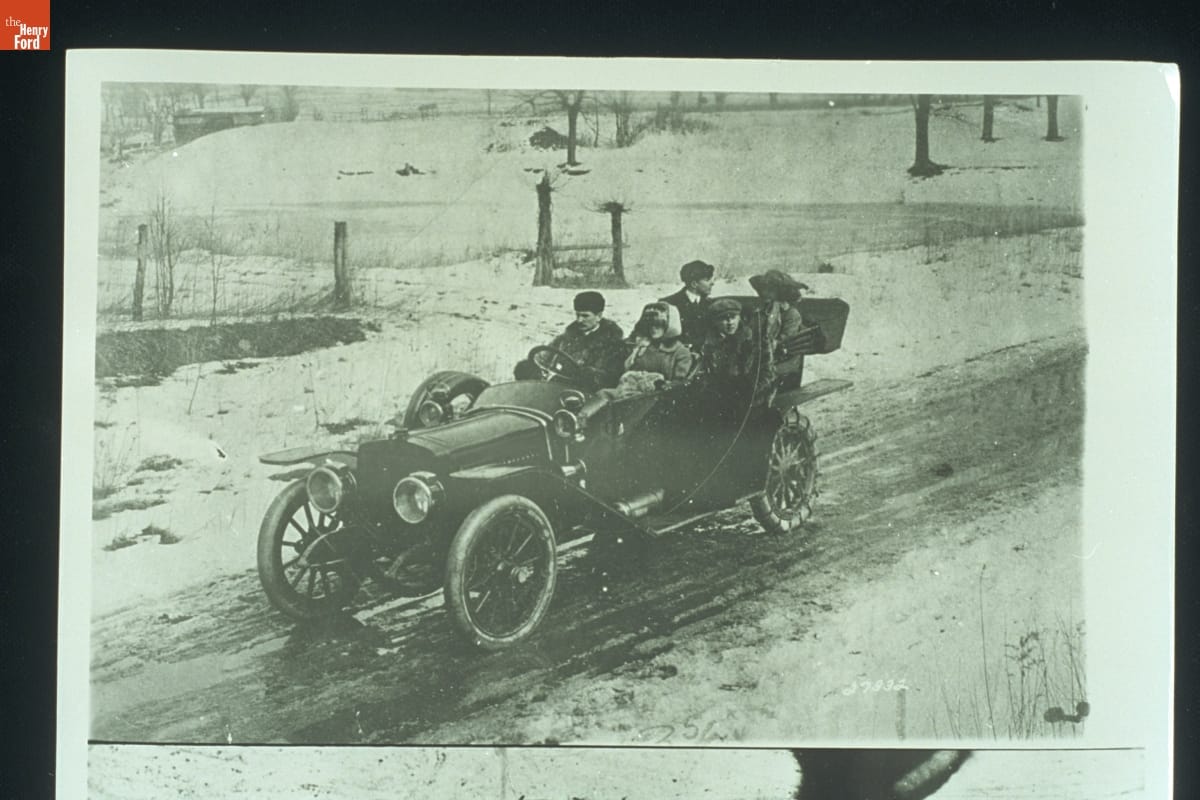
- Driving on Winter Roads, circa 1915 - Early motorists tended to avoid wintertime driving, especially in rural areas where roads were poor even in warm weather. But some adventurous drivers refused to be intimidated by cold and snow. Chains on the tires improved a car's traction in icy conditions, but using an open automobile in winter still required warm clothing and steely determination.
- circa 1915
- Collections - Artifact
Driving on Winter Roads, circa 1915
Early motorists tended to avoid wintertime driving, especially in rural areas where roads were poor even in warm weather. But some adventurous drivers refused to be intimidated by cold and snow. Chains on the tires improved a car's traction in icy conditions, but using an open automobile in winter still required warm clothing and steely determination.
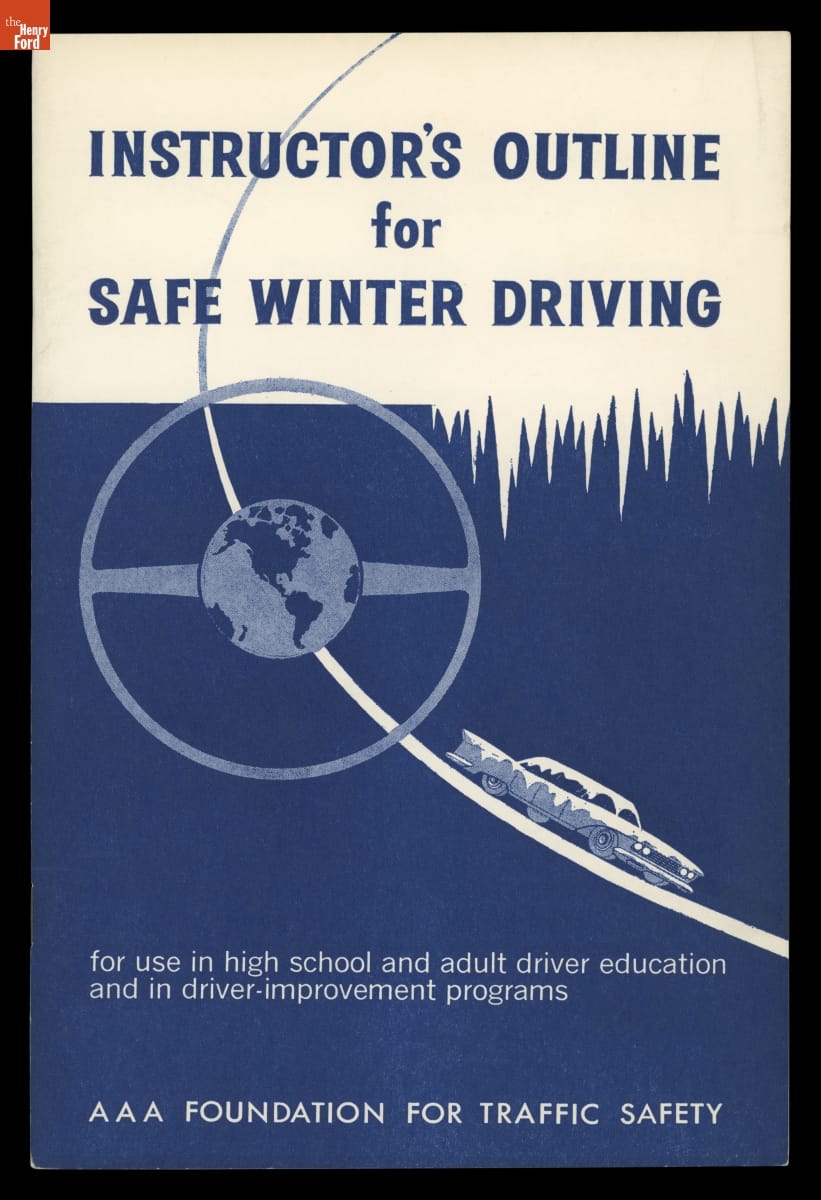
- Instructor's Outline for Safe Winter Driving, 1960 - This textbook doesn't teach driver education -- it teaches how to teach driver education. It was written as a supplement to the instructor's outline for <em>Sportsmanlike Driving</em>, a widely used text in American high schools. Winter driving brings its own set of challenges, and the authors at the American Automobile Association were eager to keep new drivers safe.
- 1960
- Collections - Artifact
Instructor's Outline for Safe Winter Driving, 1960
This textbook doesn't teach driver education -- it teaches how to teach driver education. It was written as a supplement to the instructor's outline for Sportsmanlike Driving, a widely used text in American high schools. Winter driving brings its own set of challenges, and the authors at the American Automobile Association were eager to keep new drivers safe.
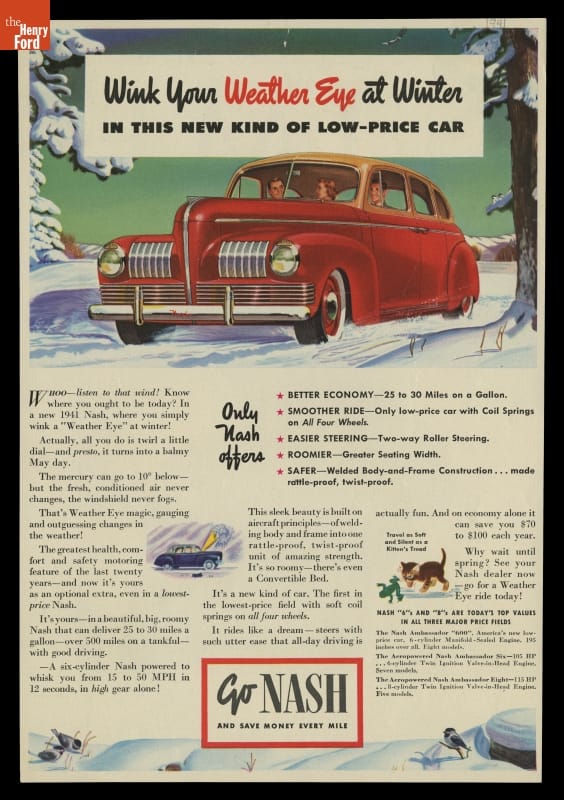
- 1941 Nash Advertisement, "Wink Your Weather Eye at Winter in This New Kind of Low-Price Car" - In 1916, Charles W. Nash founded Nash Motors Company in Kenosha, Wisconsin, focusing on mid-priced vehicles. The company absorbed several Wisconsin-based automobile firms in the 1920s and later merged with refrigerator manufacturer Kelvinator. Nash-Kelvinator Corporation merged with Hudson Motor Car Company to create American Motors Company in 1954. The Nash brand was phased out in 1957.
- January 20, 1941
- Collections - Artifact
1941 Nash Advertisement, "Wink Your Weather Eye at Winter in This New Kind of Low-Price Car"
In 1916, Charles W. Nash founded Nash Motors Company in Kenosha, Wisconsin, focusing on mid-priced vehicles. The company absorbed several Wisconsin-based automobile firms in the 1920s and later merged with refrigerator manufacturer Kelvinator. Nash-Kelvinator Corporation merged with Hudson Motor Car Company to create American Motors Company in 1954. The Nash brand was phased out in 1957.
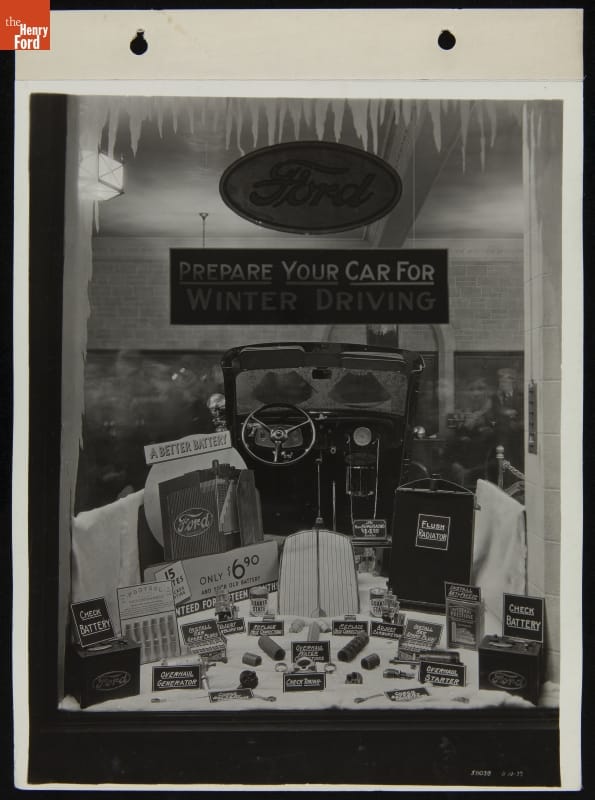
- "Winter Driving" Window Display at Stark Hickey Ford Dealership, Detroit, Michigan, November 1933 - Ford Motor Company offered a variety of accessories for its cars, trucks and engines in the 1930s. Some improved performance and economy, others added comfort and convenience, and some simply enhanced a vehicle's appearance. Wintertime advertisements and displays suggested Ford accessories as holiday gifts or emphasized items useful for cold-weather driving.
- November 10, 1933
- Collections - Artifact
"Winter Driving" Window Display at Stark Hickey Ford Dealership, Detroit, Michigan, November 1933
Ford Motor Company offered a variety of accessories for its cars, trucks and engines in the 1930s. Some improved performance and economy, others added comfort and convenience, and some simply enhanced a vehicle's appearance. Wintertime advertisements and displays suggested Ford accessories as holiday gifts or emphasized items useful for cold-weather driving.