
Search
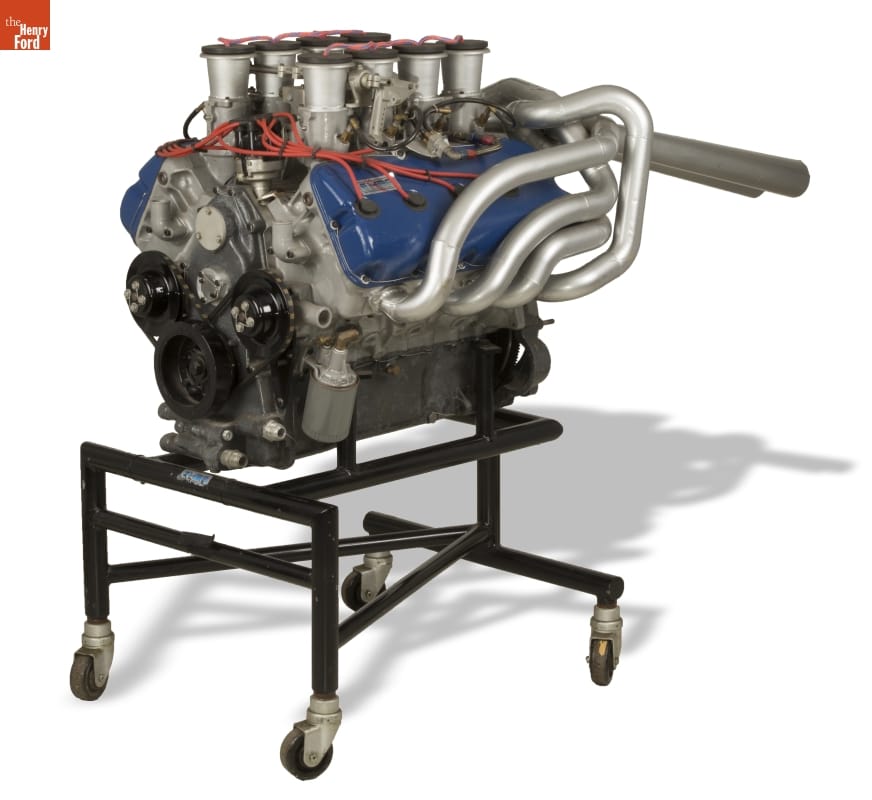
- Ford "Calliope" V-8 Automobile Engine, 1968 - Ford engineers developed the aluminum-block 427-cubic-inch "calliope" engine for the 1968 Le Mans 24-hour race. Three valves per cylinder were connected to pushrods driven by twin camshafts in the block. The distinctive fuel injector stacks above each cylinder, resembling whistles on a musical calliope, gave the engine its nickname. Rules changes at Le Mans prevented the engine from ever racing.
- 1968
- Collections - Artifact
Ford "Calliope" V-8 Automobile Engine, 1968
Ford engineers developed the aluminum-block 427-cubic-inch "calliope" engine for the 1968 Le Mans 24-hour race. Three valves per cylinder were connected to pushrods driven by twin camshafts in the block. The distinctive fuel injector stacks above each cylinder, resembling whistles on a musical calliope, gave the engine its nickname. Rules changes at Le Mans prevented the engine from ever racing.
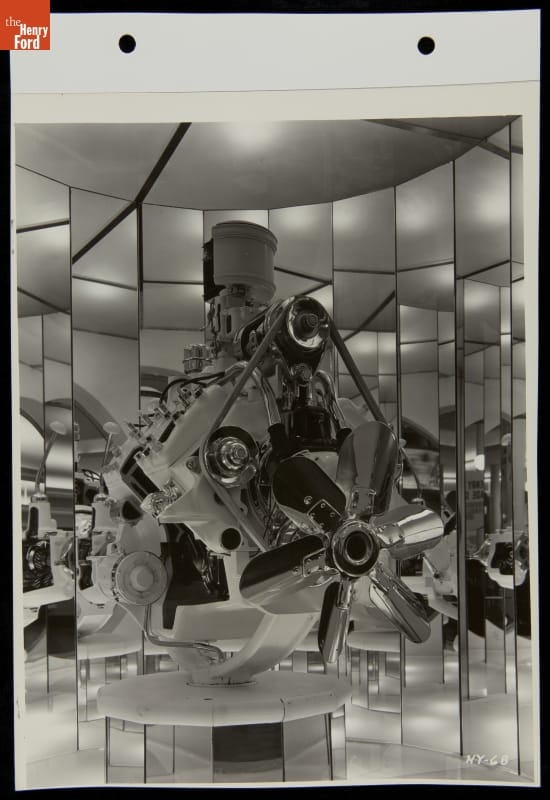
- "Ford V-8 Engine Shows its Inner Workings," Ford Exposition, New York World's Fair, 1939 - Henry Ford viewed national expositions as business opportunities <EM>and</EM> platforms for public education. During the 1939-40 New York World's Fair, Ford Motor Company spent more than $5 million to build and maintain an elaborate exposition space. Informative displays and manufacturing demonstrations inside Ford's massive fair building offered visitors an in-depth, entertaining, and educational look at industrial processes.
- May 03, 1939
- Collections - Artifact
"Ford V-8 Engine Shows its Inner Workings," Ford Exposition, New York World's Fair, 1939
Henry Ford viewed national expositions as business opportunities and platforms for public education. During the 1939-40 New York World's Fair, Ford Motor Company spent more than $5 million to build and maintain an elaborate exposition space. Informative displays and manufacturing demonstrations inside Ford's massive fair building offered visitors an in-depth, entertaining, and educational look at industrial processes.
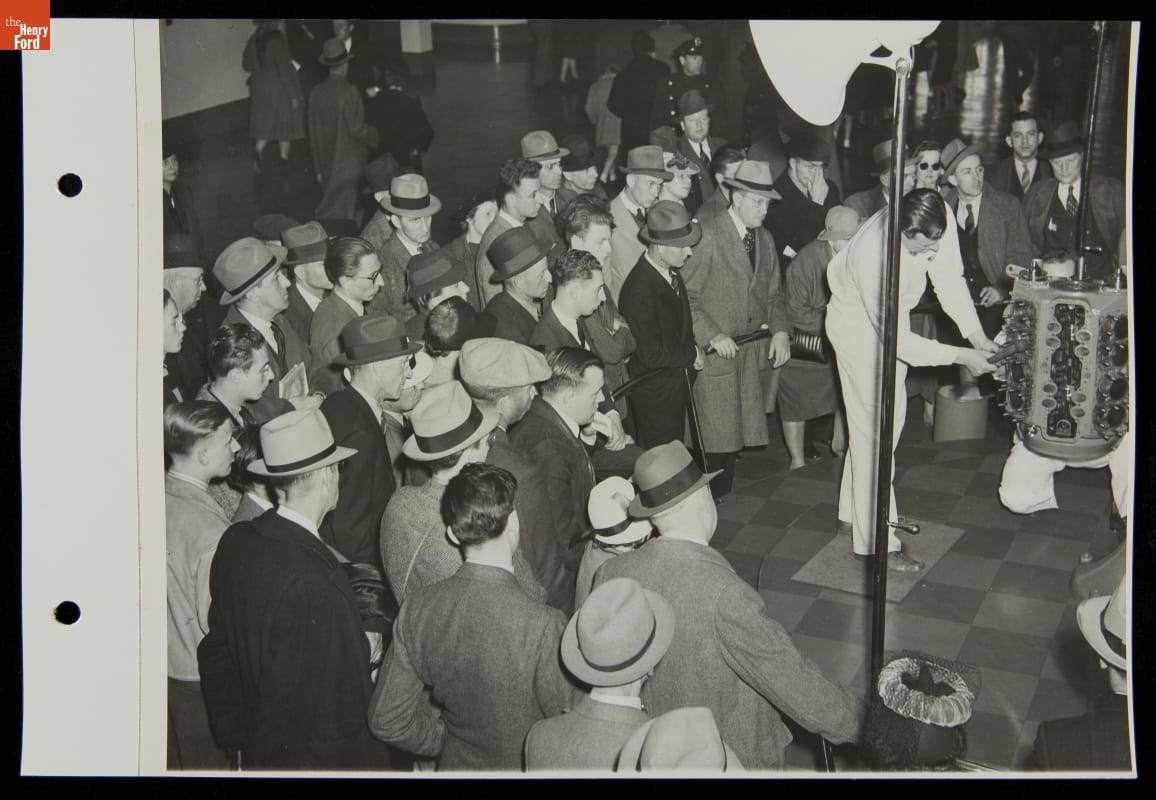
- Crowds near Motor Assembly, Ford Exposition, New York World's Fair, 1939 - Henry Ford viewed national expositions as business opportunities <EM>and</EM> platforms for public education. During the 1939-40 New York World's Fair, Ford Motor Company spent more than $5 million to build and maintain an elaborate exposition space. Informative displays and manufacturing demonstrations inside Ford's massive fair building offered visitors an in-depth, entertaining, and educational look at industrial processes.
- 1939
- Collections - Artifact
Crowds near Motor Assembly, Ford Exposition, New York World's Fair, 1939
Henry Ford viewed national expositions as business opportunities and platforms for public education. During the 1939-40 New York World's Fair, Ford Motor Company spent more than $5 million to build and maintain an elaborate exposition space. Informative displays and manufacturing demonstrations inside Ford's massive fair building offered visitors an in-depth, entertaining, and educational look at industrial processes.
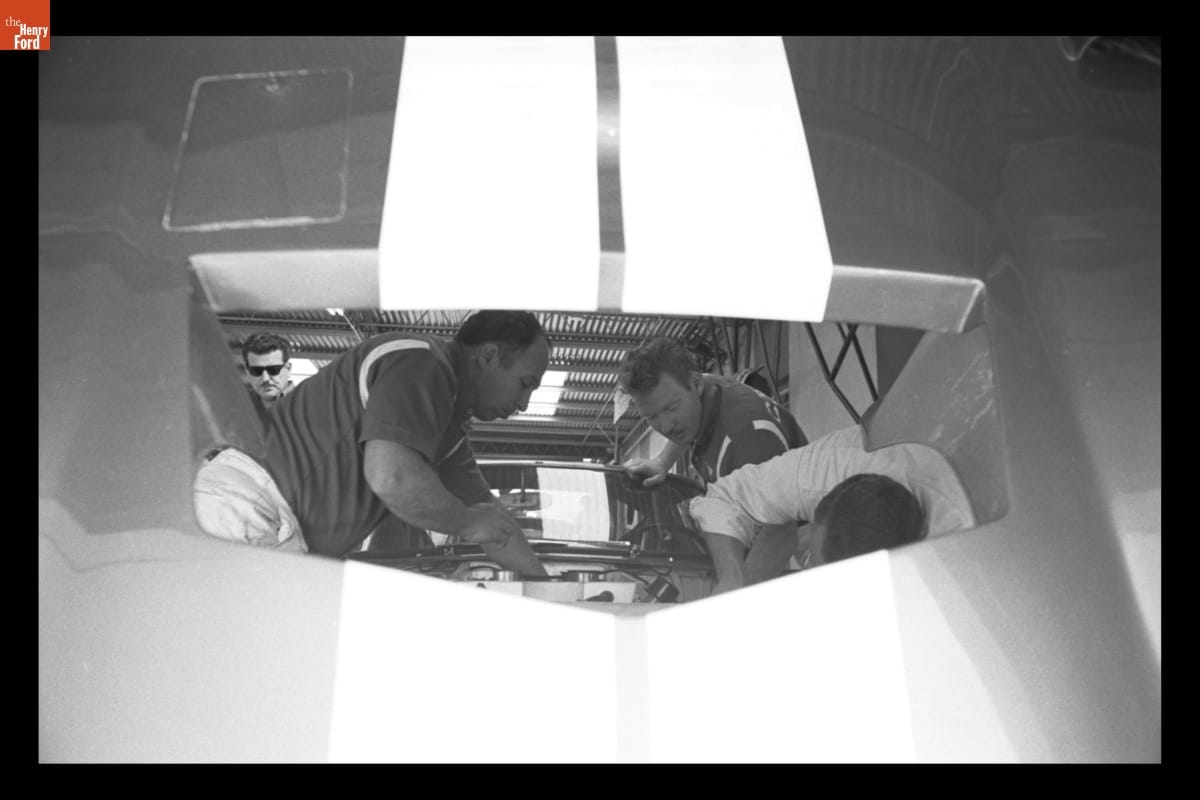
- Engineers Preparing Shelby Cobra Daytona Coupe for the Daytona Continental 2000 km Race, February 1965 - Carroll Shelby's Shelby American racing team entered six cars in the 1965 Daytona Continental 2000-Kilometer Race. Of those six cars, four -- two Ford GT40s and two Shelby Cobra Daytona Coupes -- finished in the top five positions. The overall victory went to the team's #73 GT40 driven by Ken Miles and Lloyd Ruby -- the first win by a GT40 anywhere.
- February 28, 1965
- Collections - Artifact
Engineers Preparing Shelby Cobra Daytona Coupe for the Daytona Continental 2000 km Race, February 1965
Carroll Shelby's Shelby American racing team entered six cars in the 1965 Daytona Continental 2000-Kilometer Race. Of those six cars, four -- two Ford GT40s and two Shelby Cobra Daytona Coupes -- finished in the top five positions. The overall victory went to the team's #73 GT40 driven by Ken Miles and Lloyd Ruby -- the first win by a GT40 anywhere.
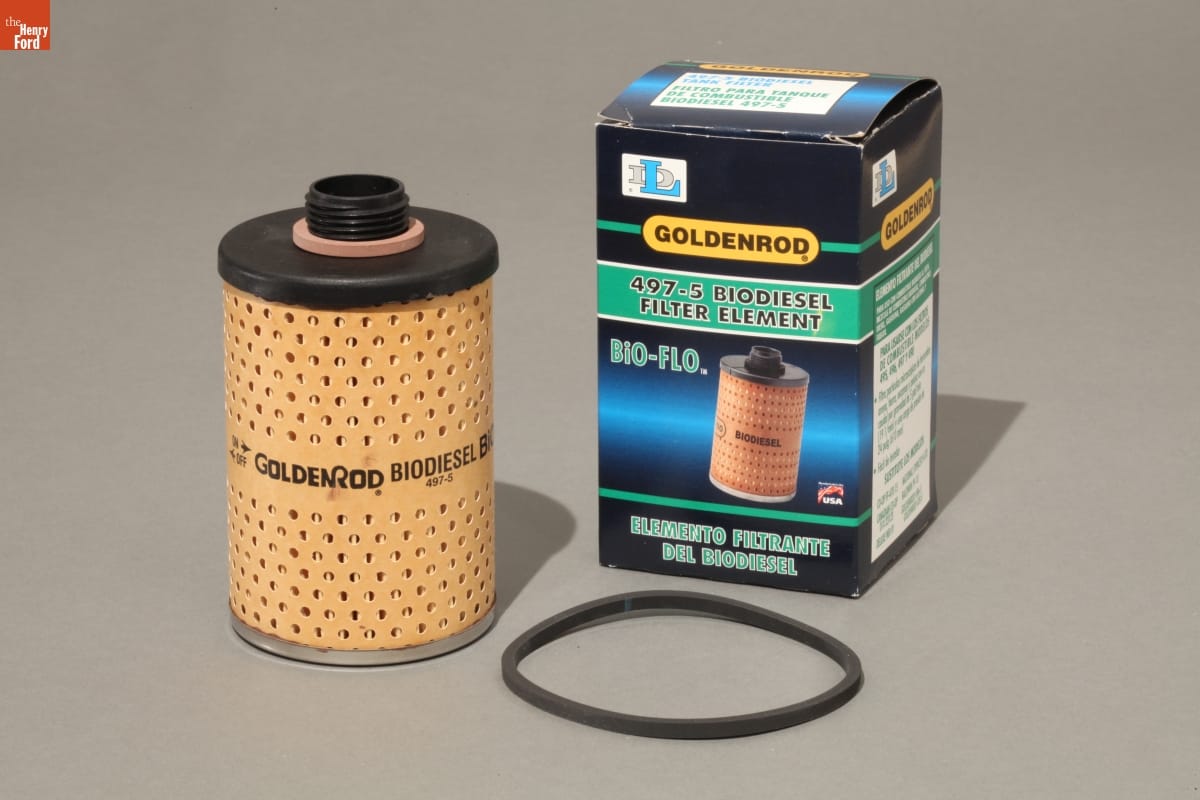
- Biodiesel Filter, circa 2011 - This Goldenrod Biodiesel Bio-Flo filter helps remove impurities in the fuel. Biodiesel is made from vegetable oils or animal fats. Diesel engines can be adapted to run on biofuels.
- circa 2011
- Collections - Artifact
Biodiesel Filter, circa 2011
This Goldenrod Biodiesel Bio-Flo filter helps remove impurities in the fuel. Biodiesel is made from vegetable oils or animal fats. Diesel engines can be adapted to run on biofuels.
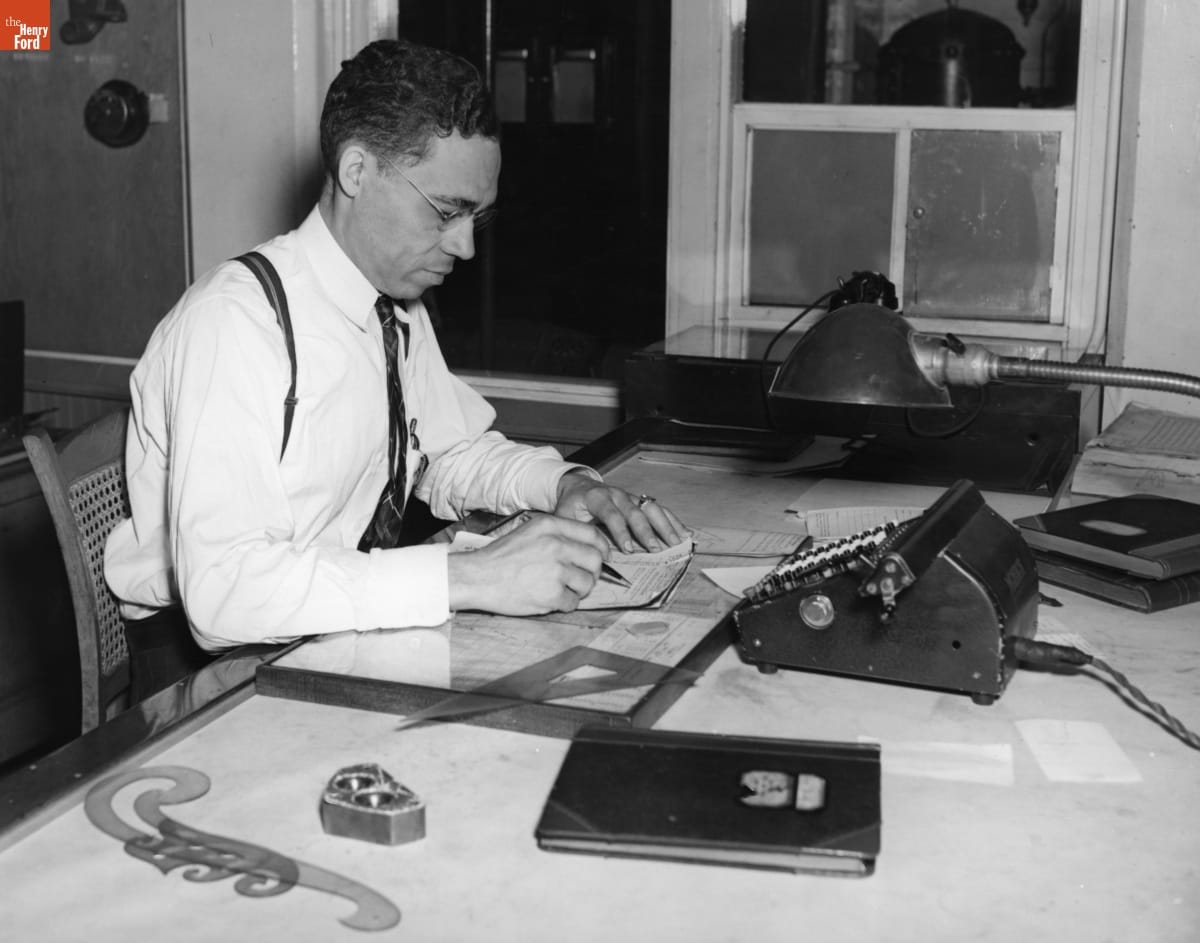
- Engineer Working at the Ford Motor Company Rouge Plant, August 3, 1942 -
- August 03, 1942
- Collections - Artifact
Engineer Working at the Ford Motor Company Rouge Plant, August 3, 1942
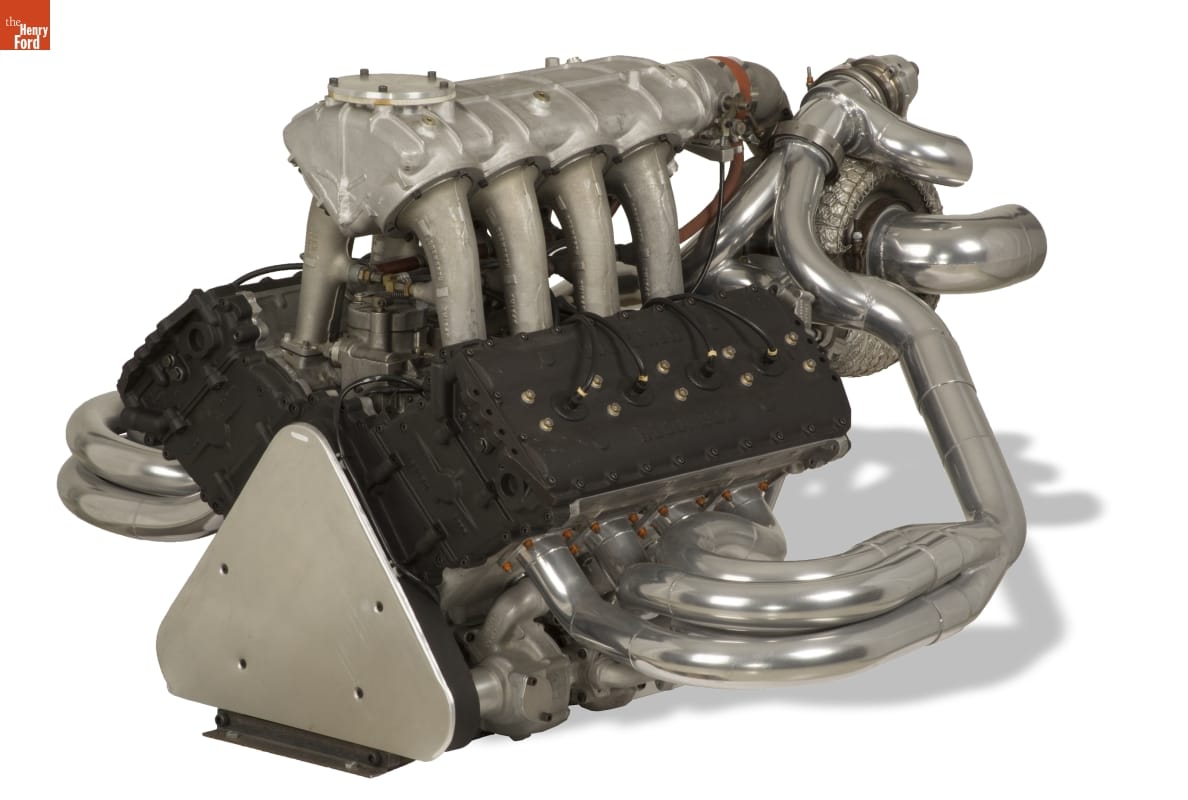
- Cosworth DFX V-8 Engine, 1975-1985 - The Cosworth DFX engine won its first race in 1976. The turbocharged V-8, based on an earlier Formula One engine designed by British firm Cosworth and funded by Ford Motor Company, dominated Indy car racing well into the 1980s. Cosworth DFX engines powered all ten Indianapolis 500 winners between 1978 and 1987.
- 1975-1985
- Collections - Artifact
Cosworth DFX V-8 Engine, 1975-1985
The Cosworth DFX engine won its first race in 1976. The turbocharged V-8, based on an earlier Formula One engine designed by British firm Cosworth and funded by Ford Motor Company, dominated Indy car racing well into the 1980s. Cosworth DFX engines powered all ten Indianapolis 500 winners between 1978 and 1987.
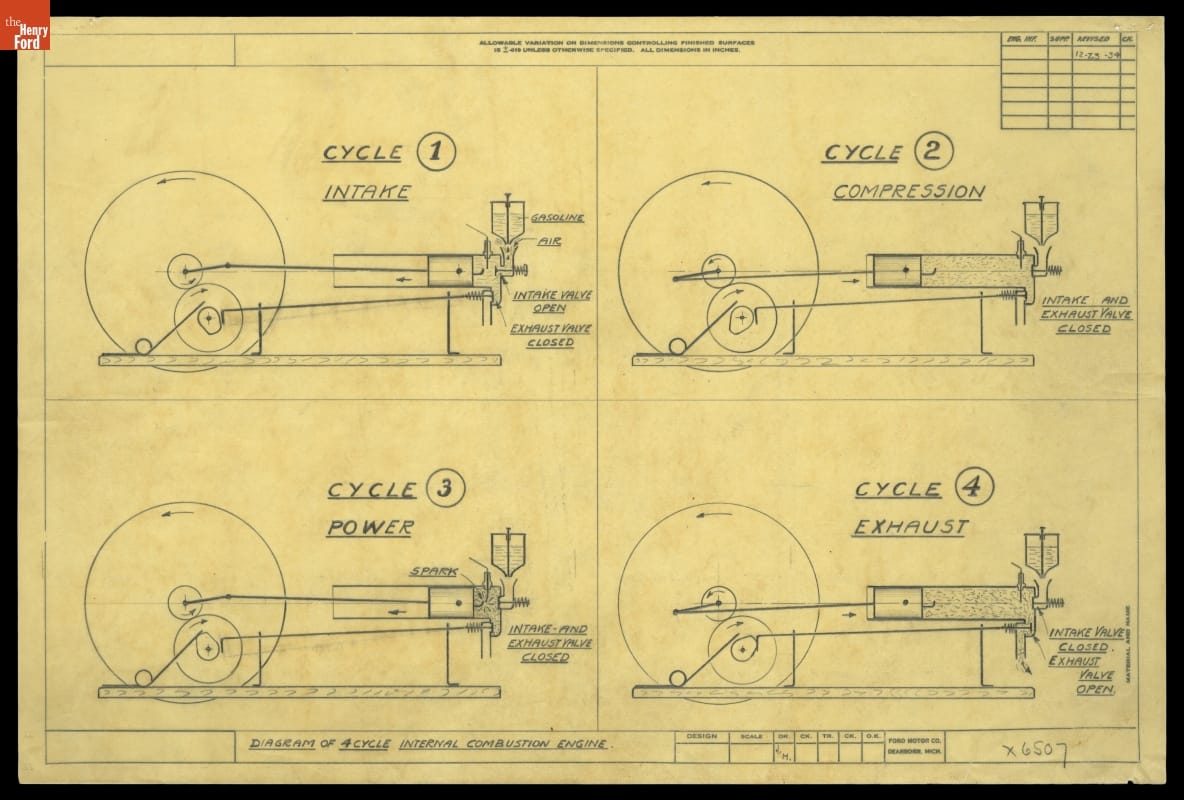
- Drawing of the 1893 Kitchen Sink Engine, "Diagram of 4 Cycle Internal Combustion Engine" - This 1934 diagram uses Henry Ford's experimental 1893 Kitchen Sink Engine to illustrate the operation of a four-stroke internal combustion engine. Stroke one draws air and fuel into the cylinder. Stroke two compresses the air-fuel mixture. In the power stroke, a spark ignites the mixture which forces the piston down, turning the crankshaft. Stroke four pushes exhaust from the cylinder.
- December 23, 1934
- Collections - Artifact
Drawing of the 1893 Kitchen Sink Engine, "Diagram of 4 Cycle Internal Combustion Engine"
This 1934 diagram uses Henry Ford's experimental 1893 Kitchen Sink Engine to illustrate the operation of a four-stroke internal combustion engine. Stroke one draws air and fuel into the cylinder. Stroke two compresses the air-fuel mixture. In the power stroke, a spark ignites the mixture which forces the piston down, turning the crankshaft. Stroke four pushes exhaust from the cylinder.
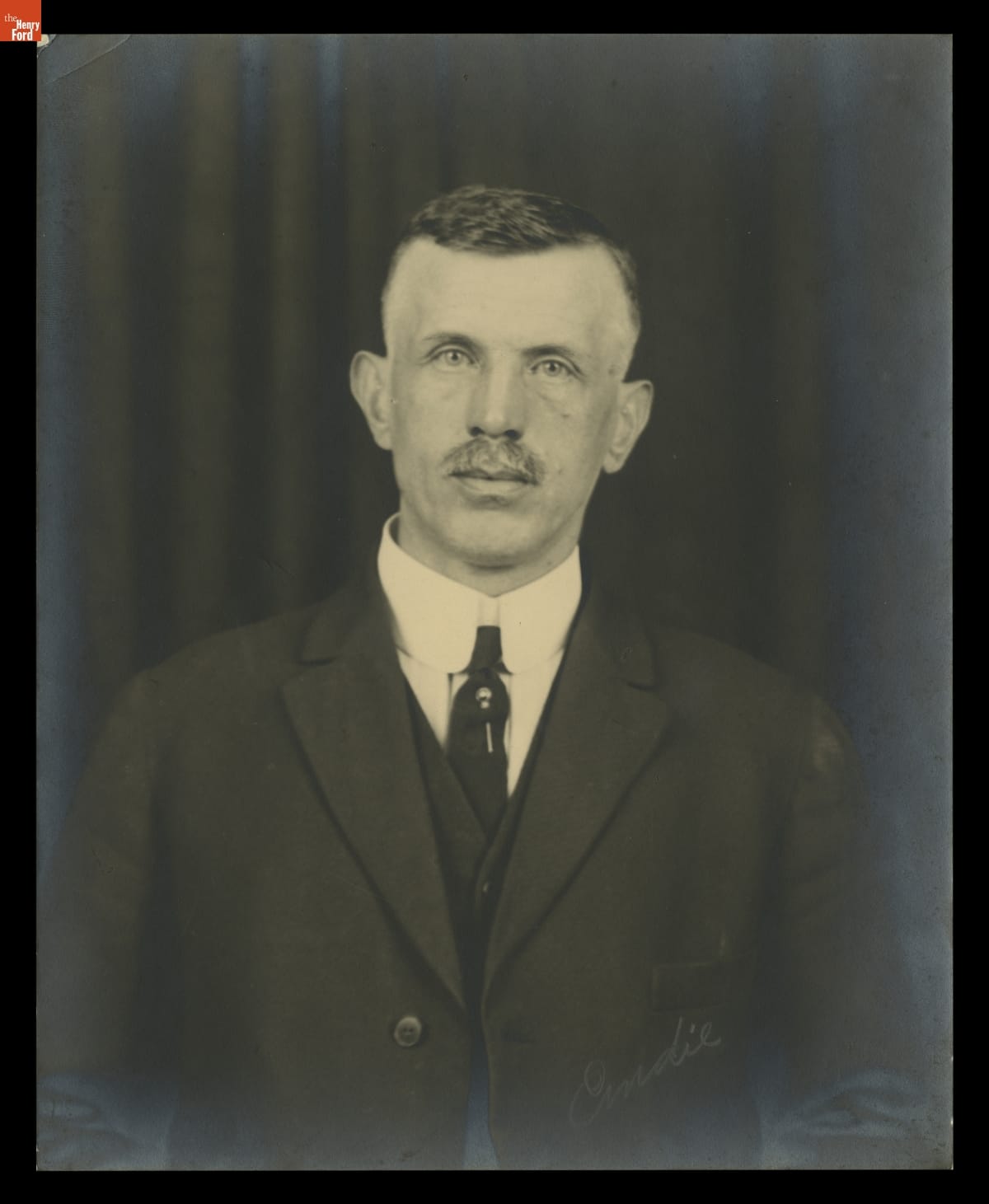
- Ford Motor Company Engineer Carl Emde, circa 1910 - Carl Emde joined Ford Motor Company in 1906. He designed many of the specialized machine tools that were essential to the company's mass production techniques. Emde and his team worked constantly to improve tools and fixtures -- to increase production, to reduce labor, and to improve quality. Emde left Ford in 1926.
- circa 1910
- Collections - Artifact
Ford Motor Company Engineer Carl Emde, circa 1910
Carl Emde joined Ford Motor Company in 1906. He designed many of the specialized machine tools that were essential to the company's mass production techniques. Emde and his team worked constantly to improve tools and fixtures -- to increase production, to reduce labor, and to improve quality. Emde left Ford in 1926.
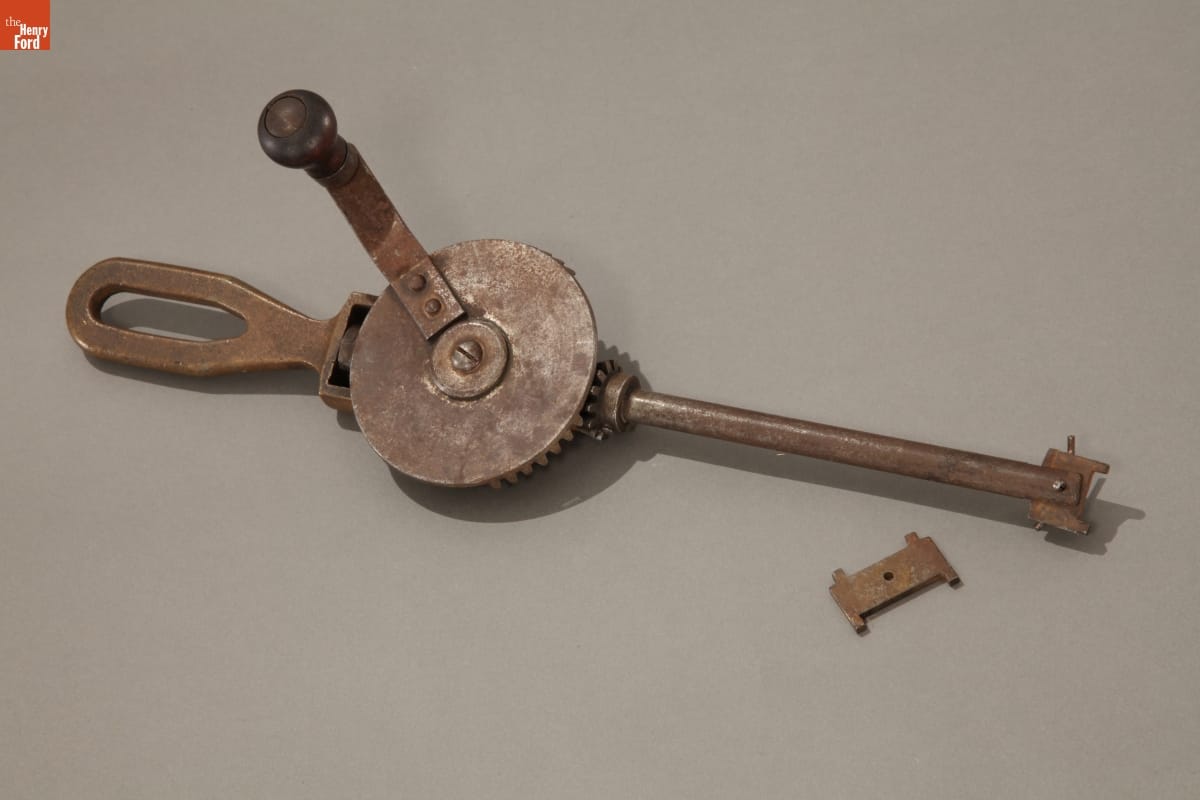
- Automobile Engine Valve Lapping Tool, circa 1915 - Until the late 1910s, the intake and exhaust valves in a car's engine required periodic maintenance -- once a year was not unusual. The valves needed to be cleaned and reseated with a valve lapping tool to ensure a tight seal. This task could take between a few hours to a full day to complete.
- circa 1915
- Collections - Artifact
Automobile Engine Valve Lapping Tool, circa 1915
Until the late 1910s, the intake and exhaust valves in a car's engine required periodic maintenance -- once a year was not unusual. The valves needed to be cleaned and reseated with a valve lapping tool to ensure a tight seal. This task could take between a few hours to a full day to complete.