
Search
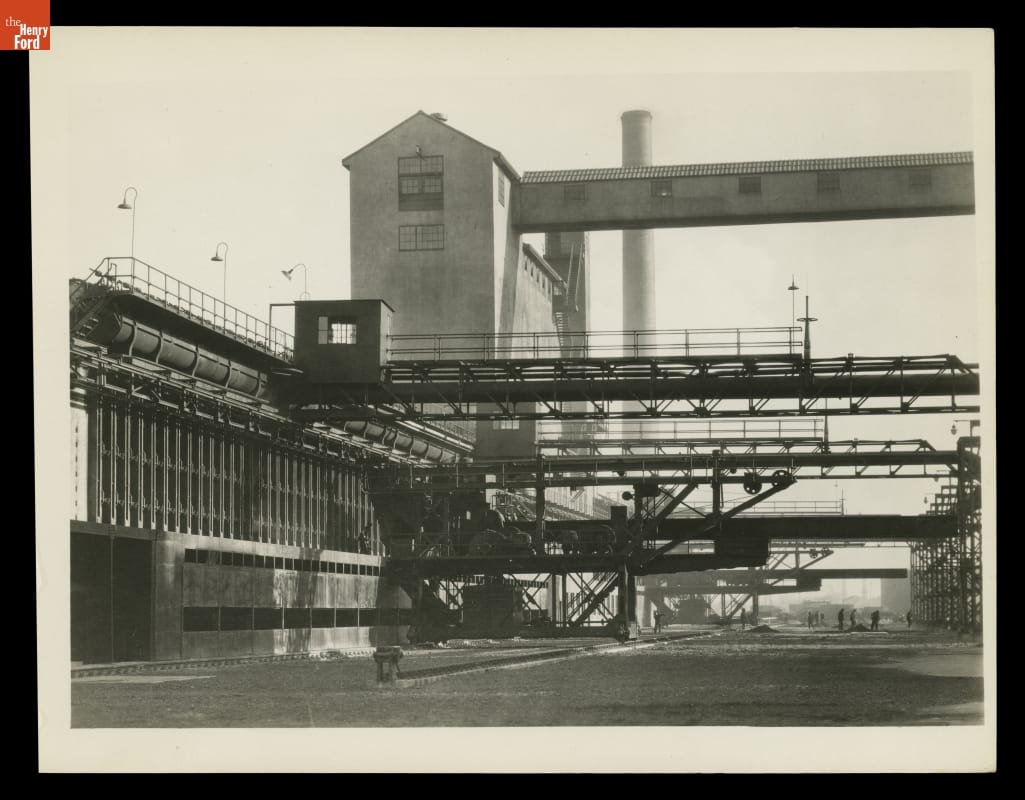
- Ford Motor Company Rouge Plant Coke Ovens, 1927 - Coke ovens at Ford Motor Company's Rouge plant converted coal into high-carbon coke, used in the factory's blast furnaces to produce iron. In 1921, the Rouge's ovens could produce up to 3,600 tons of coke daily. New, more efficient coke ovens opened in 1937. The coking process also produced gas used to heat some of the factory's other furnaces.
- 1927
- Collections - Artifact
Ford Motor Company Rouge Plant Coke Ovens, 1927
Coke ovens at Ford Motor Company's Rouge plant converted coal into high-carbon coke, used in the factory's blast furnaces to produce iron. In 1921, the Rouge's ovens could produce up to 3,600 tons of coke daily. New, more efficient coke ovens opened in 1937. The coking process also produced gas used to heat some of the factory's other furnaces.
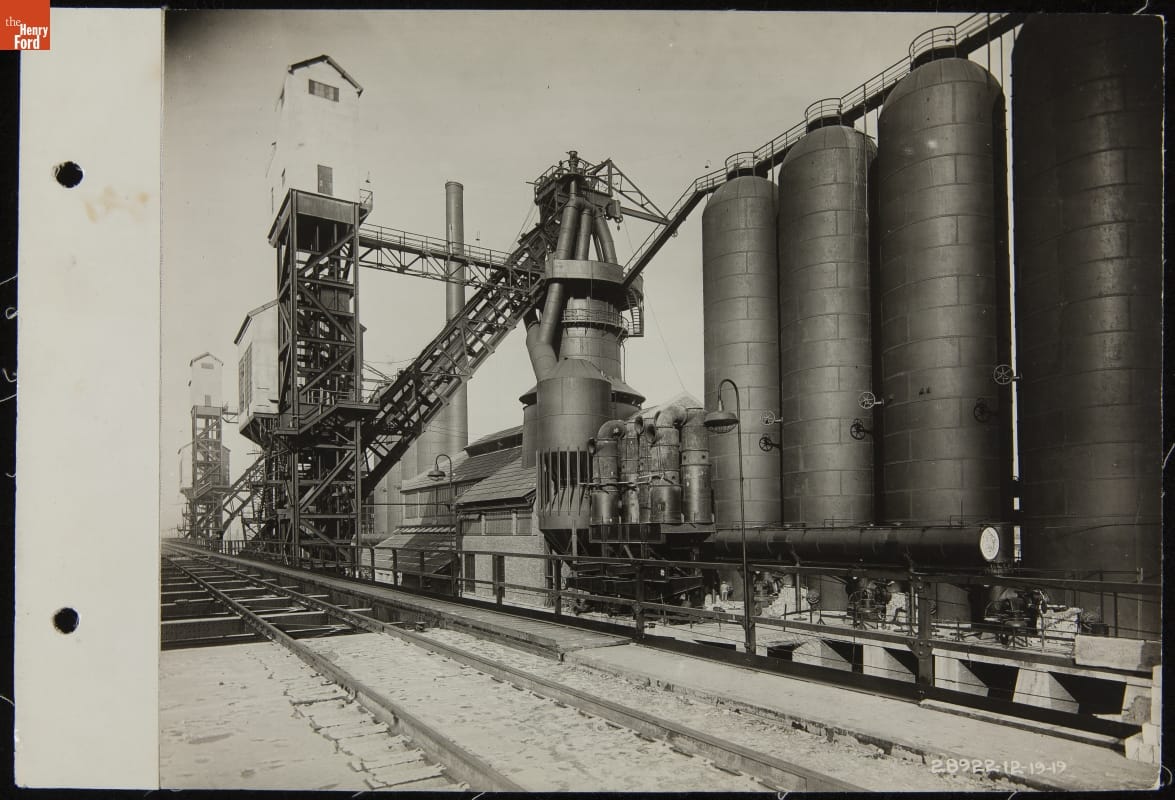
- Ford Motor Company Rouge Plant, December 1919 - Three blast furnaces at Ford's Rouge plant converted raw iron oxide ore into metallic iron. The furnaces were named for Henry Ford's grandsons. Blast Furnace A, the "Henry Ford II," opened in May 1920, while the identical Blast Furnace B, the "Benson Ford," followed in October 1922. The larger Blast Furnace C, the "William Clay Ford," opened in November 1948.
- December 19, 2019
- Collections - Artifact
Ford Motor Company Rouge Plant, December 1919
Three blast furnaces at Ford's Rouge plant converted raw iron oxide ore into metallic iron. The furnaces were named for Henry Ford's grandsons. Blast Furnace A, the "Henry Ford II," opened in May 1920, while the identical Blast Furnace B, the "Benson Ford," followed in October 1922. The larger Blast Furnace C, the "William Clay Ford," opened in November 1948.
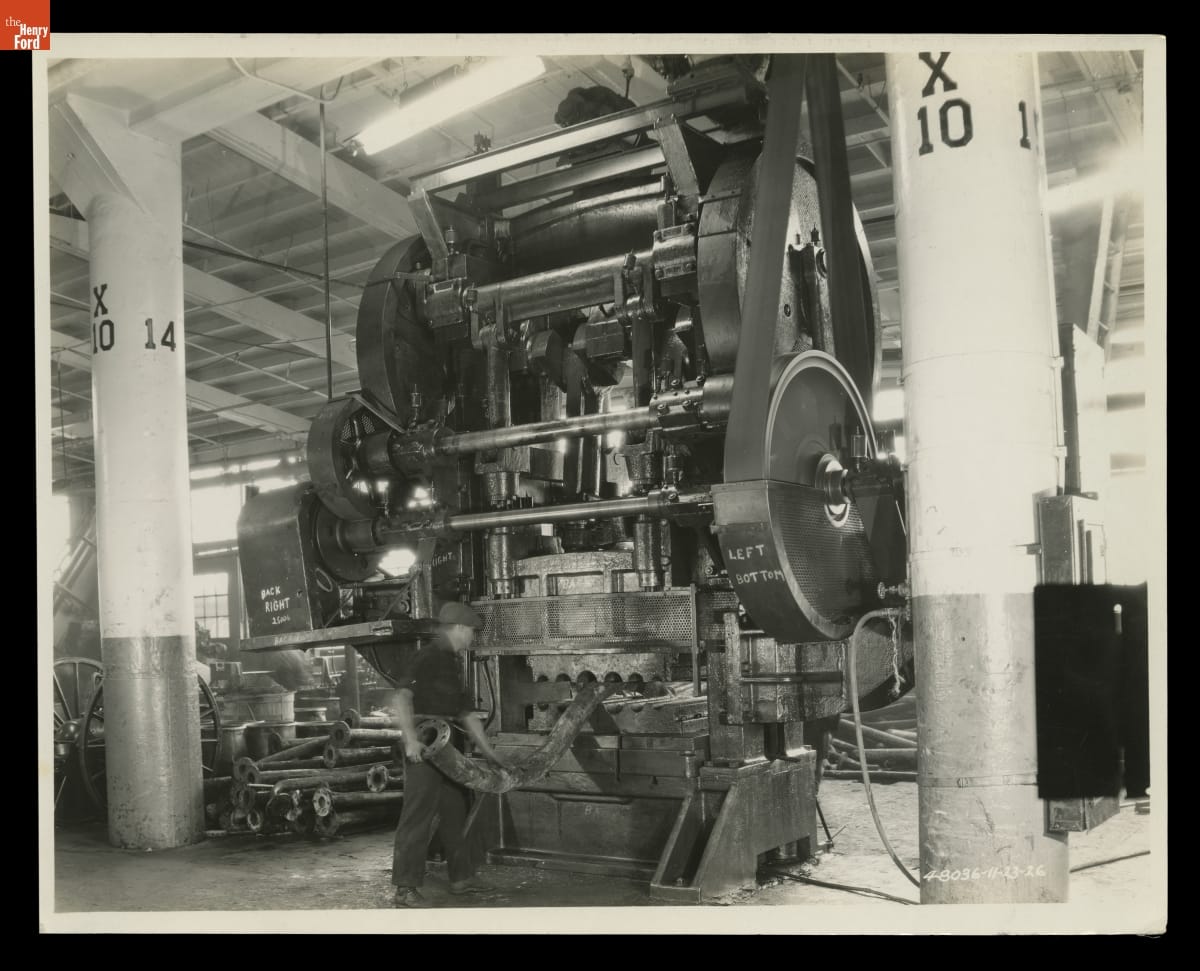
- Worker Operating a Press in the Salvage Department at the Ford Motor Company Rouge Plant, November 1926 - In 1925, Ford Motor Company purchased 199 surplus World War I merchant ships from the U.S. government. The vessels were towed by tugs to the Rouge, where most were cut into scrap metal used in the plant's steel-making facilities. Serviceable parts were salvaged. Here, a worker straightens a pipe from one of the ships for use elsewhere.
- November 23, 1926
- Collections - Artifact
Worker Operating a Press in the Salvage Department at the Ford Motor Company Rouge Plant, November 1926
In 1925, Ford Motor Company purchased 199 surplus World War I merchant ships from the U.S. government. The vessels were towed by tugs to the Rouge, where most were cut into scrap metal used in the plant's steel-making facilities. Serviceable parts were salvaged. Here, a worker straightens a pipe from one of the ships for use elsewhere.
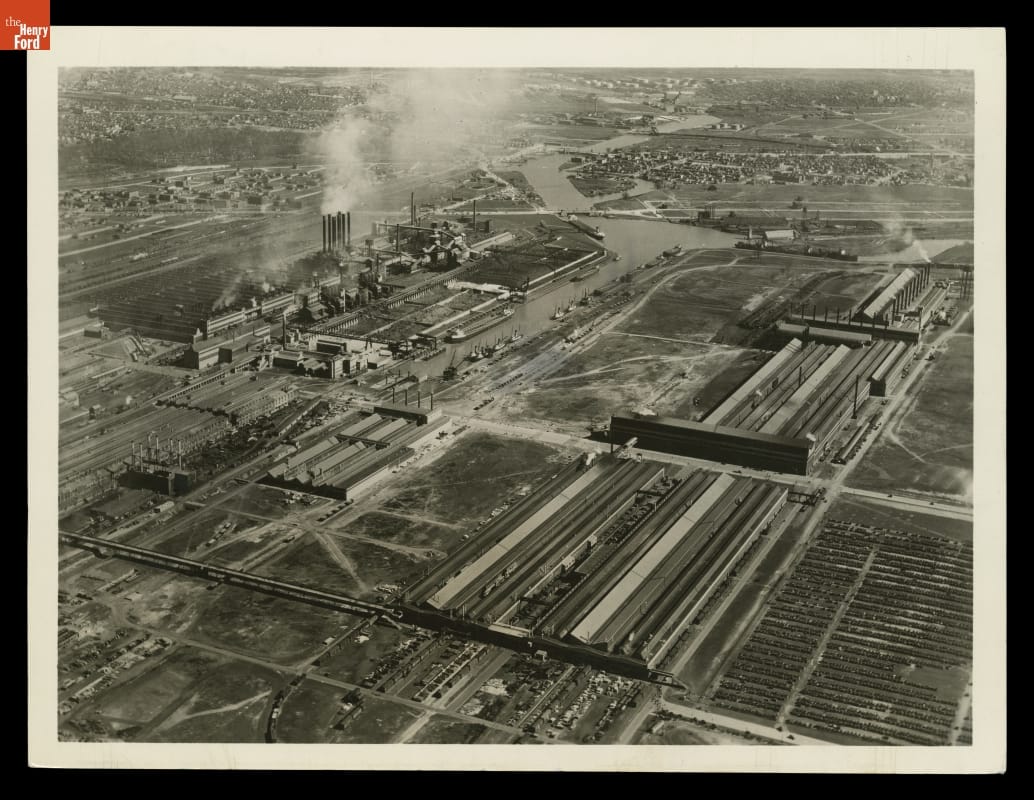
- Aerial View of Ford Rouge Plant, 1930 - This aerial view shows Ford Motor Company's sprawling Rouge plant--the largest, most efficient manufacturing complex of its time. Ford established its administrative headquarters here in 1928, around the same time the company began manufacturing automobiles from start to finish at the plant. The Rouge became not only central to Ford's operation but an icon of modern industrial efficiency.
- 1930
- Collections - Artifact
Aerial View of Ford Rouge Plant, 1930
This aerial view shows Ford Motor Company's sprawling Rouge plant--the largest, most efficient manufacturing complex of its time. Ford established its administrative headquarters here in 1928, around the same time the company began manufacturing automobiles from start to finish at the plant. The Rouge became not only central to Ford's operation but an icon of modern industrial efficiency.
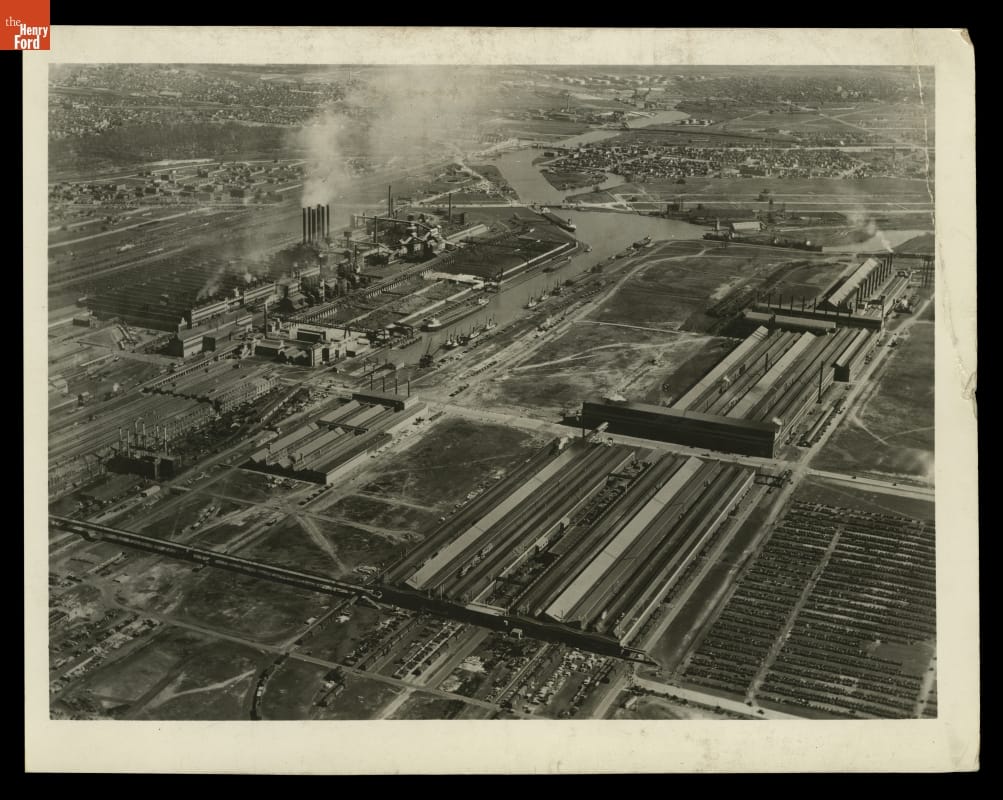
- Aerial View of Ford Motor Company Rouge Complex, Dearborn, Michigan, 1930 - This aerial view shows Ford Motor Company's sprawling Rouge plant--the largest, most efficient manufacturing complex of its time. Ford established its administrative headquarters here in 1928, around the same time the company began manufacturing automobiles from start to finish at the plant. The Rouge became not only central to Ford's operation but an icon of modern industrial efficiency.
- September 09, 1930
- Collections - Artifact
Aerial View of Ford Motor Company Rouge Complex, Dearborn, Michigan, 1930
This aerial view shows Ford Motor Company's sprawling Rouge plant--the largest, most efficient manufacturing complex of its time. Ford established its administrative headquarters here in 1928, around the same time the company began manufacturing automobiles from start to finish at the plant. The Rouge became not only central to Ford's operation but an icon of modern industrial efficiency.
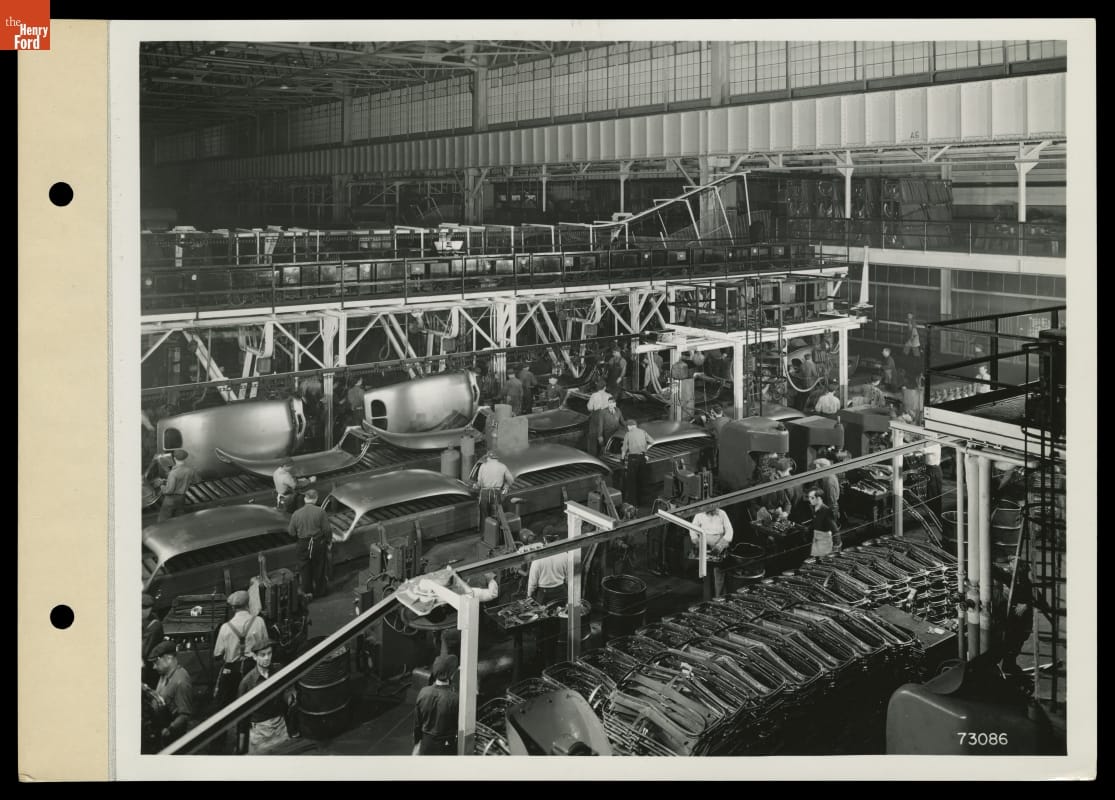
- Inside the Ford Rouge Plant Pressed Steel Building, Conveyors Moving New Parts to Body Assembly Area, 1940 - The pressed-steel building at Ford Motor Company's Rouge plant produced steel components like automobile fenders, body panels, and roof sections. In the late 1930s, the building had more than 4,000 presses, and 10,000 workers turned out more than 2,000 different parts. Some of those parts were used at the Rouge, and some were shipped to other Ford assembly plants.
- February 08, 1940
- Collections - Artifact
Inside the Ford Rouge Plant Pressed Steel Building, Conveyors Moving New Parts to Body Assembly Area, 1940
The pressed-steel building at Ford Motor Company's Rouge plant produced steel components like automobile fenders, body panels, and roof sections. In the late 1930s, the building had more than 4,000 presses, and 10,000 workers turned out more than 2,000 different parts. Some of those parts were used at the Rouge, and some were shipped to other Ford assembly plants.
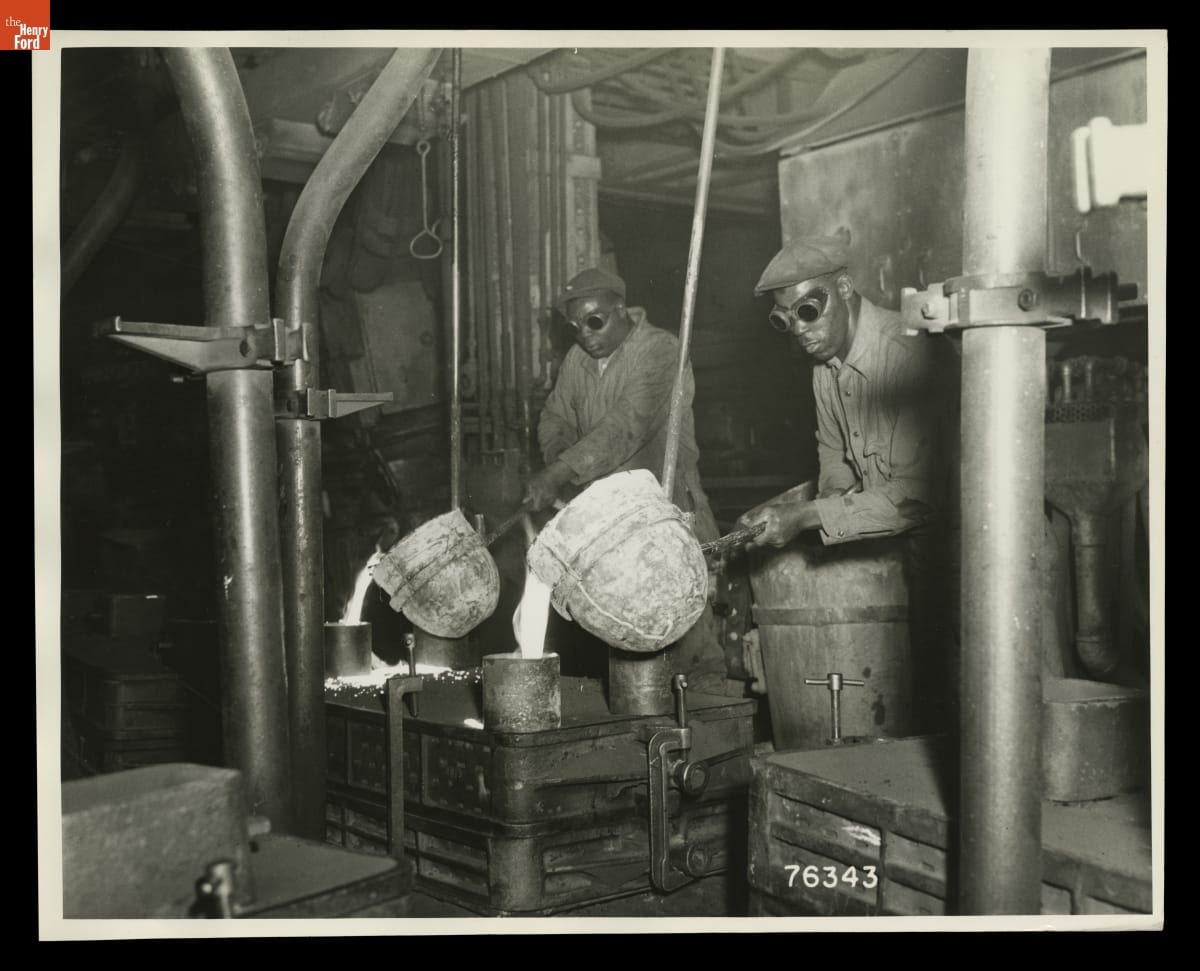
- Workers Pouring Molten Metal in the Foundry at the Ford Motor Company Rouge Plant, November 10, 1941 - Workers at the Ford Rouge plant's foundry poured a molten mixture of metal, coke, and limestone into molds to create cast-metal engine blocks and parts. Once "shaken out" of their molds, castings were roughly machined before heading elsewhere for finishing and assembly. The Rouge foundry set an industry benchmark in 1932 by successfully casting Ford's intricate, single-piece V-8 engine block.
- November 10, 1941
- Collections - Artifact
Workers Pouring Molten Metal in the Foundry at the Ford Motor Company Rouge Plant, November 10, 1941
Workers at the Ford Rouge plant's foundry poured a molten mixture of metal, coke, and limestone into molds to create cast-metal engine blocks and parts. Once "shaken out" of their molds, castings were roughly machined before heading elsewhere for finishing and assembly. The Rouge foundry set an industry benchmark in 1932 by successfully casting Ford's intricate, single-piece V-8 engine block.
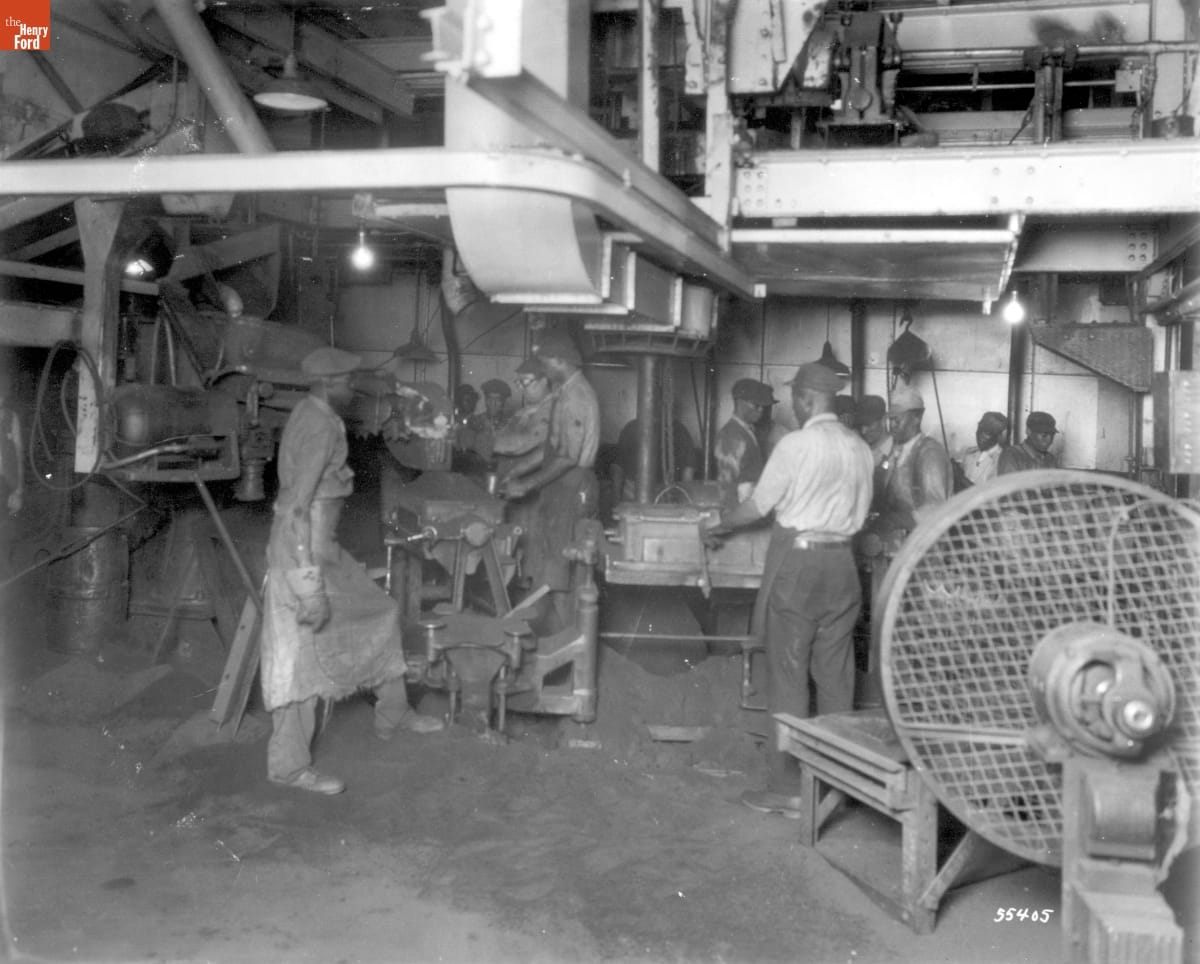
- Workers Making Cylinder Blocks in the Foundry at the Ford Motor Company Rouge Plant, 1930 - Workers at the Ford Rouge plant's foundry poured a molten mixture of metal, coke, and limestone into molds to create cast-metal engine blocks and parts. Once "shaken out" of their molds, castings were roughly machined before heading elsewhere for finishing and assembly. The Rouge foundry set an industry benchmark in 1932 by successfully casting Ford's intricate, single-piece V-8 engine block.
- 1930
- Collections - Artifact
Workers Making Cylinder Blocks in the Foundry at the Ford Motor Company Rouge Plant, 1930
Workers at the Ford Rouge plant's foundry poured a molten mixture of metal, coke, and limestone into molds to create cast-metal engine blocks and parts. Once "shaken out" of their molds, castings were roughly machined before heading elsewhere for finishing and assembly. The Rouge foundry set an industry benchmark in 1932 by successfully casting Ford's intricate, single-piece V-8 engine block.
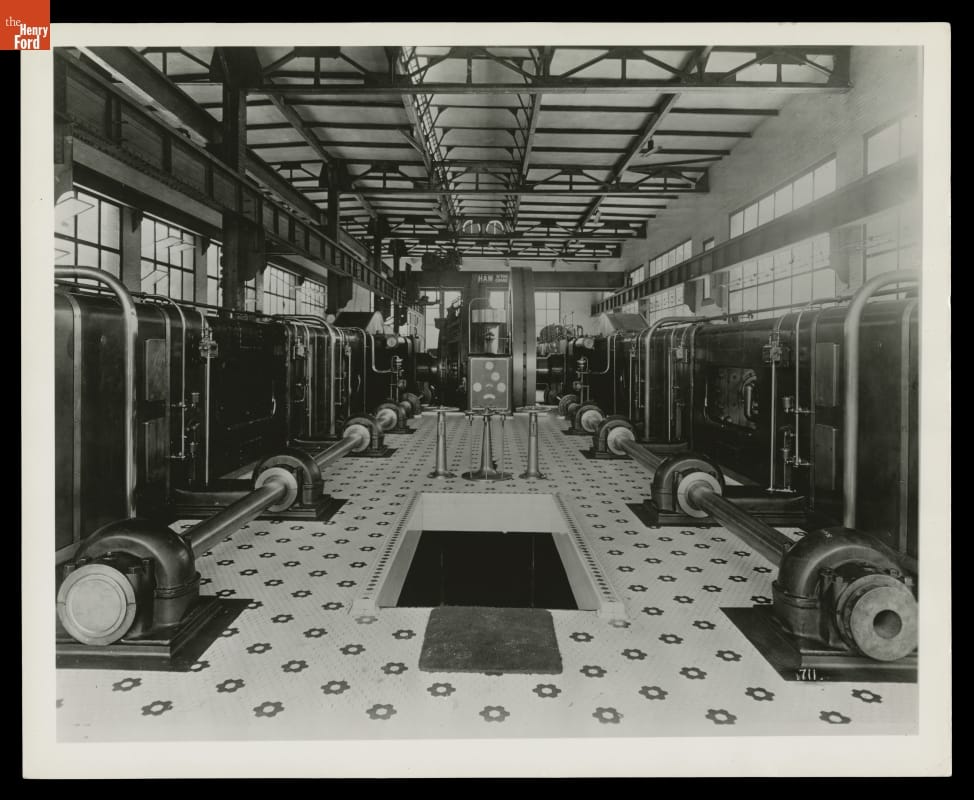
- Powerhouse, Highland Park Plant, Michigan, circa 1914 - One of the nine gas-steam engines installed in Ford Motor Company's Highland Park powerhouse is shown in this 1914 view. Each of these hybrid machines consisted of a gas engine and a steam engine both connected to a single electrical generator. Henry Ford took great pride in the engines, though their hybrid arrangement was not widely adopted elsewhere.
- circa 1914
- Collections - Artifact
Powerhouse, Highland Park Plant, Michigan, circa 1914
One of the nine gas-steam engines installed in Ford Motor Company's Highland Park powerhouse is shown in this 1914 view. Each of these hybrid machines consisted of a gas engine and a steam engine both connected to a single electrical generator. Henry Ford took great pride in the engines, though their hybrid arrangement was not widely adopted elsewhere.
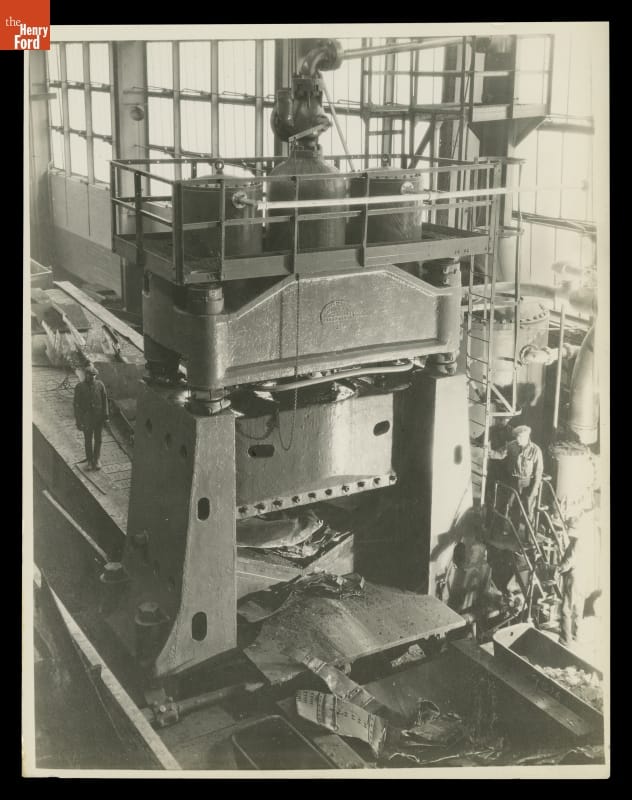
- Hydraulic Shear at Ford Rouge Plant, 1927 - To produce steel for Rouge plant operations, Ford used ten open-hearth furnaces. The furnaces, each with a capacity of at least 180 tons, resided here in the open-hearth building. These workers used a steam-powered shearer to smash scrap metal into small pieces. The bits of metal joined with molten iron in one of the furnaces and eventually became steel.
- 1927
- Collections - Artifact
Hydraulic Shear at Ford Rouge Plant, 1927
To produce steel for Rouge plant operations, Ford used ten open-hearth furnaces. The furnaces, each with a capacity of at least 180 tons, resided here in the open-hearth building. These workers used a steam-powered shearer to smash scrap metal into small pieces. The bits of metal joined with molten iron in one of the furnaces and eventually became steel.