
Search
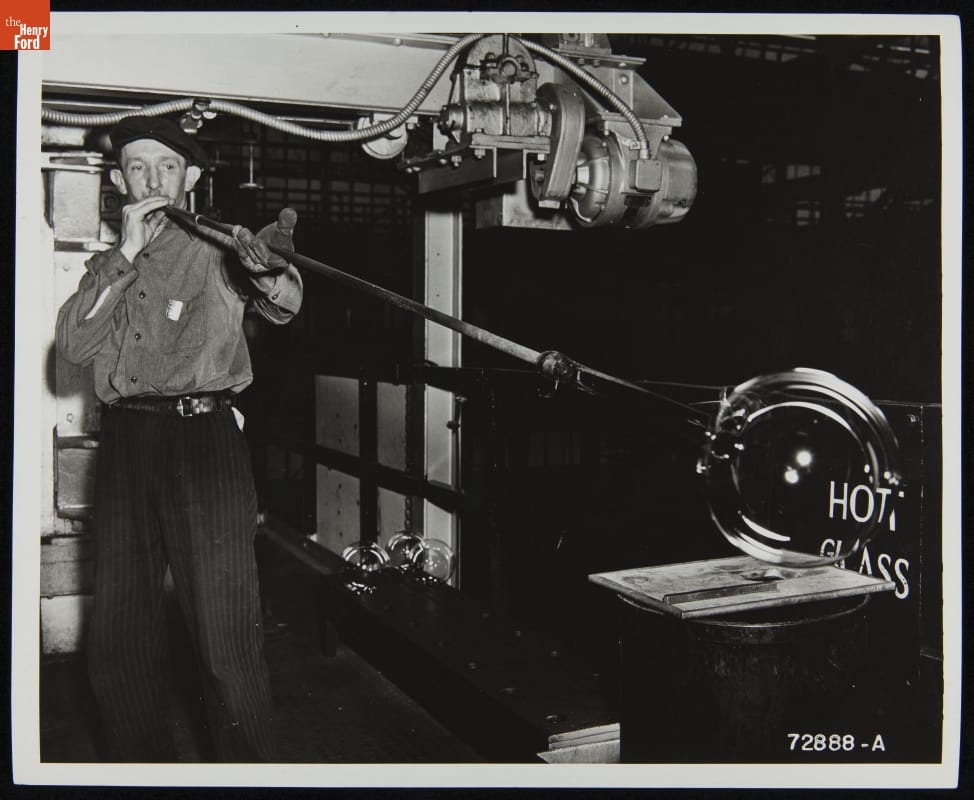
- Testing Batches of Glass at the Ford Rouge Glass Plant, 1940 - Unsatisfied with glass from outside suppliers, Ford Motor Company established its own glass plant at the Rouge in 1923. Furnaces produced molten glass, while overhead grinders and polishers worked the material to a perfectly smooth and clear finish. Two other Ford glass plants, in Pennsylvania and Minnesota, combined with the Rouge to manufacture 20 million feet of glass each year.
- January 03, 1940
- Collections - Artifact
Testing Batches of Glass at the Ford Rouge Glass Plant, 1940
Unsatisfied with glass from outside suppliers, Ford Motor Company established its own glass plant at the Rouge in 1923. Furnaces produced molten glass, while overhead grinders and polishers worked the material to a perfectly smooth and clear finish. Two other Ford glass plants, in Pennsylvania and Minnesota, combined with the Rouge to manufacture 20 million feet of glass each year.
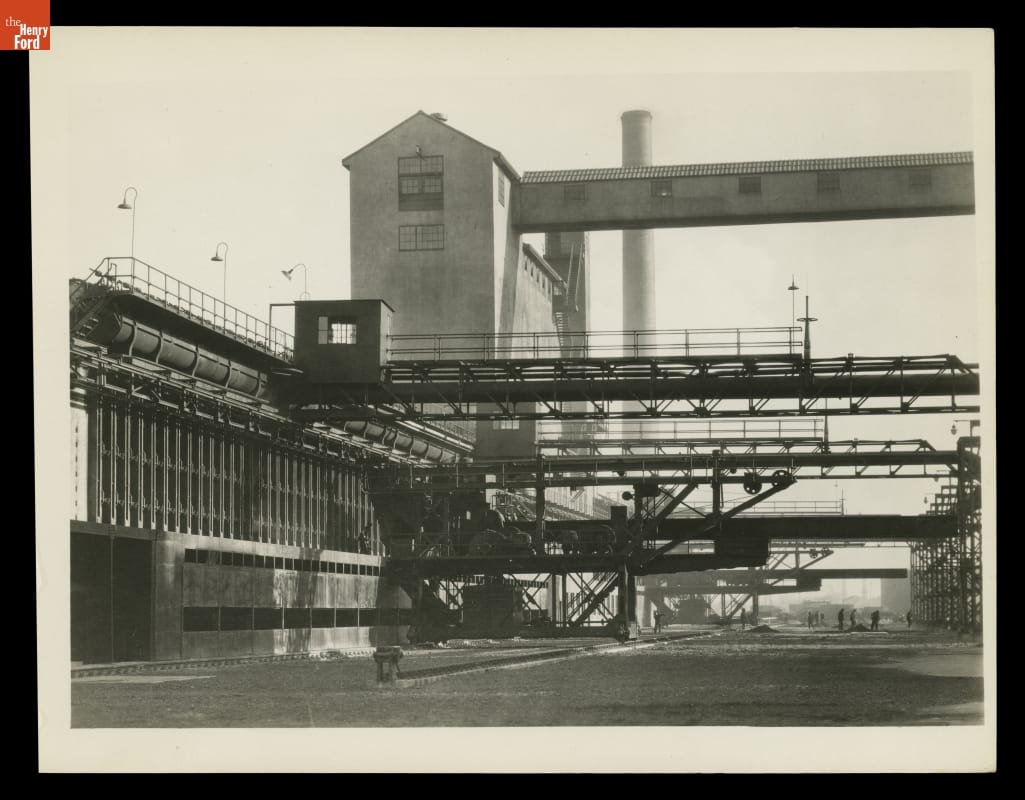
- Ford Motor Company Rouge Plant Coke Ovens, 1927 - Coke ovens at Ford Motor Company's Rouge plant converted coal into high-carbon coke, used in the factory's blast furnaces to produce iron. In 1921, the Rouge's ovens could produce up to 3,600 tons of coke daily. New, more efficient coke ovens opened in 1937. The coking process also produced gas used to heat some of the factory's other furnaces.
- 1927
- Collections - Artifact
Ford Motor Company Rouge Plant Coke Ovens, 1927
Coke ovens at Ford Motor Company's Rouge plant converted coal into high-carbon coke, used in the factory's blast furnaces to produce iron. In 1921, the Rouge's ovens could produce up to 3,600 tons of coke daily. New, more efficient coke ovens opened in 1937. The coking process also produced gas used to heat some of the factory's other furnaces.
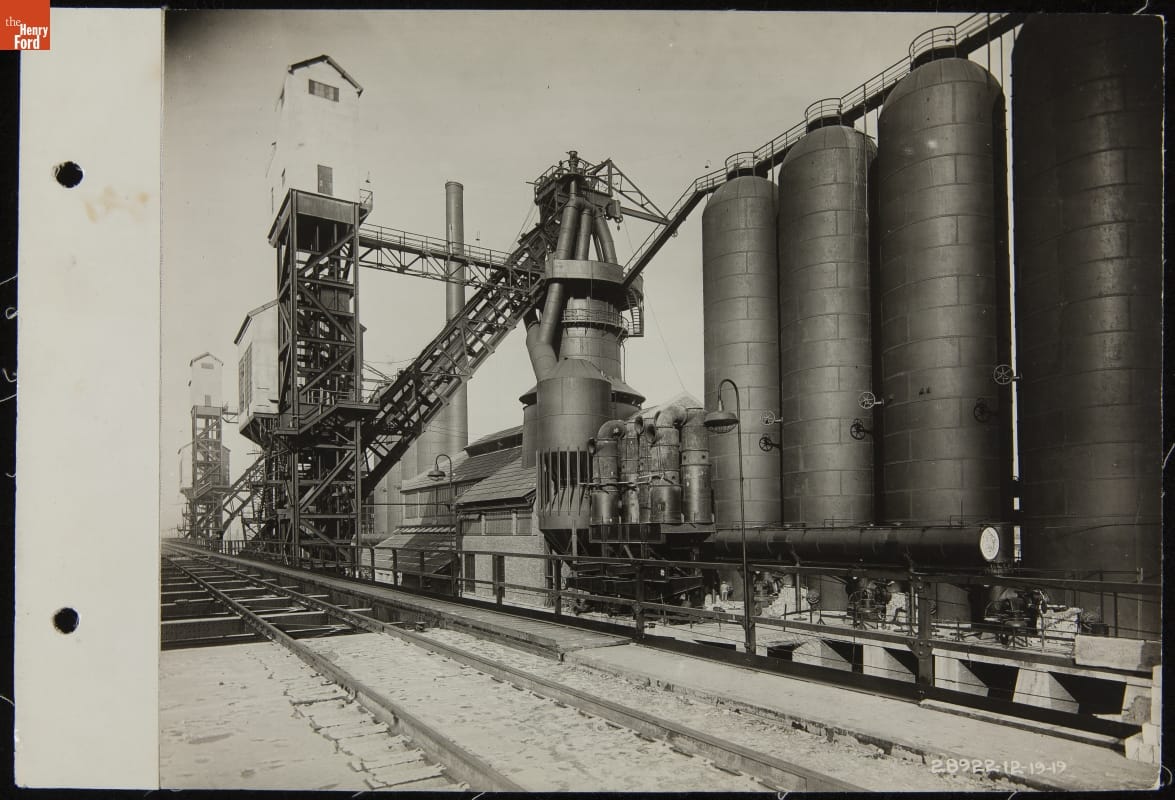
- Ford Motor Company Rouge Plant, December 1919 - Three blast furnaces at Ford's Rouge plant converted raw iron oxide ore into metallic iron. The furnaces were named for Henry Ford's grandsons. Blast Furnace A, the "Henry Ford II," opened in May 1920, while the identical Blast Furnace B, the "Benson Ford," followed in October 1922. The larger Blast Furnace C, the "William Clay Ford," opened in November 1948.
- December 19, 2019
- Collections - Artifact
Ford Motor Company Rouge Plant, December 1919
Three blast furnaces at Ford's Rouge plant converted raw iron oxide ore into metallic iron. The furnaces were named for Henry Ford's grandsons. Blast Furnace A, the "Henry Ford II," opened in May 1920, while the identical Blast Furnace B, the "Benson Ford," followed in October 1922. The larger Blast Furnace C, the "William Clay Ford," opened in November 1948.
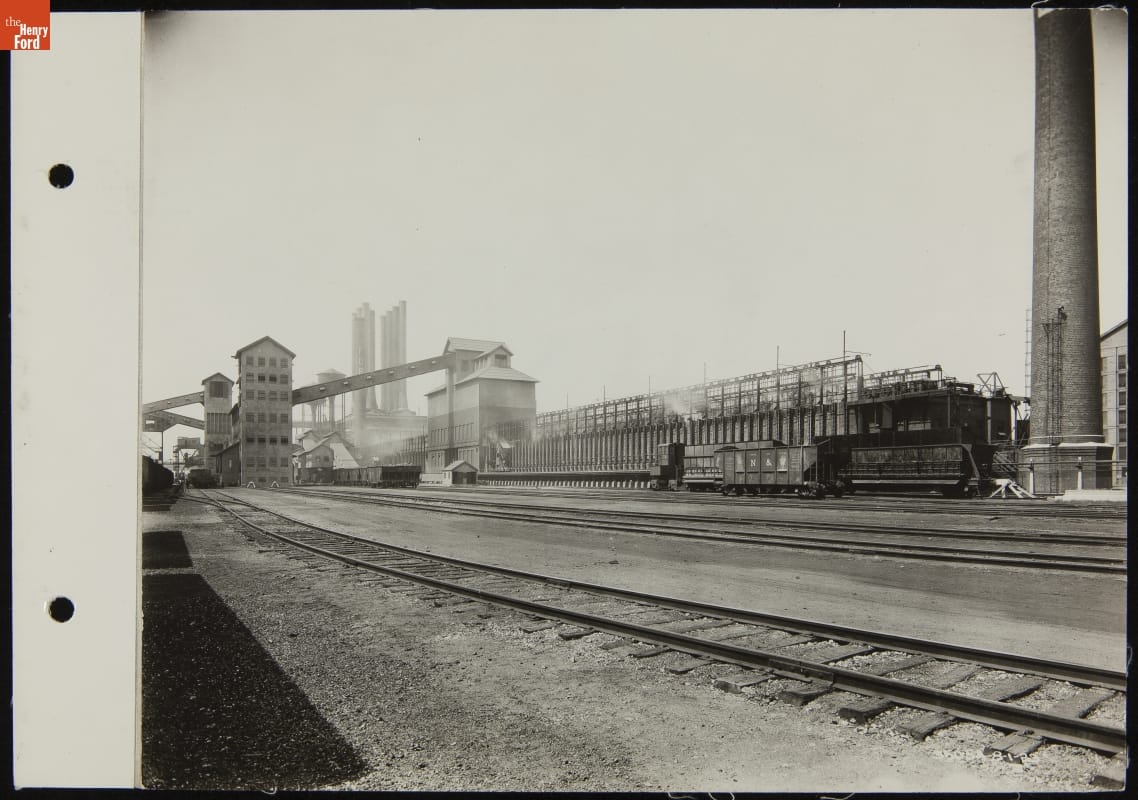
- Ford Motor Company Rouge Plant Coke Ovens from Southwest Corner, August 1923 - Coke ovens at Ford Motor Company's Rouge plant converted coal into high-carbon coke, used in the factory's blast furnaces to produce iron. In 1921, the Rouge's ovens could produce up to 3,600 tons of coke daily. New, more efficient coke ovens opened in 1937. The coking process also produced gas used to heat some of the factory's other furnaces.
- August 01, 1923
- Collections - Artifact
Ford Motor Company Rouge Plant Coke Ovens from Southwest Corner, August 1923
Coke ovens at Ford Motor Company's Rouge plant converted coal into high-carbon coke, used in the factory's blast furnaces to produce iron. In 1921, the Rouge's ovens could produce up to 3,600 tons of coke daily. New, more efficient coke ovens opened in 1937. The coking process also produced gas used to heat some of the factory's other furnaces.
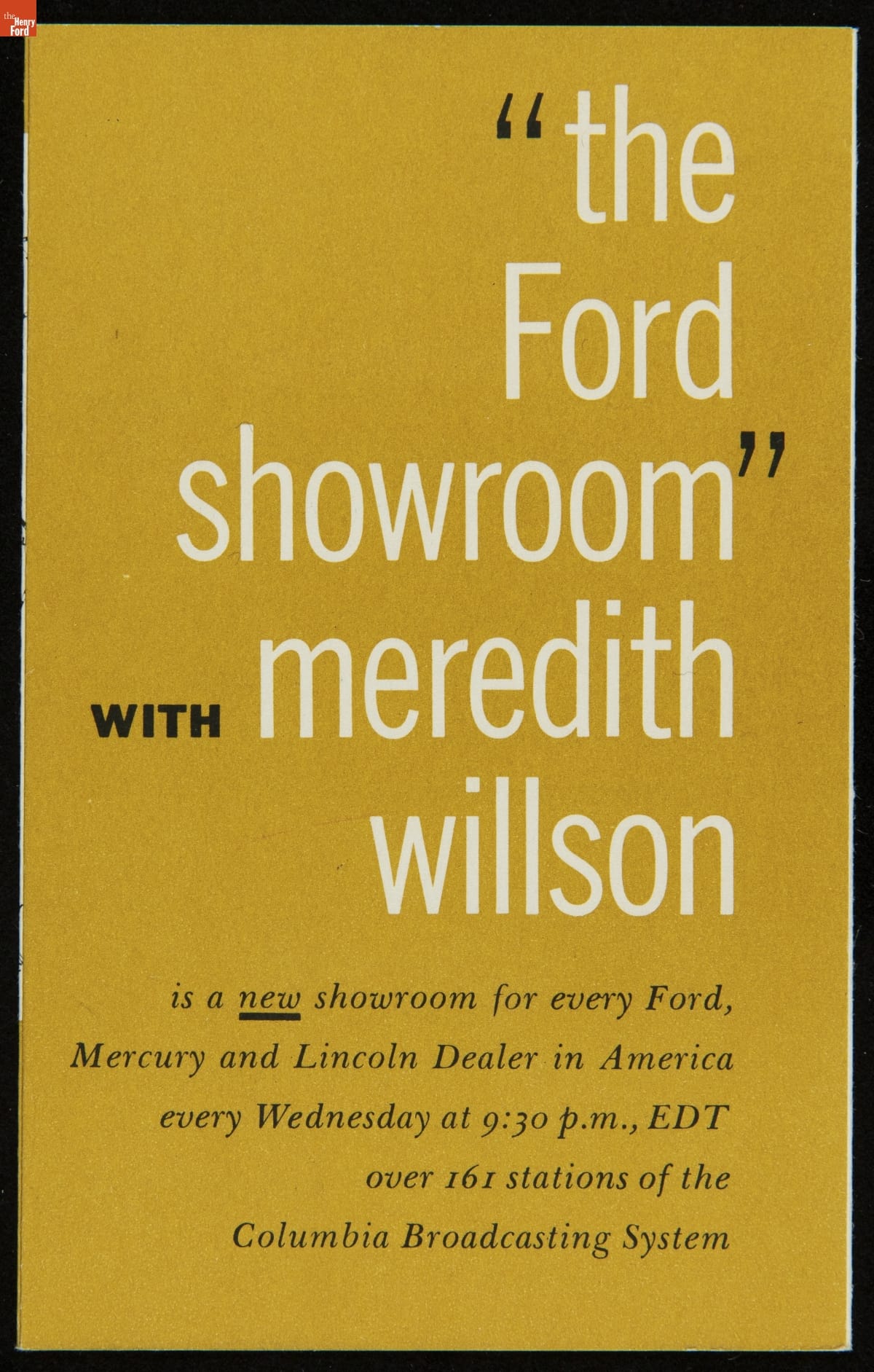
- "The Ford Showroom" with Meredith Willson, 1947 - Ford Motor Company sponsored the CBS radio show <em>The Ford Showroom</em> in 1947. The program featured bandleader Meredith Willson, a radio and film veteran. Willson reached greater heights ten years later, when his musical inspired by his Iowa childhood, <em>The Music Man</em>, opened on Broadway to critical and commercial success.
- 1947
- Collections - Artifact
"The Ford Showroom" with Meredith Willson, 1947
Ford Motor Company sponsored the CBS radio show The Ford Showroom in 1947. The program featured bandleader Meredith Willson, a radio and film veteran. Willson reached greater heights ten years later, when his musical inspired by his Iowa childhood, The Music Man, opened on Broadway to critical and commercial success.
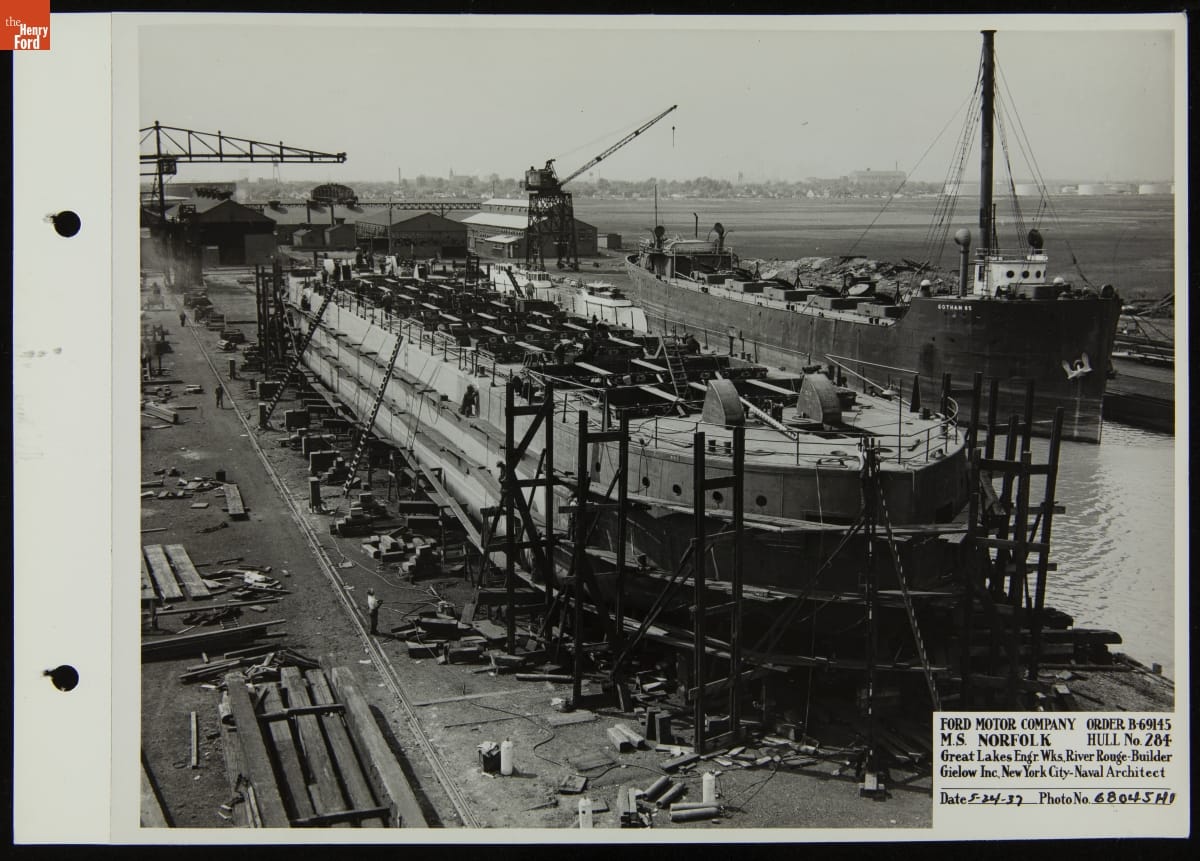
- Ford Freighter "Norfolk" under Construction at Great Lakes Engineering Works, May 24, 1937 - Ford Motor Company built four canal boats in the 1930s to transport finished auto parts between Ford's production plants on the East Coast and its River Rouge complex in Michigan. The freighters were designed to travel on the New York State Barge Canal. The <em>Norfolk</em>, named for the location of one of the Ford's East Coast plants, began service in 1937.
- April 30, 1937
- Collections - Artifact
Ford Freighter "Norfolk" under Construction at Great Lakes Engineering Works, May 24, 1937
Ford Motor Company built four canal boats in the 1930s to transport finished auto parts between Ford's production plants on the East Coast and its River Rouge complex in Michigan. The freighters were designed to travel on the New York State Barge Canal. The Norfolk, named for the location of one of the Ford's East Coast plants, began service in 1937.
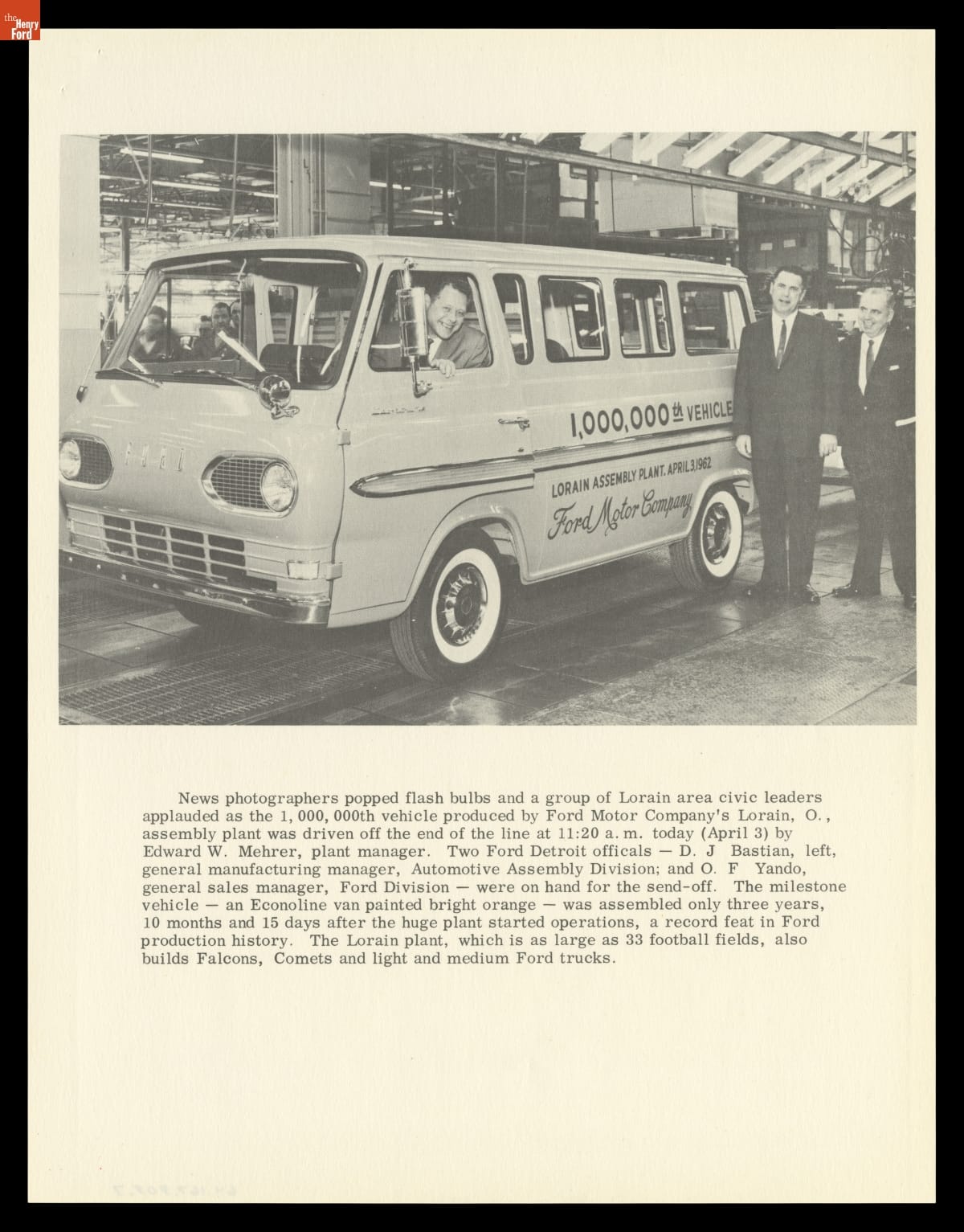
- 1,000,000th Vehicle Built at Ford Motor Company Assembly Plant, Lorain, Ohio, April 3, 1962 - Ford Motor Company opened an assembly plant in Lorain, Ohio, in 1958. Over the years, the factory manufactured various Ford and Mercury models. On April 3, 1962, employees celebrated production of the plant's one millionth vehicle: a Ford Econoline van. Workers at Lorain built another seven million vehicles before the plant closed in 2005.
- April 03, 1962
- Collections - Artifact
1,000,000th Vehicle Built at Ford Motor Company Assembly Plant, Lorain, Ohio, April 3, 1962
Ford Motor Company opened an assembly plant in Lorain, Ohio, in 1958. Over the years, the factory manufactured various Ford and Mercury models. On April 3, 1962, employees celebrated production of the plant's one millionth vehicle: a Ford Econoline van. Workers at Lorain built another seven million vehicles before the plant closed in 2005.
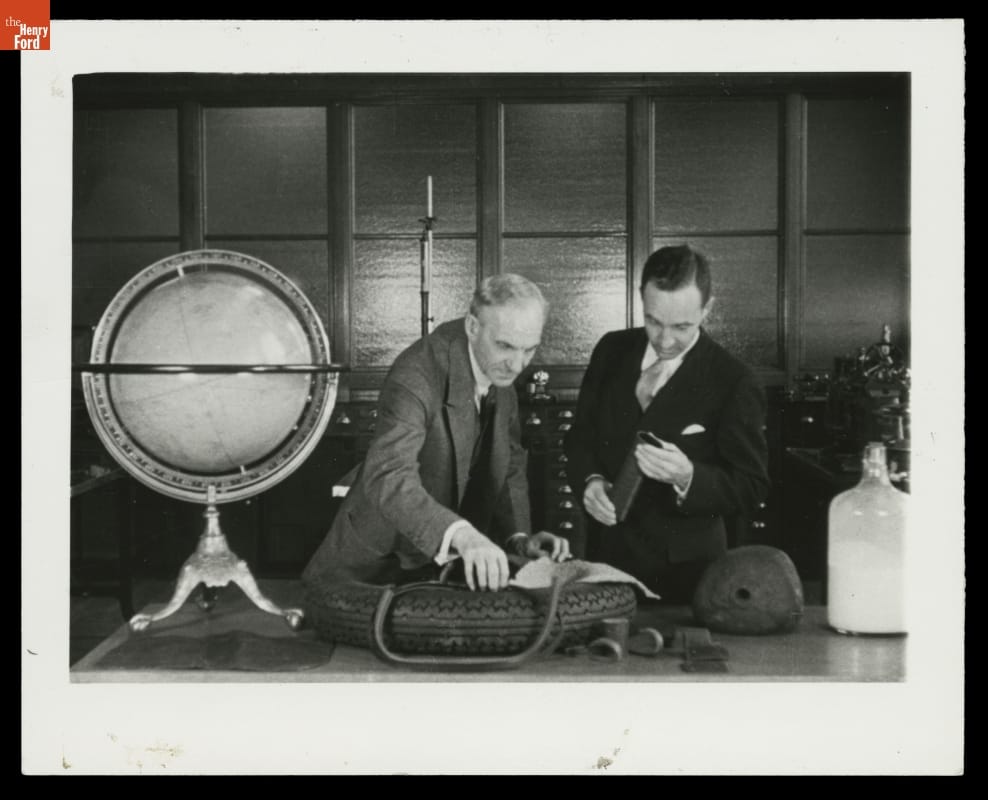
- Henry Ford and Edsel Ford Examining Tire in Laboratory, circa 1935 - Henry Ford and Edsel Ford were photographed inspecting a tire circa 1935. Ford Motor Company began construction of its own tire plant, at the Rouge factory complex, in 1937. Two years later, the plant was turning out as many as 16,000 tires each day. Nearly eight million "Ford" branded tires were made before World War II ended production in 1942.
- circa 1935
- Collections - Artifact
Henry Ford and Edsel Ford Examining Tire in Laboratory, circa 1935
Henry Ford and Edsel Ford were photographed inspecting a tire circa 1935. Ford Motor Company began construction of its own tire plant, at the Rouge factory complex, in 1937. Two years later, the plant was turning out as many as 16,000 tires each day. Nearly eight million "Ford" branded tires were made before World War II ended production in 1942.
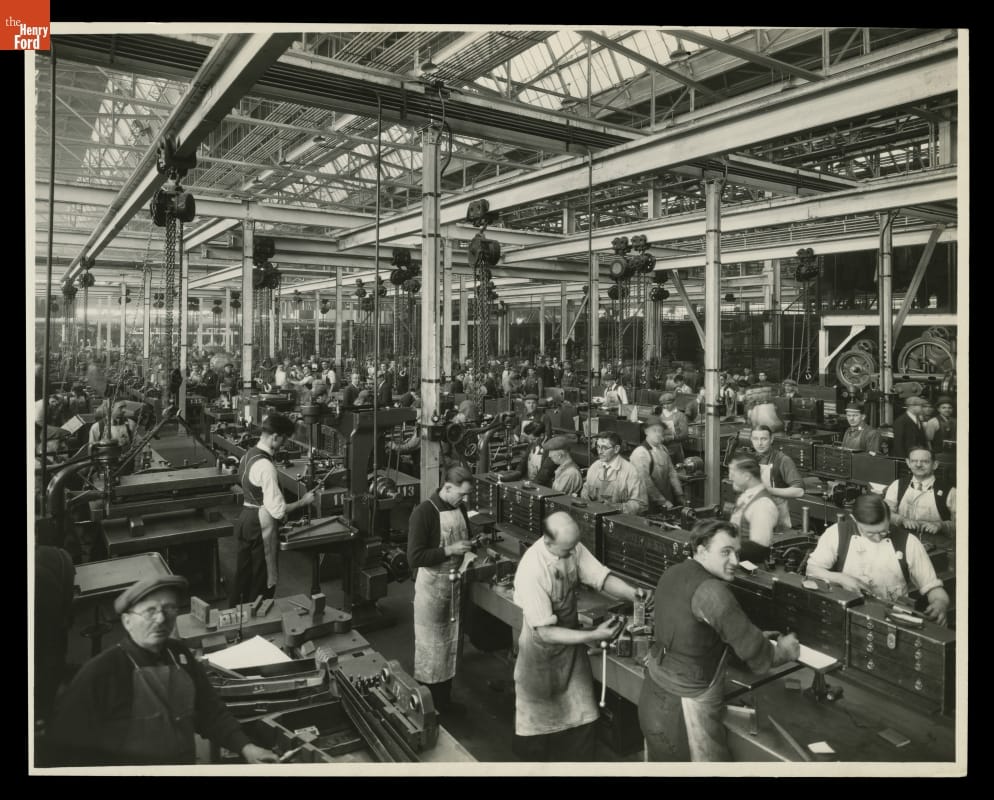
- Tool and Die Department in Pressed Steel Building, Ford Motor Company Rouge Plant, Dearborn, Michigan, 1928 - The pressed-steel building at Ford Motor Company's Rouge plant produced steel components like automobile fenders, body panels, and roof sections. In the late 1930s, the building had more than 4,000 presses, and 10,000 workers turned out more than 2,000 different parts. Some of those parts were used at the Rouge, and some were shipped to other Ford assembly plants.
- February 01, 1928
- Collections - Artifact
Tool and Die Department in Pressed Steel Building, Ford Motor Company Rouge Plant, Dearborn, Michigan, 1928
The pressed-steel building at Ford Motor Company's Rouge plant produced steel components like automobile fenders, body panels, and roof sections. In the late 1930s, the building had more than 4,000 presses, and 10,000 workers turned out more than 2,000 different parts. Some of those parts were used at the Rouge, and some were shipped to other Ford assembly plants.
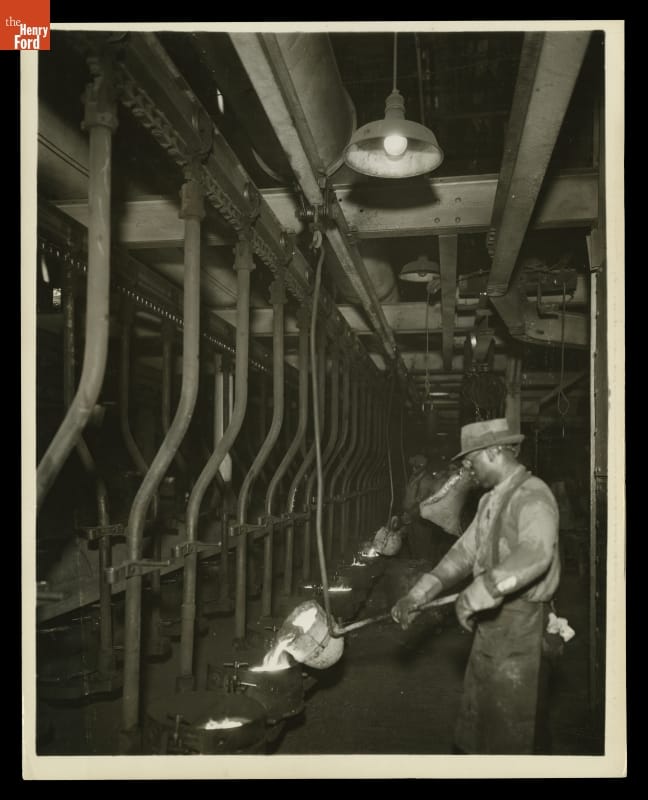
- Foundry Workers at the Ford Rouge Plant, 1934 - Workers at the Ford Rouge plant's foundry poured a molten mixture of metal, coke, and limestone into molds to create cast-metal engine blocks and parts. Once "shaken out" of their molds, castings were roughly machined before heading elsewhere for finishing and assembly. The Rouge foundry set an industry benchmark in 1932 by successfully casting Ford's intricate, single-piece V-8 engine block.
- 1934
- Collections - Artifact
Foundry Workers at the Ford Rouge Plant, 1934
Workers at the Ford Rouge plant's foundry poured a molten mixture of metal, coke, and limestone into molds to create cast-metal engine blocks and parts. Once "shaken out" of their molds, castings were roughly machined before heading elsewhere for finishing and assembly. The Rouge foundry set an industry benchmark in 1932 by successfully casting Ford's intricate, single-piece V-8 engine block.