
Search
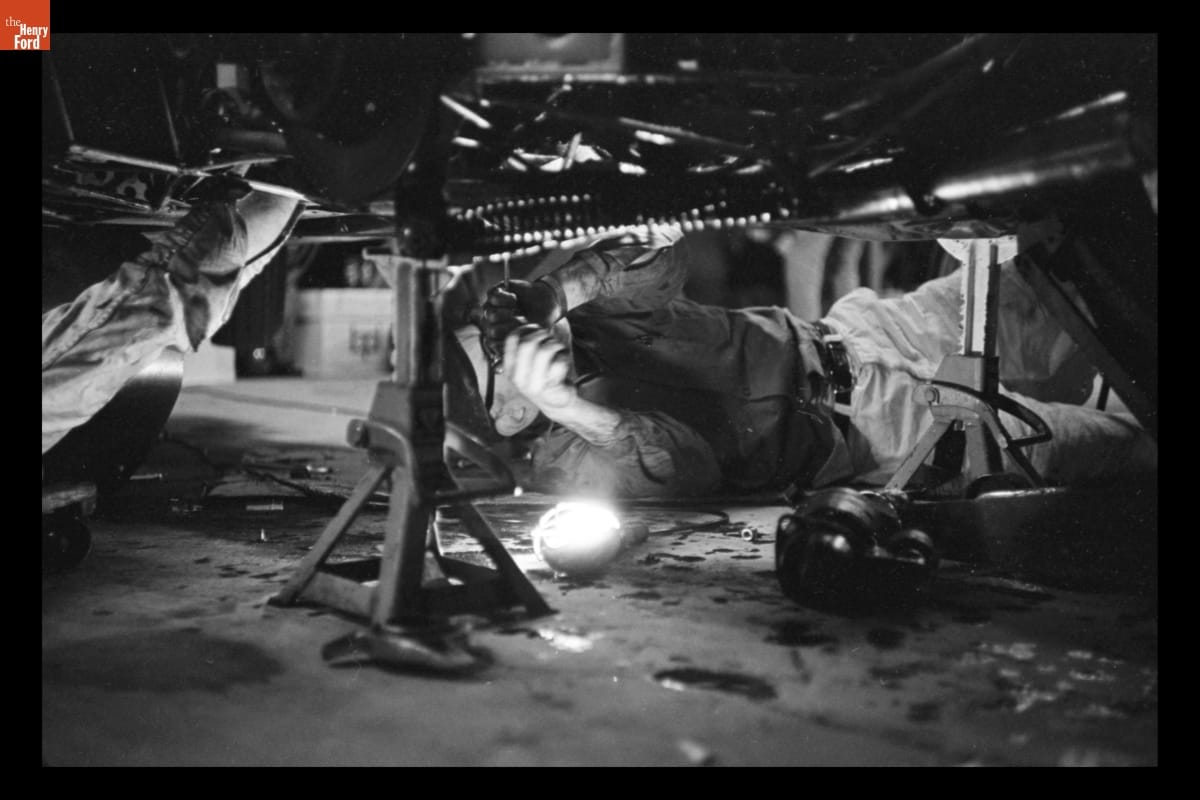
- Mechanic Working on Shelby Cobra Daytona Coupe at the Daytona Continental 2000 km Race, February 1965 - Carroll Shelby's Shelby American racing team entered six cars in the 1965 Daytona Continental 2000-Kilometer Race. Of those six cars, four -- two Ford GT40s and two Shelby Cobra Daytona Coupes -- finished in the top five positions. The overall victory went to the team's #73 GT40 driven by Ken Miles and Lloyd Ruby -- the first win by a GT40 anywhere.
- February 28, 1965
- Collections - Artifact
Mechanic Working on Shelby Cobra Daytona Coupe at the Daytona Continental 2000 km Race, February 1965
Carroll Shelby's Shelby American racing team entered six cars in the 1965 Daytona Continental 2000-Kilometer Race. Of those six cars, four -- two Ford GT40s and two Shelby Cobra Daytona Coupes -- finished in the top five positions. The overall victory went to the team's #73 GT40 driven by Ken Miles and Lloyd Ruby -- the first win by a GT40 anywhere.
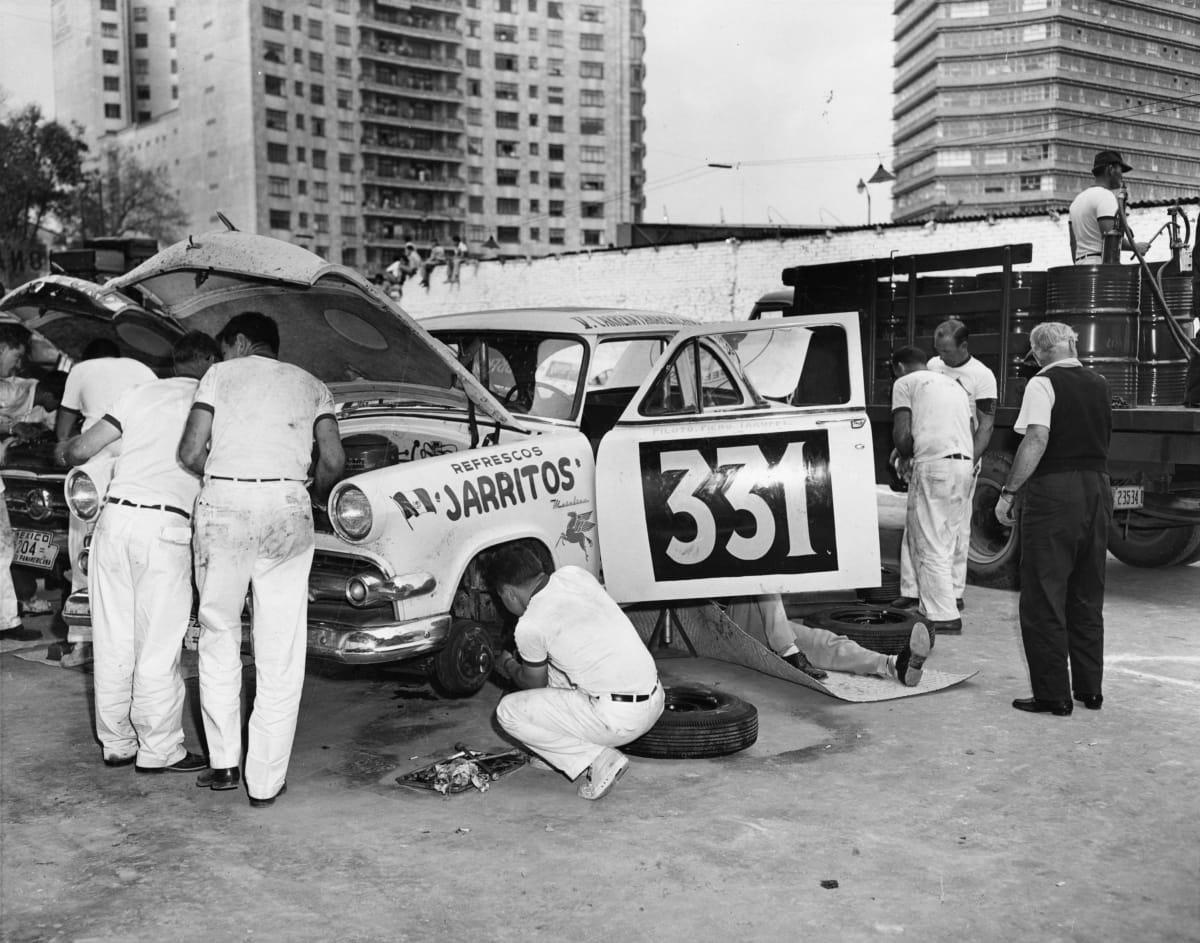
- Mechanics Working on Race Car during the La Carrera Panamericana (Mexican Road Race), 1954 - La Carrera Panamericana is known famously in motorsports as a long and difficult race that often led to the deaths of many competitors, spectators, and safety personnel. It was important for racing teams and their mechanics to constantly inspect and maintain their vehicles to reduce the dangers of mechanical failure or miscalculation of racing physics.
- November 01, 1954
- Collections - Artifact
Mechanics Working on Race Car during the La Carrera Panamericana (Mexican Road Race), 1954
La Carrera Panamericana is known famously in motorsports as a long and difficult race that often led to the deaths of many competitors, spectators, and safety personnel. It was important for racing teams and their mechanics to constantly inspect and maintain their vehicles to reduce the dangers of mechanical failure or miscalculation of racing physics.
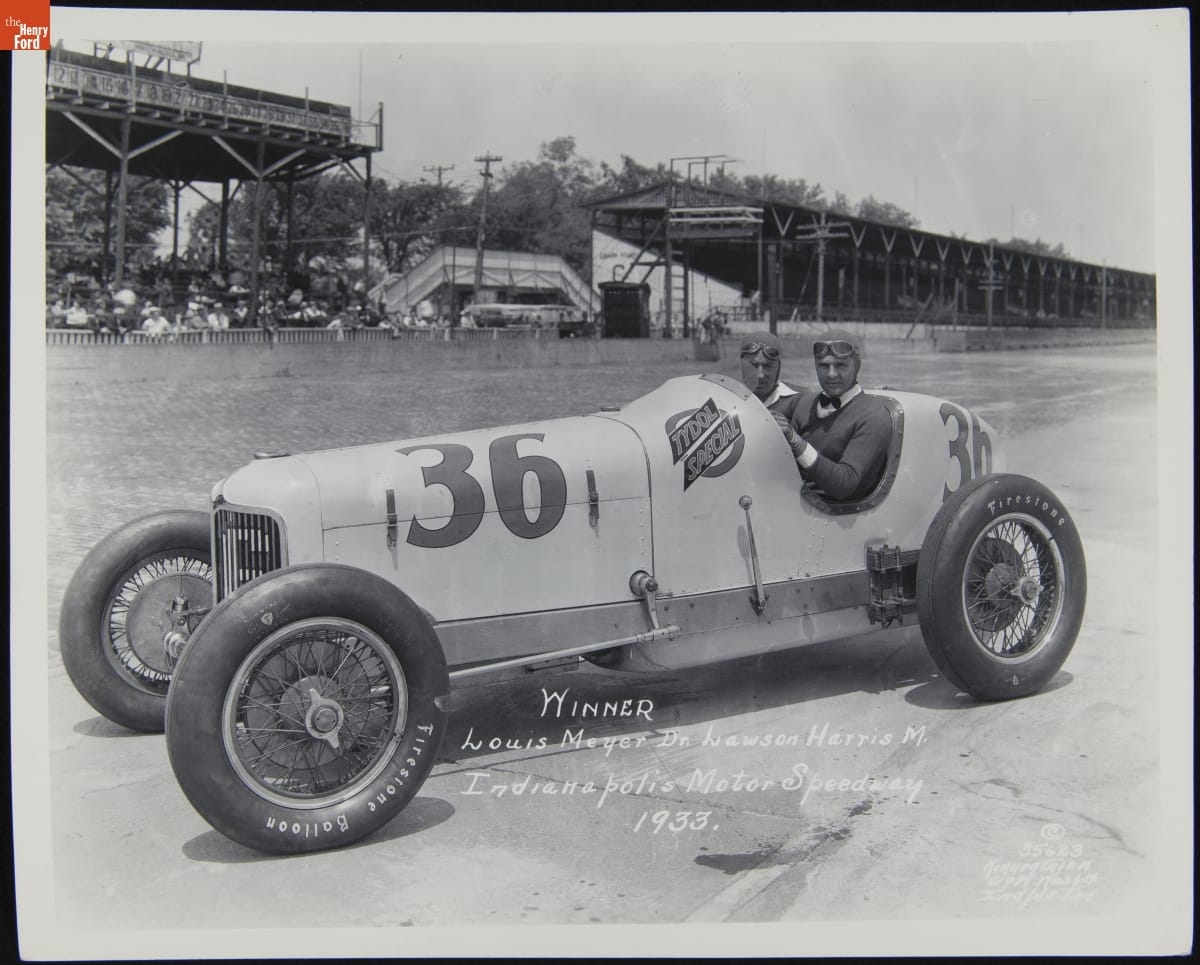
- Winners of the 1933 Indianapolis 500, Driver Louis Meyer and Mechanic Lawson Harris, in #36 Tydol Special - Driver Louis Meyer and riding mechanic Lawson Harris won the Indianapolis 500 in 1933, averaging 104.162 mph. Their Miller-built car was sponsored by Tydol gasoline. It was the second of Meyer's three Indy 500 victories. Meyer is also credited with starting the Indy tradition of drinking milk in Victory Lane -- he downed a glass of buttermilk after his 1936 win.
- 1933
- Collections - Artifact
Winners of the 1933 Indianapolis 500, Driver Louis Meyer and Mechanic Lawson Harris, in #36 Tydol Special
Driver Louis Meyer and riding mechanic Lawson Harris won the Indianapolis 500 in 1933, averaging 104.162 mph. Their Miller-built car was sponsored by Tydol gasoline. It was the second of Meyer's three Indy 500 victories. Meyer is also credited with starting the Indy tradition of drinking milk in Victory Lane -- he downed a glass of buttermilk after his 1936 win.
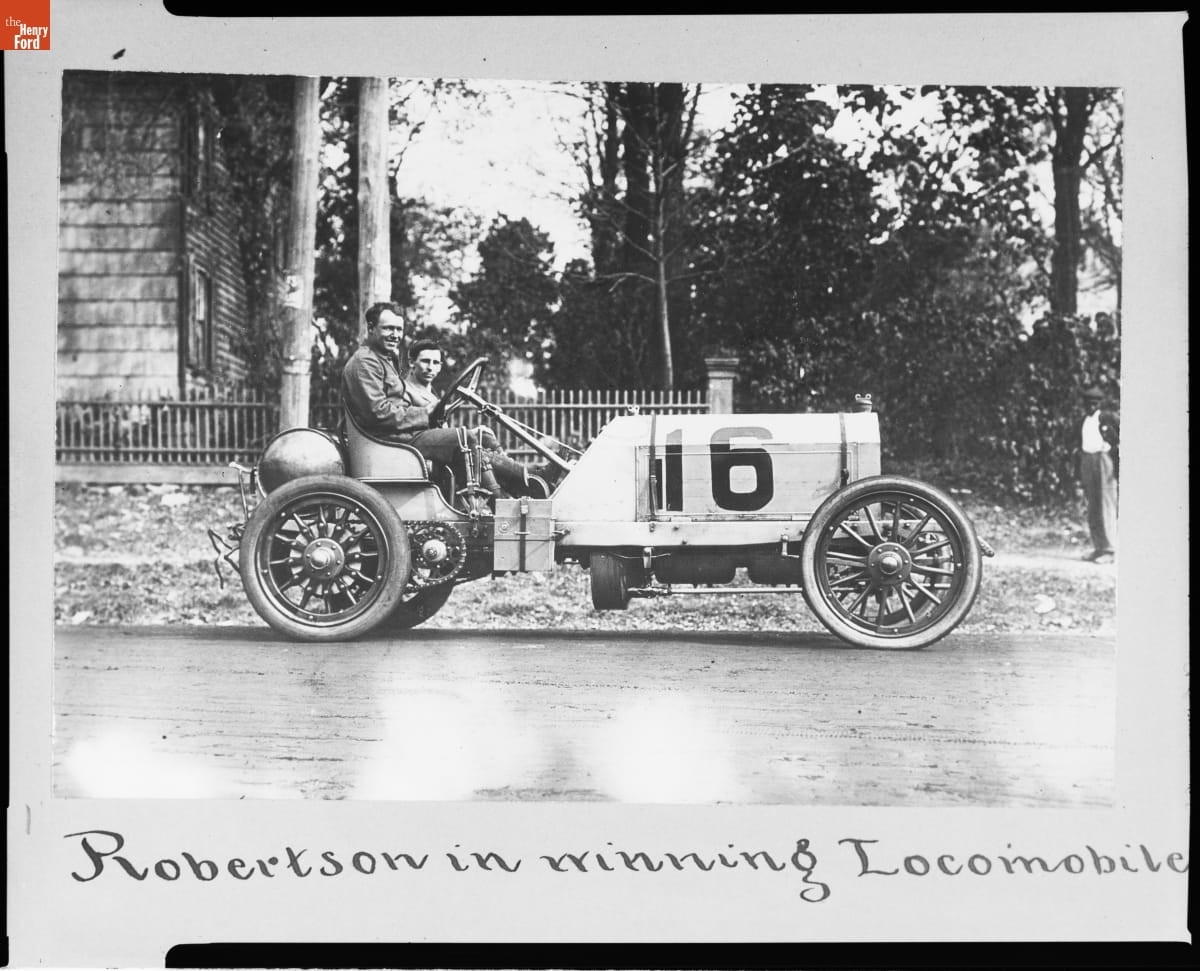
- George Robertson in the Winning Locomobile #16 at the 1908 Vanderbilt Cup Race - Driver George Robertson and riding mechanic Glenn Ethridge won the 1908 Vanderbilt Cup with a 1906 Locomobile. It was the first American-built car to win America's first great automobile race. The Locomobile competed while wearing number 16, and it's been known as "Old 16" ever since.
- October 24, 1908
- Collections - Artifact
George Robertson in the Winning Locomobile #16 at the 1908 Vanderbilt Cup Race
Driver George Robertson and riding mechanic Glenn Ethridge won the 1908 Vanderbilt Cup with a 1906 Locomobile. It was the first American-built car to win America's first great automobile race. The Locomobile competed while wearing number 16, and it's been known as "Old 16" ever since.
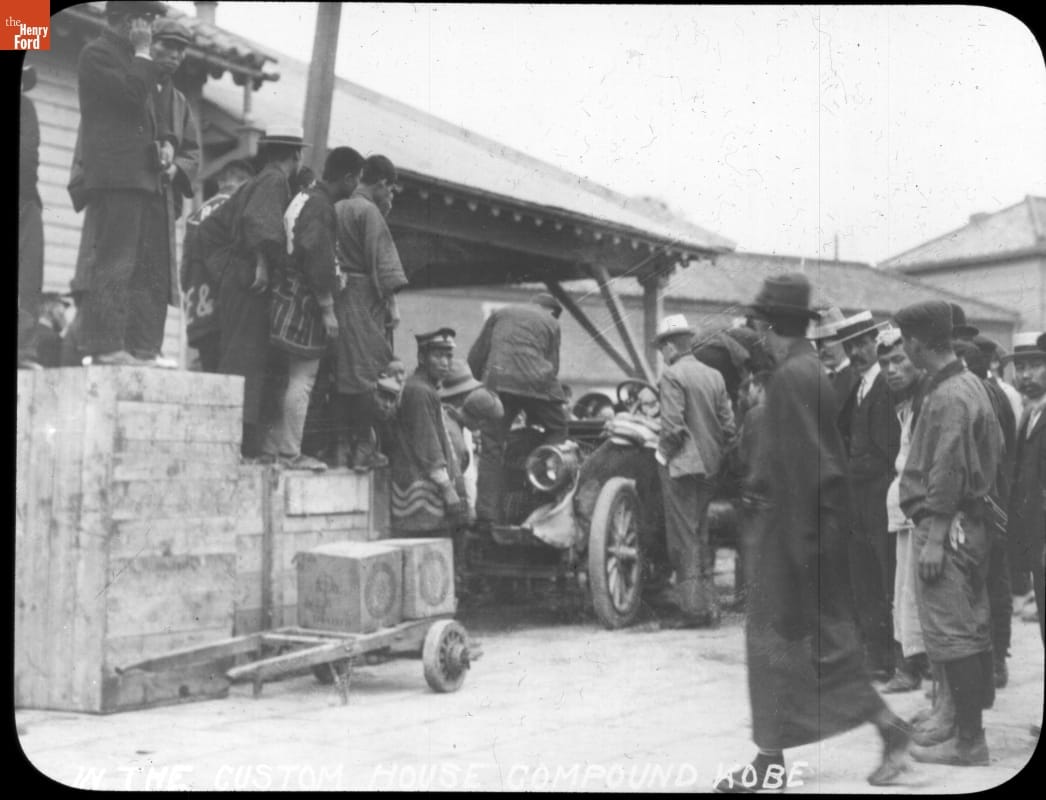
- The Thomas Flyer and Team in the Custom House Compound, Kobe, Japan, New York to Paris Race, 1908 - The 1908 New York to Paris race was a 22,000-mile automobile endurance contest. After crossing the continental United States, teams shipped their vehicles to Asia. The Americans, driving a Thomas Flyer, disembarked in Japan in early May. As the Flyer and crew trekked carefully over the narrow Japanese roads, they encountered many inquisitive, courteous and helpful people.
- 1908
- Collections - Artifact
The Thomas Flyer and Team in the Custom House Compound, Kobe, Japan, New York to Paris Race, 1908
The 1908 New York to Paris race was a 22,000-mile automobile endurance contest. After crossing the continental United States, teams shipped their vehicles to Asia. The Americans, driving a Thomas Flyer, disembarked in Japan in early May. As the Flyer and crew trekked carefully over the narrow Japanese roads, they encountered many inquisitive, courteous and helpful people.
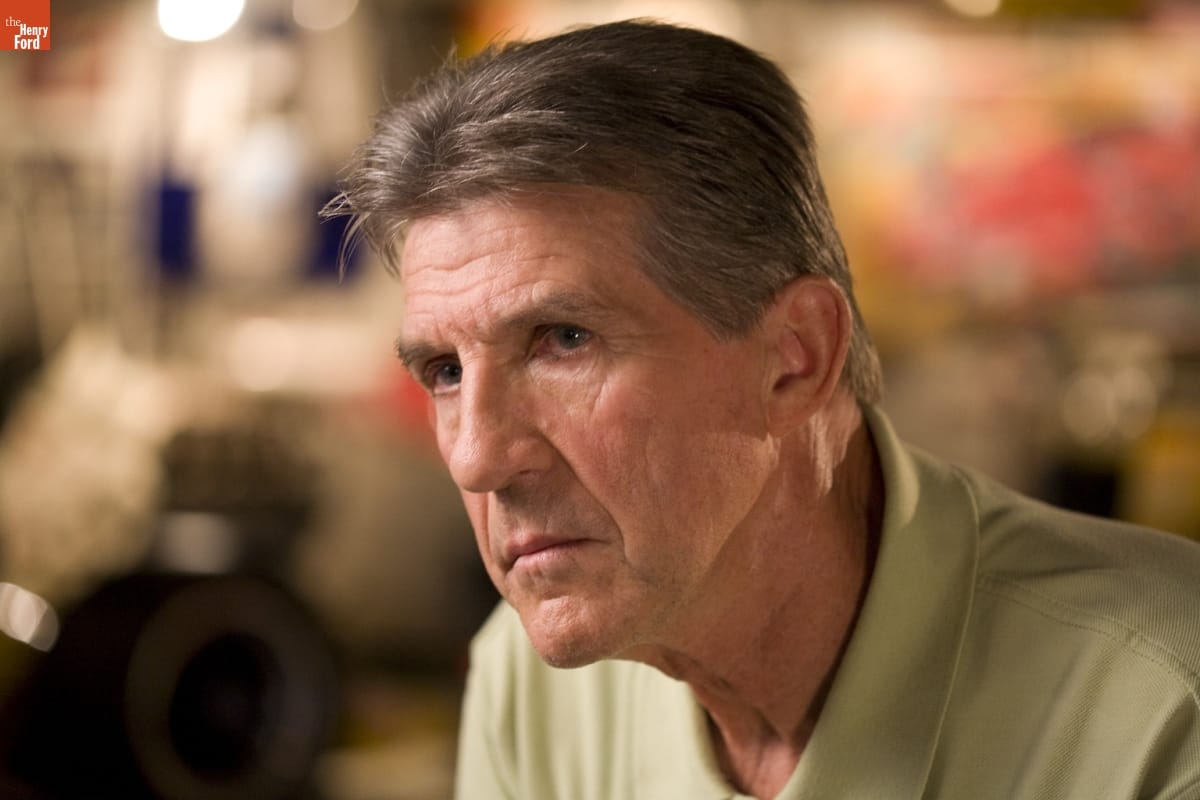
- Oral History Interview With Jim Dilamarter, August 21, 2008--Photographs--Digital Images--Item 6 - Jim Dilamarter joined Vel's Parnelli Jones Racing in 1969. He handled everything from race car repairs to front office business operations as the team competed in Indy car, Formula One, and off-road events. In 2008 staff from The Henry Ford interviewed Dilamarter in Torrence, California, as part of the Collecting Innovation Today Oral History Project.
- August 21, 2008
- Collections - Artifact
Oral History Interview With Jim Dilamarter, August 21, 2008--Photographs--Digital Images--Item 6
Jim Dilamarter joined Vel's Parnelli Jones Racing in 1969. He handled everything from race car repairs to front office business operations as the team competed in Indy car, Formula One, and off-road events. In 2008 staff from The Henry Ford interviewed Dilamarter in Torrence, California, as part of the Collecting Innovation Today Oral History Project.
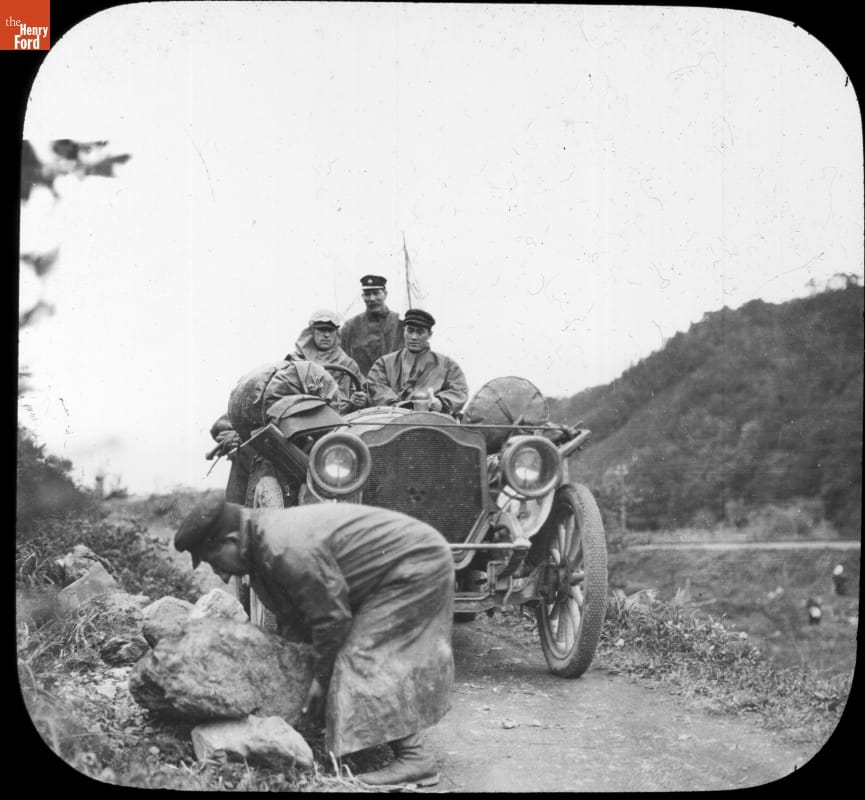
- George Miller Clearing the Way for the Thomas Flyer in Japan, New York to Paris Race, 1908 - The 1908 New York to Paris race was a 22,000-mile automobile endurance contest. After crossing the continental United States, teams shipped their vehicles to Asia. The Americans, driving a Thomas Flyer, disembarked in Japan in early May. As the Flyer and crew trekked carefully over the narrow Japanese roads, they encountered many inquisitive, courteous and helpful people.
- 1908
- Collections - Artifact
George Miller Clearing the Way for the Thomas Flyer in Japan, New York to Paris Race, 1908
The 1908 New York to Paris race was a 22,000-mile automobile endurance contest. After crossing the continental United States, teams shipped their vehicles to Asia. The Americans, driving a Thomas Flyer, disembarked in Japan in early May. As the Flyer and crew trekked carefully over the narrow Japanese roads, they encountered many inquisitive, courteous and helpful people.
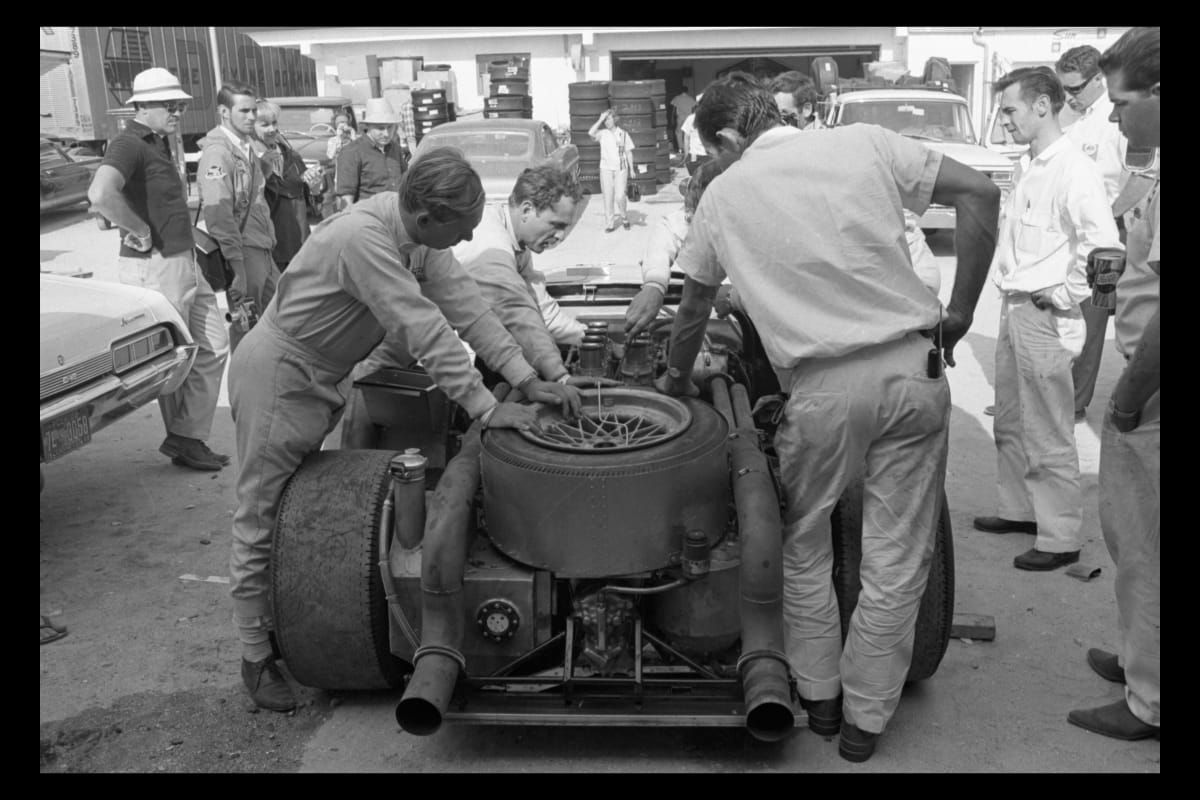
- Chaparral 2D Driven by Bob Johnson and Bruce Jennings at the Daytona Continental 24 Hours Race, February 1967 - Photographer Dave Friedman captured and preserved auto racing history. His work -- and his collection of works by other photographers -- documents key races, cars, drivers, and teams. This photo, from the 1967 Daytona 24-Hour race, shows the #14 Chaparral 2D designed by Jim Hall and Hap Sharp. The car was distinguished by its roof-mounted air-intake snorkel. Gearbox problems ended its race early.
- 04 February 1967 - 05 February 1967
- Collections - Artifact
Chaparral 2D Driven by Bob Johnson and Bruce Jennings at the Daytona Continental 24 Hours Race, February 1967
Photographer Dave Friedman captured and preserved auto racing history. His work -- and his collection of works by other photographers -- documents key races, cars, drivers, and teams. This photo, from the 1967 Daytona 24-Hour race, shows the #14 Chaparral 2D designed by Jim Hall and Hap Sharp. The car was distinguished by its roof-mounted air-intake snorkel. Gearbox problems ended its race early.
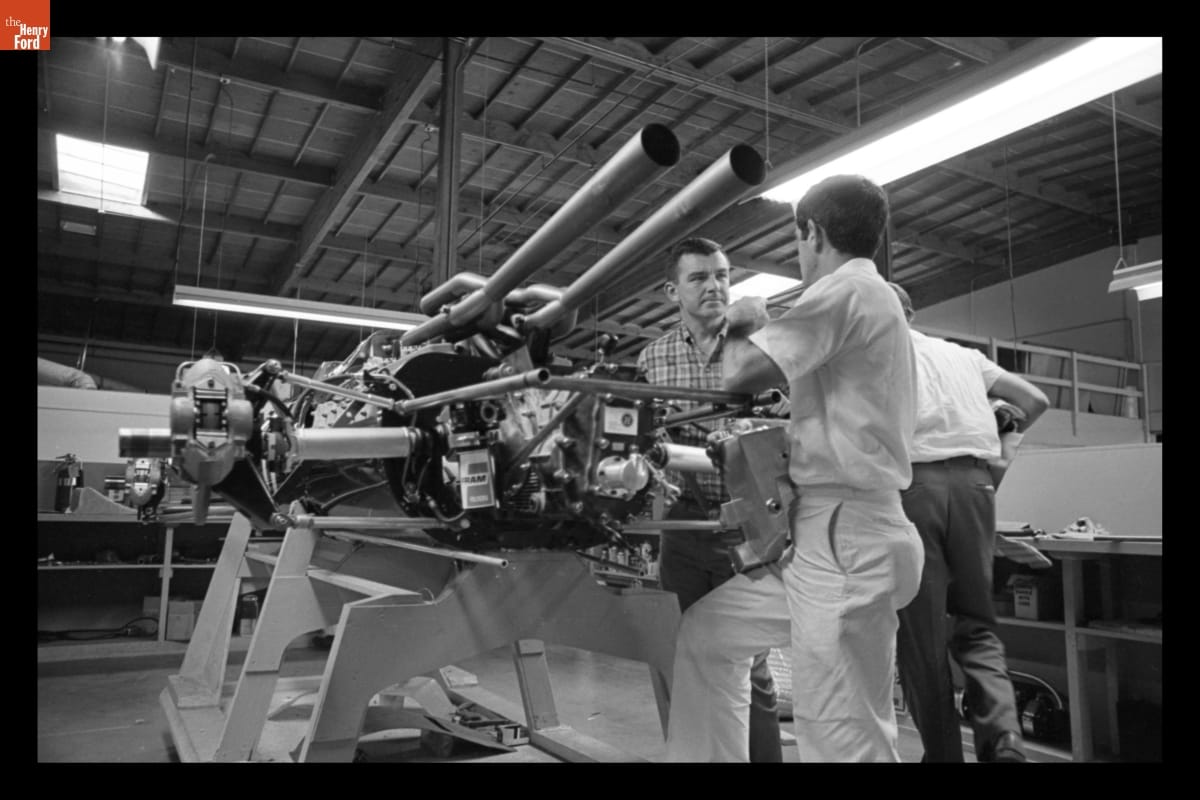
- Preparing for the Indianapolis 500 at the All American Racers Facility, May 1966 - Photographer Dave Friedman captured and preserved auto racing history. His work -- and his collection of works by other photographers -- documents key races, cars, drivers, and teams. This photo shows preparations for the 1966 Indianapolis 500 at the All American Racers shop in Santa Ana, California. Joe Leonard finished 9th in the #6 car -- AAR's best Indy 500 finish that year.
- May 01, 1966
- Collections - Artifact
Preparing for the Indianapolis 500 at the All American Racers Facility, May 1966
Photographer Dave Friedman captured and preserved auto racing history. His work -- and his collection of works by other photographers -- documents key races, cars, drivers, and teams. This photo shows preparations for the 1966 Indianapolis 500 at the All American Racers shop in Santa Ana, California. Joe Leonard finished 9th in the #6 car -- AAR's best Indy 500 finish that year.
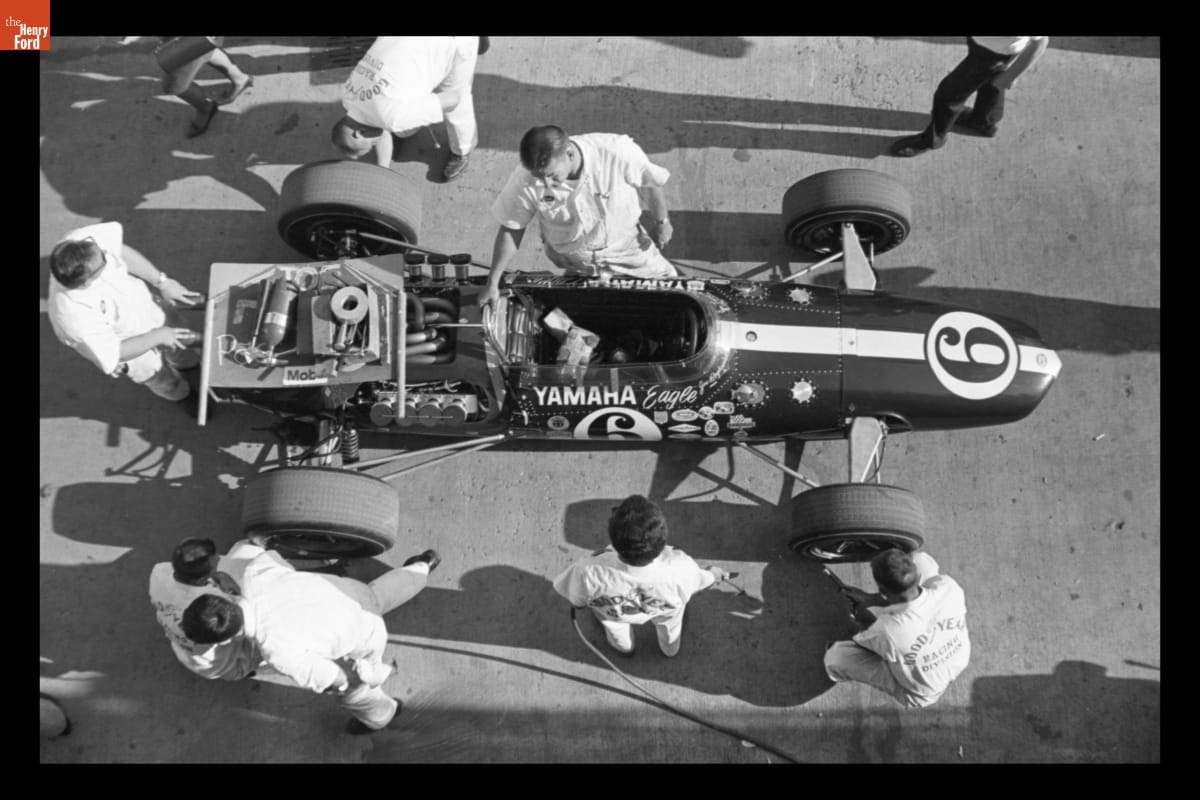
- Eagle-Ford Race Car Driven by Joe Leonard at Indianapolis Motor Speedway, May 1966 -
- May 01, 1966
- Collections - Artifact
Eagle-Ford Race Car Driven by Joe Leonard at Indianapolis Motor Speedway, May 1966