
Search
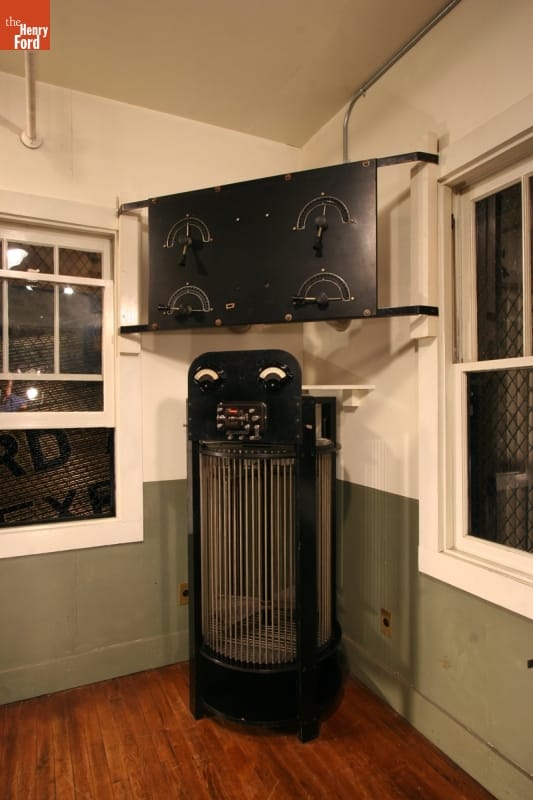
- Radio Goniometer Used at Ford Airport, circa 1927 - The radio beacon may be Henry Ford's most important contribution to aviation. Early pilots depended on landmarks, preventing reliable navigation in bad weather. Ford's engineers developed a radio beacon that simultaneously transmitted the Morse code letter "A" (dot-dash) in one direction and the letter "N" (dash-dot) in another. The pilot steered until the separate signals merged into a steady hum.
- circa 1927
- Collections - Artifact
Radio Goniometer Used at Ford Airport, circa 1927
The radio beacon may be Henry Ford's most important contribution to aviation. Early pilots depended on landmarks, preventing reliable navigation in bad weather. Ford's engineers developed a radio beacon that simultaneously transmitted the Morse code letter "A" (dot-dash) in one direction and the letter "N" (dash-dot) in another. The pilot steered until the separate signals merged into a steady hum.
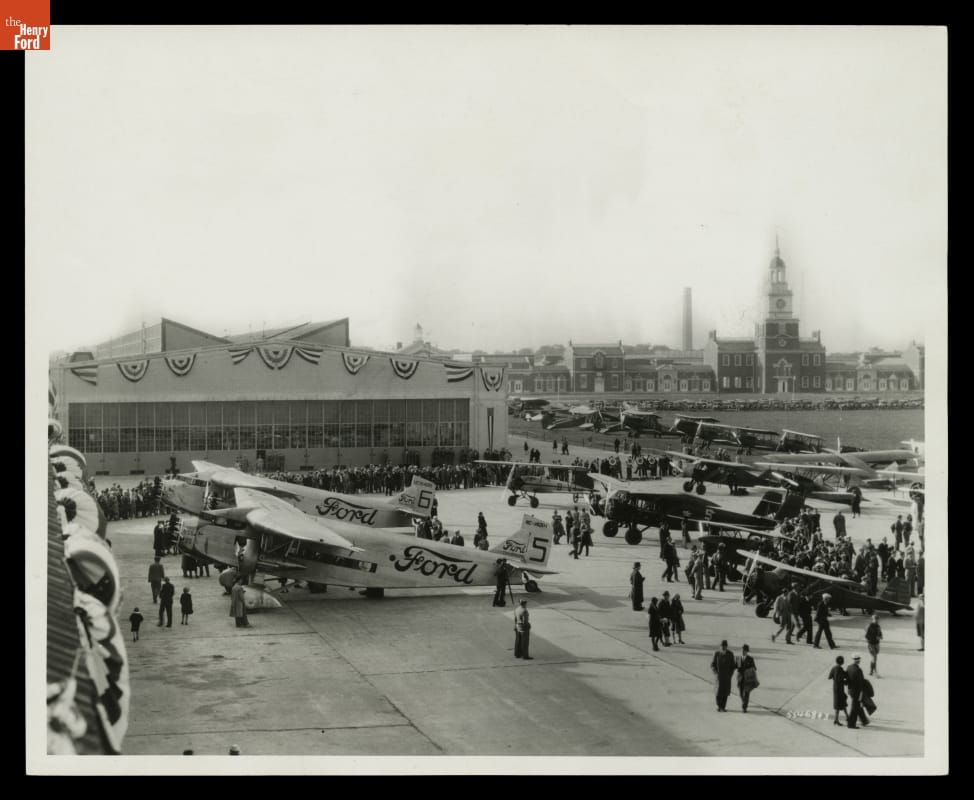
- Ford Reliability Tour at Ford Airport, Dearborn, Michigan, 1930 - From 1925-1931, Ford Motor Company sponsored annual air tours to promote reliability and safety in commercial aircraft. Pilots flew to pre-determined cities, and their airplanes were rated on the ability to take off and land quickly and maintain consistent speeds. The 1930 tour included 18 entries and visited 29 cities in the United States and Canada.
- September 27, 1930
- Collections - Artifact
Ford Reliability Tour at Ford Airport, Dearborn, Michigan, 1930
From 1925-1931, Ford Motor Company sponsored annual air tours to promote reliability and safety in commercial aircraft. Pilots flew to pre-determined cities, and their airplanes were rated on the ability to take off and land quickly and maintain consistent speeds. The 1930 tour included 18 entries and visited 29 cities in the United States and Canada.
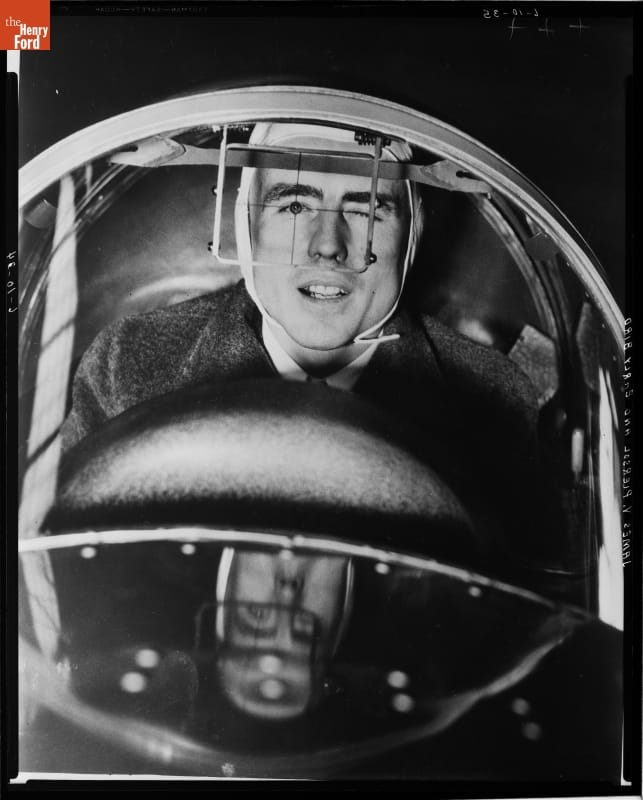
- Detroit News--Airplane--Lockheed Orion--James V. Piersol, William A. Kuenzel and Early Bird--Item1 - The <EM>Detroit News</EM> bought a new Lockheed Orion in 1934 to assist in its news-gathering efforts. The monoplane, christened "Early Bird", contained space for a reporter or radio operator, a compact radio broadcasting station and three cameras--one of which was located in a streamlined nacelle on the left wing. A viewfinder in the cockpit interior helped the pilot line up the wing-mounted camera.
- June 10, 1934
- Collections - Artifact
Detroit News--Airplane--Lockheed Orion--James V. Piersol, William A. Kuenzel and Early Bird--Item1
The Detroit News bought a new Lockheed Orion in 1934 to assist in its news-gathering efforts. The monoplane, christened "Early Bird", contained space for a reporter or radio operator, a compact radio broadcasting station and three cameras--one of which was located in a streamlined nacelle on the left wing. A viewfinder in the cockpit interior helped the pilot line up the wing-mounted camera.
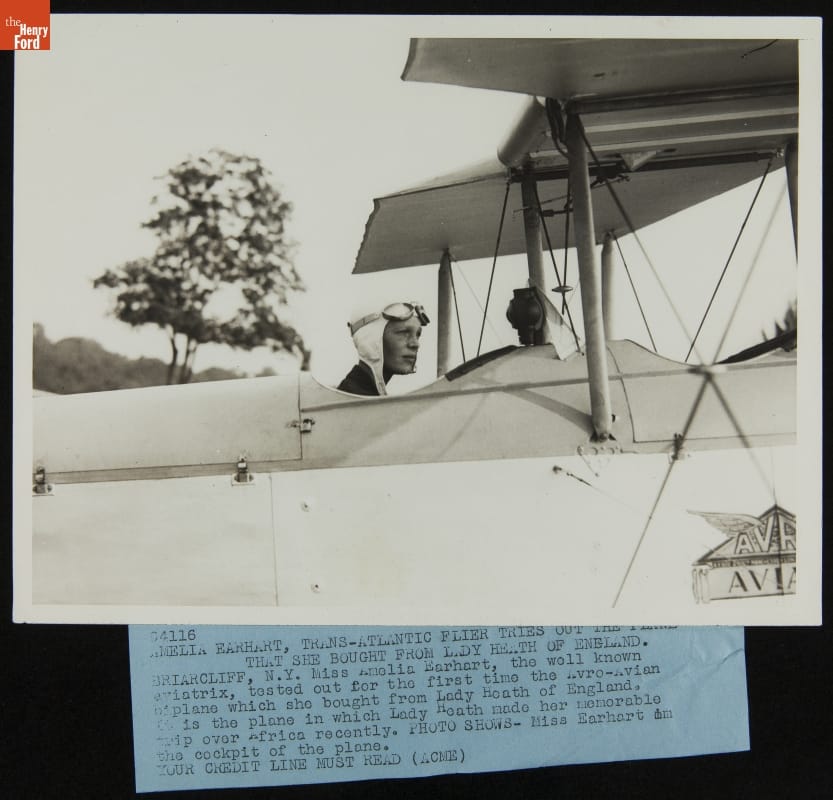
- Amelia Earhart in the Avro-Avian Biplane Received from Lady Heath, 1928 - World-renowned Irish pilot Mary, Lady Heath, was an inspiration to Amelia Earhart. After Lady Heath took Earhart for a flight in her Avro Avian biplane, which Heath had flown solo from South Africa to Great Britain, Earhart was so impressed that she bought the aircraft and shipped it back to the United States. Soon Earhart's own fame eclipsed Lady Heath's.
- 1928
- Collections - Artifact
Amelia Earhart in the Avro-Avian Biplane Received from Lady Heath, 1928
World-renowned Irish pilot Mary, Lady Heath, was an inspiration to Amelia Earhart. After Lady Heath took Earhart for a flight in her Avro Avian biplane, which Heath had flown solo from South Africa to Great Britain, Earhart was so impressed that she bought the aircraft and shipped it back to the United States. Soon Earhart's own fame eclipsed Lady Heath's.
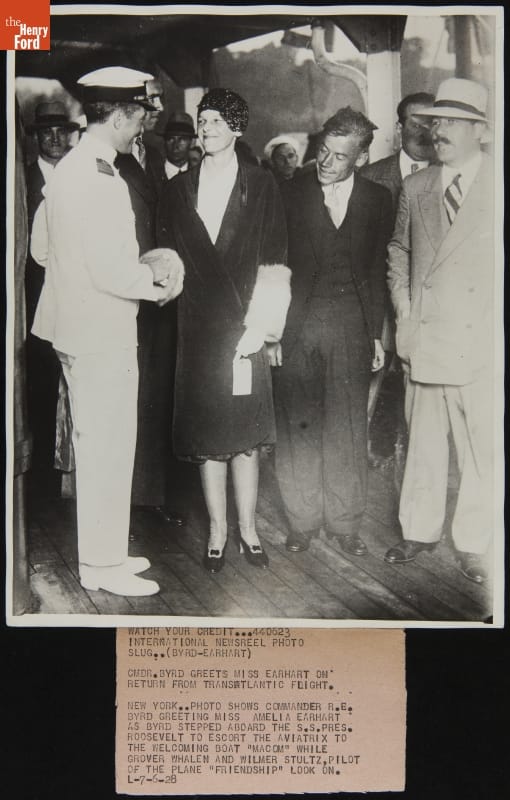
- Amelia Earhart Meets Richard Byrd aboard SS President Roosevelt, Returning from the Transatlantic Flight, July 6, 1928 - Amelia Earhart was congratulated by explorer Richard Byrd for her 1928 flight across the Atlantic Ocean. Earhart, riding as a passenger with pilot Wilmer Stultz and mechanic Louis Gordon, made the crossing in a Fokker F.VII Tri-Motor airplane. Byrd used a similar Fokker on his North Pole flight in 1926.
- July 06, 1928
- Collections - Artifact
Amelia Earhart Meets Richard Byrd aboard SS President Roosevelt, Returning from the Transatlantic Flight, July 6, 1928
Amelia Earhart was congratulated by explorer Richard Byrd for her 1928 flight across the Atlantic Ocean. Earhart, riding as a passenger with pilot Wilmer Stultz and mechanic Louis Gordon, made the crossing in a Fokker F.VII Tri-Motor airplane. Byrd used a similar Fokker on his North Pole flight in 1926.
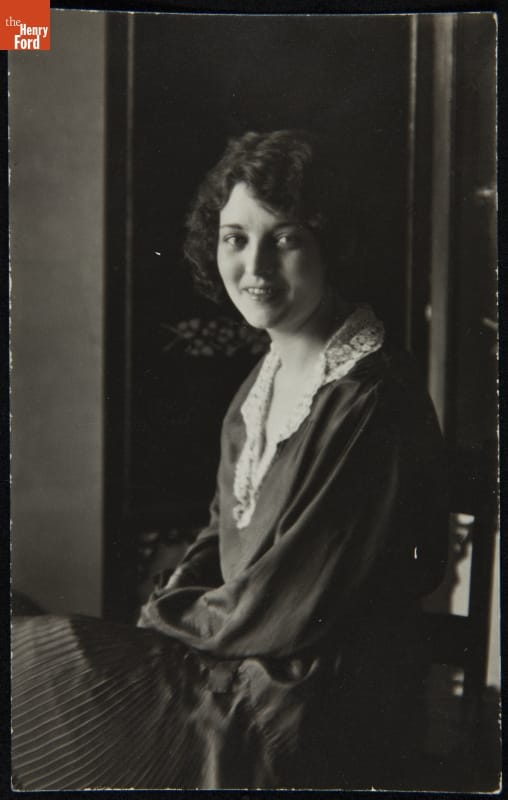
- Ruth Elder at Mrs. Mackey's Home, Horte, Azores, October 1927 - Ruth Elder fell short of her goal to be the first woman to fly the Atlantic in 1927, but the public loved her just the same. She competed in the 1929 Women's Air Derby and parlayed her aviation fame into a modest film career. Elder was fondly remembered as the "Miss America of the Air" when she died in 1977.
- October 01, 1927
- Collections - Artifact
Ruth Elder at Mrs. Mackey's Home, Horte, Azores, October 1927
Ruth Elder fell short of her goal to be the first woman to fly the Atlantic in 1927, but the public loved her just the same. She competed in the 1929 Women's Air Derby and parlayed her aviation fame into a modest film career. Elder was fondly remembered as the "Miss America of the Air" when she died in 1977.
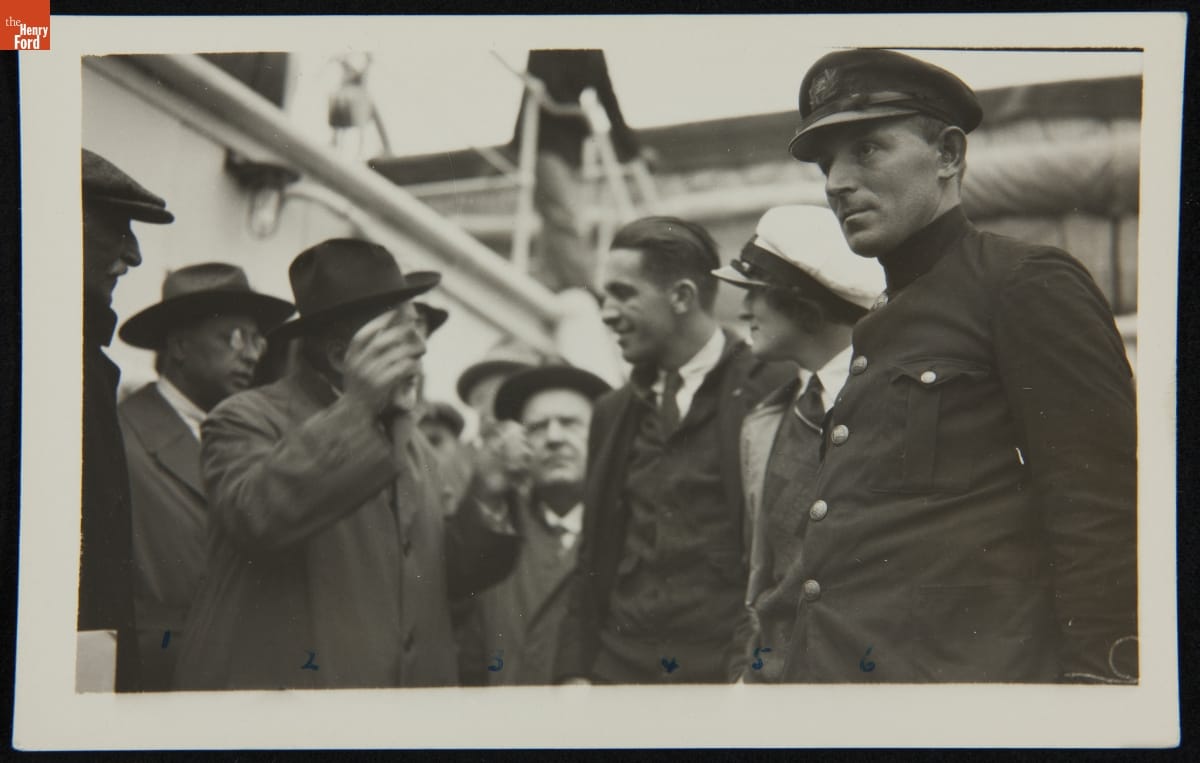
- George Haldeman and Ruth Elder after Their Rescue, Horta, Azores, October 1927 - Ruth Elder fell short of her goal to be the first woman to fly the Atlantic in 1927, but the public loved her just the same. She competed in the 1929 Women's Air Derby and parlayed her aviation fame into a modest film career. Elder was fondly remembered as the "Miss America of the Air" when she died in 1977.
- October 01, 1927
- Collections - Artifact
George Haldeman and Ruth Elder after Their Rescue, Horta, Azores, October 1927
Ruth Elder fell short of her goal to be the first woman to fly the Atlantic in 1927, but the public loved her just the same. She competed in the 1929 Women's Air Derby and parlayed her aviation fame into a modest film career. Elder was fondly remembered as the "Miss America of the Air" when she died in 1977.
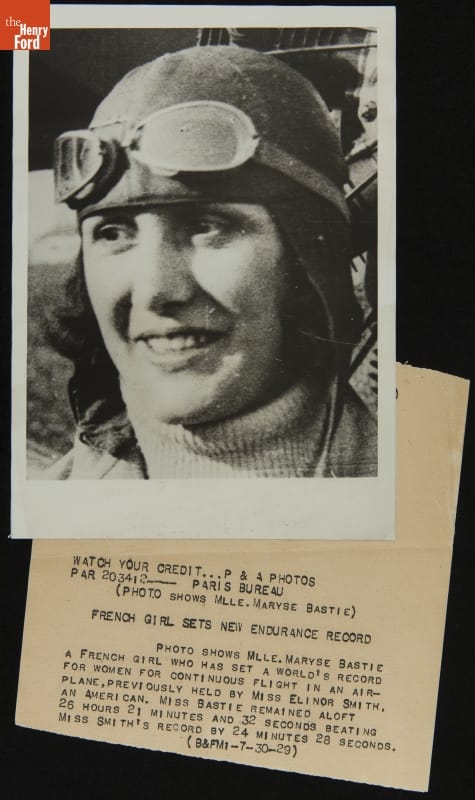
- Maryse Bastie Sets a New World Record for Women, for Continuous Flight, July 30, 1929 - Following her marriage to a military pilot, Maryse Bastie earned her own pilot's license and began aerobatic flying in her native France. Bastie was rewarded for her skill in 1931 with the Harmon Trophy, an international prize given to the world's outstanding aviator. After serving in France's air force during World War II, Bastie died in a 1952 plane crash.
- July 30, 1929
- Collections - Artifact
Maryse Bastie Sets a New World Record for Women, for Continuous Flight, July 30, 1929
Following her marriage to a military pilot, Maryse Bastie earned her own pilot's license and began aerobatic flying in her native France. Bastie was rewarded for her skill in 1931 with the Harmon Trophy, an international prize given to the world's outstanding aviator. After serving in France's air force during World War II, Bastie died in a 1952 plane crash.
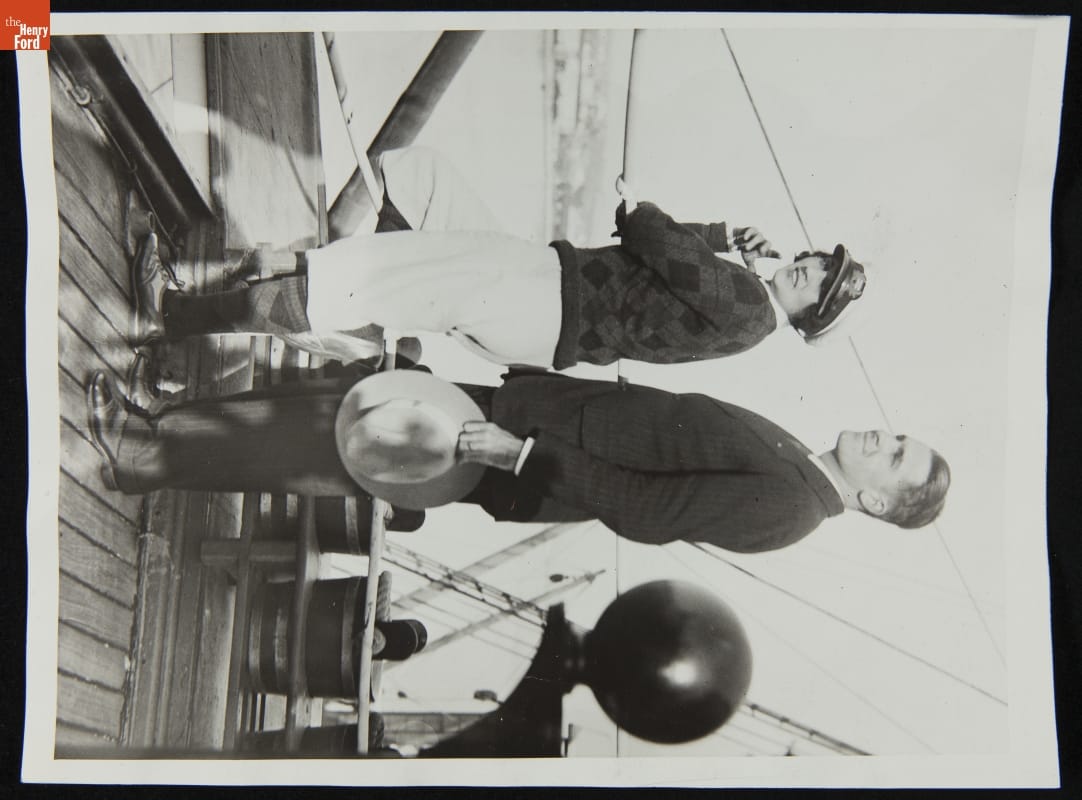
- Ruth Elder and George Haldeman aboard the Mail Ship "Lima," October 25, 1927 - Ruth Elder planned to be the first woman to fly across the Atlantic. On October 11, 1927, Elder and co-pilot George Haldeman took off in their Stinson Detroiter <EM>American Girl</EM>. An oil leak forced them to ditch in the ocean some 360 miles short of land. Still, the 2,623 miles Elder covered set a new distance record for a female pilot.
- October 25, 1927
- Collections - Artifact
Ruth Elder and George Haldeman aboard the Mail Ship "Lima," October 25, 1927
Ruth Elder planned to be the first woman to fly across the Atlantic. On October 11, 1927, Elder and co-pilot George Haldeman took off in their Stinson Detroiter American Girl. An oil leak forced them to ditch in the ocean some 360 miles short of land. Still, the 2,623 miles Elder covered set a new distance record for a female pilot.
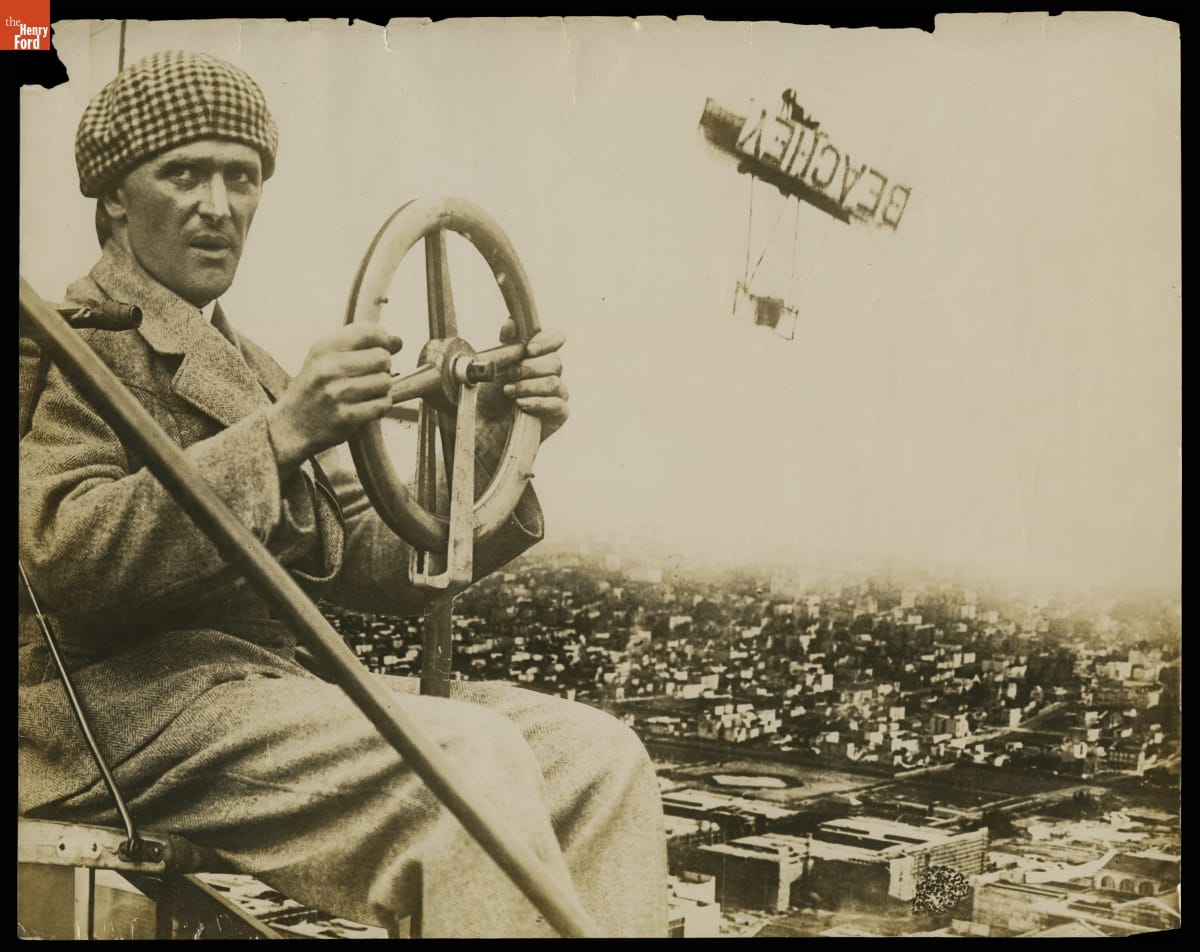
- Lincoln Beachey Stunt Flying over San Francisco, California, circa 1915 - Lincoln Beachey is remembered as America's first great stunt flyer. He perfected a series of aerobatic maneuvers -- including spins, dives, spirals, and loops -- and earned fame and fortune by staging heart-stopping exhibition flights for audiences across the country. Beachey died when the wings broke loose from his airplane during a stunt flight over San Francisco Bay in 1915.
- circa 1915
- Collections - Artifact
Lincoln Beachey Stunt Flying over San Francisco, California, circa 1915
Lincoln Beachey is remembered as America's first great stunt flyer. He perfected a series of aerobatic maneuvers -- including spins, dives, spirals, and loops -- and earned fame and fortune by staging heart-stopping exhibition flights for audiences across the country. Beachey died when the wings broke loose from his airplane during a stunt flight over San Francisco Bay in 1915.