
Search
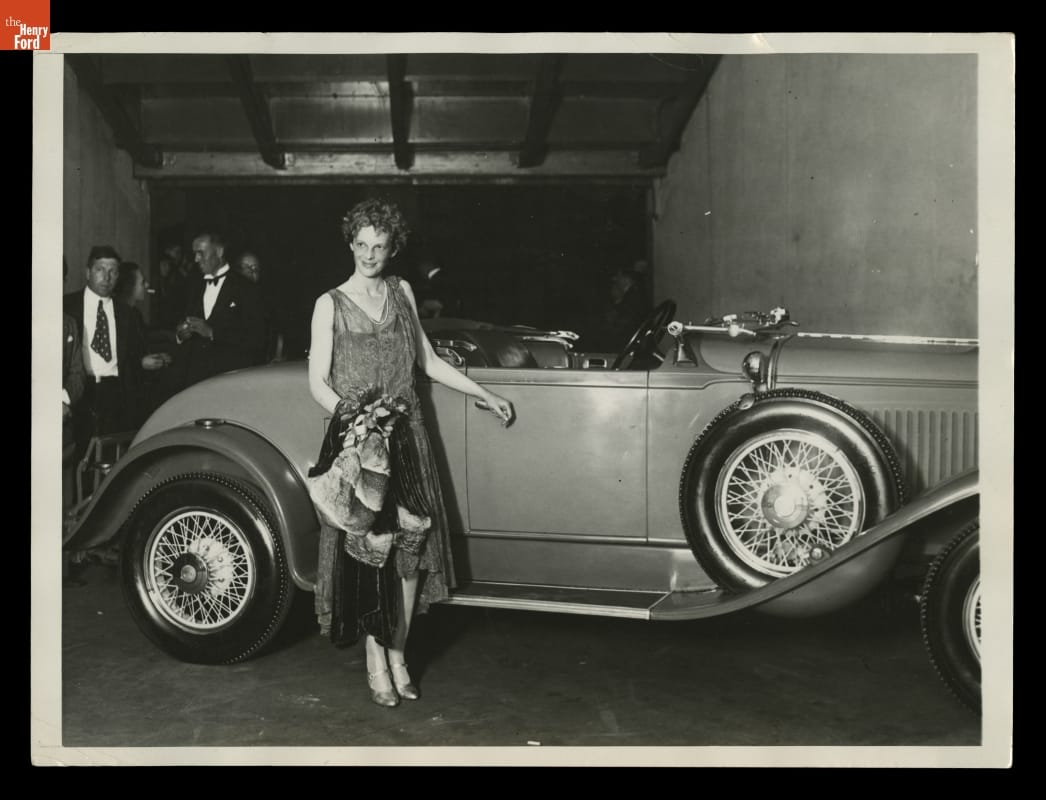
- Amelia Earhart with the Automobile Received from Chrysler Corporation, July 11, 1928 - Skilled aviatrix Amelia Earhart came to national attention in 1928, when she was invited to become the first woman to fly the Atlantic--as a passenger. Wilmer Stutz flew the plane, with Louis Gordon as co-pilot, as the trio made their challenging--and successful--journey from Newfoundland to Wales. Upon her return, Earhart received this sporty automobile from Chrysler Corporation.
- July 11, 1928
- Collections - Artifact
Amelia Earhart with the Automobile Received from Chrysler Corporation, July 11, 1928
Skilled aviatrix Amelia Earhart came to national attention in 1928, when she was invited to become the first woman to fly the Atlantic--as a passenger. Wilmer Stutz flew the plane, with Louis Gordon as co-pilot, as the trio made their challenging--and successful--journey from Newfoundland to Wales. Upon her return, Earhart received this sporty automobile from Chrysler Corporation.
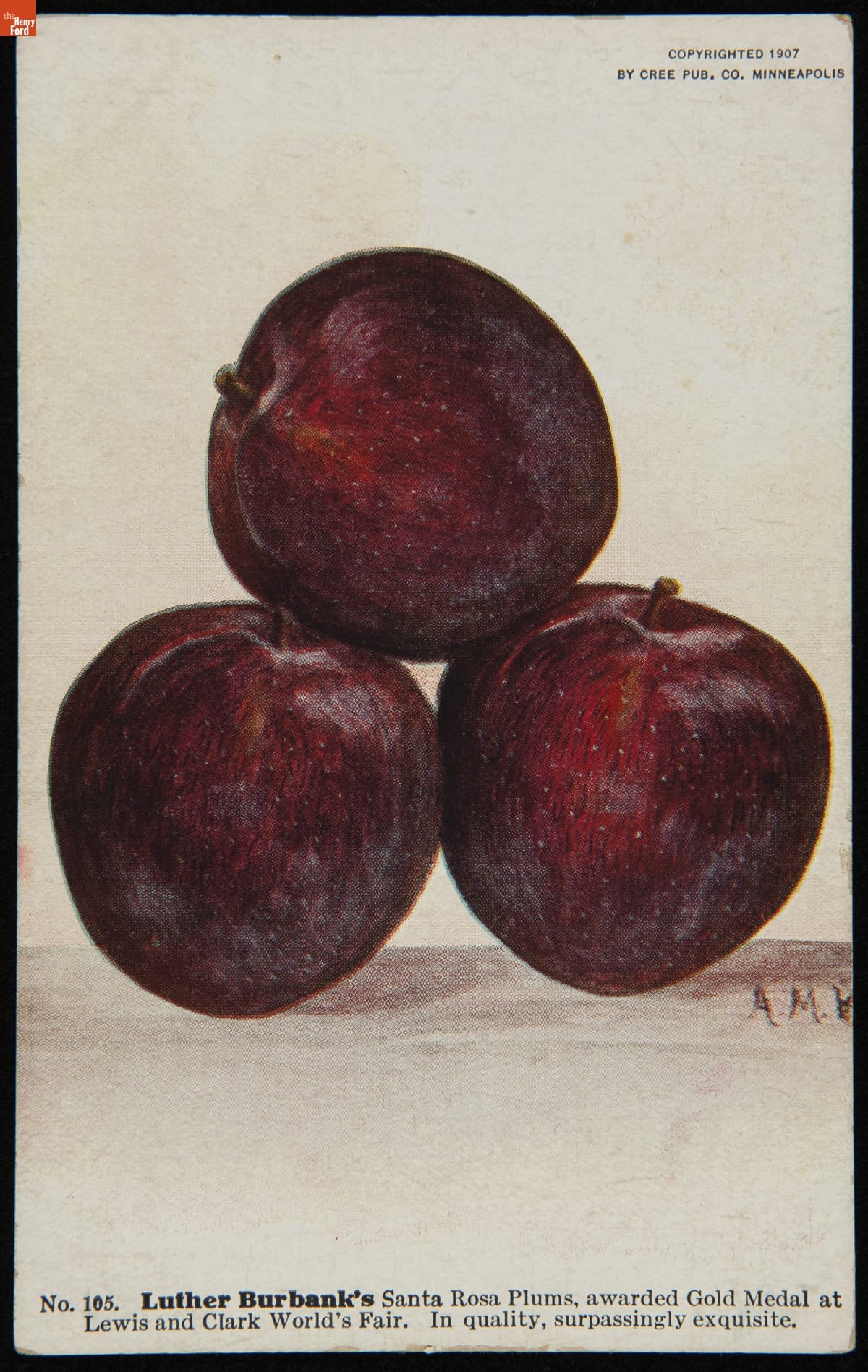
- Luther Burbanks's Santa Rosa Plums, 1907 - Luther Burbank (1849-1926), an American horticulturalist and author, gained a reputation for selective breeding that yielded more than 800 new fruits, vegetables, flowers, and other plants. By 1906, Burbank's international fame had brought multiple solicitors to his home in Santa Rosa, California, interested in documenting his work. A deal with Minneapolis publisher Dugal Cree resulted in this promotional postcard.
- 1907
- Collections - Artifact
Luther Burbanks's Santa Rosa Plums, 1907
Luther Burbank (1849-1926), an American horticulturalist and author, gained a reputation for selective breeding that yielded more than 800 new fruits, vegetables, flowers, and other plants. By 1906, Burbank's international fame had brought multiple solicitors to his home in Santa Rosa, California, interested in documenting his work. A deal with Minneapolis publisher Dugal Cree resulted in this promotional postcard.
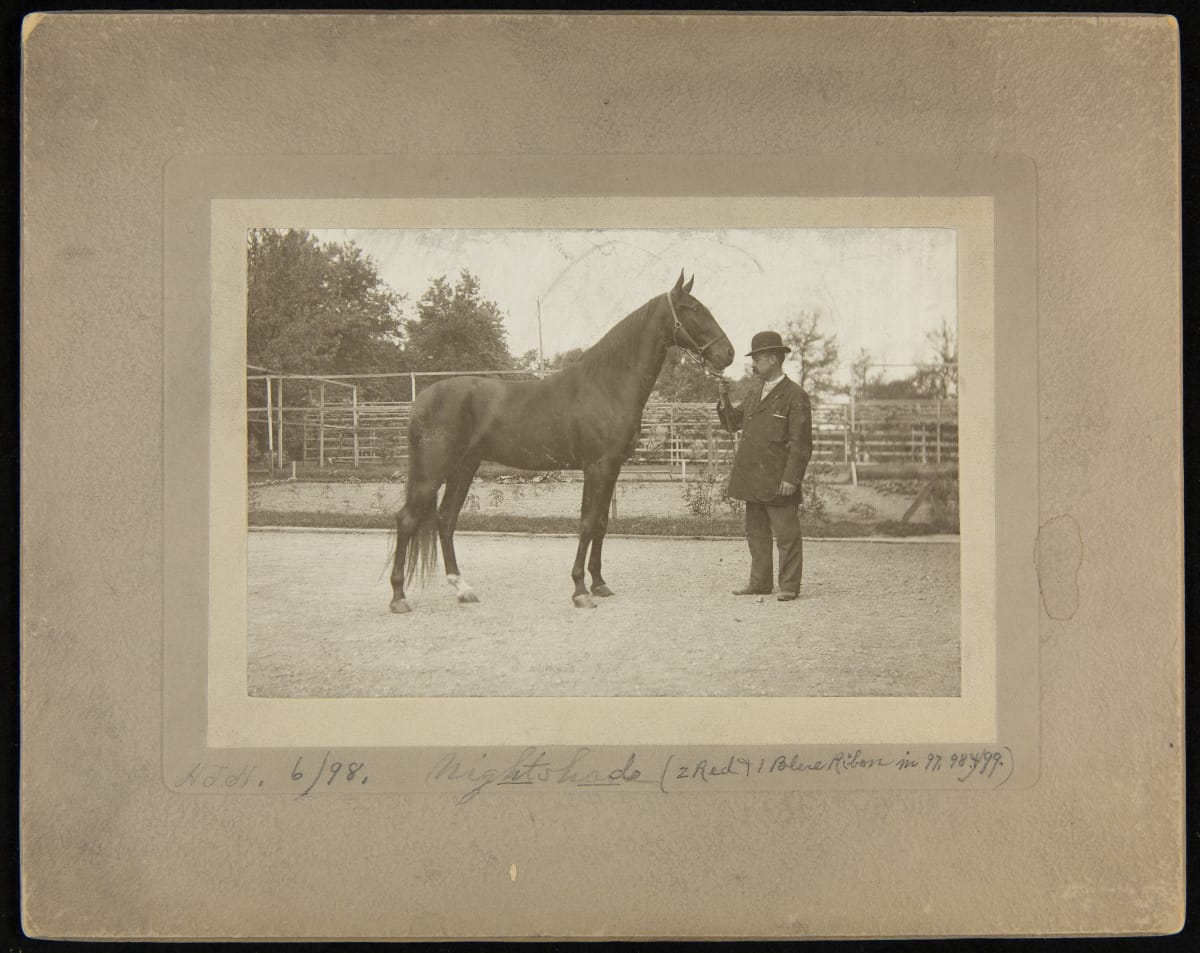
- Nightshade the Prize-Winning Horse, H. J. Heinz Company, Pittsburgh, Pennsylvania, June 1898 - The H.J. Heinz Company had humble beginnings in 1869 and has since become one of the most recognized names in the food industry today. This artifact, from the H.J. Heinz Company Collection, is one from The Henry Ford's sizeable collection of material dedicated to telling the company's history of innovative business practices and marketing techniques.
- June 01, 1898
- Collections - Artifact
Nightshade the Prize-Winning Horse, H. J. Heinz Company, Pittsburgh, Pennsylvania, June 1898
The H.J. Heinz Company had humble beginnings in 1869 and has since become one of the most recognized names in the food industry today. This artifact, from the H.J. Heinz Company Collection, is one from The Henry Ford's sizeable collection of material dedicated to telling the company's history of innovative business practices and marketing techniques.
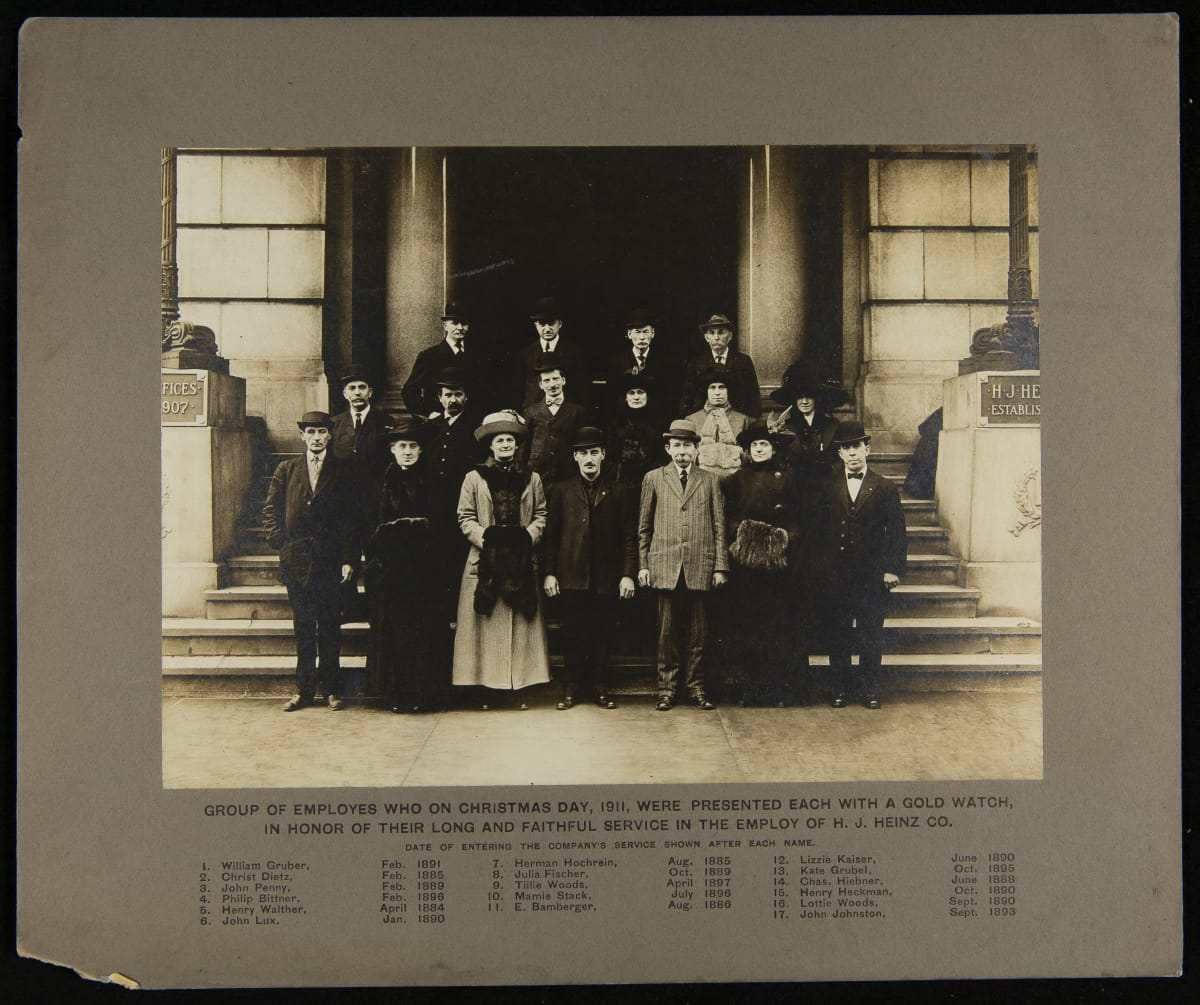
- Employees after Being Awarded Gold Watches for Service, H. J. Heinz Company, December 25, 1911 - Early on in his career, H.J. Heinz recognized that the success of his company relied on his employees. Heinz was at the forefront of the employee welfare movement, providing benefits and amenities to his workers, as well as special gifts to acknowledge their commitment. This photograph shows the employees who were awarded gold watches in 1911 "in honor of their long and faithful service."
- December 25, 1911
- Collections - Artifact
Employees after Being Awarded Gold Watches for Service, H. J. Heinz Company, December 25, 1911
Early on in his career, H.J. Heinz recognized that the success of his company relied on his employees. Heinz was at the forefront of the employee welfare movement, providing benefits and amenities to his workers, as well as special gifts to acknowledge their commitment. This photograph shows the employees who were awarded gold watches in 1911 "in honor of their long and faithful service."
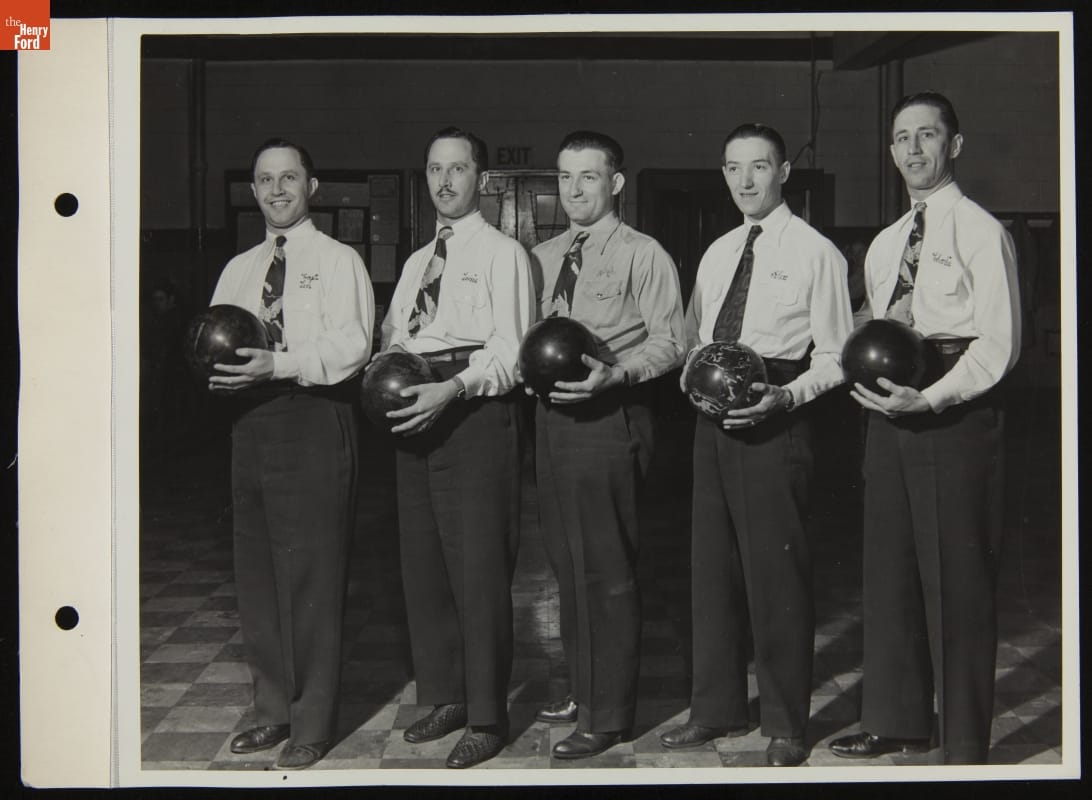
- Ford Engineering Bowling League Championship Team, Ambassador Alleys, April 1944 - Employees of Ford Motor Company participated in a variety of organized after-work sports teams and leagues. Baseball, softball, hockey, golf, and bowling were all played at various times. These sporting events provided recreational opportunities for employees like these Ford engineers photographed in 1944. They also helped build camaraderie among co-workers.
- April 18, 1944
- Collections - Artifact
Ford Engineering Bowling League Championship Team, Ambassador Alleys, April 1944
Employees of Ford Motor Company participated in a variety of organized after-work sports teams and leagues. Baseball, softball, hockey, golf, and bowling were all played at various times. These sporting events provided recreational opportunities for employees like these Ford engineers photographed in 1944. They also helped build camaraderie among co-workers.
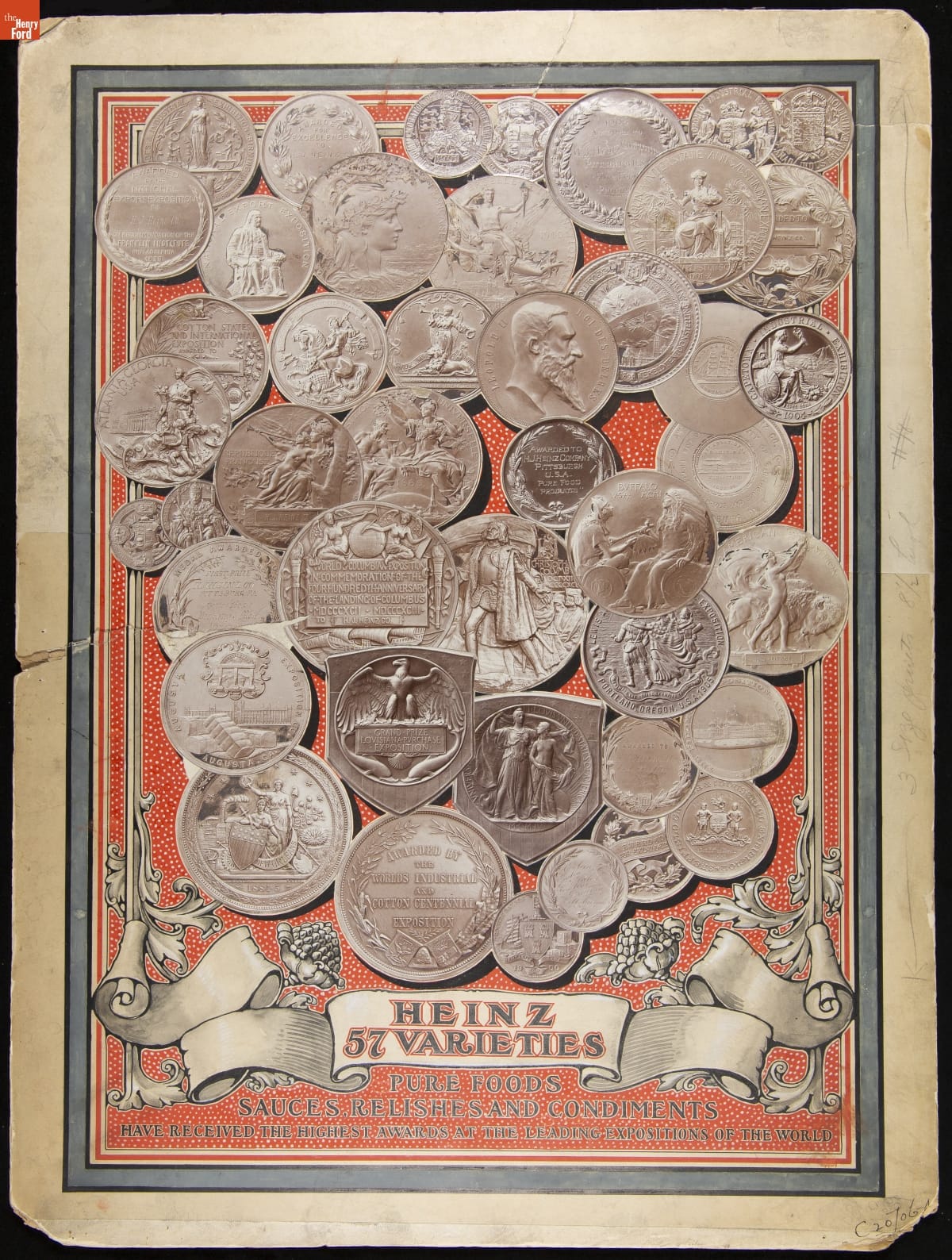
- Advertising Layout of Awards Received by the H. J. Heinz Company, circa 1905 - From humble beginnings in 1869 to becoming a household name by the turn of the century, H.J. Heinz remained committed to producing high-quality products. The company traveled to many expositions and world's fairs to exhibit and promote its products, winning numerous awards, medals, and accolades along the way. This advertising layout features a collection of these awards and medals won by the company.
- circa 1905
- Collections - Artifact
Advertising Layout of Awards Received by the H. J. Heinz Company, circa 1905
From humble beginnings in 1869 to becoming a household name by the turn of the century, H.J. Heinz remained committed to producing high-quality products. The company traveled to many expositions and world's fairs to exhibit and promote its products, winning numerous awards, medals, and accolades along the way. This advertising layout features a collection of these awards and medals won by the company.
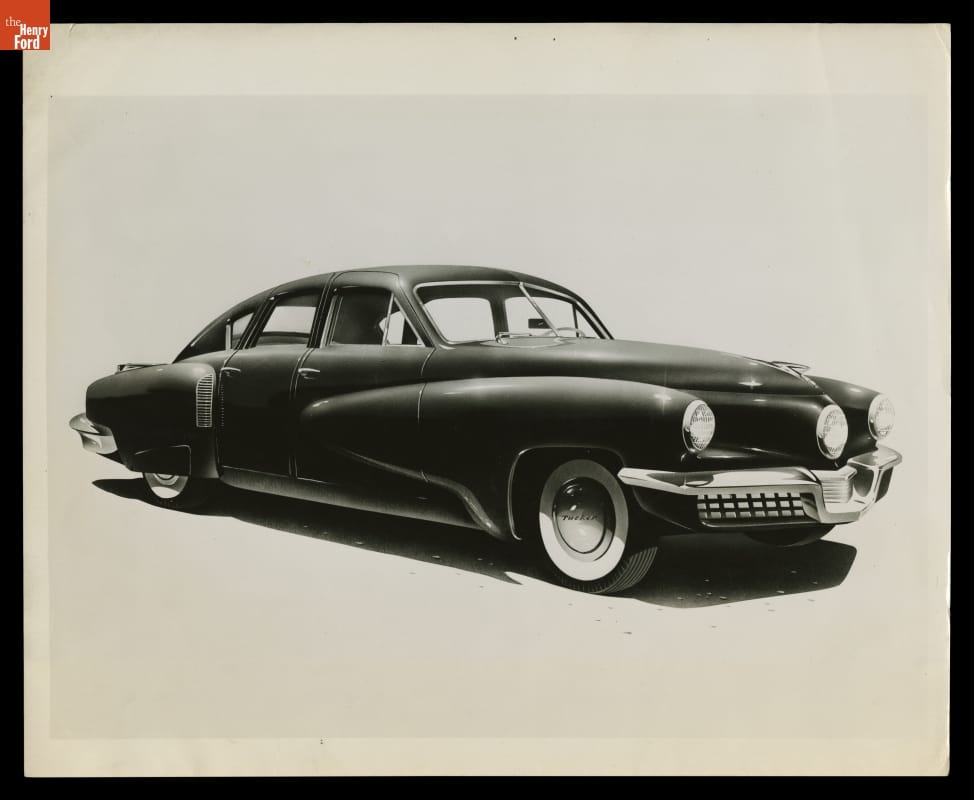
- View of a 1948 Tucker Torpedo, with Press Release on Preston Tucker's Award from the Museum of Science and Industry - After unveiling his prototype Tucker 48 in June 1947, Preston Tucker took the car on a nationwide publicity tour. At New York's Museum of Science and Industry, thousands of visitors paid 48 cents each for a chance to view the car. Thousands more saw the prototype in Los Angeles, Chicago, and other American cities.
- circa 1948
- Collections - Artifact
View of a 1948 Tucker Torpedo, with Press Release on Preston Tucker's Award from the Museum of Science and Industry
After unveiling his prototype Tucker 48 in June 1947, Preston Tucker took the car on a nationwide publicity tour. At New York's Museum of Science and Industry, thousands of visitors paid 48 cents each for a chance to view the car. Thousands more saw the prototype in Los Angeles, Chicago, and other American cities.
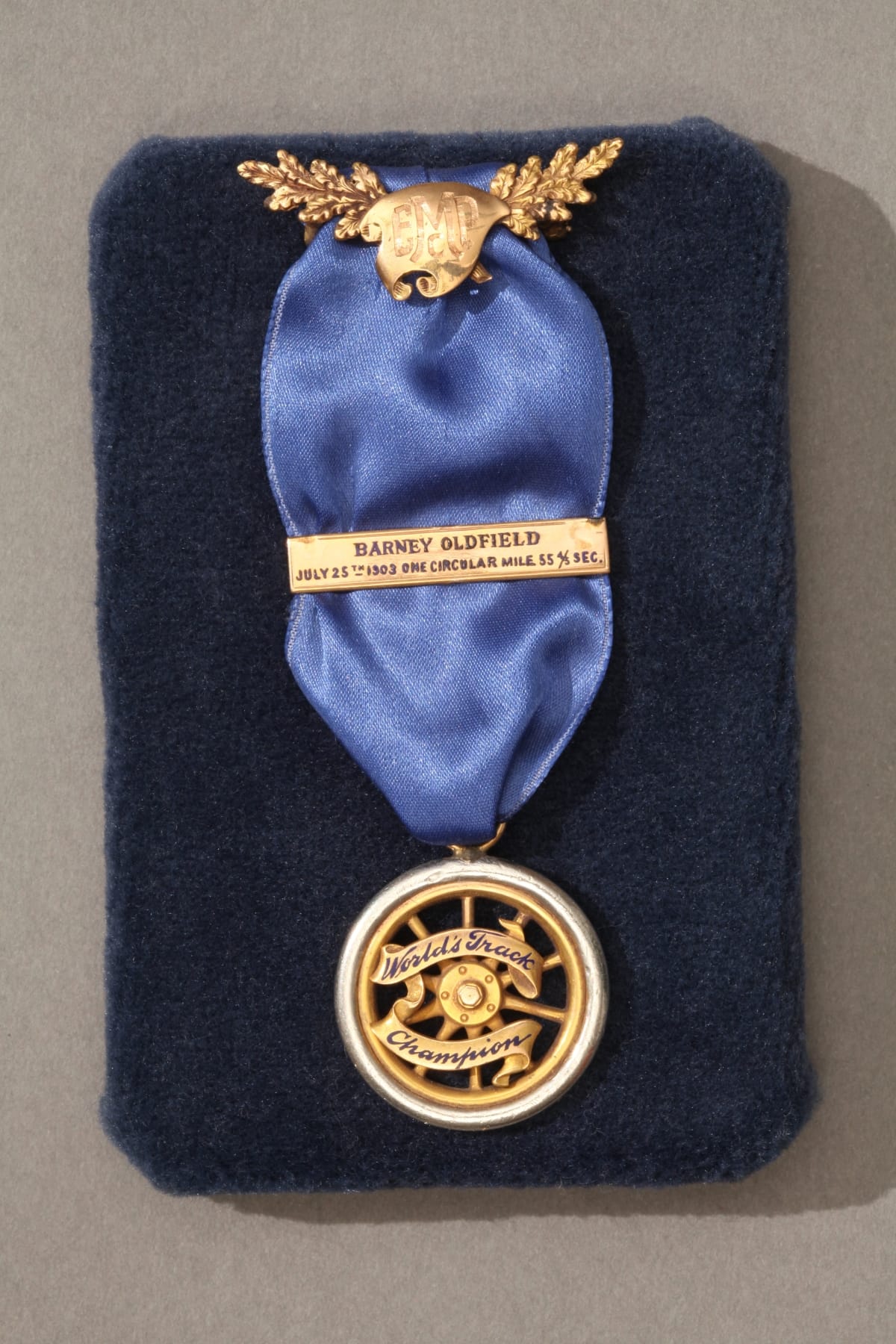
- World's Track Award Won by Barney Oldfield, 1903 - The fearless driver Barney Oldfield won many awards at the controls of the Ford-built race car "999." In 1903, Oldfield set the mile-track world's record at the Empire City meet. Oldfield in the "999" sped around the track in 55 and 4/5 seconds. Officials awarded Oldfield this medal for his accomplishment claiming him "World's Track Champion."
- July 25, 1903
- Collections - Artifact
World's Track Award Won by Barney Oldfield, 1903
The fearless driver Barney Oldfield won many awards at the controls of the Ford-built race car "999." In 1903, Oldfield set the mile-track world's record at the Empire City meet. Oldfield in the "999" sped around the track in 55 and 4/5 seconds. Officials awarded Oldfield this medal for his accomplishment claiming him "World's Track Champion."
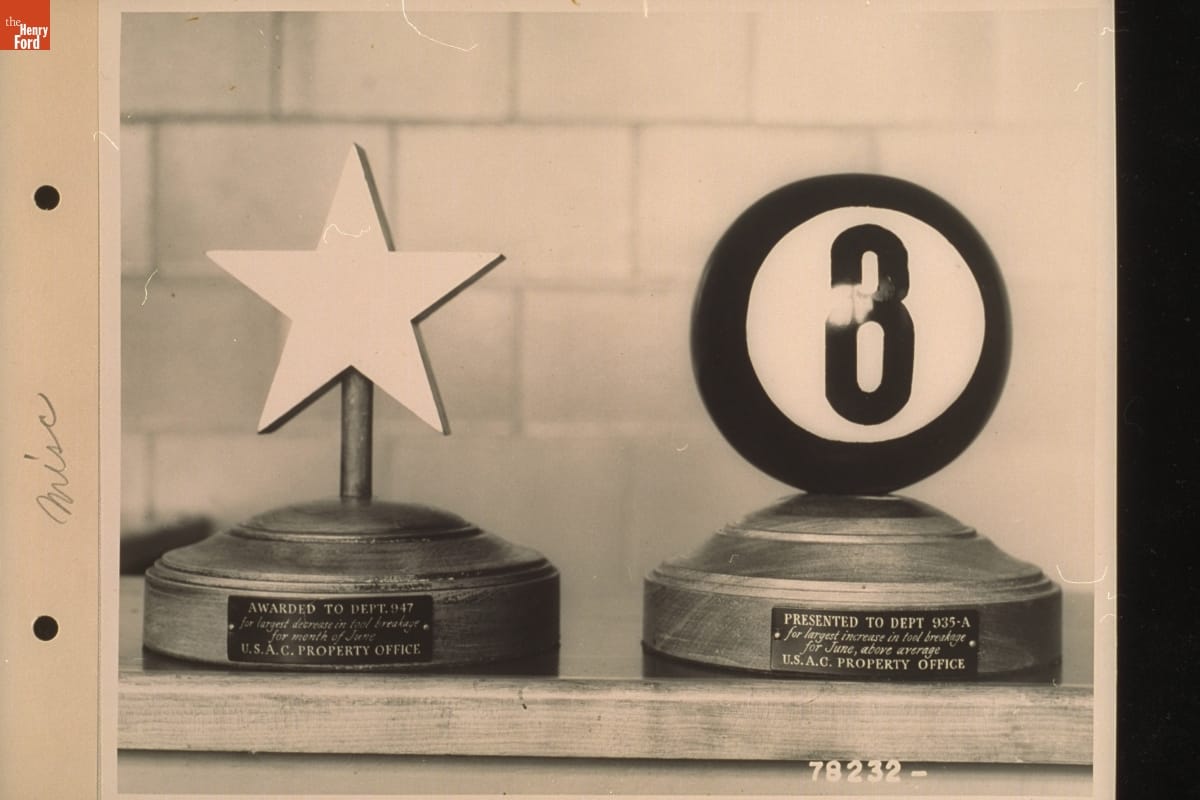
- Two Trophies Awarded as Part of the Willow Run Tool Breakage Campaign, July 1943 - At Willow Run's peak, the plant's more than 42,000 employees built one B-24 bomber airplane every 63 minutes. Ford encouraged workers with special productivity awards. This star-shaped trophy went to the department with the largest decrease in tool breakage during June 1943. The eight-ball prize went to the department with the largest increase in breakage.
- July 08, 1943
- Collections - Artifact
Two Trophies Awarded as Part of the Willow Run Tool Breakage Campaign, July 1943
At Willow Run's peak, the plant's more than 42,000 employees built one B-24 bomber airplane every 63 minutes. Ford encouraged workers with special productivity awards. This star-shaped trophy went to the department with the largest decrease in tool breakage during June 1943. The eight-ball prize went to the department with the largest increase in breakage.
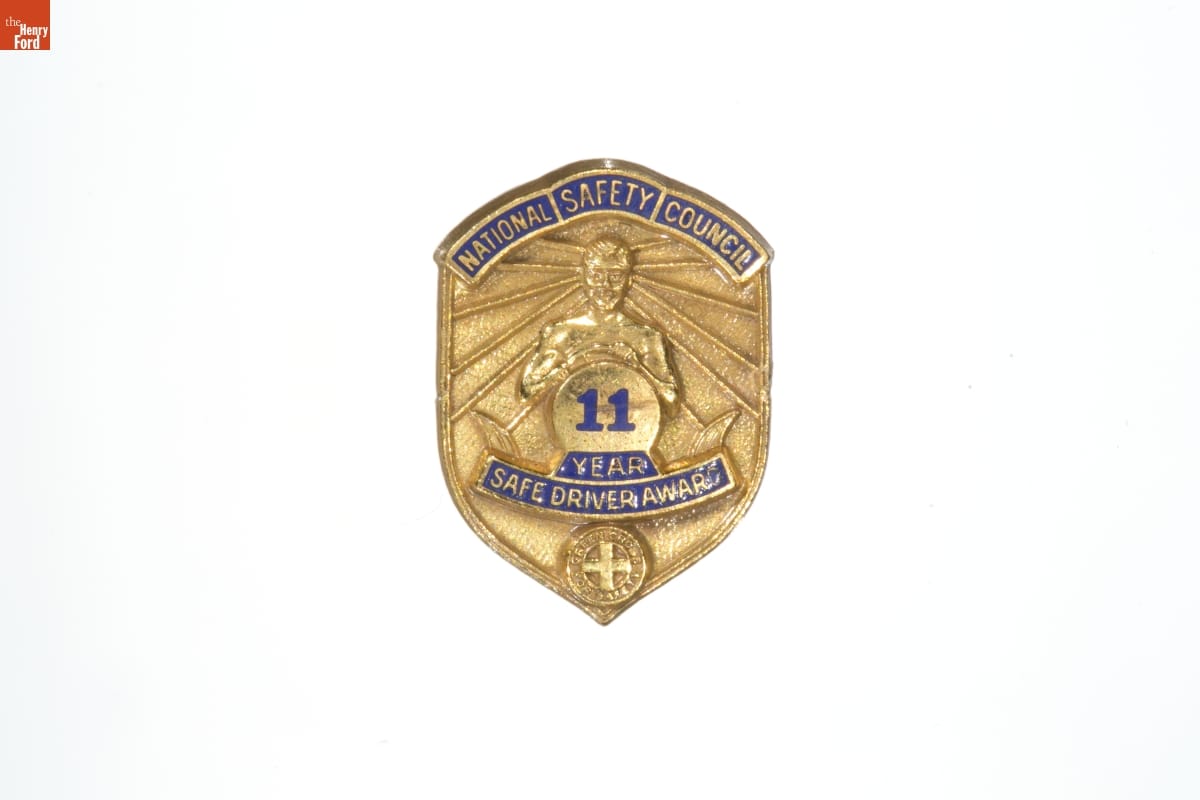
- Safe Driver Award Given by the National Safety Council, circa 1967 -
- circa 1967
- Collections - Artifact
Safe Driver Award Given by the National Safety Council, circa 1967