
Search
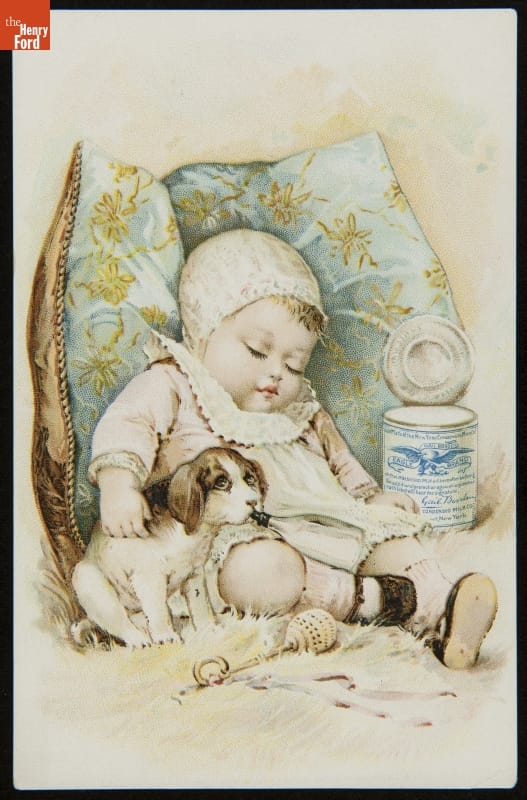
- Trade Card for Gail Borden Eagle Brand Condensed Milk, New York Condensed Milk Co., 1891 - Feeding infants tainted cow's milk was a common cause of infant mortality. In 1856, Gail Borden introduced Eagle Brand Condensed Milk to combat this. This product became so popular for soldiers during the Civil War that, by the end of the war, it had gained a reputation for being safe, wholesome, and nourishing -- a trusted food for infants.
- circa 1891
- Collections - Artifact
Trade Card for Gail Borden Eagle Brand Condensed Milk, New York Condensed Milk Co., 1891
Feeding infants tainted cow's milk was a common cause of infant mortality. In 1856, Gail Borden introduced Eagle Brand Condensed Milk to combat this. This product became so popular for soldiers during the Civil War that, by the end of the war, it had gained a reputation for being safe, wholesome, and nourishing -- a trusted food for infants.
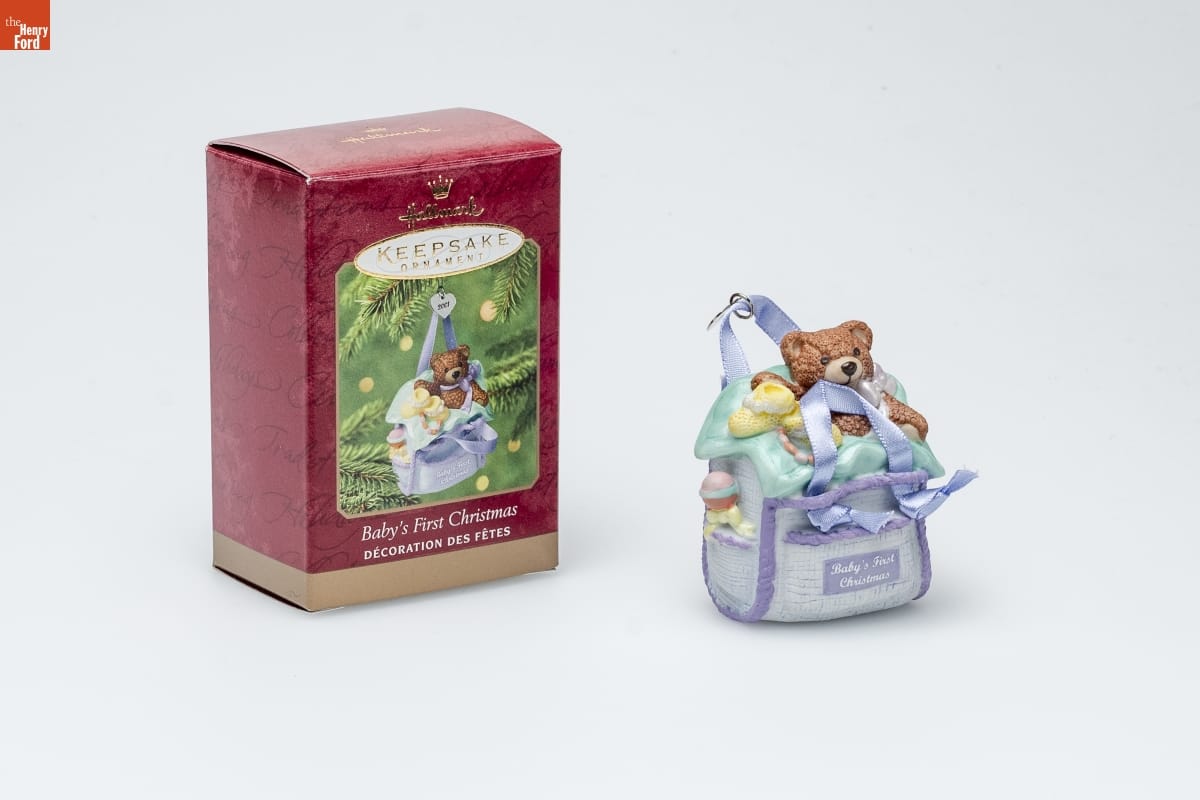
- Hallmark "Baby's First Christmas" Christmas Ornament, 2001 - Already known for greeting cards, Hallmark introduced a line of Christmas ornaments in 1973. The company's annual release of an increasing array of ornaments appealed to customers' interest in marking memories and milestones as well as expressing one's personality and unique tastes. Purchasing an ornament like this one would bring back happy family memories of that event year after year.
- 2001
- Collections - Artifact
Hallmark "Baby's First Christmas" Christmas Ornament, 2001
Already known for greeting cards, Hallmark introduced a line of Christmas ornaments in 1973. The company's annual release of an increasing array of ornaments appealed to customers' interest in marking memories and milestones as well as expressing one's personality and unique tastes. Purchasing an ornament like this one would bring back happy family memories of that event year after year.
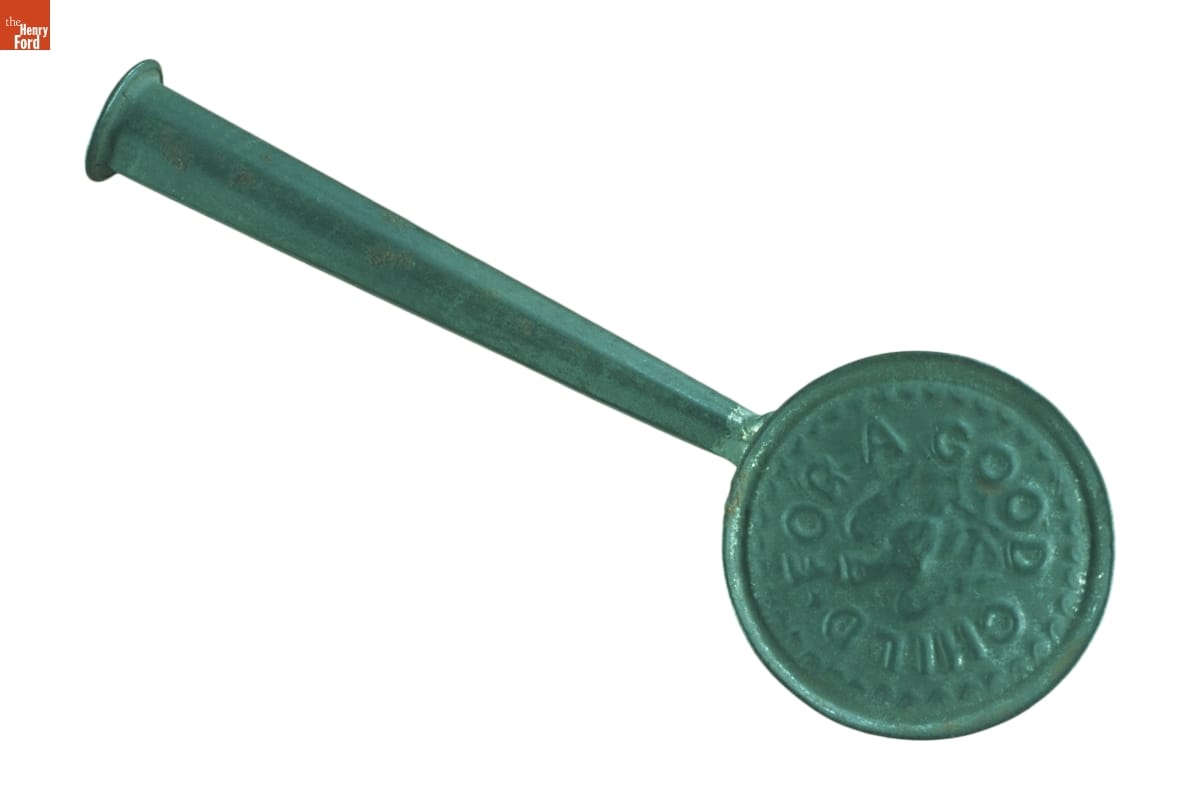
- Baby Rattle, "For A Good Child," 1840-1860 - A rattle is a basic plaything for infants. Parents or other childcare providers will use a rattle to amuse and calm a fussy baby. Infants also will begin to develop their new-found motor skills by grasping and shaking this noisy toy. For a mid-nineteenth-century "good child," this tin rattle was an early instrument for entertainment and growth.
- 1840-1860
- Collections - Artifact
Baby Rattle, "For A Good Child," 1840-1860
A rattle is a basic plaything for infants. Parents or other childcare providers will use a rattle to amuse and calm a fussy baby. Infants also will begin to develop their new-found motor skills by grasping and shaking this noisy toy. For a mid-nineteenth-century "good child," this tin rattle was an early instrument for entertainment and growth.
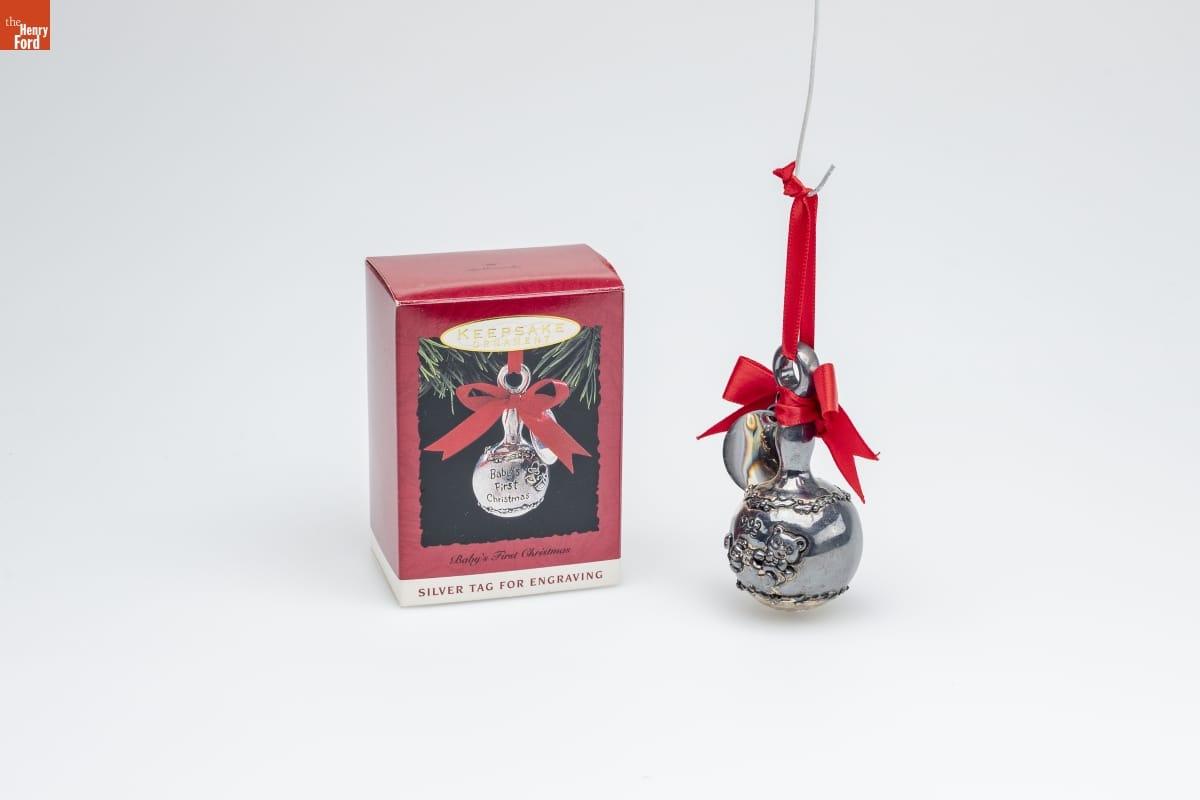
- Hallmark "Baby's First Christmas" Christmas Ornament, 1993 - Already known for greeting cards, Hallmark introduced a line of Christmas ornaments in 1973. The company's annual release of an increasing array of ornaments appealed to customers' interest in marking memories and milestones as well as expressing one's personality and unique tastes. Purchasing an ornament like this one would bring back happy family memories of that event year after year.
- 1993
- Collections - Artifact
Hallmark "Baby's First Christmas" Christmas Ornament, 1993
Already known for greeting cards, Hallmark introduced a line of Christmas ornaments in 1973. The company's annual release of an increasing array of ornaments appealed to customers' interest in marking memories and milestones as well as expressing one's personality and unique tastes. Purchasing an ornament like this one would bring back happy family memories of that event year after year.
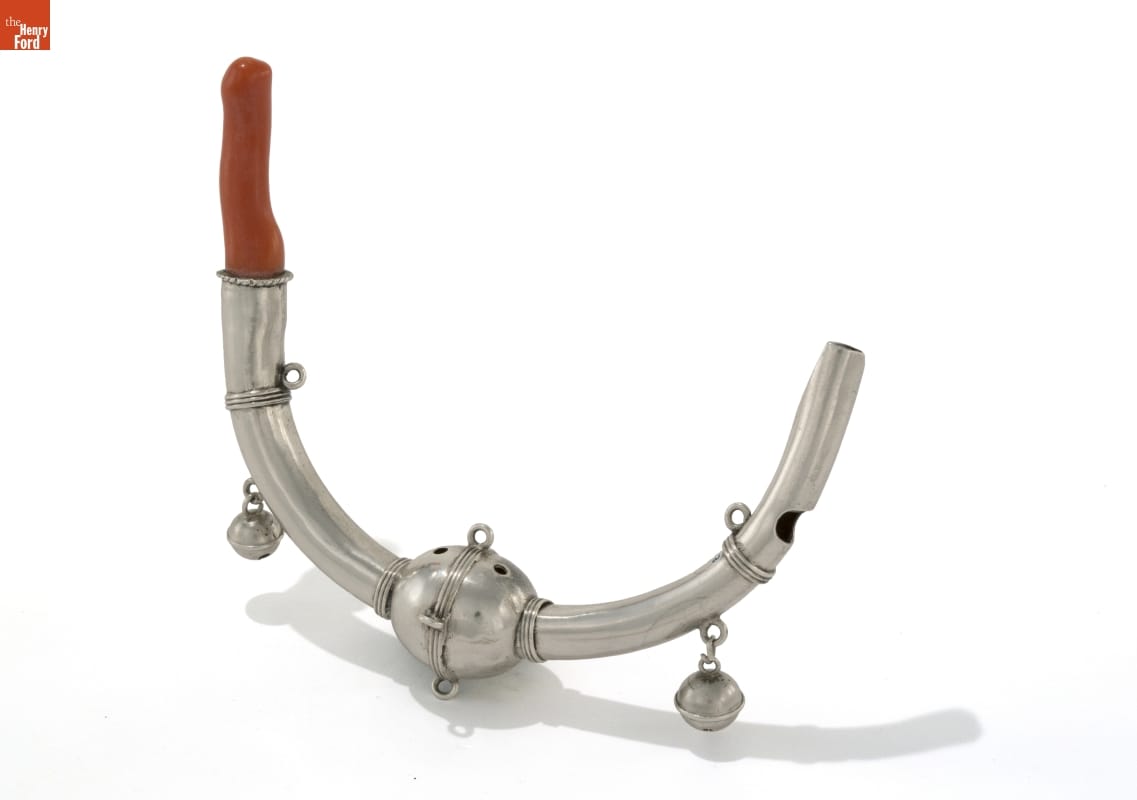
- Baby Rattle, 1720-1730 - Eighteenth-century parents viewed teething as a potentially dangerous time for their baby -- difficulties in cutting teeth, many believed, could lead to disease or even death. Coral and bells proved a useful toy to ease parent's fears. The whistle and bells provided noisy entertainment, while the hard coral teething surface eased the child's pain and helped ward off perceived dangers.
- 1720-1730
- Collections - Artifact
Baby Rattle, 1720-1730
Eighteenth-century parents viewed teething as a potentially dangerous time for their baby -- difficulties in cutting teeth, many believed, could lead to disease or even death. Coral and bells proved a useful toy to ease parent's fears. The whistle and bells provided noisy entertainment, while the hard coral teething surface eased the child's pain and helped ward off perceived dangers.
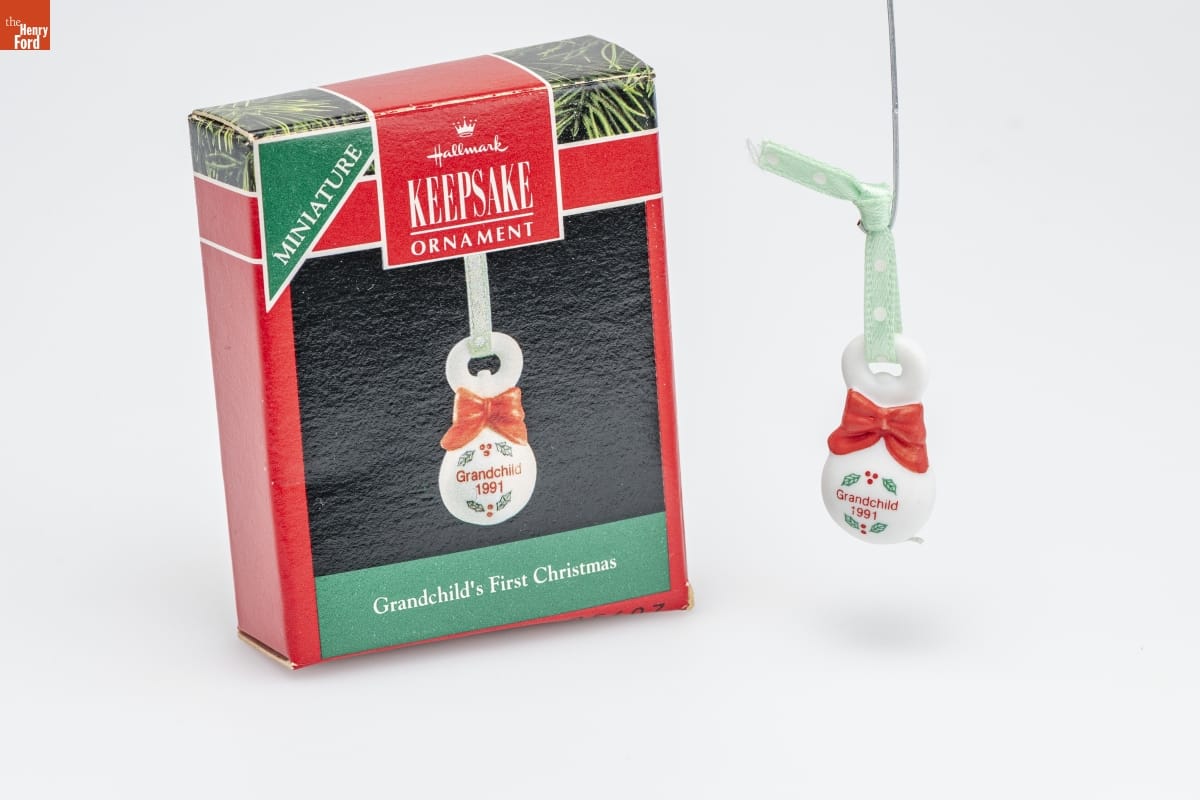
- Hallmark "Grandchild's First Christmas" Miniature Christmas Ornament, 1991 - Already known for greeting cards, Hallmark introduced a line of Christmas ornaments in 1973. The company's annual release of an increasing array of ornaments appealed to customers' interest in marking memories and milestones as well as expressing one's personality and unique tastes. Purchasing an ornament like this one would bring back happy family memories of that event year after year.
- 1991
- Collections - Artifact
Hallmark "Grandchild's First Christmas" Miniature Christmas Ornament, 1991
Already known for greeting cards, Hallmark introduced a line of Christmas ornaments in 1973. The company's annual release of an increasing array of ornaments appealed to customers' interest in marking memories and milestones as well as expressing one's personality and unique tastes. Purchasing an ornament like this one would bring back happy family memories of that event year after year.
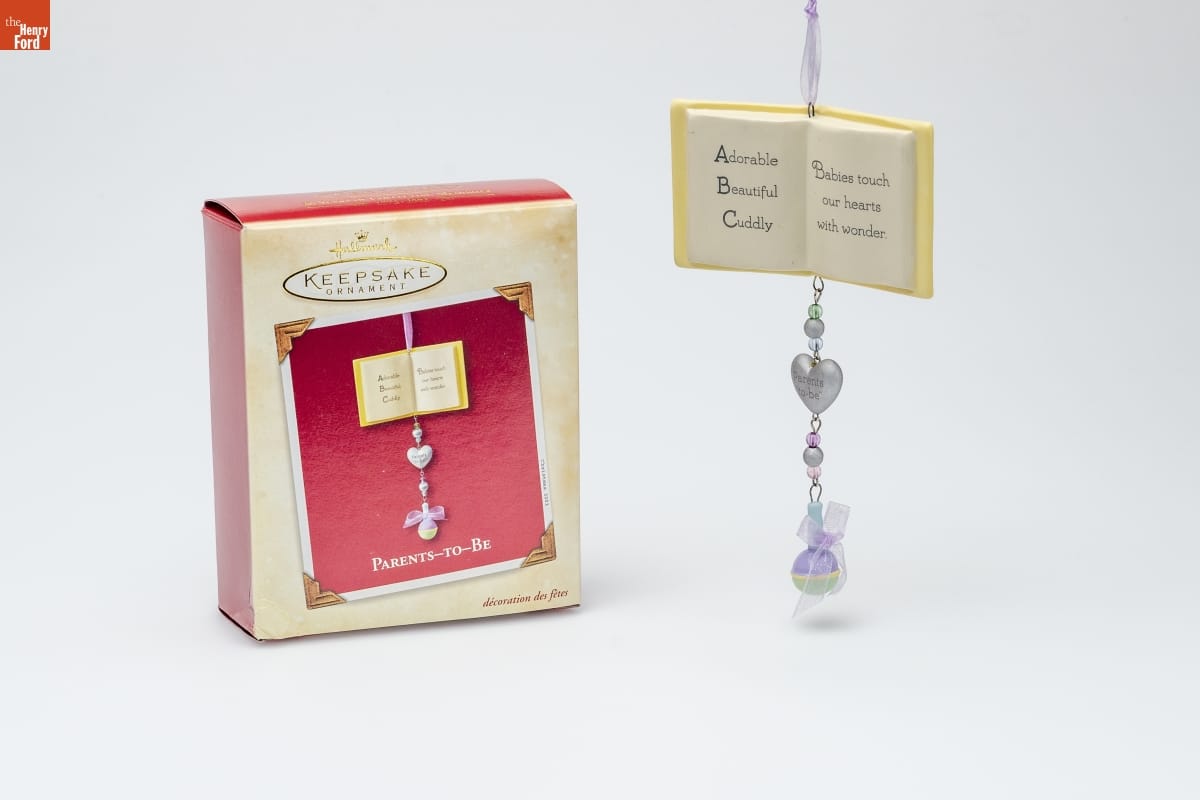
- Hallmark "Parents-to-Be" Christmas Ornament, 2003 - Already known for greeting cards, Hallmark introduced a line of Christmas ornaments in 1973. The company's annual release of an increasing array of ornaments revolutionized Christmas decorating, appealing to customers' interest in marking memories and milestones as well as expressing one's personality and unique tastes.
- 2003
- Collections - Artifact
Hallmark "Parents-to-Be" Christmas Ornament, 2003
Already known for greeting cards, Hallmark introduced a line of Christmas ornaments in 1973. The company's annual release of an increasing array of ornaments revolutionized Christmas decorating, appealing to customers' interest in marking memories and milestones as well as expressing one's personality and unique tastes.
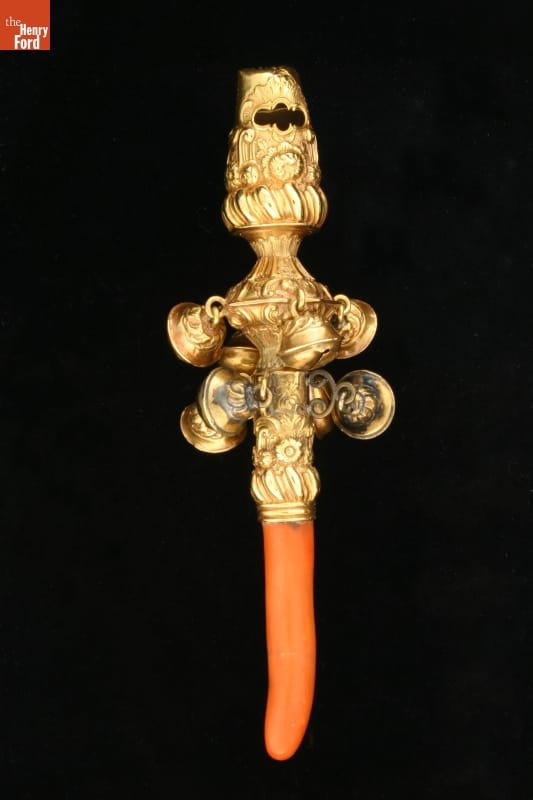
- Baby Rattle, 1760-1780 - Eighteenth-century parents viewed teething as a potentially dangerous time for their baby -- difficulties in cutting teeth, many believed, could lead to disease or even death. Coral and bells proved a useful toy to ease parent's fears. The whistle and bells provided noisy entertainment, while the hard coral teething surface eased the child's pain and helped ward off perceived dangers.
- 1760-1780
- Collections - Artifact
Baby Rattle, 1760-1780
Eighteenth-century parents viewed teething as a potentially dangerous time for their baby -- difficulties in cutting teeth, many believed, could lead to disease or even death. Coral and bells proved a useful toy to ease parent's fears. The whistle and bells provided noisy entertainment, while the hard coral teething surface eased the child's pain and helped ward off perceived dangers.
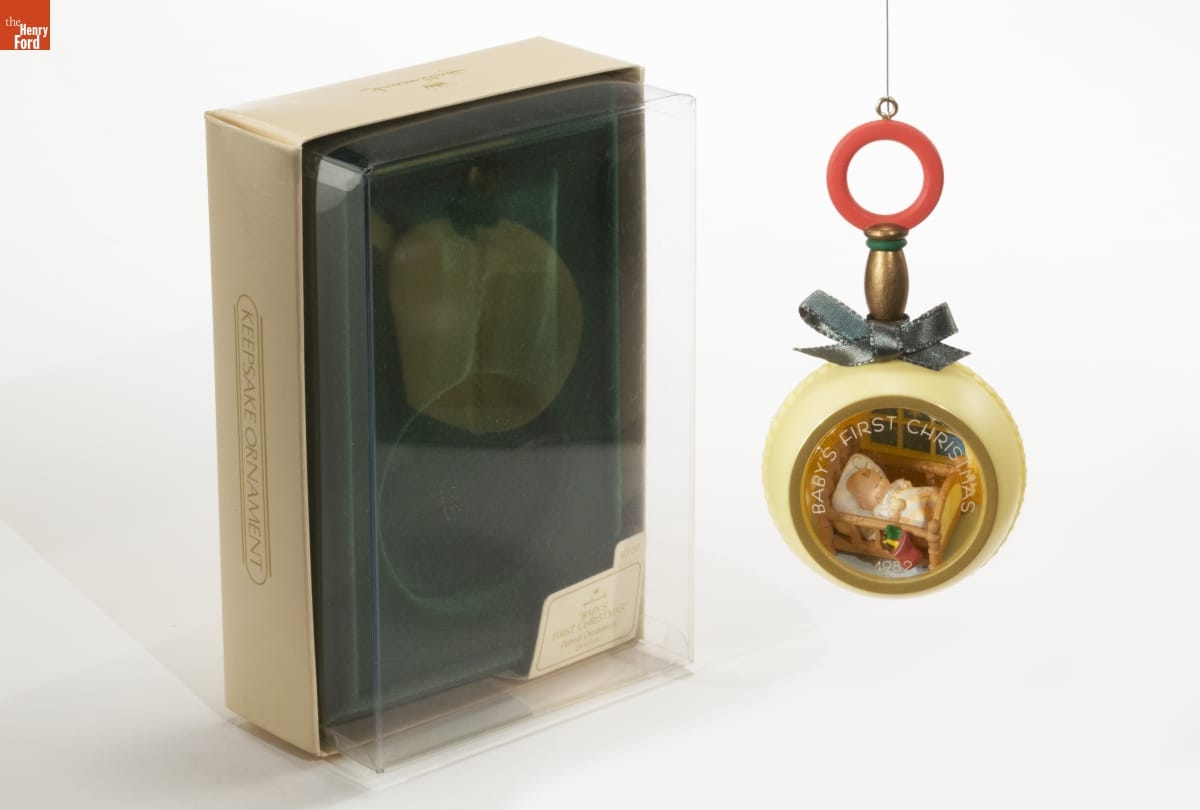
- Hallmark "Baby's First Christmas" Christmas Ornament, 1982 - Already known for greeting cards, Hallmark introduced a line of Christmas ornaments in 1973. The company's annual release of an increasing array of ornaments revolutionized Christmas decorating, appealing to customers' interest in marking memories and milestones as well as expressing one's personality and unique tastes.
- 1982
- Collections - Artifact
Hallmark "Baby's First Christmas" Christmas Ornament, 1982
Already known for greeting cards, Hallmark introduced a line of Christmas ornaments in 1973. The company's annual release of an increasing array of ornaments revolutionized Christmas decorating, appealing to customers' interest in marking memories and milestones as well as expressing one's personality and unique tastes.
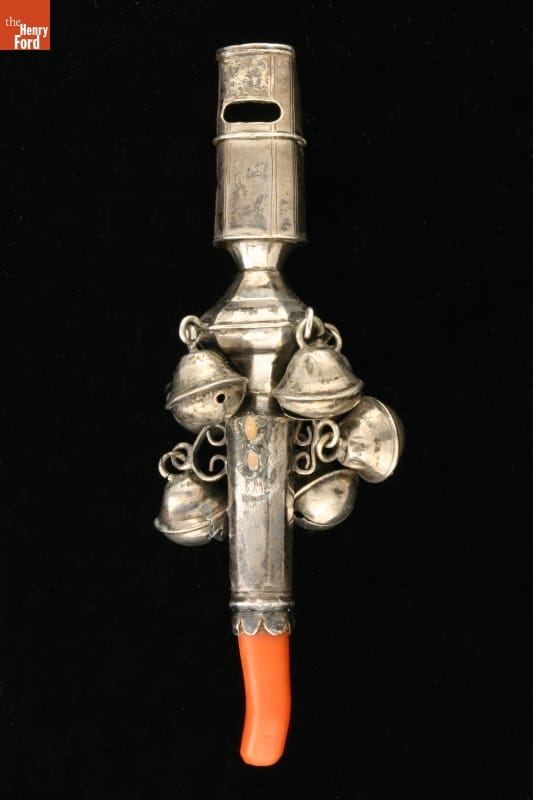
- Baby Rattle, circa 1785 - Eighteenth-century parents viewed teething as a potentially dangerous time for their baby -- difficulties in cutting teeth, many believed, could lead to disease or even death. Coral and bells proved a useful toy to ease parent's fears. The whistle and bells provided noisy entertainment, while the hard coral teething surface eased the child's pain and helped ward off perceived dangers.
- circa 1785
- Collections - Artifact
Baby Rattle, circa 1785
Eighteenth-century parents viewed teething as a potentially dangerous time for their baby -- difficulties in cutting teeth, many believed, could lead to disease or even death. Coral and bells proved a useful toy to ease parent's fears. The whistle and bells provided noisy entertainment, while the hard coral teething surface eased the child's pain and helped ward off perceived dangers.