
Search
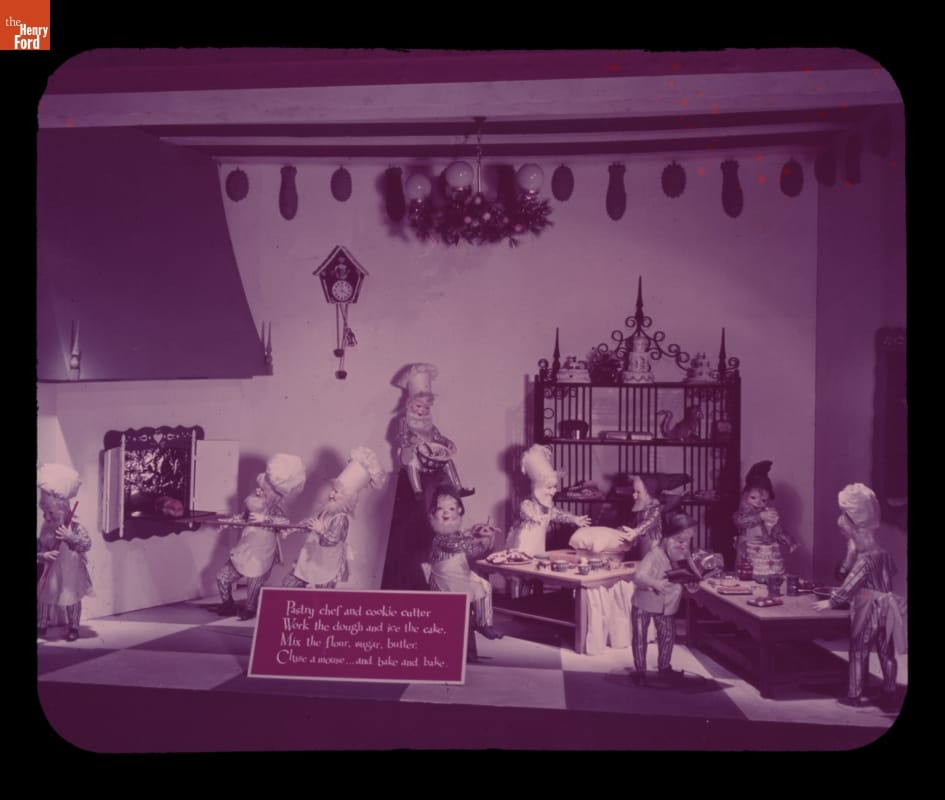
- Bakery Shop Exhibit for Christmas at Ford Rotunda, 1957 - After the Chicago Century of Progress Exposition ended in 1934, Ford Motor Company brought back its central Rotunda building from that fair to Dearborn, to serve as a visitor center and starting point for Rouge Plant tours. However, its biggest draw between 1953 and 1961 was the annual "Christmas Fantasy," shown here. Unfortunately, the Rotunda burned down in November 1962.
- 1957
- Collections - Artifact
Bakery Shop Exhibit for Christmas at Ford Rotunda, 1957
After the Chicago Century of Progress Exposition ended in 1934, Ford Motor Company brought back its central Rotunda building from that fair to Dearborn, to serve as a visitor center and starting point for Rouge Plant tours. However, its biggest draw between 1953 and 1961 was the annual "Christmas Fantasy," shown here. Unfortunately, the Rotunda burned down in November 1962.
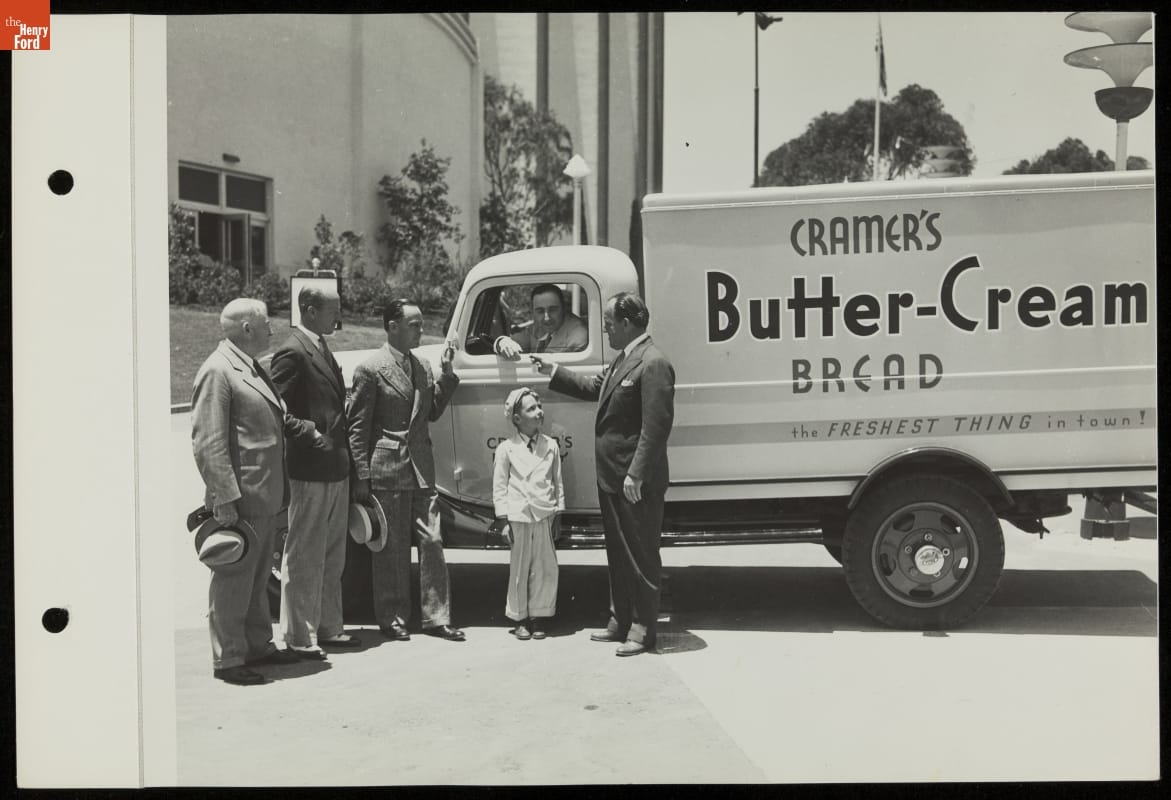
- Cramer's Bakery Bread Truck outside the Ford Building, California Pacific International Exposition, San Diego, 1935 - In 1913, Henry Ford established Ford Motor Company's photographic department. Though few internal records describe company photography, remaining photographs reveal a wide range of departmental activity. Among many other events, Ford photographers documented the 1935 California Pacific International Exposition in San Diego -- where Ford Motor Company's exhibition was the largest and most popular.
- 1935
- Collections - Artifact
Cramer's Bakery Bread Truck outside the Ford Building, California Pacific International Exposition, San Diego, 1935
In 1913, Henry Ford established Ford Motor Company's photographic department. Though few internal records describe company photography, remaining photographs reveal a wide range of departmental activity. Among many other events, Ford photographers documented the 1935 California Pacific International Exposition in San Diego -- where Ford Motor Company's exhibition was the largest and most popular.
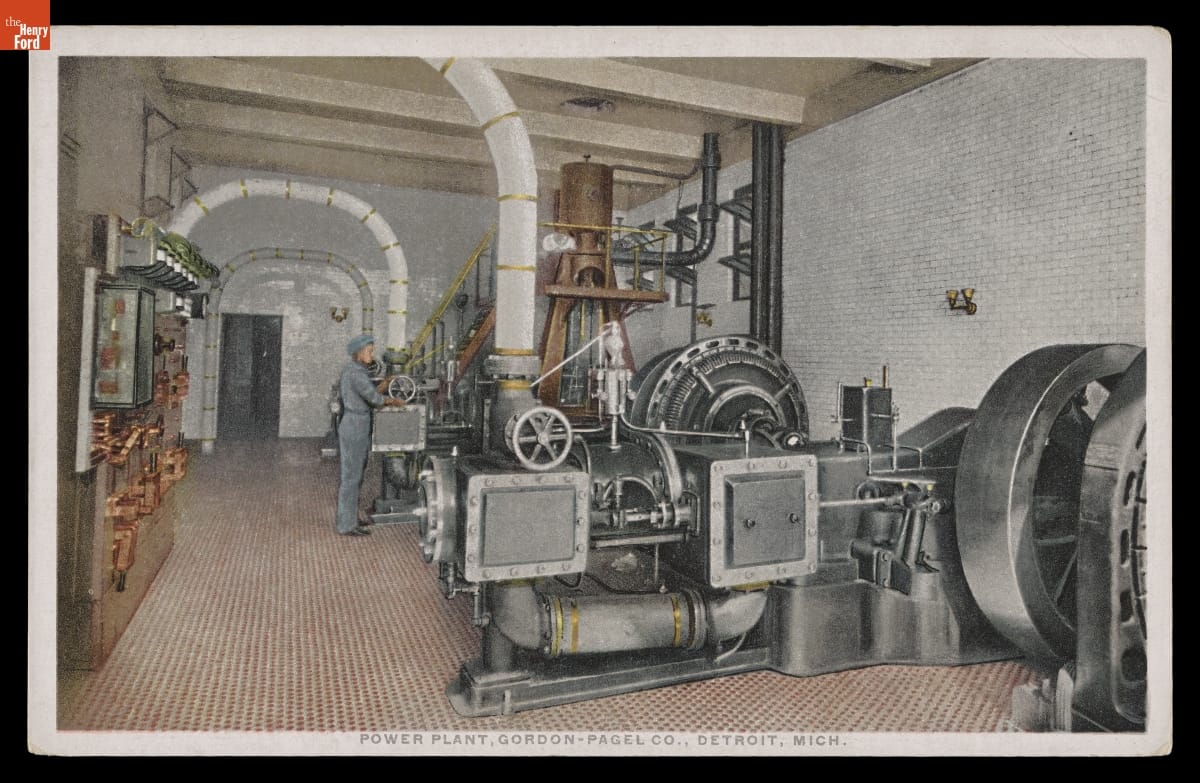
- Power Plant, Gordon-Pagel Company, Detroit, Michigan -
- 1907-1914
- Collections - Artifact
Power Plant, Gordon-Pagel Company, Detroit, Michigan
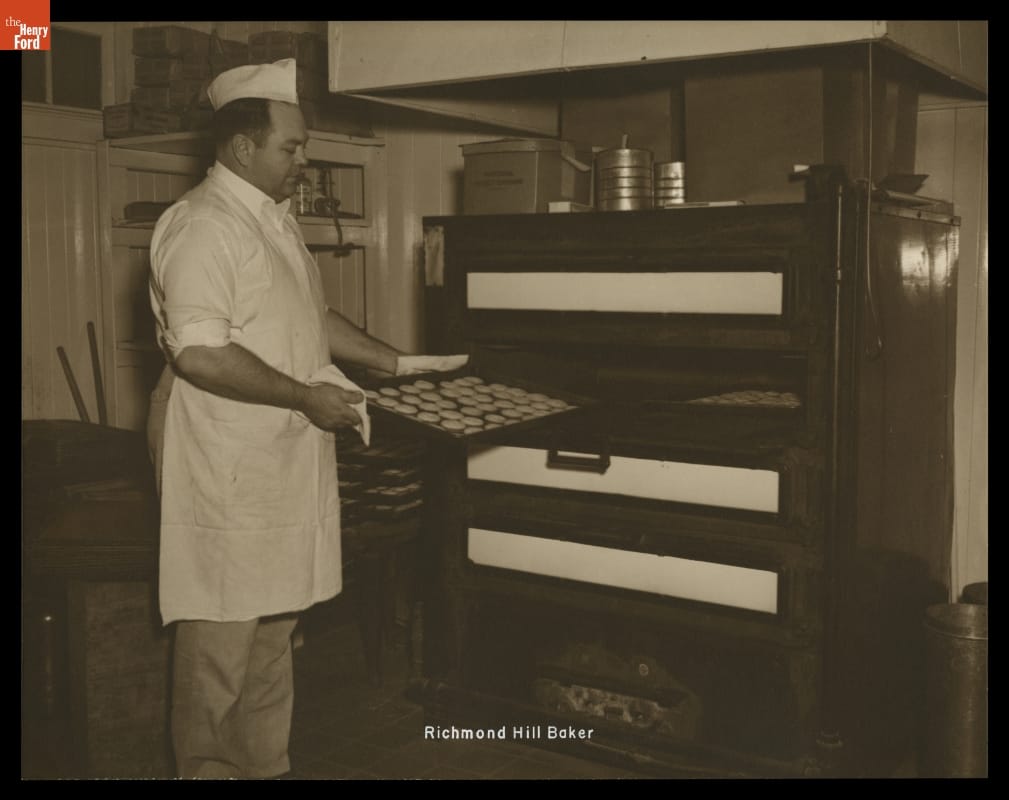
- Interior of Bakery, Richmond Hill, Georgia, circa 1947 - Henry Ford purchased vast amounts of land around present-day Richmond Hill, Georgia, beginning in the 1920s. Here, Ford dabbled in agricultural experimentation and in the late 1930s he built a winter residence. Ford also built other buildings to support his farming operations and the surrounding community. A three-room bakery was located near the commissary and post office.
- circa 1947
- Collections - Artifact
Interior of Bakery, Richmond Hill, Georgia, circa 1947
Henry Ford purchased vast amounts of land around present-day Richmond Hill, Georgia, beginning in the 1920s. Here, Ford dabbled in agricultural experimentation and in the late 1930s he built a winter residence. Ford also built other buildings to support his farming operations and the surrounding community. A three-room bakery was located near the commissary and post office.
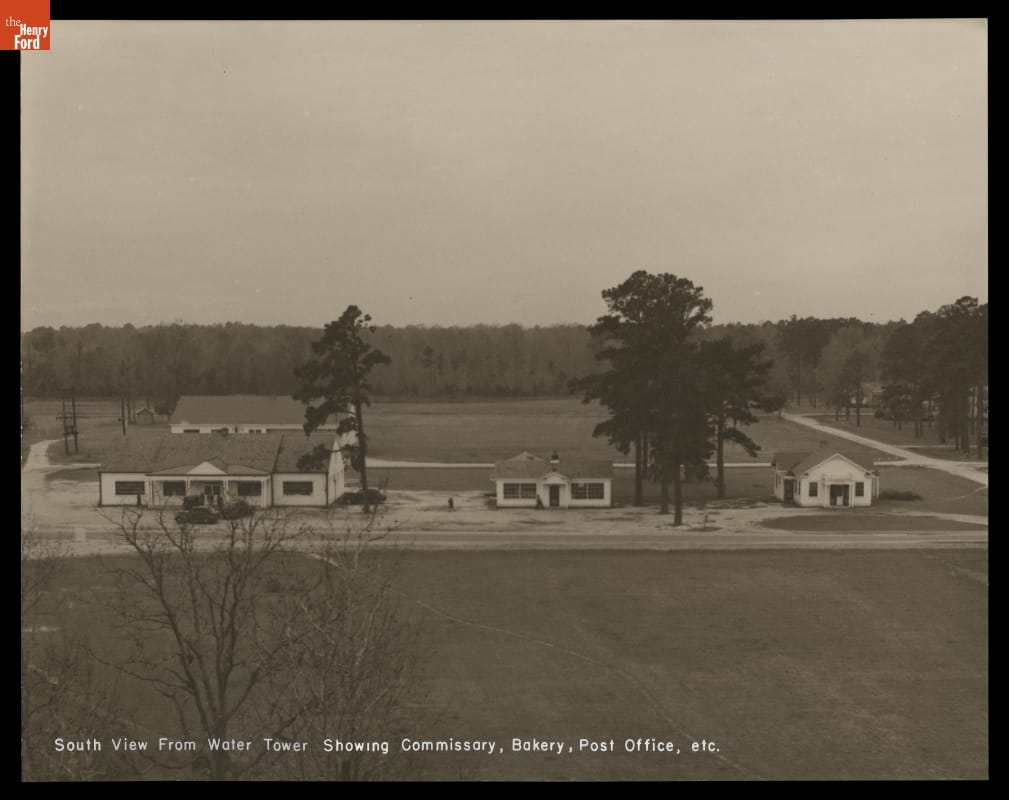
- Commissary, Bakery, and Post Office, Richmond Hill, Georgia, circa 1947 - Henry Ford purchased vast amounts of land around present-day Richmond Hill, Georgia, beginning in the 1920s. Here, Ford dabbled in agricultural experimentation and in the late 1930s he built a winter residence. Ford also built other buildings to support his farming operations and the surrounding community. The commissary with a bakery and post office nearby was an important shopping facility for area residents.
- circa 1947
- Collections - Artifact
Commissary, Bakery, and Post Office, Richmond Hill, Georgia, circa 1947
Henry Ford purchased vast amounts of land around present-day Richmond Hill, Georgia, beginning in the 1920s. Here, Ford dabbled in agricultural experimentation and in the late 1930s he built a winter residence. Ford also built other buildings to support his farming operations and the surrounding community. The commissary with a bakery and post office nearby was an important shopping facility for area residents.
- Trade Card for the Knights of Labor, "Our Daily Bread," 1884-1887 -
- 1884-1887
- Collections - Artifact
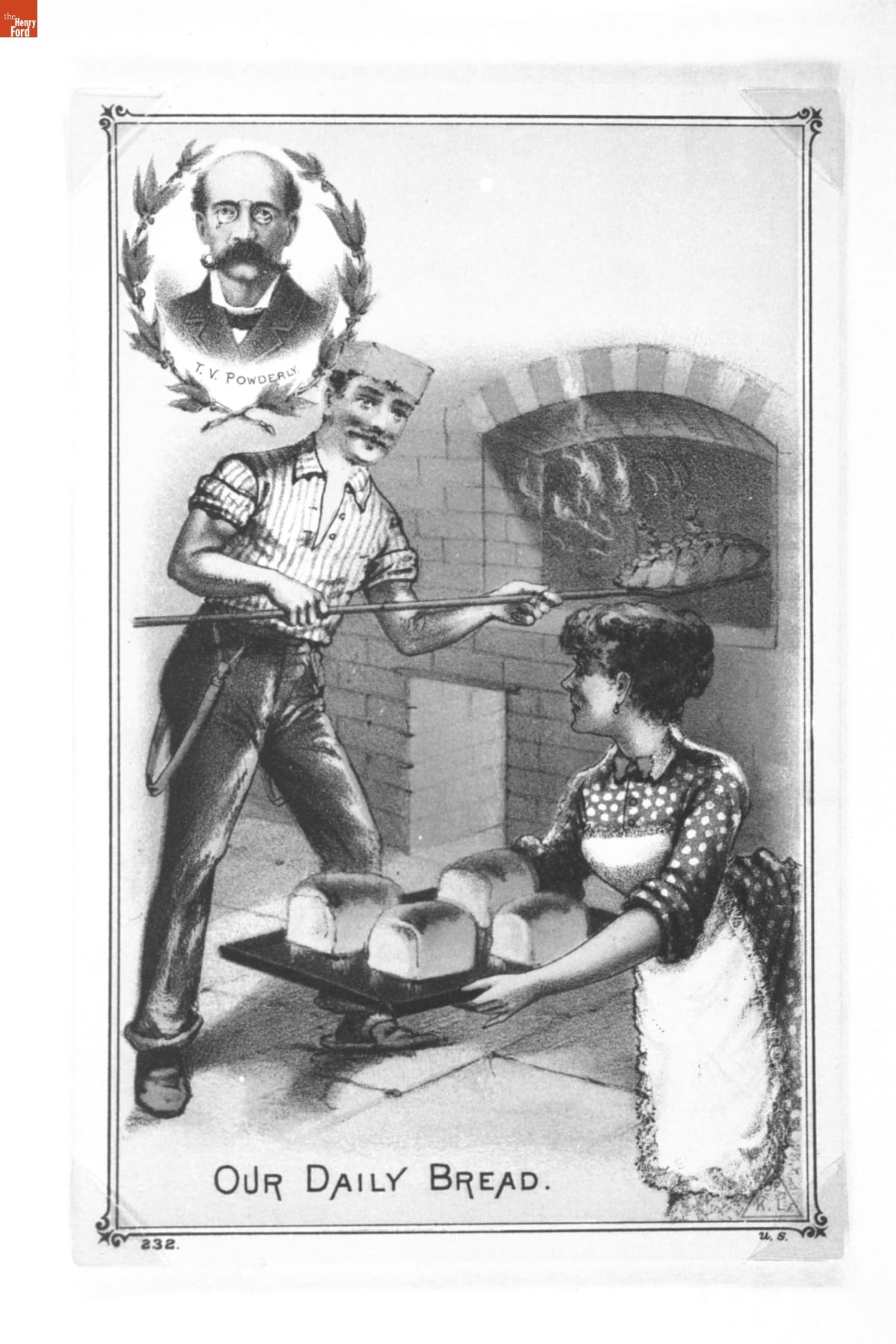
Trade Card for the Knights of Labor, "Our Daily Bread," 1884-1887
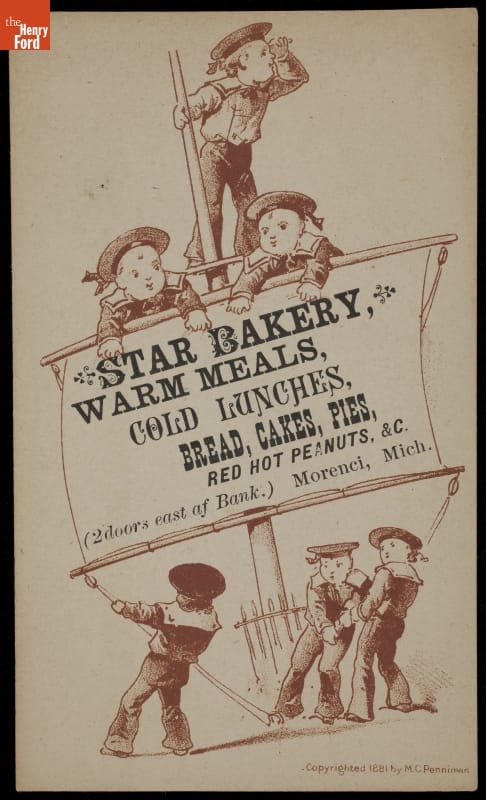
- Trade Card for Star Bakery, M. C. Penniman, 1881 - In the last third of the nineteenth century, an unprecedented variety of consumer goods and services flooded the American market. Advertisers bombarded potential customers with trade cards. Americans enjoyed and saved the often illustrated little advertisements found in product packages or distributed by local merchants. Many survive as historical records of commercialism in the United States.
- 1881
- Collections - Artifact
Trade Card for Star Bakery, M. C. Penniman, 1881
In the last third of the nineteenth century, an unprecedented variety of consumer goods and services flooded the American market. Advertisers bombarded potential customers with trade cards. Americans enjoyed and saved the often illustrated little advertisements found in product packages or distributed by local merchants. Many survive as historical records of commercialism in the United States.
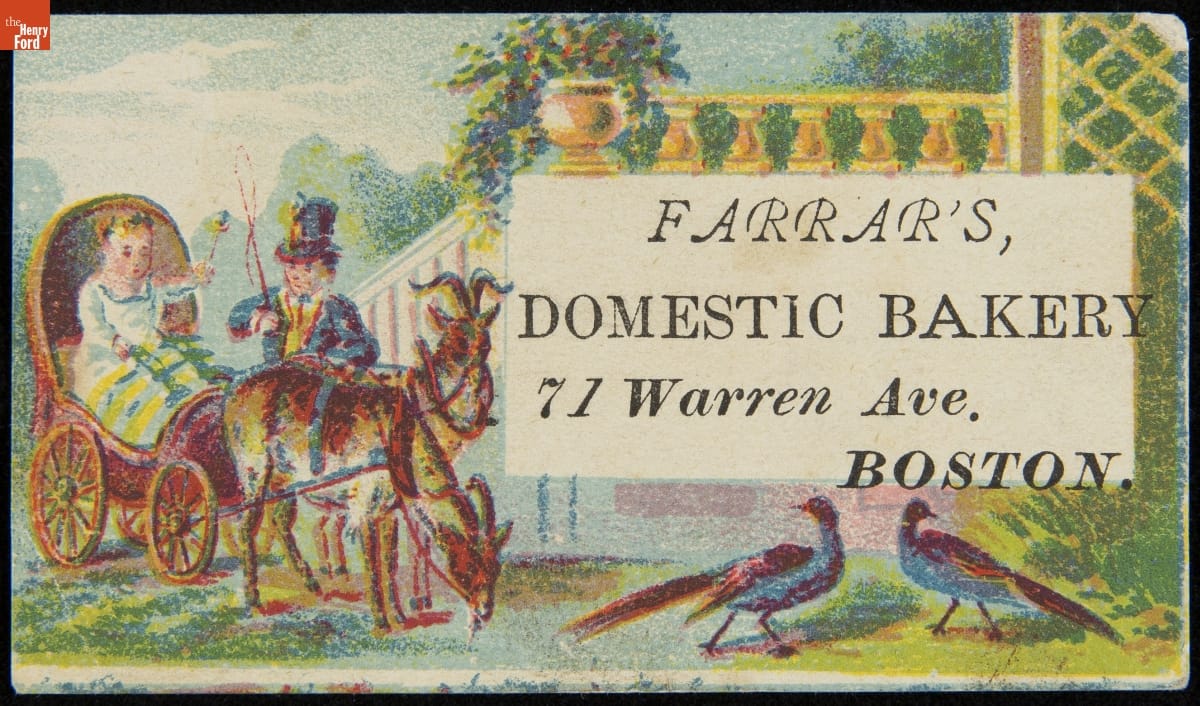
- Trade Card for Farrar's Domestic Bakery, 1880-1900 - In the last third of the nineteenth century, an unprecedented variety of consumer goods and services flooded the American market. Advertisers, armed with new methods of color printing, bombarded potential customers with trade cards. Americans enjoyed and often saved the vibrant little advertisements found in product packages or distributed by local merchants. Many survive as historical records of commercialism in the United States.
- 1880-1900
- Collections - Artifact
Trade Card for Farrar's Domestic Bakery, 1880-1900
In the last third of the nineteenth century, an unprecedented variety of consumer goods and services flooded the American market. Advertisers, armed with new methods of color printing, bombarded potential customers with trade cards. Americans enjoyed and often saved the vibrant little advertisements found in product packages or distributed by local merchants. Many survive as historical records of commercialism in the United States.
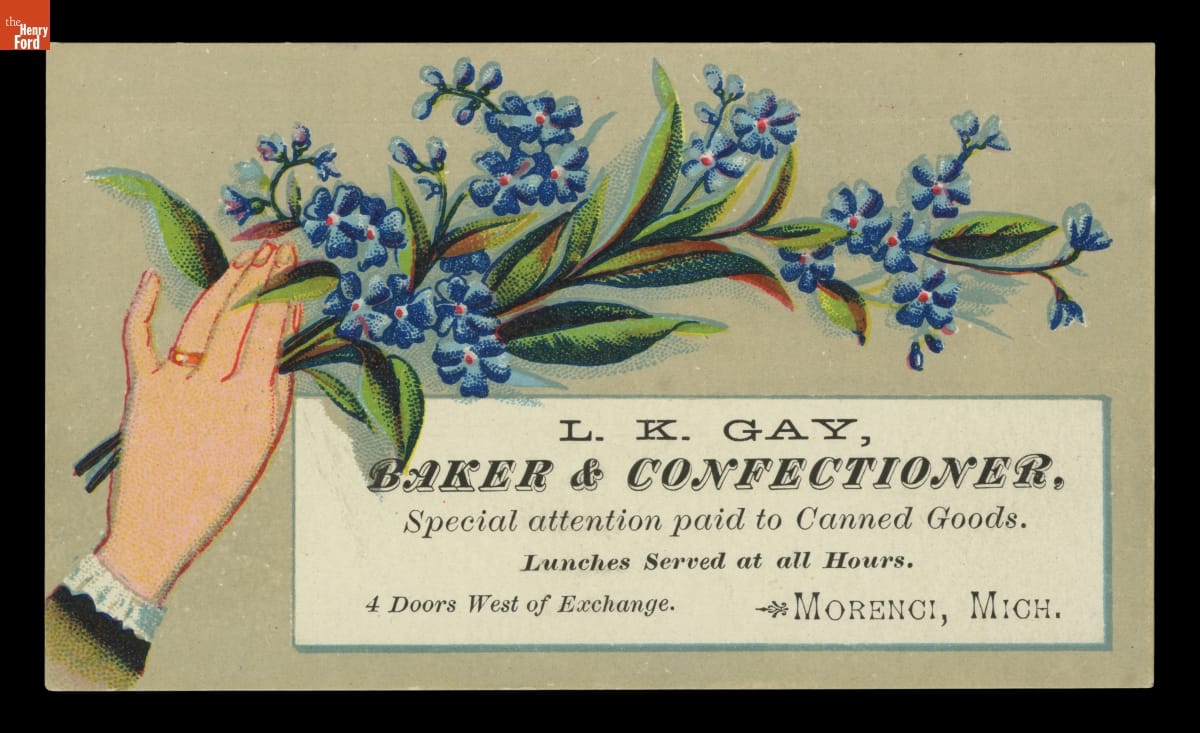
- Trade Card for L. K. Gay Baker & Confectioner, 1870-1900 - In the last third of the nineteenth century, an unprecedented variety of consumer goods and services flooded the American market. Advertisers, armed with new methods of color printing, bombarded potential customers with trade cards. Americans enjoyed and often saved the vibrant little advertisements found in product packages or distributed by local merchants. Many survive as historical records of commercialism in the United States.
- 1870-1900
- Collections - Artifact
Trade Card for L. K. Gay Baker & Confectioner, 1870-1900
In the last third of the nineteenth century, an unprecedented variety of consumer goods and services flooded the American market. Advertisers, armed with new methods of color printing, bombarded potential customers with trade cards. Americans enjoyed and often saved the vibrant little advertisements found in product packages or distributed by local merchants. Many survive as historical records of commercialism in the United States.
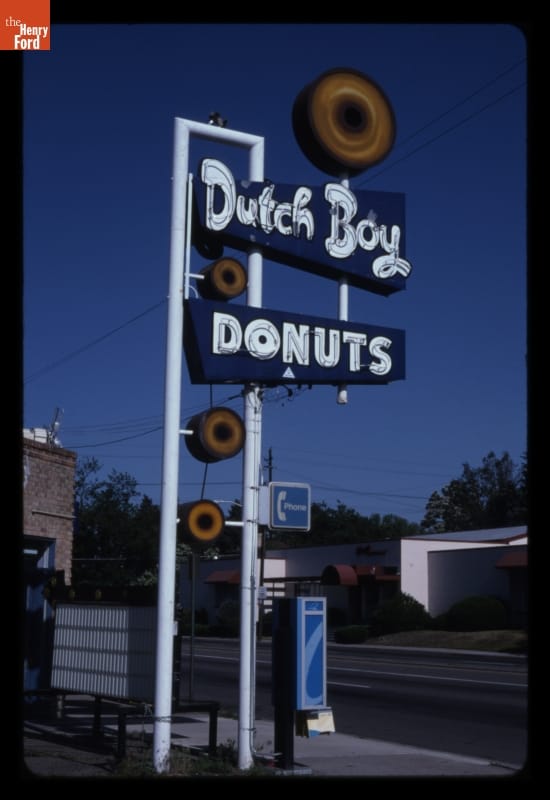
- Dutch Boy Donuts Sign, Denver, Colorado, 2004 - In the mid-1970s, John Margolies began to assemble a visual record of America's built roadside landscape. Over the following three decades, he traveled thousands of miles to photograph the overlooked and often quickly vanishing structures that had grown out of American automobile culture and main street commerce. His photographs of hotels, motels, diners, service stations, drive-ins and attractions celebrate and capture a unique chapter of American history.
- 2004
- Collections - Artifact
Dutch Boy Donuts Sign, Denver, Colorado, 2004
In the mid-1970s, John Margolies began to assemble a visual record of America's built roadside landscape. Over the following three decades, he traveled thousands of miles to photograph the overlooked and often quickly vanishing structures that had grown out of American automobile culture and main street commerce. His photographs of hotels, motels, diners, service stations, drive-ins and attractions celebrate and capture a unique chapter of American history.