
Search
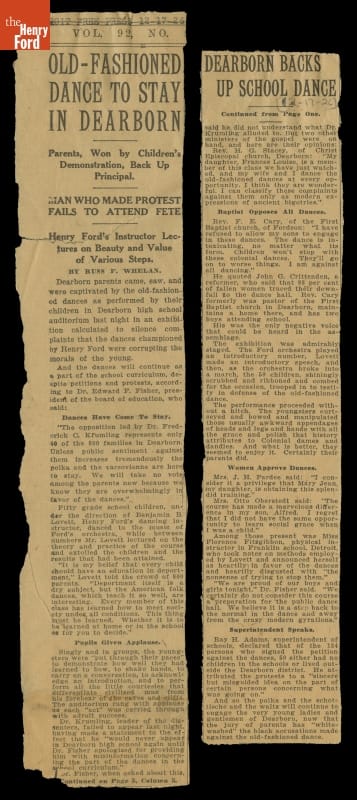
- Newspaper Article, "Old-Fashioned Dance to Stay in Dearborn...Dearborn Backs Up School Dance," 1926 - As Henry Ford extended his traditional American dance classes to local Dearborn schoolchildren, some parents grew alarmed--they weren't sure they approved of boys and girls dancing together. A dance demonstration by the children soon set most of the parents' minds at ease. They quickly realized the benefit of having their children learn these old-time dances--and the good manners that went along with them.
- December 17, 1926
- Collections - Artifact
Newspaper Article, "Old-Fashioned Dance to Stay in Dearborn...Dearborn Backs Up School Dance," 1926
As Henry Ford extended his traditional American dance classes to local Dearborn schoolchildren, some parents grew alarmed--they weren't sure they approved of boys and girls dancing together. A dance demonstration by the children soon set most of the parents' minds at ease. They quickly realized the benefit of having their children learn these old-time dances--and the good manners that went along with them.
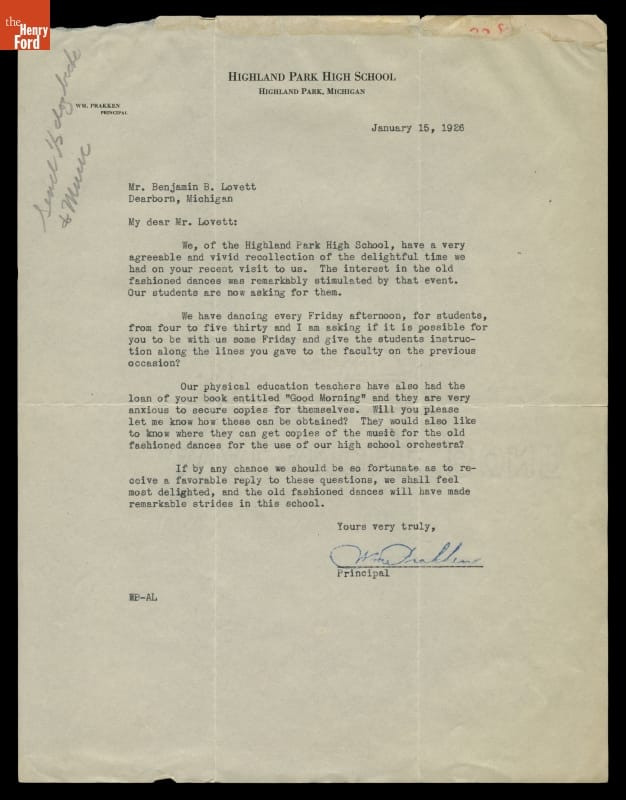
- Letter from Highland Park High School Principal to Benjamin Lovett, January 16, 1926 - Like the collections of antique vehicles, farm equipment and cooking implements Ford began to amass with vigor during the 1920s--music was part of Ford's larger vision for preserving the American past. By this time, much of America had left traditional music behind. But Ford never forgot it. And, through Benjamin Lovett's instruction, Ford wanted to share it with new generations.
- January 16, 1926
- Collections - Artifact
Letter from Highland Park High School Principal to Benjamin Lovett, January 16, 1926
Like the collections of antique vehicles, farm equipment and cooking implements Ford began to amass with vigor during the 1920s--music was part of Ford's larger vision for preserving the American past. By this time, much of America had left traditional music behind. But Ford never forgot it. And, through Benjamin Lovett's instruction, Ford wanted to share it with new generations.
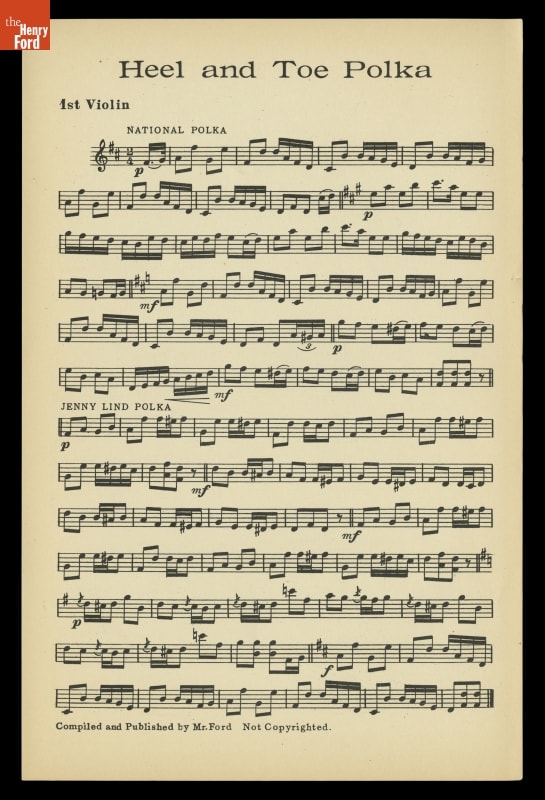
- "Heel and Toe Polka," Published by Henry Ford, 1925-1926 - In the 1920s, Henry Ford thought the old-fashioned dances of his youth should be revived. So he published a book of dance instruction--and also this sheet music for school orchestras or community musicians who wished to provide live music for 19th century dances like the reel, quadrille, schottische, and gavotte. The music included parts for violin, bass, cello, viola, clarinet, flute, piano, trumpet, trombone, and drums.
- 1925-1926
- Collections - Artifact
"Heel and Toe Polka," Published by Henry Ford, 1925-1926
In the 1920s, Henry Ford thought the old-fashioned dances of his youth should be revived. So he published a book of dance instruction--and also this sheet music for school orchestras or community musicians who wished to provide live music for 19th century dances like the reel, quadrille, schottische, and gavotte. The music included parts for violin, bass, cello, viola, clarinet, flute, piano, trumpet, trombone, and drums.
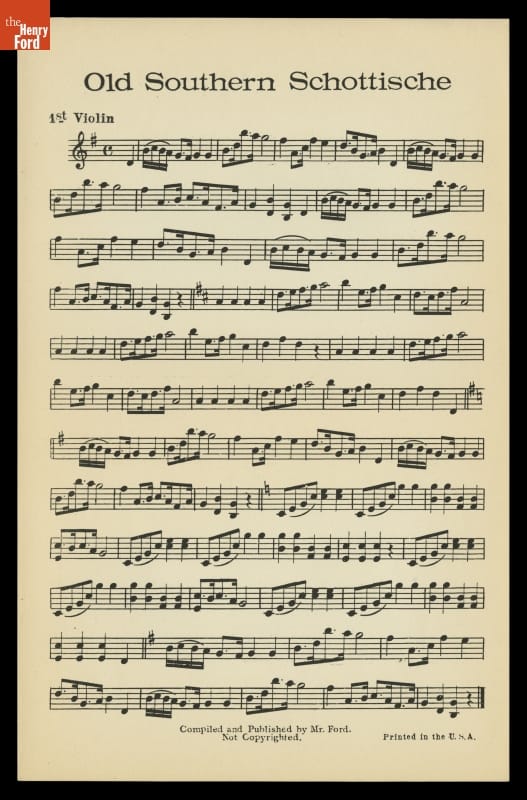
- "Old Southern Schottische," Published by Henry Ford, 1925-1926 - In the 1920s, Henry Ford thought the old-fashioned dances of his youth should be revived. So he published a book of dance instruction--and also this sheet music for school orchestras or community musicians who wished to provide live music for 19th century dances like the reel, quadrille, schottische, and gavotte. The music included parts for violin, bass, cello, viola, clarinet, flute, piano, trumpet, trombone, and drums.
- 1925-1926
- Collections - Artifact
"Old Southern Schottische," Published by Henry Ford, 1925-1926
In the 1920s, Henry Ford thought the old-fashioned dances of his youth should be revived. So he published a book of dance instruction--and also this sheet music for school orchestras or community musicians who wished to provide live music for 19th century dances like the reel, quadrille, schottische, and gavotte. The music included parts for violin, bass, cello, viola, clarinet, flute, piano, trumpet, trombone, and drums.
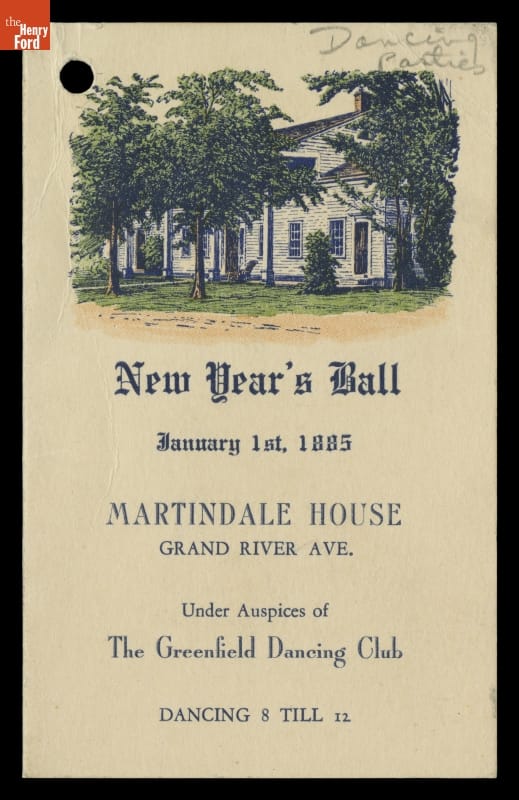
- Replica Dance Card for the 1885 New Year's Ball at Martindale House Inn - Young people living in the vicinity of the Martindale House, a hotel run by George Martindale in rural Greenfield Township, Wayne County, Michigan, gathered in the hotel's large ballroom to enjoy dancing to quadrilles, reels, and schottisches. Albert Race played the dulcimer, as he called off the dance steps. This dance card is from the night Henry Ford met his wife, Clara Bryant.
- January 01, 1885
- Collections - Artifact
Replica Dance Card for the 1885 New Year's Ball at Martindale House Inn
Young people living in the vicinity of the Martindale House, a hotel run by George Martindale in rural Greenfield Township, Wayne County, Michigan, gathered in the hotel's large ballroom to enjoy dancing to quadrilles, reels, and schottisches. Albert Race played the dulcimer, as he called off the dance steps. This dance card is from the night Henry Ford met his wife, Clara Bryant.
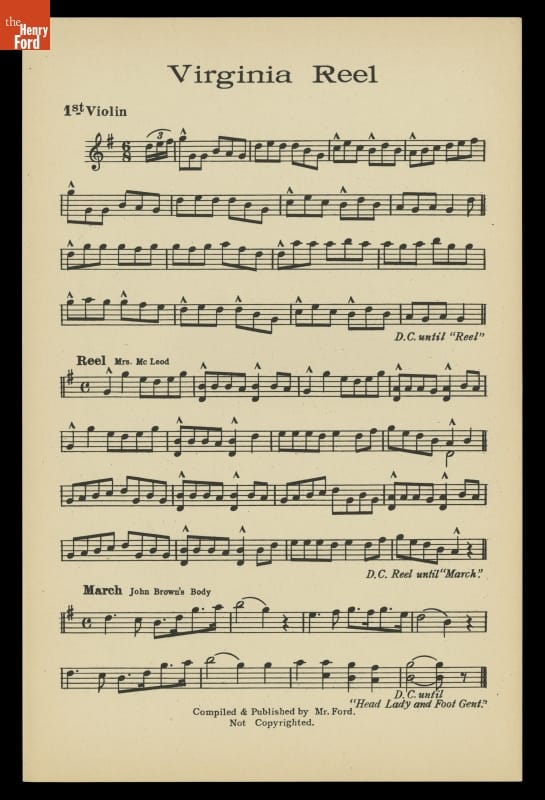
- "Virginia Reel," Published by Henry Ford, 1925-1926 - In the 1920s, Henry Ford thought the old-fashioned dances of his youth should be revived. So he published a book of dance instruction--and also this sheet music for school orchestras or community musicians who wished to provide live music for 19th century dances like the reel, quadrille, schottische, and gavotte. The music included parts for violin, bass, cello, viola, clarinet, flute, piano, trumpet, trombone, and drums.
- 1925-1926
- Collections - Artifact
"Virginia Reel," Published by Henry Ford, 1925-1926
In the 1920s, Henry Ford thought the old-fashioned dances of his youth should be revived. So he published a book of dance instruction--and also this sheet music for school orchestras or community musicians who wished to provide live music for 19th century dances like the reel, quadrille, schottische, and gavotte. The music included parts for violin, bass, cello, viola, clarinet, flute, piano, trumpet, trombone, and drums.
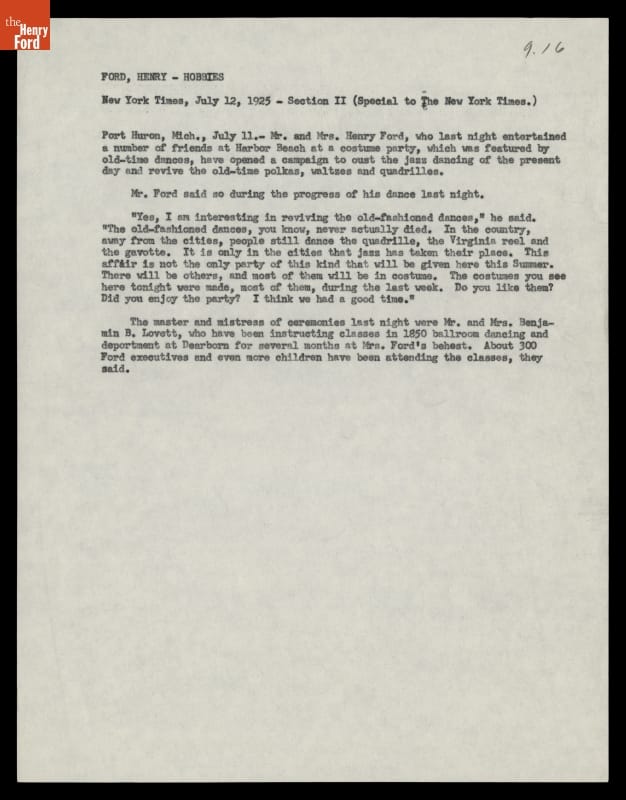
- News Story about Henry Ford's Revival of Old-Fashioned Music and Dancing, July 1925 -
- July 11, 1925
- Collections - Artifact
News Story about Henry Ford's Revival of Old-Fashioned Music and Dancing, July 1925
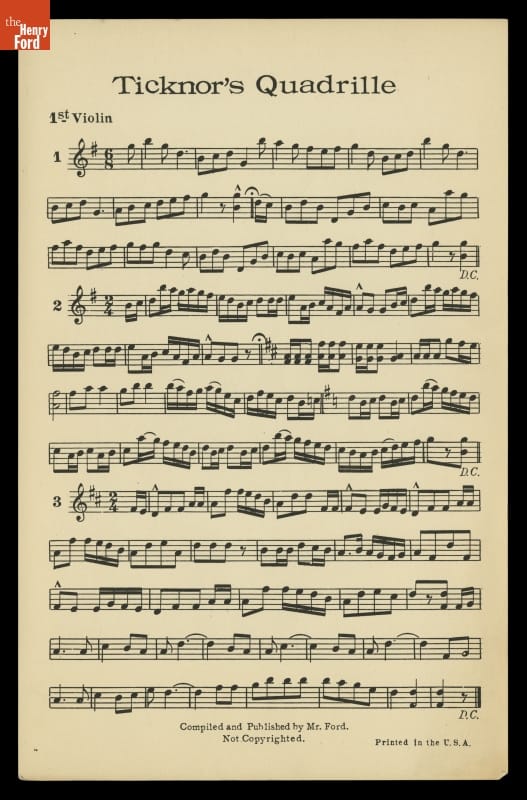
- "Ticknor's Quadrille," Published by Henry Ford, 1925-1926 - In the 1920s, Henry Ford thought the old-fashioned dances of his youth should be revived. So he published a book of dance instruction--and also this sheet music for school orchestras or community musicians who wished to provide live music for 19th century dances like the reel, quadrille, schottische, and gavotte. The music included parts for violin, bass, cello, viola, clarinet, flute, piano, trumpet, trombone, and drums.
- 1925-1926
- Collections - Artifact
"Ticknor's Quadrille," Published by Henry Ford, 1925-1926
In the 1920s, Henry Ford thought the old-fashioned dances of his youth should be revived. So he published a book of dance instruction--and also this sheet music for school orchestras or community musicians who wished to provide live music for 19th century dances like the reel, quadrille, schottische, and gavotte. The music included parts for violin, bass, cello, viola, clarinet, flute, piano, trumpet, trombone, and drums.
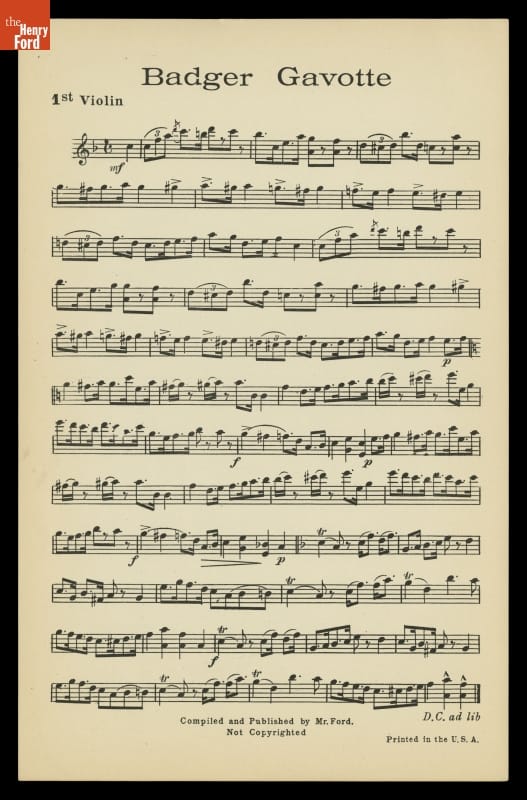
- "Badger Gavotte," Published by Henry Ford, 1925-1926 - In the 1920s, Henry Ford thought the old-fashioned dances of his youth should be revived. So he published a book of dance instruction--and also this sheet music for school orchestras or community musicians who wished to provide live music for 19th century dances like the reel, quadrille, schottische, and gavotte. The music included parts for violin, bass, cello, viola, clarinet, flute, piano, trumpet, trombone, and drums.
- 1925-1926
- Collections - Artifact
"Badger Gavotte," Published by Henry Ford, 1925-1926
In the 1920s, Henry Ford thought the old-fashioned dances of his youth should be revived. So he published a book of dance instruction--and also this sheet music for school orchestras or community musicians who wished to provide live music for 19th century dances like the reel, quadrille, schottische, and gavotte. The music included parts for violin, bass, cello, viola, clarinet, flute, piano, trumpet, trombone, and drums.
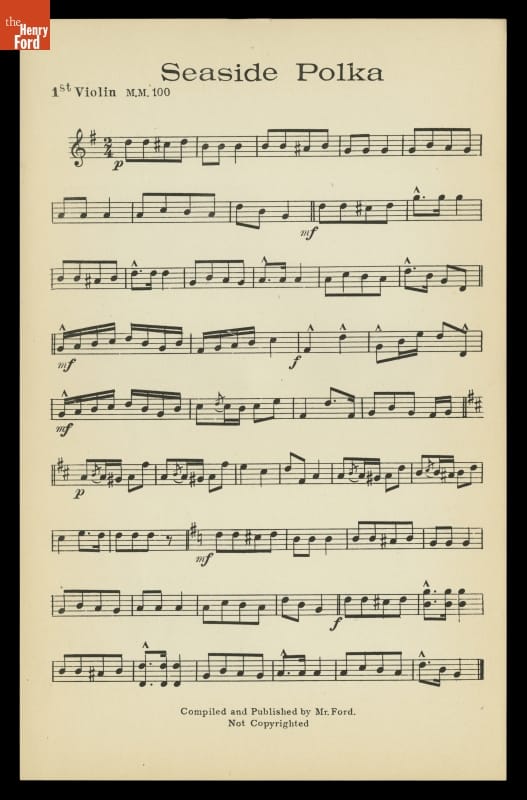
- "Seaside Polka," Published by Henry Ford, 1925-1926 - In the 1920s, Henry Ford thought the old-fashioned dances of his youth should be revived. So he published a book of dance instruction--and also this sheet music for school orchestras or community musicians who wished to provide live music for 19th century dances like the reel, quadrille, schottische, and gavotte. The music included parts for violin, bass, cello, viola, clarinet, flute, piano, trumpet, trombone, and drums.
- 1925-1926
- Collections - Artifact
"Seaside Polka," Published by Henry Ford, 1925-1926
In the 1920s, Henry Ford thought the old-fashioned dances of his youth should be revived. So he published a book of dance instruction--and also this sheet music for school orchestras or community musicians who wished to provide live music for 19th century dances like the reel, quadrille, schottische, and gavotte. The music included parts for violin, bass, cello, viola, clarinet, flute, piano, trumpet, trombone, and drums.