
Search
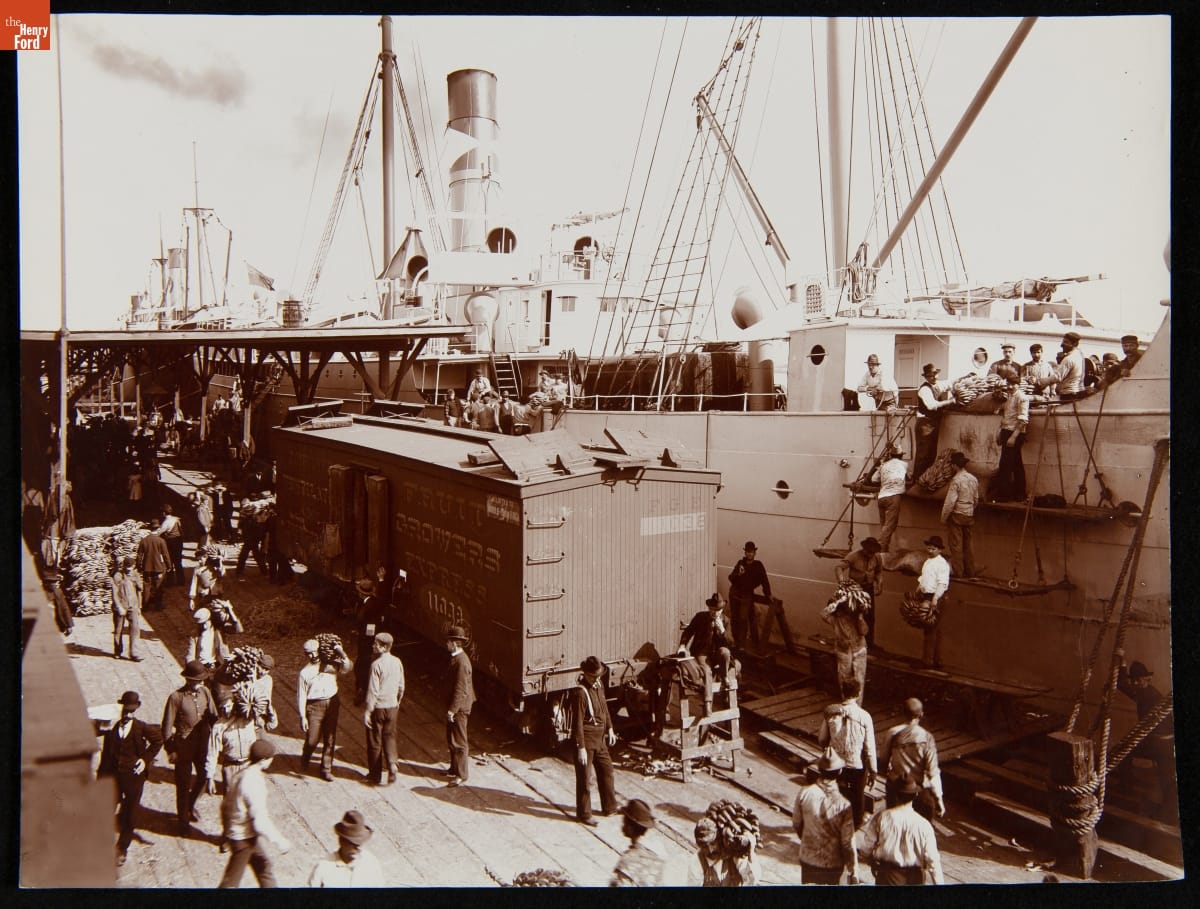
- Unloading Bananas from Steamer, New Orleans, Louisiana, 1900-1910 - Bananas arrived on grocery store shelves via a transportation system controlled by competing fruit companies and their government allies. Refrigerated railcars moved the crop from Central American plantations to ships bound for U.S. ports in the Gulf of Mexico. This photograph shows dockworkers in New Orleans, Louisiana, transferring bunches of bananas -- each weighing around 86 pounds -- to a refrigerated railcar for transport to market.
- 1900-1910
- Collections - Artifact
Unloading Bananas from Steamer, New Orleans, Louisiana, 1900-1910
Bananas arrived on grocery store shelves via a transportation system controlled by competing fruit companies and their government allies. Refrigerated railcars moved the crop from Central American plantations to ships bound for U.S. ports in the Gulf of Mexico. This photograph shows dockworkers in New Orleans, Louisiana, transferring bunches of bananas -- each weighing around 86 pounds -- to a refrigerated railcar for transport to market.
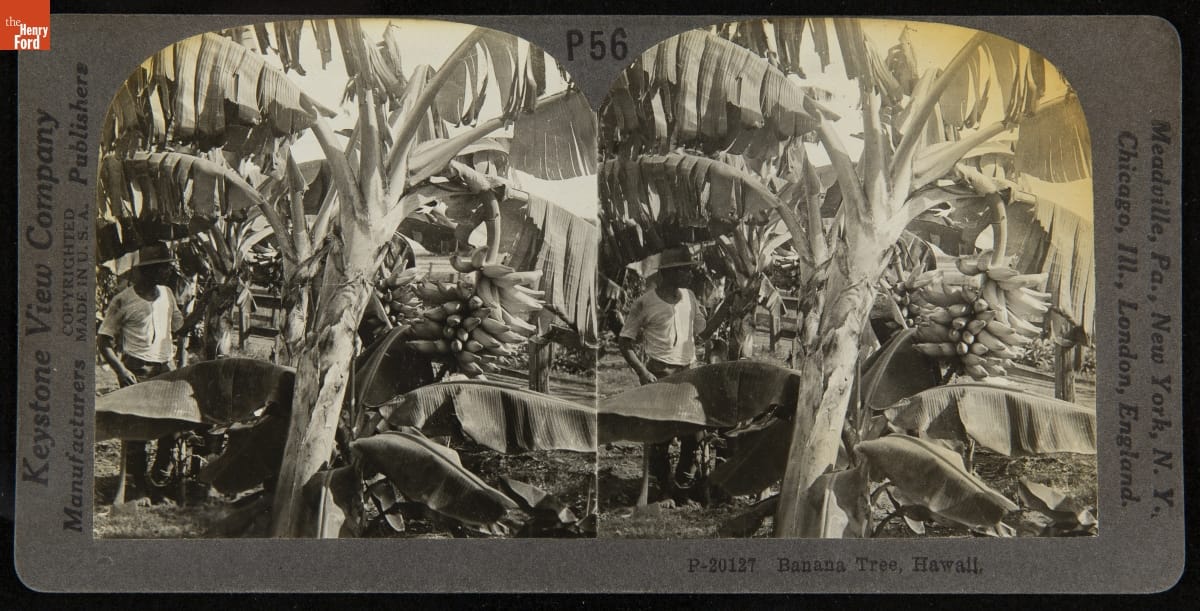
- Banana Tree, Hawaii, 1906 -
- 1906
- Collections - Artifact
Banana Tree, Hawaii, 1906
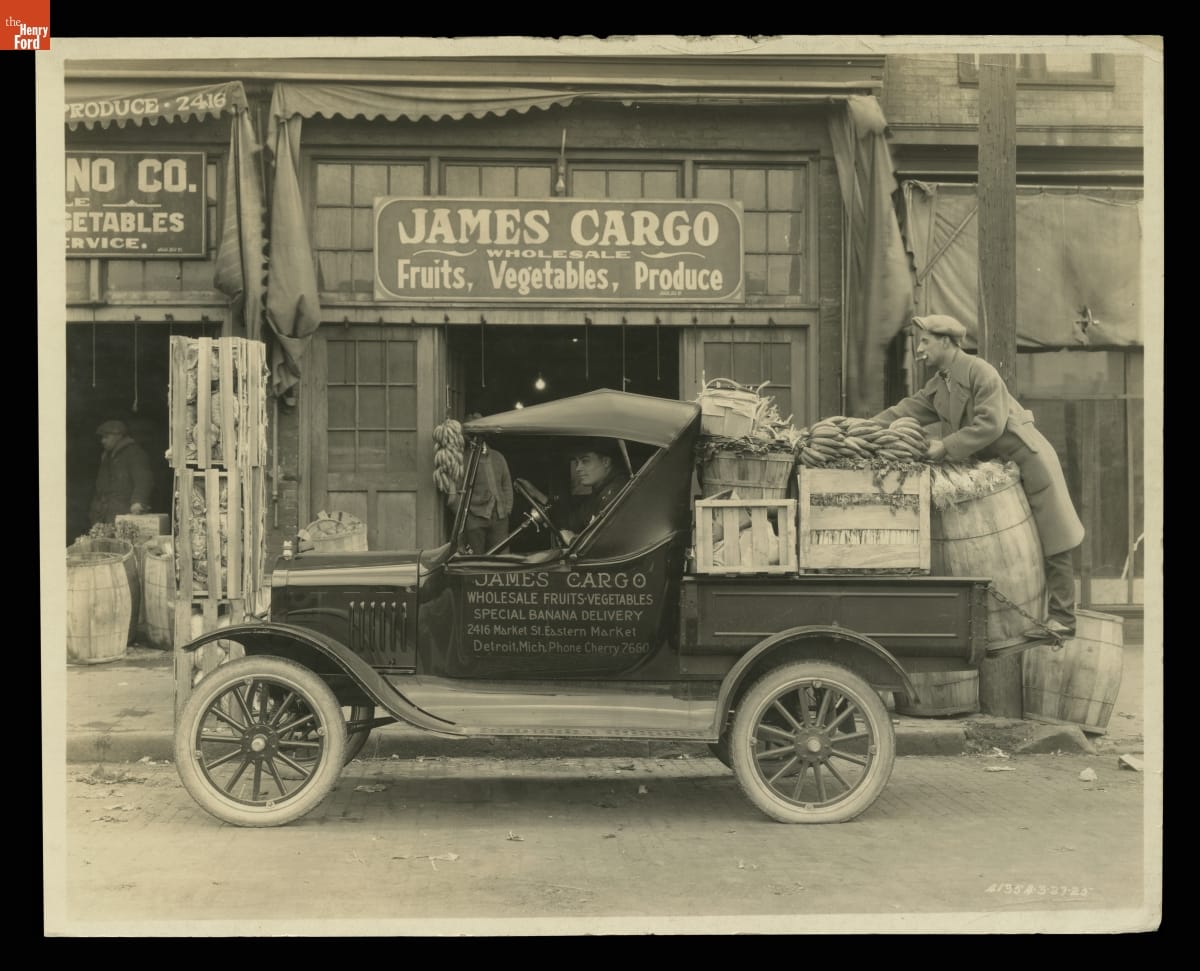
- Ford Model T Pickup Used by James Cargo, Wholesale Fruit and Vegetable Dealer, Eastern Market, Detroit, Michigan, March 1925 - For years, buyers needing a light-duty truck had modified Ford's two-seat Model T roadster by removing the rear deck and replacing it with a truck bed. Ford noticed the trend and introduced a factory-built Model T pickup in 1925. It featured a steel bed 56 inches long by 40-3/4 inches wide. Ford sold nearly 33,800 units that first year.
- March 27, 1925
- Collections - Artifact
Ford Model T Pickup Used by James Cargo, Wholesale Fruit and Vegetable Dealer, Eastern Market, Detroit, Michigan, March 1925
For years, buyers needing a light-duty truck had modified Ford's two-seat Model T roadster by removing the rear deck and replacing it with a truck bed. Ford noticed the trend and introduced a factory-built Model T pickup in 1925. It featured a steel bed 56 inches long by 40-3/4 inches wide. Ford sold nearly 33,800 units that first year.
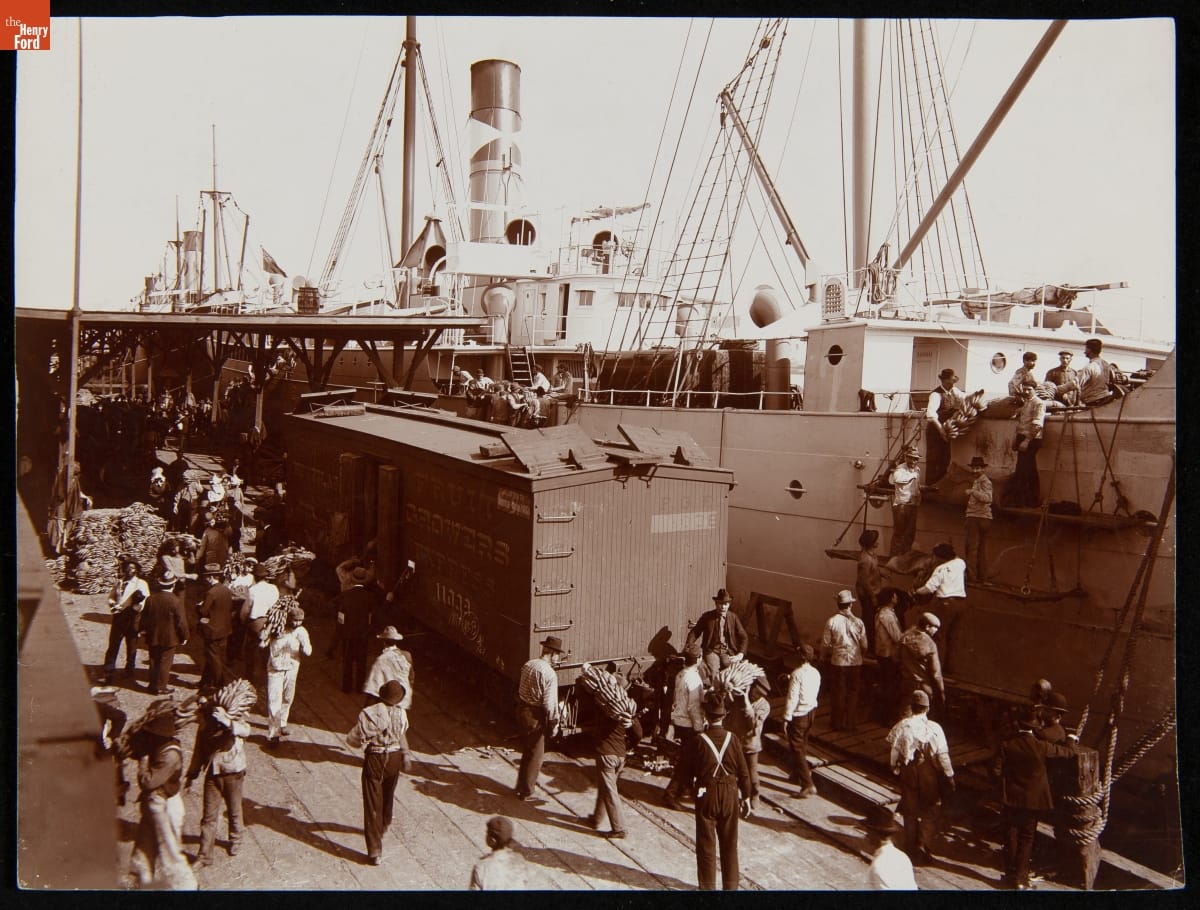
- Unloading Bananas from Steamer, New Orleans, Louisiana, 1900-1910 - Bananas arrived on grocery store shelves via a transportation system controlled by competing fruit companies and their government allies. Refrigerated railcars moved the crop from Central American plantations to ships bound for U.S. ports in the Gulf of Mexico. This photograph shows dockworkers in New Orleans, Louisiana, transferring bunches of bananas -- each weighing around 86 pounds -- to a refrigerated railcar for transport to market.
- 1900-1910
- Collections - Artifact
Unloading Bananas from Steamer, New Orleans, Louisiana, 1900-1910
Bananas arrived on grocery store shelves via a transportation system controlled by competing fruit companies and their government allies. Refrigerated railcars moved the crop from Central American plantations to ships bound for U.S. ports in the Gulf of Mexico. This photograph shows dockworkers in New Orleans, Louisiana, transferring bunches of bananas -- each weighing around 86 pounds -- to a refrigerated railcar for transport to market.
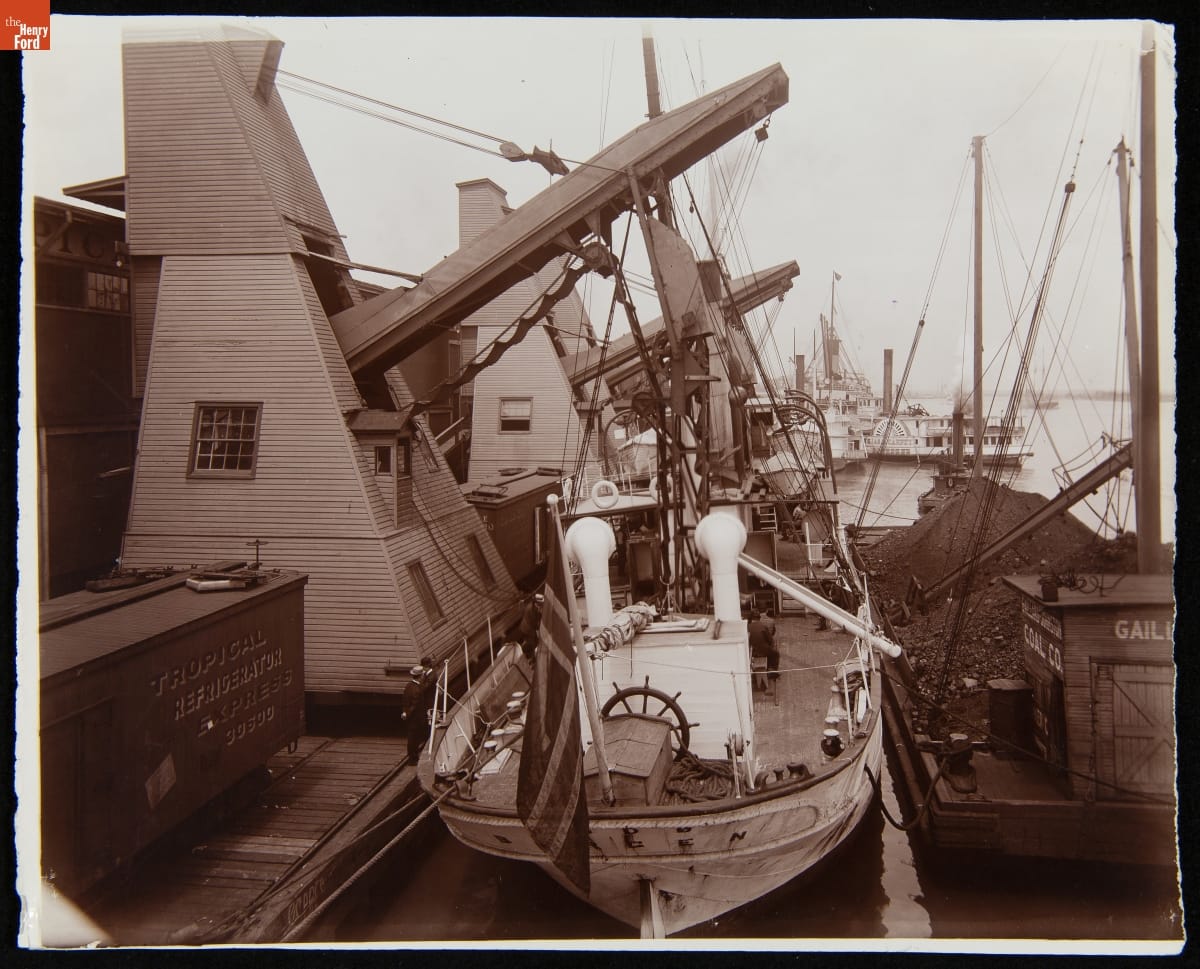
- Unloading a Banana Steamer by Machinery, Mobile, Alabama, 1900-1910 - Bananas raised on Central American plantations traveled to North American grocery stores via a transportation system controlled by competing fruit companies and their government allies. Ships hauled the commodity to U.S. ports in the Gulf of Mexico, including Mobile, Alabama. Conveyor belts moved stalks of bananas, each weighing around 86 pounds, from the ship's hold into refrigerated railcars, visible next to the ship.
- 1900-1910
- Collections - Artifact
Unloading a Banana Steamer by Machinery, Mobile, Alabama, 1900-1910
Bananas raised on Central American plantations traveled to North American grocery stores via a transportation system controlled by competing fruit companies and their government allies. Ships hauled the commodity to U.S. ports in the Gulf of Mexico, including Mobile, Alabama. Conveyor belts moved stalks of bananas, each weighing around 86 pounds, from the ship's hold into refrigerated railcars, visible next to the ship.
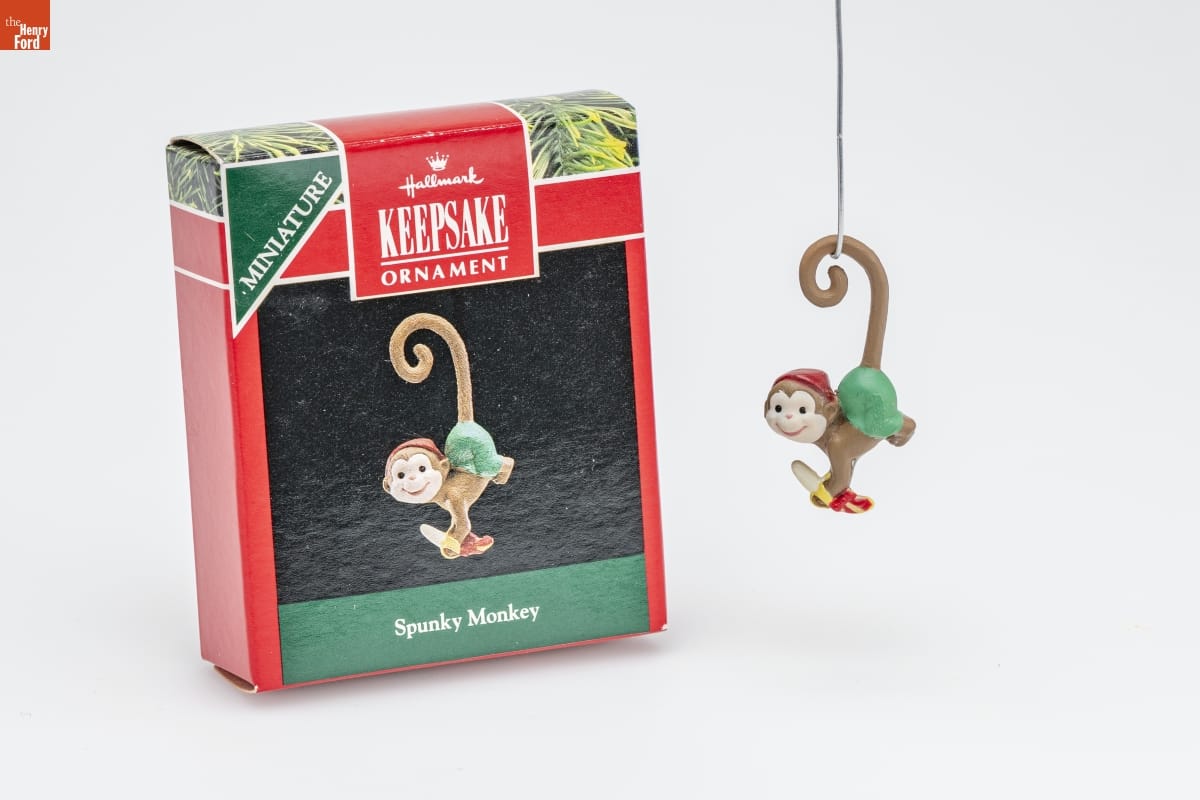
- Hallmark "Spunky Monkey" Miniature Christmas Ornament, 1992 - Already known for greeting cards, Hallmark introduced a line of Christmas ornaments in 1973. The company's annual release of an increasing array of ornaments revolutionized Christmas decorating, appealing to customers' interest in marking memories and milestones as well as expressing one's personality and unique tastes.
- 1992
- Collections - Artifact
Hallmark "Spunky Monkey" Miniature Christmas Ornament, 1992
Already known for greeting cards, Hallmark introduced a line of Christmas ornaments in 1973. The company's annual release of an increasing array of ornaments revolutionized Christmas decorating, appealing to customers' interest in marking memories and milestones as well as expressing one's personality and unique tastes.
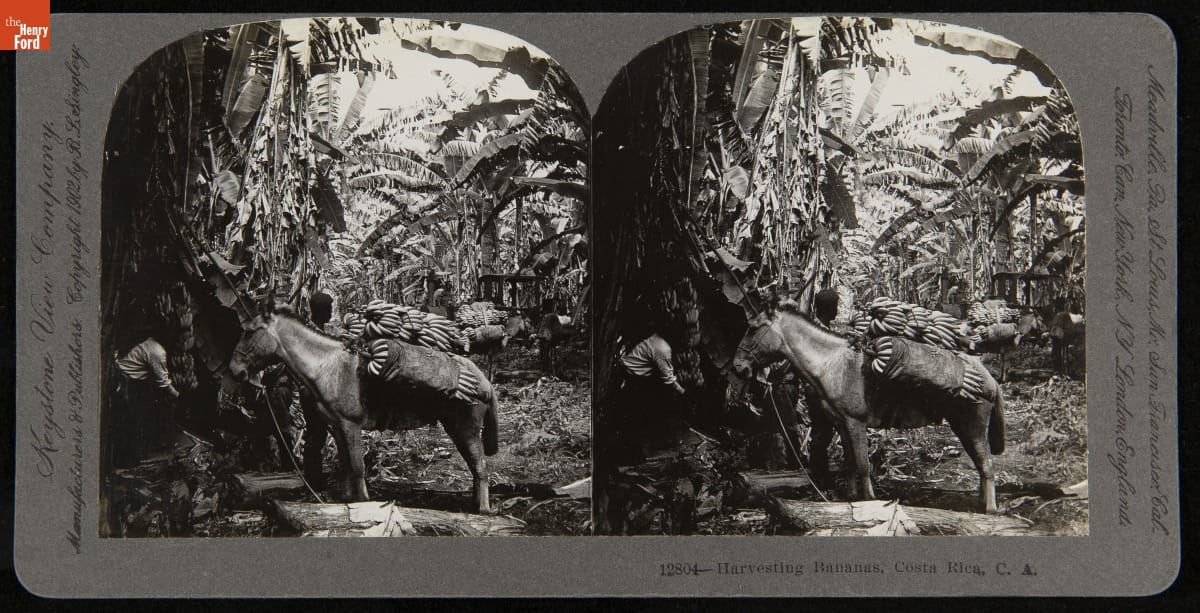
- Harvesting Bananas, Costa Rica, 1902 -
- 1902
- Collections - Artifact
Harvesting Bananas, Costa Rica, 1902
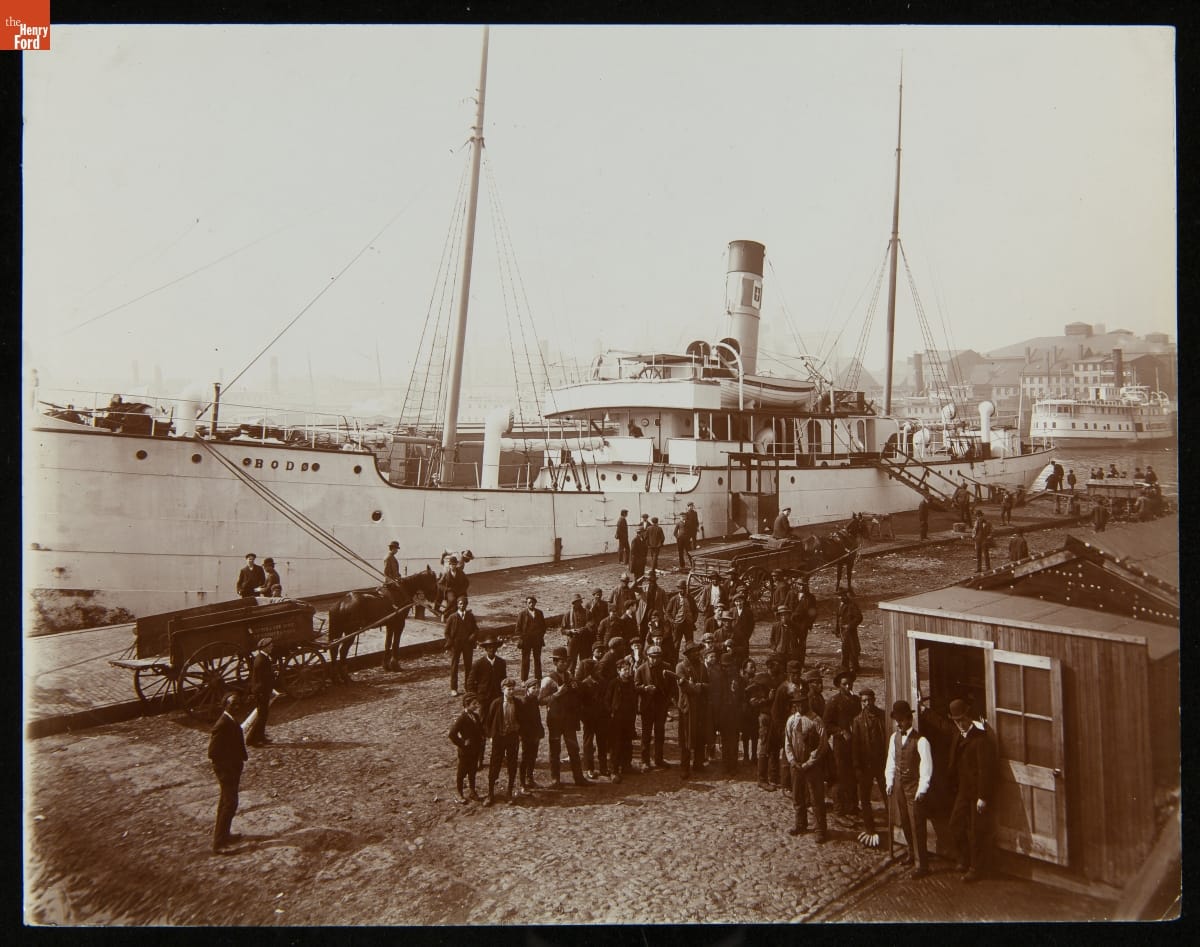
- Stevedore Pay Day, Banana Docks, Baltimore, Maryland, circa 1905 -
- circa 1905
- Collections - Artifact
Stevedore Pay Day, Banana Docks, Baltimore, Maryland, circa 1905
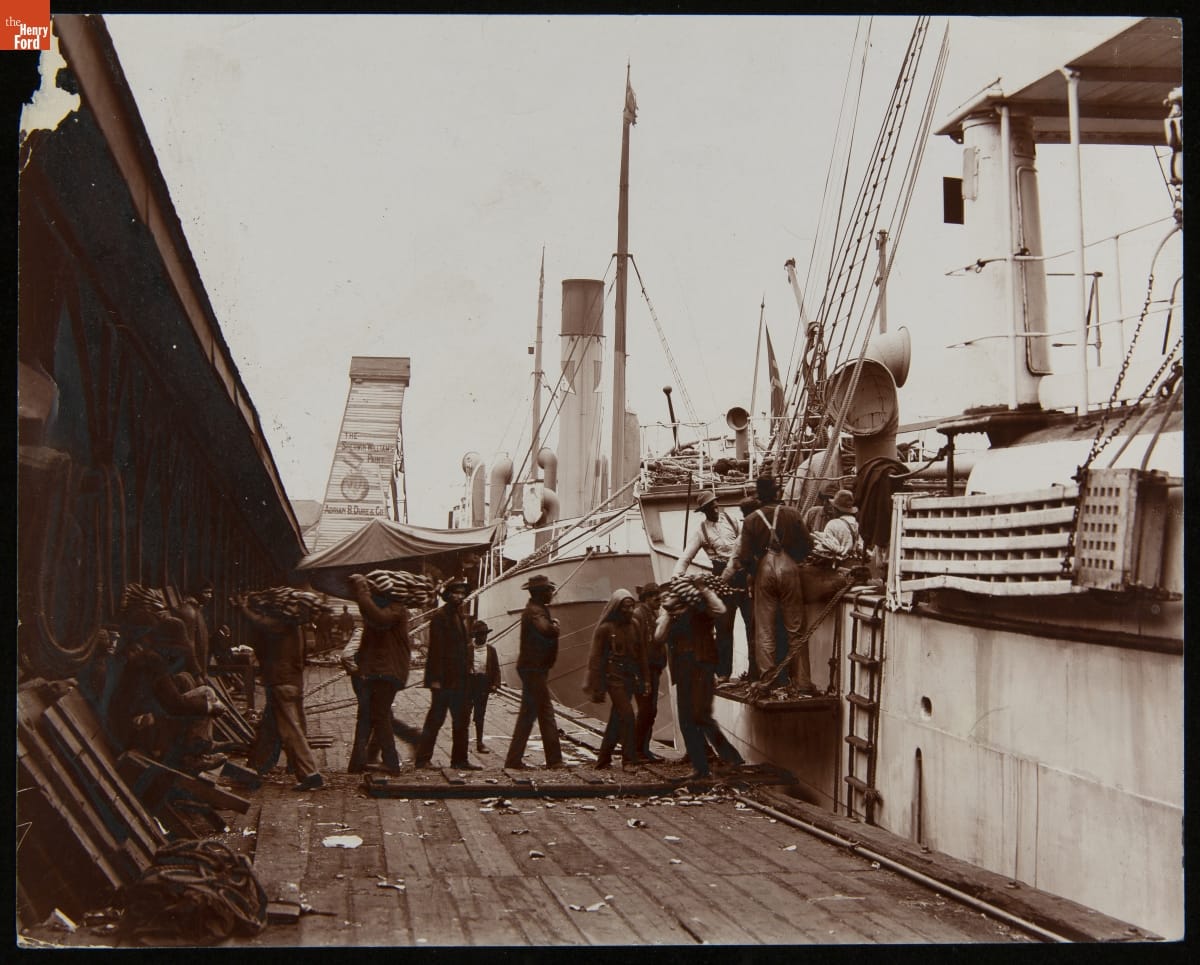
- Unloading a Banana Steamer, Mobile, Alabama, circa 1906 -
- circa 1906
- Collections - Artifact
Unloading a Banana Steamer, Mobile, Alabama, circa 1906
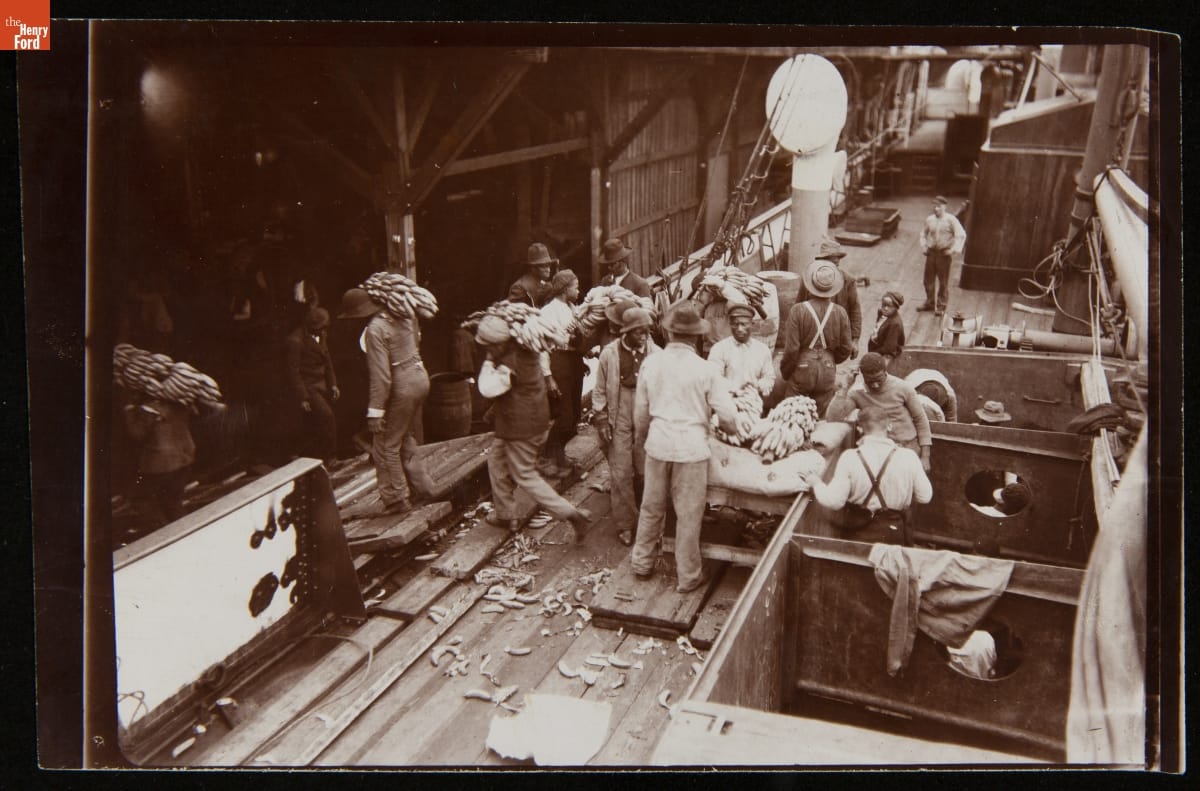
- Unloading Bananas, Mobile, Alabama, circa 1906 - Bananas arrived on grocery store shelves via a transportation system controlled by competing fruit companies and their government allies. Refrigerated railcars moved the crop from Central American plantations to ships bound for U.S. ports in the Gulf of Mexico. This photograph shows dockworkers in Mobile, Alabama, unloading bunches of bananas -- each weighing around 86 pounds -- from a ship's hold and moving them to a warehouse.
- circa 1906
- Collections - Artifact
Unloading Bananas, Mobile, Alabama, circa 1906
Bananas arrived on grocery store shelves via a transportation system controlled by competing fruit companies and their government allies. Refrigerated railcars moved the crop from Central American plantations to ships bound for U.S. ports in the Gulf of Mexico. This photograph shows dockworkers in Mobile, Alabama, unloading bunches of bananas -- each weighing around 86 pounds -- from a ship's hold and moving them to a warehouse.