
Search
- Banjo Girondole Wall Clock, Made by Lemuel Curtis, 1815-1820 -
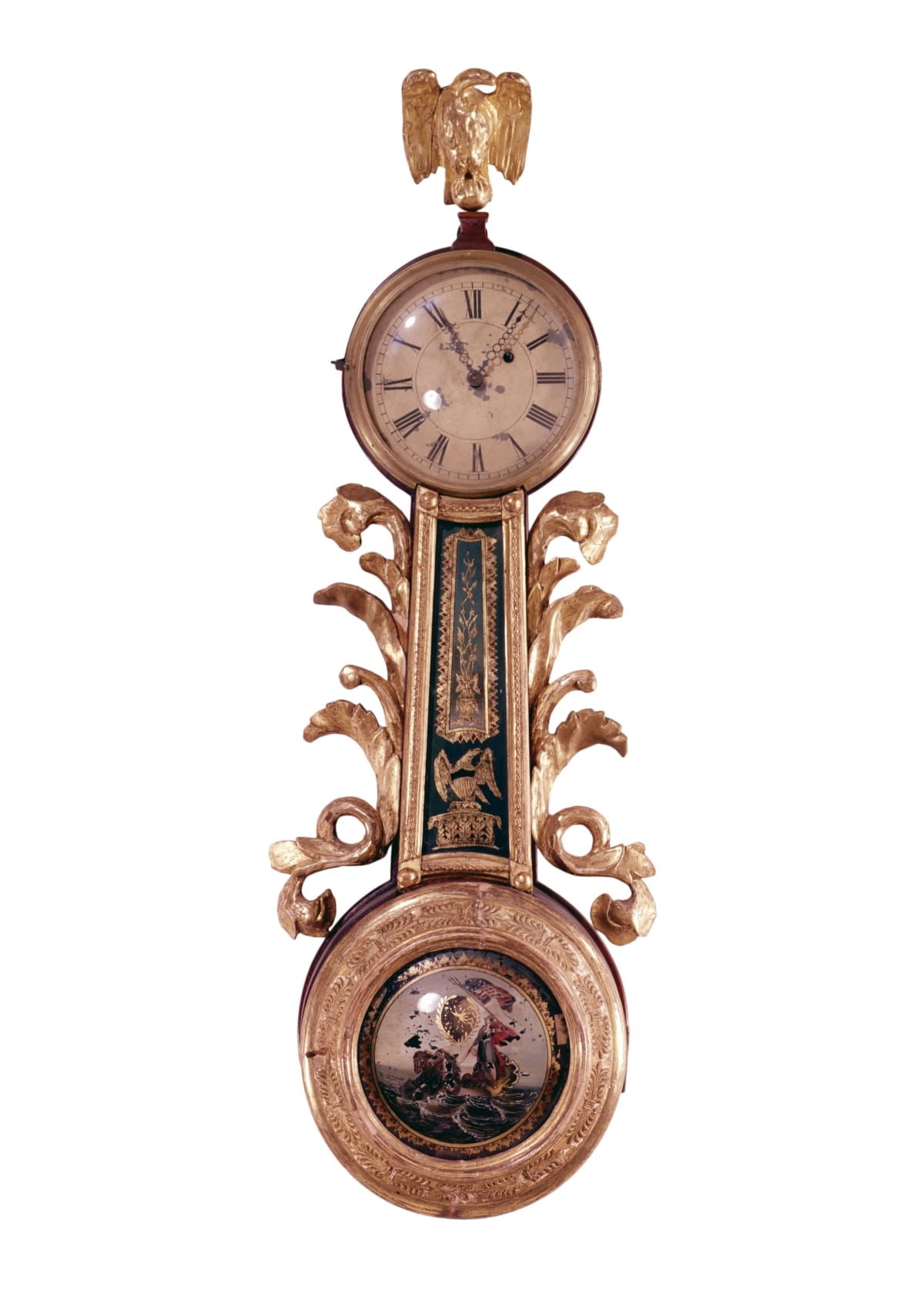
- 1815-1820
- Collections - Artifact
Banjo Girondole Wall Clock, Made by Lemuel Curtis, 1815-1820
- Banjo Wall Clock, 1815-1820 - Simon Willard obtained a United States patent in 1802 for a compact wall timepiece. Willard's clocks were accurate and dependable--and economical to produce. He permitted family, associates, and other manufacturers to make clocks based on his original design. Others copied the style. Banjo clocks, nicknamed for their characteristic shape, remained popular throughout the nineteenth century.
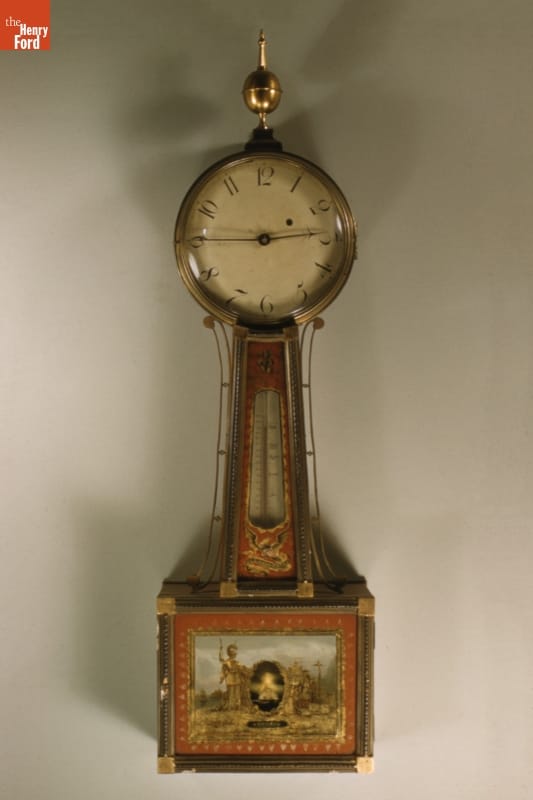
- 1815-1820
- Collections - Artifact
Banjo Wall Clock, 1815-1820
Simon Willard obtained a United States patent in 1802 for a compact wall timepiece. Willard's clocks were accurate and dependable--and economical to produce. He permitted family, associates, and other manufacturers to make clocks based on his original design. Others copied the style. Banjo clocks, nicknamed for their characteristic shape, remained popular throughout the nineteenth century.
- Banjo Wall Clock, circa 1815 - Simon Willard obtained a United States patent in 1802 for a compact wall timepiece. Willard's clocks were accurate and dependable--and economical to produce. He permitted family, associates, and other manufacturers to make clocks based on his original design. Others copied the style. Banjo clocks, nicknamed for their characteristic shape, remained popular throughout the nineteenth century.
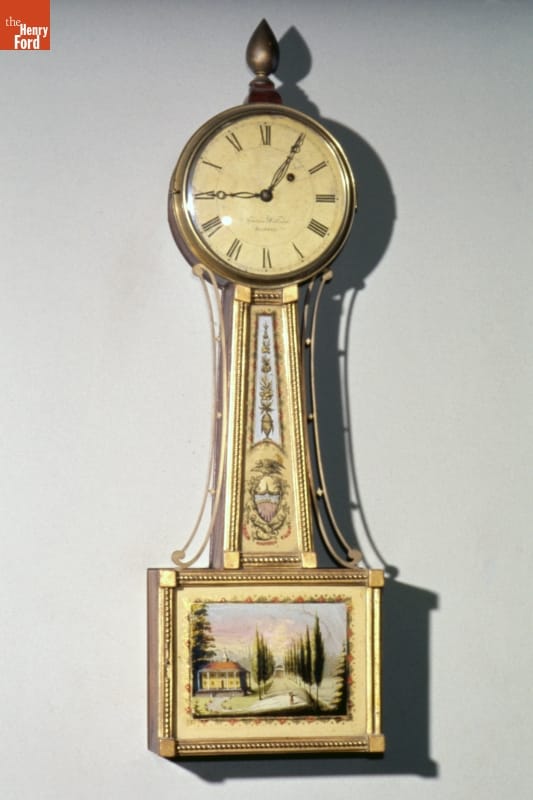
- circa 1815
- Collections - Artifact
Banjo Wall Clock, circa 1815
Simon Willard obtained a United States patent in 1802 for a compact wall timepiece. Willard's clocks were accurate and dependable--and economical to produce. He permitted family, associates, and other manufacturers to make clocks based on his original design. Others copied the style. Banjo clocks, nicknamed for their characteristic shape, remained popular throughout the nineteenth century.
- Banjo Clock, Made by Aaron Willard, circa 1810 - Simon Willard obtained a United States patent in 1802 for a compact wall timepiece. Willard's clocks were accurate and dependable--and economical to produce. He permitted family, associates, and other manufacturers to make clocks based on his original design. Others copied the style. Banjo clocks, nicknamed for their characteristic shape, remained popular throughout the nineteenth century.
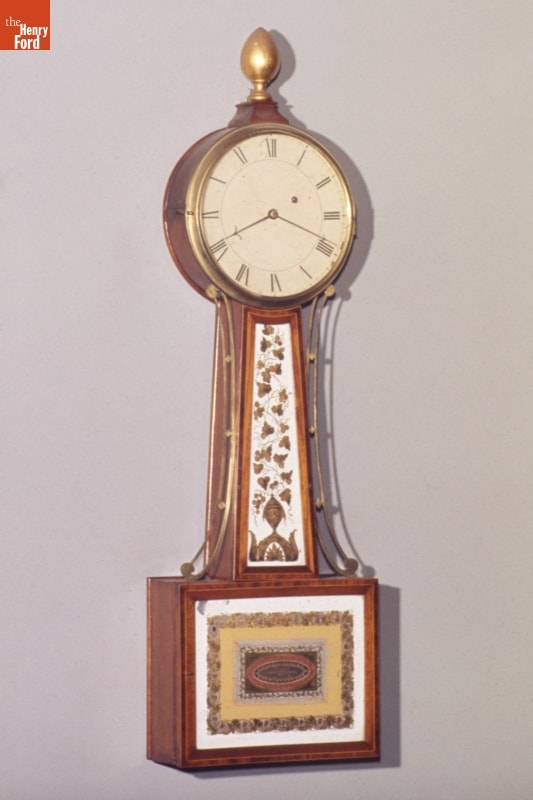
- circa 1810
- Collections - Artifact
Banjo Clock, Made by Aaron Willard, circa 1810
Simon Willard obtained a United States patent in 1802 for a compact wall timepiece. Willard's clocks were accurate and dependable--and economical to produce. He permitted family, associates, and other manufacturers to make clocks based on his original design. Others copied the style. Banjo clocks, nicknamed for their characteristic shape, remained popular throughout the nineteenth century.
- Banjo Wall Clock, 1813-1818 - Simon Willard obtained a United States patent in 1802 for a compact wall timepiece. Willard's clocks were accurate and dependable--and economical to produce. He permitted family, associates, and other manufacturers to make clocks based on his original design. Others copied the style. Banjo clocks, nicknamed for their characteristic shape, remained popular throughout the nineteenth century.
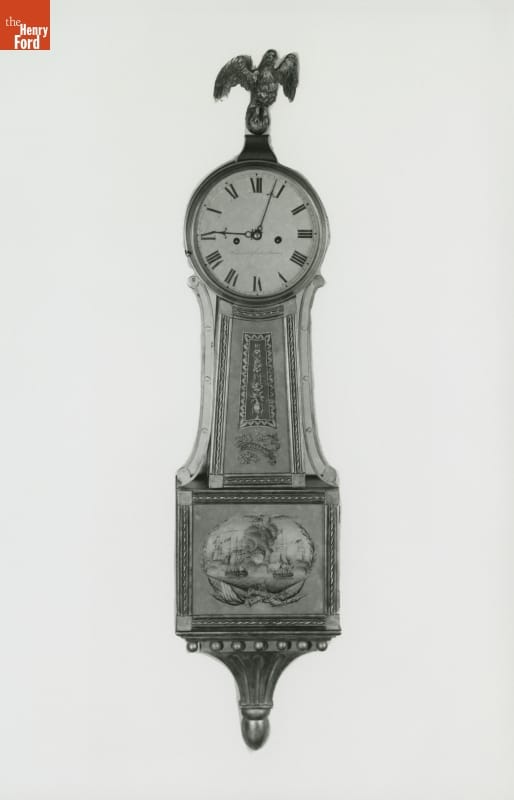
- 1813-1818
- Collections - Artifact
Banjo Wall Clock, 1813-1818
Simon Willard obtained a United States patent in 1802 for a compact wall timepiece. Willard's clocks were accurate and dependable--and economical to produce. He permitted family, associates, and other manufacturers to make clocks based on his original design. Others copied the style. Banjo clocks, nicknamed for their characteristic shape, remained popular throughout the nineteenth century.