
Search
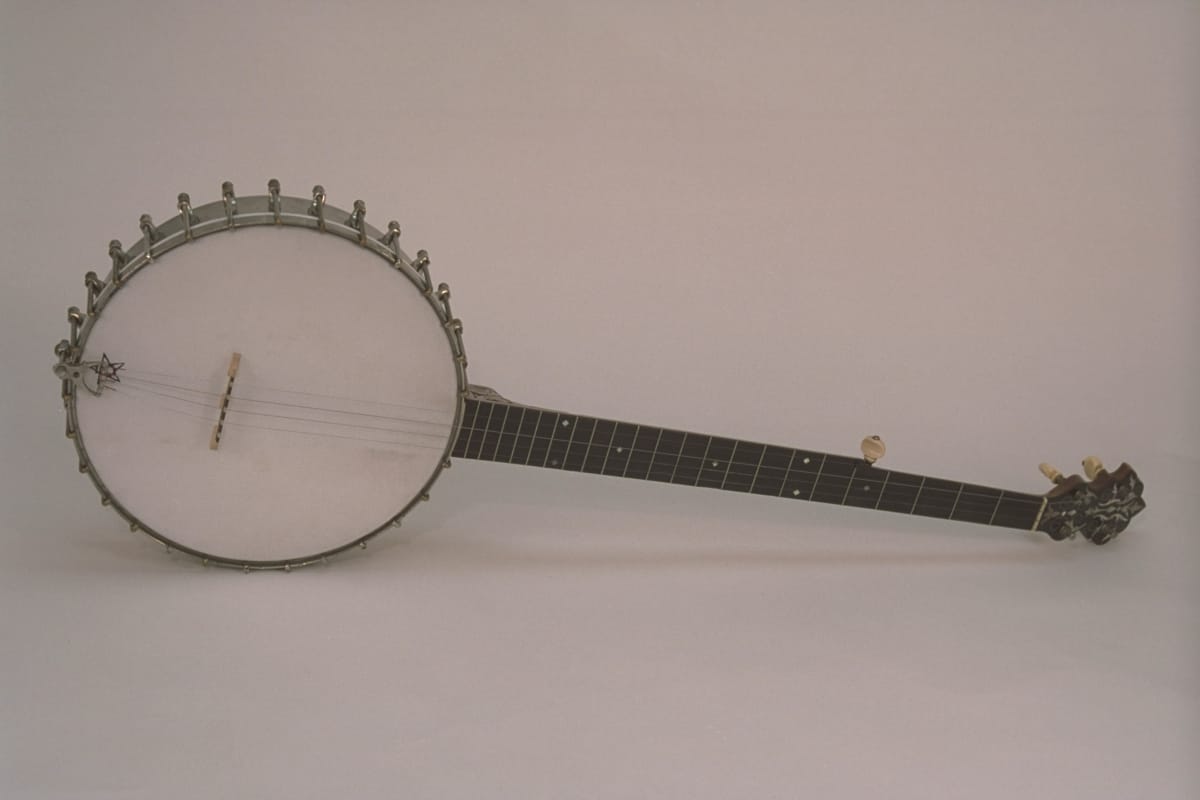
- Banjo by Samuel Swaim Stewart, circa 1890 - This iconic American instrument had its roots in the stringed instruments played by free and enslaved African Americans living in colonial America. By the 1890s, the banjo was firmly ensconced into American popular culture.
- circa 1890
- Collections - Artifact
Banjo by Samuel Swaim Stewart, circa 1890
This iconic American instrument had its roots in the stringed instruments played by free and enslaved African Americans living in colonial America. By the 1890s, the banjo was firmly ensconced into American popular culture.
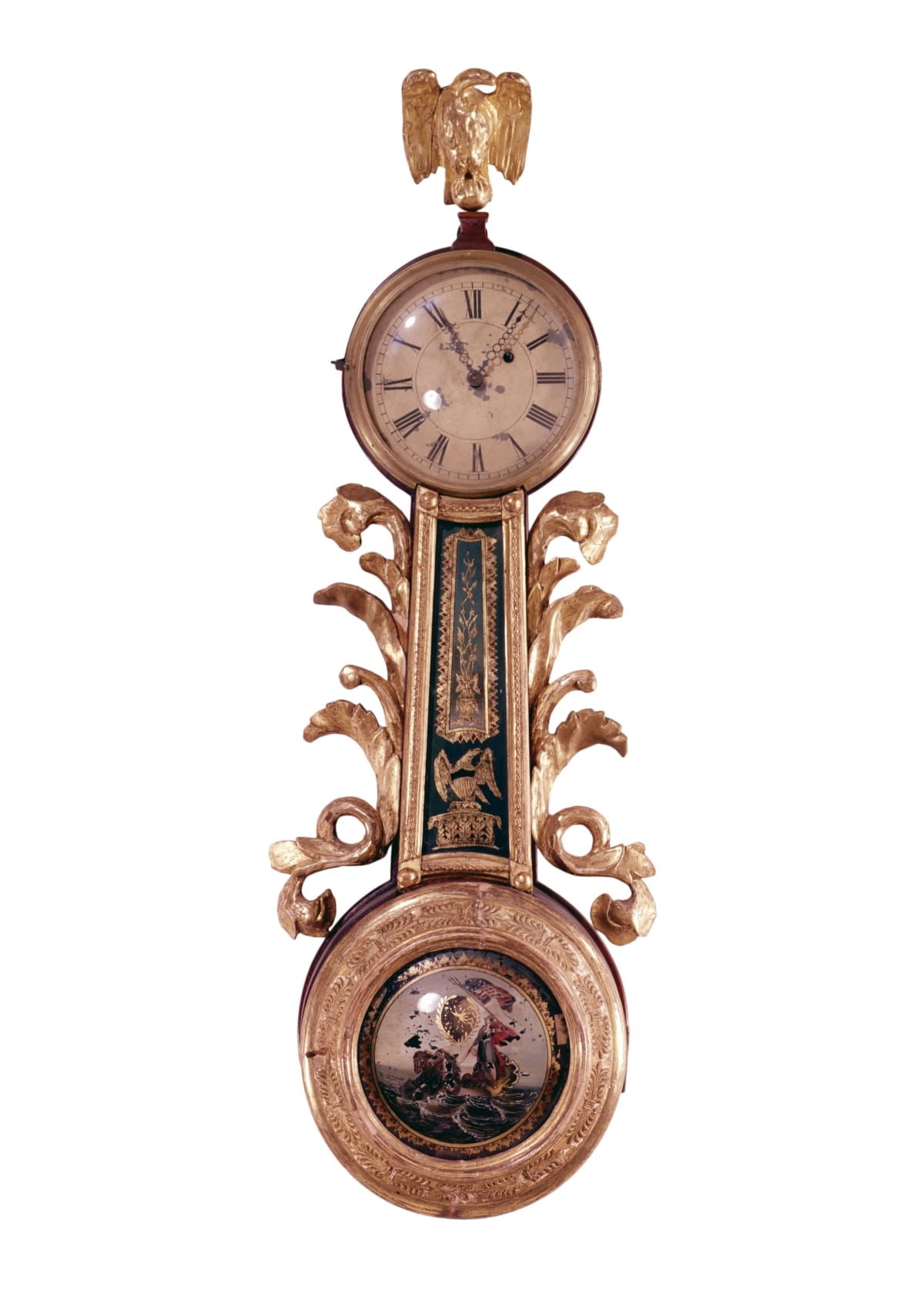
- Banjo Girondole Wall Clock, Made by Lemuel Curtis, 1815-1820 -
- 1815-1820
- Collections - Artifact
Banjo Girondole Wall Clock, Made by Lemuel Curtis, 1815-1820
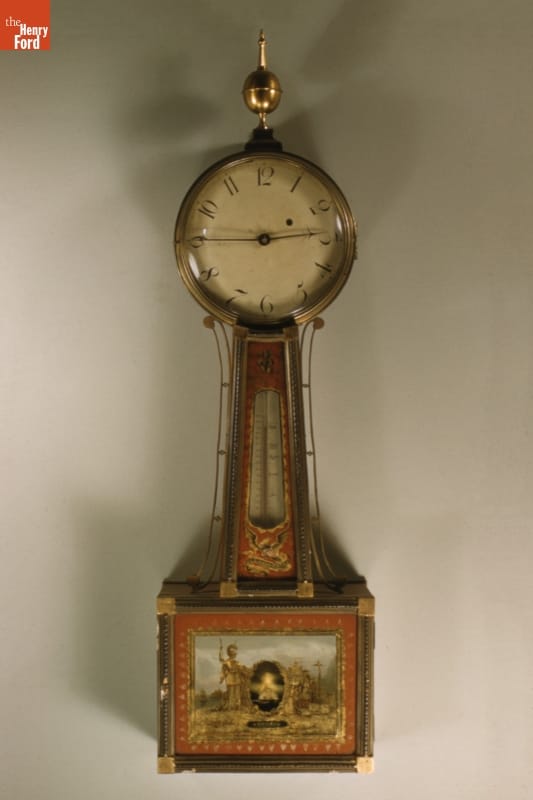
- Banjo Wall Clock, 1815-1820 - Simon Willard obtained a United States patent in 1802 for a compact wall timepiece. Willard's clocks were accurate and dependable--and economical to produce. He permitted family, associates, and other manufacturers to make clocks based on his original design. Others copied the style. Banjo clocks, nicknamed for their characteristic shape, remained popular throughout the nineteenth century.
- 1815-1820
- Collections - Artifact
Banjo Wall Clock, 1815-1820
Simon Willard obtained a United States patent in 1802 for a compact wall timepiece. Willard's clocks were accurate and dependable--and economical to produce. He permitted family, associates, and other manufacturers to make clocks based on his original design. Others copied the style. Banjo clocks, nicknamed for their characteristic shape, remained popular throughout the nineteenth century.
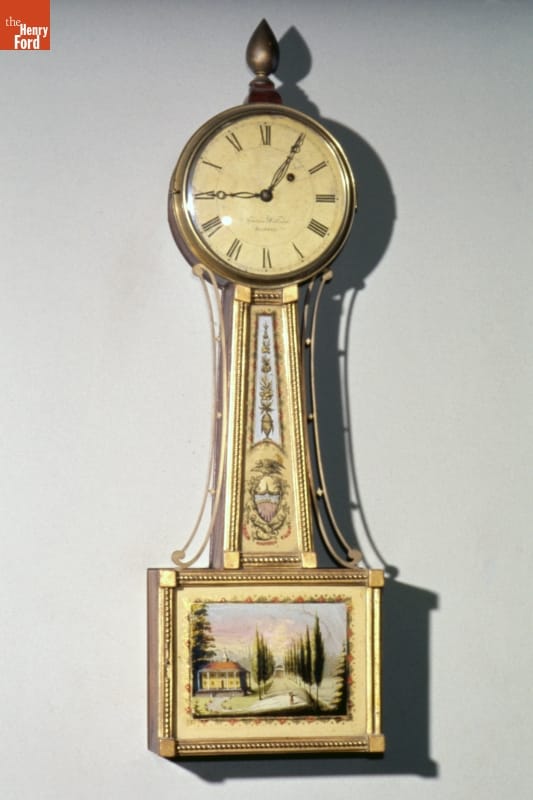
- Banjo Wall Clock, circa 1815 - Simon Willard obtained a United States patent in 1802 for a compact wall timepiece. Willard's clocks were accurate and dependable--and economical to produce. He permitted family, associates, and other manufacturers to make clocks based on his original design. Others copied the style. Banjo clocks, nicknamed for their characteristic shape, remained popular throughout the nineteenth century.
- circa 1815
- Collections - Artifact
Banjo Wall Clock, circa 1815
Simon Willard obtained a United States patent in 1802 for a compact wall timepiece. Willard's clocks were accurate and dependable--and economical to produce. He permitted family, associates, and other manufacturers to make clocks based on his original design. Others copied the style. Banjo clocks, nicknamed for their characteristic shape, remained popular throughout the nineteenth century.
- Correspondence between Edgar McKillop and the Office of Henry Ford, January 28, 1929-February 11, 1929 -
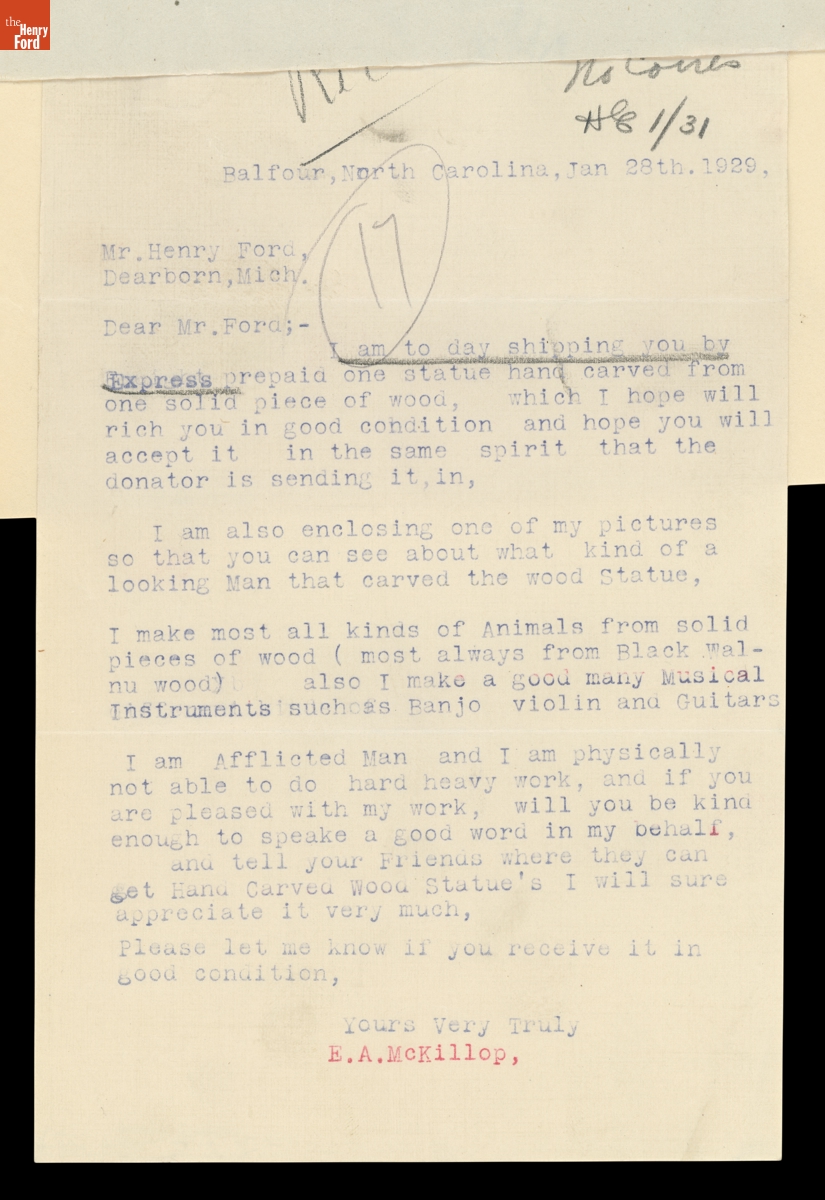
- 28 January 1929-11 February 1929
- Collections - Artifact
Correspondence between Edgar McKillop and the Office of Henry Ford, January 28, 1929-February 11, 1929
- Banjo Clock, Made by Aaron Willard, circa 1810 - Simon Willard obtained a United States patent in 1802 for a compact wall timepiece. Willard's clocks were accurate and dependable--and economical to produce. He permitted family, associates, and other manufacturers to make clocks based on his original design. Others copied the style. Banjo clocks, nicknamed for their characteristic shape, remained popular throughout the nineteenth century.
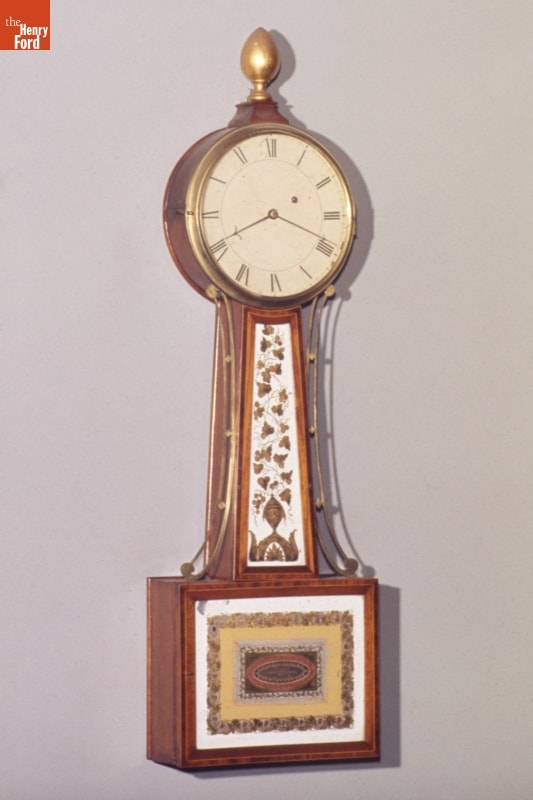
- circa 1810
- Collections - Artifact
Banjo Clock, Made by Aaron Willard, circa 1810
Simon Willard obtained a United States patent in 1802 for a compact wall timepiece. Willard's clocks were accurate and dependable--and economical to produce. He permitted family, associates, and other manufacturers to make clocks based on his original design. Others copied the style. Banjo clocks, nicknamed for their characteristic shape, remained popular throughout the nineteenth century.
- Hallmark "Rudolph the Red-Nosed Reindeer: Sam the Snowman" Christmas Ornament, 2008 - Already known for greeting cards, Hallmark introduced a line of Christmas ornaments in 1973. The company's annual release of an increasing array of ornaments revolutionized Christmas decorating, appealing to customers' interest in marking memories and milestones as well as expressing one's personality and unique tastes.
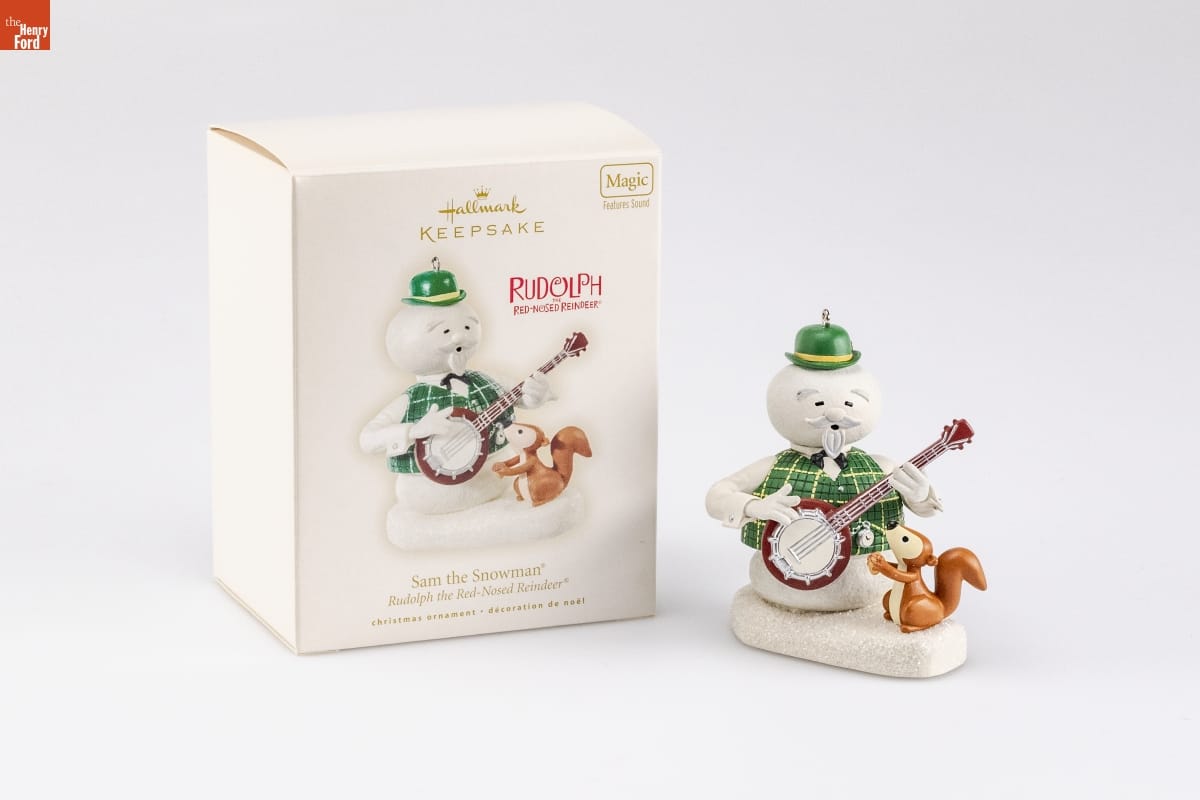
- 2008
- Collections - Artifact
Hallmark "Rudolph the Red-Nosed Reindeer: Sam the Snowman" Christmas Ornament, 2008
Already known for greeting cards, Hallmark introduced a line of Christmas ornaments in 1973. The company's annual release of an increasing array of ornaments revolutionized Christmas decorating, appealing to customers' interest in marking memories and milestones as well as expressing one's personality and unique tastes.
- Banjo Wall Clock, 1813-1818 - Simon Willard obtained a United States patent in 1802 for a compact wall timepiece. Willard's clocks were accurate and dependable--and economical to produce. He permitted family, associates, and other manufacturers to make clocks based on his original design. Others copied the style. Banjo clocks, nicknamed for their characteristic shape, remained popular throughout the nineteenth century.
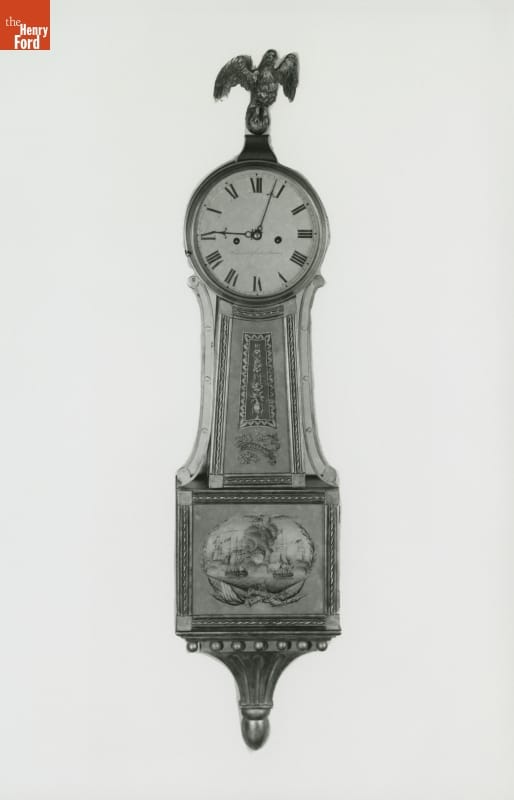
- 1813-1818
- Collections - Artifact
Banjo Wall Clock, 1813-1818
Simon Willard obtained a United States patent in 1802 for a compact wall timepiece. Willard's clocks were accurate and dependable--and economical to produce. He permitted family, associates, and other manufacturers to make clocks based on his original design. Others copied the style. Banjo clocks, nicknamed for their characteristic shape, remained popular throughout the nineteenth century.
- Banjo, circa 1870 - This iconic American instrument had its roots in the stringed instruments played by free and enslaved African Americans living in colonial America. By the 1890s, the banjo was firmly ensconced into American popular culture.
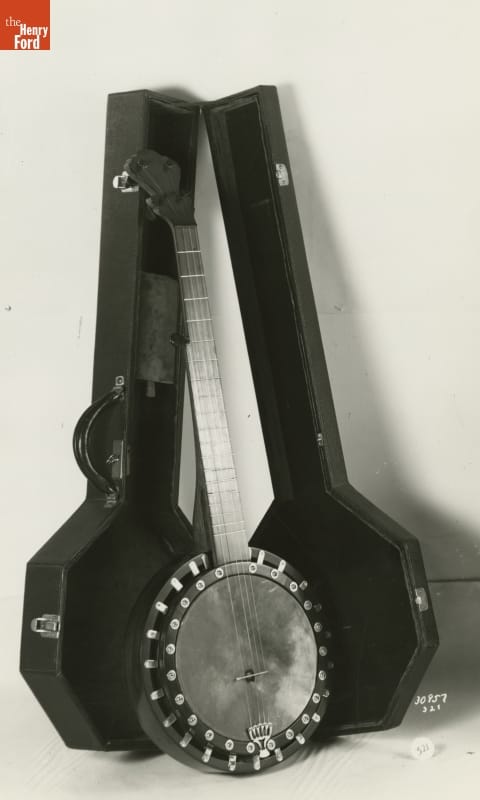
- circa 1870
- Collections - Artifact
Banjo, circa 1870
This iconic American instrument had its roots in the stringed instruments played by free and enslaved African Americans living in colonial America. By the 1890s, the banjo was firmly ensconced into American popular culture.