
Search
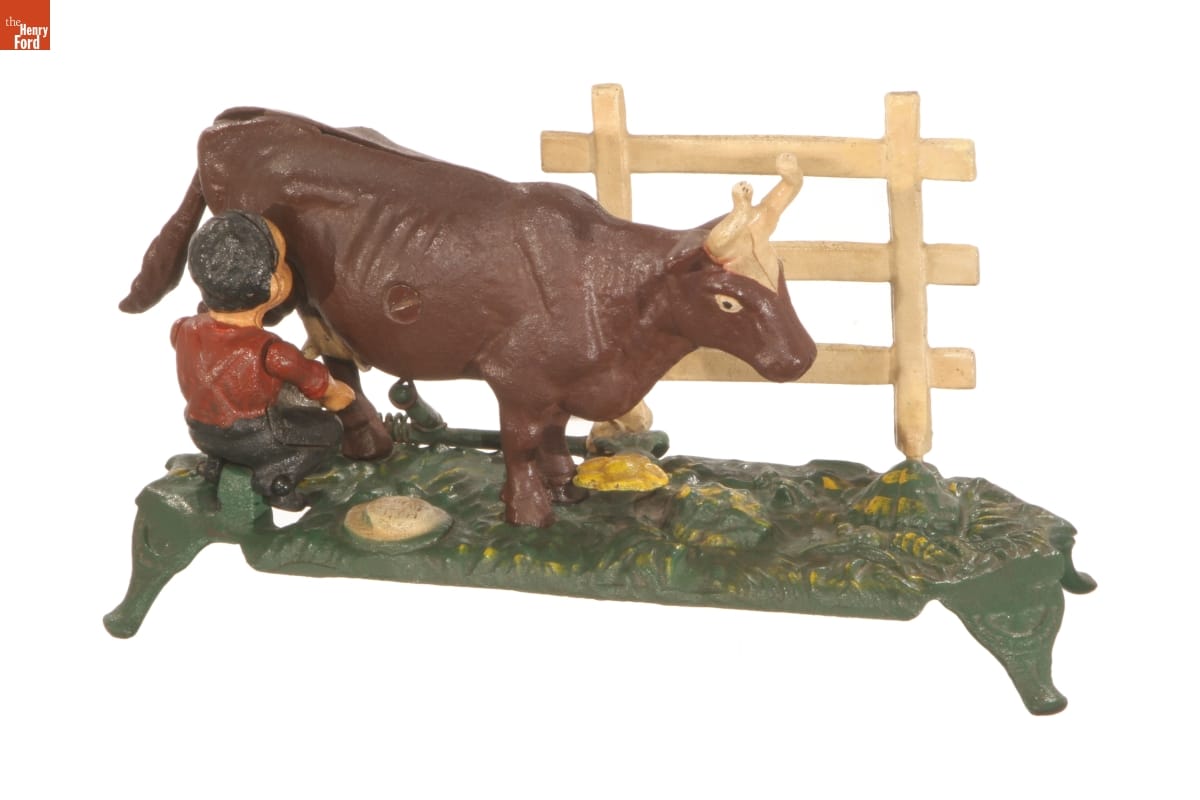
- Kicking Cow Bank, 1950-1965 - Saving money can be fun. Beginning in the late 1800s, families could purchase mechanical banks. These banks used ingenious mechanisms to deposit money. This mid-twentieth-century reproduction depicts a man milking a cow. When the saver deposits a coin, the cow kicks -- a real hazard if the animal was treated roughly -- and the man tumbles backwards.
- 1950-1965
- Collections - Artifact
Kicking Cow Bank, 1950-1965
Saving money can be fun. Beginning in the late 1800s, families could purchase mechanical banks. These banks used ingenious mechanisms to deposit money. This mid-twentieth-century reproduction depicts a man milking a cow. When the saver deposits a coin, the cow kicks -- a real hazard if the animal was treated roughly -- and the man tumbles backwards.
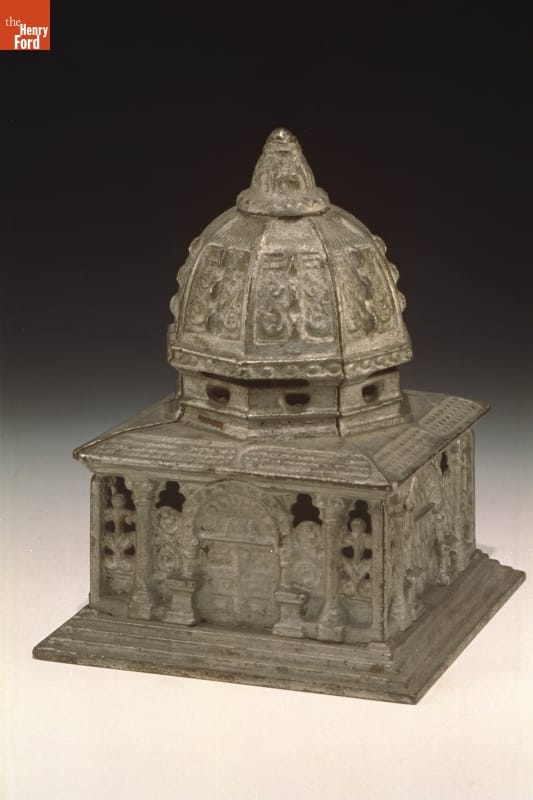
- "Columbia Bank" Building Bank, 1895-1912 - In the late-19th and early-20th centuries, several manufacturers marketed cast-iron toy banks to parents as a way to encourage thrift in children. Some banks used mechanical actions to deposit a coin, while others, like this one, just had a slot where the coin was dropped. These simple banks came in a variety of shapes that delighted children of all ages.
- 1895-1912
- Collections - Artifact
"Columbia Bank" Building Bank, 1895-1912
In the late-19th and early-20th centuries, several manufacturers marketed cast-iron toy banks to parents as a way to encourage thrift in children. Some banks used mechanical actions to deposit a coin, while others, like this one, just had a slot where the coin was dropped. These simple banks came in a variety of shapes that delighted children of all ages.
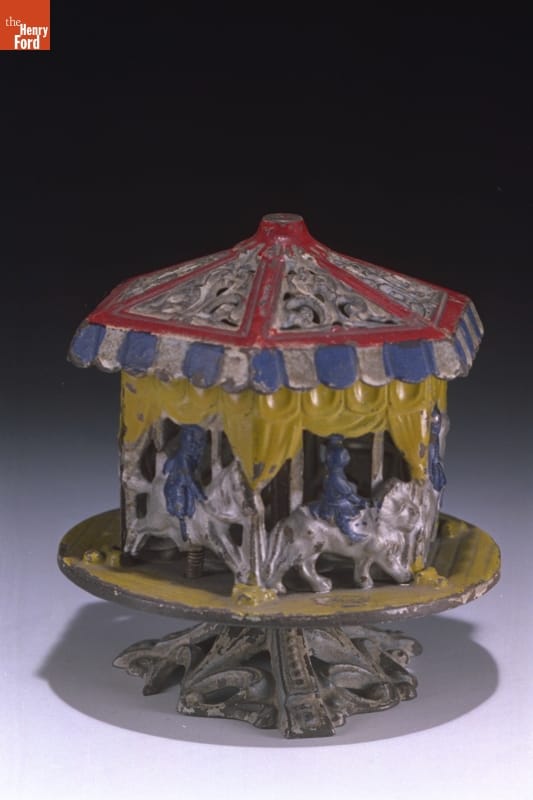
- Merry-Go-Round Bank, 1900-1920 - Still banks provide a simple way to save money. You place your coin in the slot then let it drop--there are no mechanical devices. Still banks came in a variety of interesting and decorative shapes. This bank looks like a merry-go-round or carousel--and it even spins.
- 1900-1920
- Collections - Artifact
Merry-Go-Round Bank, 1900-1920
Still banks provide a simple way to save money. You place your coin in the slot then let it drop--there are no mechanical devices. Still banks came in a variety of interesting and decorative shapes. This bank looks like a merry-go-round or carousel--and it even spins.
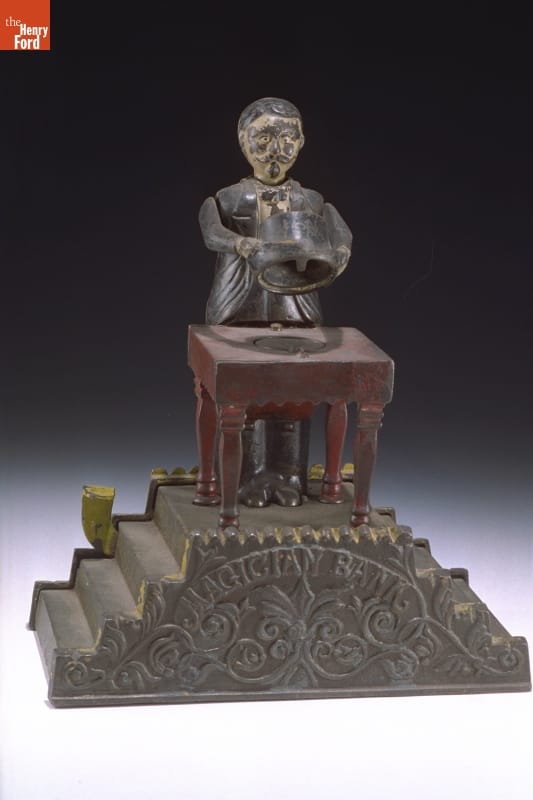
- Magician Bank, 1901-1920 - Cast iron mechanical banks, which used ingenious mechanisms to deposit money, became particularly popular between 1870 and 1930. Banks were produced in a variety of forms, such as this magician. When the lever on the step is depressed, a coin placed on the table "disappears" under the table while the magician lowers his hat over the coin and nods his head.
- 1901-1920
- Collections - Artifact
Magician Bank, 1901-1920
Cast iron mechanical banks, which used ingenious mechanisms to deposit money, became particularly popular between 1870 and 1930. Banks were produced in a variety of forms, such as this magician. When the lever on the step is depressed, a coin placed on the table "disappears" under the table while the magician lowers his hat over the coin and nods his head.
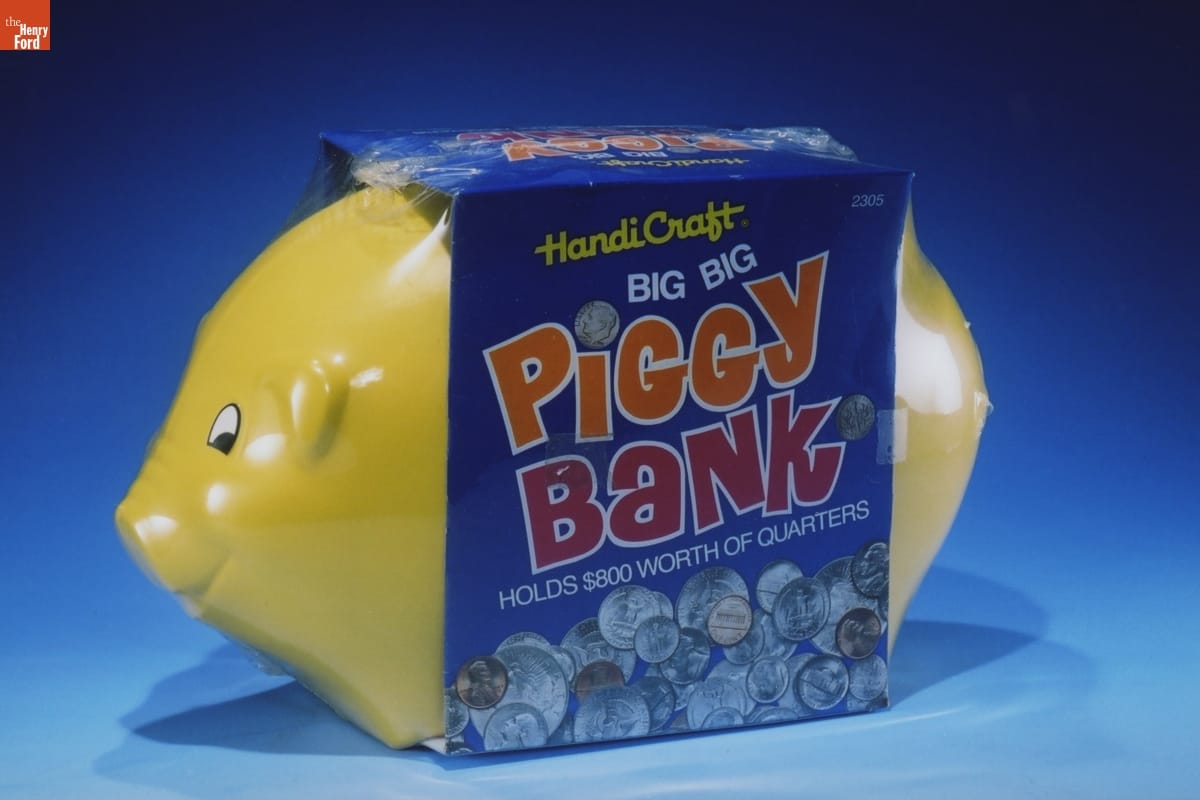
- Piggy Bank, 1991 - Still banks provide a simple way to save money. You place your coin in the slot then let it drop -- there are no mechanical devices. Still banks come in a variety of interesting and decorative shapes, including buildings, people, and animals. This yellow plastic "piggy" bank -- a popular form used for saving money -- was made in 1991.
- 1991
- Collections - Artifact
Piggy Bank, 1991
Still banks provide a simple way to save money. You place your coin in the slot then let it drop -- there are no mechanical devices. Still banks come in a variety of interesting and decorative shapes, including buildings, people, and animals. This yellow plastic "piggy" bank -- a popular form used for saving money -- was made in 1991.
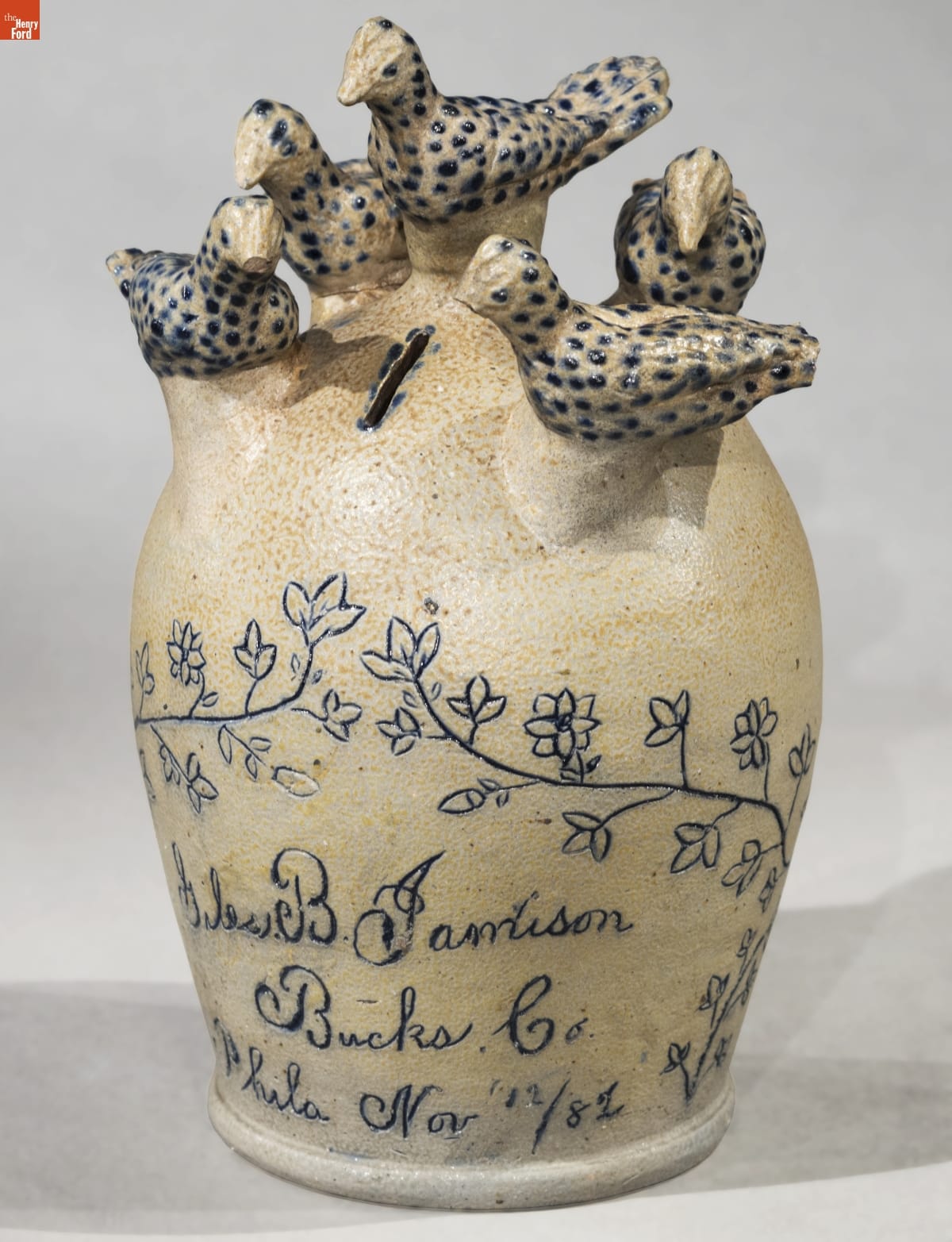
- Stoneware Toy Bank, 1882 - This toy bank was made of a durable, leak-proof pottery called stoneware, shaped on a potter's wheel. The orange-peel-like outer glaze was created when the potter threw handfuls of common rock salt into a white-hot kiln during the piece' firing. Salt-glazed stoneware pieces were decorated with an amazing array of designs, including the playful birds and flowers on this piece.
- 1882
- Collections - Artifact
Stoneware Toy Bank, 1882
This toy bank was made of a durable, leak-proof pottery called stoneware, shaped on a potter's wheel. The orange-peel-like outer glaze was created when the potter threw handfuls of common rock salt into a white-hot kiln during the piece' firing. Salt-glazed stoneware pieces were decorated with an amazing array of designs, including the playful birds and flowers on this piece.
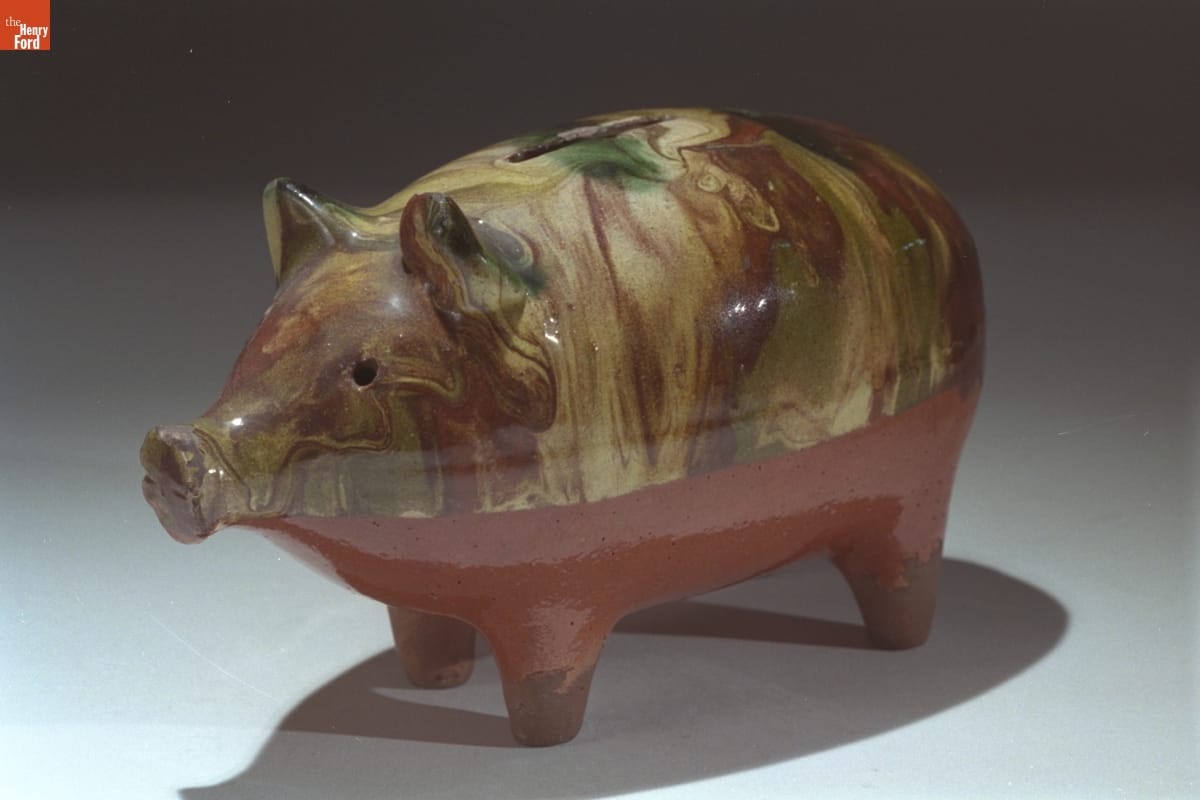
- Piggy Bank, 1870-1920 - In the late-19th and early-20th centuries, toy banks were marketed to parents as a way to encourage thrift in children. Some banks used mechanical actions to deposit a coin, while others, like this one, just had a slot where the coin was dropped. These simple banks came in a variety of shapes that delighted children of all ages.
- 1870-1920
- Collections - Artifact
Piggy Bank, 1870-1920
In the late-19th and early-20th centuries, toy banks were marketed to parents as a way to encourage thrift in children. Some banks used mechanical actions to deposit a coin, while others, like this one, just had a slot where the coin was dropped. These simple banks came in a variety of shapes that delighted children of all ages.
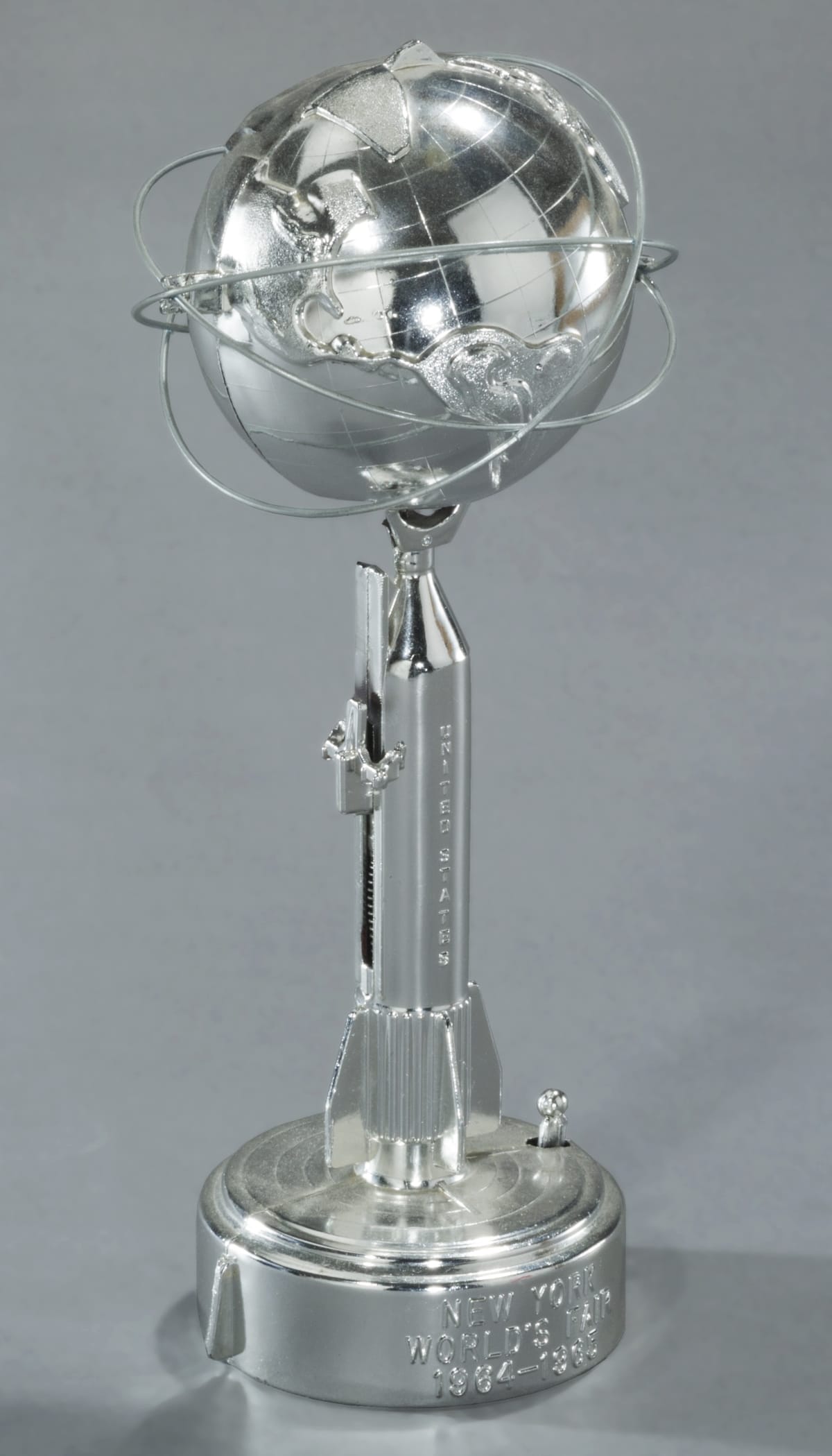
- "Unisphere" Mechanical Bank, circa 1964 - Many early space toys depicted outer space as a futuristic fantasy world. But when space travel became possible, these toys became more realistic looking. An earlier version of this mechanical bank had the rocket topped with the moon. This later version depicts the 1964-65 New York World's Fair Unisphere--a symbol of global interdependence in the space age.
- circa 1964
- Collections - Artifact
"Unisphere" Mechanical Bank, circa 1964
Many early space toys depicted outer space as a futuristic fantasy world. But when space travel became possible, these toys became more realistic looking. An earlier version of this mechanical bank had the rocket topped with the moon. This later version depicts the 1964-65 New York World's Fair Unisphere--a symbol of global interdependence in the space age.
- Buster Brown Bank, 1905-1930 - Still banks provide a simple way to save money. You place your coin in the slot then let it drop -- there are no mechanical devices. Still banks came in a variety of interesting and decorative shapes. Along with a horse and "Good Luck" horseshoe, this bank depicts Buster Brown and Tige -- popular comic characters in the early 20th century.

- 1905-1930
- Collections - Artifact
Buster Brown Bank, 1905-1930
Still banks provide a simple way to save money. You place your coin in the slot then let it drop -- there are no mechanical devices. Still banks came in a variety of interesting and decorative shapes. Along with a horse and "Good Luck" horseshoe, this bank depicts Buster Brown and Tige -- popular comic characters in the early 20th century.
- "Rocket Bank," circa 1951 - In the years before the space race of the late 1950s, many Americans viewed outer space exploration as fantasy and science fiction. Whimsical space toys based on popular movies, radio and television shows, and comics featured futuristic robots, ray guns, and spaceships. This mechanical rocket bank from about 1951 resembles those early comic-book-style space vehicles.
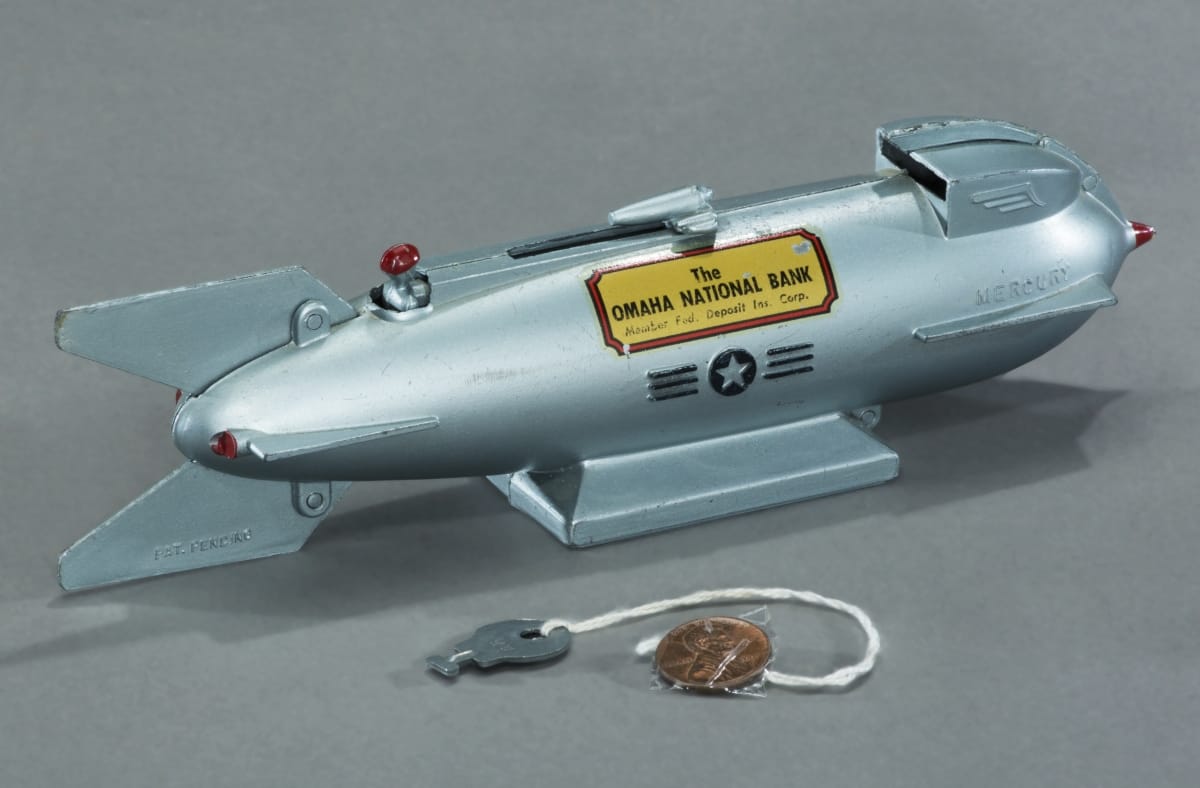
- circa 1951
- Collections - Artifact
"Rocket Bank," circa 1951
In the years before the space race of the late 1950s, many Americans viewed outer space exploration as fantasy and science fiction. Whimsical space toys based on popular movies, radio and television shows, and comics featured futuristic robots, ray guns, and spaceships. This mechanical rocket bank from about 1951 resembles those early comic-book-style space vehicles.