
Search
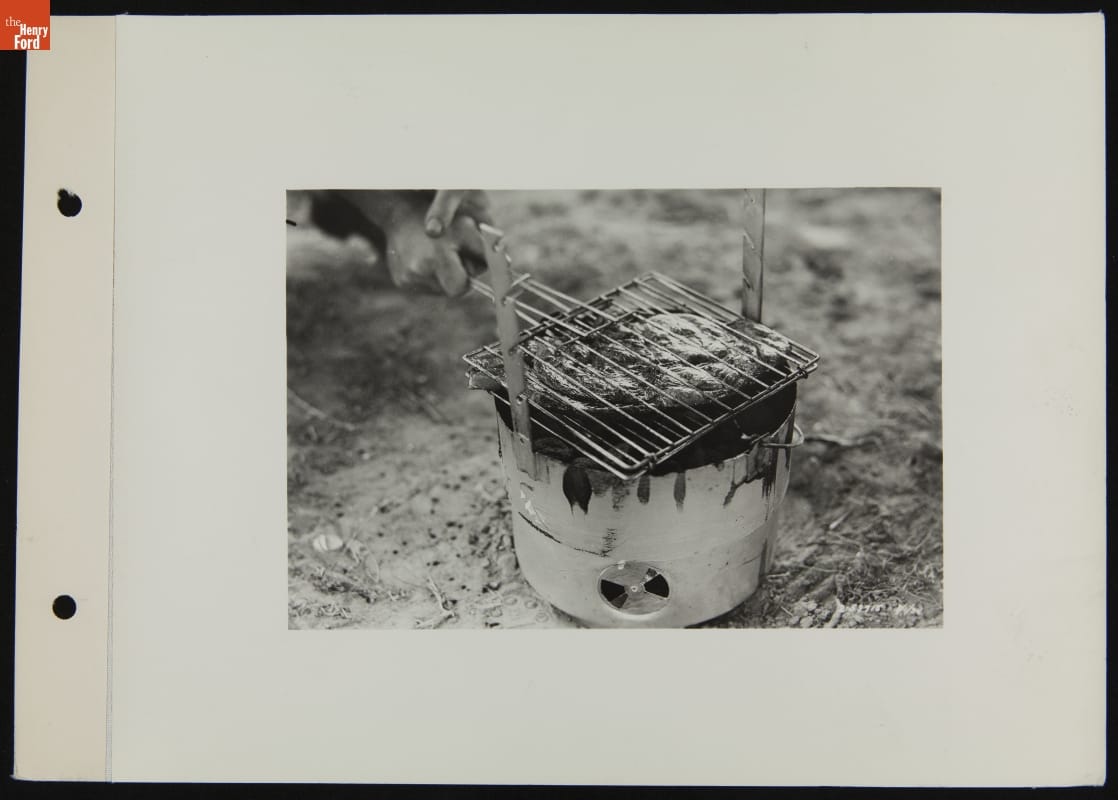
- Grilling Meat using Ford Charcoal Briquets, 1934 - Ford Motor Company sawmills created heaps of wood wastes. Some was used to produce steam for factory operations. The rest was carbonized and compressed into charcoal. Workers mixed charred hardwood chips with starch, forming nearly 100 tons of charcoal briquettes each day. Dealers sold branded bags of the popular briquettes in Ford dealerships across the country.
- July 01, 1934
- Collections - Artifact
Grilling Meat using Ford Charcoal Briquets, 1934
Ford Motor Company sawmills created heaps of wood wastes. Some was used to produce steam for factory operations. The rest was carbonized and compressed into charcoal. Workers mixed charred hardwood chips with starch, forming nearly 100 tons of charcoal briquettes each day. Dealers sold branded bags of the popular briquettes in Ford dealerships across the country.
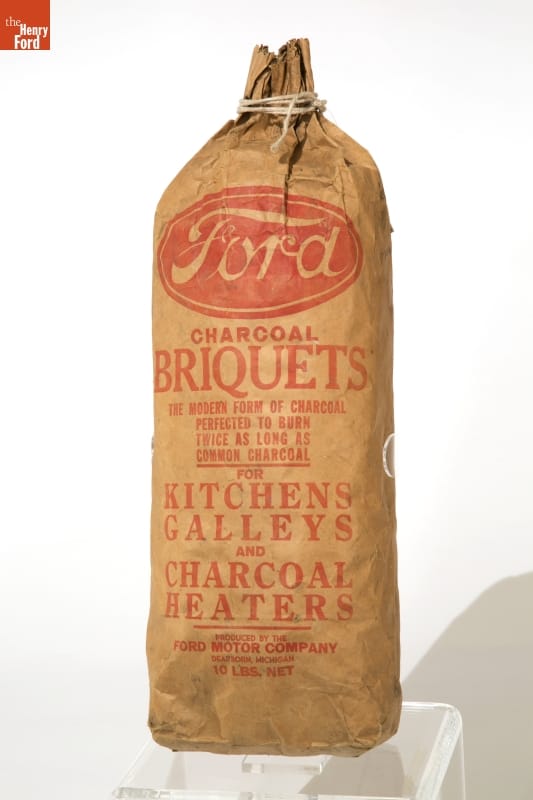
- Ford Charcoal Briquets Bag, 1929-1947 - Ford Motor Company sawmills created heaps of wood wastes. Some was used to produce steam for factory operations. The rest was carbonized and compressed into charcoal. Workers mixed charred hardwood chips with starch, forming nearly 100 tons of charcoal briquettes each day. Dealers sold branded bags of the popular briquettes in Ford dealerships across the country.
- 1929-1947
- Collections - Artifact
Ford Charcoal Briquets Bag, 1929-1947
Ford Motor Company sawmills created heaps of wood wastes. Some was used to produce steam for factory operations. The rest was carbonized and compressed into charcoal. Workers mixed charred hardwood chips with starch, forming nearly 100 tons of charcoal briquettes each day. Dealers sold branded bags of the popular briquettes in Ford dealerships across the country.
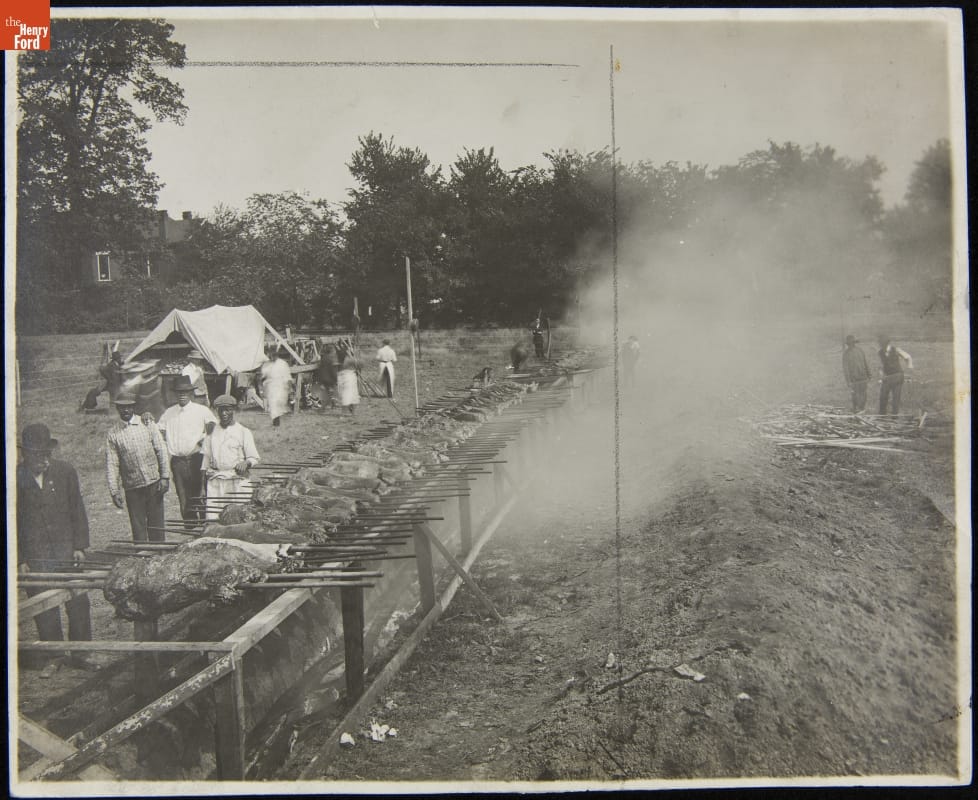
- Barbecue Day in Lexington, Kentucky, 1923-1924 -
- 1923-1924
- Collections - Artifact
Barbecue Day in Lexington, Kentucky, 1923-1924
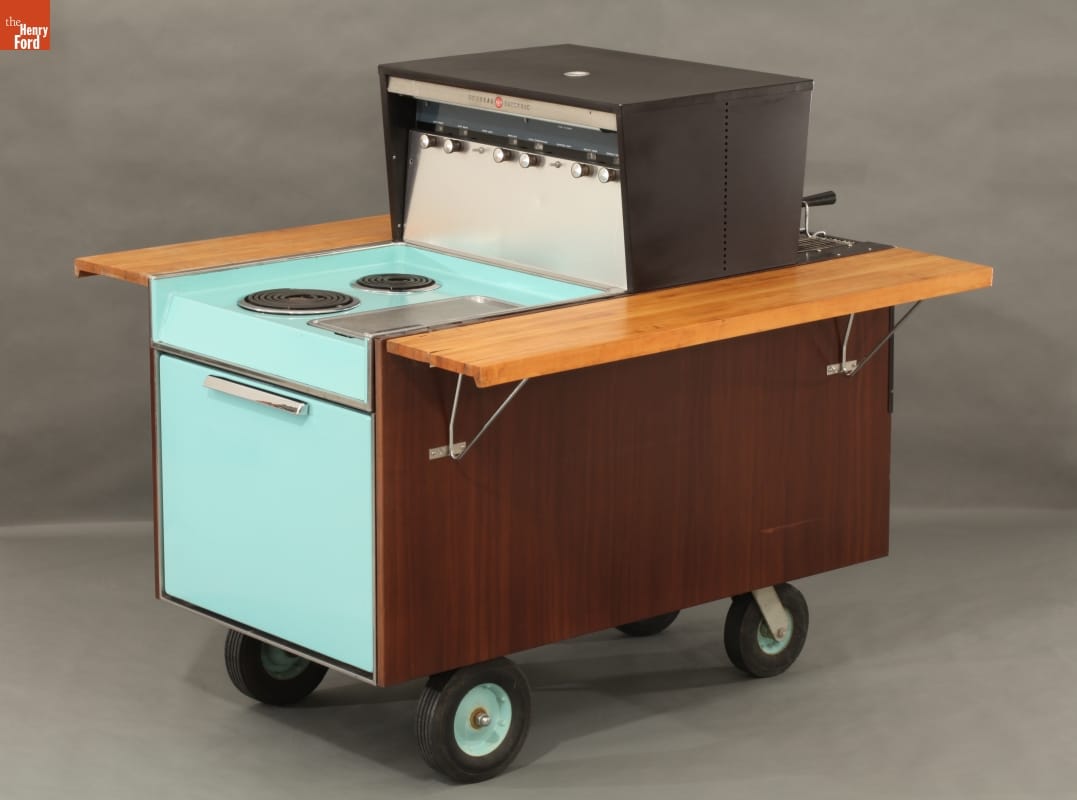
- "Partio" Cart Used by Dwight Eisenhower, circa 1960 - The upscale Partio -- an all-in-one electric range, charcoal barbeque, and rotisserie -- evokes America's sense of optimism during the Eisenhower era. This particular example was owned by Dwight D. Eisenhower and used by the former President at his Palm Springs, California, home. Vivid postwar styling aside, the Partio points forward to the present day interest in well-appointed outdoor living, as served up in lifestyle magazines and lavish catalogues.
- circa 1960
- Collections - Artifact
"Partio" Cart Used by Dwight Eisenhower, circa 1960
The upscale Partio -- an all-in-one electric range, charcoal barbeque, and rotisserie -- evokes America's sense of optimism during the Eisenhower era. This particular example was owned by Dwight D. Eisenhower and used by the former President at his Palm Springs, California, home. Vivid postwar styling aside, the Partio points forward to the present day interest in well-appointed outdoor living, as served up in lifestyle magazines and lavish catalogues.
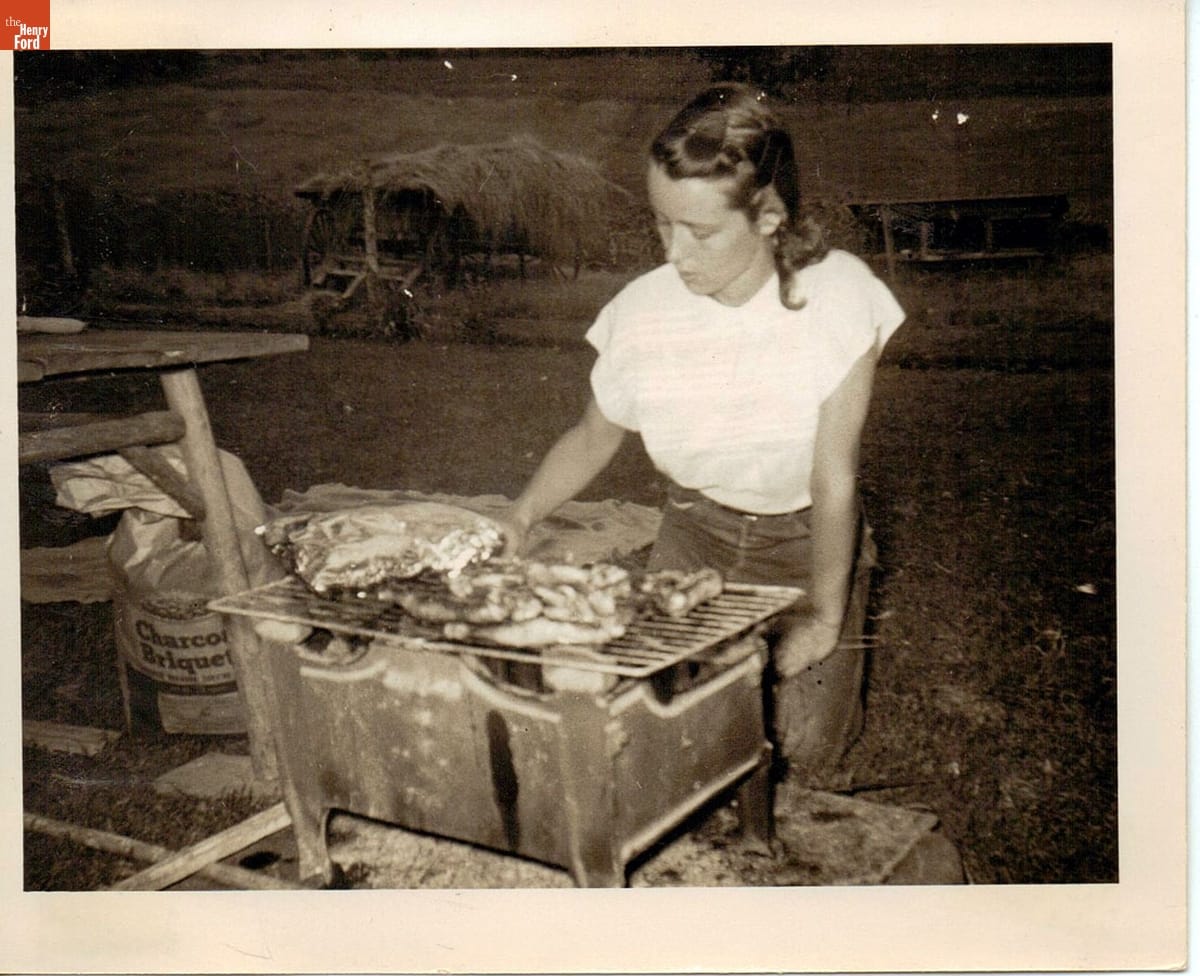
- Lois Kelley Grilling Chicken, 1951 -
- 1951
- Collections - Artifact
Lois Kelley Grilling Chicken, 1951
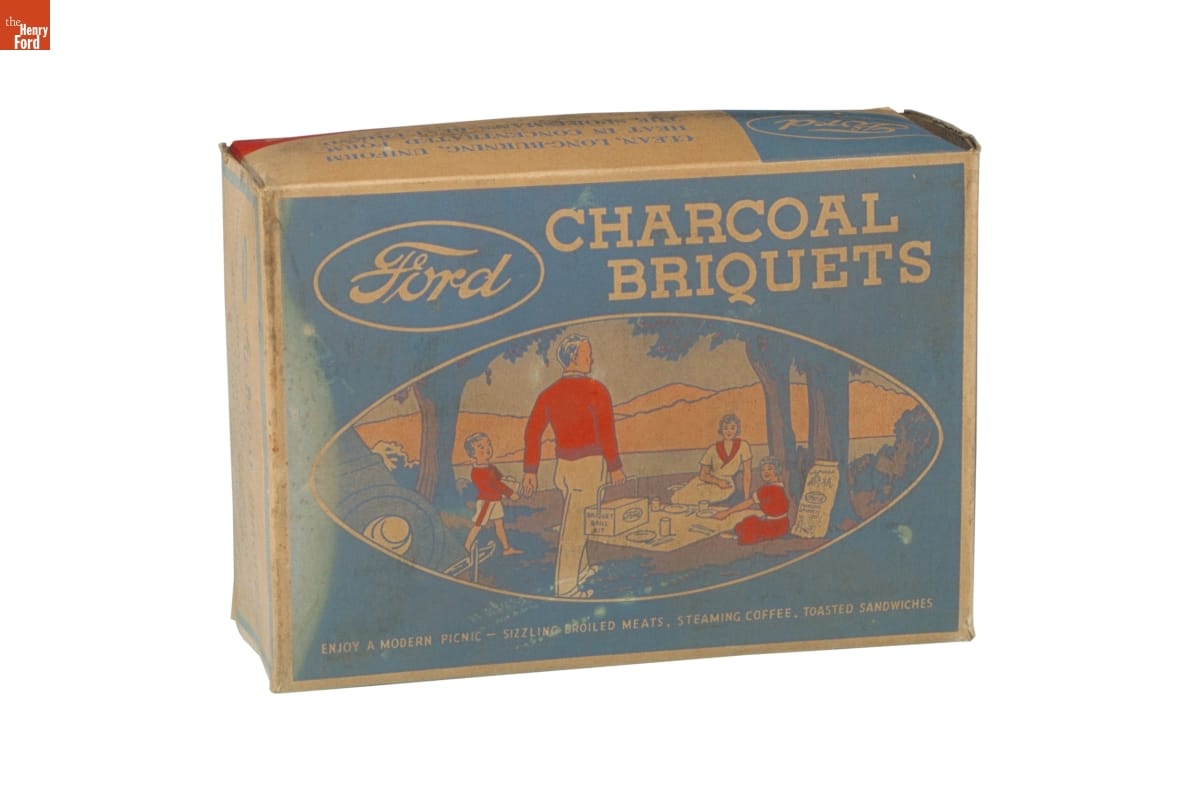
- Ford Charcoal Briquets and Packaging, 1935-1937 - Ford Motor Company sawmills created heaps of wood wastes. Some was used to produce steam for factory operations. The rest was carbonized and compressed into charcoal. Workers mixed charred hardwood chips with starch, forming nearly 100 tons of charcoal briquettes each day. Dealers sold branded barbecue accessories and packages of the popular briquettes in Ford dealerships across the country.
- 1935-1937
- Collections - Artifact
Ford Charcoal Briquets and Packaging, 1935-1937
Ford Motor Company sawmills created heaps of wood wastes. Some was used to produce steam for factory operations. The rest was carbonized and compressed into charcoal. Workers mixed charred hardwood chips with starch, forming nearly 100 tons of charcoal briquettes each day. Dealers sold branded barbecue accessories and packages of the popular briquettes in Ford dealerships across the country.
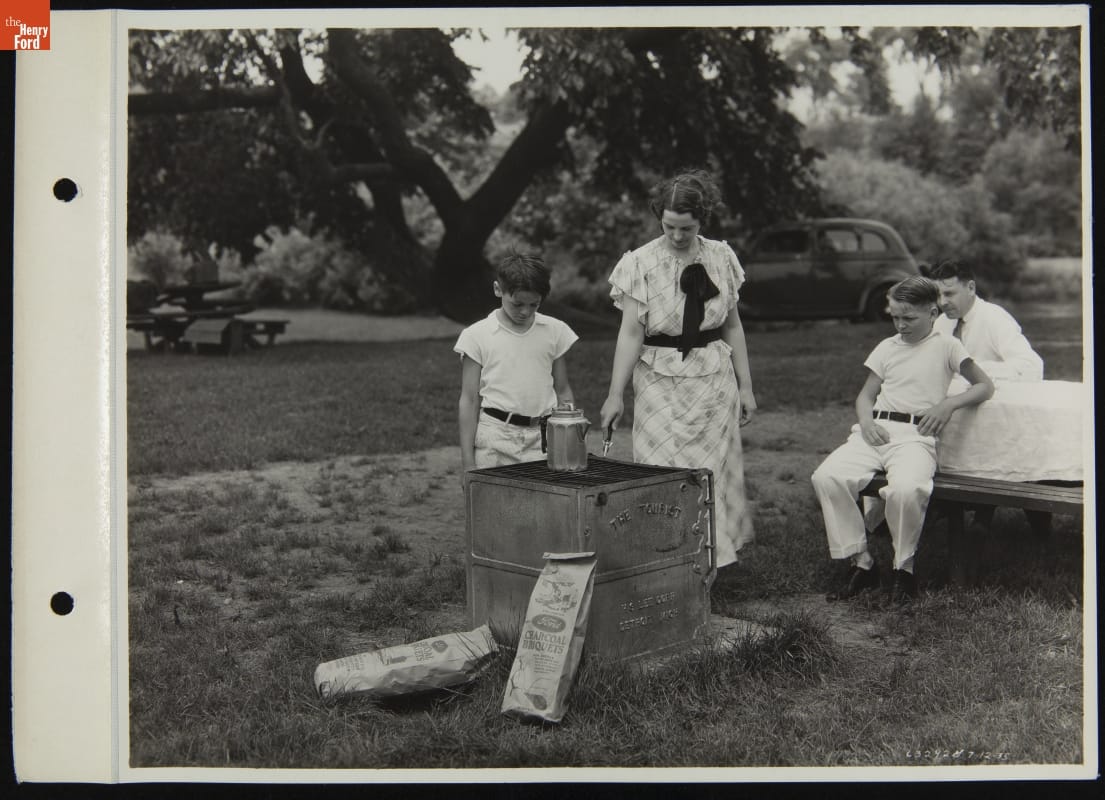
- Grilling at a Family Picnic Using Ford Charcoal Briquets, 1935 - Cars and cookouts were a natural fit in the 1920s and 1930s. As roads improved, Americans were eager to go exploring, whether on short day trips or longer journeys. A roadside picnic saved money for budget-conscious travelers, or it provided a destination in itself for a family on a Sunday drive. Ford used these themes to market its charcoal briquettes.
- July 12, 1935
- Collections - Artifact
Grilling at a Family Picnic Using Ford Charcoal Briquets, 1935
Cars and cookouts were a natural fit in the 1920s and 1930s. As roads improved, Americans were eager to go exploring, whether on short day trips or longer journeys. A roadside picnic saved money for budget-conscious travelers, or it provided a destination in itself for a family on a Sunday drive. Ford used these themes to market its charcoal briquettes.
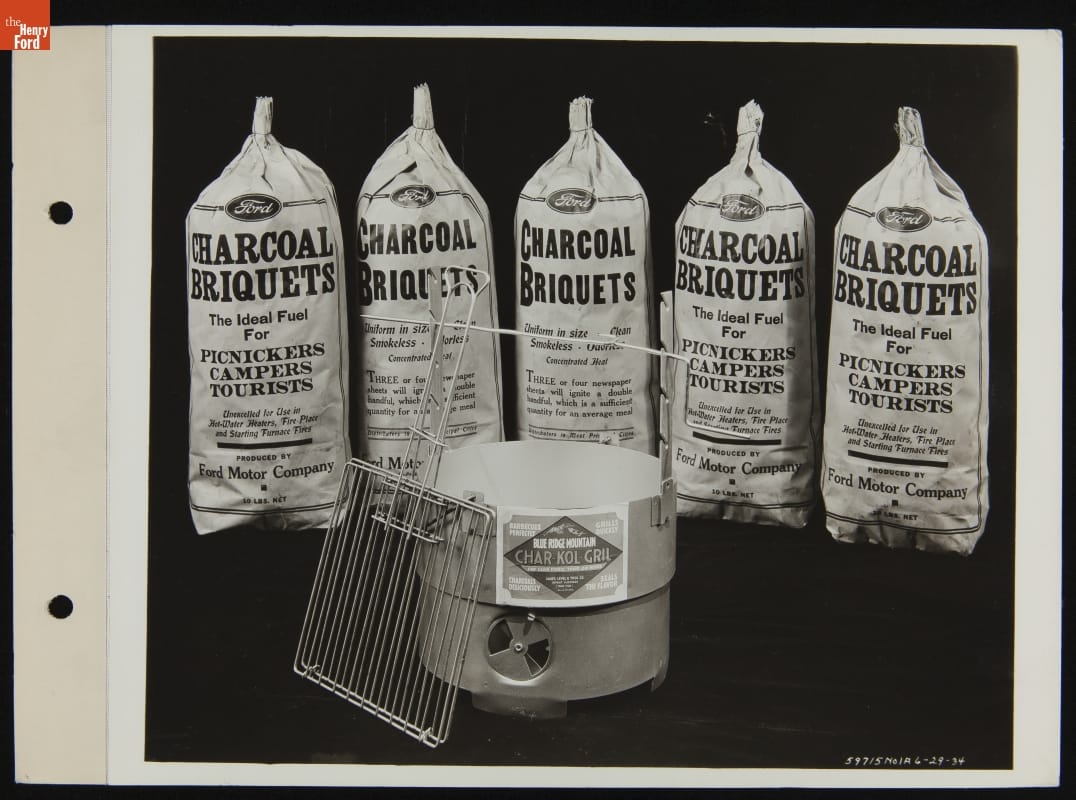
- Bags of Ford Charcoal Briquets and "Char-Kol-Gril," 1934 - Ford Motor Company sawmills created heaps of wood wastes. Some was used to produce steam for factory operations. The rest was carbonized and compressed into charcoal. Workers mixed charred hardwood chips with starch, forming nearly 100 tons of charcoal briquettes each day. Dealers sold branded bags of the popular briquettes in Ford dealerships across the country.
- June 29, 1934
- Collections - Artifact
Bags of Ford Charcoal Briquets and "Char-Kol-Gril," 1934
Ford Motor Company sawmills created heaps of wood wastes. Some was used to produce steam for factory operations. The rest was carbonized and compressed into charcoal. Workers mixed charred hardwood chips with starch, forming nearly 100 tons of charcoal briquettes each day. Dealers sold branded bags of the popular briquettes in Ford dealerships across the country.
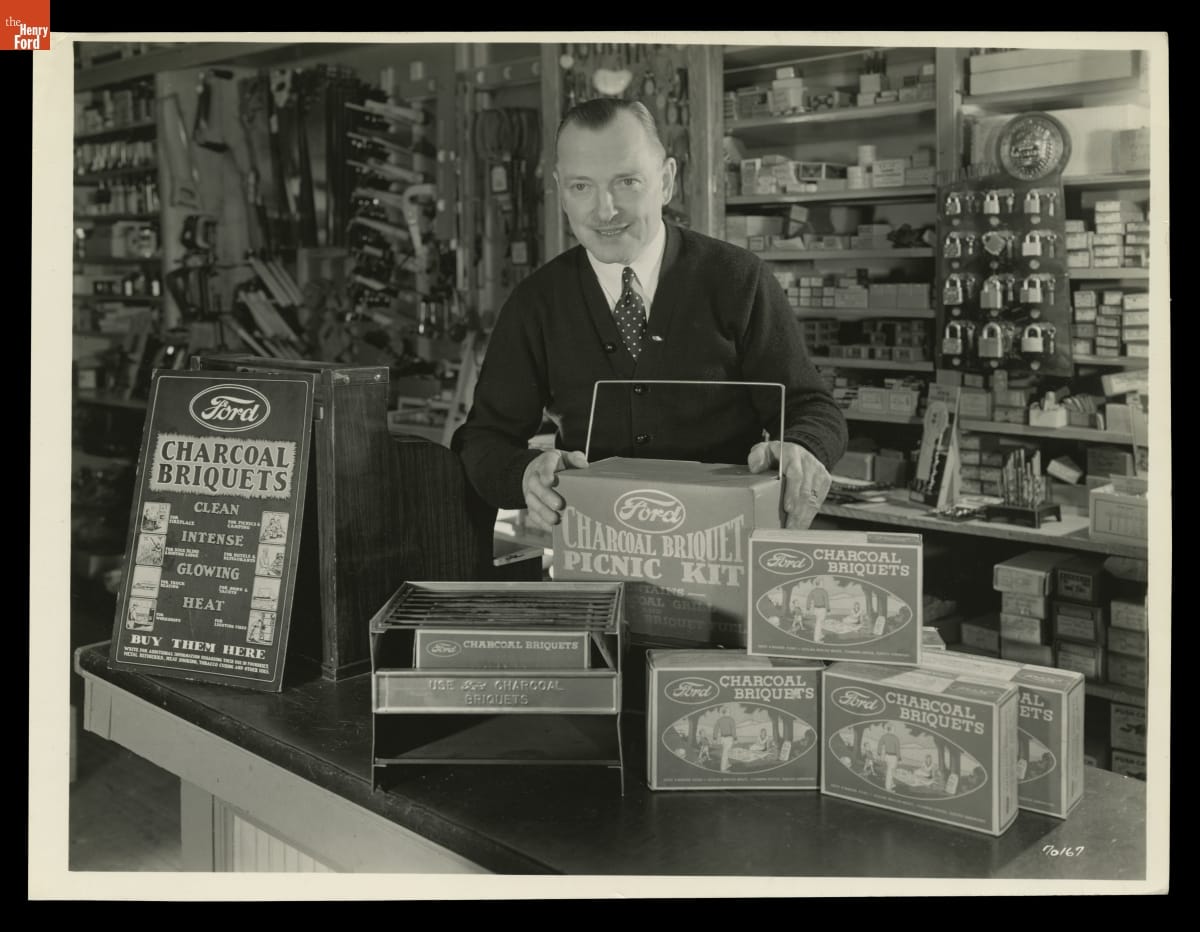
- Ford Charcoal Briquets and Picnic Kit Display in a Hardware Store, 1938 - Ford Motor Company manufactured charcoal briquettes from wood wastes generated by its lumber operations in Michigan's Upper Peninsula. To help promote the briquettes, Ford also sold charcoal grills through its auto dealerships and employee commissaries, as well as traditional hardware and sporting goods stores. Charcoal provided picnickers with a quick-burning fuel that eliminated the work of gathering and lighting firewood.
- April 28, 1938
- Collections - Artifact
Ford Charcoal Briquets and Picnic Kit Display in a Hardware Store, 1938
Ford Motor Company manufactured charcoal briquettes from wood wastes generated by its lumber operations in Michigan's Upper Peninsula. To help promote the briquettes, Ford also sold charcoal grills through its auto dealerships and employee commissaries, as well as traditional hardware and sporting goods stores. Charcoal provided picnickers with a quick-burning fuel that eliminated the work of gathering and lighting firewood.
- Barbecue on the Patio, circa 1960 -
- circa 1960
- Collections - Artifact
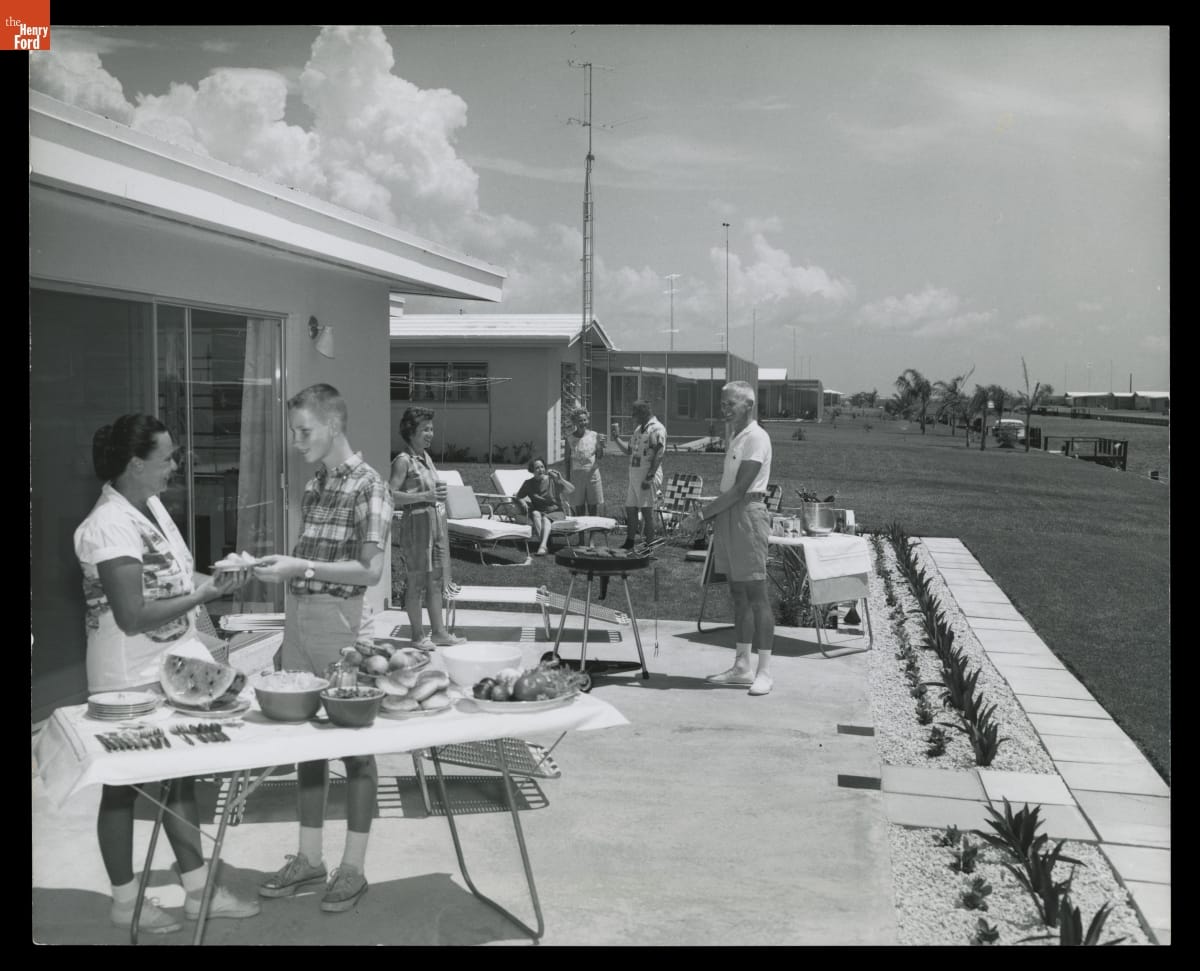
Barbecue on the Patio, circa 1960