
Search
- Circus Poster, Sells Brothers Enormous United Shows, Equestrians in Three Ring Circus, circa 1890 - In the late nineteenth century, printers developed a lithograph method that produced brightly colored posters. In advance of a circus coming to town, general agents glued these eye-catching generic posters to building walls, fences, and in window displays. To announce when and where the performances would happen, local printers sometimes provided letterpress paper date strips to paste onto the posters' lower margin.
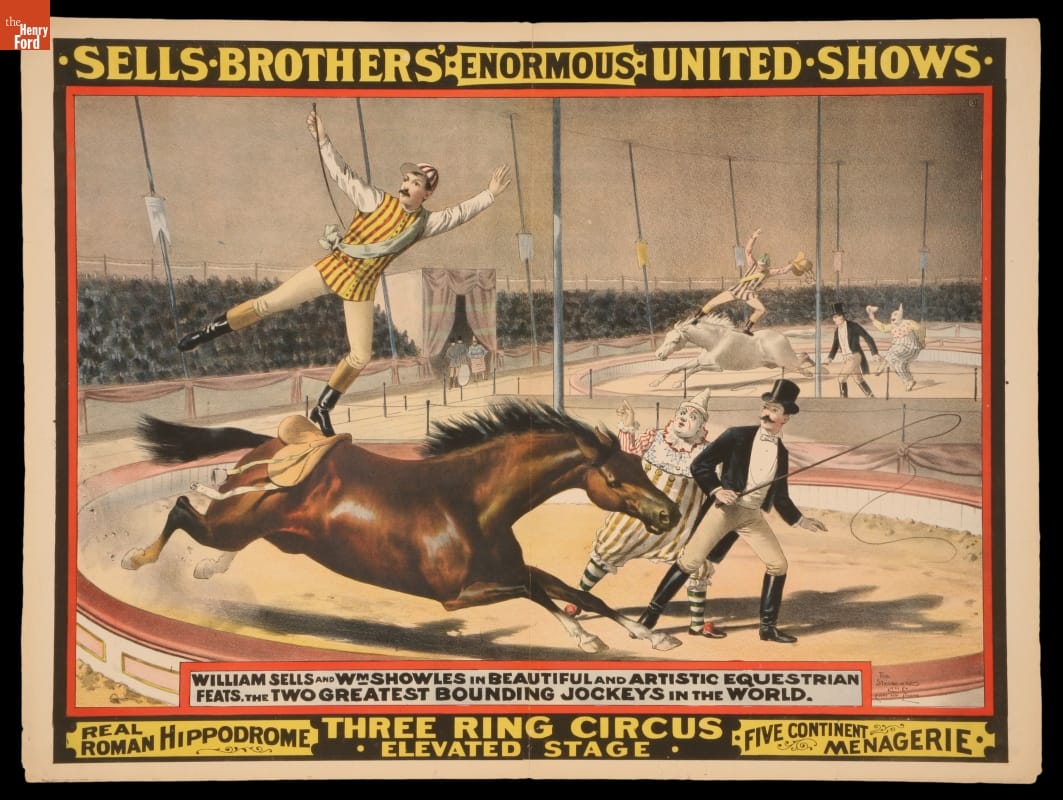
- circa 1890
- Collections - Artifact
Circus Poster, Sells Brothers Enormous United Shows, Equestrians in Three Ring Circus, circa 1890
In the late nineteenth century, printers developed a lithograph method that produced brightly colored posters. In advance of a circus coming to town, general agents glued these eye-catching generic posters to building walls, fences, and in window displays. To announce when and where the performances would happen, local printers sometimes provided letterpress paper date strips to paste onto the posters' lower margin.
- Circus Poster, Forepaugh & Sells Brothers Circus Presents "Royal Riding Shows of the World," 1902 - In the late nineteenth century, printers developed a lithograph method that produced brightly colored posters. In advance of a circus coming to town, general agents glued these eye-catching generic posters to building walls, fences, and in window displays. To announce when and where the performances would happen, local printers sometimes provided letterpress paper date strips to paste onto the posters' lower margin.
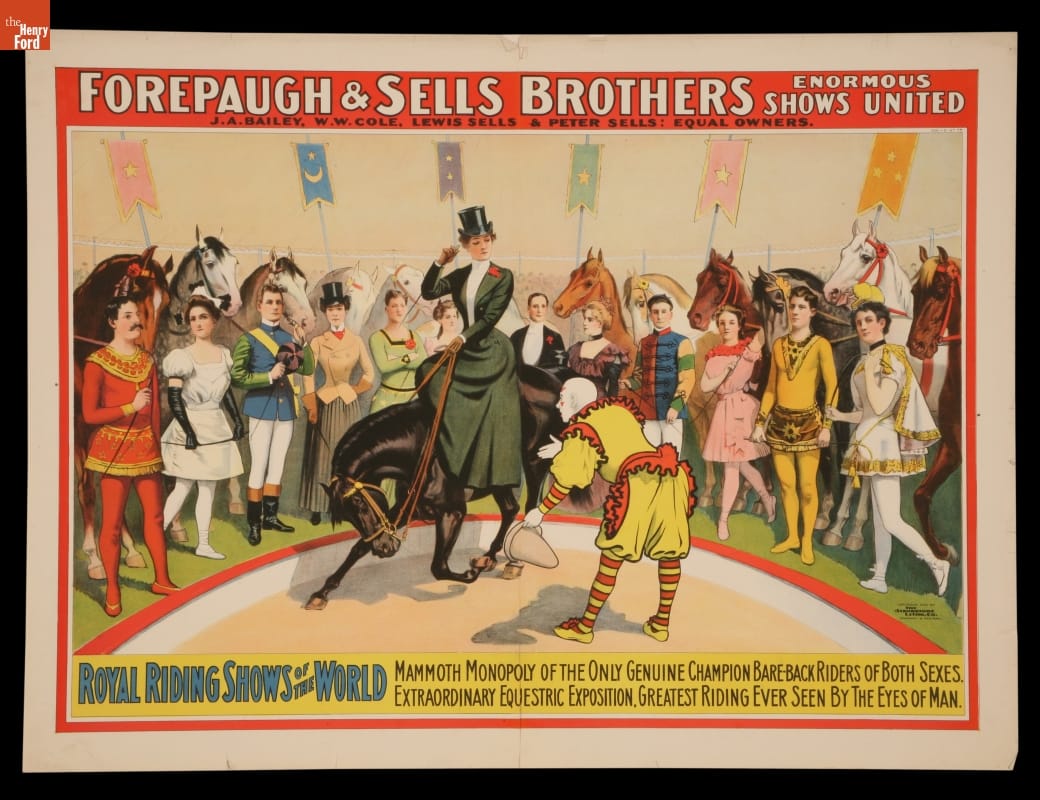
- 1902
- Collections - Artifact
Circus Poster, Forepaugh & Sells Brothers Circus Presents "Royal Riding Shows of the World," 1902
In the late nineteenth century, printers developed a lithograph method that produced brightly colored posters. In advance of a circus coming to town, general agents glued these eye-catching generic posters to building walls, fences, and in window displays. To announce when and where the performances would happen, local printers sometimes provided letterpress paper date strips to paste onto the posters' lower margin.
- Circus Poster, Barnum and Bailey Circus, The Greatest Show on Earth, 1897 - In the late nineteenth century, printers developed a lithograph method that produced brightly colored posters. In advance of a circus coming to town, general agents glued these eye-catching generic posters to building walls, fences, and in window displays. To announce when and where the performances would happen, local printers sometimes provided letterpress paper date strips to paste onto the posters' lower margin.
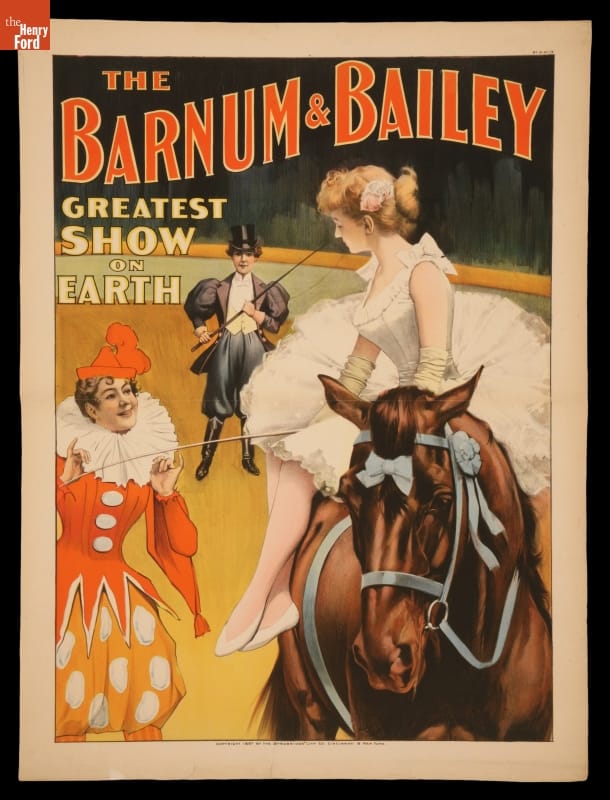
- 1897
- Collections - Artifact
Circus Poster, Barnum and Bailey Circus, The Greatest Show on Earth, 1897
In the late nineteenth century, printers developed a lithograph method that produced brightly colored posters. In advance of a circus coming to town, general agents glued these eye-catching generic posters to building walls, fences, and in window displays. To announce when and where the performances would happen, local printers sometimes provided letterpress paper date strips to paste onto the posters' lower margin.
- Circus Poster, Adam Forepaugh and Sells Brothers Circus: America's Greatest Shows, 1894 - In the late nineteenth century, printers developed a lithograph method that produced brightly colored posters. In advance of a circus coming to town, general agents glued these eye-catching generic posters to building walls, fences, and in window displays. To announce when and where the performances would happen, local printers sometimes provided letterpress paper date strips to paste onto the posters' lower margin.
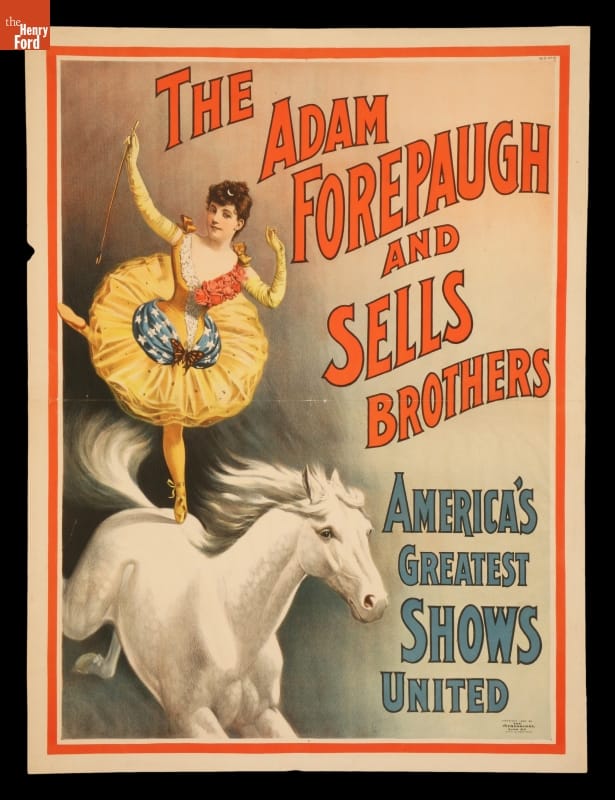
- 1894
- Collections - Artifact
Circus Poster, Adam Forepaugh and Sells Brothers Circus: America's Greatest Shows, 1894
In the late nineteenth century, printers developed a lithograph method that produced brightly colored posters. In advance of a circus coming to town, general agents glued these eye-catching generic posters to building walls, fences, and in window displays. To announce when and where the performances would happen, local printers sometimes provided letterpress paper date strips to paste onto the posters' lower margin.
- Circus Poster, Barnum and Bailey Present "Miss Allen, The Greatest Living Equestrienne," circa 1890 - In the late nineteenth century, printers developed a lithograph method that produced brightly colored posters. In advance of a circus coming to town, general agents glued these eye-catching generic posters to building walls, fences, and in window displays. To announce when and where the performances would happen, local printers sometimes provided letterpress paper date strips to paste onto the posters' lower margin.
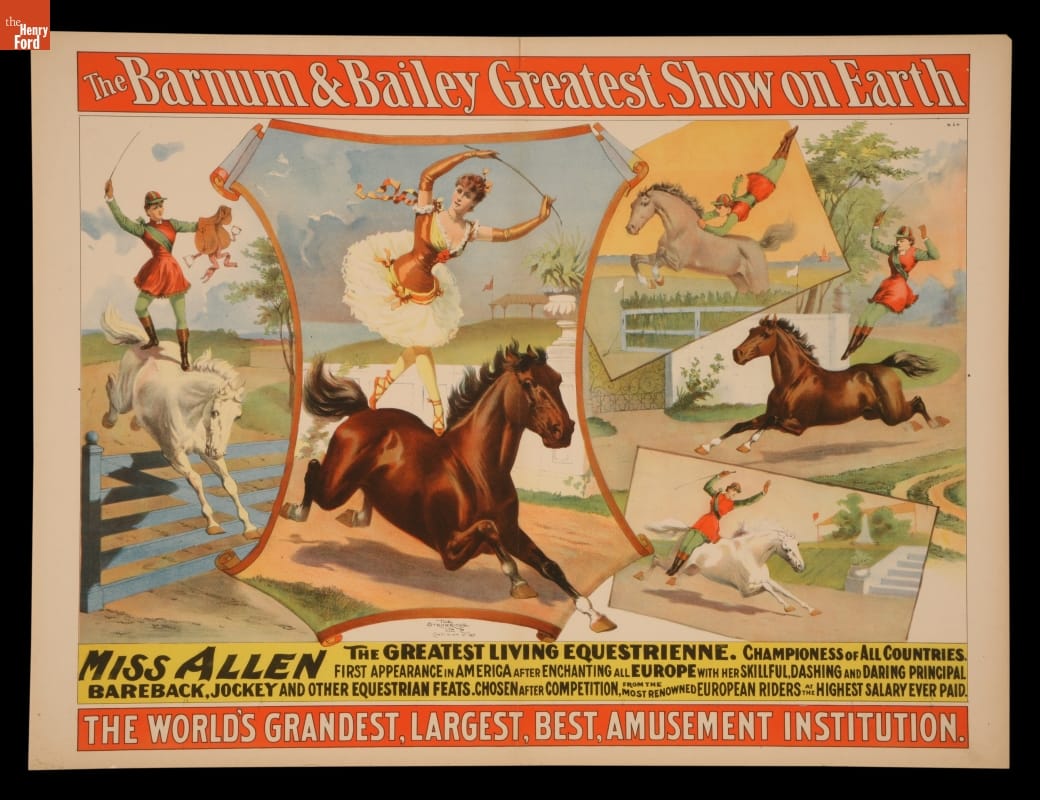
- circa 1890
- Collections - Artifact
Circus Poster, Barnum and Bailey Present "Miss Allen, The Greatest Living Equestrienne," circa 1890
In the late nineteenth century, printers developed a lithograph method that produced brightly colored posters. In advance of a circus coming to town, general agents glued these eye-catching generic posters to building walls, fences, and in window displays. To announce when and where the performances would happen, local printers sometimes provided letterpress paper date strips to paste onto the posters' lower margin.
- Circus Poster, Adam Forepaugh & Sells Brothers Circus Presents "Bareback Performances by the Orfords," 1897 - In the late nineteenth century, printers developed a lithograph method that produced brightly colored posters. In advance of a circus coming to town, general agents glued these eye-catching generic posters to building walls, fences, and in window displays. To announce when and where the performances would happen, local printers sometimes provided letterpress paper date strips to paste onto the posters' lower margin.
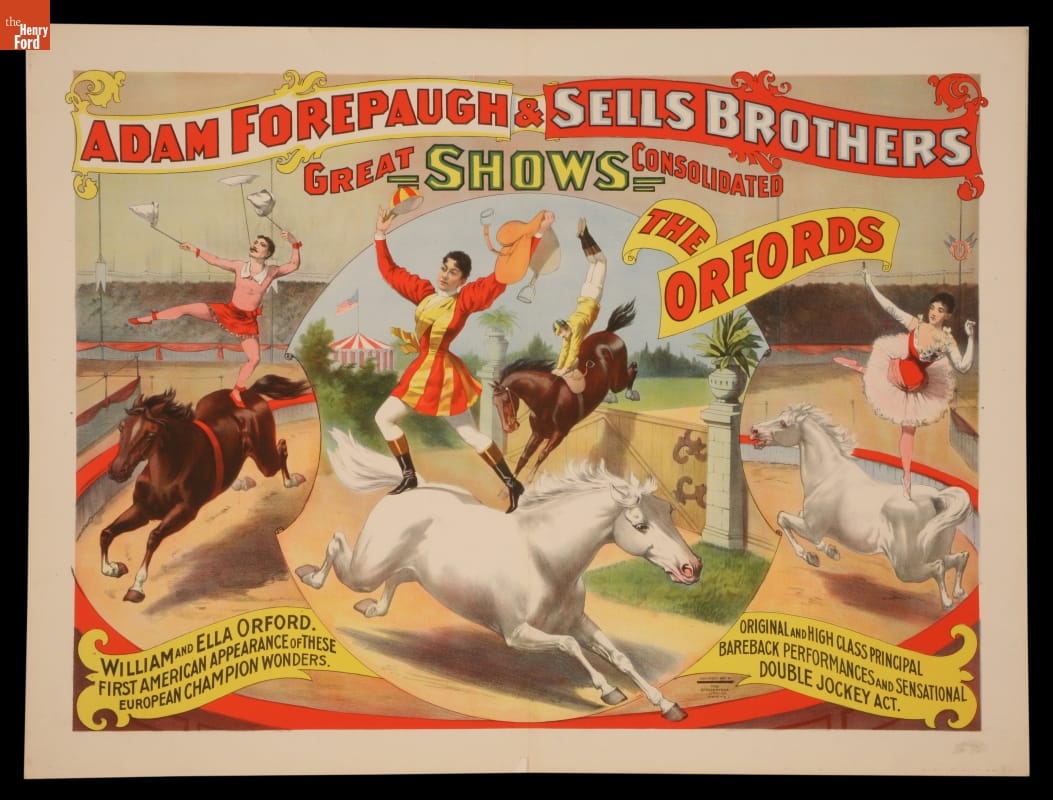
- 1897
- Collections - Artifact
Circus Poster, Adam Forepaugh & Sells Brothers Circus Presents "Bareback Performances by the Orfords," 1897
In the late nineteenth century, printers developed a lithograph method that produced brightly colored posters. In advance of a circus coming to town, general agents glued these eye-catching generic posters to building walls, fences, and in window displays. To announce when and where the performances would happen, local printers sometimes provided letterpress paper date strips to paste onto the posters' lower margin.
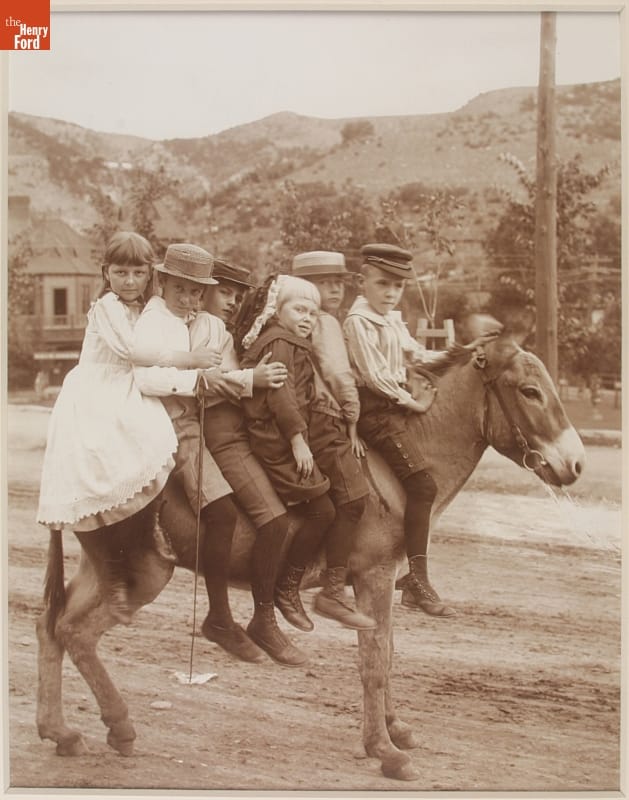
- "Loaded," Children on a Donkey, Colorado, circa 1900 - From 1895 to 1924, the Detroit Publishing Company was one of the major image publishers in the world. The company's wide-ranging stock of original photographs documented life and landscapes from across the nation and around the globe. From the tens of thousands of negatives, the company created prints, postcards, lantern slides, panoramas, and other merchandise for sale to educators, businessmen, advertisers, homeowners and travelers.
- circa 1890
- Collections - Artifact
"Loaded," Children on a Donkey, Colorado, circa 1900
From 1895 to 1924, the Detroit Publishing Company was one of the major image publishers in the world. The company's wide-ranging stock of original photographs documented life and landscapes from across the nation and around the globe. From the tens of thousands of negatives, the company created prints, postcards, lantern slides, panoramas, and other merchandise for sale to educators, businessmen, advertisers, homeowners and travelers.
- Circus Poster, Adam Forepaugh and Sells Brothers Circus Present, "See the New Woman in a Novel Sphere," 1896 - In the late nineteenth century, printers developed a lithograph method that produced brightly colored posters. In advance of a circus coming to town, general agents glued these eye-catching generic posters to building walls, fences, and in window displays. To announce when and where the performances would happen, local printers sometimes provided letterpress paper date strips to paste onto the posters' lower margin.
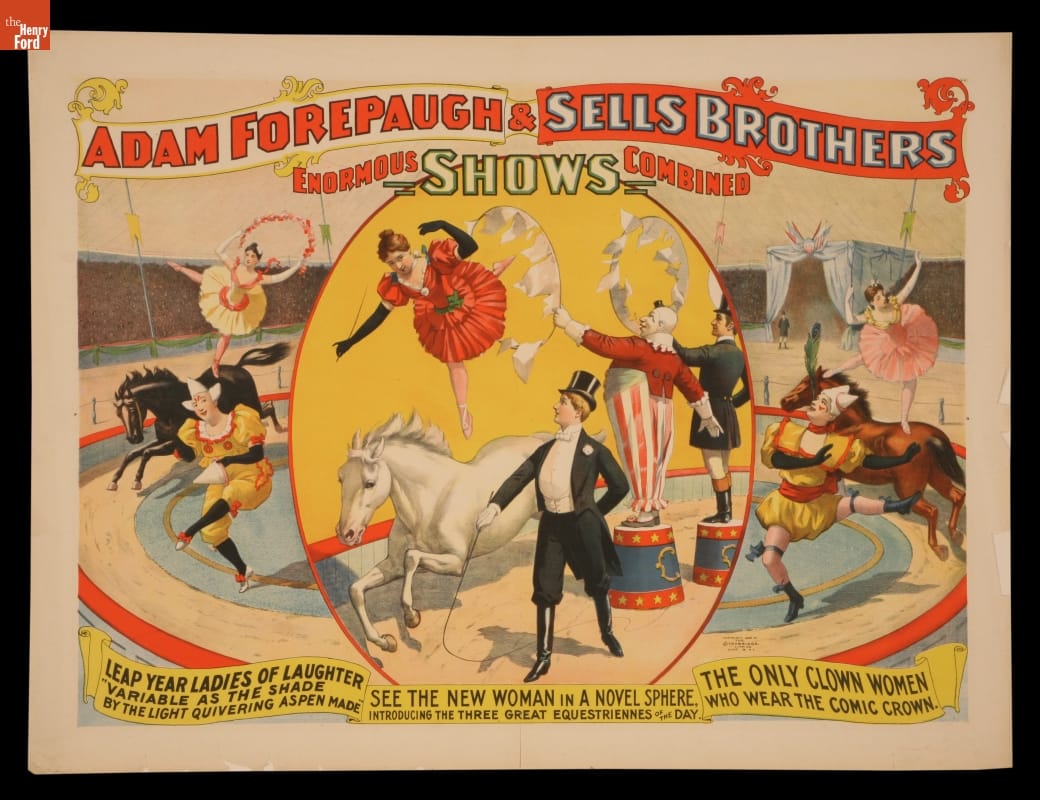
- 1896
- Collections - Artifact
Circus Poster, Adam Forepaugh and Sells Brothers Circus Present, "See the New Woman in a Novel Sphere," 1896
In the late nineteenth century, printers developed a lithograph method that produced brightly colored posters. In advance of a circus coming to town, general agents glued these eye-catching generic posters to building walls, fences, and in window displays. To announce when and where the performances would happen, local printers sometimes provided letterpress paper date strips to paste onto the posters' lower margin.
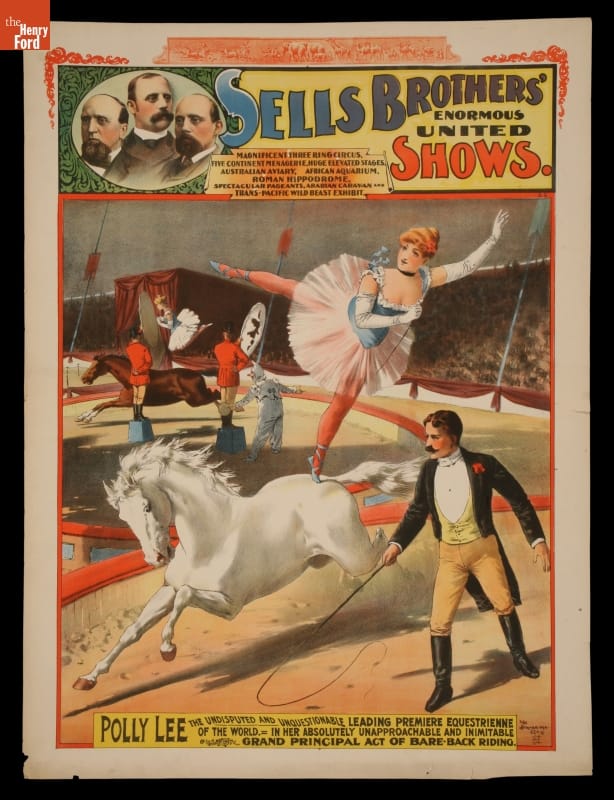
- Circus Poster, Sells Brothers, "Polly Lee, Grand Principal Act of Bare-Back Riding," circa 1890 -
- circa 1890
- Collections - Artifact
Circus Poster, Sells Brothers, "Polly Lee, Grand Principal Act of Bare-Back Riding," circa 1890