
Search
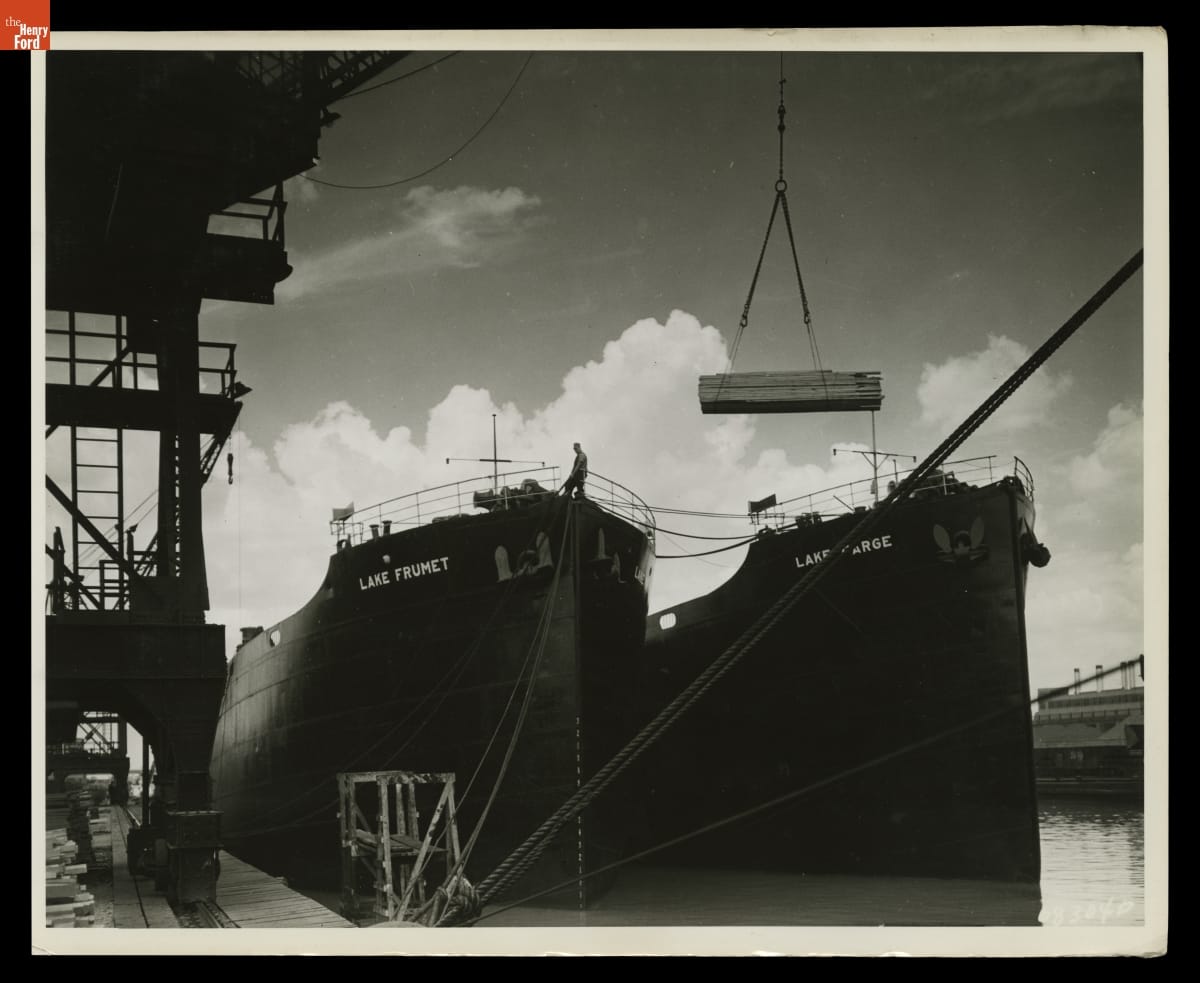
- Ford Motor Company Barges "Lake Frumet" and "Lake Farge" Docked at the Ford Rouge Plant, May 1937 - Henry Ford purchased 199 surplus World War I merchant ships from the United States government in 1925. Most of these ships were scrapped and the materials were used at Ford's new automobile manufacturing complex on the Rouge River. But 13 were converted into barges, like the <em>Lake Frumet</em> and the <em>Lake Farge</em>. These barges transported products and material as part of Ford's operation.
- May 16, 1937
- Collections - Artifact
Ford Motor Company Barges "Lake Frumet" and "Lake Farge" Docked at the Ford Rouge Plant, May 1937
Henry Ford purchased 199 surplus World War I merchant ships from the United States government in 1925. Most of these ships were scrapped and the materials were used at Ford's new automobile manufacturing complex on the Rouge River. But 13 were converted into barges, like the Lake Frumet and the Lake Farge. These barges transported products and material as part of Ford's operation.
- Letter regarding Transfer of Supplies from Ford Barge "Lake Forsby" to Ford Tugboat "Baymead," November 3, 1926 -
- November 03, 1926
- Collections - Artifact
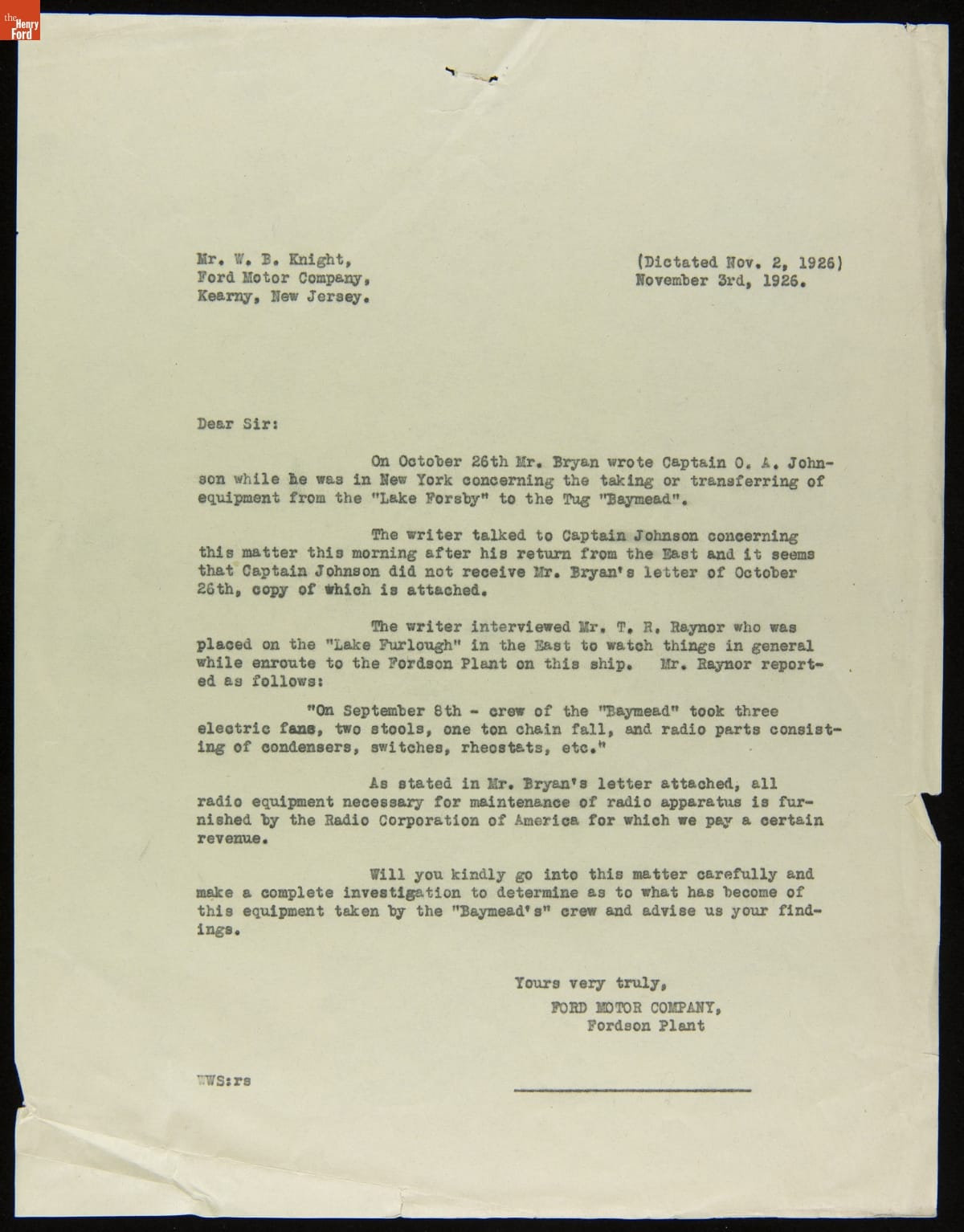
Letter regarding Transfer of Supplies from Ford Barge "Lake Forsby" to Ford Tugboat "Baymead," November 3, 1926
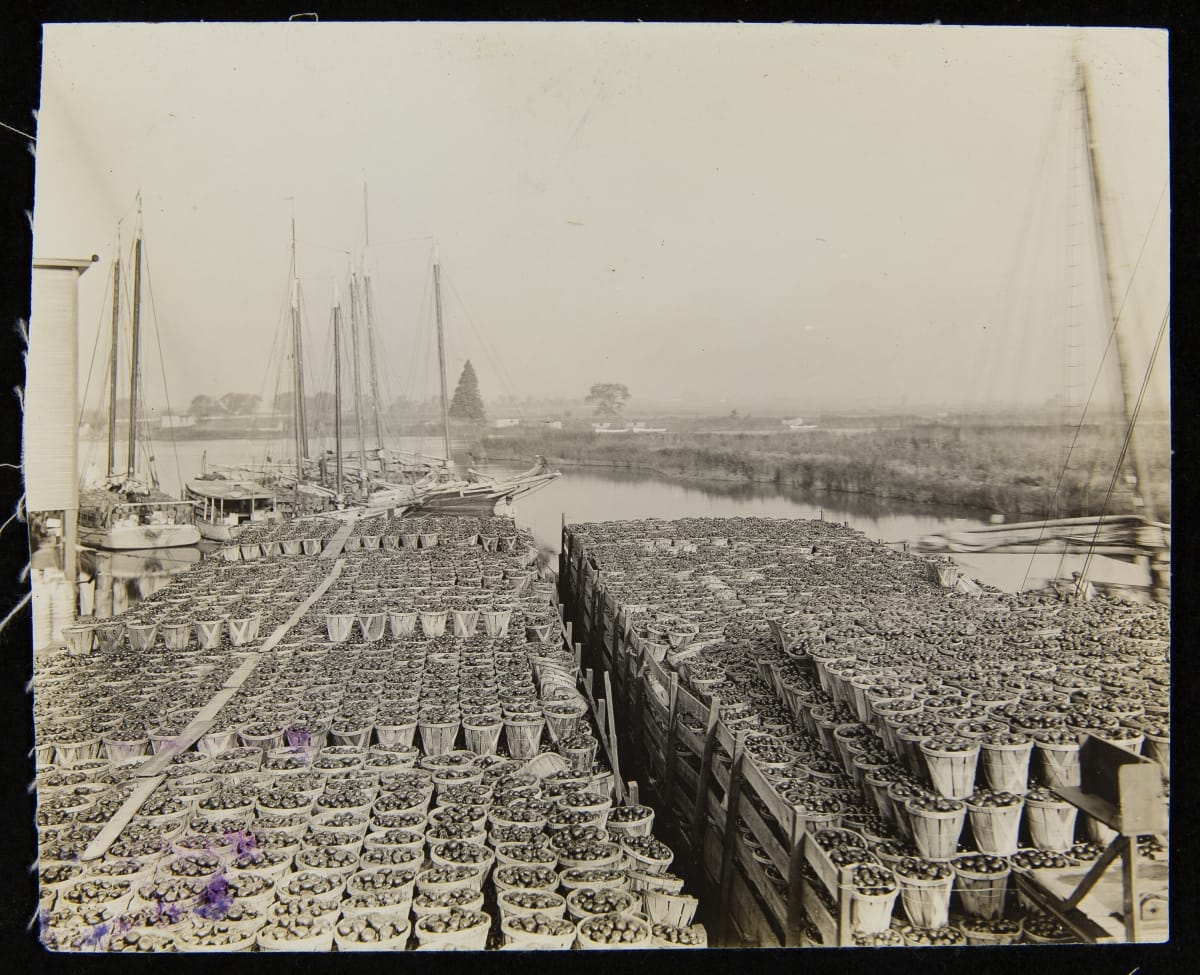
- Barges Loaded with Tomatoes, H. J. Heinz Company, Salem, New Jersey, circa 1910 - Sometimes sailing vessels ensured the quickest transport form farm to Heinz processing plants. This photograph shows barges loaded with tomatoes in Salem, New Jersey, awaiting the journey to the H.J. Heinz main plant in Pittsburgh, Pennsylvania.
- circa 1910
- Collections - Artifact
Barges Loaded with Tomatoes, H. J. Heinz Company, Salem, New Jersey, circa 1910
Sometimes sailing vessels ensured the quickest transport form farm to Heinz processing plants. This photograph shows barges loaded with tomatoes in Salem, New Jersey, awaiting the journey to the H.J. Heinz main plant in Pittsburgh, Pennsylvania.
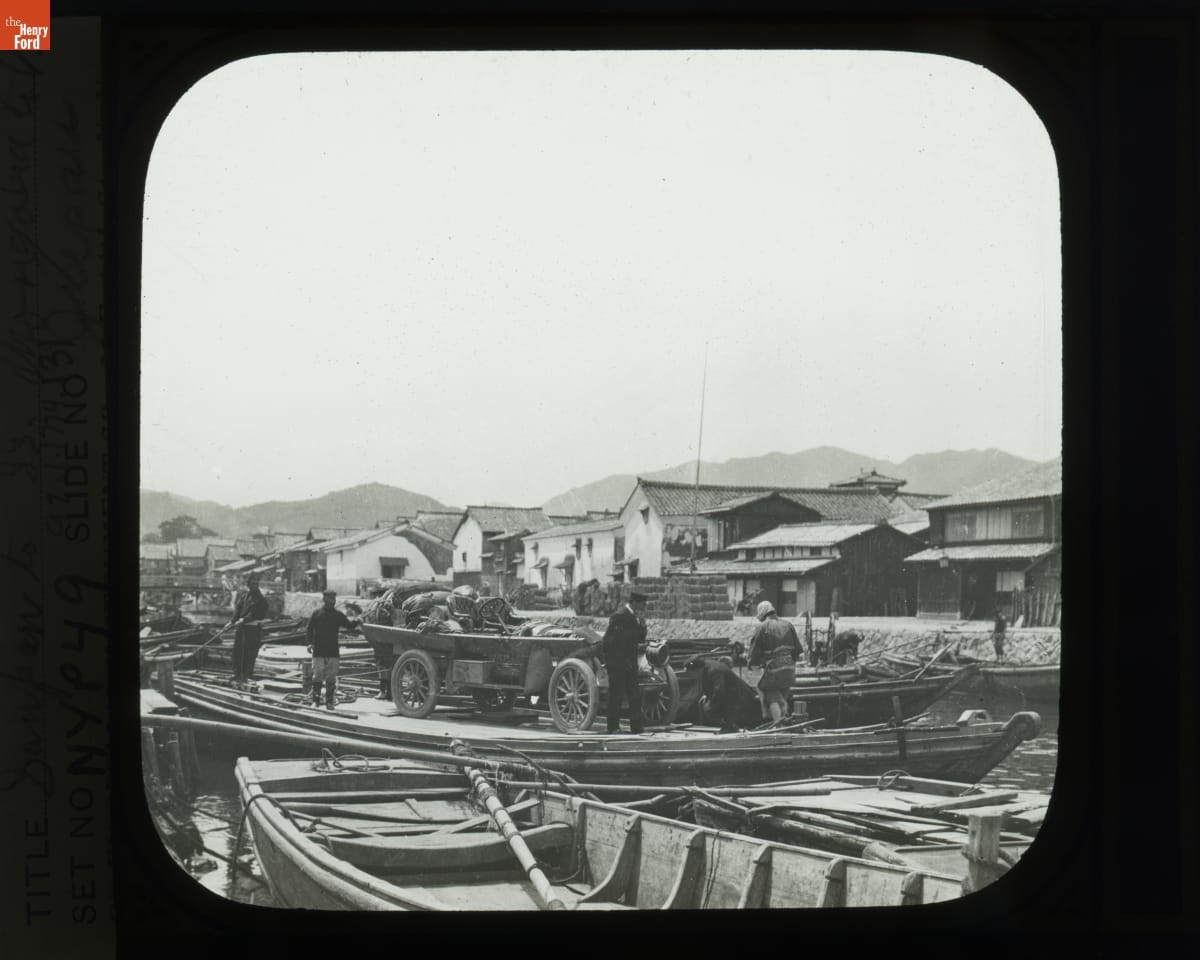
- Thomas Flyer on Sampan Boat to the SS Mongolia, Leaving Japan, New York to Paris Race, 1908 - The 1908 New York to Paris race was a 22,000-mile automobile endurance contest. After crossing the continental United States, teams shipped their vehicles to Asia. The Americans, driving a Thomas Flyer, disembarked in Japan in early May. Once across the island, the Americans shipped their car to Vladivostok, Russia, where the race would begin again.
- May 16, 1908
- Collections - Artifact
Thomas Flyer on Sampan Boat to the SS Mongolia, Leaving Japan, New York to Paris Race, 1908
The 1908 New York to Paris race was a 22,000-mile automobile endurance contest. After crossing the continental United States, teams shipped their vehicles to Asia. The Americans, driving a Thomas Flyer, disembarked in Japan in early May. Once across the island, the Americans shipped their car to Vladivostok, Russia, where the race would begin again.
- Thomas Flyer Being Transferred to SS Mongolia, Leaving Japan, New York to Paris Race, 1908 - The 1908 New York to Paris race was a 22,000-mile automobile endurance contest. After crossing the continental United States, teams shipped their vehicles to Asia. The Americans, driving a Thomas Flyer, disembarked in Japan in early May. Once across the island, the Americans shipped their car to Vladivostok, Russia, where the race would begin again.
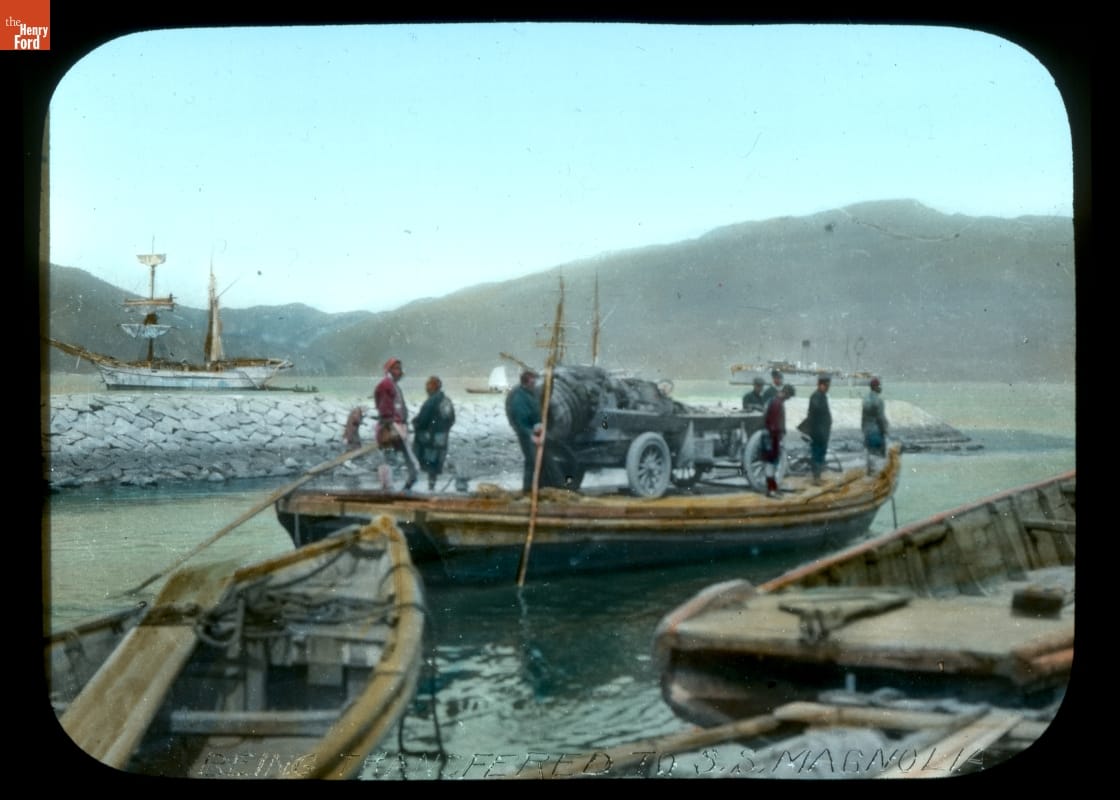
- May 16, 1908
- Collections - Artifact
Thomas Flyer Being Transferred to SS Mongolia, Leaving Japan, New York to Paris Race, 1908
The 1908 New York to Paris race was a 22,000-mile automobile endurance contest. After crossing the continental United States, teams shipped their vehicles to Asia. The Americans, driving a Thomas Flyer, disembarked in Japan in early May. Once across the island, the Americans shipped their car to Vladivostok, Russia, where the race would begin again.
- "North River Steam Boat and Safety Barge," circa 1825 Lithograph -
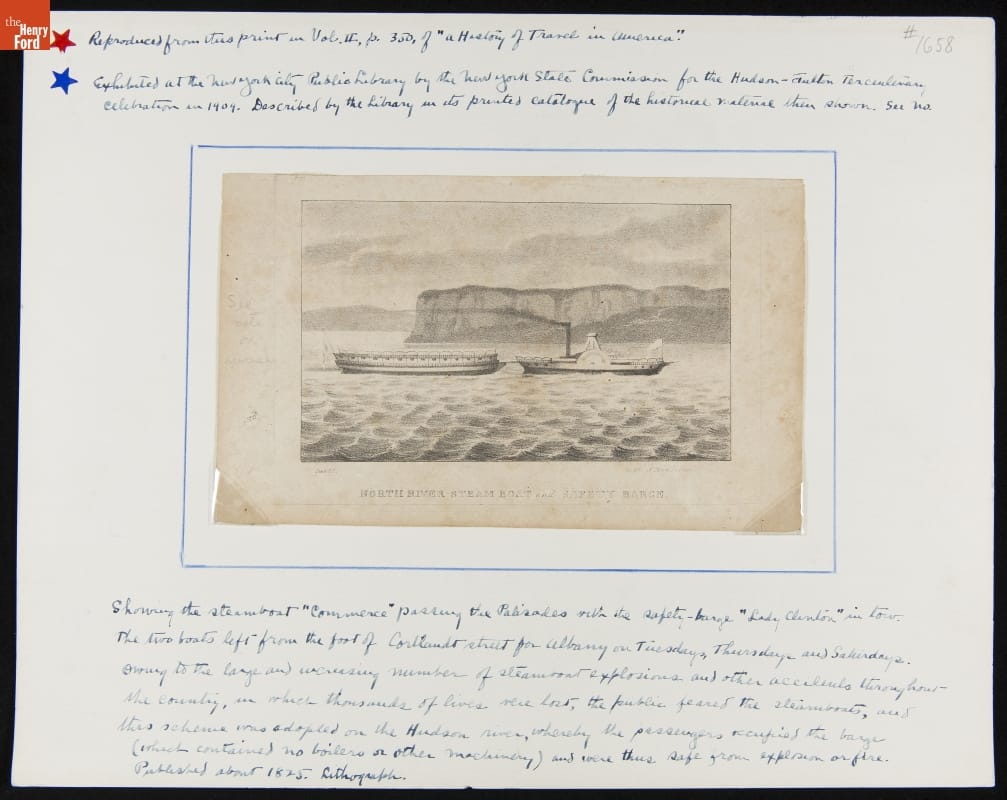
- circa 1825
- Collections - Artifact
"North River Steam Boat and Safety Barge," circa 1825 Lithograph
- Barges Loaded with Shipping Crates at the Ford Motor Company Assembly Plant, Edgewater, New Jersey, January 1942 - Ford Motor Company opened its branch factory in Edgewater, New Jersey, in 1930. Located across the Hudson River from New York City, the Edgewater plant cost $25 million and was one of the largest industrial facilities in the Northeast. Ford closed the Edgewater factory in 1955. It was replaced by a new plant at Mahwah, New Jersey.
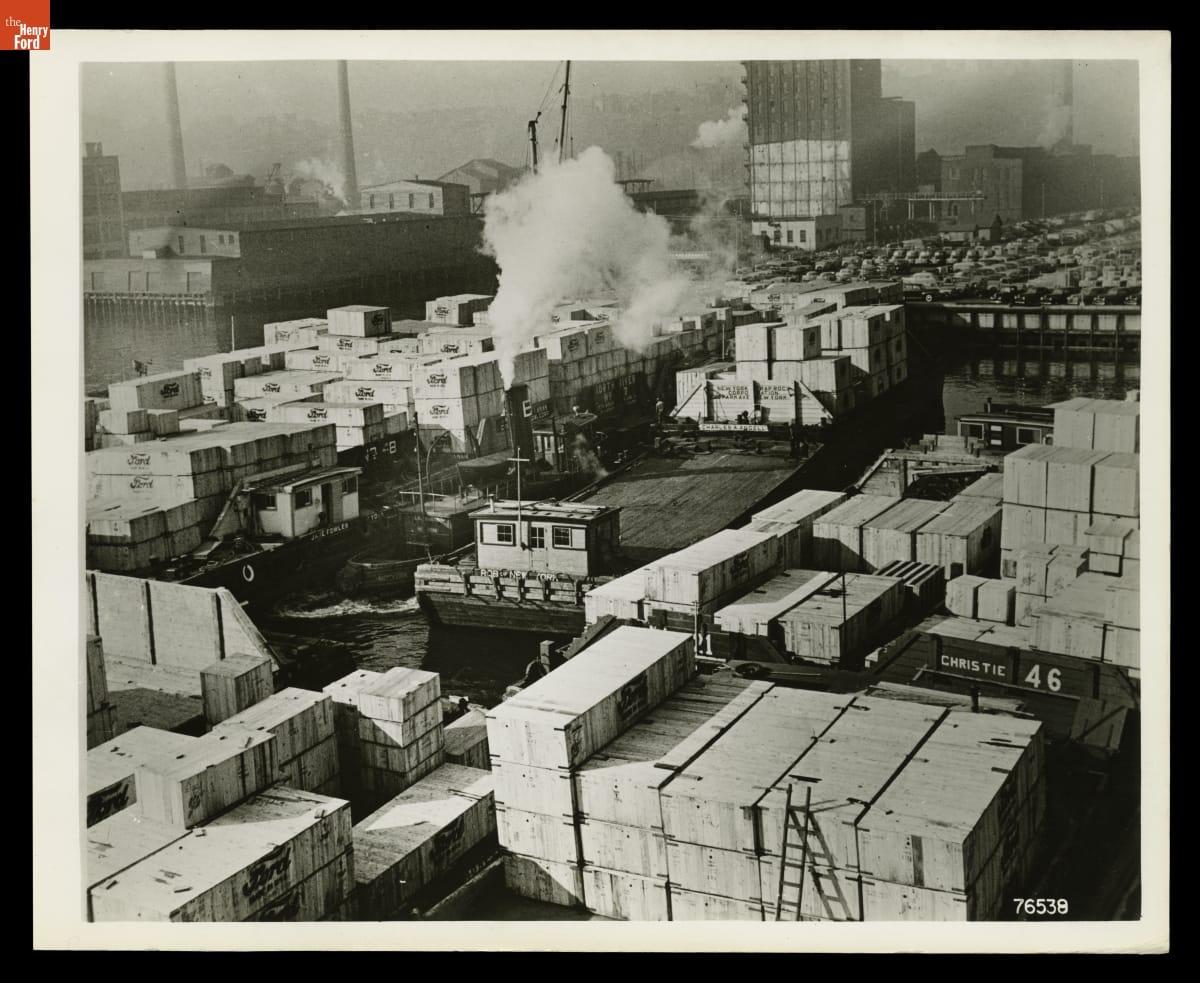
- January 21, 1942
- Collections - Artifact
Barges Loaded with Shipping Crates at the Ford Motor Company Assembly Plant, Edgewater, New Jersey, January 1942
Ford Motor Company opened its branch factory in Edgewater, New Jersey, in 1930. Located across the Hudson River from New York City, the Edgewater plant cost $25 million and was one of the largest industrial facilities in the Northeast. Ford closed the Edgewater factory in 1955. It was replaced by a new plant at Mahwah, New Jersey.
- Moving the Heinz House by Barge on the Allegheny River to Pittsburgh, Pennsylvania, 1904 - In 1869, H.J. Heinz started his processed food business at his parents' home in Sharpsburg, Pennsylvania. Though operations soon outgrew the house, it remained an important part of company history. In 1904, Heinz moved the house 5 miles down the Allegheny River to his Pittsburgh factory, where it served as a company museum for visiting tourists.
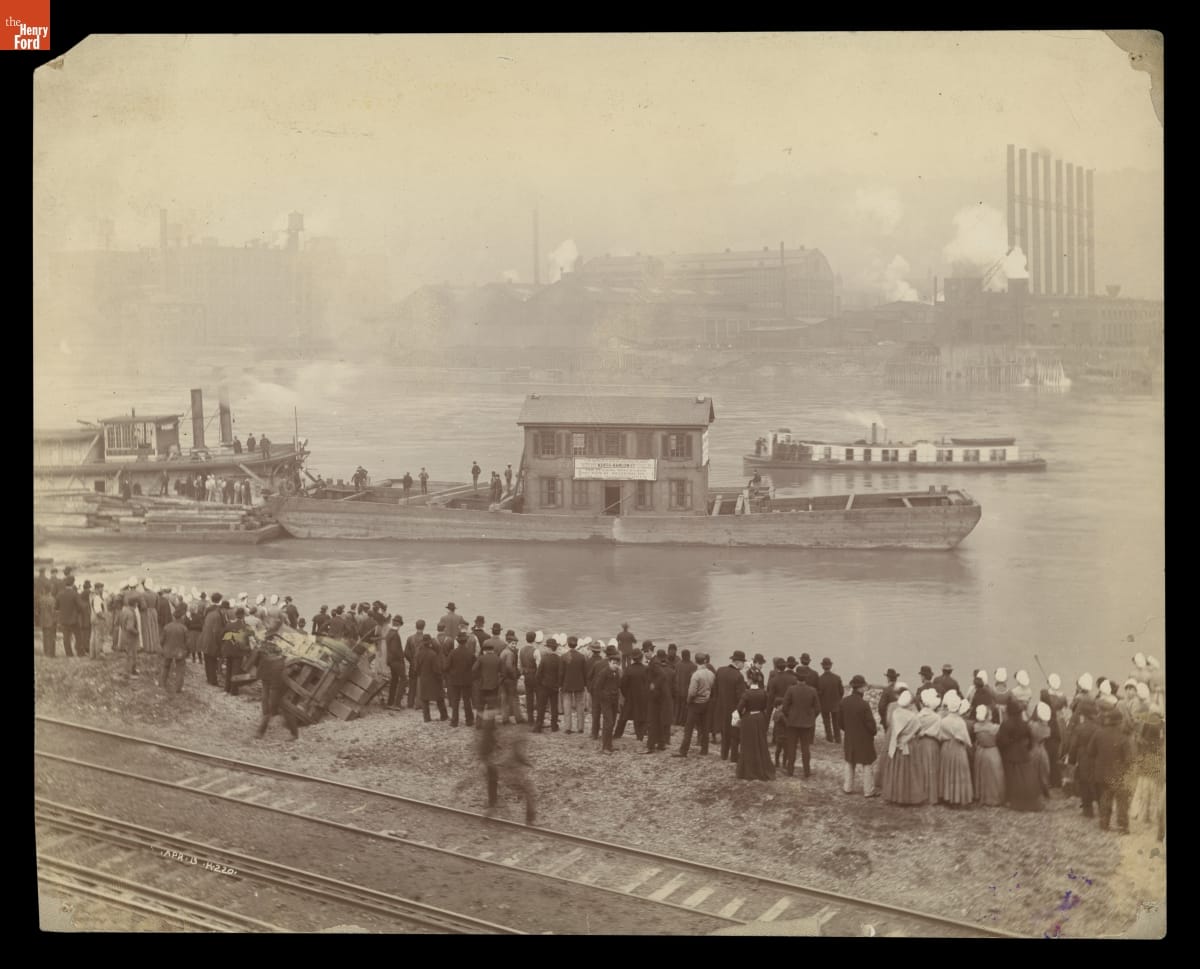
- April 13, 1904
- Collections - Artifact
Moving the Heinz House by Barge on the Allegheny River to Pittsburgh, Pennsylvania, 1904
In 1869, H.J. Heinz started his processed food business at his parents' home in Sharpsburg, Pennsylvania. Though operations soon outgrew the house, it remained an important part of company history. In 1904, Heinz moved the house 5 miles down the Allegheny River to his Pittsburgh factory, where it served as a company museum for visiting tourists.