
Search
- Citizens News, Volume IV, Number 5, 1964-1965 - LGBTQ+ newspapers became more available beginning in the 1950s as organizations added print media to their activist tool kit. These newspapers were a regionally focused way to rally the LGBTQ+ community, share information, and fight discrimination. Many of these newspapers came to rely on gay bars as a location for disbursement as they were among the only private gay spaces in many cities.
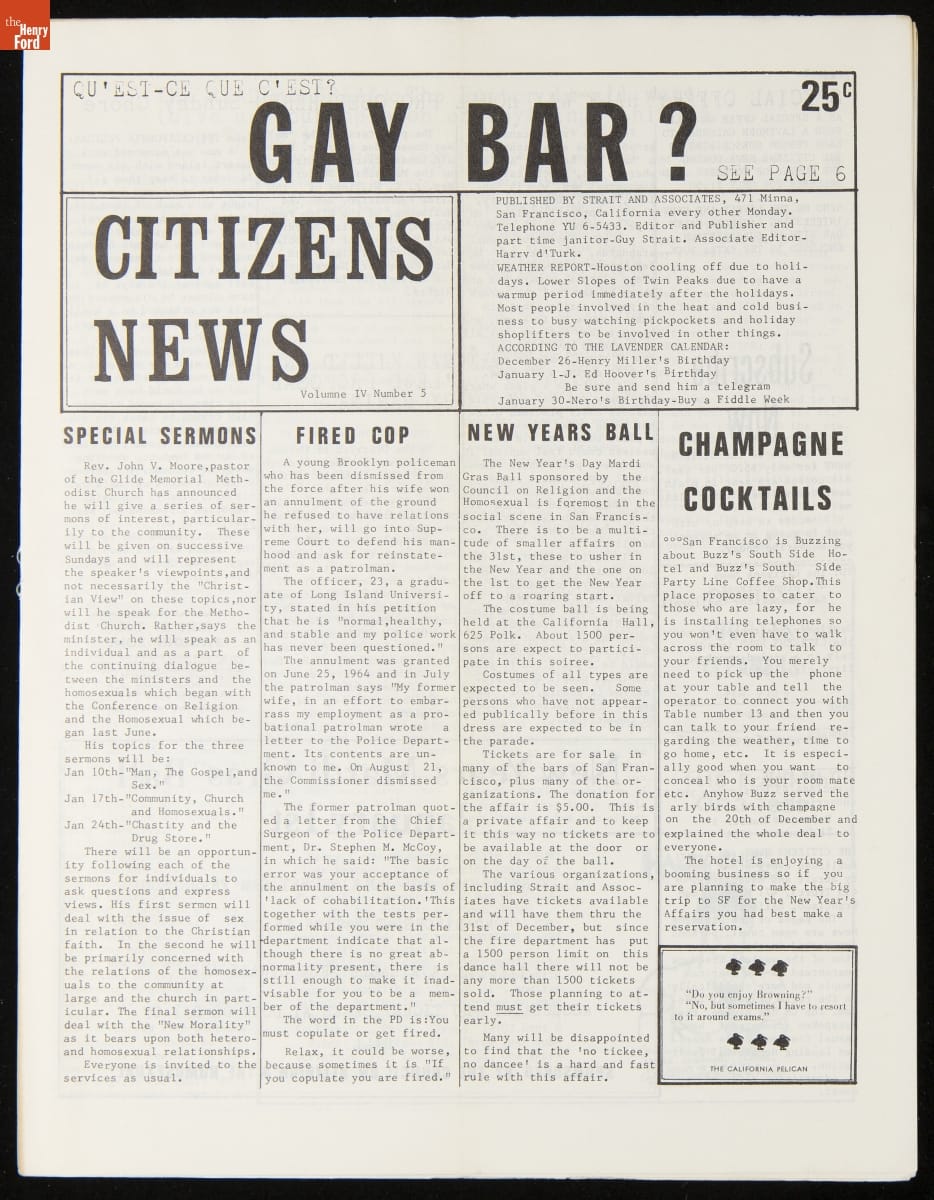
- 1964-1965
- Collections - Artifact
Citizens News, Volume IV, Number 5, 1964-1965
LGBTQ+ newspapers became more available beginning in the 1950s as organizations added print media to their activist tool kit. These newspapers were a regionally focused way to rally the LGBTQ+ community, share information, and fight discrimination. Many of these newspapers came to rely on gay bars as a location for disbursement as they were among the only private gay spaces in many cities.
- Roddis Decorative Veneer Paneling Product Used in an Unidentified Bar, 1928-1937 -
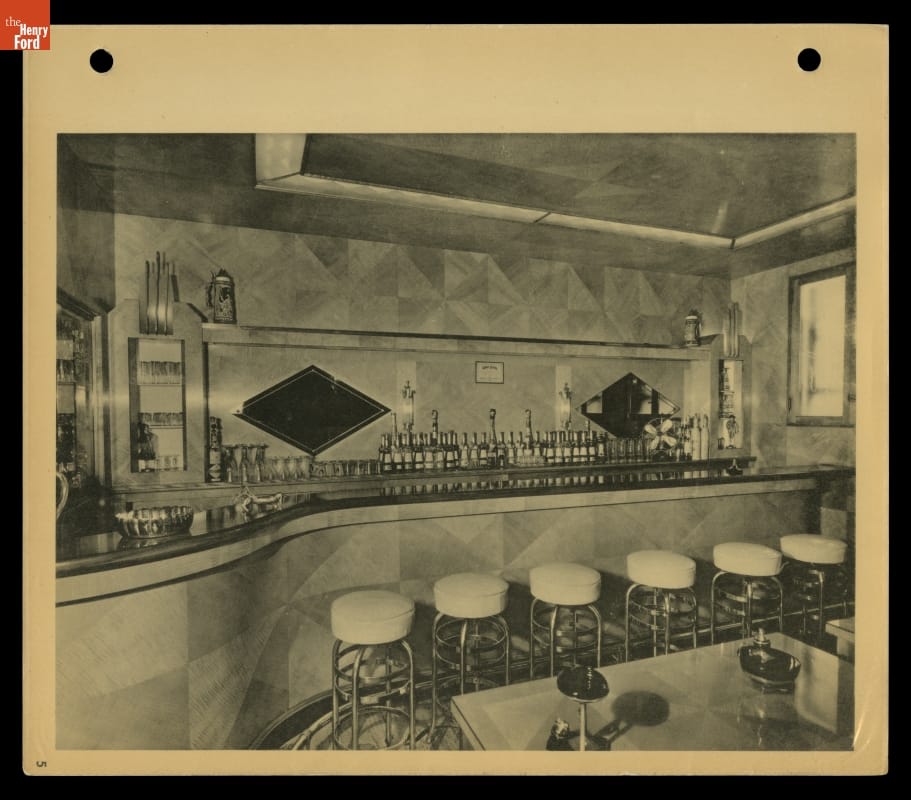
- circa 1930-circa 1935
- Collections - Artifact
Roddis Decorative Veneer Paneling Product Used in an Unidentified Bar, 1928-1937
- Bottle of Bootleg "Old Jordan" Straight Bourbon Whiskey, 1925-1932 -
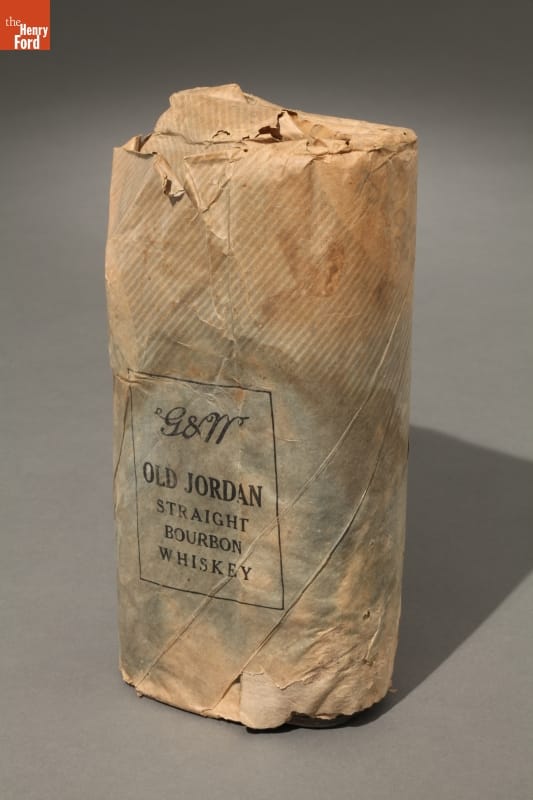
- 1925-1932
- Collections - Artifact
Bottle of Bootleg "Old Jordan" Straight Bourbon Whiskey, 1925-1932
- Thomas Flyer Parked in Front of the Elkhorn Saloon in Wyoming, New York to Paris Race, 1908 - In 1908, six automobiles raced around the globe from New York City to Paris, France. The contest took 169 days, covered 22,000 miles and spanned three continents. In late February, a few weeks after the start, only five cars remained. After leaving Chicago, Illinois, the American team in a Thomas Flyer would lead the way to the west coast.
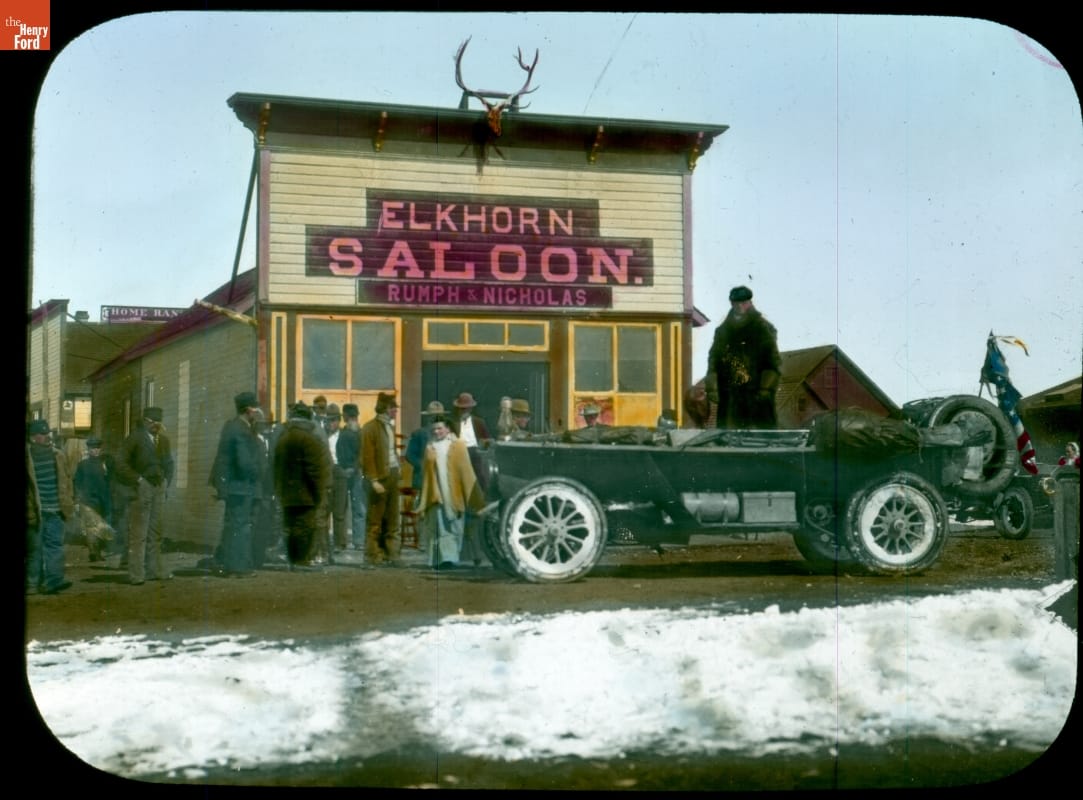
- 1908
- Collections - Artifact
Thomas Flyer Parked in Front of the Elkhorn Saloon in Wyoming, New York to Paris Race, 1908
In 1908, six automobiles raced around the globe from New York City to Paris, France. The contest took 169 days, covered 22,000 miles and spanned three continents. In late February, a few weeks after the start, only five cars remained. After leaving Chicago, Illinois, the American team in a Thomas Flyer would lead the way to the west coast.
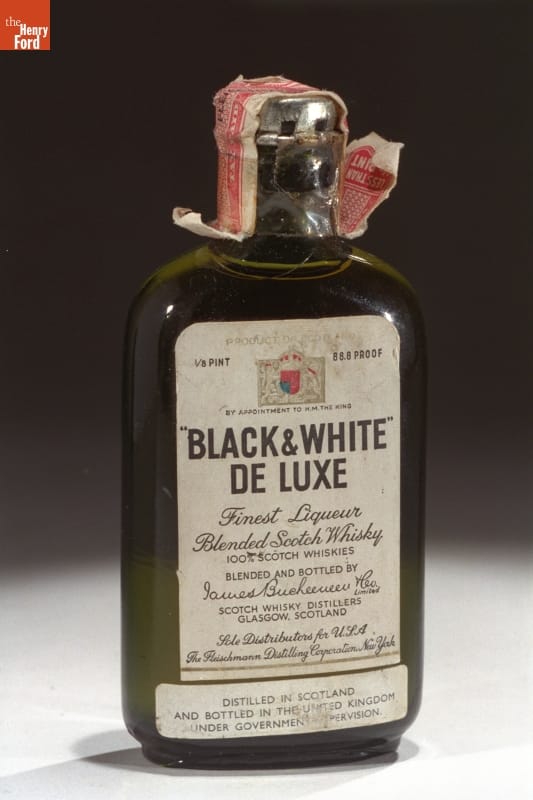
- Bottle of Bootleg "Black & White De Luxe" Blended Scotch Whiskey, 1915-1920 -
- 1915-1920
- Collections - Artifact
Bottle of Bootleg "Black & White De Luxe" Blended Scotch Whiskey, 1915-1920
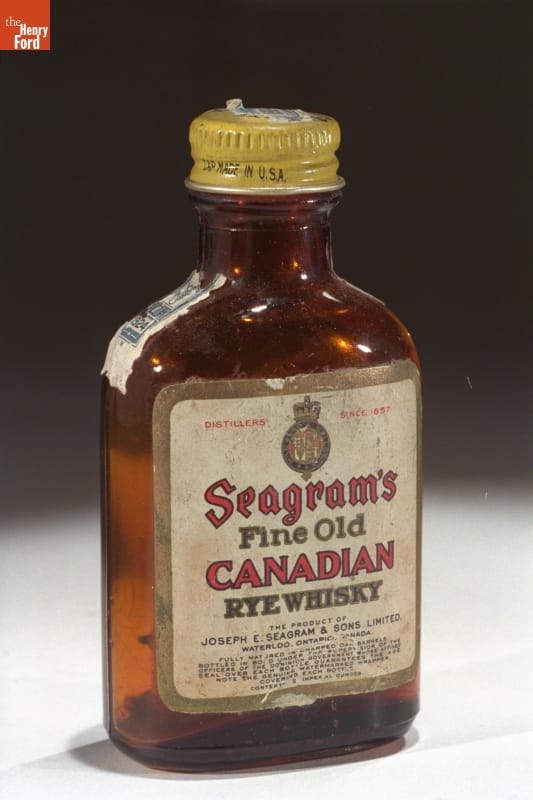
- Bottle of Bootleg "Seagram's Canadian Rye Whiskey," 1924 -
- 1924
- Collections - Artifact
Bottle of Bootleg "Seagram's Canadian Rye Whiskey," 1924
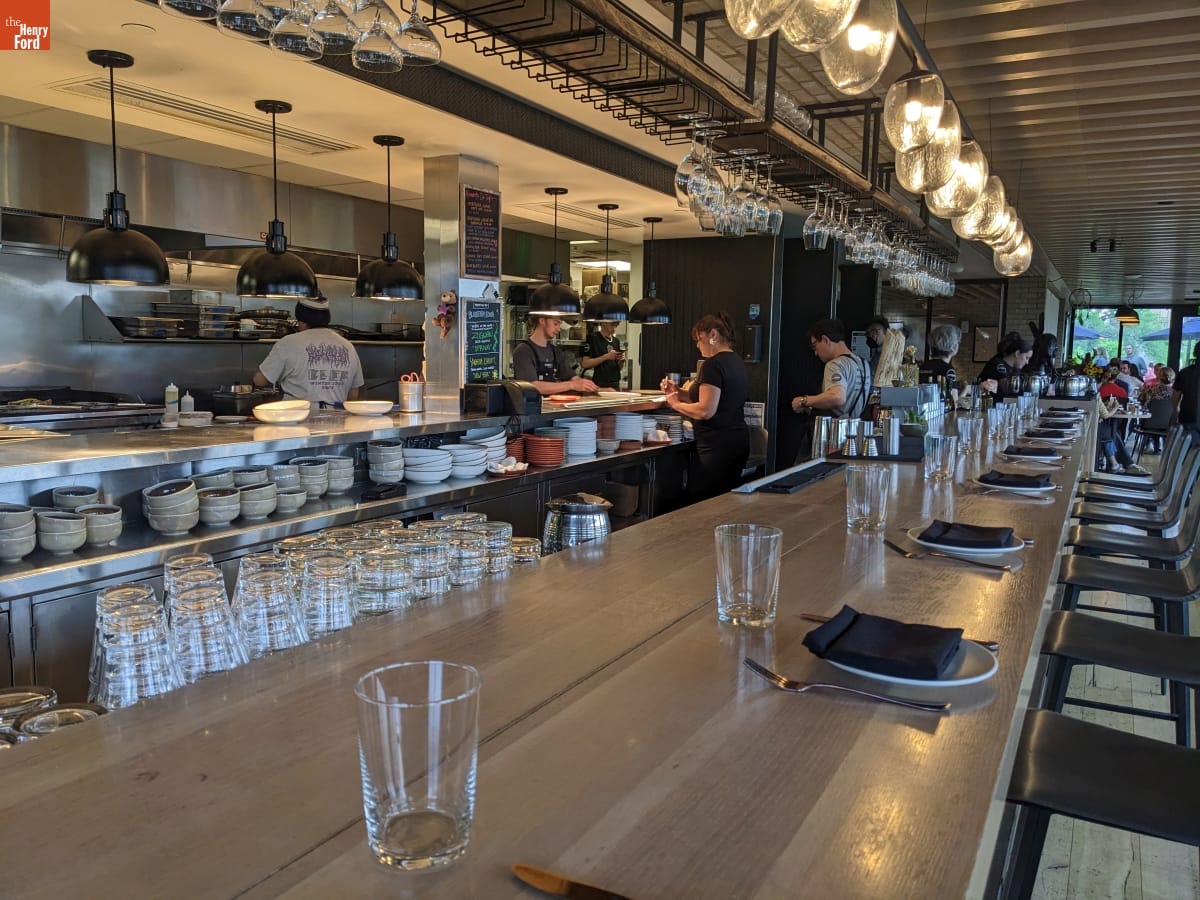
- Kitchen and Bar Area at Owamni Restaurant, Minneapolis, Minnesota, June 6, 2025 - <body>Sean Sherman, a member of the Oglala Lakota nation, found success as an executive chef, and channeled that into advocacy for indigenous foodways as The Sioux Chef. He earned several James Beard awards for his leadership, for his first cookbook, <i>The Sioux Chef's Indigenous Kitchen</i> (2017) and for the restaurant Owamni, owned by the not-for-profit North American Traditional Indigenous Food Systems (NATIFS). </body>
- June 06, 2025
- Collections - Artifact
Kitchen and Bar Area at Owamni Restaurant, Minneapolis, Minnesota, June 6, 2025
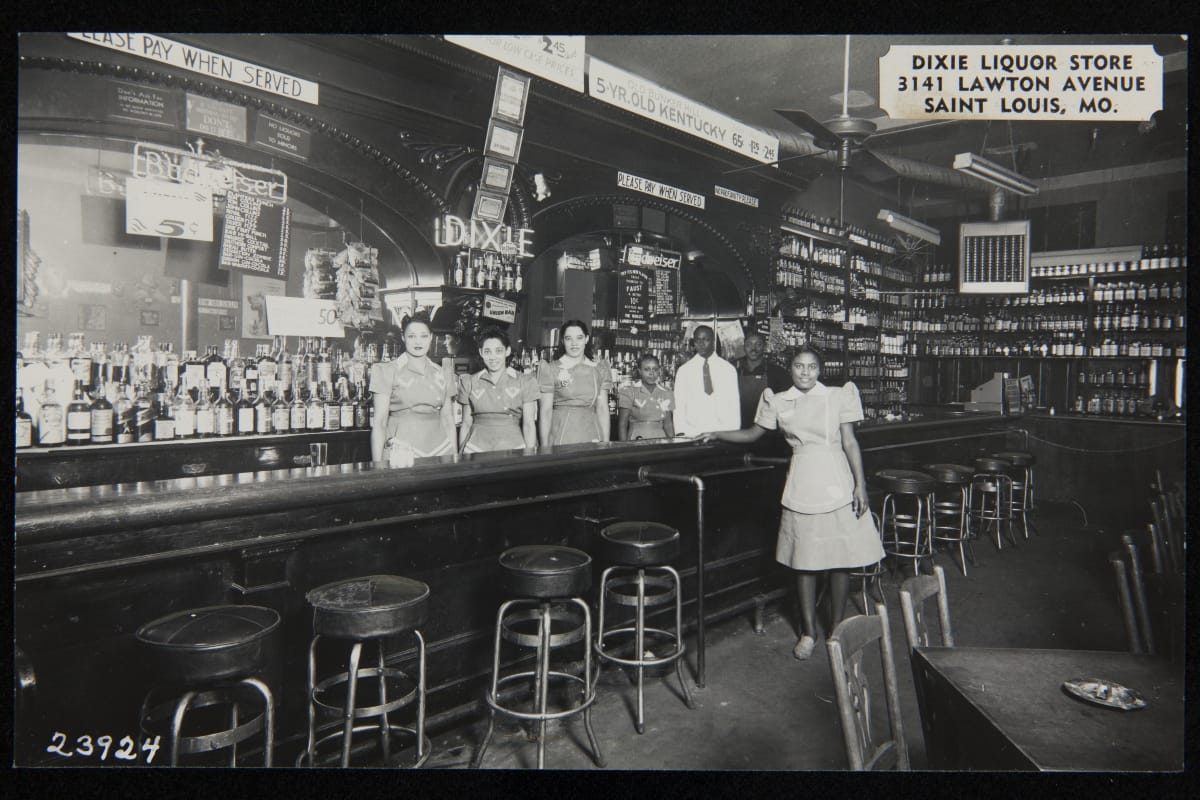
Sean Sherman, a member of the Oglala Lakota nation, found success as an executive chef, and channeled that into advocacy for indigenous foodways as The Sioux Chef. He earned several James Beard awards for his leadership, for his first cookbook, The Sioux Chef's Indigenous Kitchen (2017) and for the restaurant Owamni, owned by the not-for-profit North American Traditional Indigenous Food Systems (NATIFS). - Dixie Liquor Store, St. Louis, Missouri, 1935-1950 - Photographic cards like this one, with their glued-on labels, were a preliminary step taken by Dexter Press before producing postcards for small-business owners to mail or hand out to customers. During the first half of the 20th century, racial segregation was a pervasive feature in St. Louis, Missouri. This African-American-run liquor store catered to black customers in the local community.
- 1935-1950
- Collections - Artifact
Dixie Liquor Store, St. Louis, Missouri, 1935-1950
Photographic cards like this one, with their glued-on labels, were a preliminary step taken by Dexter Press before producing postcards for small-business owners to mail or hand out to customers. During the first half of the 20th century, racial segregation was a pervasive feature in St. Louis, Missouri. This African-American-run liquor store catered to black customers in the local community.
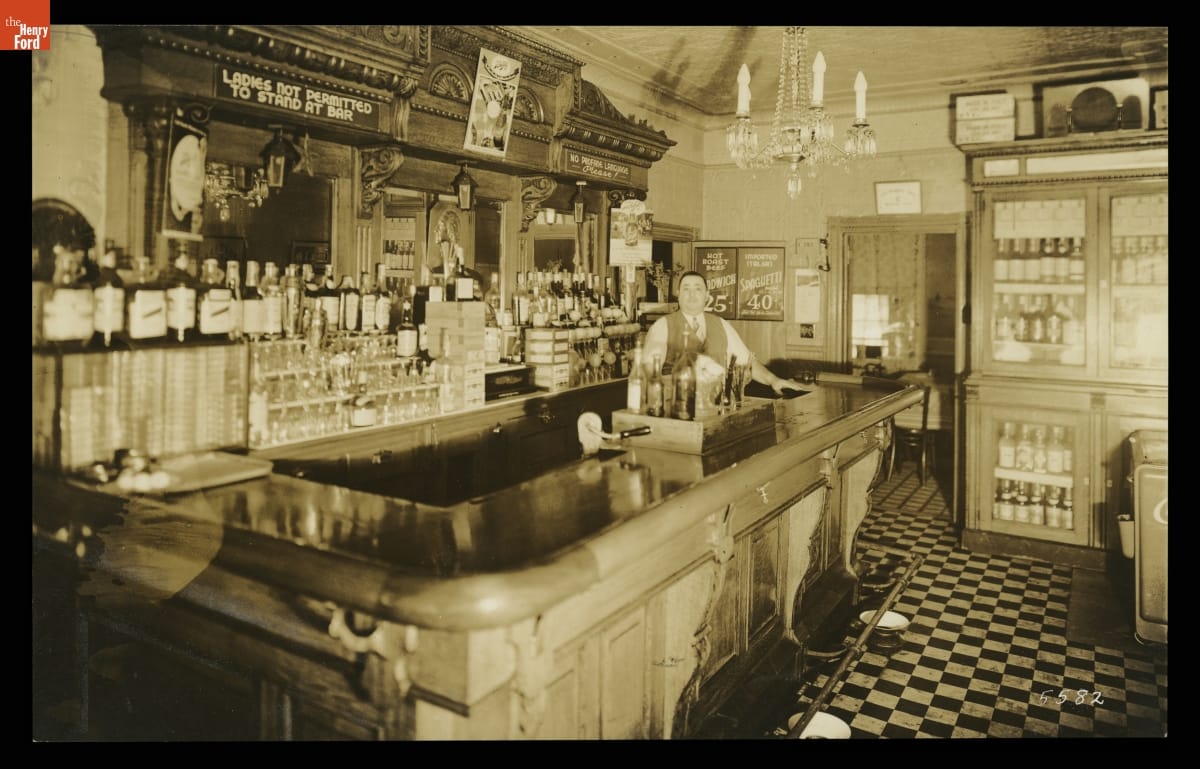
- Frank Collarelli's Cocktail Palace, Nyack, New York, 1935-1950 - Photographic cards like this one, with their glued-on labels, were a preliminary step taken by Dexter Press before producing postcards for small-business owners to mail or hand out. A 1934 ad for this "Cocktail Palace" boasted that it was famous for its cocktails and mixed drinks. Dinner specials included spaghetti with meatballs and hot roast beef sandwiches.
- 1935-1950
- Collections - Artifact
Frank Collarelli's Cocktail Palace, Nyack, New York, 1935-1950
Photographic cards like this one, with their glued-on labels, were a preliminary step taken by Dexter Press before producing postcards for small-business owners to mail or hand out. A 1934 ad for this "Cocktail Palace" boasted that it was famous for its cocktails and mixed drinks. Dinner specials included spaghetti with meatballs and hot roast beef sandwiches.
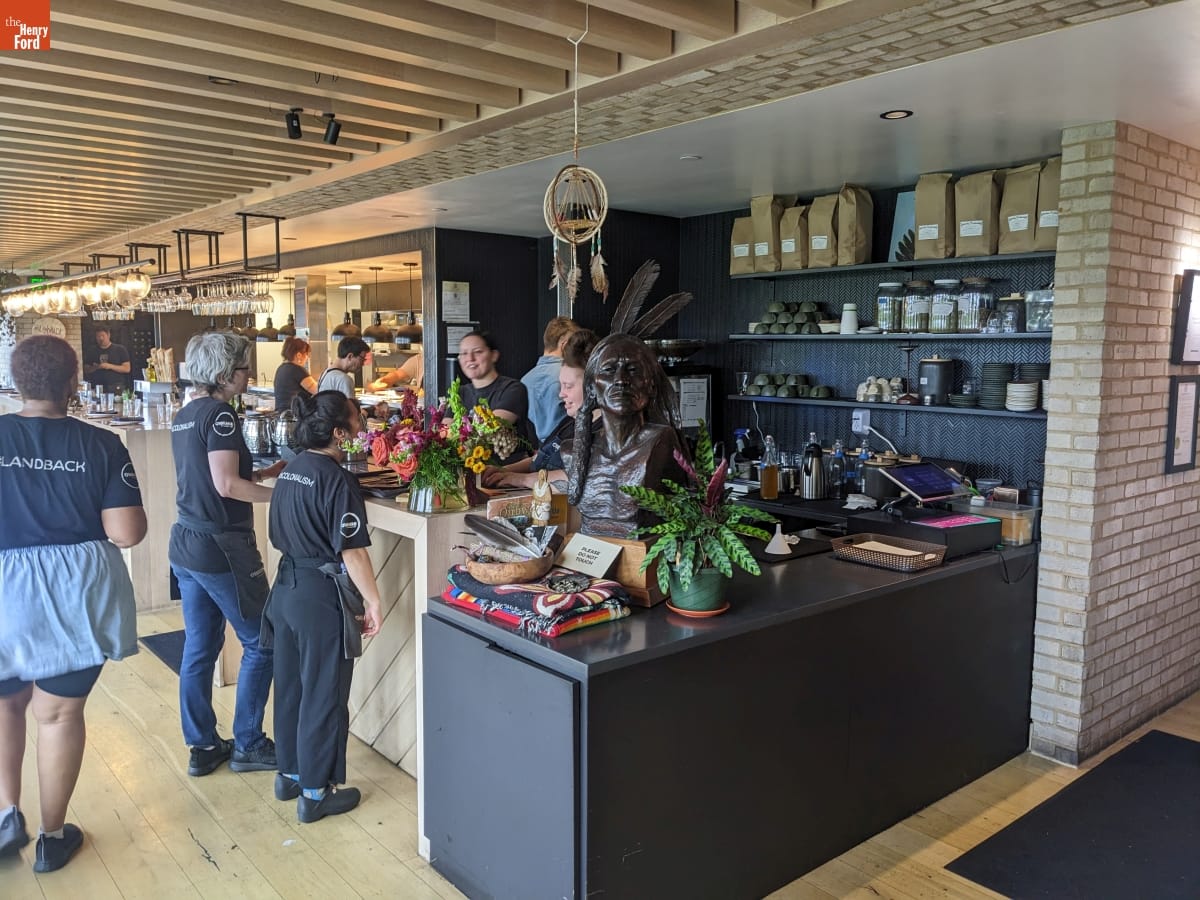
- Interior of Owamni Restaurant, Minneapolis, Minnesota, June 6, 2025 - <body>Sean Sherman, a member of the Oglala Lakota nation, found success as an executive chef, and channeled that into advocacy for indigenous foodways as The Sioux Chef. He earned several James Beard awards for his leadership, for his first cookbook, <i>The Sioux Chef's Indigenous Kitchen</i> (2017) and for the restaurant Owamni, owned by the not-for-profit North American Traditional Indigenous Food Systems (NATIFS). </body>
- June 06, 2025
- Collections - Artifact
Interior of Owamni Restaurant, Minneapolis, Minnesota, June 6, 2025
Sean Sherman, a member of the Oglala Lakota nation, found success as an executive chef, and channeled that into advocacy for indigenous foodways as The Sioux Chef. He earned several James Beard awards for his leadership, for his first cookbook, The Sioux Chef's Indigenous Kitchen (2017) and for the restaurant Owamni, owned by the not-for-profit North American Traditional Indigenous Food Systems (NATIFS).