
Search
- Delco-Light Co. Exide Farm Lighting Battery Jar, circa 1935 -
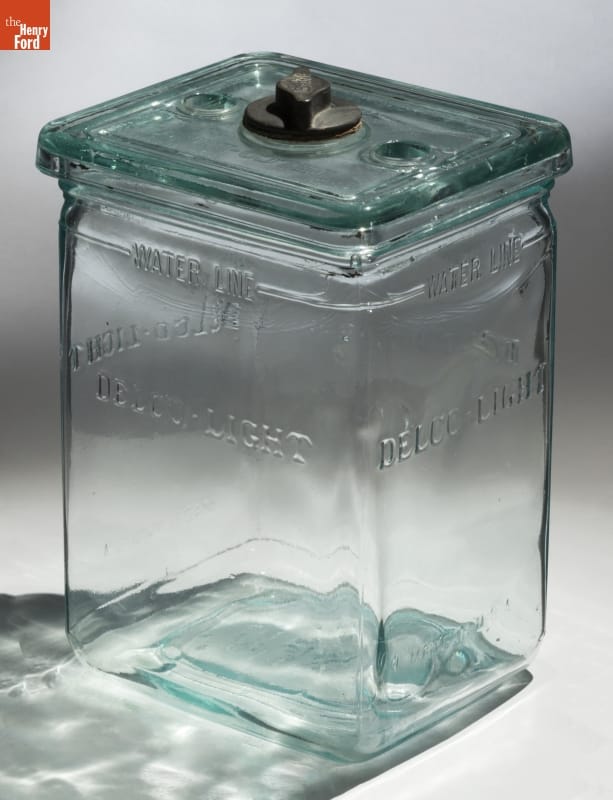
- circa 1935
- Collections - Artifact
Delco-Light Co. Exide Farm Lighting Battery Jar, circa 1935
- Delco-Light Co. Exide Farm Lighting Battery Jar, circa 1935 -
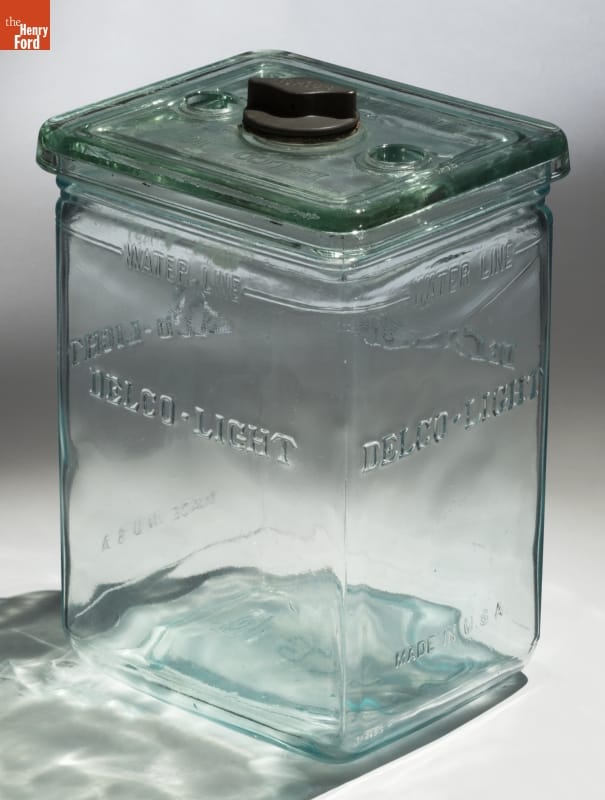
- circa 1935
- Collections - Artifact
Delco-Light Co. Exide Farm Lighting Battery Jar, circa 1935
- Delco-Light Co. Exide Farm Lighting Battery Jar, circa 1935 -
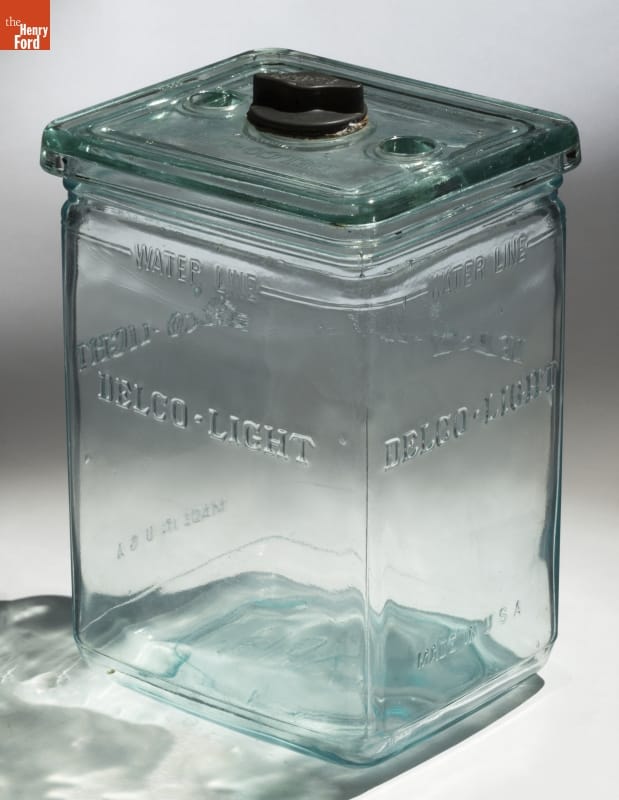
- circa 1935
- Collections - Artifact
Delco-Light Co. Exide Farm Lighting Battery Jar, circa 1935
- Battery Jar - In the late 19th and early 20th centuries, batteries powered telegraph, telephone, and alarm systems, ran small appliances, or sparked gasoline engines in areas where the electric grid did not reach, or electric generators were impractical. Companies made wet cell batteries to meet this growing need. The glass jar held a conductive solution surrounding carbon and zinc elements that produced an electrochemical reaction.
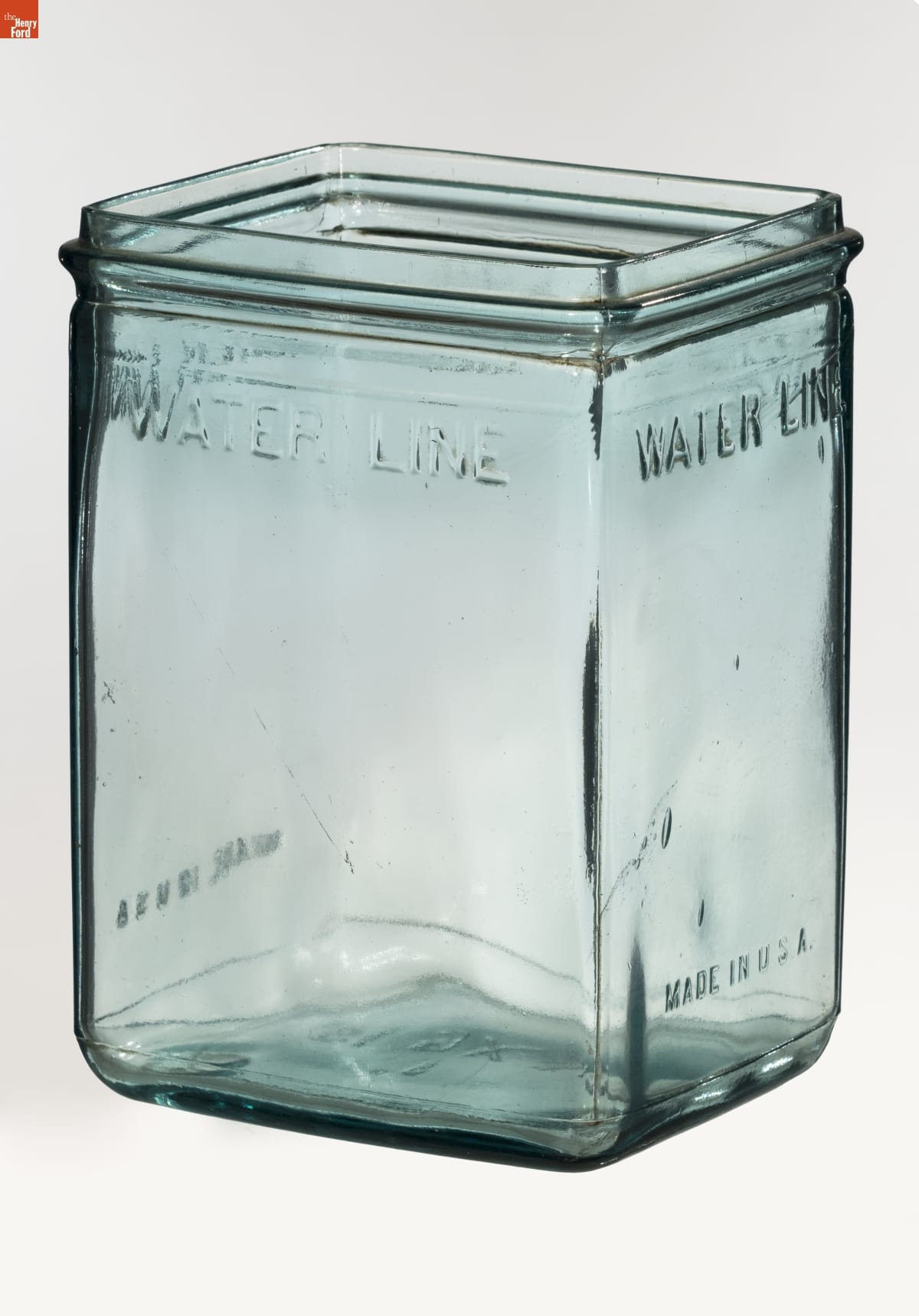
- Collections - Artifact
Battery Jar
In the late 19th and early 20th centuries, batteries powered telegraph, telephone, and alarm systems, ran small appliances, or sparked gasoline engines in areas where the electric grid did not reach, or electric generators were impractical. Companies made wet cell batteries to meet this growing need. The glass jar held a conductive solution surrounding carbon and zinc elements that produced an electrochemical reaction.
- Battery Shell -
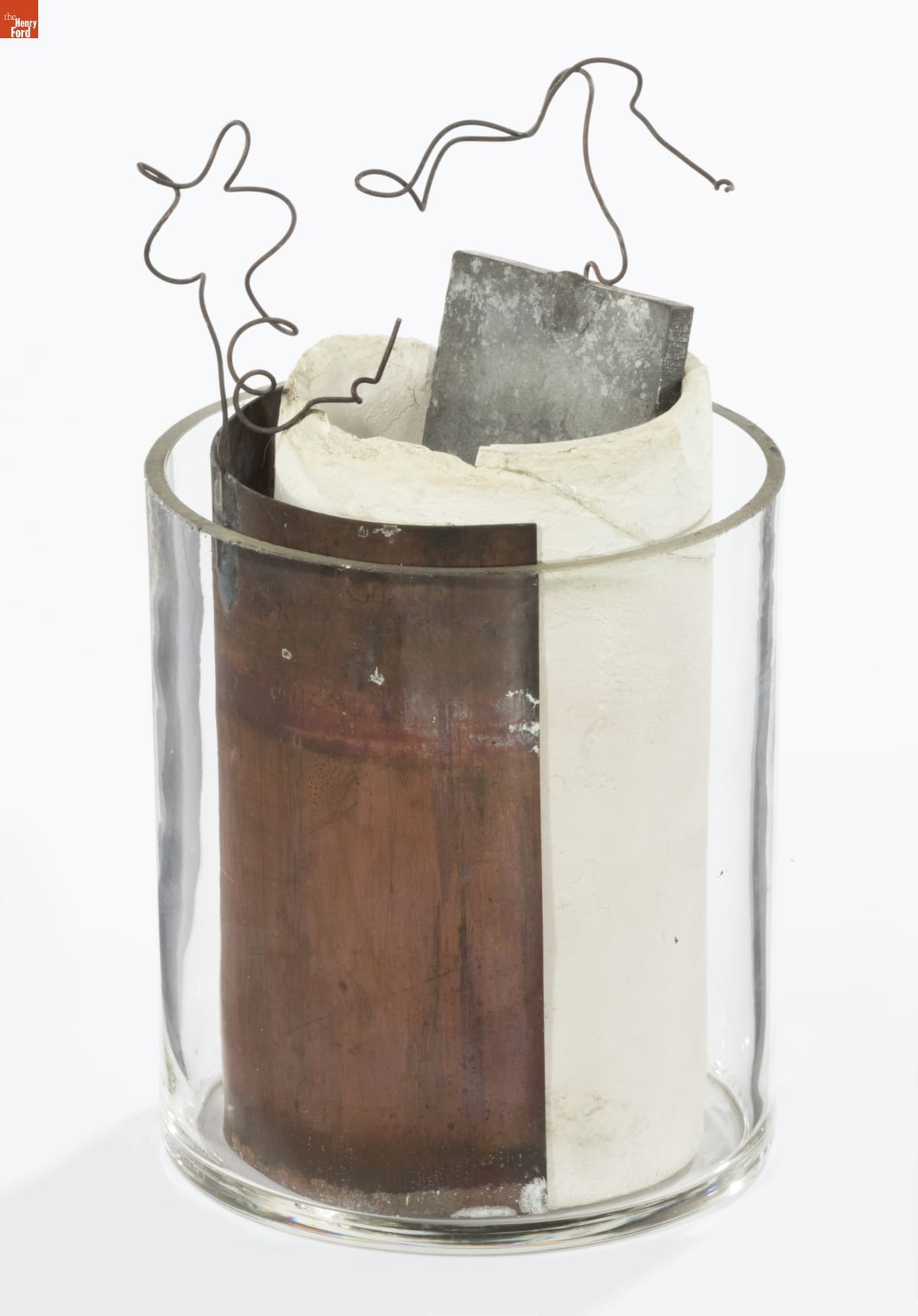
- Collections - Artifact
Battery Shell
- Battery Jar - In the late 19th and early 20th centuries, people used batteries to power telegraph and telephone systems, ring bells and alarms, run small appliances, or spark gasoline engines. A variety of companies produced wet cell batteries to meet this growing need. The glass jar held a conductive solution surrounding the carbon and zinc elements that produced an electrochemical reaction.
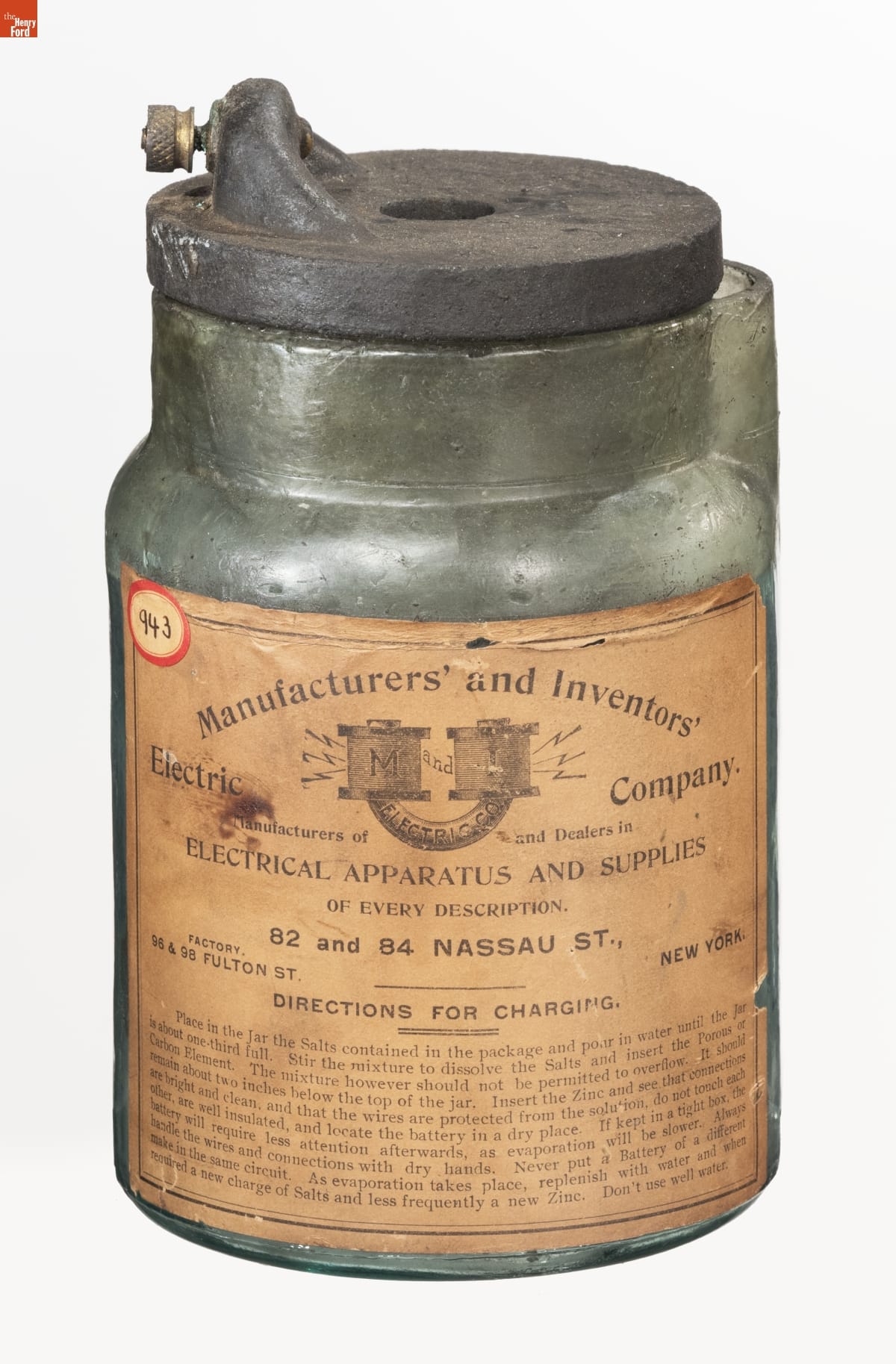
- Collections - Artifact
Battery Jar
In the late 19th and early 20th centuries, people used batteries to power telegraph and telephone systems, ring bells and alarms, run small appliances, or spark gasoline engines. A variety of companies produced wet cell batteries to meet this growing need. The glass jar held a conductive solution surrounding the carbon and zinc elements that produced an electrochemical reaction.
- Battery Jar - In the late 19th and early 20th centuries, batteries powered telegraph, telephone, and alarm systems, ran small appliances, or sparked gasoline engines in areas where the electric grid did not reach, or electric generators were impractical. Companies made wet cell batteries to meet this growing need. The glass jar held a conductive solution surrounding carbon and zinc elements that produced an electrochemical reaction.
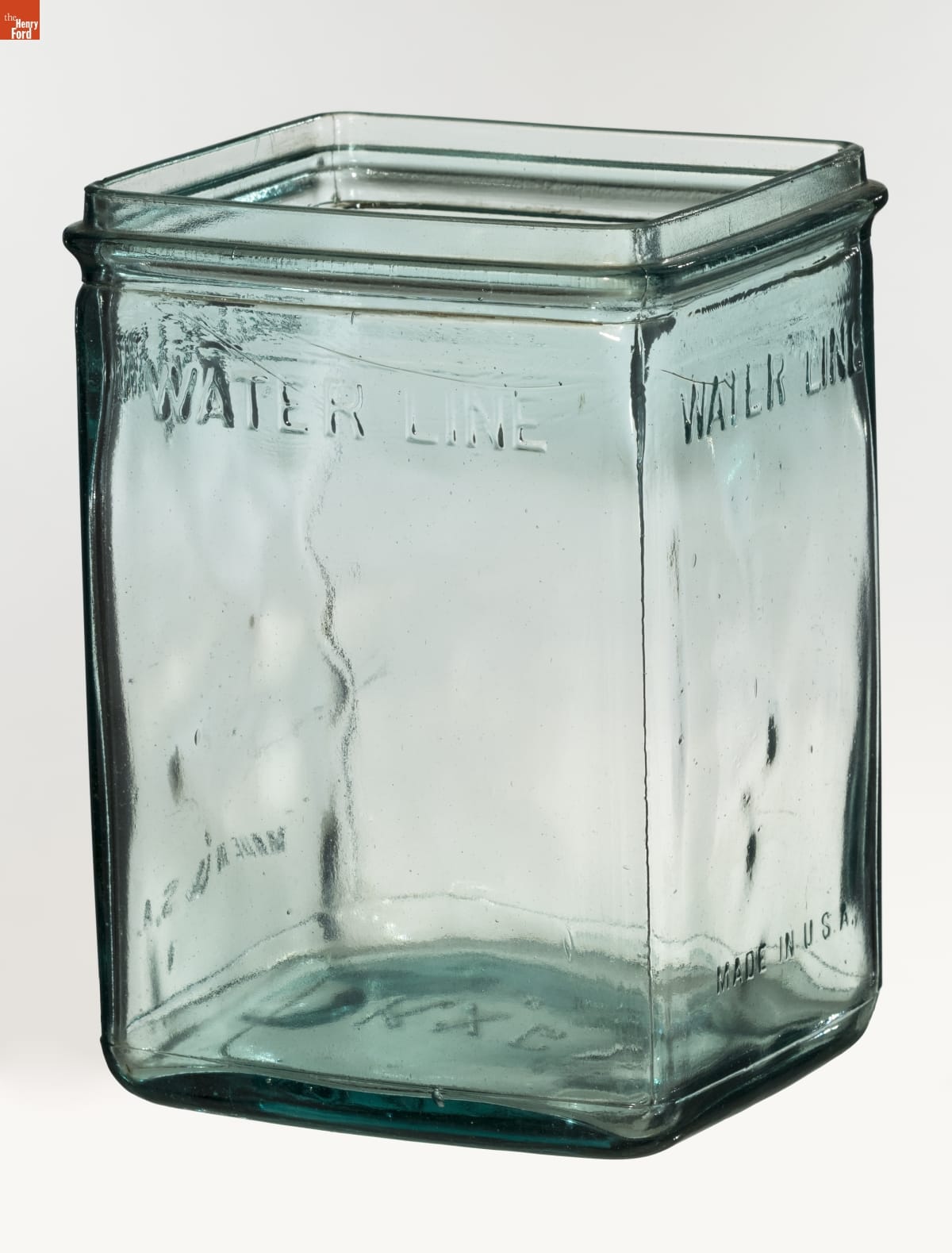
- Collections - Artifact
Battery Jar
In the late 19th and early 20th centuries, batteries powered telegraph, telephone, and alarm systems, ran small appliances, or sparked gasoline engines in areas where the electric grid did not reach, or electric generators were impractical. Companies made wet cell batteries to meet this growing need. The glass jar held a conductive solution surrounding carbon and zinc elements that produced an electrochemical reaction.
- Battery Shell -
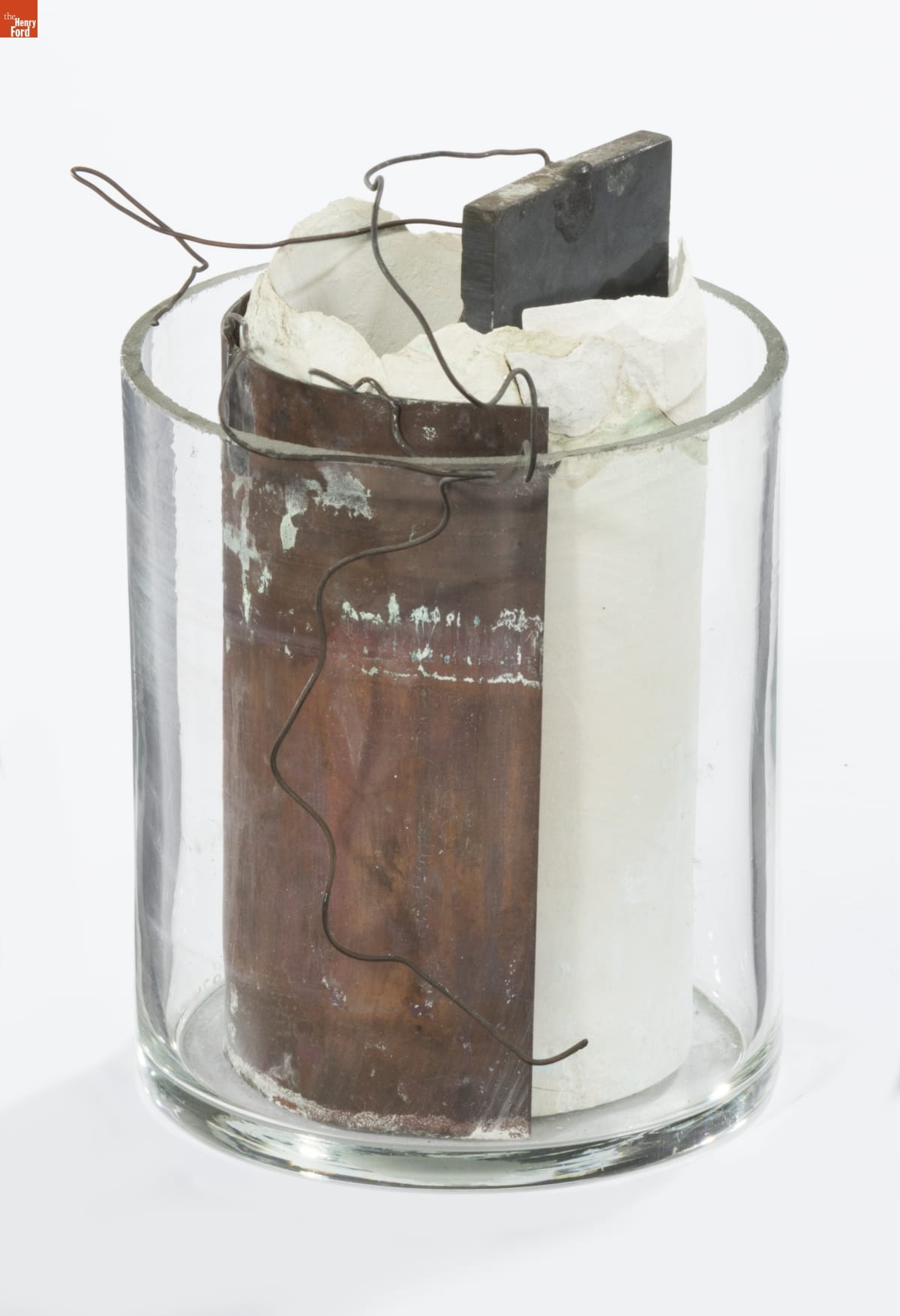
- Collections - Artifact
Battery Shell
- Battery Jar, 1887-1890 - In the late 19th and early 20th centuries, people used batteries to power telegraph and telephones systems, ring bells and alarms, or spark gasoline engines. The Standard Carbon Company of Cleveland, Ohio, produced wet cell batteries in the late 1880s. The glass jar held a conductive solution surrounding the carbon and zinc elements that produced an electrochemical reaction.
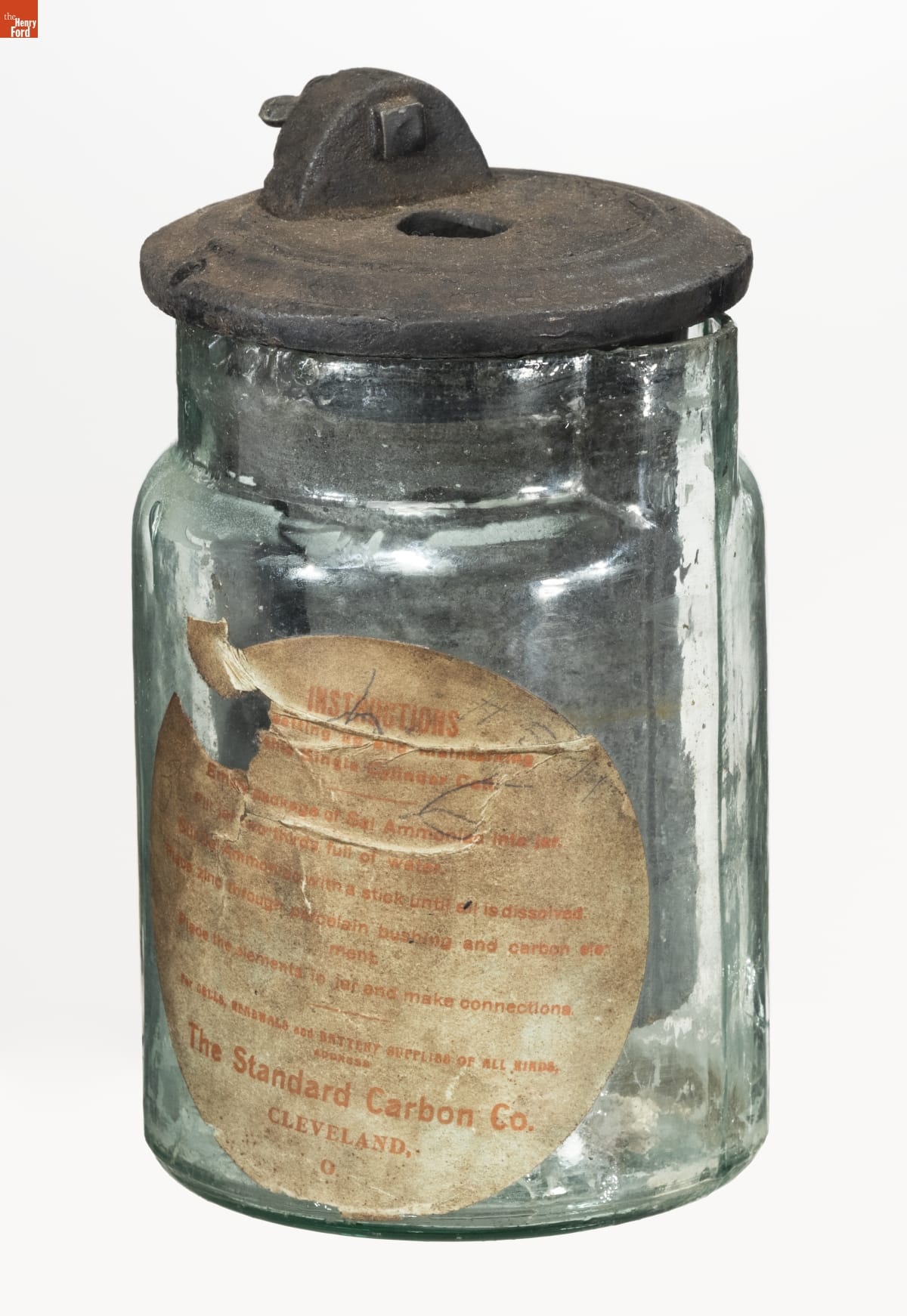
- 1887-1890
- Collections - Artifact
Battery Jar, 1887-1890
In the late 19th and early 20th centuries, people used batteries to power telegraph and telephones systems, ring bells and alarms, or spark gasoline engines. The Standard Carbon Company of Cleveland, Ohio, produced wet cell batteries in the late 1880s. The glass jar held a conductive solution surrounding the carbon and zinc elements that produced an electrochemical reaction.
- Delco-Light Co. Exide Farm Lighting Battery Jar, circa 1935 -
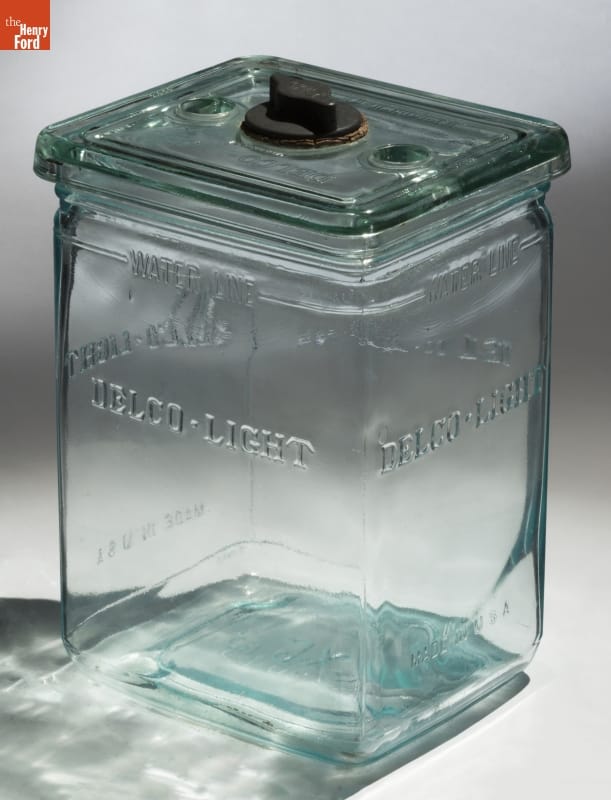
- circa 1935
- Collections - Artifact
Delco-Light Co. Exide Farm Lighting Battery Jar, circa 1935