
Search
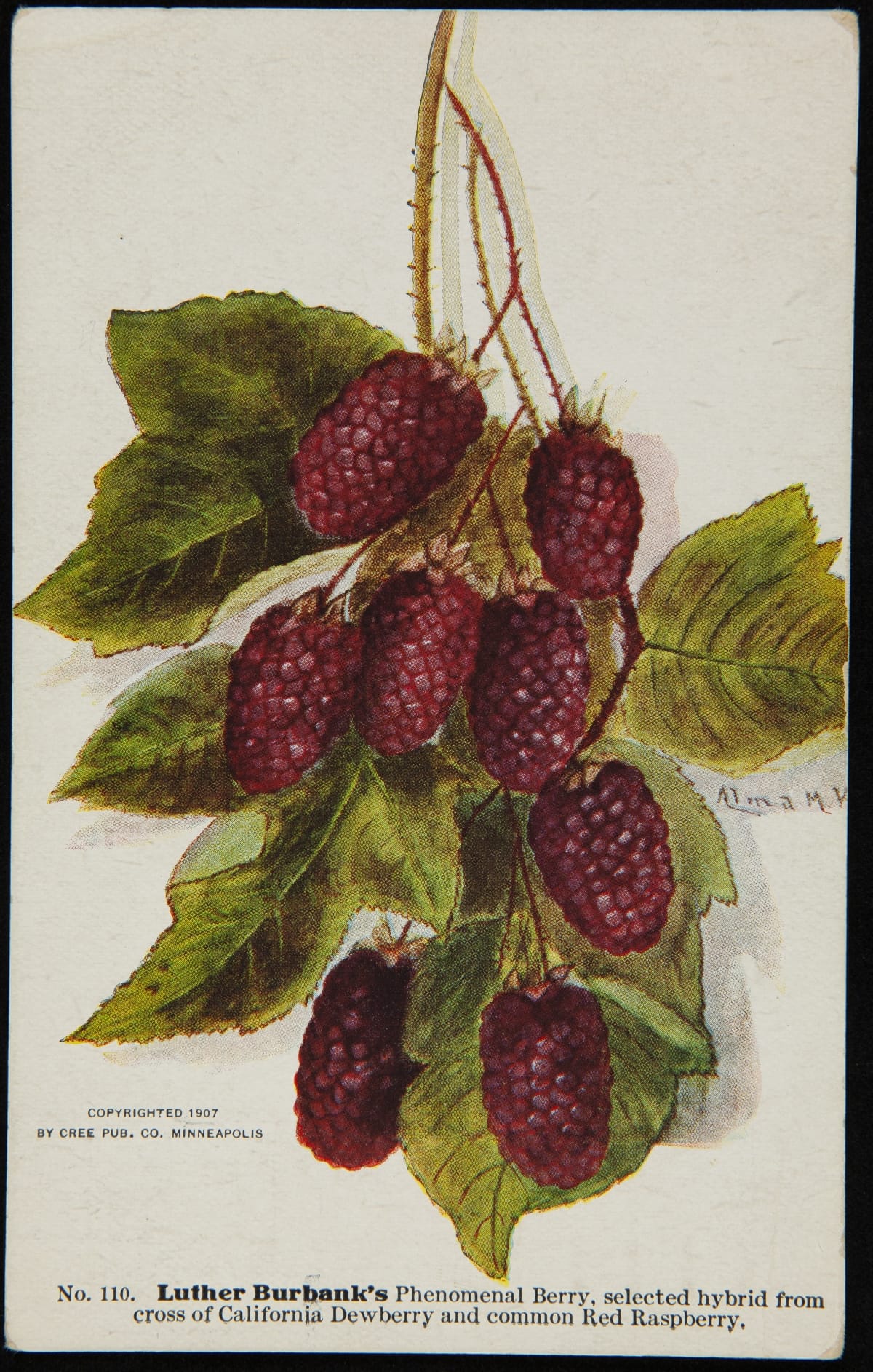
- Luther Burbank's Phenomenal Berry, Selected Hybrid from Cross of California Dewberry and Common Red Raspberry, 1907 - Luther Burbank (1849-1926), an American horticulturalist and author, gained a reputation for selective breeding that yielded more than 800 new fruits, vegetables, flowers, and other plants. By 1906, Burbank's international fame had brought multiple solicitors to his home in Santa Rosa, California, interested in documenting his work. A deal with Minneapolis publisher Dugal Cree resulted in this promotional postcard.
- November 01, 1907
- Collections - Artifact
Luther Burbank's Phenomenal Berry, Selected Hybrid from Cross of California Dewberry and Common Red Raspberry, 1907
Luther Burbank (1849-1926), an American horticulturalist and author, gained a reputation for selective breeding that yielded more than 800 new fruits, vegetables, flowers, and other plants. By 1906, Burbank's international fame had brought multiple solicitors to his home in Santa Rosa, California, interested in documenting his work. A deal with Minneapolis publisher Dugal Cree resulted in this promotional postcard.
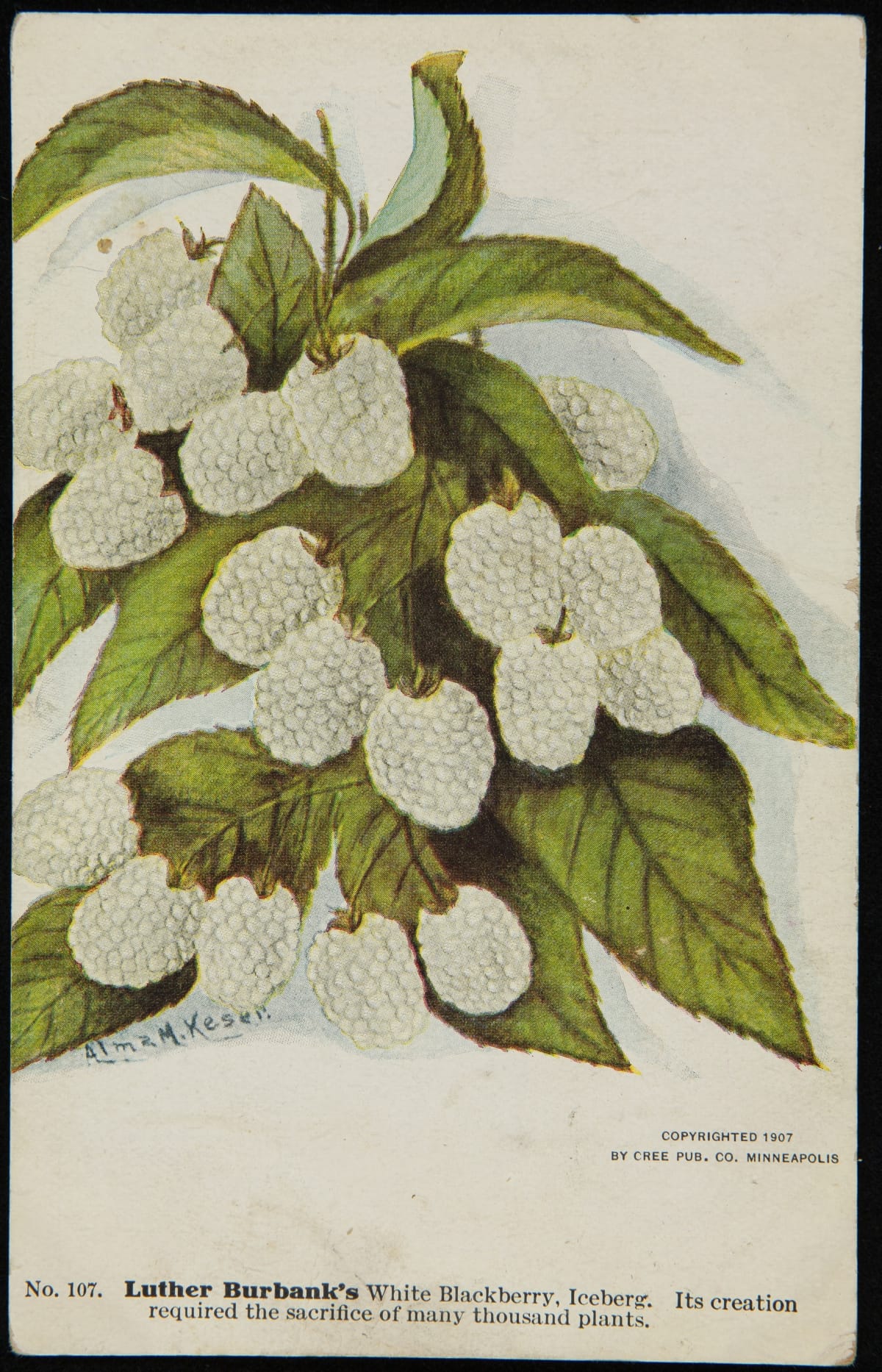
- "Luther Burbank's White Blackberry, Iceberg," 1907 - Luther Burbank (1849-1926), an American horticulturalist and author, gained a reputation for selective breeding that yielded more than 800 new fruits, vegetables, flowers, and other plants. By 1906, Burbank's international fame had brought multiple solicitors to his home in Santa Rosa, California, interested in documenting his work. A deal with Minneapolis publisher Dugal Cree resulted in this promotional postcard.
- 1907
- Collections - Artifact
"Luther Burbank's White Blackberry, Iceberg," 1907
Luther Burbank (1849-1926), an American horticulturalist and author, gained a reputation for selective breeding that yielded more than 800 new fruits, vegetables, flowers, and other plants. By 1906, Burbank's international fame had brought multiple solicitors to his home in Santa Rosa, California, interested in documenting his work. A deal with Minneapolis publisher Dugal Cree resulted in this promotional postcard.
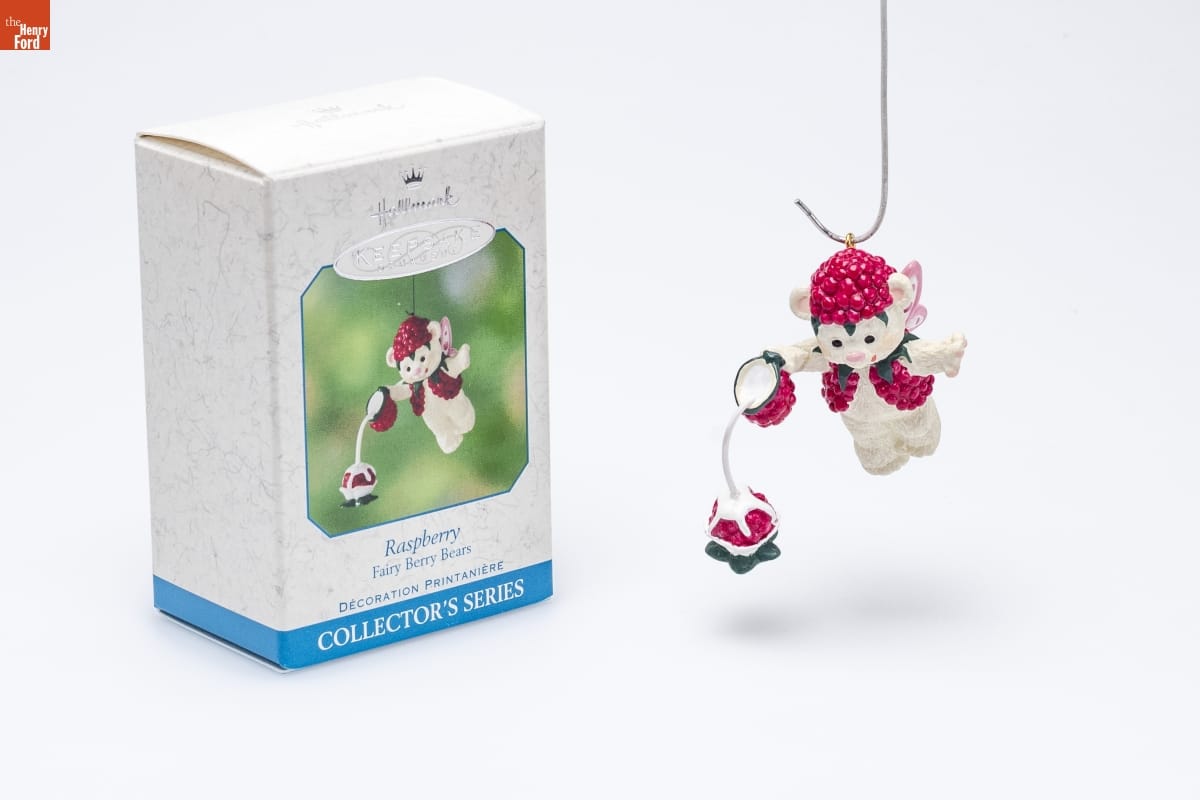
- Hallmark "Fairy Berry Bears Series: Raspberry" Spring Ornament, 2001 - Hallmark introduced a line of Christmas ornaments in 1973. These ornaments appealed to customers' interest in marking memories, commemorating milestones, and expressing one's personality and unique tastes. This success led the company to produce ornaments for other holidays. Hallmark marketed and sold Easter and springtime ornaments in several series dating back to the 1990s.
- 2001
- Collections - Artifact
Hallmark "Fairy Berry Bears Series: Raspberry" Spring Ornament, 2001
Hallmark introduced a line of Christmas ornaments in 1973. These ornaments appealed to customers' interest in marking memories, commemorating milestones, and expressing one's personality and unique tastes. This success led the company to produce ornaments for other holidays. Hallmark marketed and sold Easter and springtime ornaments in several series dating back to the 1990s.
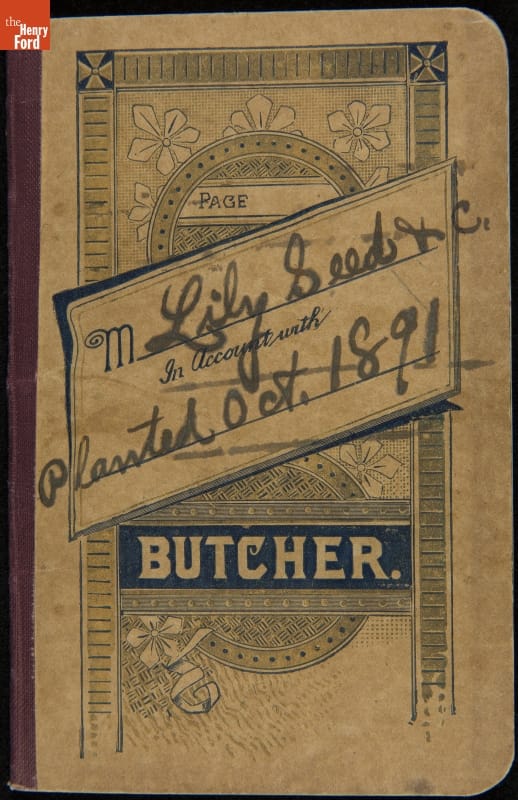
- Luther Burbank Notebook, "Lily Seeds &c., Planted Oct. 1891" - Luther Burbank (1849-1926), an American plant breeder, naturalist, and author, was especially noted for his experiments with plants, fruits, and vegetables. After developing the influential Russet Burbank potato in his native Massachusetts, Burbank established a large experimental garden in Santa Rosa, California. When not working outdoors, Burbank spent time carrying on his nursery business, keeping accounts, researching, and writing.
- 1891-1892
- Collections - Artifact
Luther Burbank Notebook, "Lily Seeds &c., Planted Oct. 1891"
Luther Burbank (1849-1926), an American plant breeder, naturalist, and author, was especially noted for his experiments with plants, fruits, and vegetables. After developing the influential Russet Burbank potato in his native Massachusetts, Burbank established a large experimental garden in Santa Rosa, California. When not working outdoors, Burbank spent time carrying on his nursery business, keeping accounts, researching, and writing.
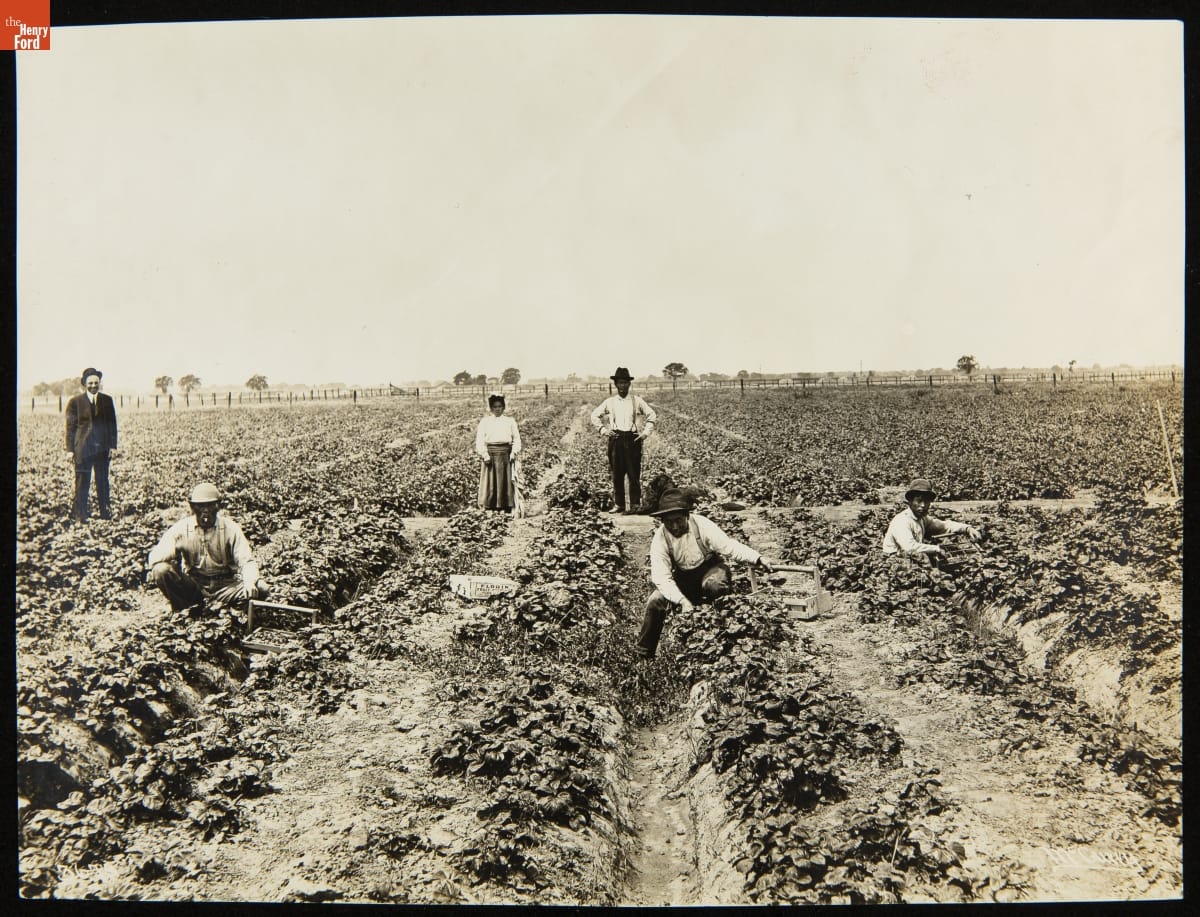
- Japanese Men and Women in the Strawberry Fields, California, 1921-1922 - This seemingly innocuous photograph was taken to support an article in <em>The Dearborn Independent</em> attacking Japanese farmers' supposed control of the fruit-growing industry in California. Comments on the back expose its true purpose. Harry H. Dunn, a freelance writer, penned the article. With the support of the paper's editors, he also wrote some of the defamatory anti-Jewish articles for Henry Ford's weekly.
- 1921-1922
- Collections - Artifact
Japanese Men and Women in the Strawberry Fields, California, 1921-1922
This seemingly innocuous photograph was taken to support an article in The Dearborn Independent attacking Japanese farmers' supposed control of the fruit-growing industry in California. Comments on the back expose its true purpose. Harry H. Dunn, a freelance writer, penned the article. With the support of the paper's editors, he also wrote some of the defamatory anti-Jewish articles for Henry Ford's weekly.
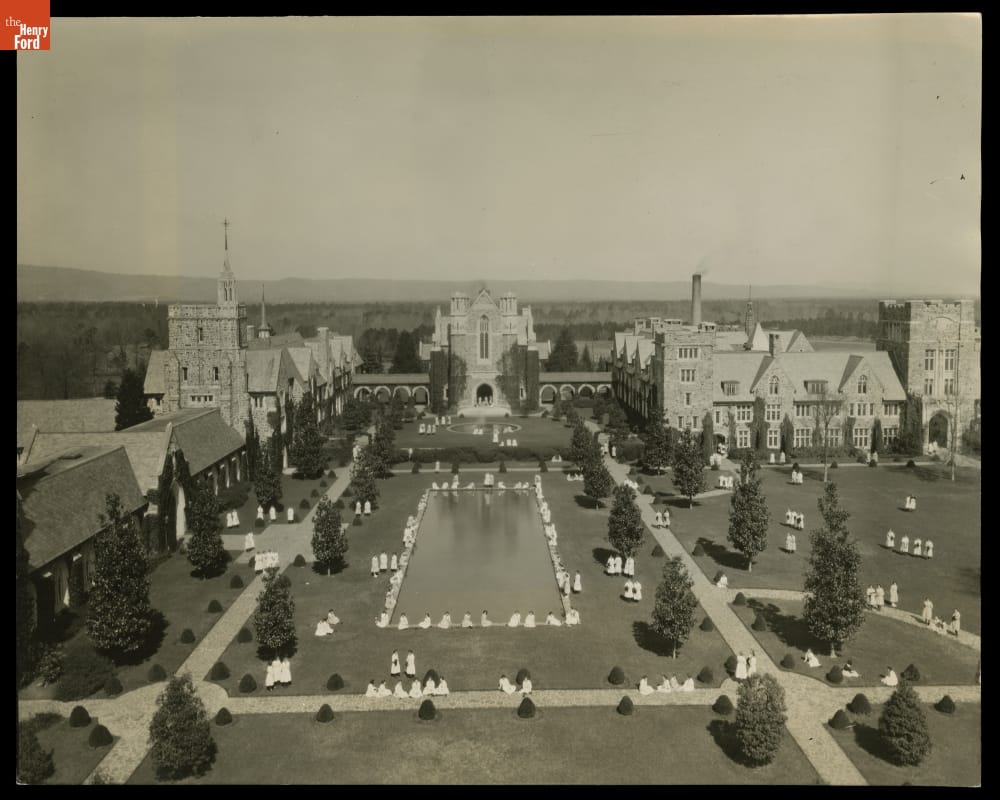
- Aerial View of the Berry Schools Campus, Mount Berry, Georgia, circa 1935 - In 1902, Martha Berry established a school near Rome, Georgia, to educate local underprivileged children. As the school grew, Berry solicited funds from many wealthy Americans. She invited Clara and Henry Ford to the school in 1921. The Fords were impressed. Clara and Henry became lifelong benefactors and funded construction of several campus buildings.
- circa 1935
- Collections - Artifact
Aerial View of the Berry Schools Campus, Mount Berry, Georgia, circa 1935
In 1902, Martha Berry established a school near Rome, Georgia, to educate local underprivileged children. As the school grew, Berry solicited funds from many wealthy Americans. She invited Clara and Henry Ford to the school in 1921. The Fords were impressed. Clara and Henry became lifelong benefactors and funded construction of several campus buildings.
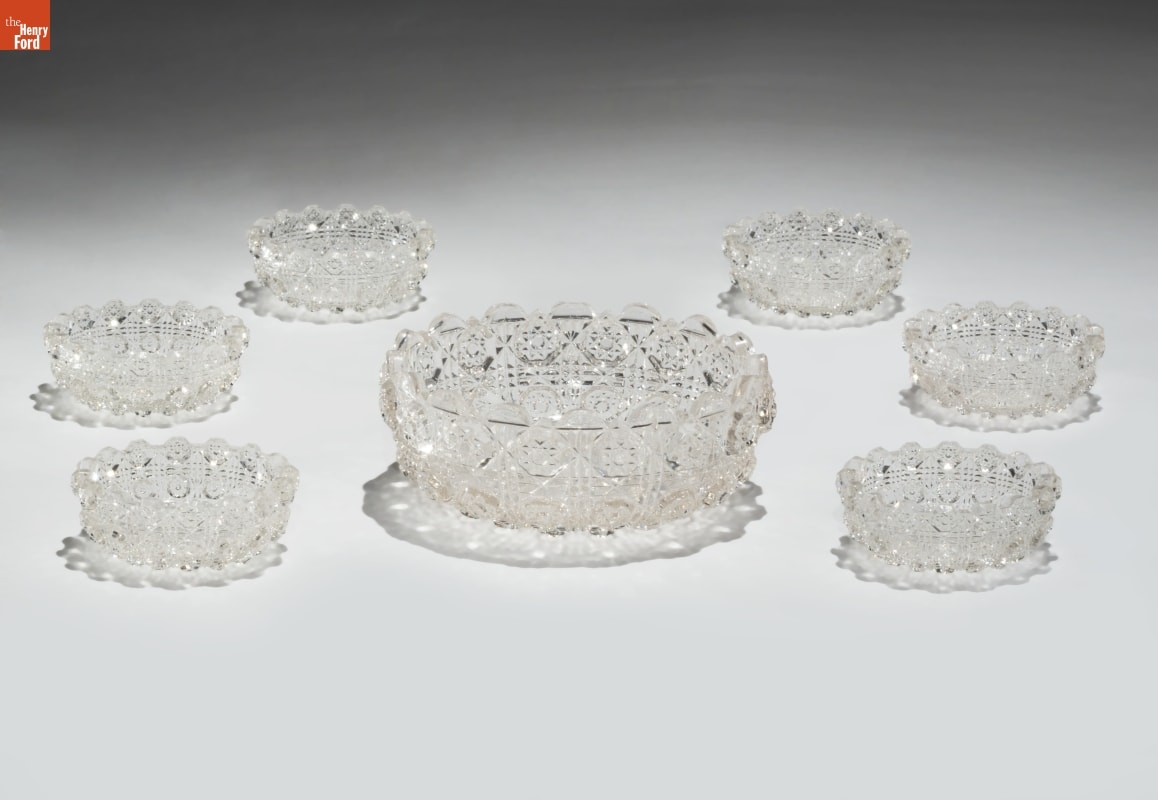
- United States Glass Company "Lacy Daisy" Toy Berry Bowl Set, 1900-1930 -
- 1900-1930
- Collections - Artifact
United States Glass Company "Lacy Daisy" Toy Berry Bowl Set, 1900-1930
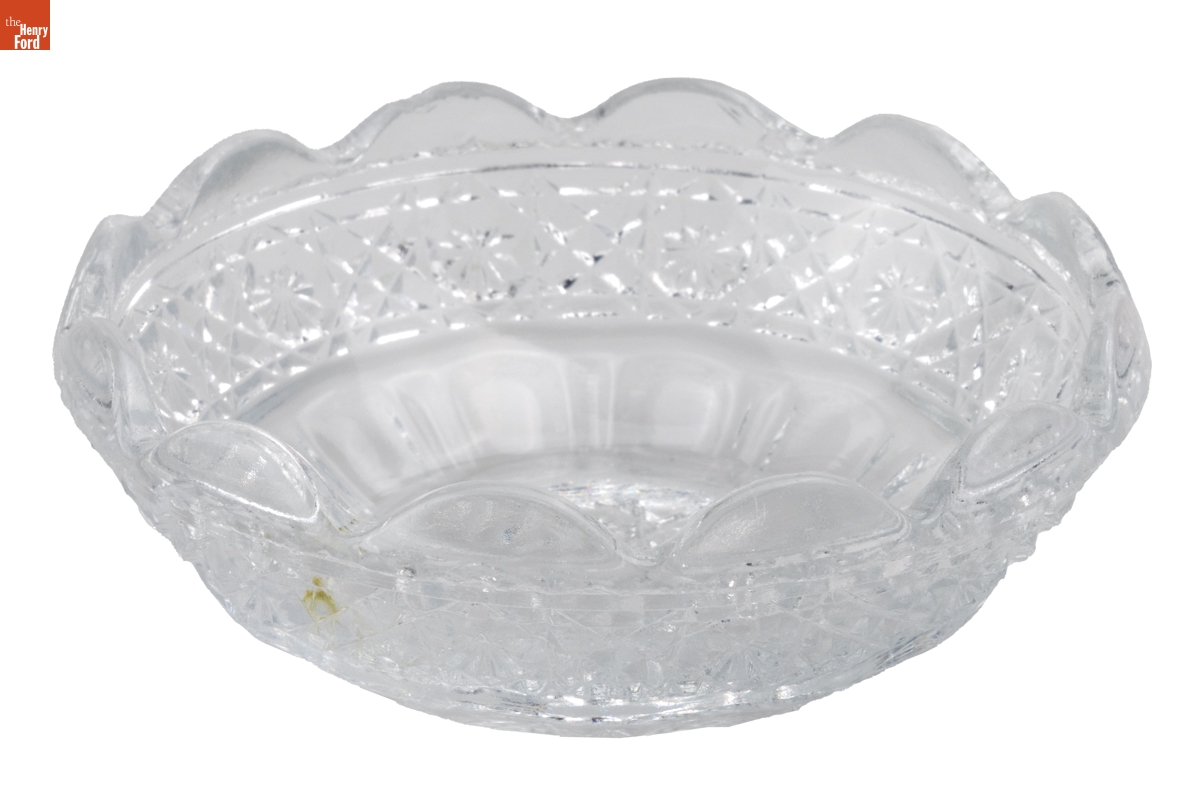
- Berry Bowl Used by the Jackson Family, Selma, Alabama -
- circa 1913
- Collections - Artifact
Berry Bowl Used by the Jackson Family, Selma, Alabama
- "Rolling Stone," December 4, 1986 -
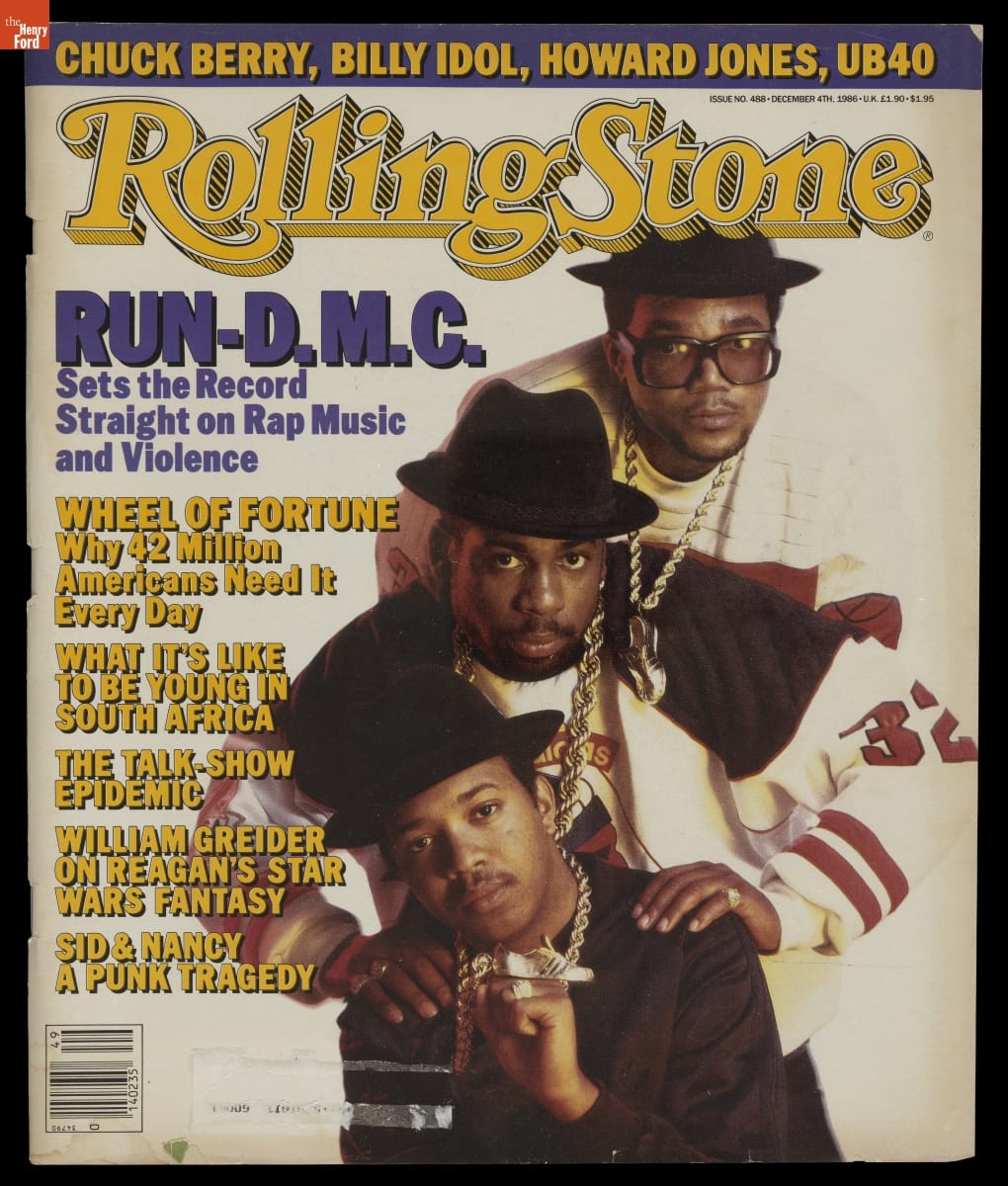
- December 04, 1986
- Collections - Artifact
"Rolling Stone," December 4, 1986
- Picking Strawberries in January, circa 1928 -
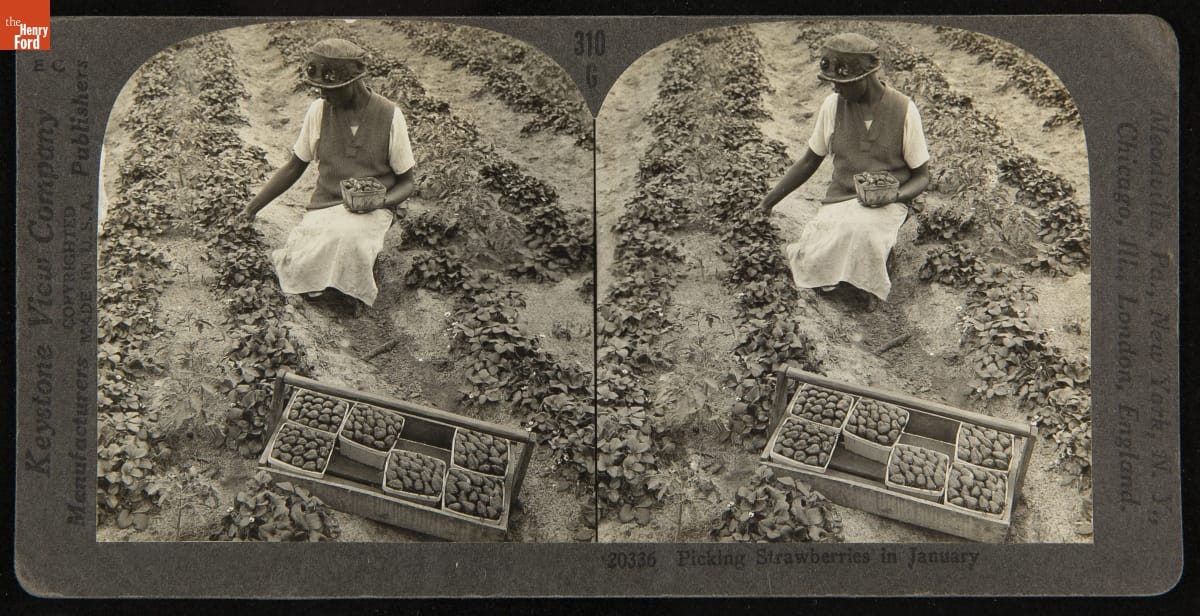
- circa 1928
- Collections - Artifact
Picking Strawberries in January, circa 1928