
Search
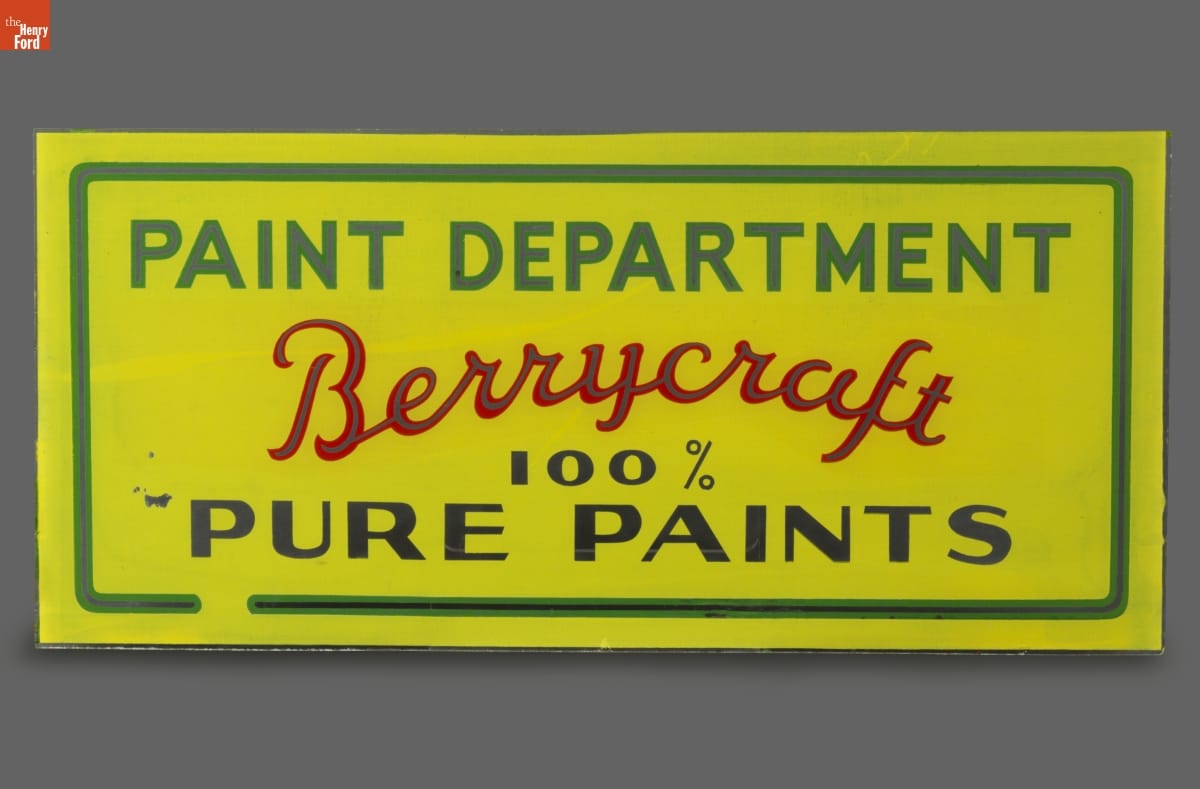
- Berrycraft Paint Sign, 1930-1940 -
- 1930-1940
- Collections - Artifact
Berrycraft Paint Sign, 1930-1940
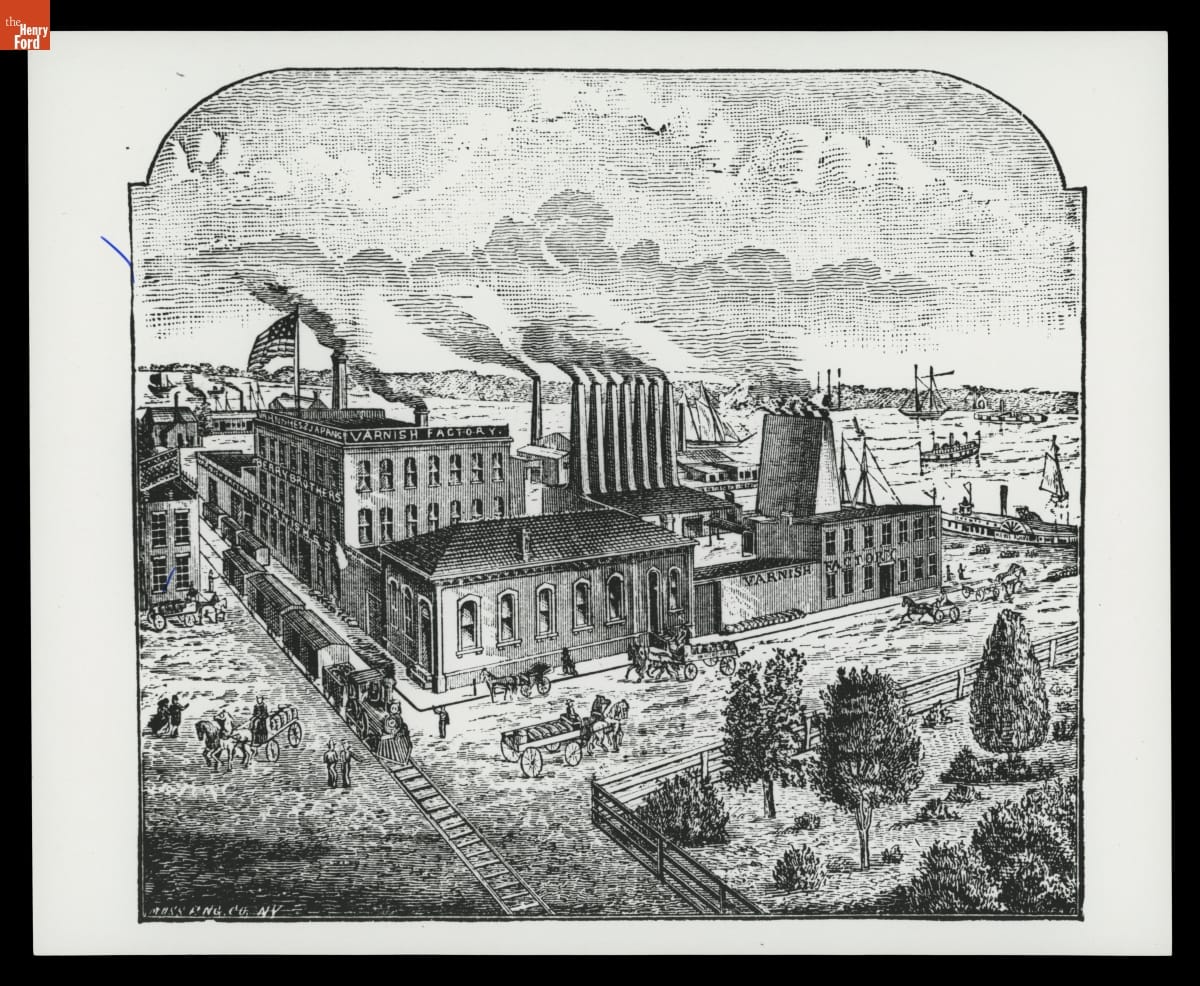
- View of the Berry Brothers Varnish Factory, Detroit, Michigan, circa 1884 - Before it was the Motor City, Detroit had a diversified industrial economy. Its waterway and railroad access made Detroit a prime location for manufacturing. The Berry Brothers Varnish Factory and office was built in 1861 on the corner of Leib and Wight Streets. The company made varnish used by other industries, including railroad cars, carriages, wagons, furniture and farm implements.
- circa 1884
- Collections - Artifact
View of the Berry Brothers Varnish Factory, Detroit, Michigan, circa 1884
Before it was the Motor City, Detroit had a diversified industrial economy. Its waterway and railroad access made Detroit a prime location for manufacturing. The Berry Brothers Varnish Factory and office was built in 1861 on the corner of Leib and Wight Streets. The company made varnish used by other industries, including railroad cars, carriages, wagons, furniture and farm implements.
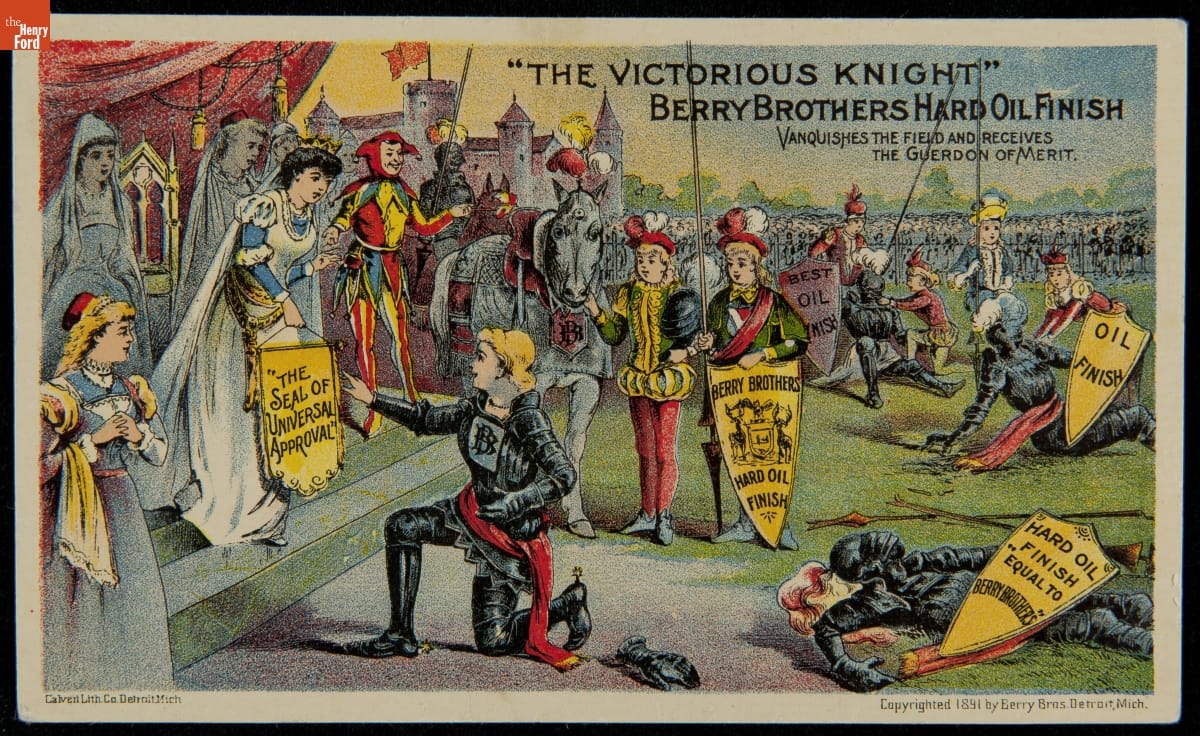
- Trade Card for Berry Brothers Hard Oil Finish, "The Victorious Knight," 1891 - In the last third of the nineteenth century, an unprecedented variety of consumer goods and services flooded the American market. Advertisers, armed with new methods of color printing, bombarded potential customers with trade cards. Americans enjoyed and often saved the vibrant little advertisements found in product packages or distributed by local merchants. Many survive as historical records of commercialism in the United States.
- 1891
- Collections - Artifact
Trade Card for Berry Brothers Hard Oil Finish, "The Victorious Knight," 1891
In the last third of the nineteenth century, an unprecedented variety of consumer goods and services flooded the American market. Advertisers, armed with new methods of color printing, bombarded potential customers with trade cards. Americans enjoyed and often saved the vibrant little advertisements found in product packages or distributed by local merchants. Many survive as historical records of commercialism in the United States.