
Search
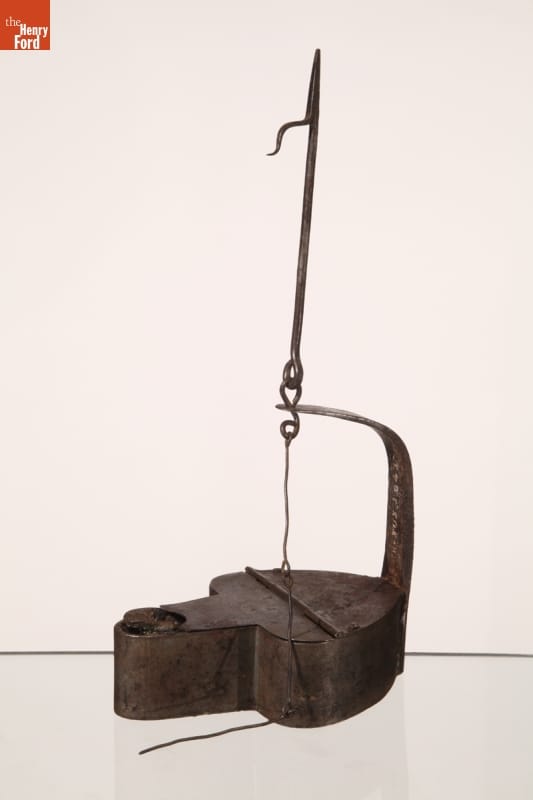
- Betty Lamp, 1841 - Betty lamps were one of the earliest forms of American lighting, burning grease and fat. They could be hung or placed on a table. The flame projected from the spout on the front of the lamp. Lamps usually came with a wick pick should the wick need adjustment. This is a late example; by the 1840s, the preferred fuel was whale oil.
- 1841
- Collections - Artifact
Betty Lamp, 1841
Betty lamps were one of the earliest forms of American lighting, burning grease and fat. They could be hung or placed on a table. The flame projected from the spout on the front of the lamp. Lamps usually came with a wick pick should the wick need adjustment. This is a late example; by the 1840s, the preferred fuel was whale oil.
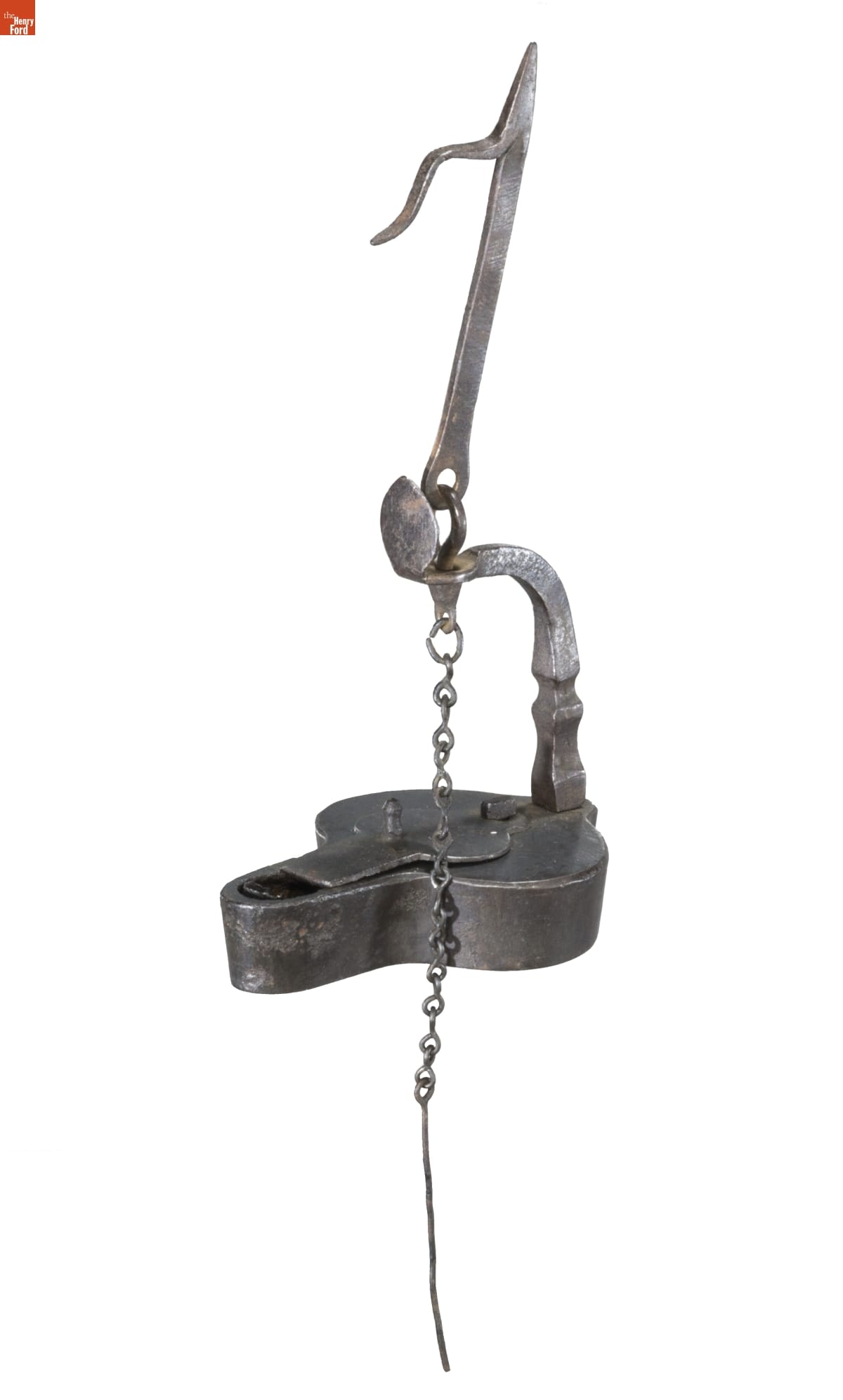
- Betty Lamp, circa 1800 -
- circa 1800
- Collections - Artifact
Betty Lamp, circa 1800
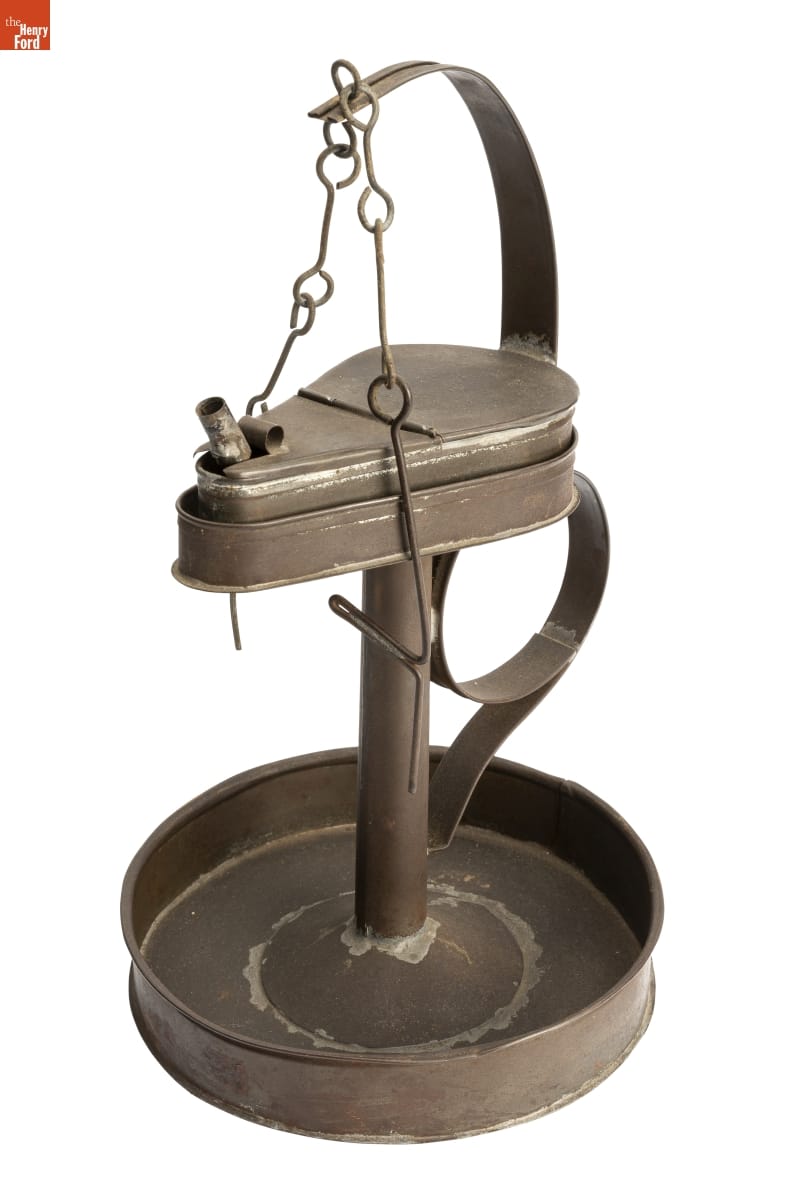
- Betty Lamp with Stand - Tin-plated iron, commonly called "tin," was the dominant material for utilitarian items in 19th-century America. Local tinsmiths produced an almost endless range of goods. But as more durable and lower maintenance materials emerged, handmade tinware came to be considered a folk art or heritage craft. This 20th-century example was produced in the Greenfield Village tin shop using historical tinsmithing tools and techniques.
- Collections - Artifact
Betty Lamp with Stand
Tin-plated iron, commonly called "tin," was the dominant material for utilitarian items in 19th-century America. Local tinsmiths produced an almost endless range of goods. But as more durable and lower maintenance materials emerged, handmade tinware came to be considered a folk art or heritage craft. This 20th-century example was produced in the Greenfield Village tin shop using historical tinsmithing tools and techniques.
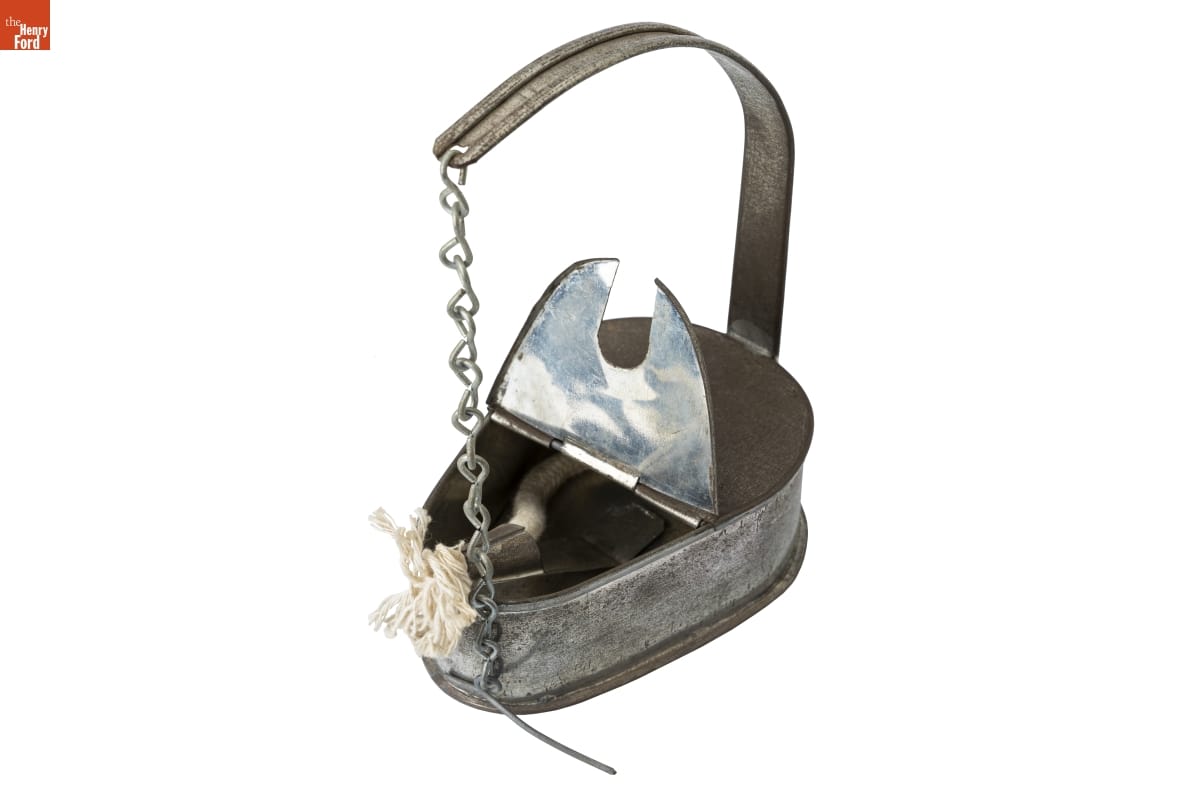
- Betty Lamp - Tin-plated iron, commonly called "tin," was the dominant material for utilitarian items in 19th-century America. Local tinsmiths produced an almost endless range of goods. But as more durable and lower maintenance materials emerged, handmade tinware came to be considered a folk art or heritage craft. This 20th-century example was produced in the Greenfield Village tin shop using historical tinsmithing tools and techniques.
- Collections - Artifact
Betty Lamp
Tin-plated iron, commonly called "tin," was the dominant material for utilitarian items in 19th-century America. Local tinsmiths produced an almost endless range of goods. But as more durable and lower maintenance materials emerged, handmade tinware came to be considered a folk art or heritage craft. This 20th-century example was produced in the Greenfield Village tin shop using historical tinsmithing tools and techniques.
- Betty Lamp, 1848 - Betty lamps were one of the earliest forms of American lighting, burning grease and fat. They could be hung or placed on a table. The flame projected from the spout on the front of the lamp. This lamp features the design characteristics of noted lighting maker and metal worker Peter Derr, which included a sheet copper bottom and wrought iron wick support.
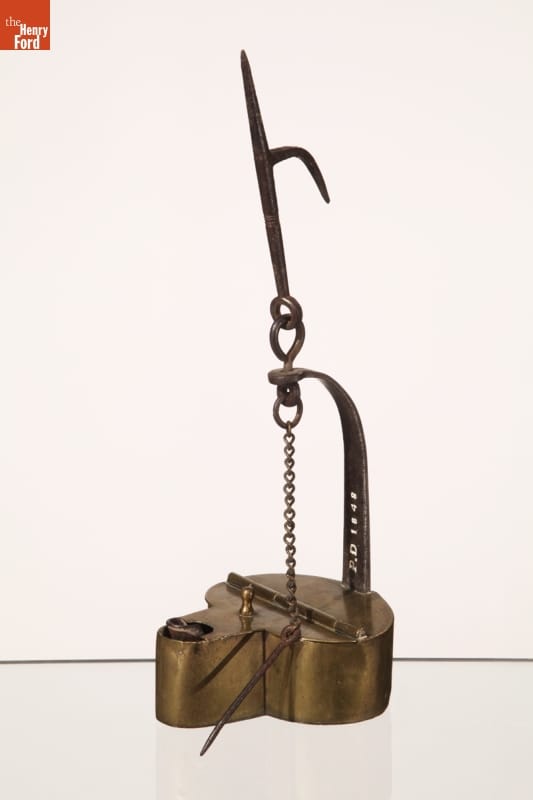
- 1848
- Collections - Artifact
Betty Lamp, 1848
Betty lamps were one of the earliest forms of American lighting, burning grease and fat. They could be hung or placed on a table. The flame projected from the spout on the front of the lamp. This lamp features the design characteristics of noted lighting maker and metal worker Peter Derr, which included a sheet copper bottom and wrought iron wick support.
- Betty Lamp, a 20th Century Reproduction of an 1837 Design -
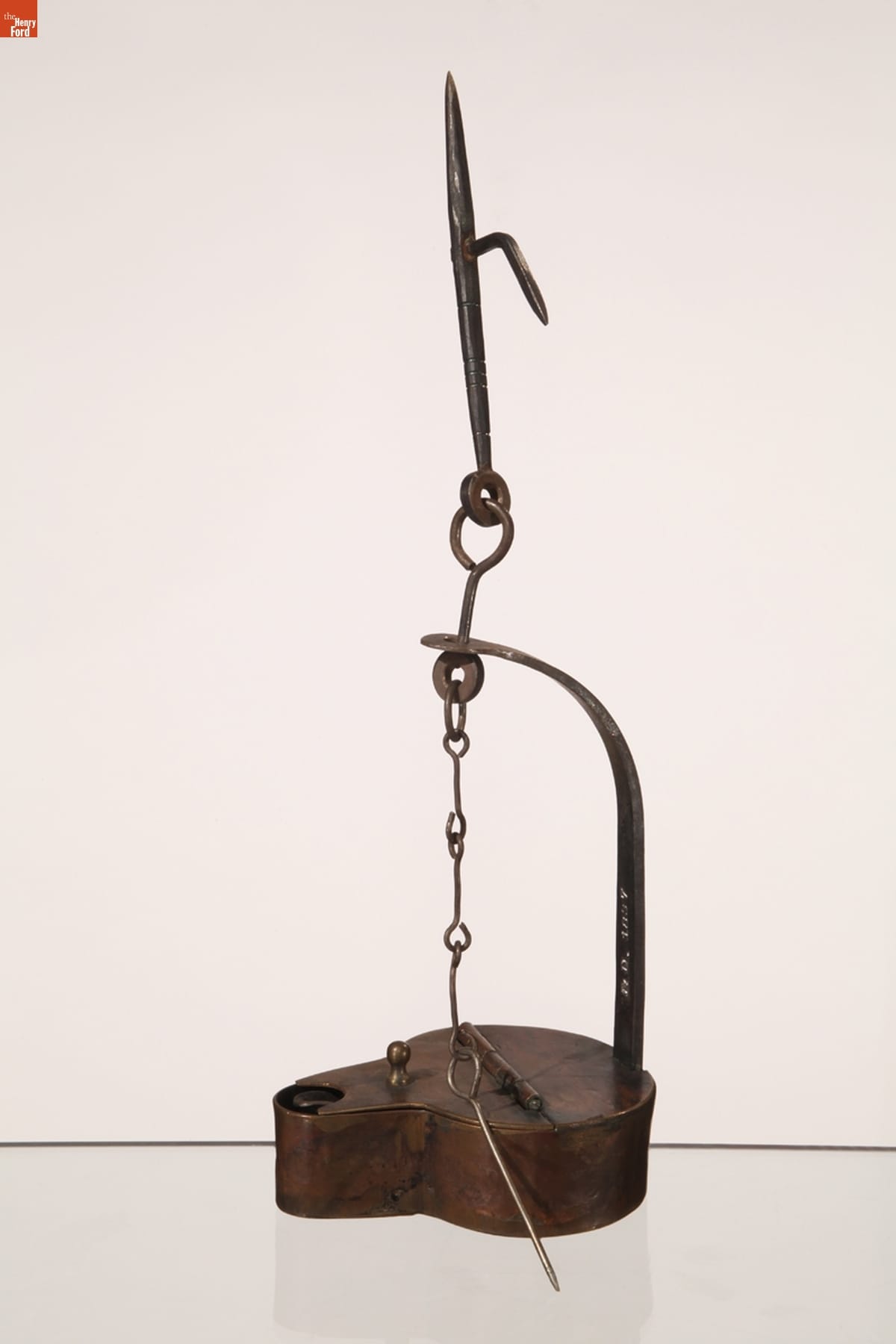
- 1837
- Collections - Artifact
Betty Lamp, a 20th Century Reproduction of an 1837 Design