
Search
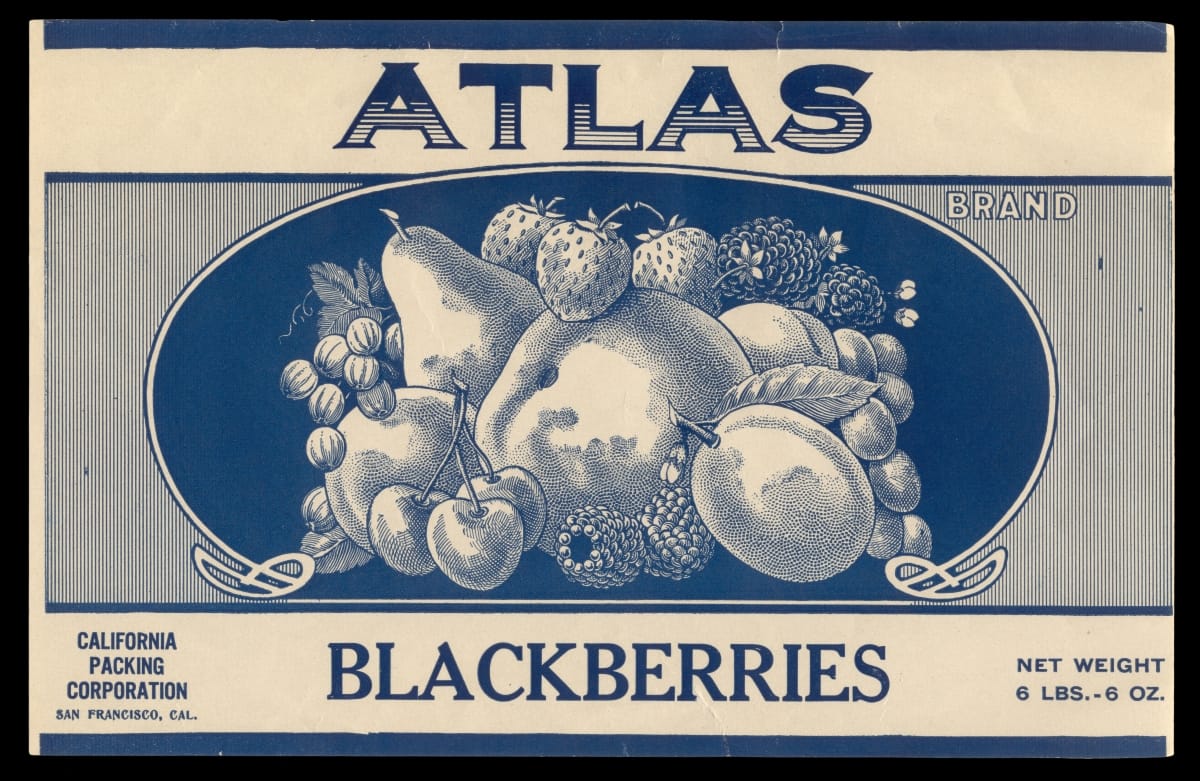
- Crate Label, "Atlas Brand Blackberries," 1920-1930 - In 1869, the transcontinental railroad opened eastern markets to the West Coast produce industry for the first time. As produce companies shipped crates of fruits and vegetables across the country, they needed a way to distinguish their goods from their competitors'. Colorful, eye-catching labels, like this one for Atlas Brand Blackberries, were created to attract grocers purchasing goods from wholesale markets.
- 1920-1930
- Collections - Artifact
Crate Label, "Atlas Brand Blackberries," 1920-1930
In 1869, the transcontinental railroad opened eastern markets to the West Coast produce industry for the first time. As produce companies shipped crates of fruits and vegetables across the country, they needed a way to distinguish their goods from their competitors'. Colorful, eye-catching labels, like this one for Atlas Brand Blackberries, were created to attract grocers purchasing goods from wholesale markets.
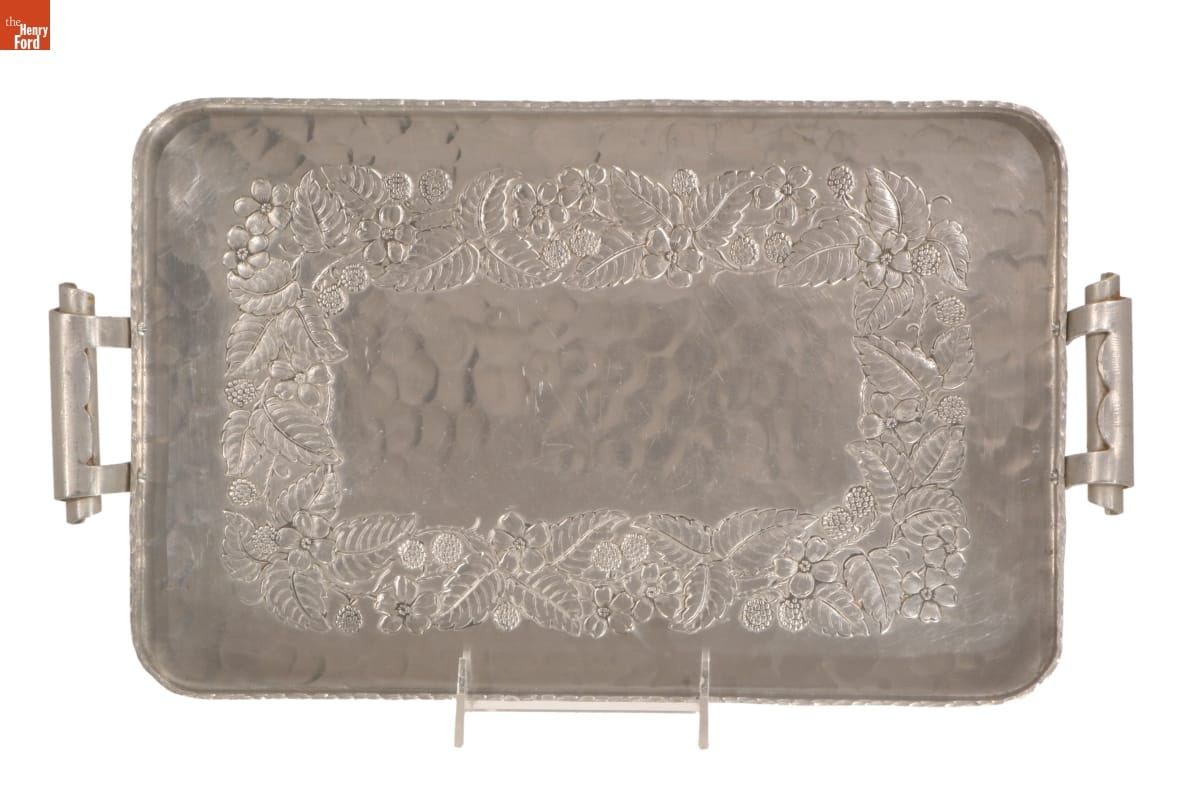
- Everlast "Forged Blackberry" Tray, 1938-1947 - In 1932, Louis Schnitzer and Nathan Gelfman formed Everlast Metal Products Corporation, producing high-quality, hand-forged aluminum giftware. In an era of growing uniformity via factory production, the "made by hand" aspect of these products held an aesthetic appeal for consumers. In 1933, Everlast introduced its first product line, "Forged Giftware" featuring Colonial Revival inspired designs.
- 1938-1947
- Collections - Artifact
Everlast "Forged Blackberry" Tray, 1938-1947
In 1932, Louis Schnitzer and Nathan Gelfman formed Everlast Metal Products Corporation, producing high-quality, hand-forged aluminum giftware. In an era of growing uniformity via factory production, the "made by hand" aspect of these products held an aesthetic appeal for consumers. In 1933, Everlast introduced its first product line, "Forged Giftware" featuring Colonial Revival inspired designs.
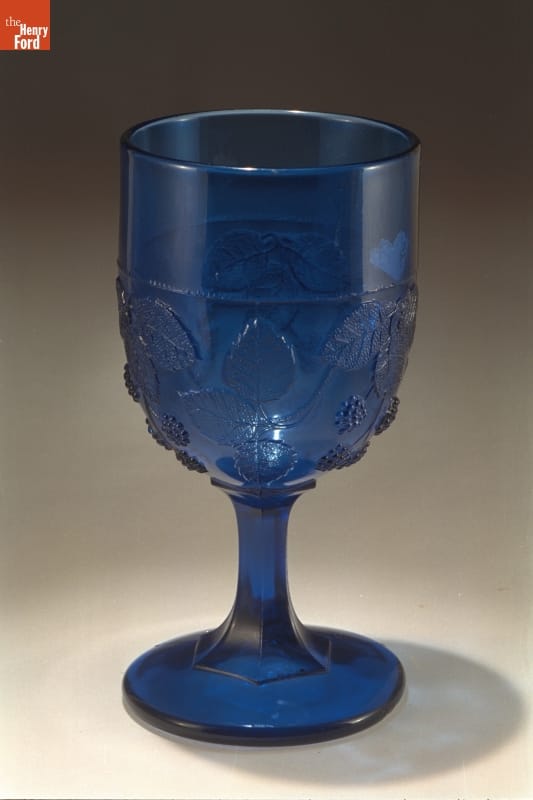
- Goblet, 1870-1881 - Nineteenth-century American glassmakers experimented with new methods to create products for a growing consumer market. In the 1820s, pressing glass into metal molds by machine was perfected, and by the mid-1800s, manufacturers were creating a variety of inexpensive pressed glass housewares. America's middle-class consumers could now decorate their homes with attractive glass bowls, creamers, dishes, plates, vases, and other tableware.
- 1870-1881
- Collections - Artifact
Goblet, 1870-1881
Nineteenth-century American glassmakers experimented with new methods to create products for a growing consumer market. In the 1820s, pressing glass into metal molds by machine was perfected, and by the mid-1800s, manufacturers were creating a variety of inexpensive pressed glass housewares. America's middle-class consumers could now decorate their homes with attractive glass bowls, creamers, dishes, plates, vases, and other tableware.
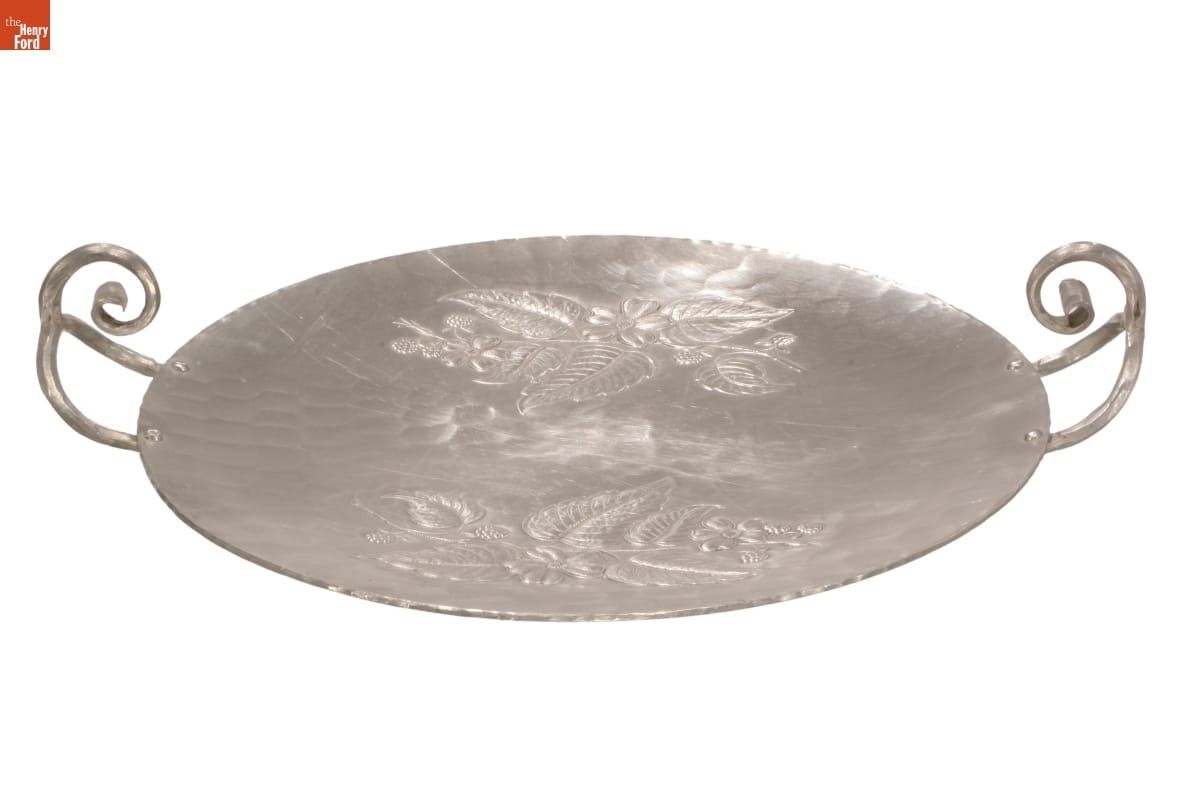
- Everlast "Forged Blackberry" Tray, 1936-1947 - In 1932, Louis Schnitzer and Nathan Gelfman formed Everlast Metal Products Corporation, producing high-quality, hand-forged aluminum giftware. In an era of growing uniformity via factory production, the "made by hand" aspect of these products held an aesthetic appeal for consumers. In 1933, Everlast introduced its first product line, "Forged Giftware" featuring Colonial Revival inspired designs.
- 1936-1947
- Collections - Artifact
Everlast "Forged Blackberry" Tray, 1936-1947
In 1932, Louis Schnitzer and Nathan Gelfman formed Everlast Metal Products Corporation, producing high-quality, hand-forged aluminum giftware. In an era of growing uniformity via factory production, the "made by hand" aspect of these products held an aesthetic appeal for consumers. In 1933, Everlast introduced its first product line, "Forged Giftware" featuring Colonial Revival inspired designs.
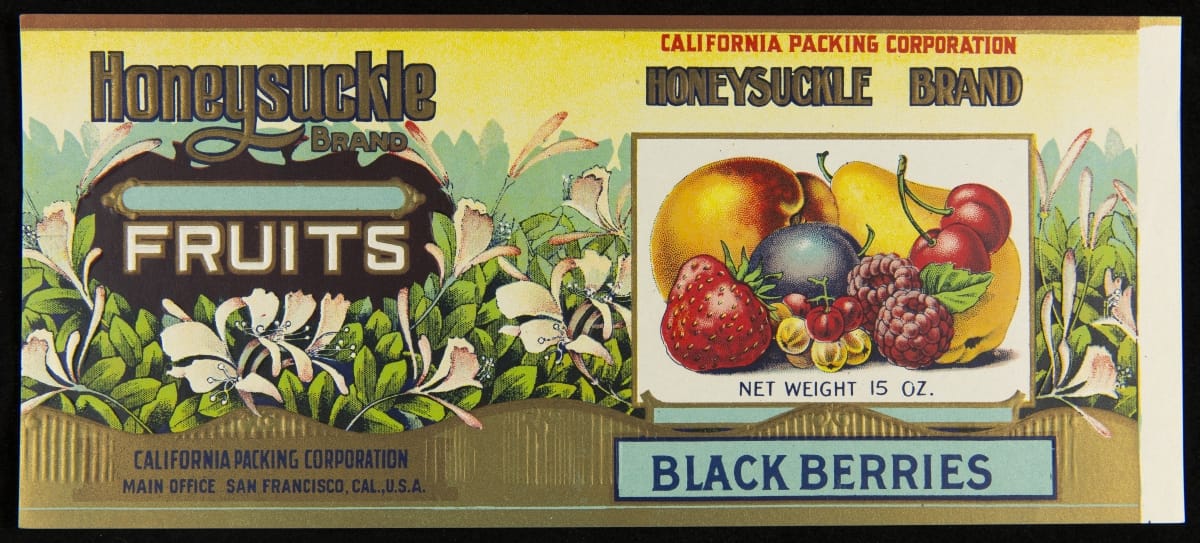
- "Honeysuckle Brand Fruits Black Berries," circa 1916 - Manufacturers of similar products sought ways to make their company's goods stand out on store shelves. Attractive labels, like this colorful design for Honeysuckle Brand blackberries, helped catch the attention of potential customers--hopefully encouraging them to purchase the company's product rather than that of a competitor.
- circa 1916
- Collections - Artifact
"Honeysuckle Brand Fruits Black Berries," circa 1916
Manufacturers of similar products sought ways to make their company's goods stand out on store shelves. Attractive labels, like this colorful design for Honeysuckle Brand blackberries, helped catch the attention of potential customers--hopefully encouraging them to purchase the company's product rather than that of a competitor.
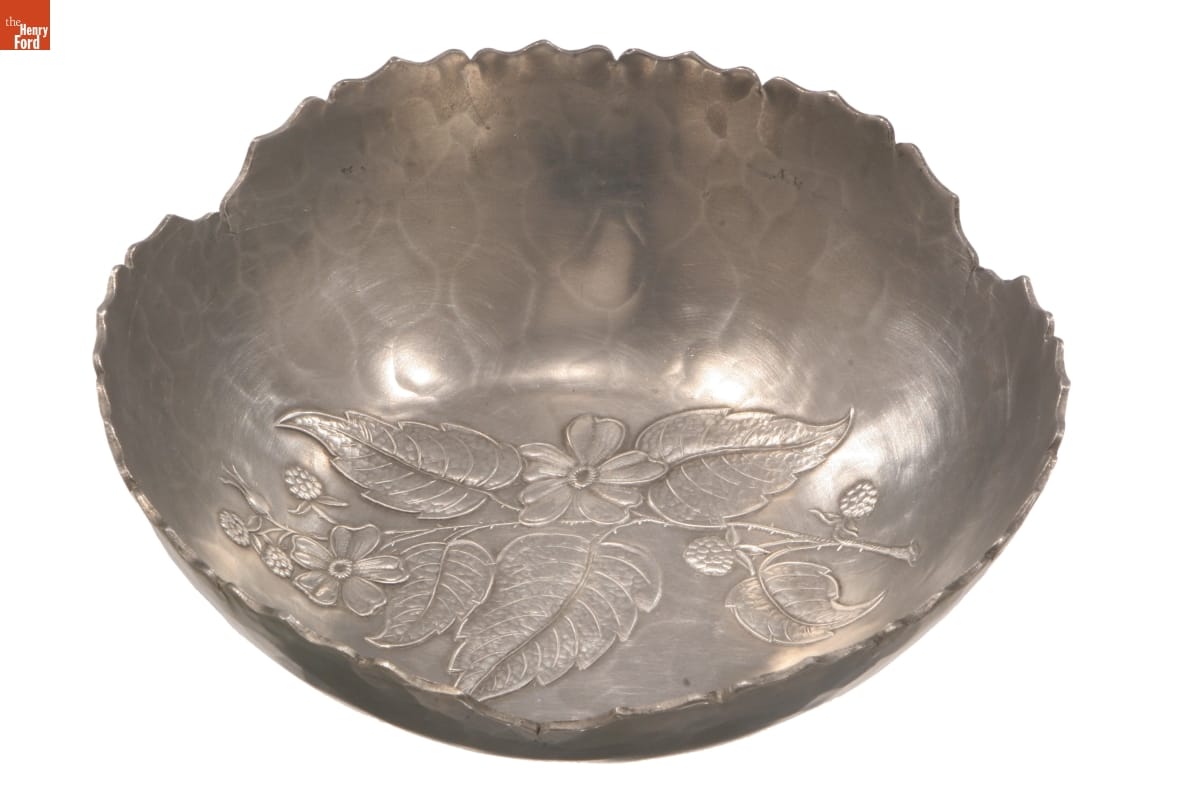
- Everlast "Forged Blackberry" Bowl, 1933-1947 - In 1932, Louis Schnitzer and Nathan Gelfman formed Everlast Metal Products Corporation, producing high-quality, hand-forged aluminum giftware. In an era of growing uniformity via factory production, the "made by hand" aspect of these products held an aesthetic appeal for consumers. In 1933, Everlast introduced its first product line, "Forged Giftware" featuring Colonial Revival inspired designs.
- 1936-1947
- Collections - Artifact
Everlast "Forged Blackberry" Bowl, 1933-1947
In 1932, Louis Schnitzer and Nathan Gelfman formed Everlast Metal Products Corporation, producing high-quality, hand-forged aluminum giftware. In an era of growing uniformity via factory production, the "made by hand" aspect of these products held an aesthetic appeal for consumers. In 1933, Everlast introduced its first product line, "Forged Giftware" featuring Colonial Revival inspired designs.
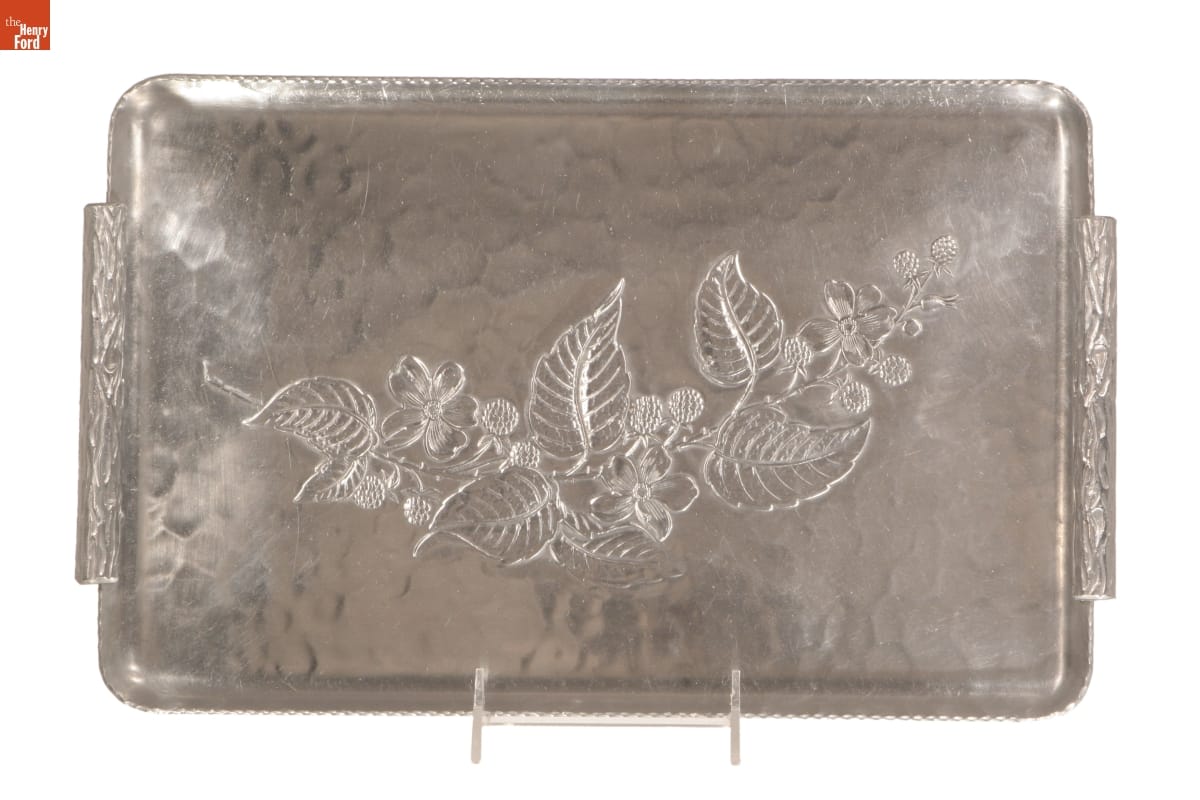
- Everlast "Forged Blackberry" Serving Tray, 1938-1947 - In 1932, Louis Schnitzer and Nathan Gelfman formed Everlast Metal Products Corporation, producing high-quality, hand-forged aluminum giftware. In an era of growing uniformity via factory production, the "made by hand" aspect of these products held an aesthetic appeal for consumers. In 1933, Everlast introduced its first product line, "Forged Giftware" featuring Colonial Revival inspired designs.
- 1938-1947
- Collections - Artifact
Everlast "Forged Blackberry" Serving Tray, 1938-1947
In 1932, Louis Schnitzer and Nathan Gelfman formed Everlast Metal Products Corporation, producing high-quality, hand-forged aluminum giftware. In an era of growing uniformity via factory production, the "made by hand" aspect of these products held an aesthetic appeal for consumers. In 1933, Everlast introduced its first product line, "Forged Giftware" featuring Colonial Revival inspired designs.
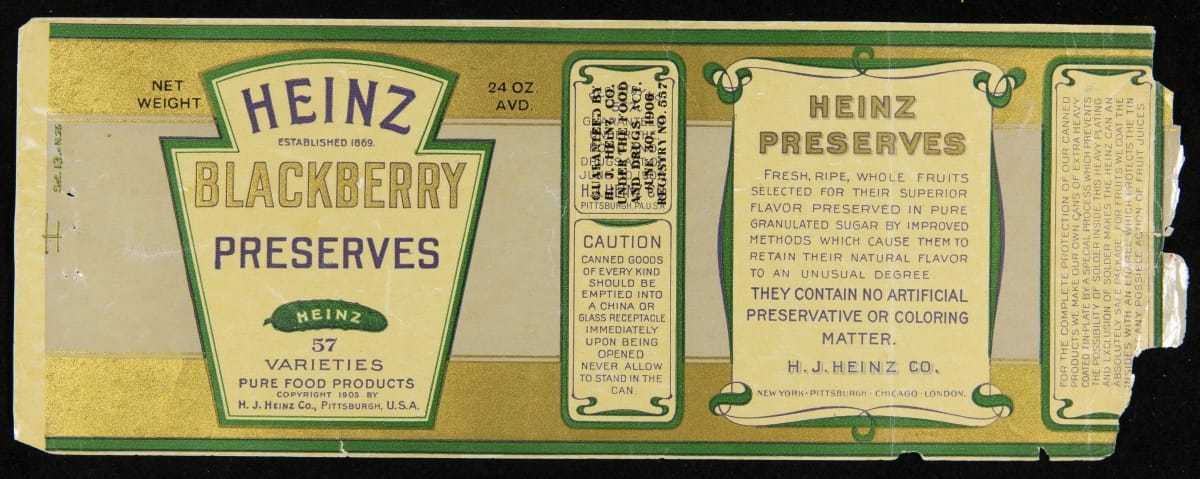
- Can Label, "Heinz Brand Blackberry Preserves," 1906-1910 - Manufacturers of similar products sought ways to make their companies' goods stand out on store shelves. Some companies established a uniform label design for their multi-product offerings -- a strategy which helped customers distinguish one brand over another. H.J. Heinz products were identified by the famous Heinz pickle and signature "keystone" logo. These design features are still found on Heinz products today.
- 1906-1910
- Collections - Artifact
Can Label, "Heinz Brand Blackberry Preserves," 1906-1910
Manufacturers of similar products sought ways to make their companies' goods stand out on store shelves. Some companies established a uniform label design for their multi-product offerings -- a strategy which helped customers distinguish one brand over another. H.J. Heinz products were identified by the famous Heinz pickle and signature "keystone" logo. These design features are still found on Heinz products today.