
Search
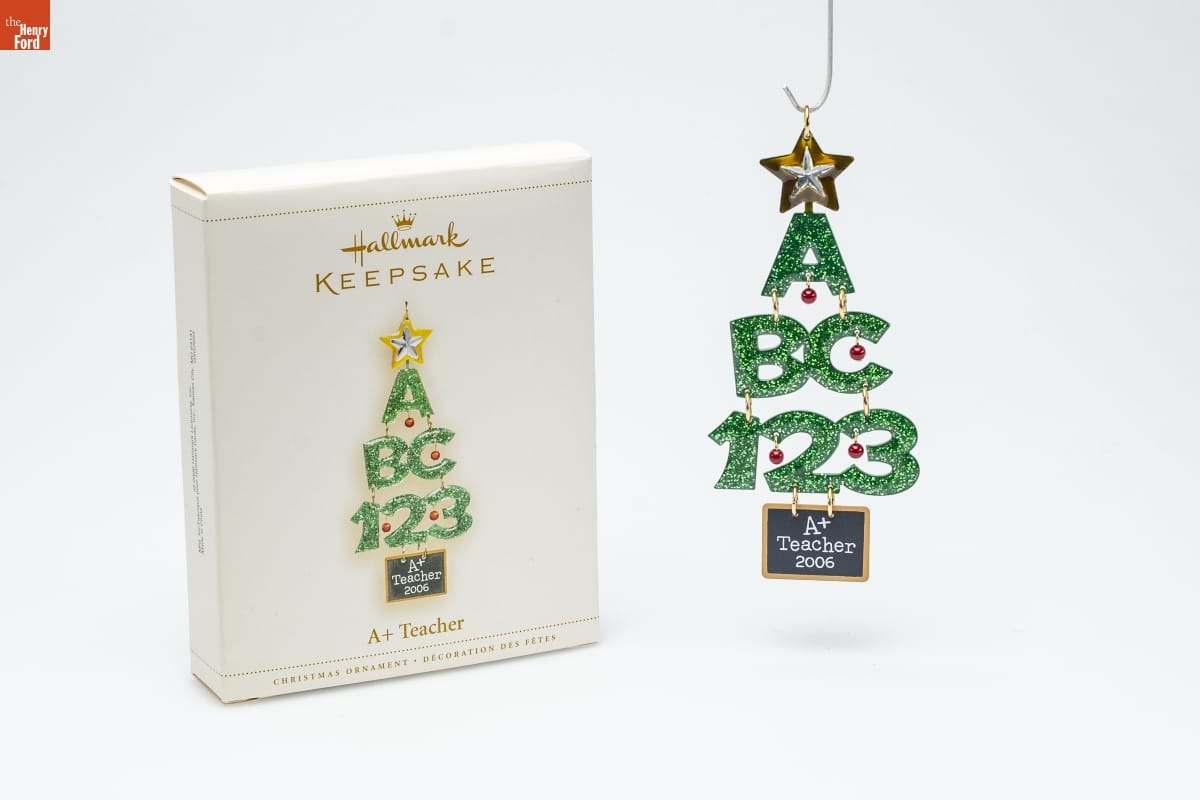
- Hallmark "A+ Teacher" Christmas Ornament, 2006 - Already known for greeting cards, Hallmark introduced a line of Christmas ornaments in 1973. The company's annual release of an increasing array of ornaments revolutionized Christmas decorating, appealing to customers' interest in marking memories and milestones as well as expressing one's personality and unique tastes.
- 2006
- Collections - Artifact
Hallmark "A+ Teacher" Christmas Ornament, 2006
Already known for greeting cards, Hallmark introduced a line of Christmas ornaments in 1973. The company's annual release of an increasing array of ornaments revolutionized Christmas decorating, appealing to customers' interest in marking memories and milestones as well as expressing one's personality and unique tastes.
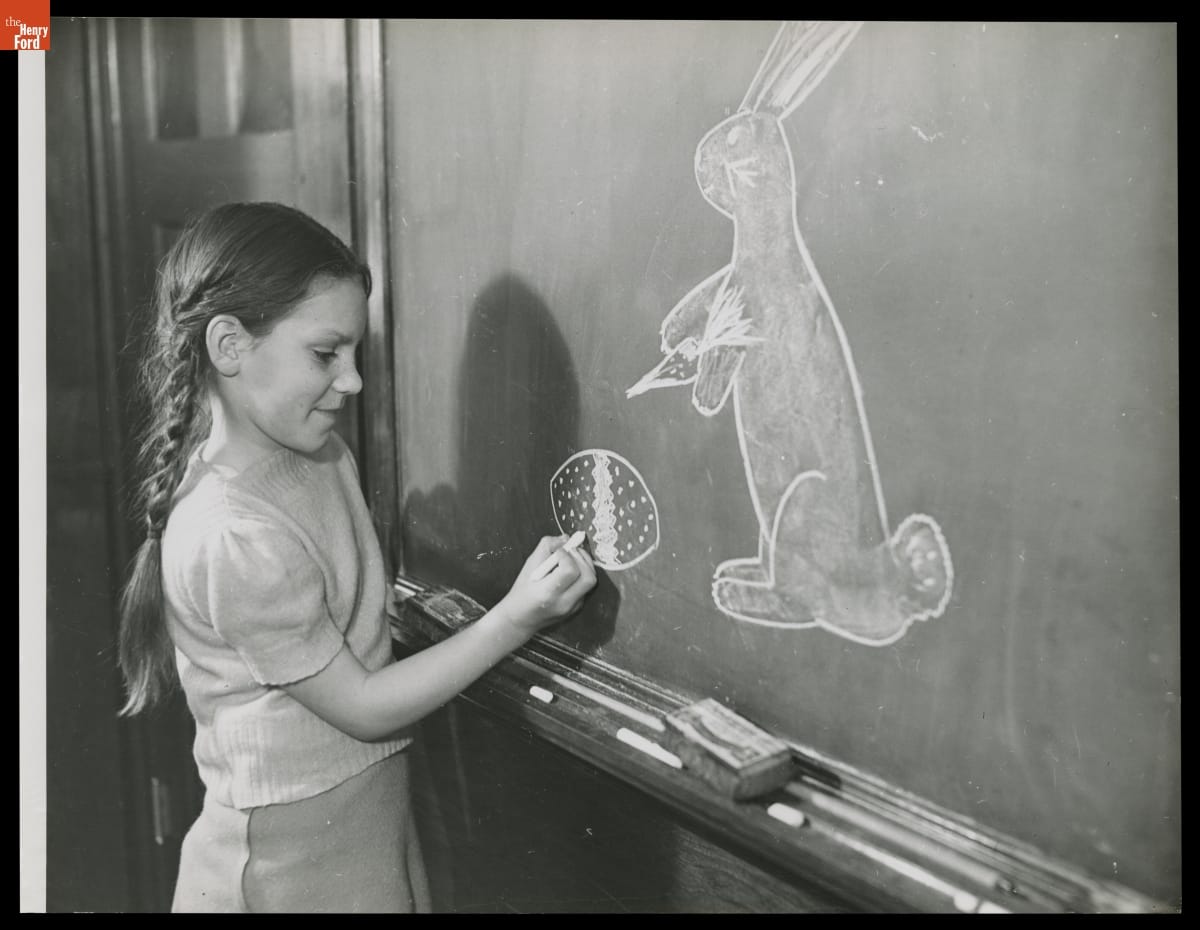
- Student Drawing on a Blackboard, Saline School, Saline, Michigan, March 1946 -
- March 08, 1946
- Collections - Artifact
Student Drawing on a Blackboard, Saline School, Saline, Michigan, March 1946
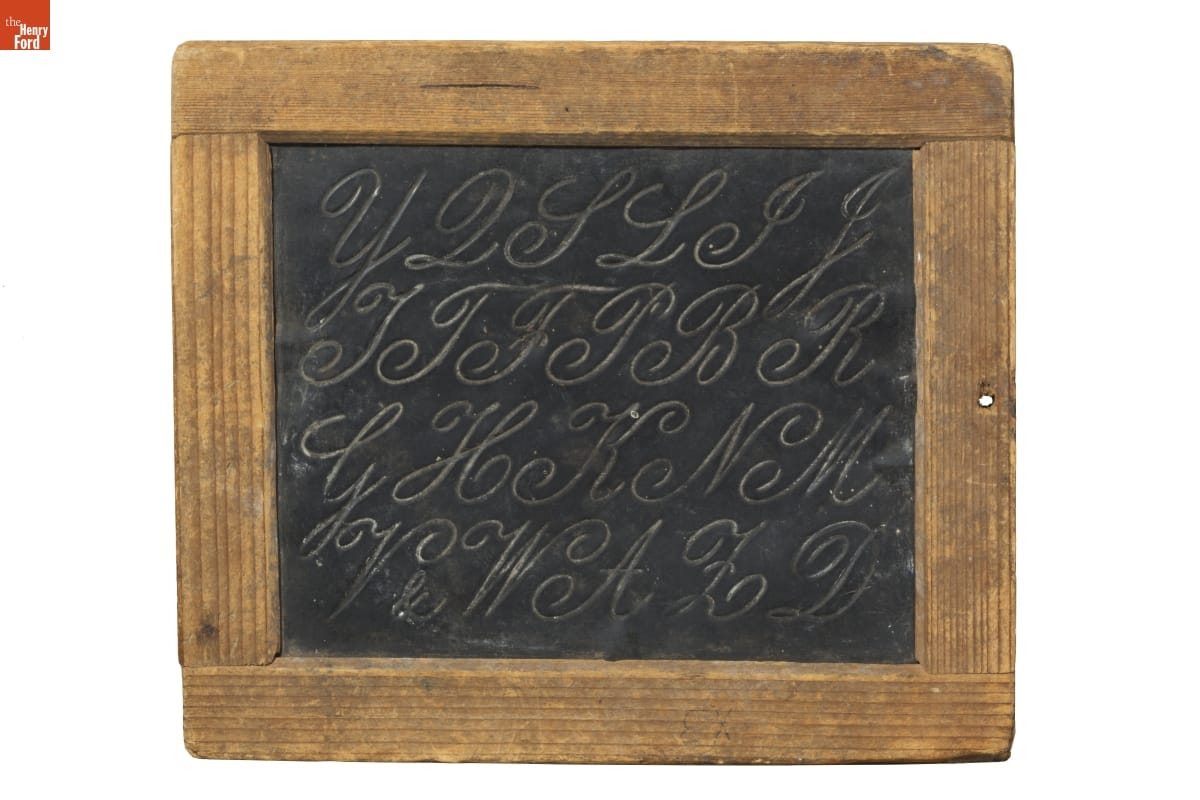
- Writing Slate - In the nineteenth century, schoolchildren's access to paper was limited. Slates were used to practice handwriting and arithmetic without wasting precious paper. After a teacher's approval, the students were allowed to copy their best slate work into a paper copybook, as a record of accomplishment. Students also memorized concepts, rules and even long literary passages, thus conserving paper.
- Collections - Artifact
Writing Slate
In the nineteenth century, schoolchildren's access to paper was limited. Slates were used to practice handwriting and arithmetic without wasting precious paper. After a teacher's approval, the students were allowed to copy their best slate work into a paper copybook, as a record of accomplishment. Students also memorized concepts, rules and even long literary passages, thus conserving paper.
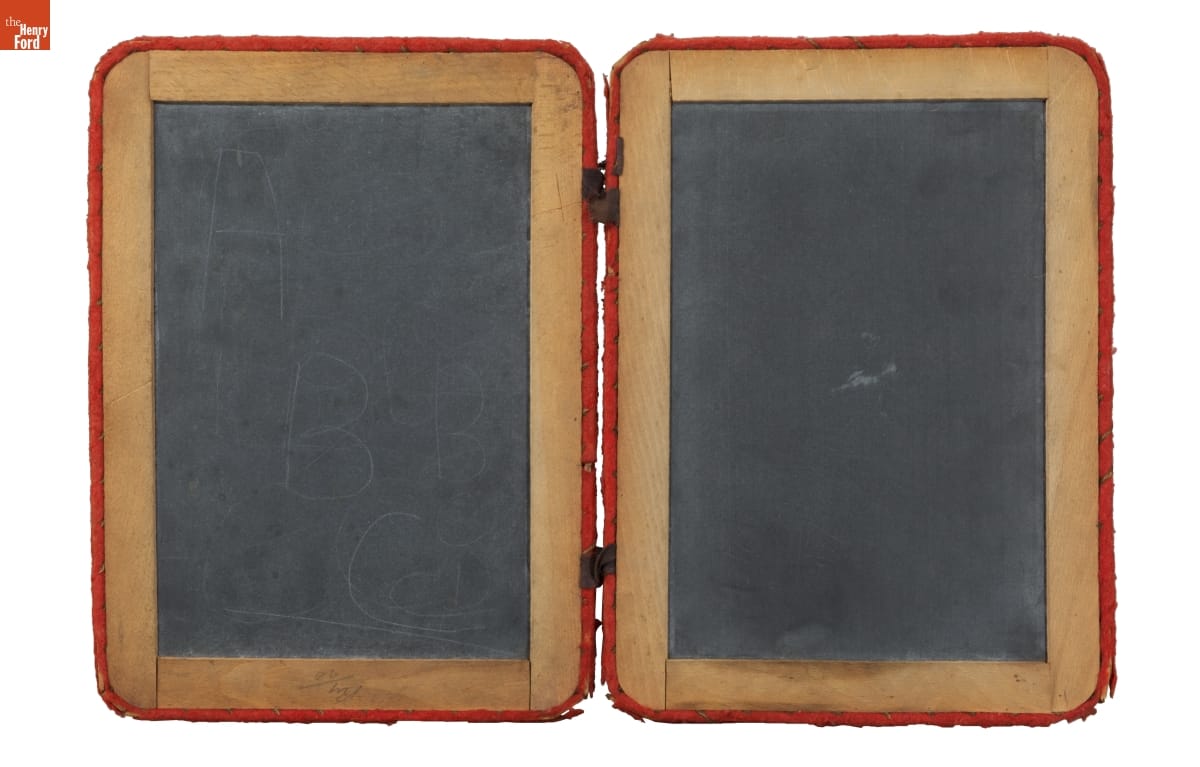
- Double Slate - In the nineteenth century, schoolchildren's access to paper was limited. Slates were used to practice handwriting and arithmetic without wasting precious paper. After a teacher's approval, the students were allowed to copy their best slate work into a paper copybook, as a record of accomplishment. Students also memorized concepts, rules and even long literary passages, thus conserving paper.
- Collections - Artifact
Double Slate
In the nineteenth century, schoolchildren's access to paper was limited. Slates were used to practice handwriting and arithmetic without wasting precious paper. After a teacher's approval, the students were allowed to copy their best slate work into a paper copybook, as a record of accomplishment. Students also memorized concepts, rules and even long literary passages, thus conserving paper.
- Writing Slate - In the nineteenth century, schoolchildren's access to paper was limited. Slates were used to practice handwriting and arithmetic without wasting precious paper. After a teacher's approval, the students were allowed to copy their best slate work into a paper copybook, as a record of accomplishment. Students also memorized concepts, rules and even long literary passages, thus conserving paper.
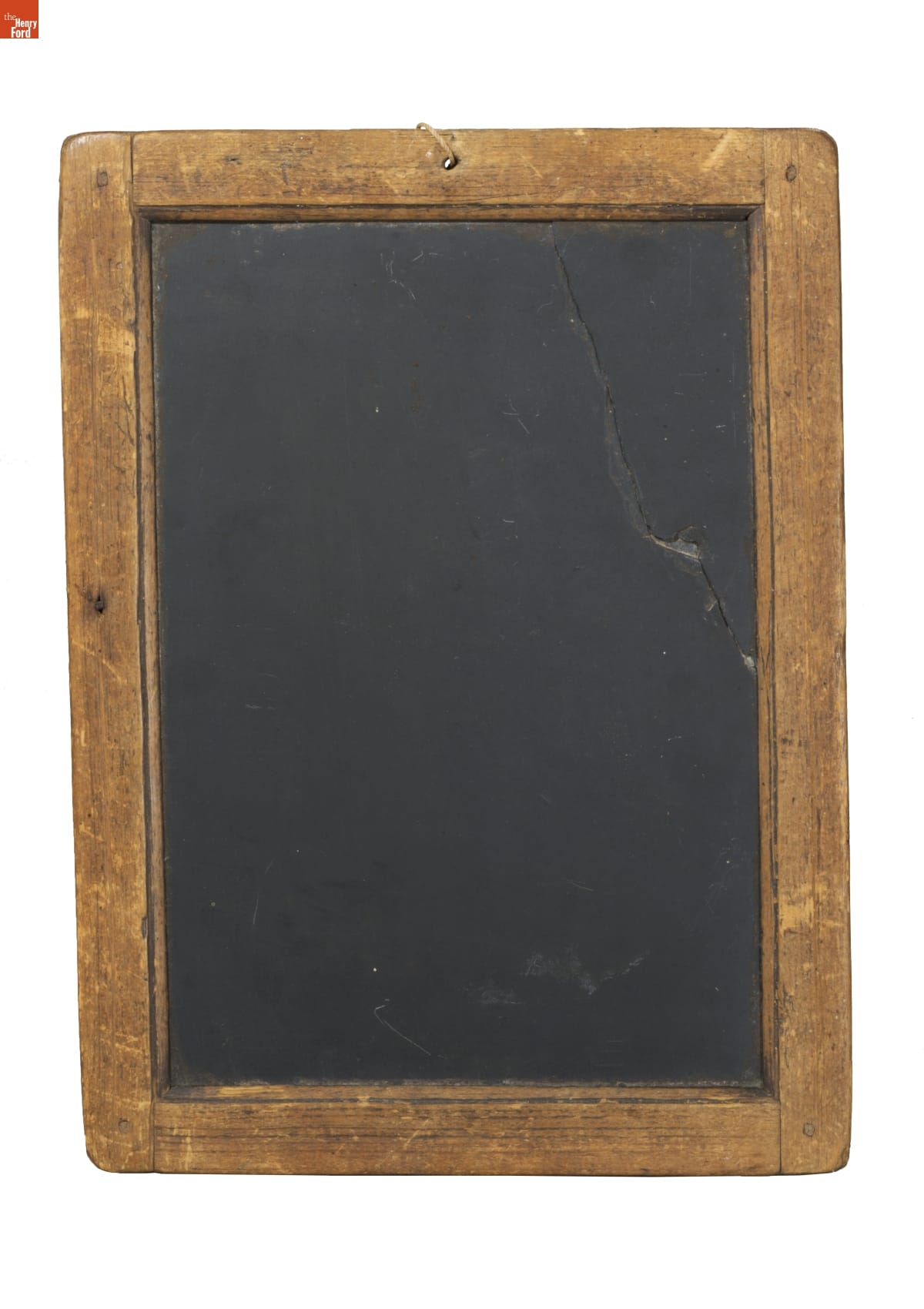
- Collections - Artifact
Writing Slate
In the nineteenth century, schoolchildren's access to paper was limited. Slates were used to practice handwriting and arithmetic without wasting precious paper. After a teacher's approval, the students were allowed to copy their best slate work into a paper copybook, as a record of accomplishment. Students also memorized concepts, rules and even long literary passages, thus conserving paper.
- Double Slate - In the nineteenth century, schoolchildren's access to paper was limited. Slates were used to practice handwriting and arithmetic without wasting precious paper. After a teacher's approval, the students were allowed to copy their best slate work into a paper copybook, as a record of accomplishment. Students also memorized concepts, rules and even long literary passages, thus conserving paper.
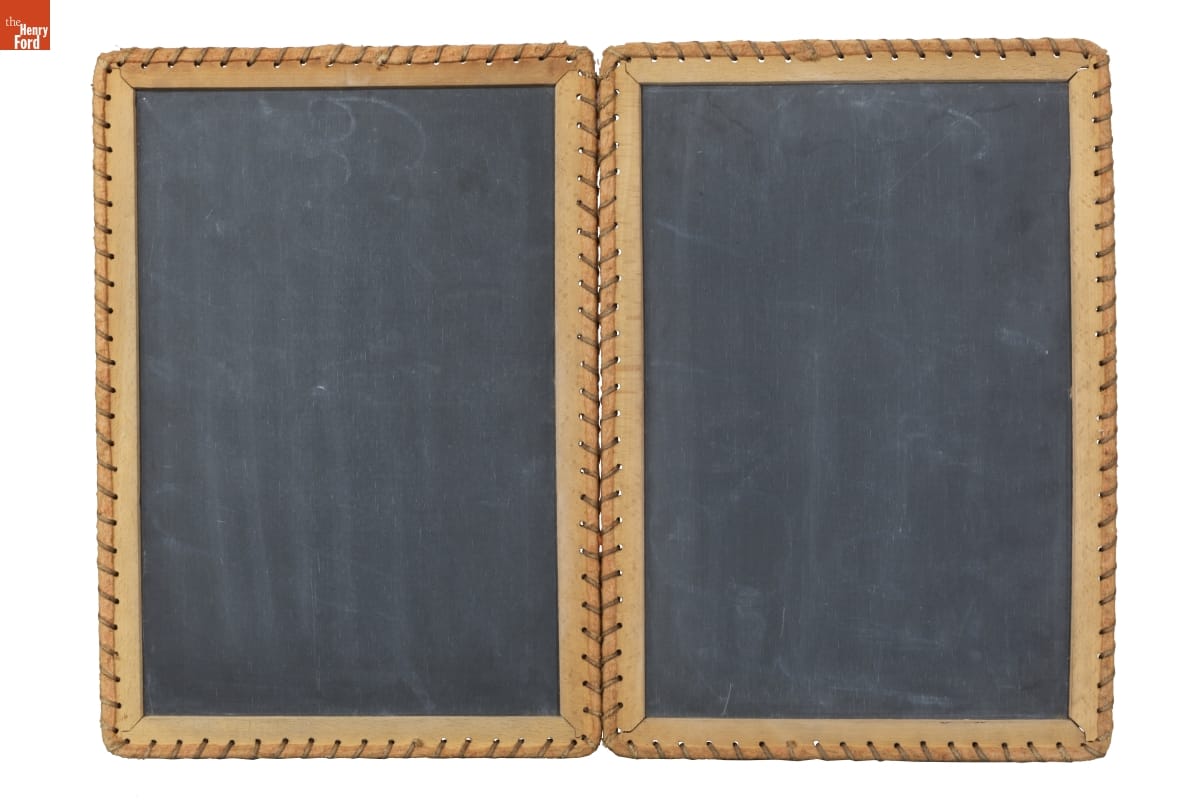
- Collections - Artifact
Double Slate
In the nineteenth century, schoolchildren's access to paper was limited. Slates were used to practice handwriting and arithmetic without wasting precious paper. After a teacher's approval, the students were allowed to copy their best slate work into a paper copybook, as a record of accomplishment. Students also memorized concepts, rules and even long literary passages, thus conserving paper.
- Writing Slate - In the nineteenth century, schoolchildren's access to paper was limited. Slates were used to practice handwriting and arithmetic without wasting precious paper. After a teacher's approval, the students were allowed to copy their best slate work into a paper copybook, as a record of accomplishment. Students also memorized concepts, rules and even long literary passages, thus conserving paper.
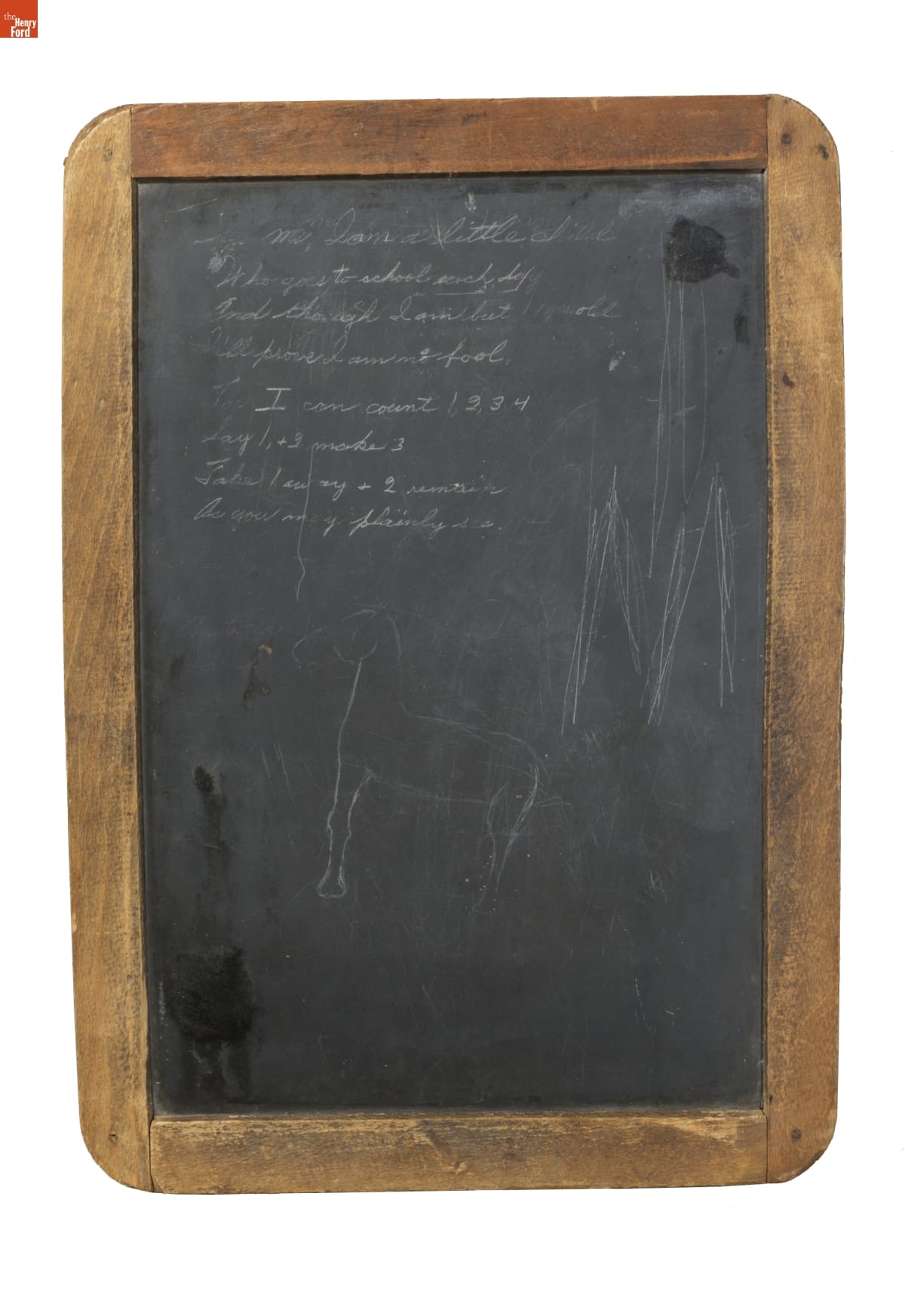
- Collections - Artifact
Writing Slate
In the nineteenth century, schoolchildren's access to paper was limited. Slates were used to practice handwriting and arithmetic without wasting precious paper. After a teacher's approval, the students were allowed to copy their best slate work into a paper copybook, as a record of accomplishment. Students also memorized concepts, rules and even long literary passages, thus conserving paper.
- Writing Slate - In the nineteenth century, schoolchildren's access to paper was limited. Slates were used to practice handwriting and arithmetic without wasting precious paper. After a teacher's approval, the students were allowed to copy their best slate work into a paper copybook, as a record of accomplishment. Students also memorized concepts, rules and even long literary passages, thus conserving paper.
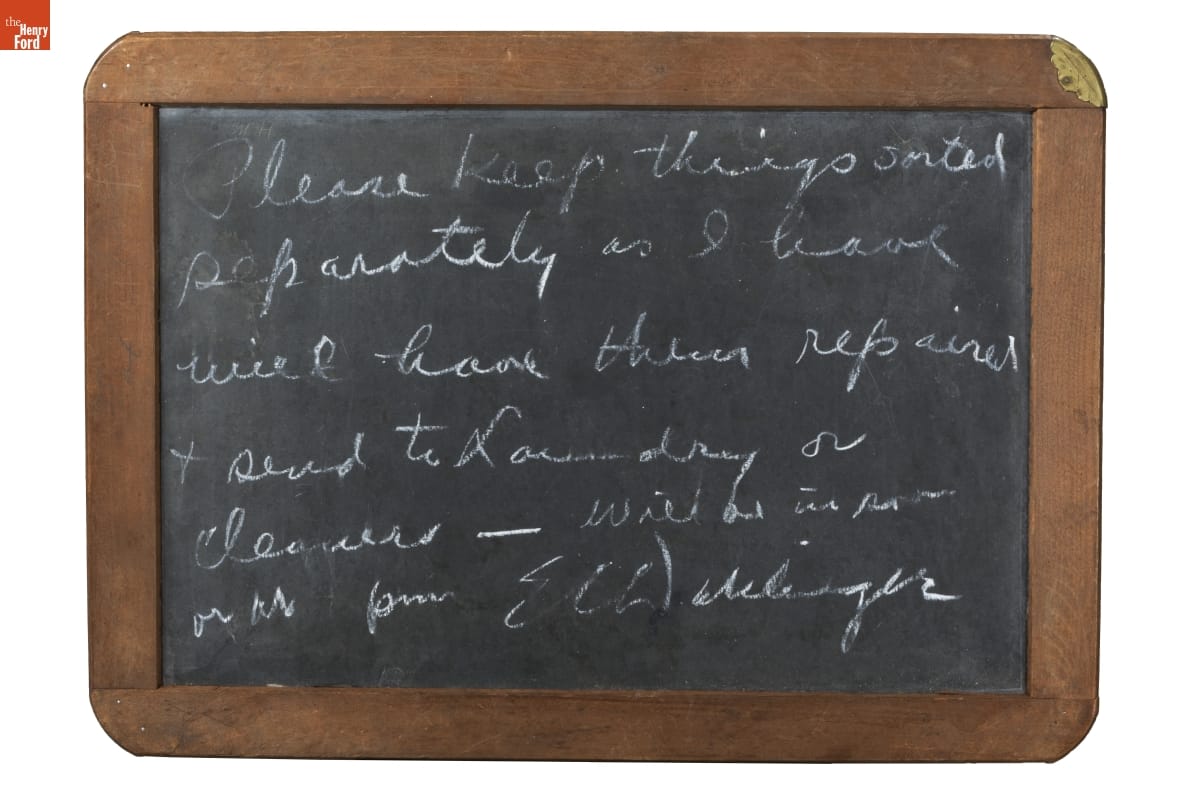
- Collections - Artifact
Writing Slate
In the nineteenth century, schoolchildren's access to paper was limited. Slates were used to practice handwriting and arithmetic without wasting precious paper. After a teacher's approval, the students were allowed to copy their best slate work into a paper copybook, as a record of accomplishment. Students also memorized concepts, rules and even long literary passages, thus conserving paper.
- Writing Slate - In the nineteenth century, schoolchildren's access to paper was limited. Slates were used to practice handwriting and arithmetic without wasting precious paper. After a teacher's approval, the students were allowed to copy their best slate work into a paper copybook, as a record of accomplishment. Students also memorized concepts, rules and even long literary passages, thus conserving paper.
- Collections - Artifact
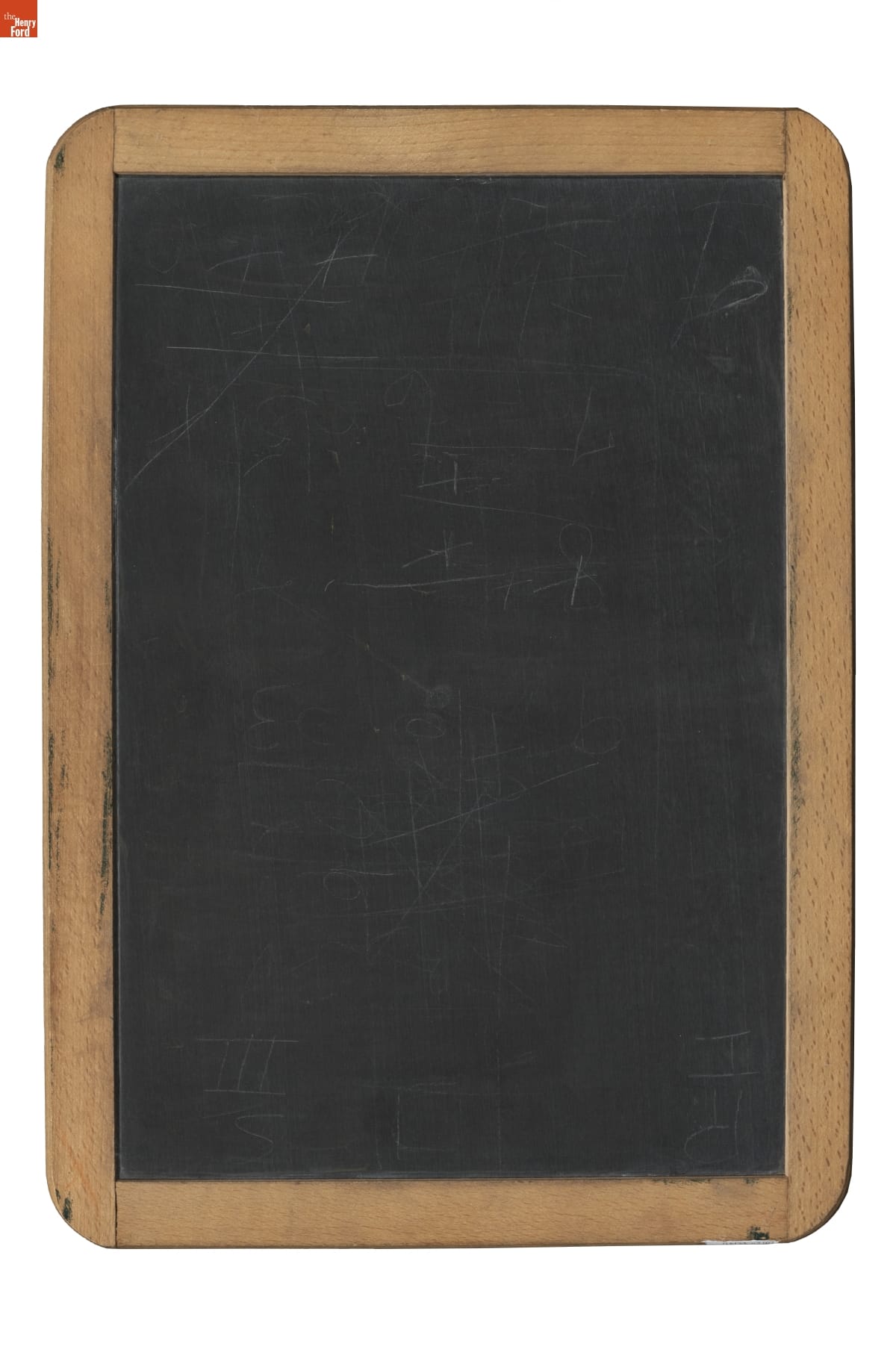
Writing Slate
In the nineteenth century, schoolchildren's access to paper was limited. Slates were used to practice handwriting and arithmetic without wasting precious paper. After a teacher's approval, the students were allowed to copy their best slate work into a paper copybook, as a record of accomplishment. Students also memorized concepts, rules and even long literary passages, thus conserving paper.
- Double Slate - In the nineteenth century, schoolchildren's access to paper was limited. Slates were used to practice handwriting and arithmetic without wasting precious paper. After a teacher's approval, the students were allowed to copy their best slate work into a paper copybook, as a record of accomplishment. Students also memorized concepts, rules and even long literary passages, thus conserving paper.
- Collections - Artifact
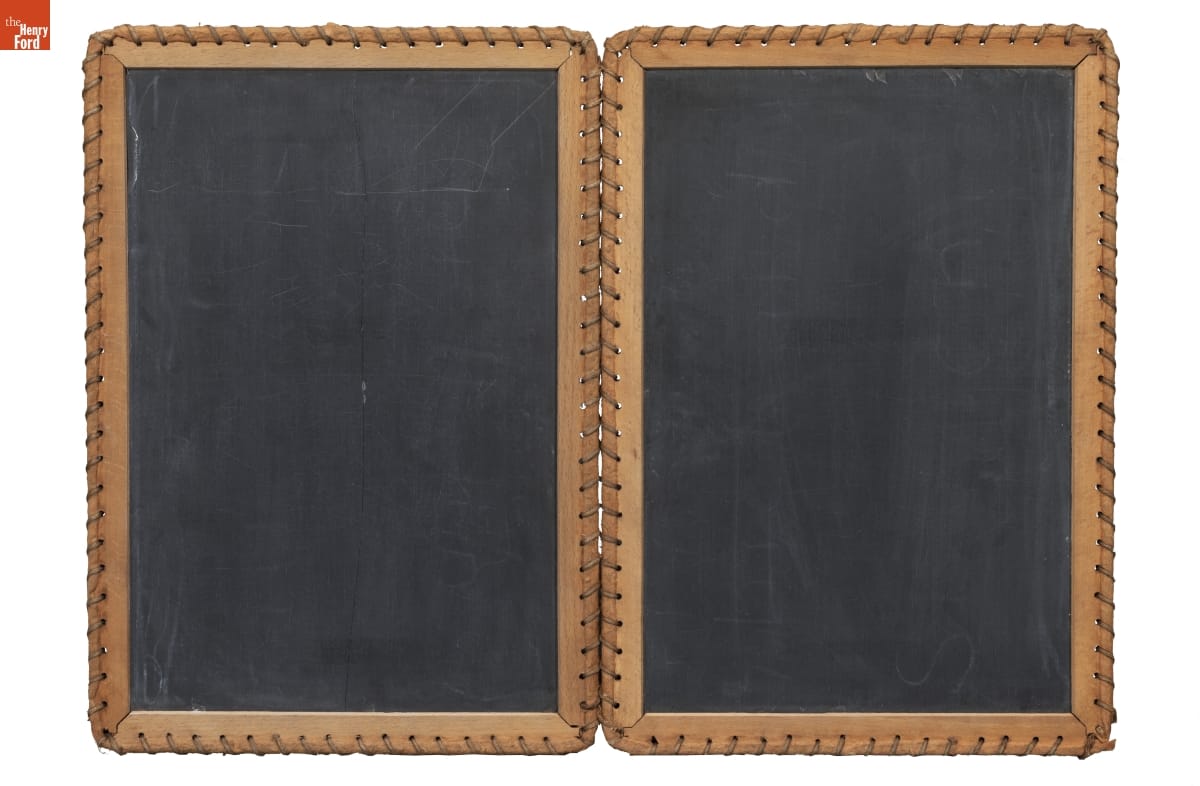
Double Slate
In the nineteenth century, schoolchildren's access to paper was limited. Slates were used to practice handwriting and arithmetic without wasting precious paper. After a teacher's approval, the students were allowed to copy their best slate work into a paper copybook, as a record of accomplishment. Students also memorized concepts, rules and even long literary passages, thus conserving paper.