
Search
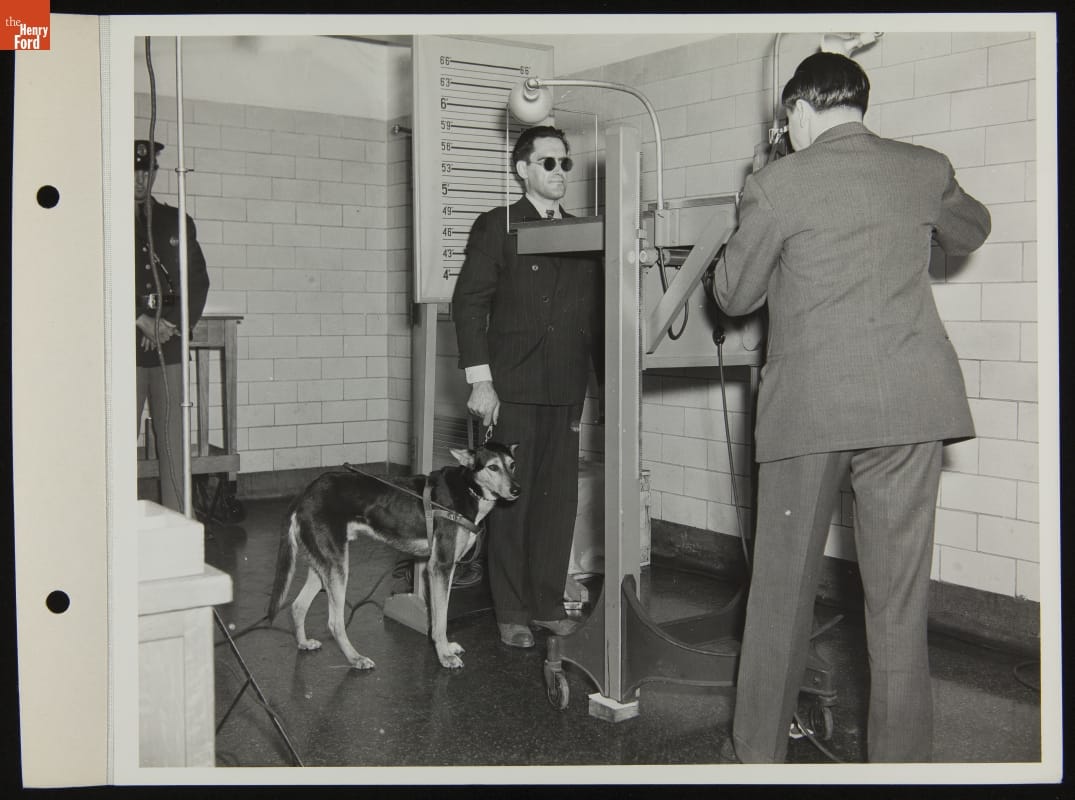
- Ford Employee Sylvester Rypkowski with Service Dog "Blackie," Being Photographed for ID Badge, October 1942 - Henry Ford believed in providing equal employment opportunities to people with disabilities -- a practice he began in the early years of his company. During World War II, Ford employed thousands of workers with disabilities. In October 1942, Ford Motor Company photographed Sylvester Rypkowski and his service dog, Blackie, as they became members of the Rouge plant's workforce.
- October 05, 1942
- Collections - Artifact
Ford Employee Sylvester Rypkowski with Service Dog "Blackie," Being Photographed for ID Badge, October 1942
Henry Ford believed in providing equal employment opportunities to people with disabilities -- a practice he began in the early years of his company. During World War II, Ford employed thousands of workers with disabilities. In October 1942, Ford Motor Company photographed Sylvester Rypkowski and his service dog, Blackie, as they became members of the Rouge plant's workforce.
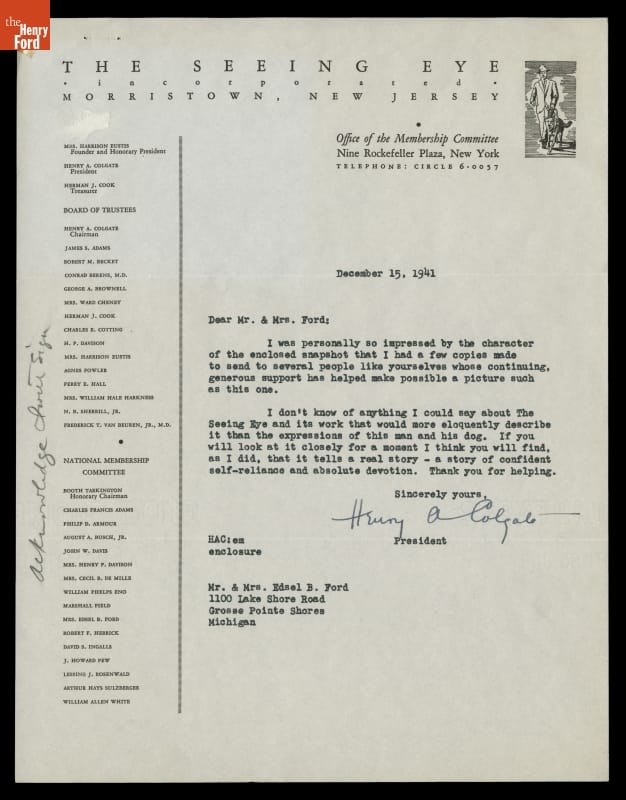
- Letter from Henry A. Colgate, The Seeing Eye Guide Dog School, to Edsel and Eleanor Ford, December 15, 1941 -
- December 15, 1941
- Collections - Artifact
Letter from Henry A. Colgate, The Seeing Eye Guide Dog School, to Edsel and Eleanor Ford, December 15, 1941
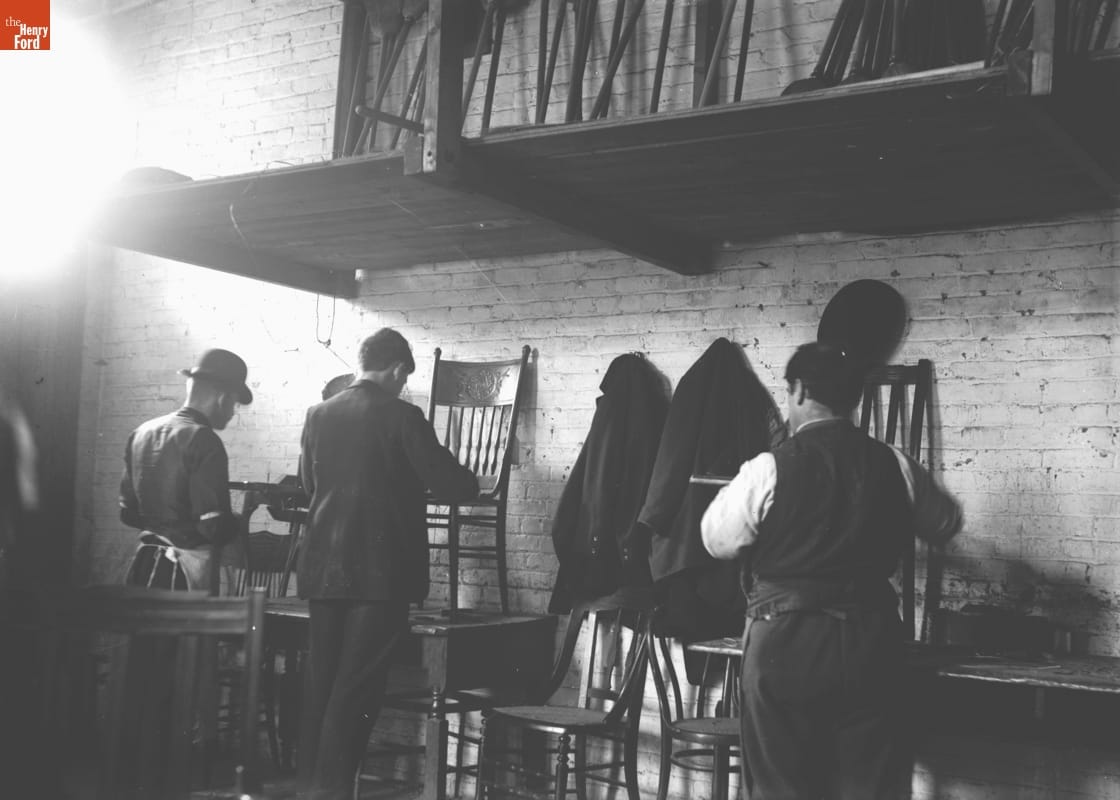
- Home for Blind, Chair Caning, 1890-1915 - In 1890, Jenny Young Chandler, 25 years old and recently widowed, began working for the <EM>New York Herald</EM>. As a photojournalist and feature writer, Chandler captured life in Brooklyn, New York, and vicinity. By 1922, the time of her death, she had produced over 800 glass plate negatives. Her sensitive, insightful photographs depict people from all walks of life and the world in which they lived.
- 1890-1915
- Collections - Artifact
Home for Blind, Chair Caning, 1890-1915
In 1890, Jenny Young Chandler, 25 years old and recently widowed, began working for the New York Herald. As a photojournalist and feature writer, Chandler captured life in Brooklyn, New York, and vicinity. By 1922, the time of her death, she had produced over 800 glass plate negatives. Her sensitive, insightful photographs depict people from all walks of life and the world in which they lived.
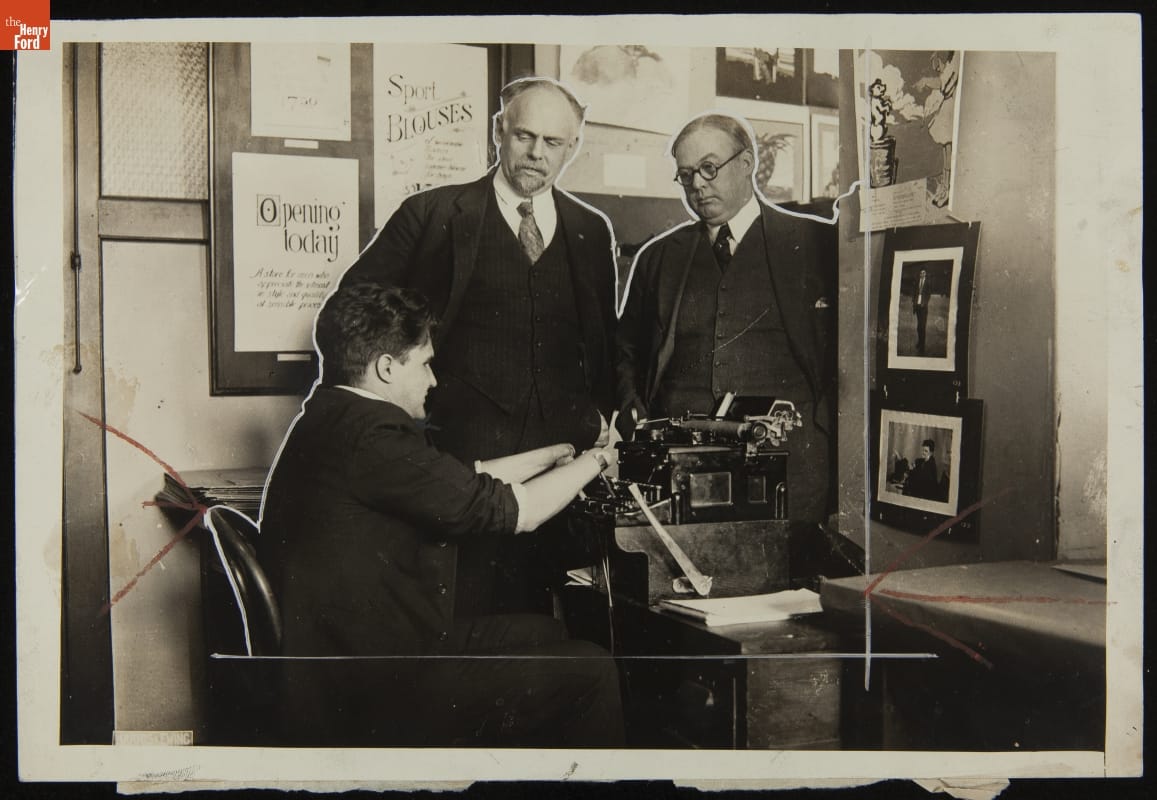
- Disabled Veteran Carl Bronner Displays Typing Abilities, Dearborn Independent, September 1922 -
- 1921-1922
- Collections - Artifact
Disabled Veteran Carl Bronner Displays Typing Abilities, Dearborn Independent, September 1922
- Ford Employee Sylvester Rypkowski Filling Out Paperwork, October 1942 - Henry Ford believed in providing equal employment opportunities to people with disabilities -- a practice he began in the early years of his company. During World War II, Ford employed thousands of workers with disabilities. In October 1942, Ford Motor Company photographed Sylvester Rypkowski and his service dog, Blackie, as they became members of the Rouge plant's workforce.
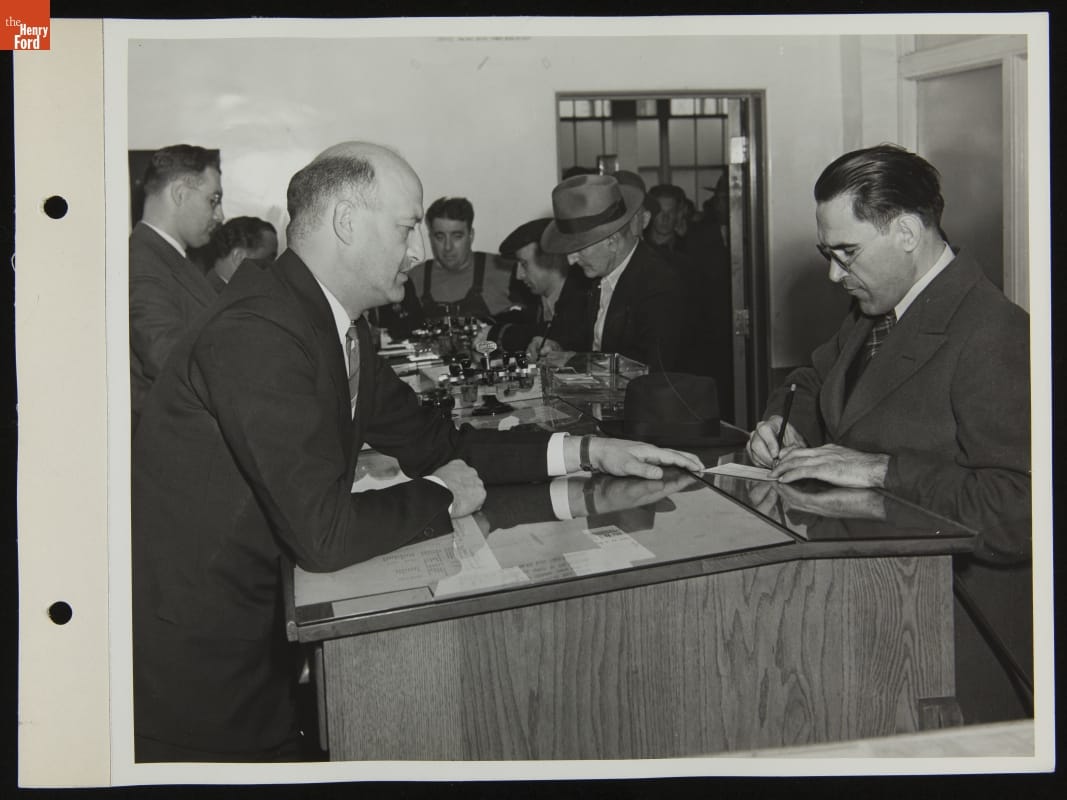
- October 05, 1942
- Collections - Artifact
Ford Employee Sylvester Rypkowski Filling Out Paperwork, October 1942
Henry Ford believed in providing equal employment opportunities to people with disabilities -- a practice he began in the early years of his company. During World War II, Ford employed thousands of workers with disabilities. In October 1942, Ford Motor Company photographed Sylvester Rypkowski and his service dog, Blackie, as they became members of the Rouge plant's workforce.
- Ford Employee Sylvester Rypkowski with His Service Dog "Blackie," October 1942 - Henry Ford believed in providing equal employment opportunities to people with disabilities -- a practice he began in the early years of his company. During World War II, Ford employed thousands of workers with disabilities. In October 1942, Ford Motor Company photographed Sylvester Rypkowski and his service dog, Blackie, as they became members of the Rouge plant's workforce.
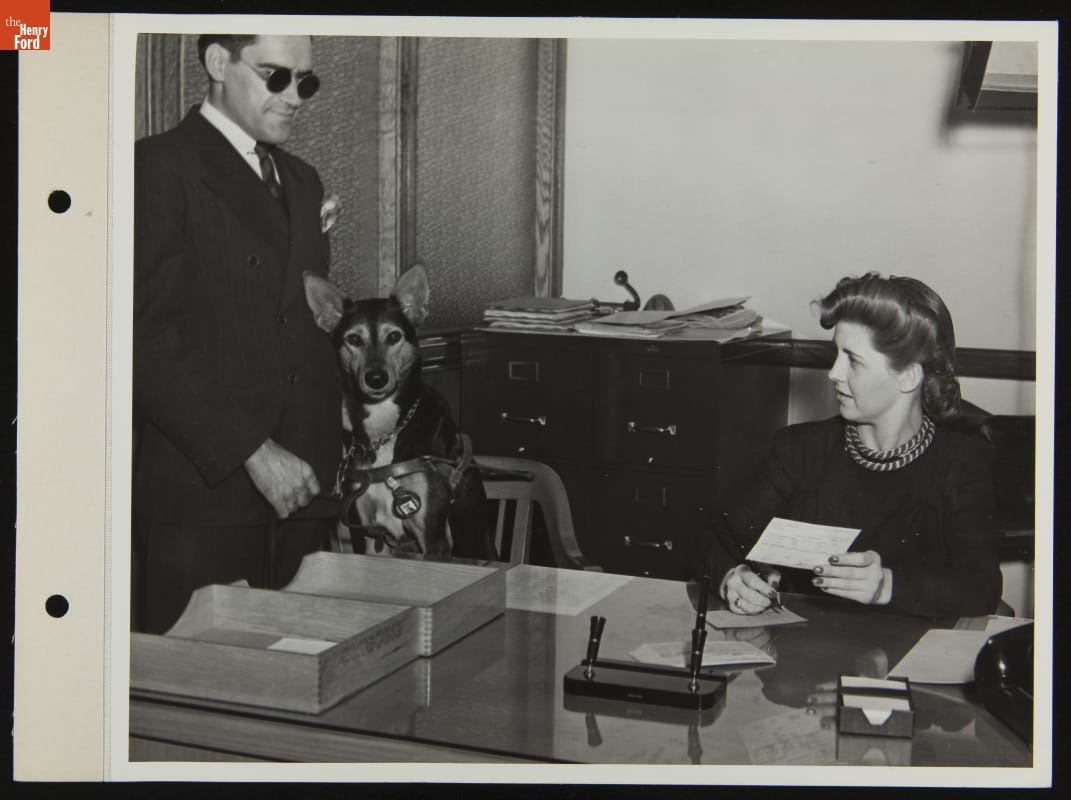
- October 05, 1942
- Collections - Artifact
Ford Employee Sylvester Rypkowski with His Service Dog "Blackie," October 1942
Henry Ford believed in providing equal employment opportunities to people with disabilities -- a practice he began in the early years of his company. During World War II, Ford employed thousands of workers with disabilities. In October 1942, Ford Motor Company photographed Sylvester Rypkowski and his service dog, Blackie, as they became members of the Rouge plant's workforce.
- Ford Employee's Service Dog Being "Noseprinted" for Identification, October 1942 - Blackie was a leader or service dog that helped blind employee Sylvester Rypkowski travel to and from his job at the Ford Rouge factory during World War II. The dog, like his human coworkers, was finger (or "paw") printed and received a photo identification badge -- standard for war workers. Local and regional newspapers ran articles about Blackie and his role in wartime production.
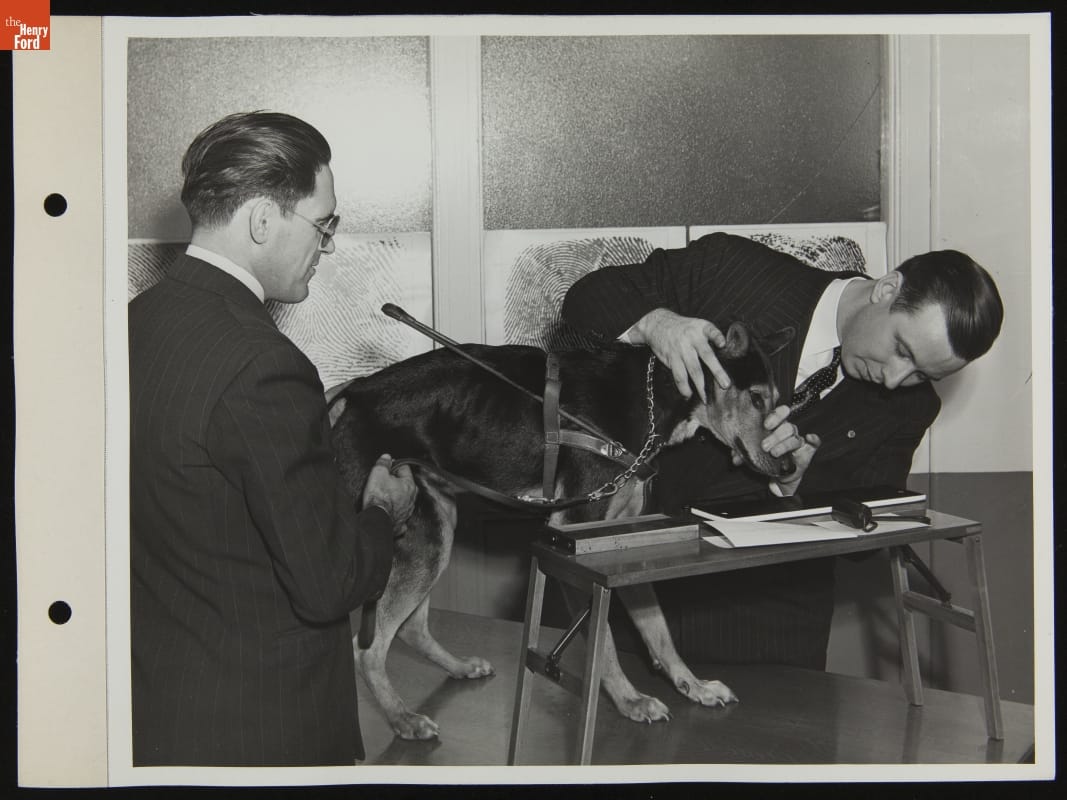
- October 05, 1942
- Collections - Artifact
Ford Employee's Service Dog Being "Noseprinted" for Identification, October 1942
Blackie was a leader or service dog that helped blind employee Sylvester Rypkowski travel to and from his job at the Ford Rouge factory during World War II. The dog, like his human coworkers, was finger (or "paw") printed and received a photo identification badge -- standard for war workers. Local and regional newspapers ran articles about Blackie and his role in wartime production.
- Checking ID Badge of Ford Employee's Service Dog "Blackie," October 1942 - Blackie was a leader or service dog that helped blind employee Sylvester Rypkowski travel to and from his job at the Ford Rouge factory during World War II. The dog, like his human coworkers, was finger (or "paw") printed and received a photo identification badge -- standard for war workers. Local and regional newspapers ran articles about Blackie and his role in wartime production.
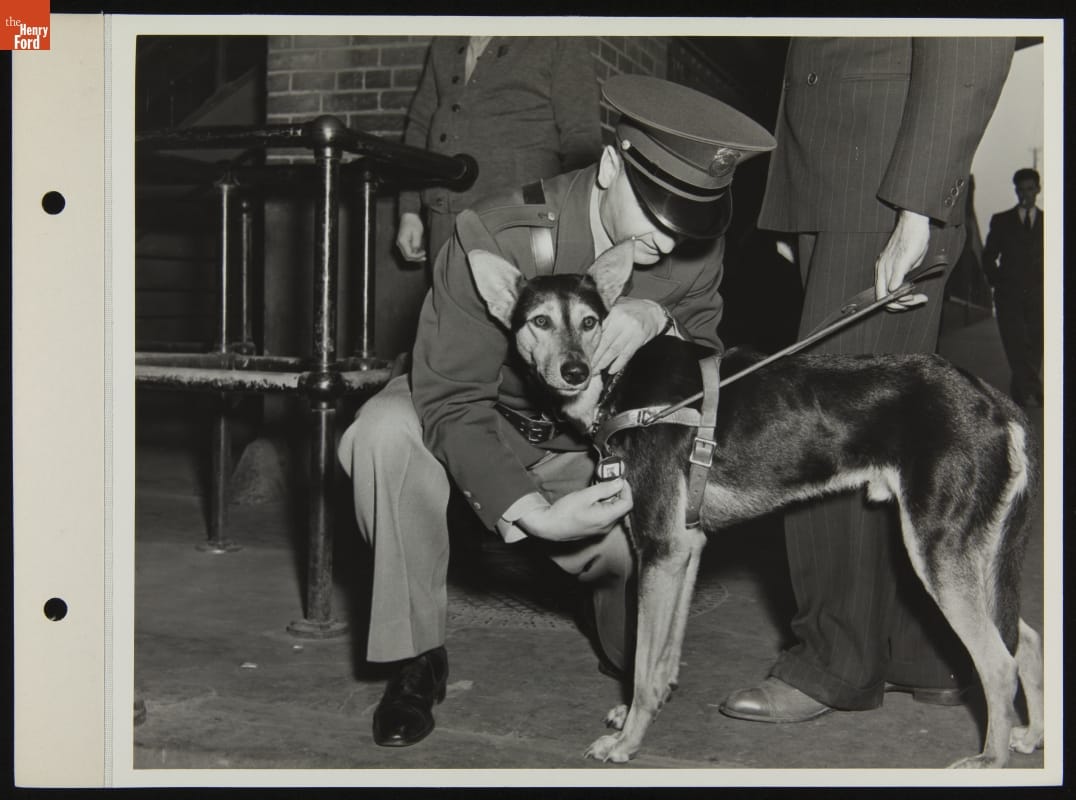
- October 05, 1942
- Collections - Artifact
Checking ID Badge of Ford Employee's Service Dog "Blackie," October 1942
Blackie was a leader or service dog that helped blind employee Sylvester Rypkowski travel to and from his job at the Ford Rouge factory during World War II. The dog, like his human coworkers, was finger (or "paw") printed and received a photo identification badge -- standard for war workers. Local and regional newspapers ran articles about Blackie and his role in wartime production.
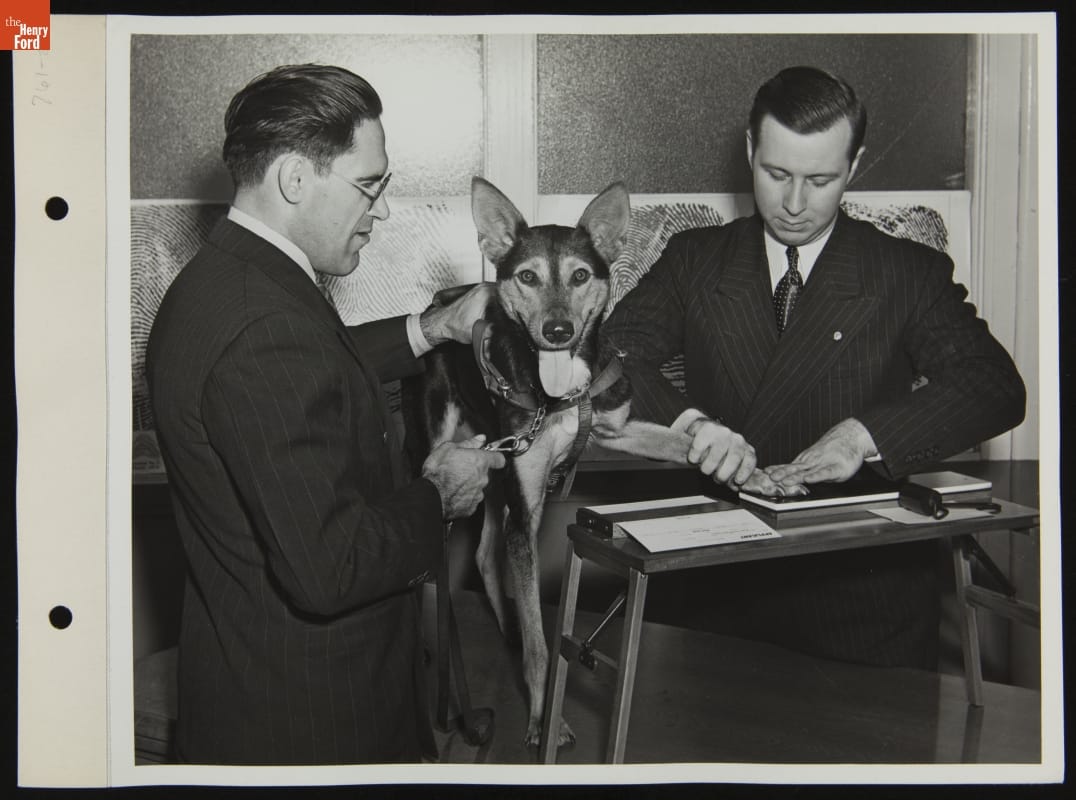
- Ford Employee's Service Dog Being "Pawprinted" for Identification, October 1942 - Blackie was a leader or service dog that helped blind employee Sylvester Rypkowski travel to and from his job at the Ford Rouge factory during World War II. The dog, like his human coworkers, was finger (or "paw") printed and received a photo identification badge -- standard for war workers. Local and regional newspapers ran articles about Blackie and his role in wartime production.
- October 05, 1942
- Collections - Artifact
Ford Employee's Service Dog Being "Pawprinted" for Identification, October 1942
Blackie was a leader or service dog that helped blind employee Sylvester Rypkowski travel to and from his job at the Ford Rouge factory during World War II. The dog, like his human coworkers, was finger (or "paw") printed and received a photo identification badge -- standard for war workers. Local and regional newspapers ran articles about Blackie and his role in wartime production.
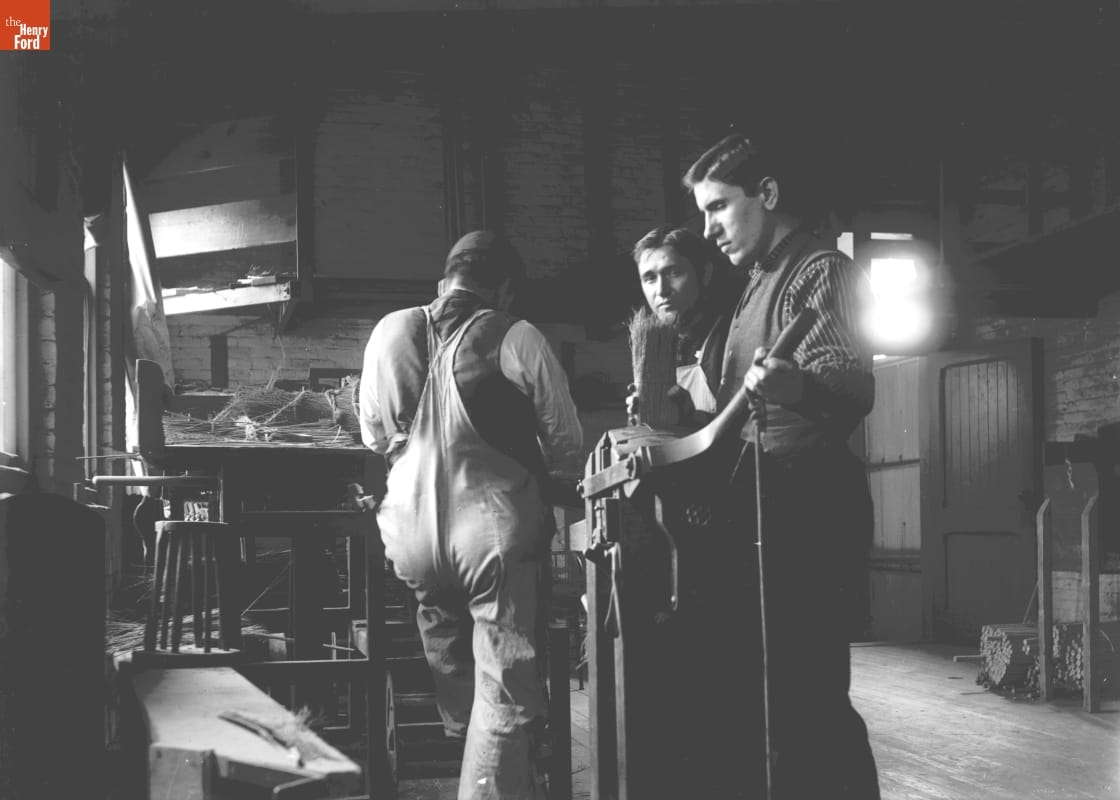
- A Broom Trimmer at the Home for Blind, New York, 1890-1915 - In 1890, Jenny Young Chandler, 25 years old and recently widowed, began working for the <EM>New York Herald</EM>. As a photojournalist and feature writer, Chandler captured life in Brooklyn, New York, and vicinity. By 1922, the time of her death, she had produced over 800 glass plate negatives. Her sensitive, insightful photographs depict people from all walks of life and the world in which they lived.
- 1890-1915
- Collections - Artifact
A Broom Trimmer at the Home for Blind, New York, 1890-1915
In 1890, Jenny Young Chandler, 25 years old and recently widowed, began working for the New York Herald. As a photojournalist and feature writer, Chandler captured life in Brooklyn, New York, and vicinity. By 1922, the time of her death, she had produced over 800 glass plate negatives. Her sensitive, insightful photographs depict people from all walks of life and the world in which they lived.