
Search
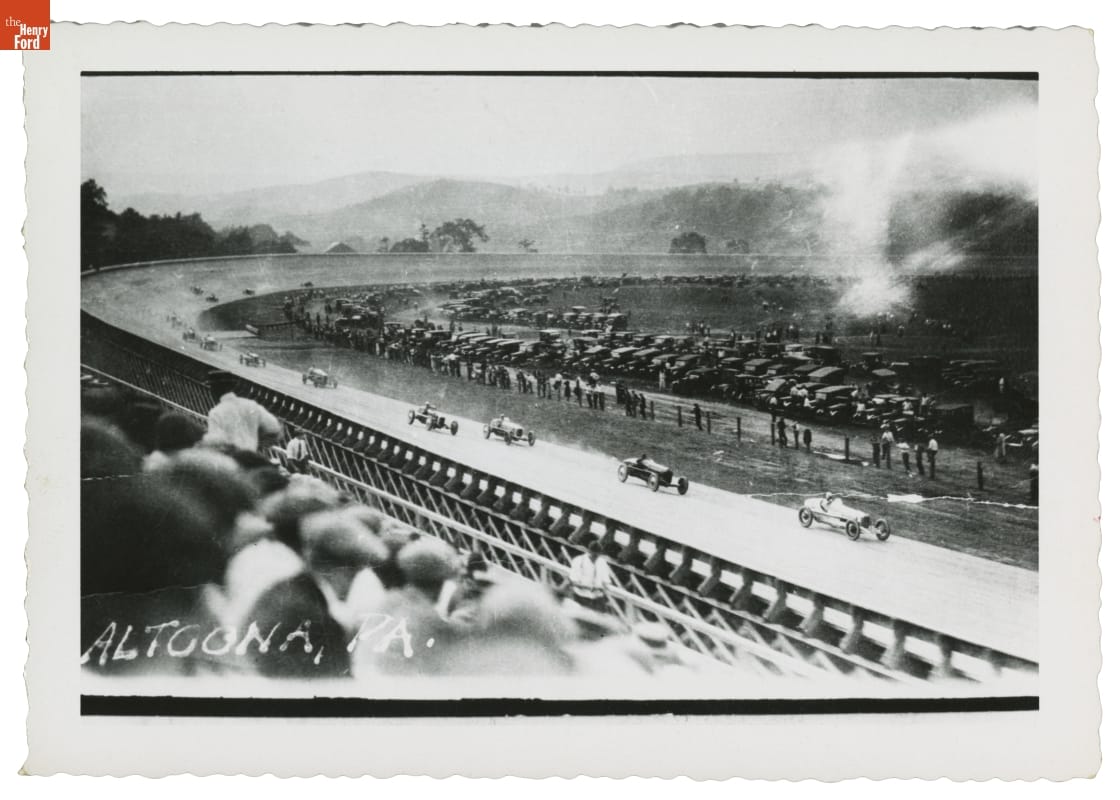
- Board Track Racing, Altoona, Pennsylvania, 1923-1929 - As automobile racing speeds increased, repurposed dirt horse tracks became inadequate. In the 1910s promoters turned to wooden boards, which provided a smooth road surface and were less expensive than bricks or concrete. But rotting wood required frequent replacement. Improvements in concrete and asphalt made board tracks obsolete in the 1930s. The 1.25-mile board track at Altoona, Pennsylvania, operated from 1923-1931.
- 1923-1929
- Collections - Artifact
Board Track Racing, Altoona, Pennsylvania, 1923-1929
As automobile racing speeds increased, repurposed dirt horse tracks became inadequate. In the 1910s promoters turned to wooden boards, which provided a smooth road surface and were less expensive than bricks or concrete. But rotting wood required frequent replacement. Improvements in concrete and asphalt made board tracks obsolete in the 1930s. The 1.25-mile board track at Altoona, Pennsylvania, operated from 1923-1931.
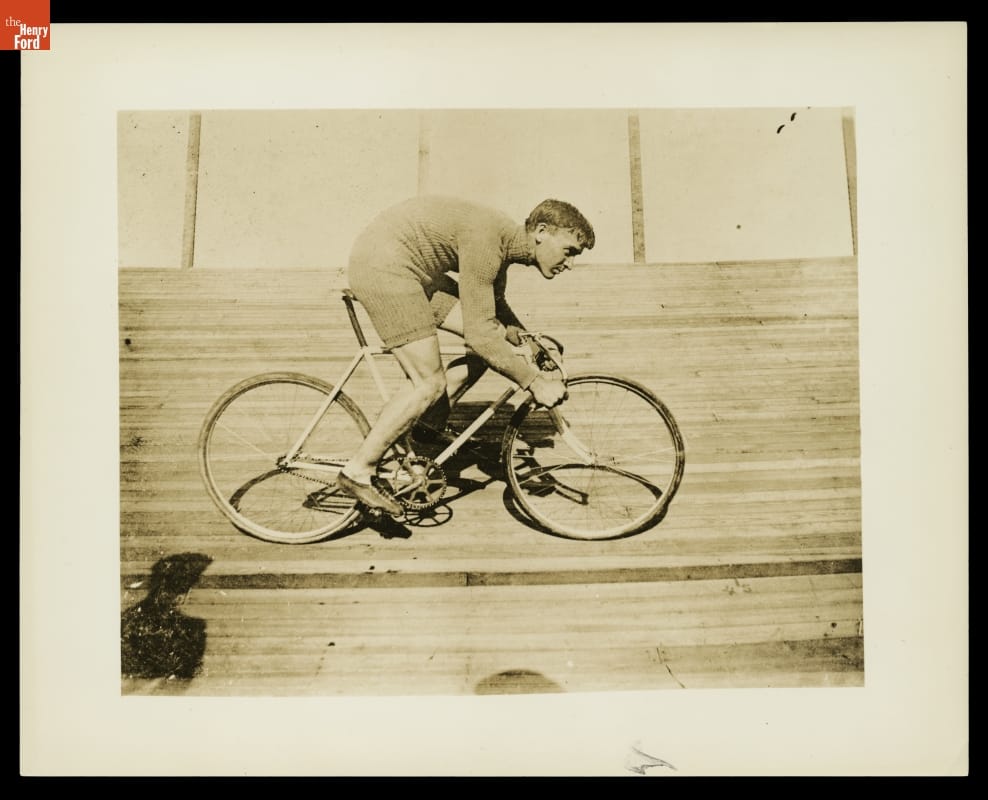
- Barney Oldfield Riding the "Blue Streak" Bicycle on the Salt Palace Board Track, Salt Lake City, Utah, circa 1900 - Auto racing legend Barney Oldfield began his racing career on two wheels. The Ohio native began racing bicycles in his teens -- winning a number of competitions. This photo shows the young Oldfield in his early twenties at a race track in Salt Lake City. In 1902, this fearless Ohioan turned his talents to auto racing -- piloting the Henry Ford designed race car "999."
- circa 1900
- Collections - Artifact
Barney Oldfield Riding the "Blue Streak" Bicycle on the Salt Palace Board Track, Salt Lake City, Utah, circa 1900
Auto racing legend Barney Oldfield began his racing career on two wheels. The Ohio native began racing bicycles in his teens -- winning a number of competitions. This photo shows the young Oldfield in his early twenties at a race track in Salt Lake City. In 1902, this fearless Ohioan turned his talents to auto racing -- piloting the Henry Ford designed race car "999."
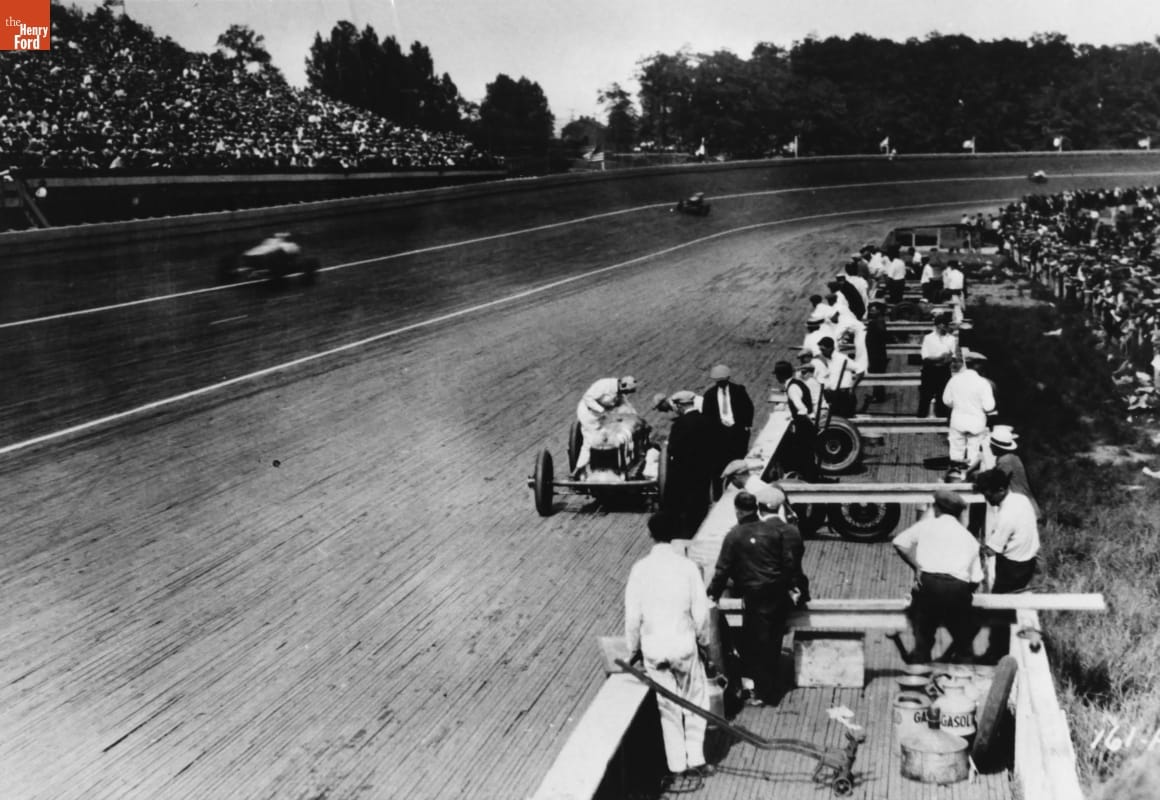
- Dave Lewis's Race Car Stopped on the Board Track at Altoona Speedway, Tipton, Pennsylvania, 1925 - In 1925, pit stops looked very different than those seen in today's motorsports. Pit crews were smaller and stops lasted much longer. Dave Lewis returned to the pit during this race and a broken connecting rod prevented him from finishing. He only made it through 36 laps out of 200, resulting in a last place finish.
- June 13, 1925
- Collections - Artifact
Dave Lewis's Race Car Stopped on the Board Track at Altoona Speedway, Tipton, Pennsylvania, 1925
In 1925, pit stops looked very different than those seen in today's motorsports. Pit crews were smaller and stops lasted much longer. Dave Lewis returned to the pit during this race and a broken connecting rod prevented him from finishing. He only made it through 36 laps out of 200, resulting in a last place finish.
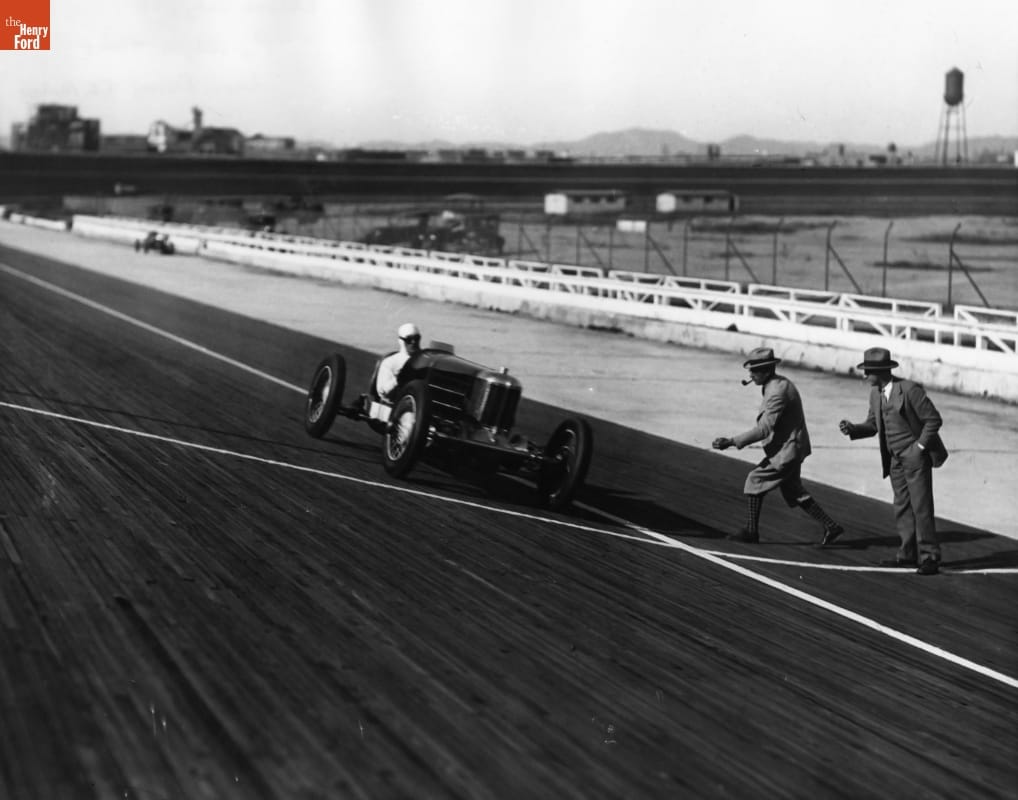
- Leon Duray Being Timed at Culver City Speedway, California, 1927 - Leon Duray crossed the finish line in first place on March 6, 1927 at Culver City Speedway. From 1910-1930, most major American auto races were contested on tracks made of wood. These oval-shaped "board tracks" had high banked turns that allowed very high speeds but were also very dangerous.
- March 06, 1927
- Collections - Artifact
Leon Duray Being Timed at Culver City Speedway, California, 1927
Leon Duray crossed the finish line in first place on March 6, 1927 at Culver City Speedway. From 1910-1930, most major American auto races were contested on tracks made of wood. These oval-shaped "board tracks" had high banked turns that allowed very high speeds but were also very dangerous.