
Search
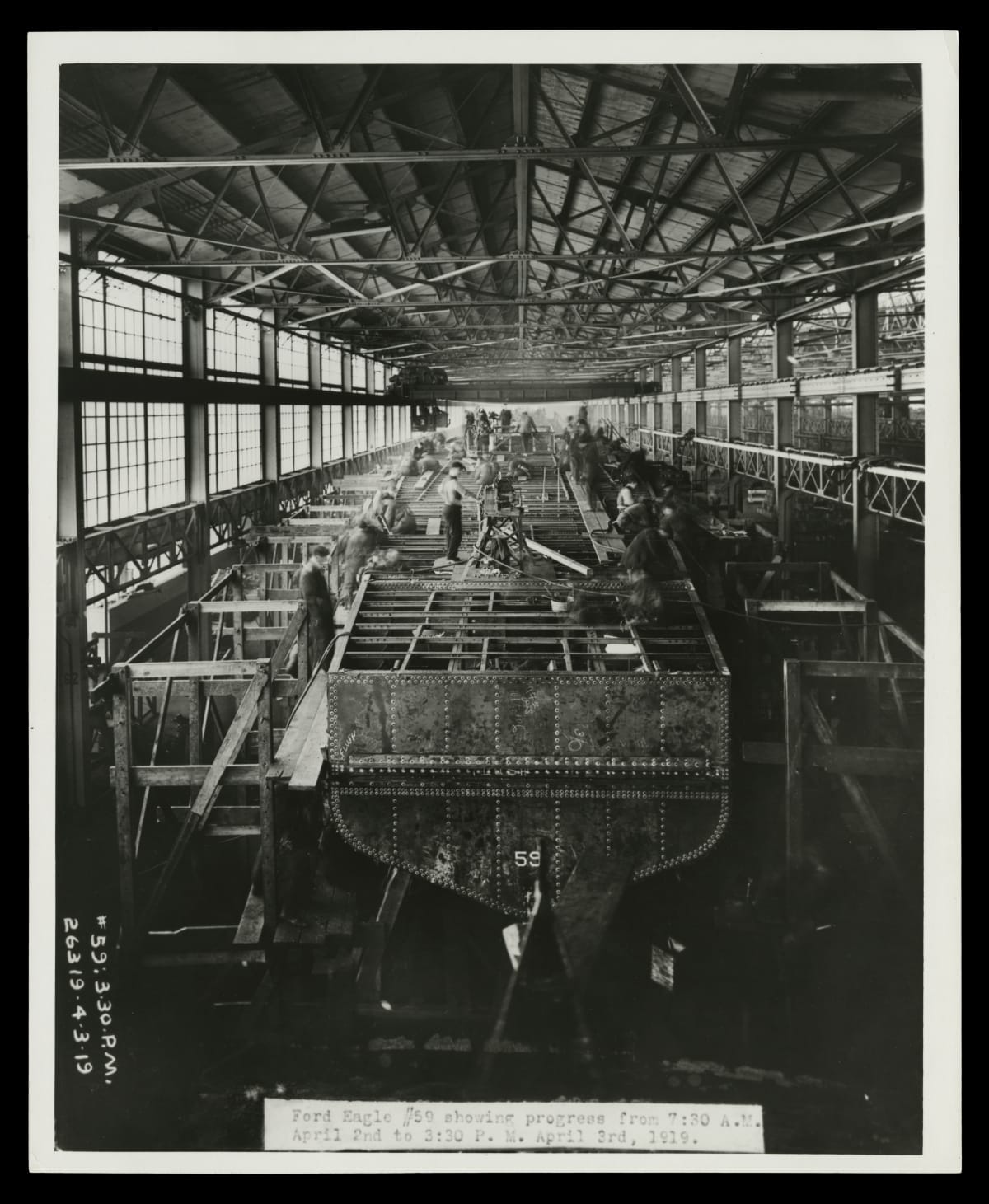
- Eagle Boat #57 Assembly at Ford Motor Company Rouge Plant, April 1919 - To combat German submarine attacks on U.S. cargo ships during World War I, Henry Ford suggested the mass production of submarine chasers. Ford Motor Company accepted a government contract to build these "Eagle Boats" and began production at its partially developed industrial complex along the Rouge River in 1918. By late 1919, Ford had completed 60 Eagle Boats for the U.S. Navy.
- April 03, 1919
- Collections - Artifact
Eagle Boat #57 Assembly at Ford Motor Company Rouge Plant, April 1919
To combat German submarine attacks on U.S. cargo ships during World War I, Henry Ford suggested the mass production of submarine chasers. Ford Motor Company accepted a government contract to build these "Eagle Boats" and began production at its partially developed industrial complex along the Rouge River in 1918. By late 1919, Ford had completed 60 Eagle Boats for the U.S. Navy.
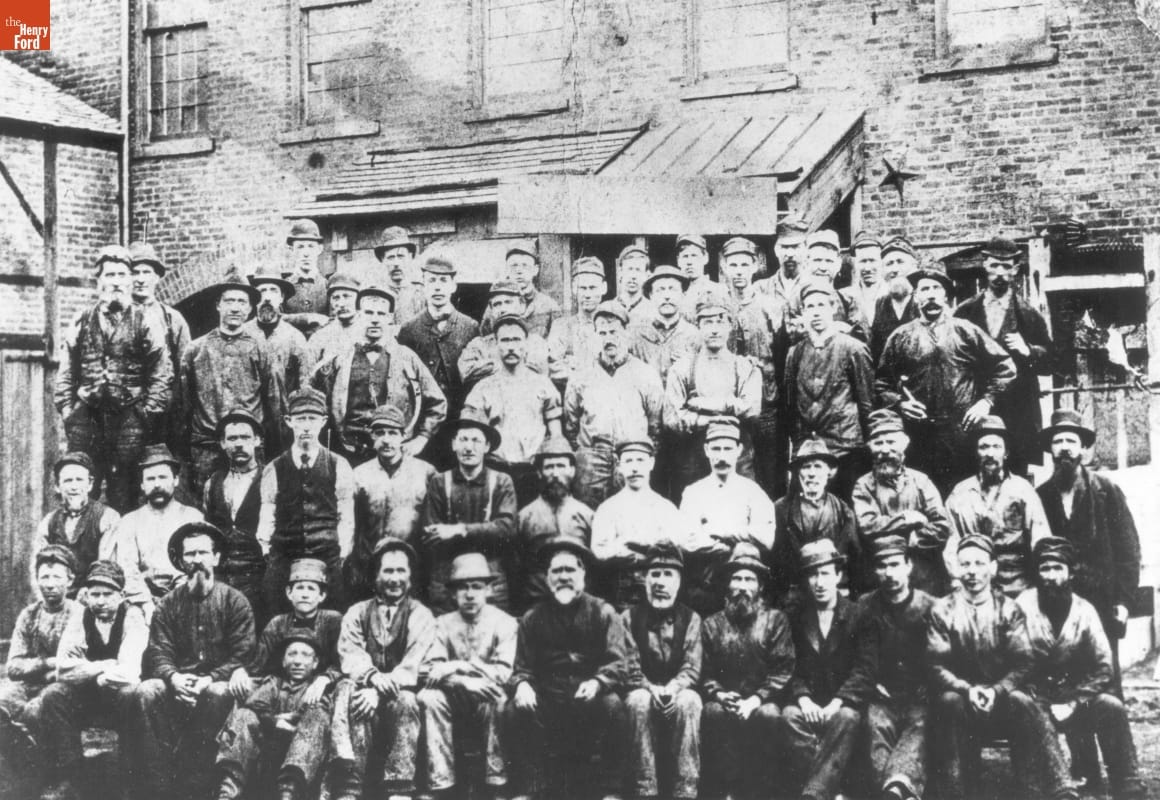
- Detroit Dry Dock Company Employees, Including Henry Ford, 1880-1882 - During the 1880s, Henry Ford worked in a variety of positions near his Dearborn, Michigan, home. Among other endeavors, Ford helped on his father's farm, apprenticed for a machinist, operated and repaired steam engines, and found occasional work in Detroit factories. This photograph shows him (top row, sixth from right) with fellow employees at the Detroit Dry Dock shipbuilding company.
- 1880-1882
- Collections - Artifact
Detroit Dry Dock Company Employees, Including Henry Ford, 1880-1882
During the 1880s, Henry Ford worked in a variety of positions near his Dearborn, Michigan, home. Among other endeavors, Ford helped on his father's farm, apprenticed for a machinist, operated and repaired steam engines, and found occasional work in Detroit factories. This photograph shows him (top row, sixth from right) with fellow employees at the Detroit Dry Dock shipbuilding company.
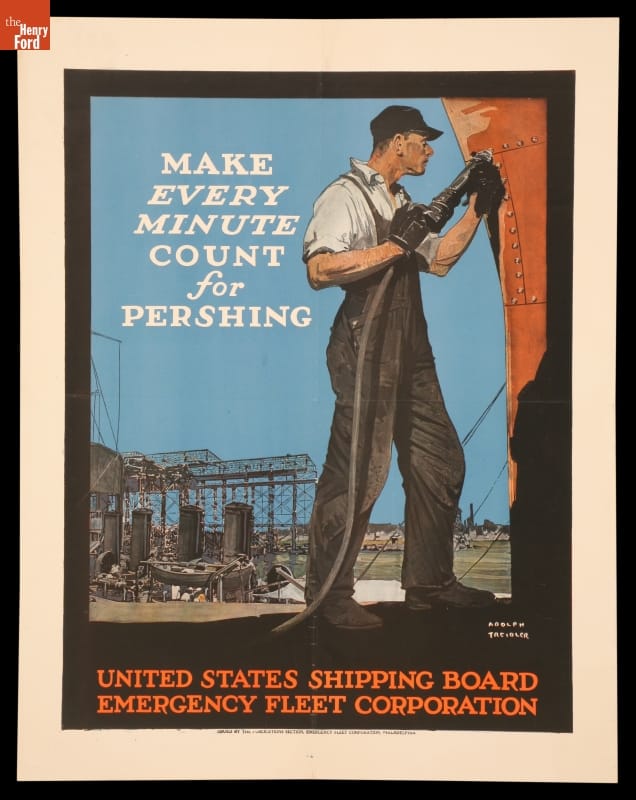
- World War I Poster, "Make Every Minute Count for Pershing," 1917 - During the First World War, governments of all the warring nations used poster campaigns to encourage civilian and military support of the war effort. Artists widely used an innovative advertising technique for these posters that moved away from a factual depiction of a product's material or event's subject to an emphasis on appealing to the viewer's emotions.
- 1917
- Collections - Artifact
World War I Poster, "Make Every Minute Count for Pershing," 1917
During the First World War, governments of all the warring nations used poster campaigns to encourage civilian and military support of the war effort. Artists widely used an innovative advertising technique for these posters that moved away from a factual depiction of a product's material or event's subject to an emphasis on appealing to the viewer's emotions.
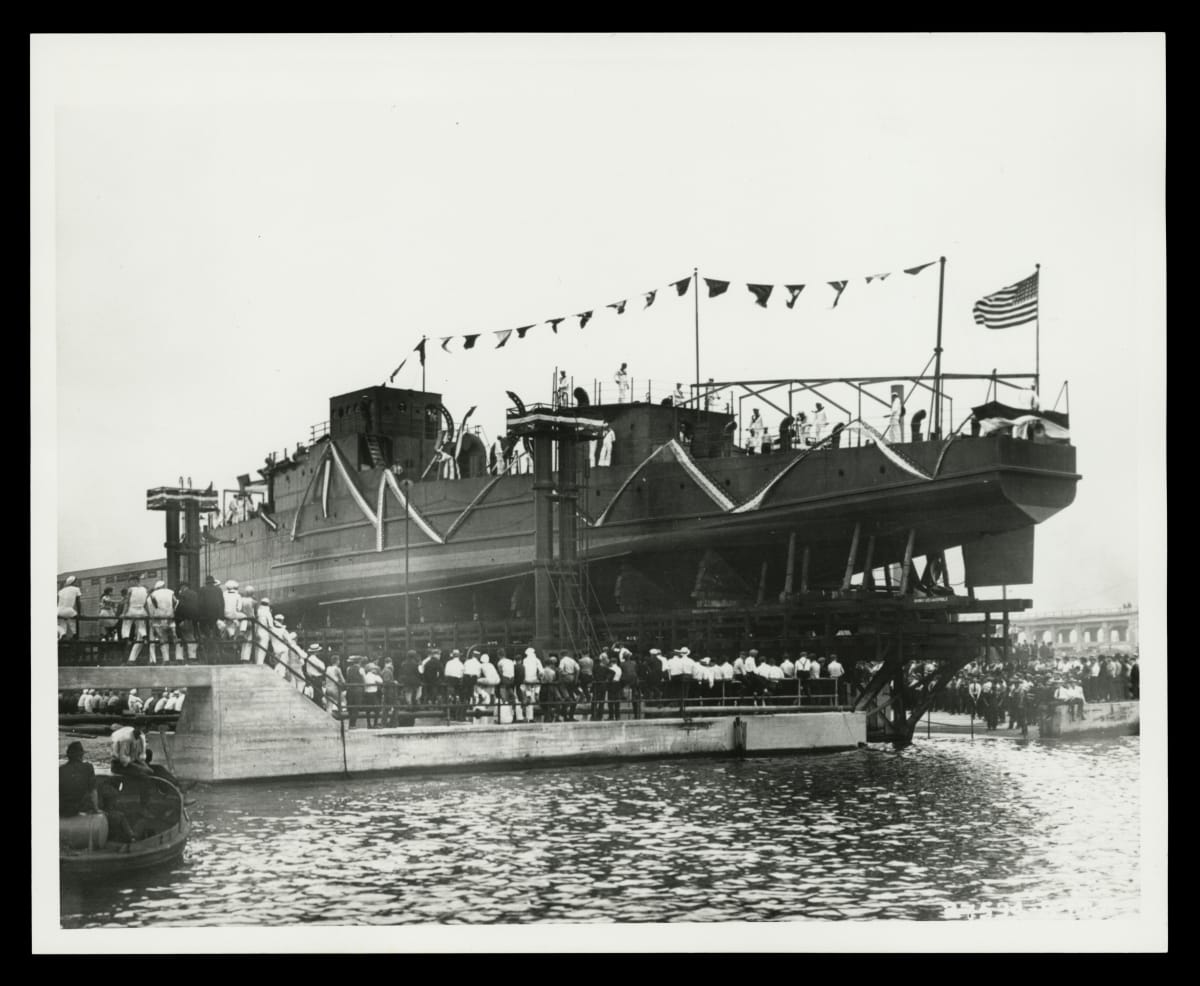
- Launching of Last Eagle Boat at Ford Motor Company Rouge Plant, August 1919 - Ford Motor Company built Eagle anti-submarine boats during World War I. The company launched its first Eagle on July 11, 1918, but the war ended exactly four months later -- before any of the boats saw action. The Navy cut its initial order of 100 Eagles to 60, and Ford launched the last of them in the summer of 1919.
- August 15, 1919
- Collections - Artifact
Launching of Last Eagle Boat at Ford Motor Company Rouge Plant, August 1919
Ford Motor Company built Eagle anti-submarine boats during World War I. The company launched its first Eagle on July 11, 1918, but the war ended exactly four months later -- before any of the boats saw action. The Navy cut its initial order of 100 Eagles to 60, and Ford launched the last of them in the summer of 1919.