
Search
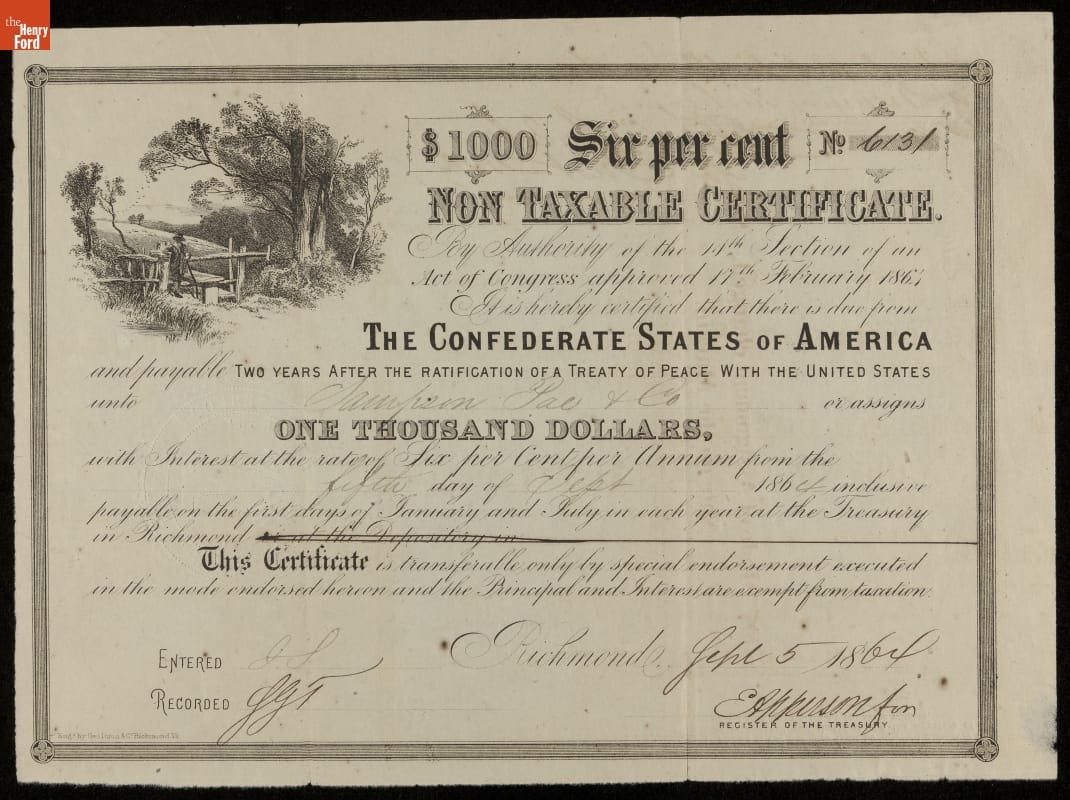
- Confederate Bond, One Thousand Dollars, 1864 - Samson and Pae foundry and machine shop was nestled among other Richmond, Virginia, industrial facilities. During the Civil War, the firm made and finished weapons, and supplied artillery projectiles. They acquired this bond in September 1864. A few months later, Confederate troops abandoned Richmond and set fire to supply warehouses. The fire raged out of control, destroying the Samson and Pae foundry.
- September 05, 1864
- Collections - Artifact
Confederate Bond, One Thousand Dollars, 1864
Samson and Pae foundry and machine shop was nestled among other Richmond, Virginia, industrial facilities. During the Civil War, the firm made and finished weapons, and supplied artillery projectiles. They acquired this bond in September 1864. A few months later, Confederate troops abandoned Richmond and set fire to supply warehouses. The fire raged out of control, destroying the Samson and Pae foundry.
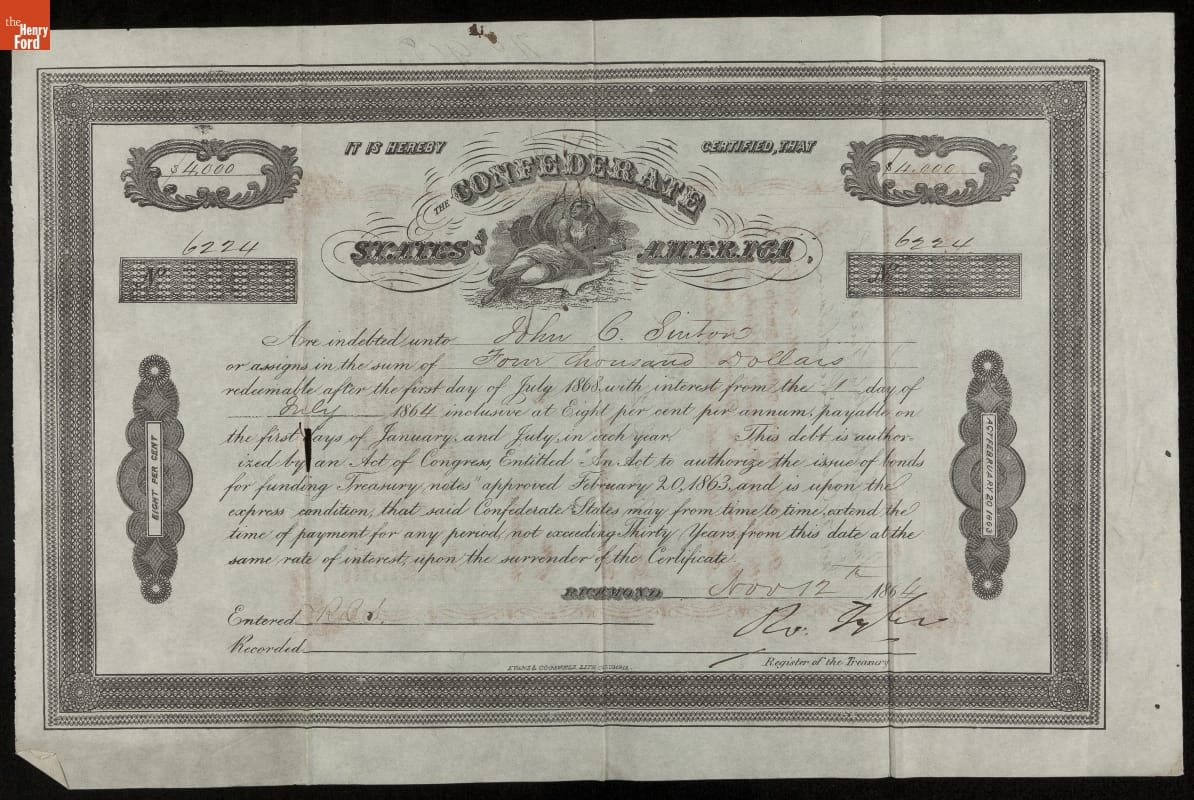
- Confederate Bond, Four Thousand Dollars, 1864 - In March 1865, John Clarke Sinton transferred this $4,000 bond to Jane Clarke, likely the widow of one of his relatives. Sinton had served as estate trustee; these funds were probably part of Jane's husband's estate. $4,000 may seem like a lot of money -- but in 1865 it didn't buy much. With Confederate surrender a month later, the bond became worthless.
- 1864
- Collections - Artifact
Confederate Bond, Four Thousand Dollars, 1864
In March 1865, John Clarke Sinton transferred this $4,000 bond to Jane Clarke, likely the widow of one of his relatives. Sinton had served as estate trustee; these funds were probably part of Jane's husband's estate. $4,000 may seem like a lot of money -- but in 1865 it didn't buy much. With Confederate surrender a month later, the bond became worthless.
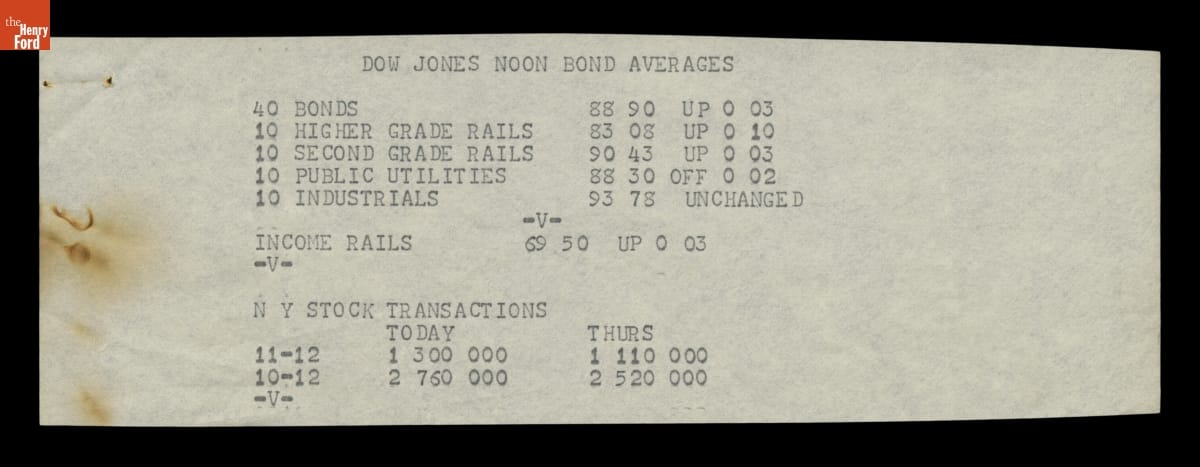
- Teletype Message with Dow Jones Bond Averages, November 22, 1963 - In the routine course of business, Ford Motor Company received a steady flow of news and financial reports from the Wall Street Journal. These dispatches came over the teletype machine on November 22, 1963 describing events from the arrival of President John F. Kennedy and his wife Jacqueline in Dallas through the official report of his death several hours later.
- November 22, 1963
- Collections - Artifact
Teletype Message with Dow Jones Bond Averages, November 22, 1963
In the routine course of business, Ford Motor Company received a steady flow of news and financial reports from the Wall Street Journal. These dispatches came over the teletype machine on November 22, 1963 describing events from the arrival of President John F. Kennedy and his wife Jacqueline in Dallas through the official report of his death several hours later.
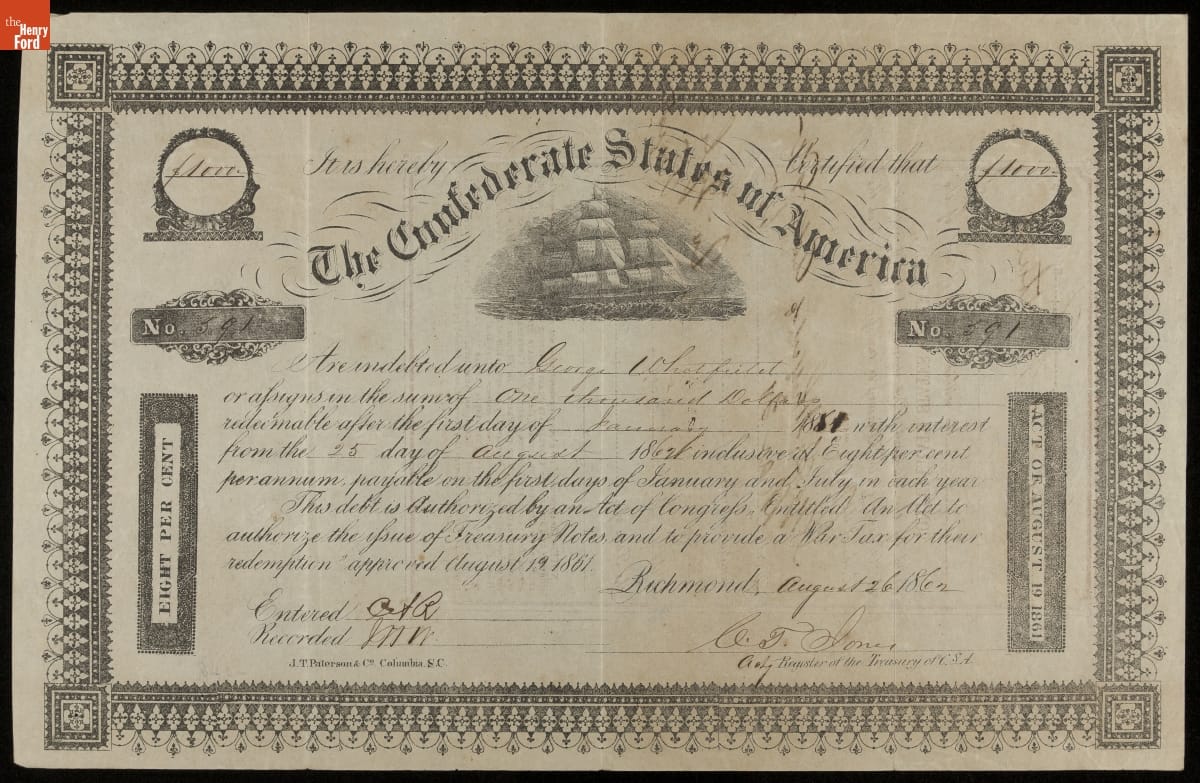
- Confederate Bond, One Thousand Dollars, 1862 - To help raise money, the Confederate States of America issued bonds. Early in the Civil War, these bonds seemed a worthwhile, even patriotic, investment to the Southerners who bought them. The war was going well for the Confederacy and the bonds promised a tidy profit in interest. At war's end, Southerners were left holding now worthless Confederate bonds.
- 1862
- Collections - Artifact
Confederate Bond, One Thousand Dollars, 1862
To help raise money, the Confederate States of America issued bonds. Early in the Civil War, these bonds seemed a worthwhile, even patriotic, investment to the Southerners who bought them. The war was going well for the Confederacy and the bonds promised a tidy profit in interest. At war's end, Southerners were left holding now worthless Confederate bonds.
- Confederate Bond, Five Thousand Dollars, 1862 - Stella Williams was a wealthy orphan in 1860, living with her aunt and uncle in Richmond, Virginia. In January 1862, 19-year-old Stella purchased this $5,000 bond -- equal to one-fourth of her wealth. At 8% interest, it seemed like a good investment. Initially, at least, it was. Once the war was lost, Southerners like Stella were left holding now worthless Confederate bonds.
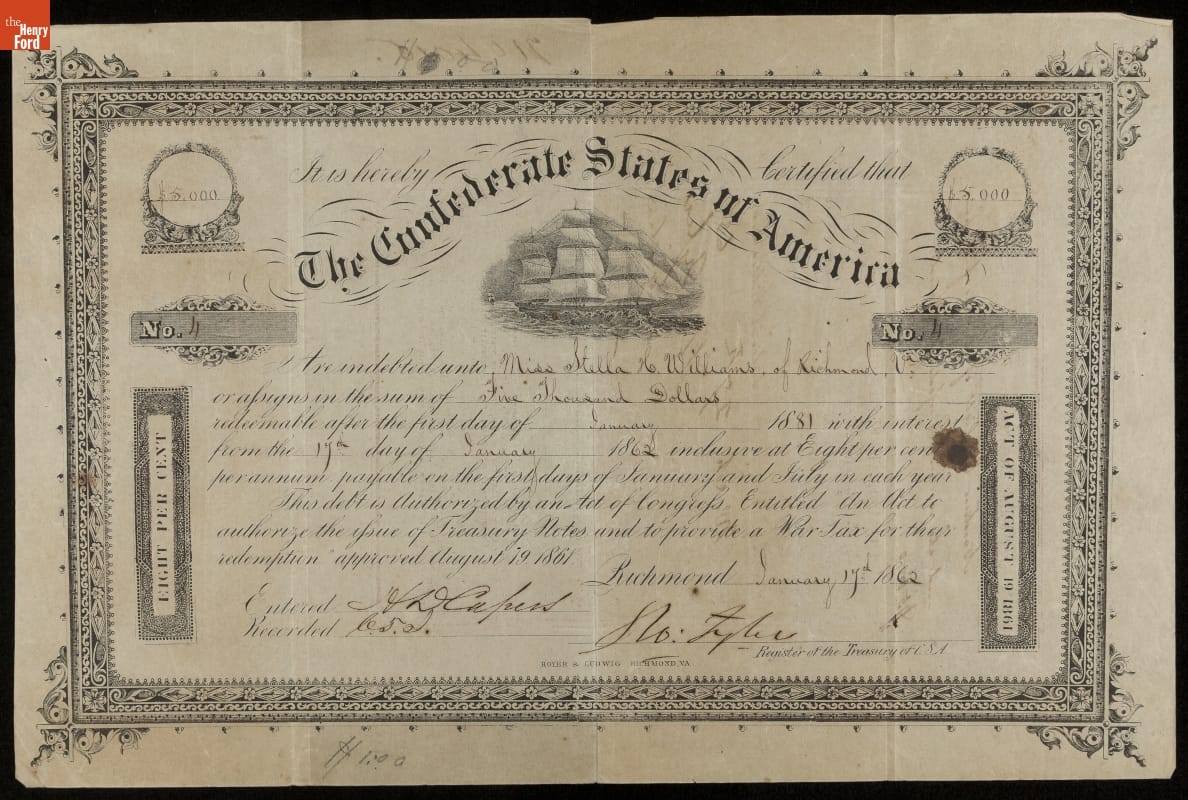
- January 17, 1862
- Collections - Artifact
Confederate Bond, Five Thousand Dollars, 1862
Stella Williams was a wealthy orphan in 1860, living with her aunt and uncle in Richmond, Virginia. In January 1862, 19-year-old Stella purchased this $5,000 bond -- equal to one-fourth of her wealth. At 8% interest, it seemed like a good investment. Initially, at least, it was. Once the war was lost, Southerners like Stella were left holding now worthless Confederate bonds.
- Confederate Bond, One Hundred Thousand Dollars, 1865 - To raise money to finance its government, the Confederate States of America issued bonds. This bond dates from late in the Civil War, when printing too much paper money had created rampant inflation. The Confederacy began issuing bonds as a way of taking some paper currency out of circulation. All bills greater than $5 were to be converted into bonds paying 4% interest.
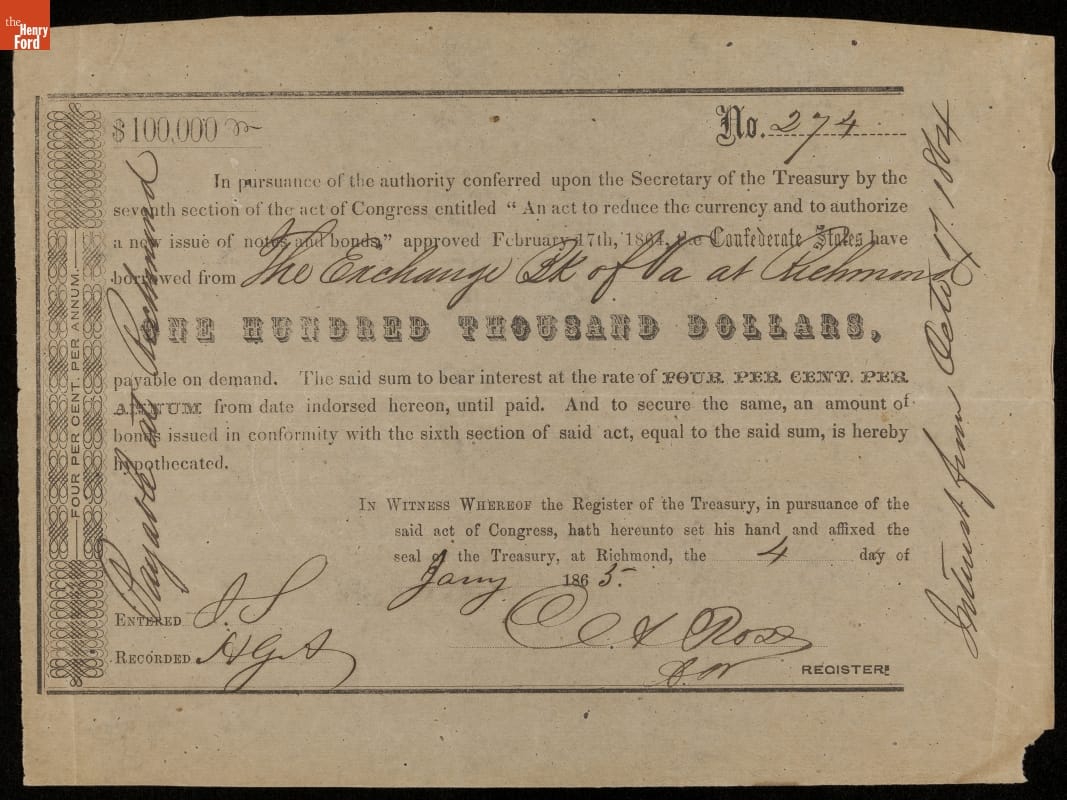
- January 04, 1865
- Collections - Artifact
Confederate Bond, One Hundred Thousand Dollars, 1865
To raise money to finance its government, the Confederate States of America issued bonds. This bond dates from late in the Civil War, when printing too much paper money had created rampant inflation. The Confederacy began issuing bonds as a way of taking some paper currency out of circulation. All bills greater than $5 were to be converted into bonds paying 4% interest.
- Confederate Bond, One Hundred Dollars, 1862 - To help raise money, the Confederate States of America issued bonds. Early in the Civil War, these bonds seemed a worthwhile, even patriotic, investment to the Southerners who bought them. The war was going well for the Confederacy and the bonds promised a tidy profit in interest. At war's end, Southerners were left holding now worthless Confederate bonds.
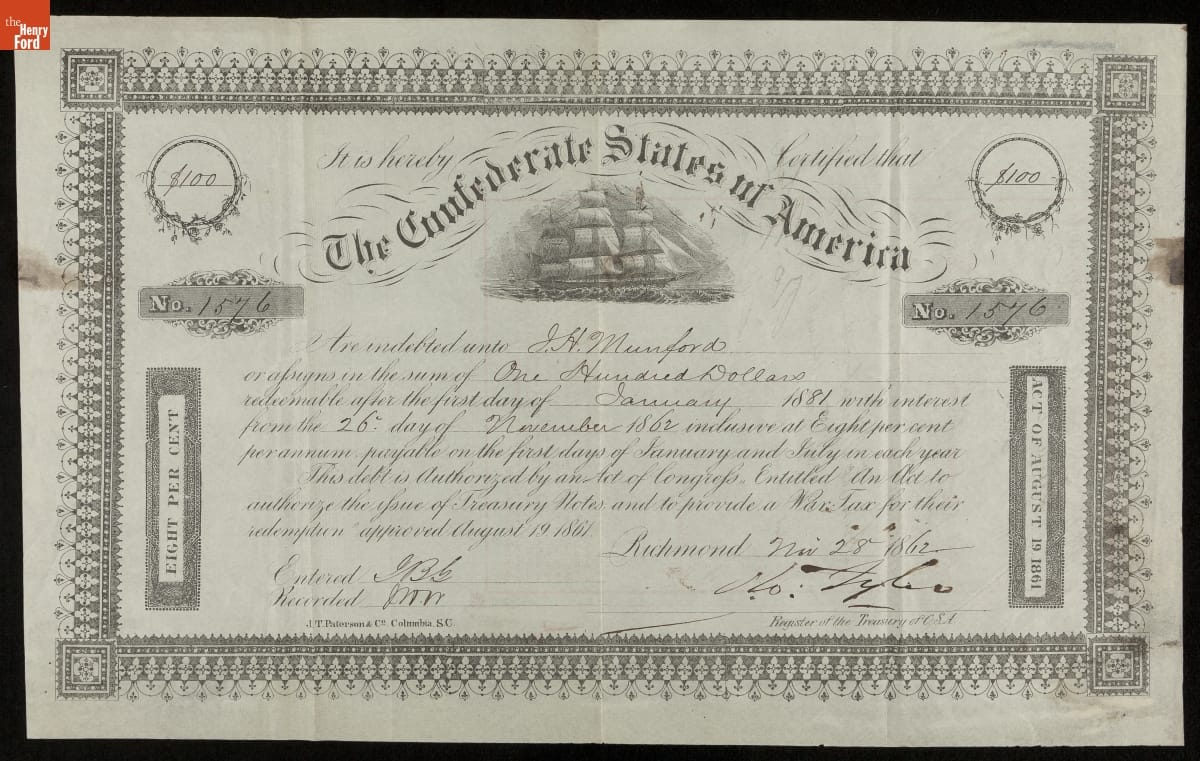
- 1862-1865
- Collections - Artifact
Confederate Bond, One Hundred Dollars, 1862
To help raise money, the Confederate States of America issued bonds. Early in the Civil War, these bonds seemed a worthwhile, even patriotic, investment to the Southerners who bought them. The war was going well for the Confederacy and the bonds promised a tidy profit in interest. At war's end, Southerners were left holding now worthless Confederate bonds.
- Correspondence between Office of Henry Ford and the Union Trust Company of Pittsburgh, September 1943 -
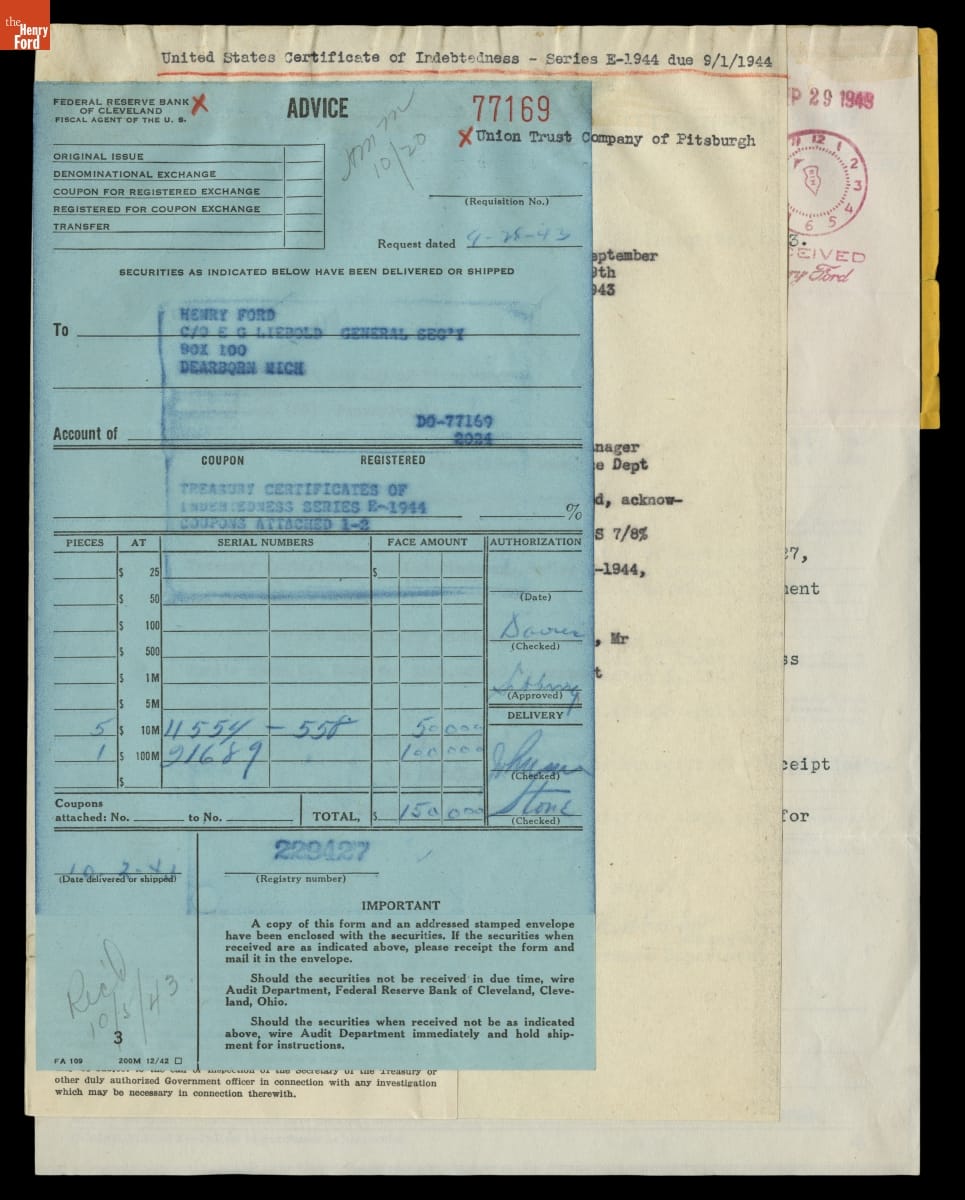
- 27 September 1943-29 September 1943
- Collections - Artifact
Correspondence between Office of Henry Ford and the Union Trust Company of Pittsburgh, September 1943
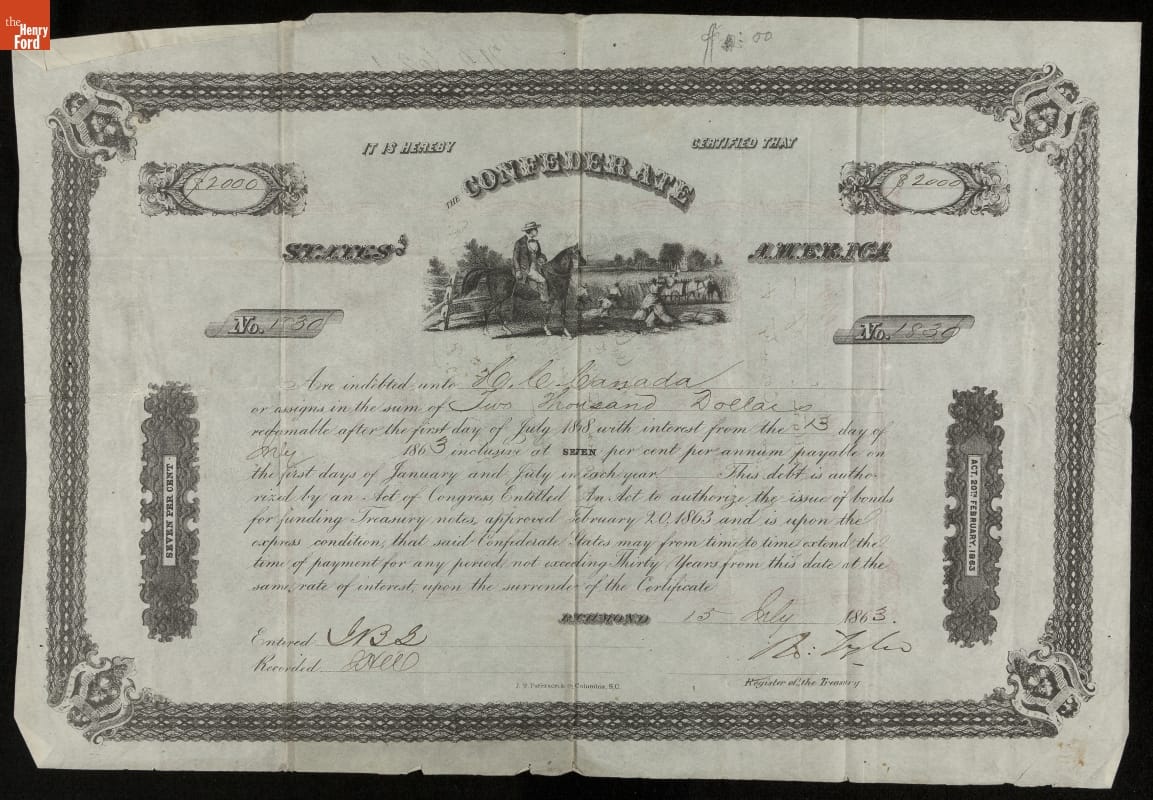
- Confederate Bond, Two Thousand Dollars, 1863 - To help raise money, the Confederate States of America issued bonds. Early in the Civil War, these bonds seemed a worthwhile, even patriotic, investment to the Southerners who bought them. The war was going well for the Confederacy and the bonds promised a tidy profit in interest. At war's end, Southerners were left holding now worthless Confederate bonds.
- July 15, 1863
- Collections - Artifact
Confederate Bond, Two Thousand Dollars, 1863
To help raise money, the Confederate States of America issued bonds. Early in the Civil War, these bonds seemed a worthwhile, even patriotic, investment to the Southerners who bought them. The war was going well for the Confederacy and the bonds promised a tidy profit in interest. At war's end, Southerners were left holding now worthless Confederate bonds.
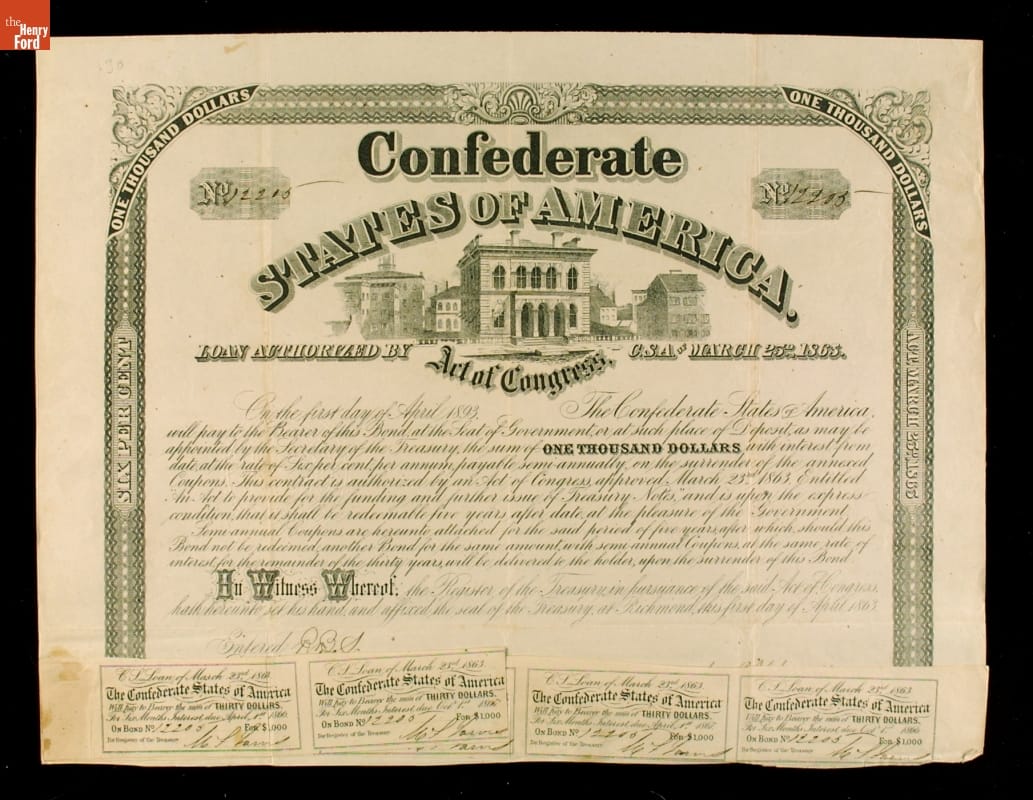
- "Confederate States of America... Loan... One Thousand Dollars...," March 25, 1863 - To help raise money, the Confederate States of America issued bonds. Early in the Civil War, these bonds seemed a worthwhile, even patriotic, investment to the Southerners who bought them. The war was going well for the Confederacy and the bonds promised a tidy profit in interest. At war's end, Southerners were left holding now worthless Confederate bonds.
- March 25, 1863
- Collections - Artifact
"Confederate States of America... Loan... One Thousand Dollars...," March 25, 1863
To help raise money, the Confederate States of America issued bonds. Early in the Civil War, these bonds seemed a worthwhile, even patriotic, investment to the Southerners who bought them. The war was going well for the Confederacy and the bonds promised a tidy profit in interest. At war's end, Southerners were left holding now worthless Confederate bonds.