
Search
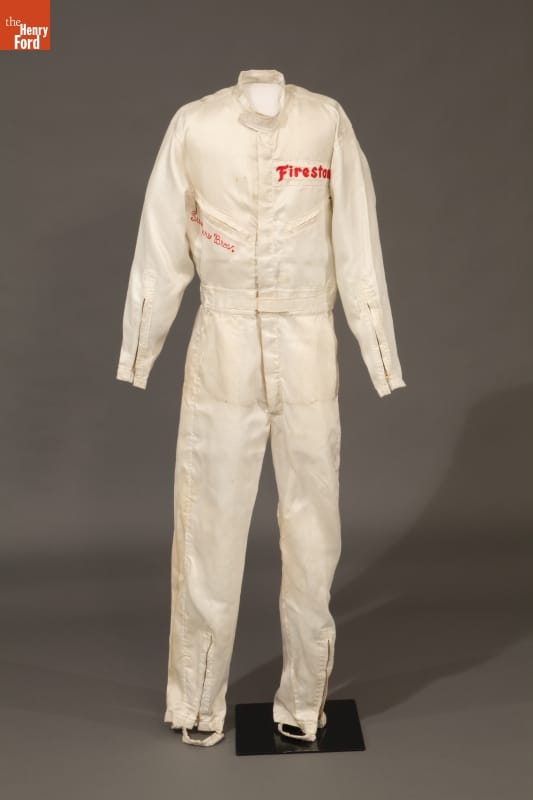
- Racing Suit Worn by Bob Summers While Winning New Land Speed Record, 1965 - Bob Summers of Ontario, California, wore this racing suit when he achieved a new wheel-driven land speed record of 409.277 miles per hour on November 12, 1965. Summers was in Goldenrod, the sleek four-engine car he built with his brother Bill. The Summers brothers' record stood until 1991.
- November 12, 1965
- Collections - Artifact
Racing Suit Worn by Bob Summers While Winning New Land Speed Record, 1965
Bob Summers of Ontario, California, wore this racing suit when he achieved a new wheel-driven land speed record of 409.277 miles per hour on November 12, 1965. Summers was in Goldenrod, the sleek four-engine car he built with his brother Bill. The Summers brothers' record stood until 1991.
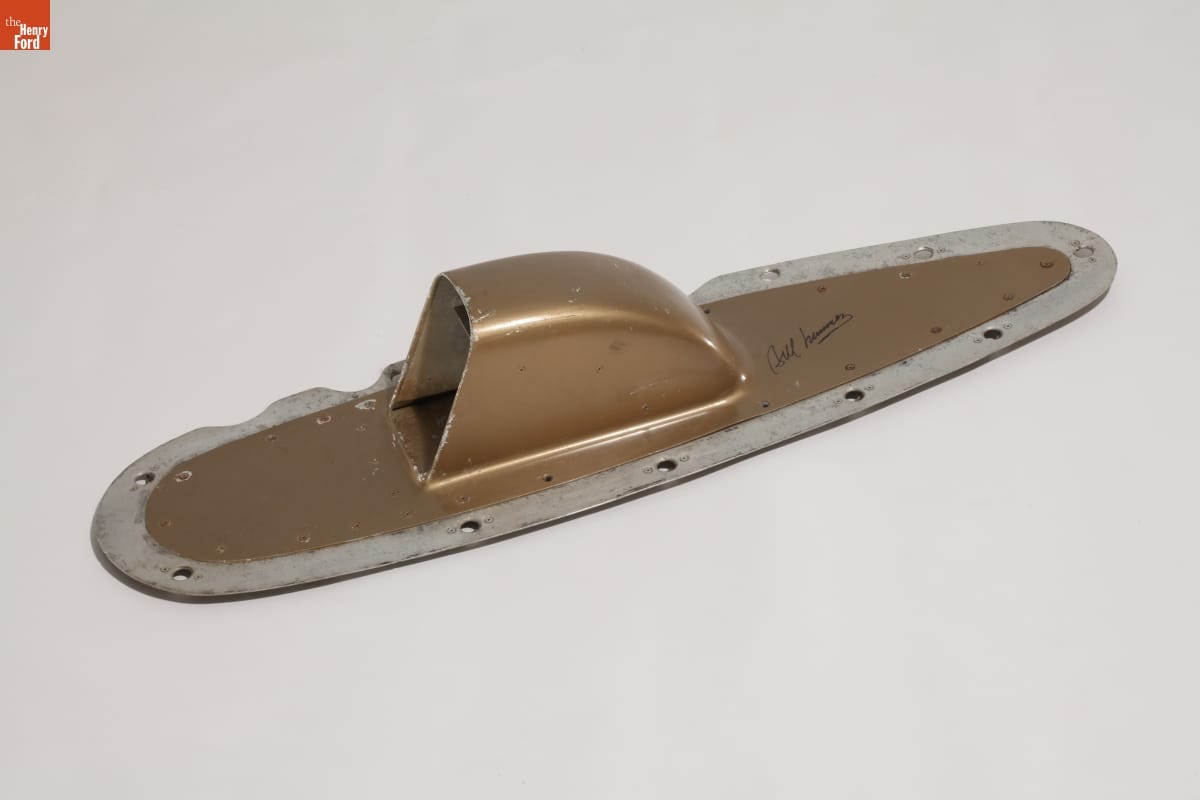
- Goldenrod Hood Scoop, 1965 - This is one of two hood scoops used on Goldenrod when it set a wheel-driven land speed record of 409.277 miles per hour in November 1965. The scoops fed air into the car's four Chrysler "Hemi" V-8 engines, which produced a combined 2,400 horsepower. This scoop is autographed by Bill Summers who, with his brother Bob, designed and built Goldenrod.
- 1965
- Collections - Artifact
Goldenrod Hood Scoop, 1965
This is one of two hood scoops used on Goldenrod when it set a wheel-driven land speed record of 409.277 miles per hour in November 1965. The scoops fed air into the car's four Chrysler "Hemi" V-8 engines, which produced a combined 2,400 horsepower. This scoop is autographed by Bill Summers who, with his brother Bob, designed and built Goldenrod.
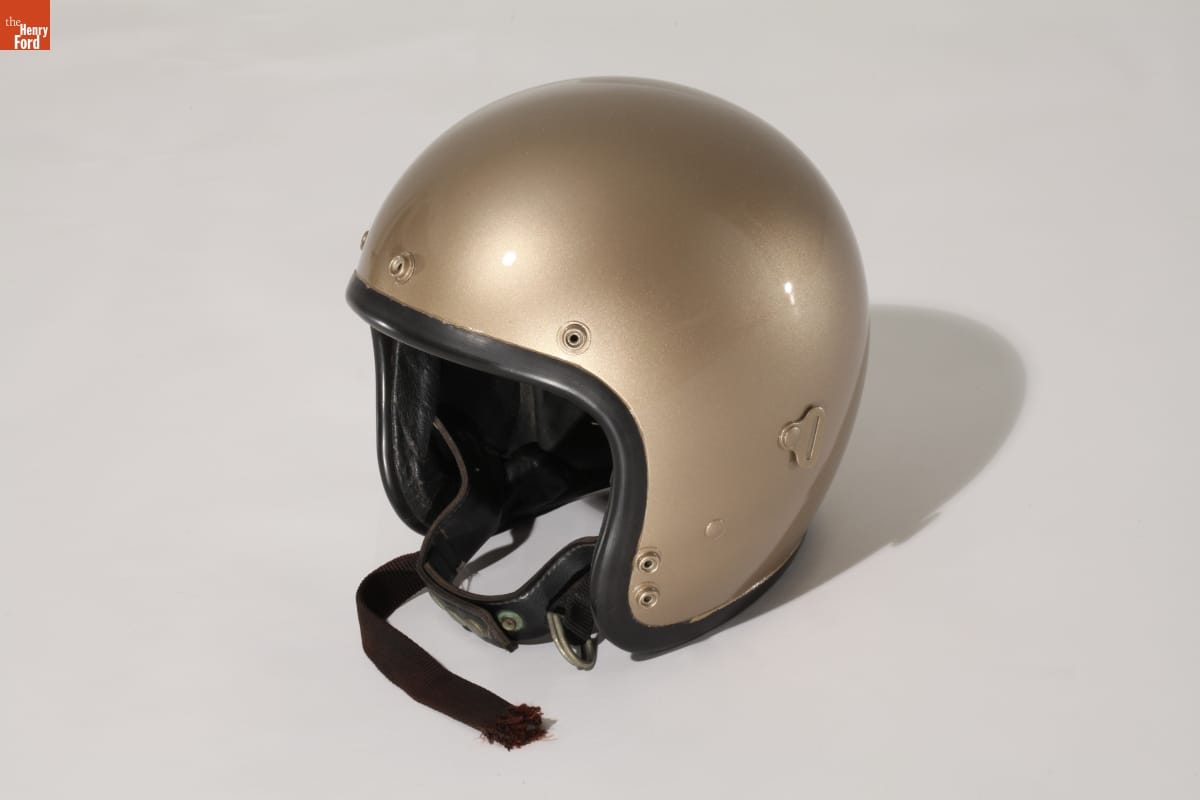
- Racing Helmet Worn by Bob Summers While Winning New Land Speed Record, 1965 - Bob Summers of Ontario, California, wore this helmet when he achieved a new wheel-driven land speed record of 409.277 miles per hour on November 12, 1965. Summers was in Goldenrod, the sleek four-engine car he built with his brother Bill. The Summers brothers' record stood until 1991.
- November 12, 1965
- Collections - Artifact
Racing Helmet Worn by Bob Summers While Winning New Land Speed Record, 1965
Bob Summers of Ontario, California, wore this helmet when he achieved a new wheel-driven land speed record of 409.277 miles per hour on November 12, 1965. Summers was in Goldenrod, the sleek four-engine car he built with his brother Bill. The Summers brothers' record stood until 1991.
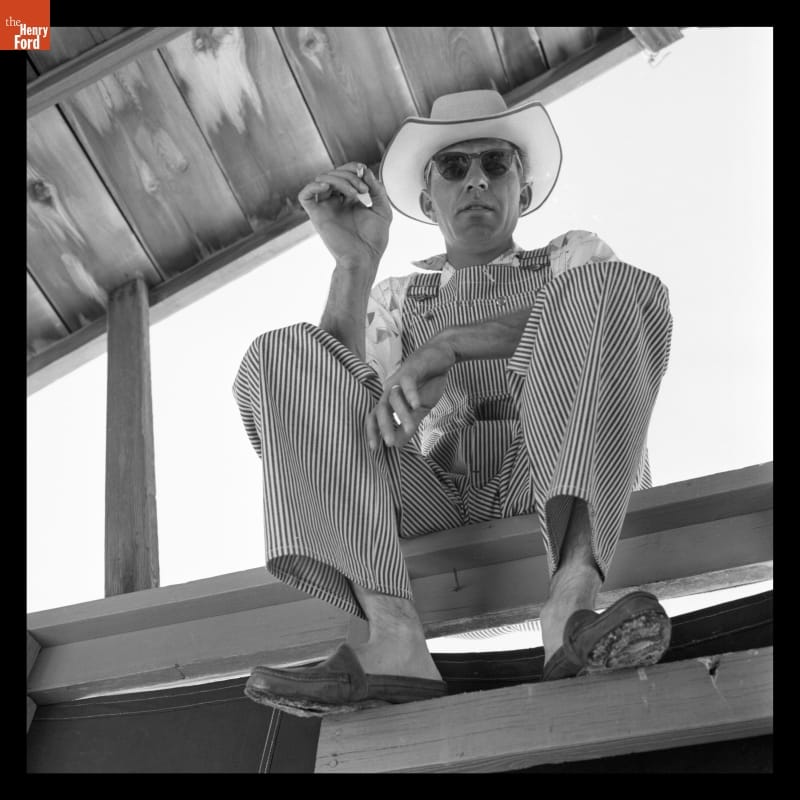
- Carroll Shelby at Bonneville Salt Flats, Utah, 1956 - Carroll Shelby, Donald Healey and Roy Jackson-Moore traveled to Utah's Bonneville Salt Flats in 1956 with a pair of heavily modified Austin-Healey streamliners. Healey's supercharged car averaged 201.10 miles per hour, fulfilling his personal ambition to break the 200-mph barrier. The naturally aspirated car driven by Shelby and Jackson-Moore set several speed and endurance records on a ten-mile circular course.
- 1956
- Collections - Artifact
Carroll Shelby at Bonneville Salt Flats, Utah, 1956
Carroll Shelby, Donald Healey and Roy Jackson-Moore traveled to Utah's Bonneville Salt Flats in 1956 with a pair of heavily modified Austin-Healey streamliners. Healey's supercharged car averaged 201.10 miles per hour, fulfilling his personal ambition to break the 200-mph barrier. The naturally aspirated car driven by Shelby and Jackson-Moore set several speed and endurance records on a ten-mile circular course.
- Carroll Shelby at Bonneville Salt Flats, Utah, 1956 - Carroll Shelby, Donald Healey and Roy Jackson-Moore traveled to Utah's Bonneville Salt Flats in 1956 with a pair of heavily modified Austin-Healey streamliners. Healey's supercharged car averaged 201.10 miles per hour, fulfilling his personal ambition to break the 200-mph barrier. The naturally aspirated car driven by Shelby and Jackson-Moore set several speed and endurance records on a ten-mile circular course.
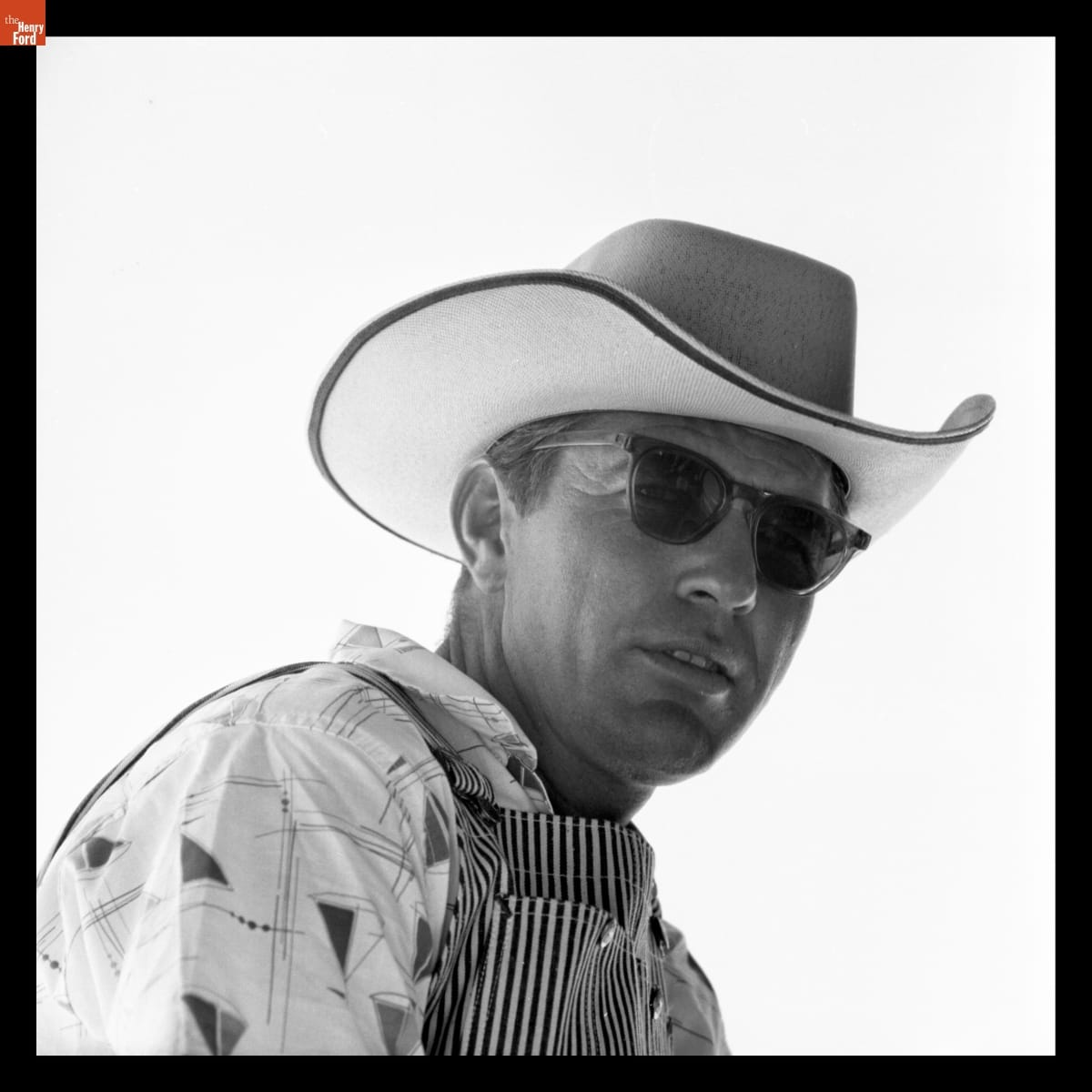
- 1956
- Collections - Artifact
Carroll Shelby at Bonneville Salt Flats, Utah, 1956
Carroll Shelby, Donald Healey and Roy Jackson-Moore traveled to Utah's Bonneville Salt Flats in 1956 with a pair of heavily modified Austin-Healey streamliners. Healey's supercharged car averaged 201.10 miles per hour, fulfilling his personal ambition to break the 200-mph barrier. The naturally aspirated car driven by Shelby and Jackson-Moore set several speed and endurance records on a ten-mile circular course.
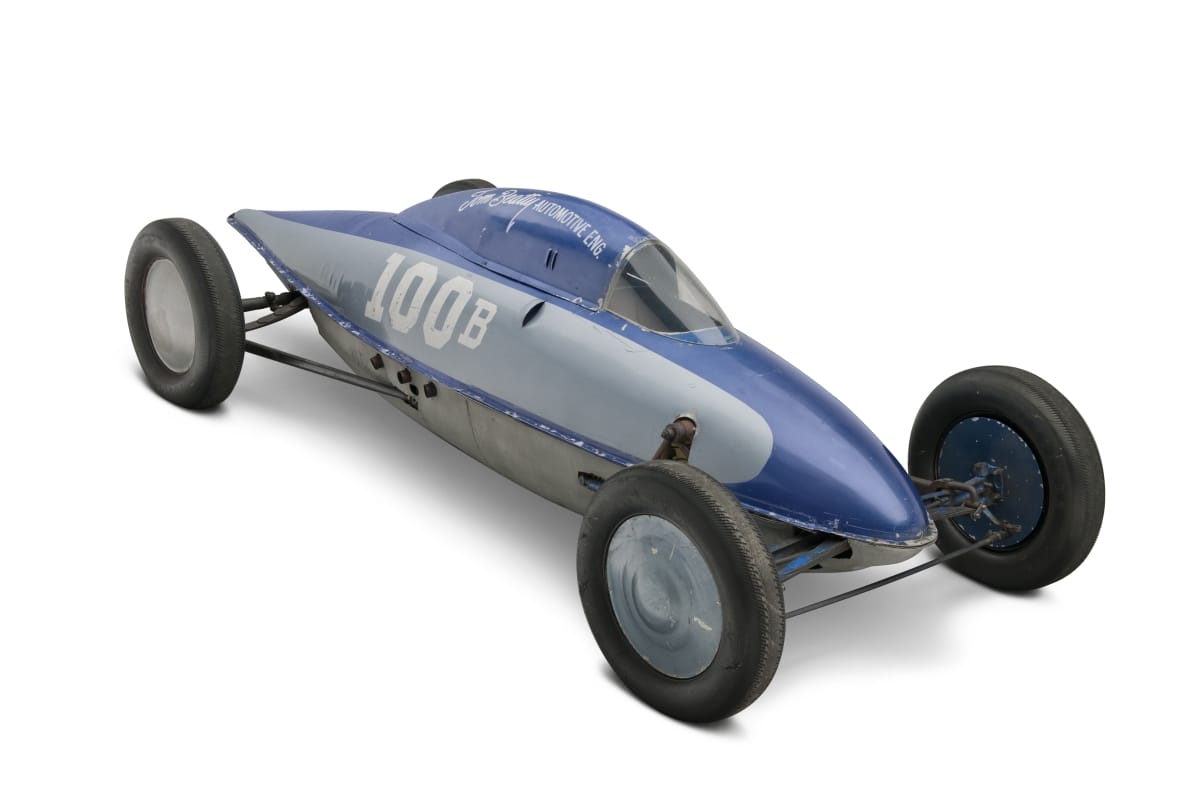
- 1951 Beatty Belly Tank Lakester Land Speed Race Car - After World War II, hot rodders started using external fuel tanks from fighter planes as car bodies. The teardrop shape was ideal for speed record runs on dry lake beds and Utah's Bonneville Salt Flats. Californian Tom Beatty crafted this tank that was once the world's fastest.
- 1951
- Collections - Artifact
1951 Beatty Belly Tank Lakester Land Speed Race Car
After World War II, hot rodders started using external fuel tanks from fighter planes as car bodies. The teardrop shape was ideal for speed record runs on dry lake beds and Utah's Bonneville Salt Flats. Californian Tom Beatty crafted this tank that was once the world's fastest.
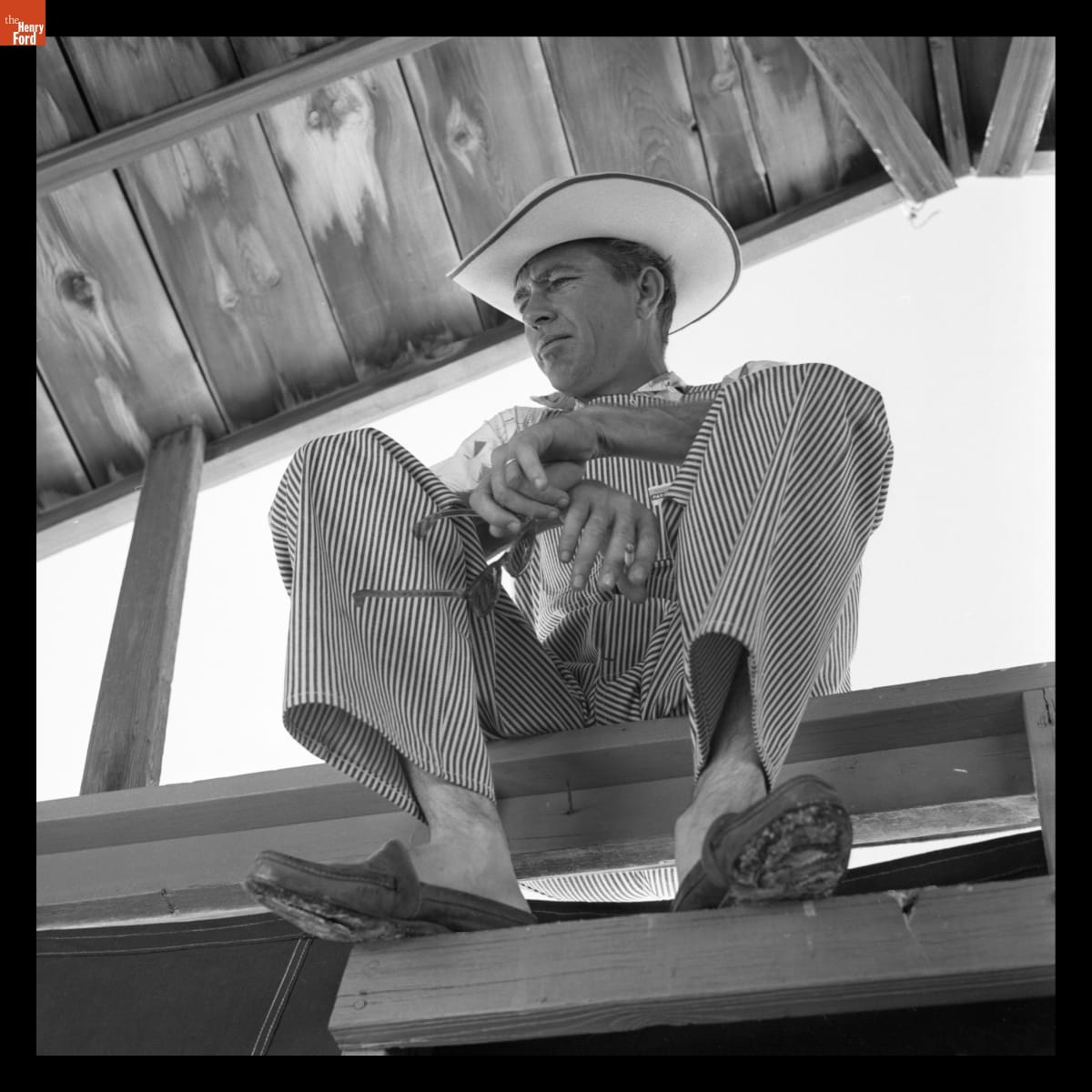
- Carroll Shelby at Bonneville Salt Flats, Utah, 1956 - Carroll Shelby, Donald Healey and Roy Jackson-Moore traveled to Utah's Bonneville Salt Flats in 1956 with a pair of heavily modified Austin-Healey streamliners. Healey's supercharged car averaged 201.10 miles per hour, fulfilling his personal ambition to break the 200-mph barrier. The naturally aspirated car driven by Shelby and Jackson-Moore set several speed and endurance records on a ten-mile circular course.
- 1956
- Collections - Artifact
Carroll Shelby at Bonneville Salt Flats, Utah, 1956
Carroll Shelby, Donald Healey and Roy Jackson-Moore traveled to Utah's Bonneville Salt Flats in 1956 with a pair of heavily modified Austin-Healey streamliners. Healey's supercharged car averaged 201.10 miles per hour, fulfilling his personal ambition to break the 200-mph barrier. The naturally aspirated car driven by Shelby and Jackson-Moore set several speed and endurance records on a ten-mile circular course.
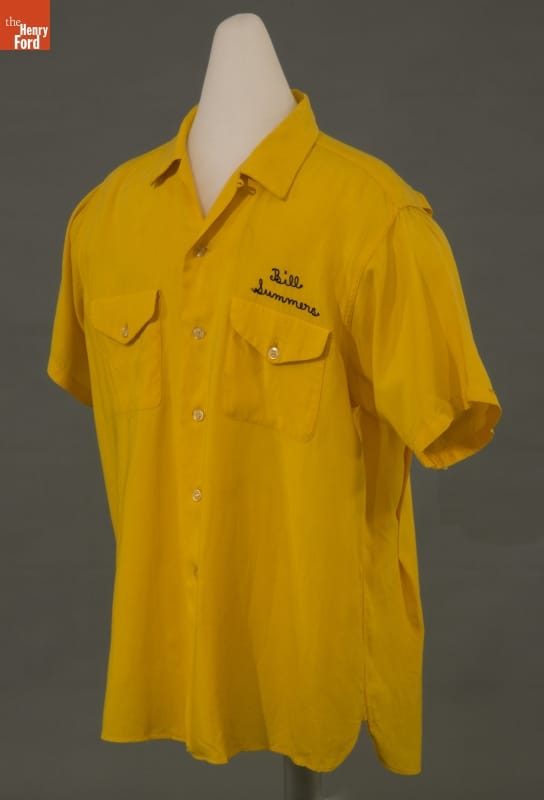
- Shirt Made for Bill Summers, Commemorating Land Speed Record Set by Goldenrod, circa 1965 - This shirt was made for Bill Summers who, with his brother Bob, built Goldenrod. The bullet-like car set a new wheel-driven land speed record of 409.277 miles per hour in November 1965. Personalized shirts like this were often worn by racing car crew members in the 1960s.
- November 12, 1965
- Collections - Artifact
Shirt Made for Bill Summers, Commemorating Land Speed Record Set by Goldenrod, circa 1965
This shirt was made for Bill Summers who, with his brother Bob, built Goldenrod. The bullet-like car set a new wheel-driven land speed record of 409.277 miles per hour in November 1965. Personalized shirts like this were often worn by racing car crew members in the 1960s.
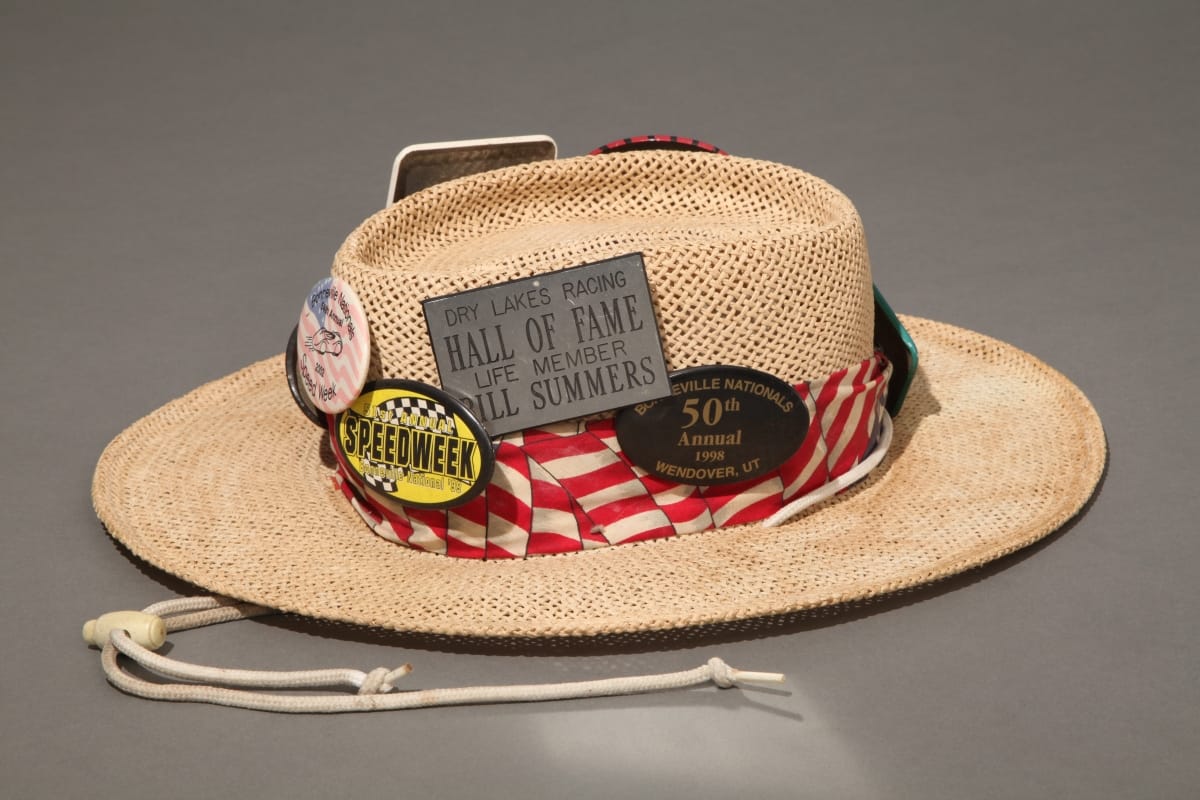
- Hat Worn by Bill Summers, circa 1982 - For a land speed racer, one of the most important -- if less obvious -- pieces of safety equipment is a good hat. Utah's Bonneville Salt Flats are devoid of shade trees, and the sun is intense. This straw hat belonged to Bill Summers who, with his brother Bob, set a land speed record with the Goldenrod car in 1965.
- 1997-2003
- Collections - Artifact
Hat Worn by Bill Summers, circa 1982
For a land speed racer, one of the most important -- if less obvious -- pieces of safety equipment is a good hat. Utah's Bonneville Salt Flats are devoid of shade trees, and the sun is intense. This straw hat belonged to Bill Summers who, with his brother Bob, set a land speed record with the Goldenrod car in 1965.
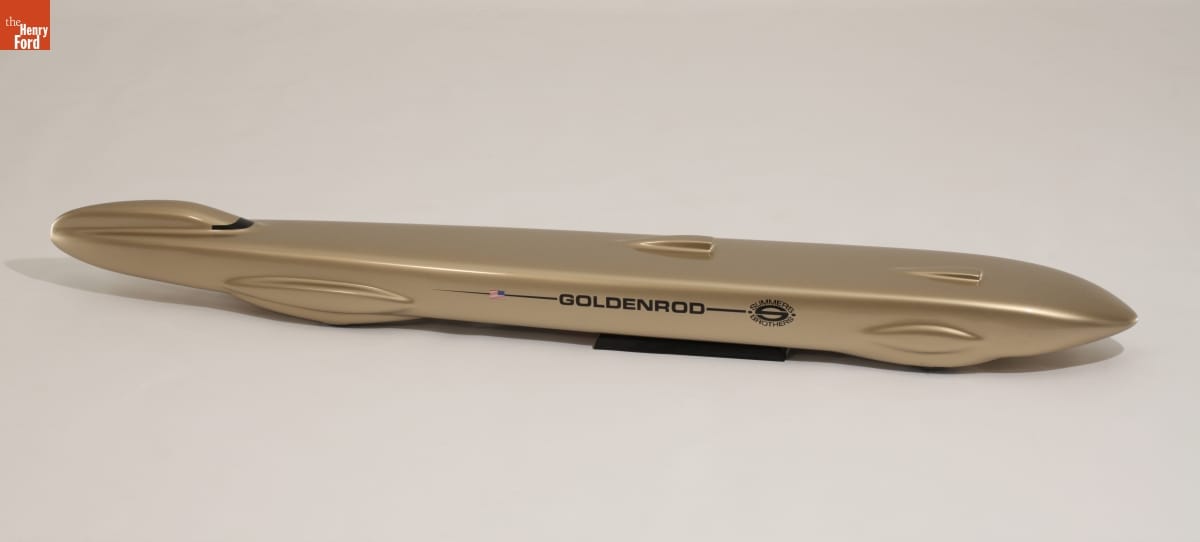
- Scale Model of Goldenrod Land Speed Record Race Car, 1963-1964 - Brothers Bob and Bill Summers of Ontario, California, set a new land speed record for a wheel-driven car with Goldenrod, their streamlined racer. The bullet-like vehicle, powered by four Chrysler "Hemi" V-8 engines, averaged 409.277 miles per hour in its November 1965 run. Goldenrod's achievement resonated with purists who thought that jet-powered land speed racers weren't true cars.
- 1963-1964
- Collections - Artifact
Scale Model of Goldenrod Land Speed Record Race Car, 1963-1964
Brothers Bob and Bill Summers of Ontario, California, set a new land speed record for a wheel-driven car with Goldenrod, their streamlined racer. The bullet-like vehicle, powered by four Chrysler "Hemi" V-8 engines, averaged 409.277 miles per hour in its November 1965 run. Goldenrod's achievement resonated with purists who thought that jet-powered land speed racers weren't true cars.