
Search
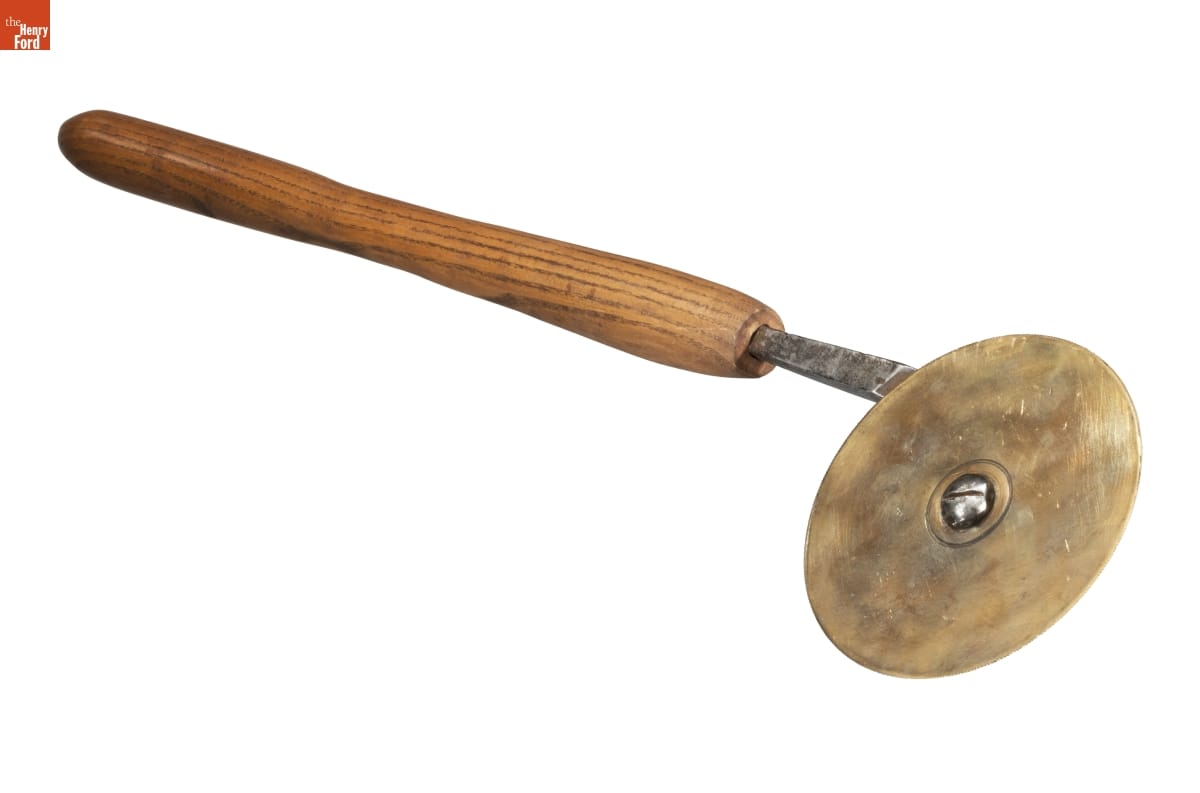
- Fillet - Bookbinders use finishing tools to add decoration to the leather spine and covers of a book. The tools are often heated and then stamped, pressed, or rolled onto the leather. Decoration can be as simple as thin straight lines or rounded arcs, or as intricate as ornate patterns, scrolls, or floral designs.
- Collections - Artifact
Fillet
Bookbinders use finishing tools to add decoration to the leather spine and covers of a book. The tools are often heated and then stamped, pressed, or rolled onto the leather. Decoration can be as simple as thin straight lines or rounded arcs, or as intricate as ornate patterns, scrolls, or floral designs.
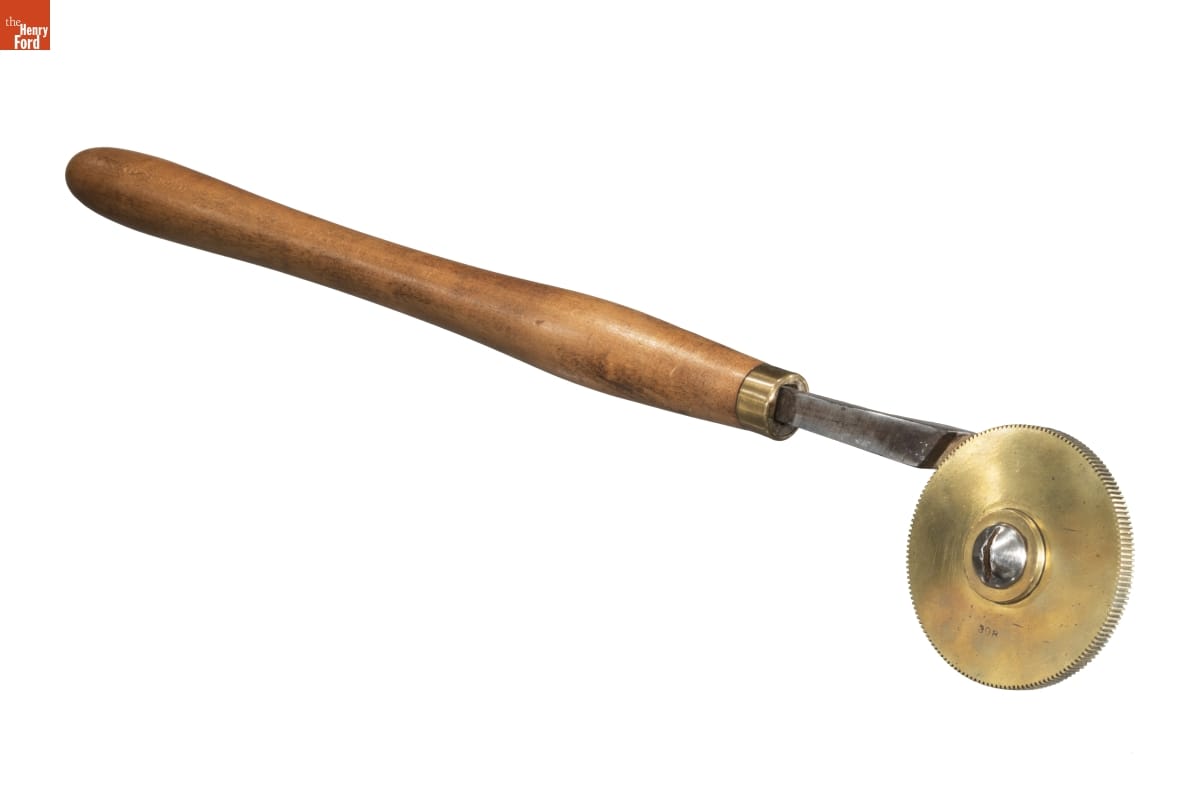
- Pattern Roll - Bookbinders use finishing tools to add decoration to the leather spine and covers of a book. The tools are often heated and then stamped, pressed, or rolled onto the leather. Decoration can be as simple as thin straight lines or rounded arcs, or as intricate as ornate patterns, scrolls, or floral designs.
- Collections - Artifact
Pattern Roll
Bookbinders use finishing tools to add decoration to the leather spine and covers of a book. The tools are often heated and then stamped, pressed, or rolled onto the leather. Decoration can be as simple as thin straight lines or rounded arcs, or as intricate as ornate patterns, scrolls, or floral designs.
- Polishing Iron -
- Collections - Artifact
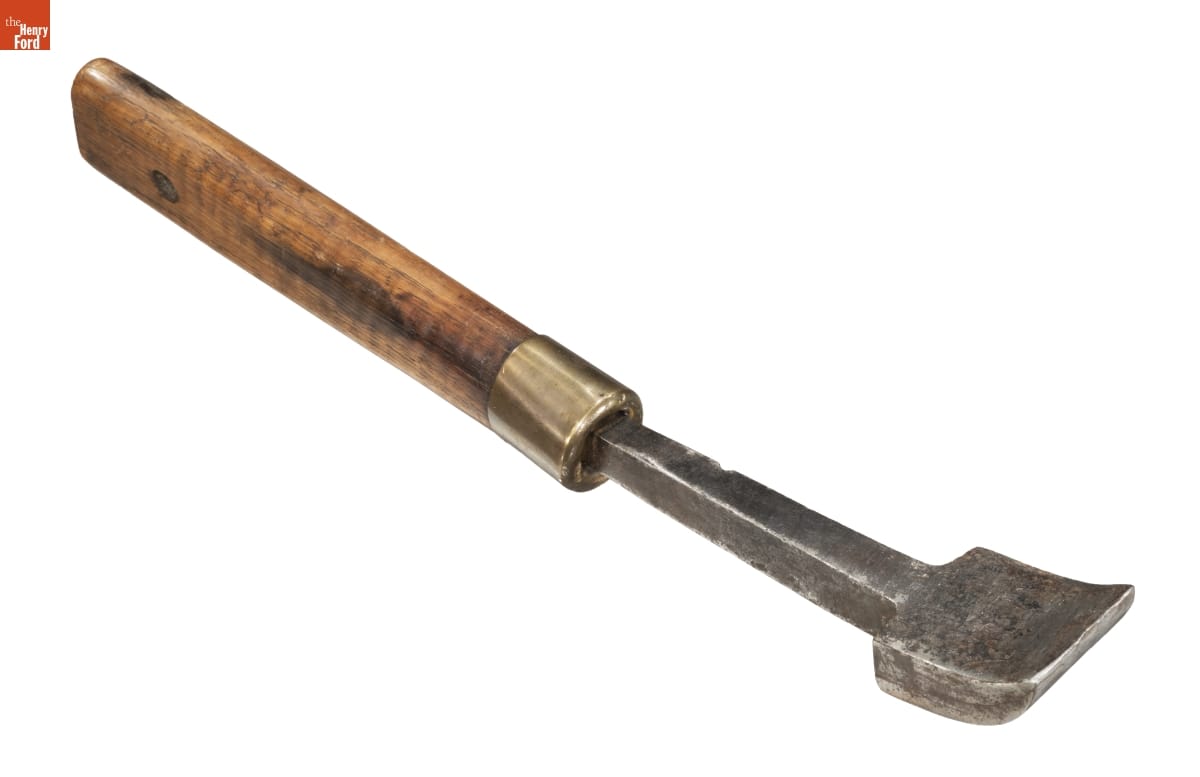
Polishing Iron
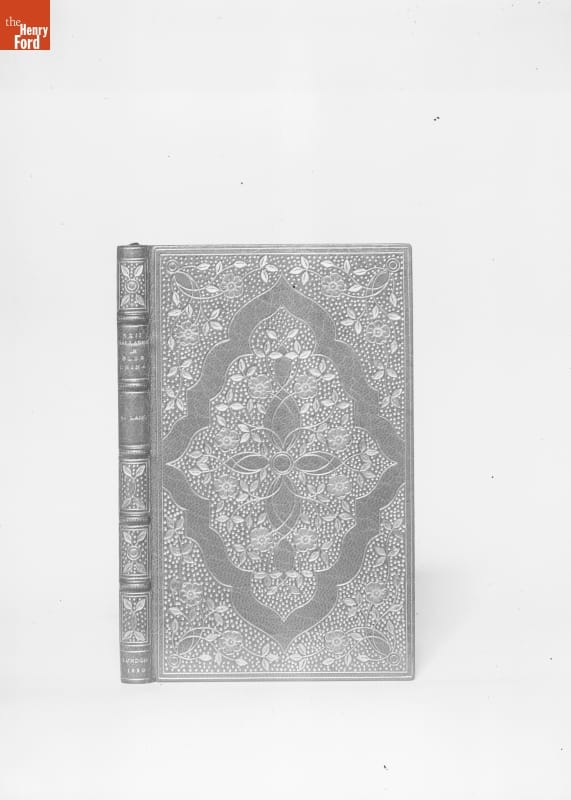
- Ballads in Blue China, A. Lang. Blue Inlay in Darker Blue, Tooling in Gold, Stikeman & Co. Front Cover., 1890-1915 - In 1890, Jenny Young Chandler, 25 years old and recently widowed, began working for the <EM>New York Herald</EM>. As a photojournalist and feature writer, Chandler captured life in Brooklyn, New York, and vicinity. She also documented collections of private individuals and museums -- some of which were featured in magazine articles for collectors. By 1922, the time of her death, she had produced over 800 glass plate negatives.
- 1890-1915
- Collections - Artifact
Ballads in Blue China, A. Lang. Blue Inlay in Darker Blue, Tooling in Gold, Stikeman & Co. Front Cover., 1890-1915
In 1890, Jenny Young Chandler, 25 years old and recently widowed, began working for the New York Herald. As a photojournalist and feature writer, Chandler captured life in Brooklyn, New York, and vicinity. She also documented collections of private individuals and museums -- some of which were featured in magazine articles for collectors. By 1922, the time of her death, she had produced over 800 glass plate negatives.
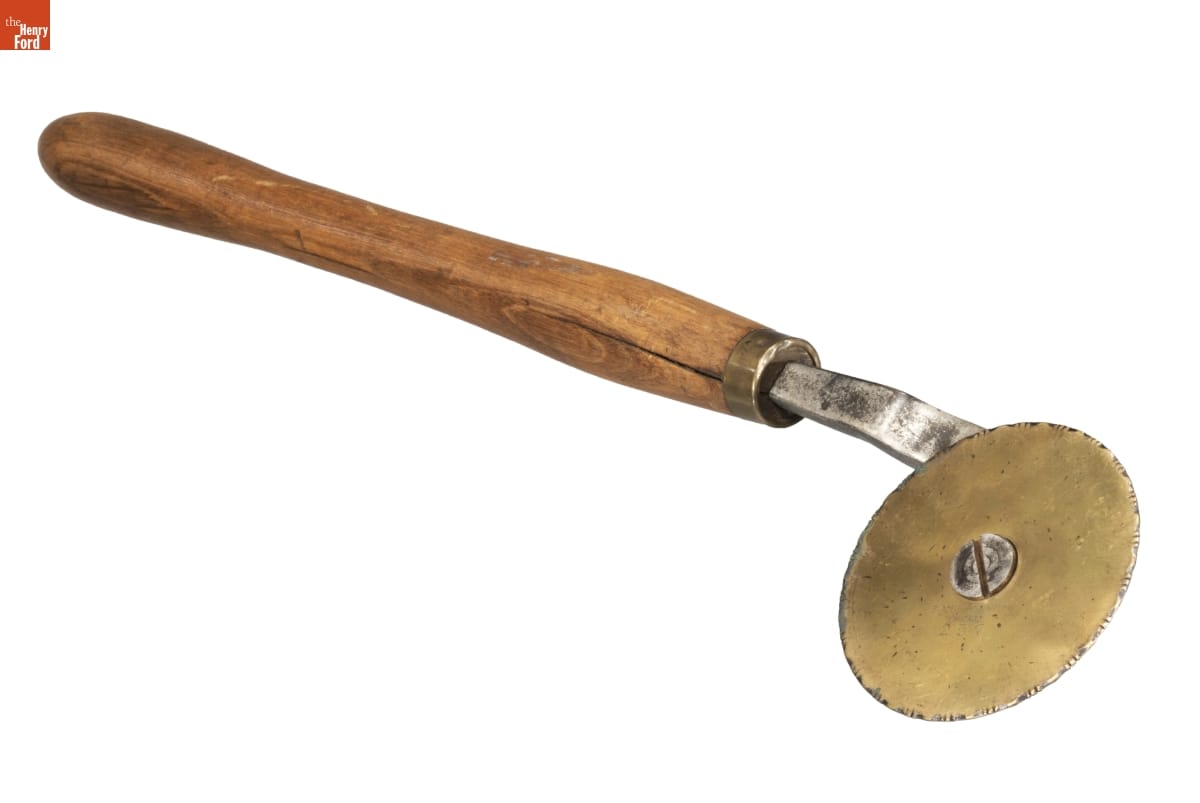
- Slade, Hipp & Meloy #257 Pattern Roll - Bookbinders use finishing tools to add decoration to the leather spine and covers of a book. The tools are often heated and then stamped, pressed, or rolled onto the leather. Decoration can be as simple as thin straight lines or rounded arcs, or as intricate as ornate patterns, scrolls, or floral designs.
- Collections - Artifact
Slade, Hipp & Meloy #257 Pattern Roll
Bookbinders use finishing tools to add decoration to the leather spine and covers of a book. The tools are often heated and then stamped, pressed, or rolled onto the leather. Decoration can be as simple as thin straight lines or rounded arcs, or as intricate as ornate patterns, scrolls, or floral designs.
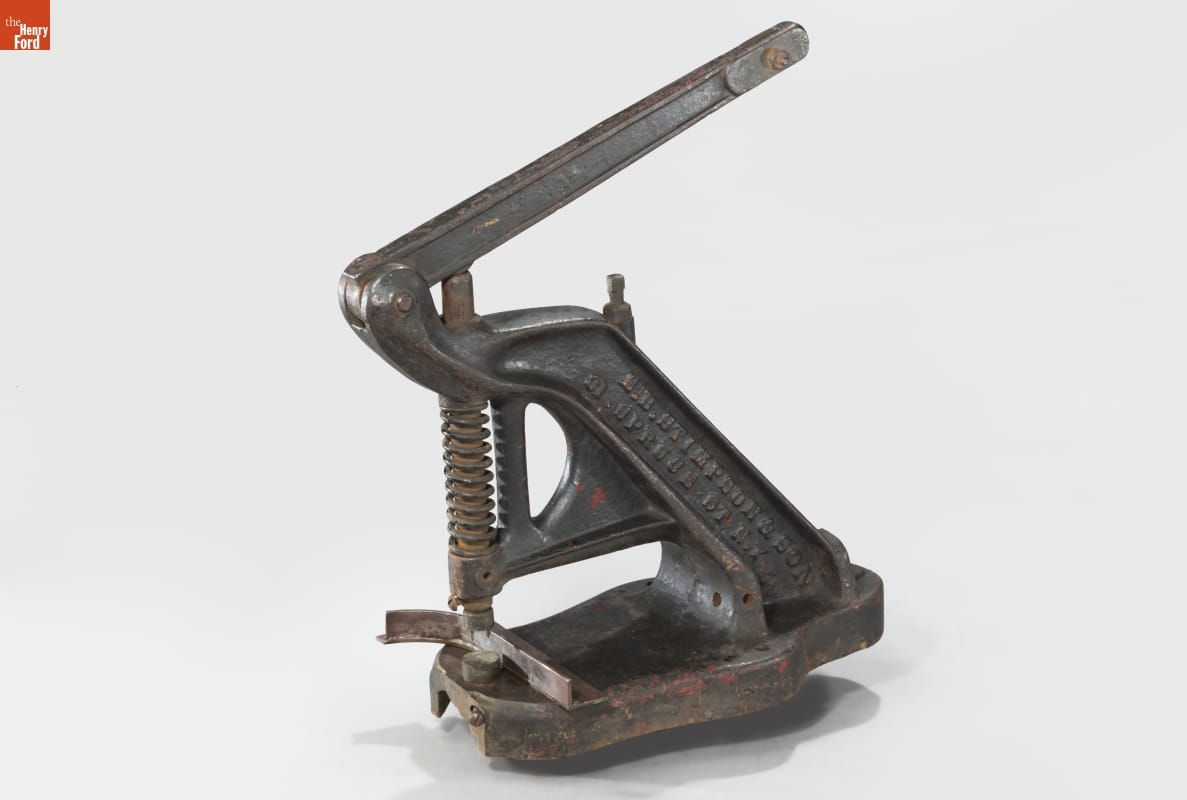
- E.B. Stimpson & Son Punching Machine, 1888 -
- 1888
- Collections - Artifact
E.B. Stimpson & Son Punching Machine, 1888
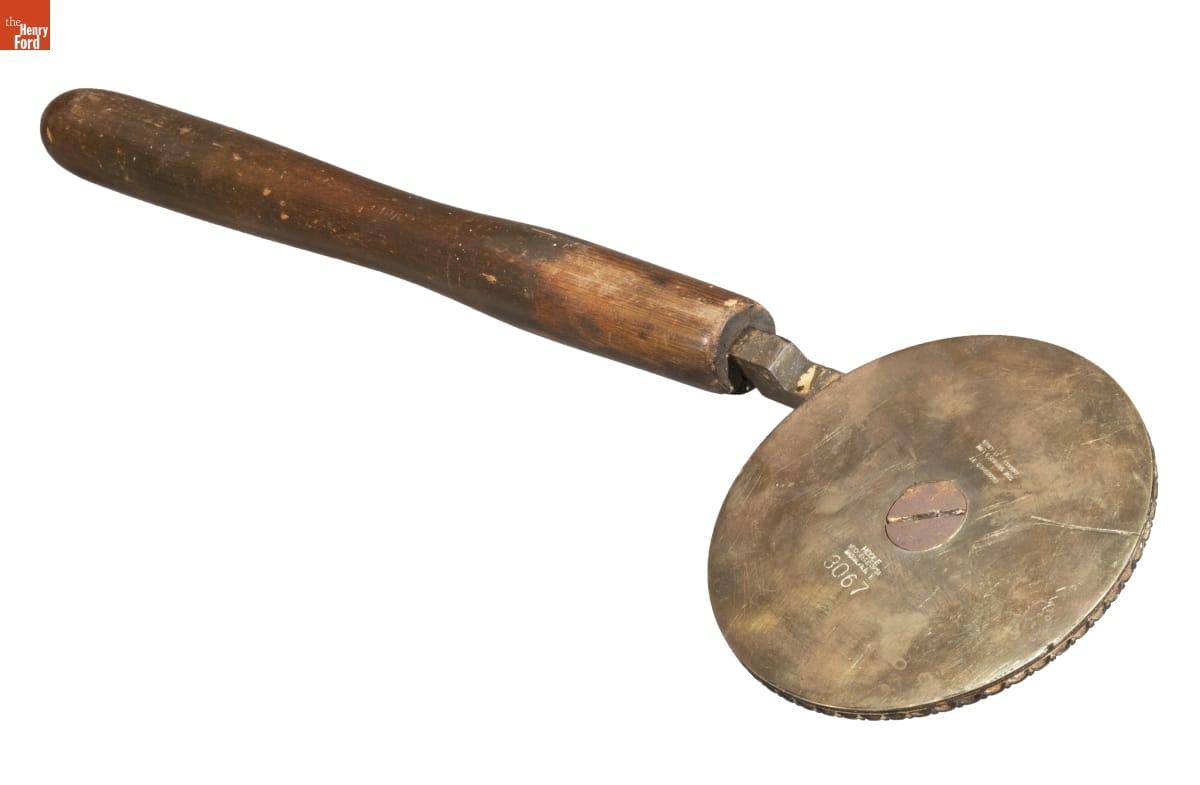
- Hool Machine & Engraving Works #3067 Pattern Roll - Bookbinders use finishing tools to add decoration to the leather spine and covers of a book. The tools are often heated and then stamped, pressed, or rolled onto the leather. Decoration can be as simple as thin straight lines or rounded arcs, or as intricate as ornate patterns, scrolls, or floral designs.
- Collections - Artifact
Hool Machine & Engraving Works #3067 Pattern Roll
Bookbinders use finishing tools to add decoration to the leather spine and covers of a book. The tools are often heated and then stamped, pressed, or rolled onto the leather. Decoration can be as simple as thin straight lines or rounded arcs, or as intricate as ornate patterns, scrolls, or floral designs.
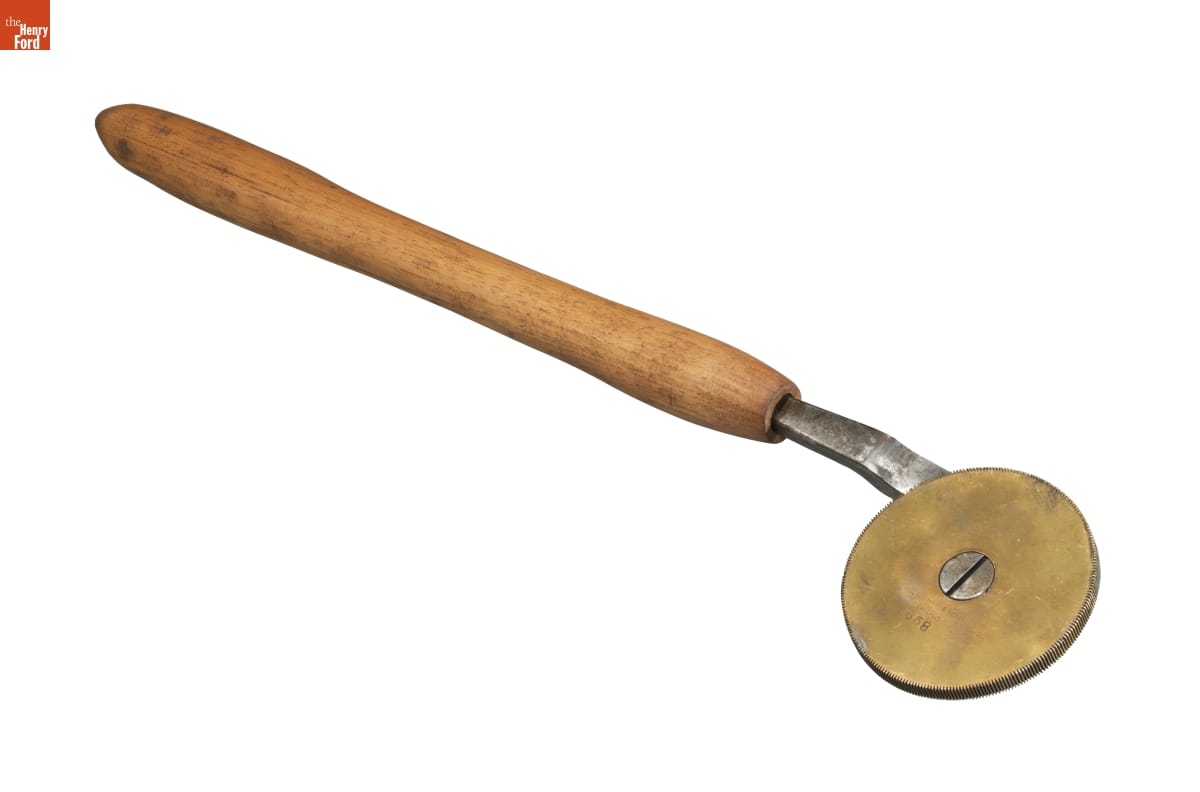
- Slade, Hipp & Meloy #658 Pattern Roll - Bookbinders use finishing tools to add decoration to the leather spine and covers of a book. The tools are often heated and then stamped, pressed, or rolled onto the leather. Decoration can be as simple as thin straight lines or rounded arcs, or as intricate as ornate patterns, scrolls, or floral designs.
- Collections - Artifact
Slade, Hipp & Meloy #658 Pattern Roll
Bookbinders use finishing tools to add decoration to the leather spine and covers of a book. The tools are often heated and then stamped, pressed, or rolled onto the leather. Decoration can be as simple as thin straight lines or rounded arcs, or as intricate as ornate patterns, scrolls, or floral designs.
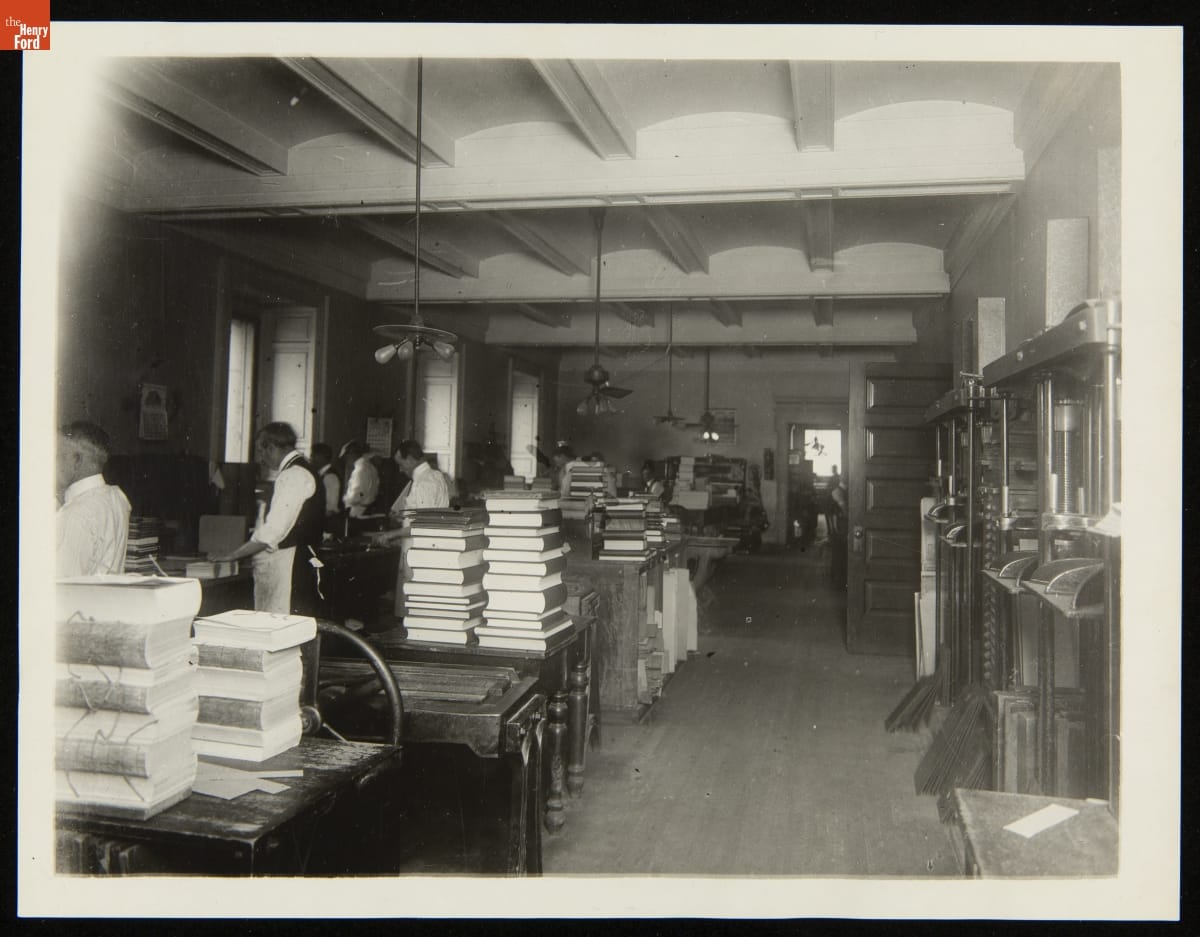
- Bookbinding Office in the Congressional Library, 1919-1920 - This photograph from the early 1920s shows one of the bookbinding rooms in the Library of Congress. In these rooms--hidden on the library's lower floors--bookbinders repaired old and worn volumes. They also bound newspapers and created durable library works from books and pamphlets with flimsy paper covers. Not an easy task for one of the world's largest repositories of recorded knowledge.
- 1919-1920
- Collections - Artifact
Bookbinding Office in the Congressional Library, 1919-1920
This photograph from the early 1920s shows one of the bookbinding rooms in the Library of Congress. In these rooms--hidden on the library's lower floors--bookbinders repaired old and worn volumes. They also bound newspapers and created durable library works from books and pamphlets with flimsy paper covers. Not an easy task for one of the world's largest repositories of recorded knowledge.
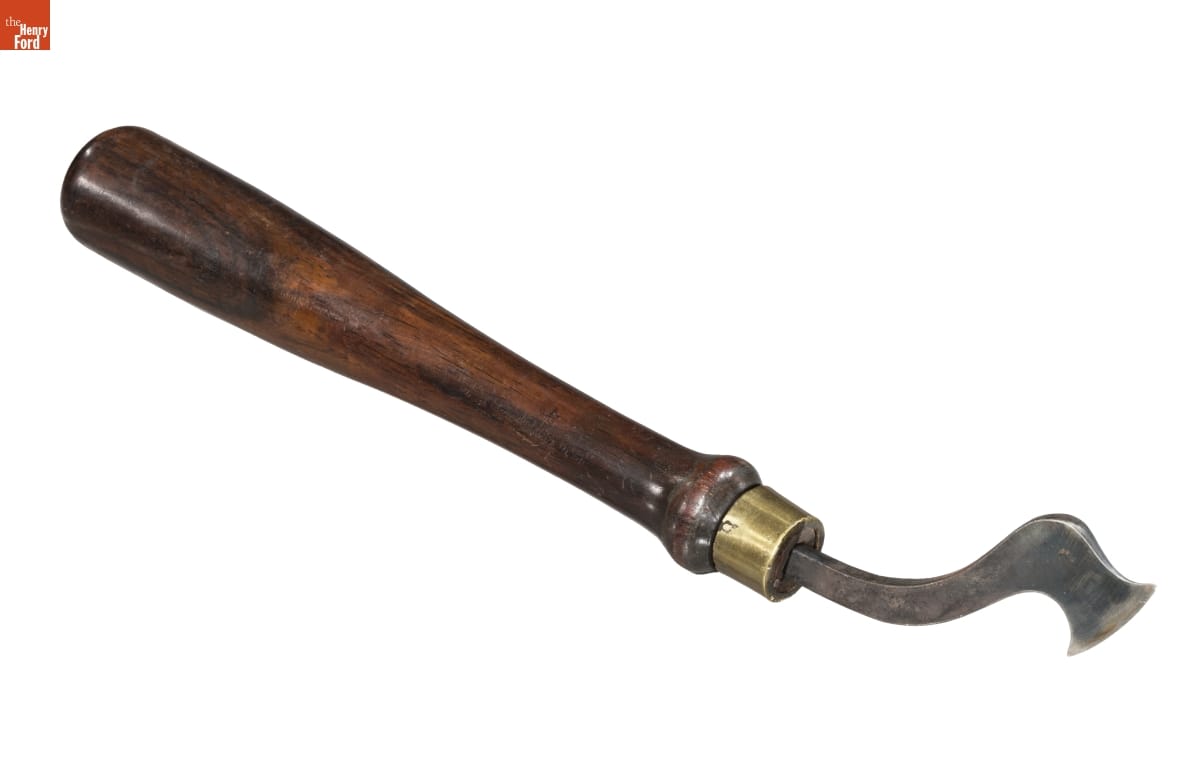
- Creaser - Bookbinders use finishing tools to add decoration to the leather spine and covers of a book. The tools are often heated and then stamped, pressed, or rolled onto the leather. Decoration can be as simple as thin straight lines or rounded arcs, or as intricate as ornate patterns, scrolls, or floral designs.
- Collections - Artifact
Creaser
Bookbinders use finishing tools to add decoration to the leather spine and covers of a book. The tools are often heated and then stamped, pressed, or rolled onto the leather. Decoration can be as simple as thin straight lines or rounded arcs, or as intricate as ornate patterns, scrolls, or floral designs.