
Search
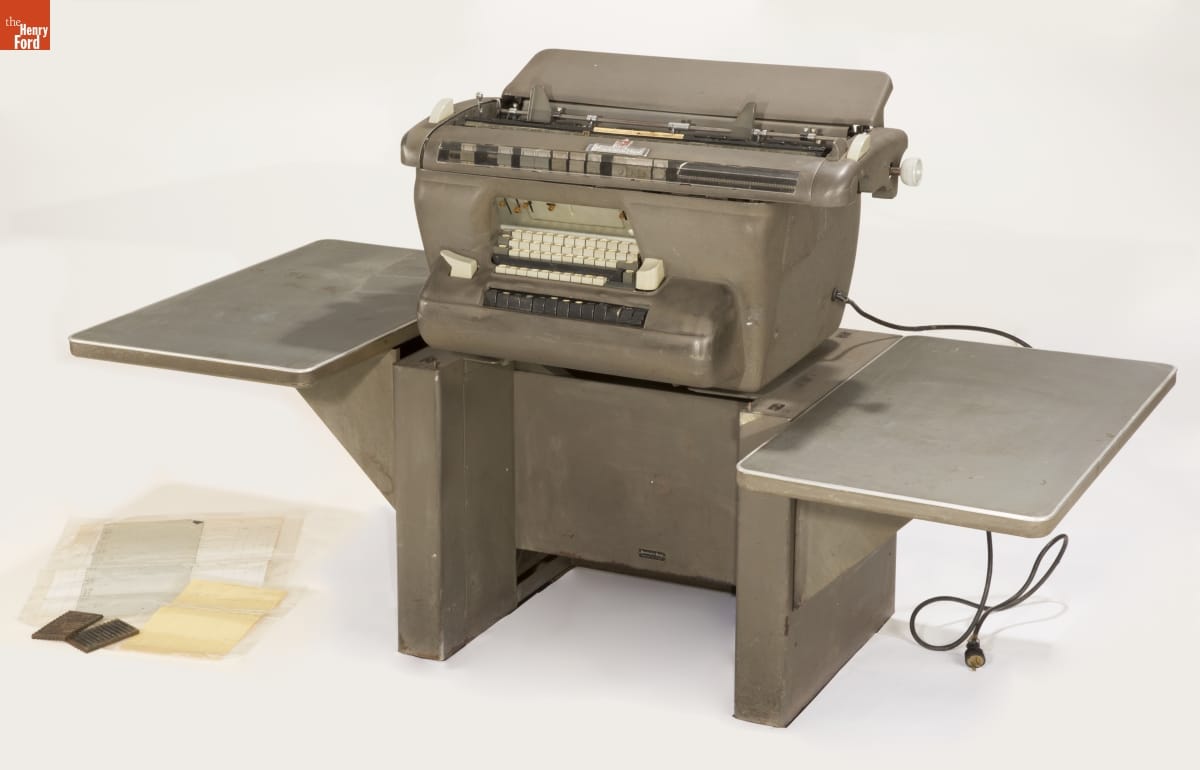
- Remington Rand Bookkeeping Machine and Stand, Model 685, 1945-1955 - Bookkeeping machines were the precursors to the computer -- they processed and moved complex numeric and alphabetic data. Combining elements of typewriters, adding machines, and calculators, bookkeeping machines processed payroll, taxes, and recorded payments and billing. Efficient and reliable, these devices eased the workload of office workers. They were also used as vote tabulators and for complex calculation of scientific data.
- 1945-1955
- Collections - Artifact
Remington Rand Bookkeeping Machine and Stand, Model 685, 1945-1955
Bookkeeping machines were the precursors to the computer -- they processed and moved complex numeric and alphabetic data. Combining elements of typewriters, adding machines, and calculators, bookkeeping machines processed payroll, taxes, and recorded payments and billing. Efficient and reliable, these devices eased the workload of office workers. They were also used as vote tabulators and for complex calculation of scientific data.
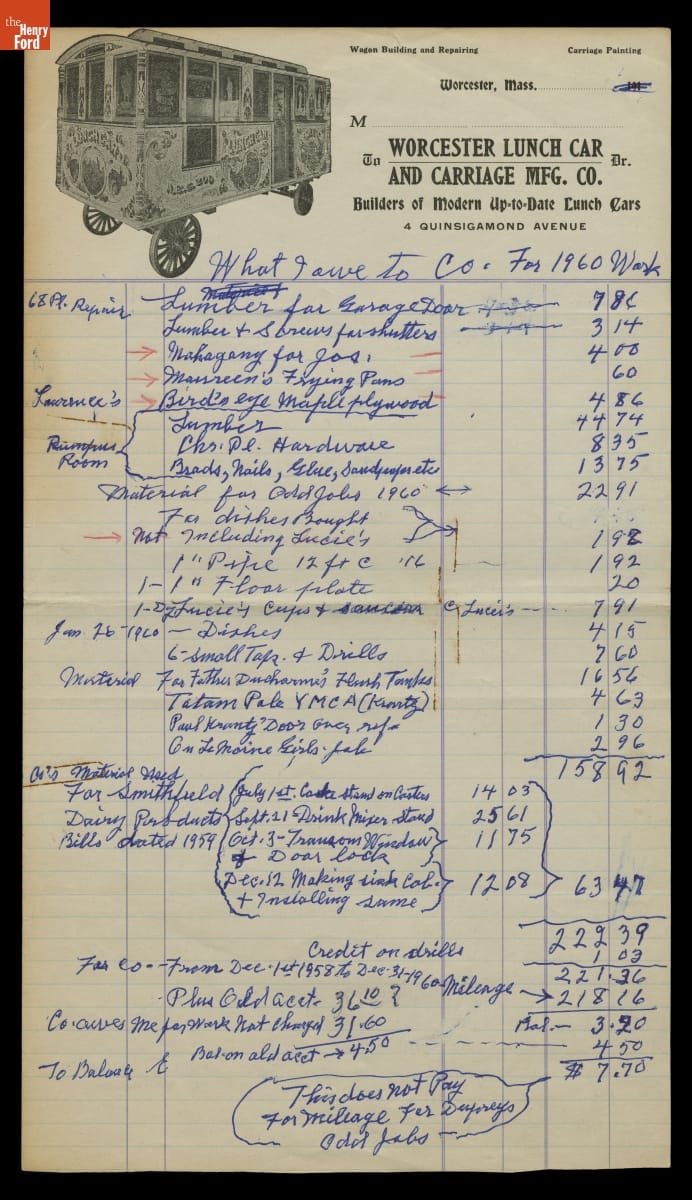
- Handwritten Expense Accounts of Charles P. Gemme, Vice President, Superintendant, and Chief Designer of Worcester Lunch Car Company, 1958-1960 -
- 1958-1960
- Collections - Artifact
Handwritten Expense Accounts of Charles P. Gemme, Vice President, Superintendant, and Chief Designer of Worcester Lunch Car Company, 1958-1960
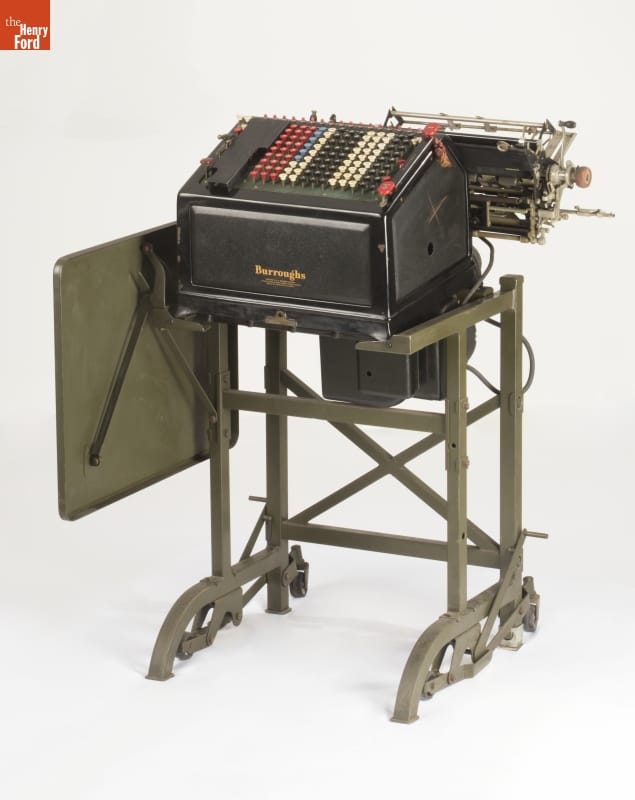
- Burroughs Bookkeeping Machine, circa 1928 - Bookkeeping machines were the precursors to the computer -- they processed and moved complex numeric and alphabetic data. Combining elements of typewriters, adding machines, and calculators, bookkeeping machines processed payroll, taxes, and recorded payments and billing. Efficient and reliable, these devices eased the workload of office workers. They were also used as vote tabulators and for complex calculation of scientific data.
- circa 1928
- Collections - Artifact
Burroughs Bookkeeping Machine, circa 1928
Bookkeeping machines were the precursors to the computer -- they processed and moved complex numeric and alphabetic data. Combining elements of typewriters, adding machines, and calculators, bookkeeping machines processed payroll, taxes, and recorded payments and billing. Efficient and reliable, these devices eased the workload of office workers. They were also used as vote tabulators and for complex calculation of scientific data.
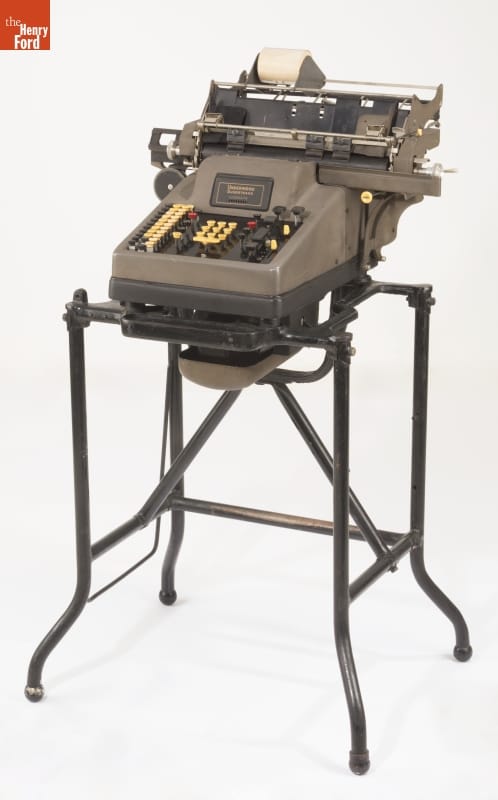
- Underwood Sundstrand Adding Machine, circa 1946 - Mechanical adding machines were indispensable office equipment used before the computer era. These devices were perfected by the American Arithmometer Company in 1886, spurred on by William Seward Burrough's desire to reduce drudgery in clerical arithmetic work. Transistors and electronic desktop calculators displaced adding machines in the 1950s; by the 1970s, microchips reduced calculators to the size of a shirt pocket.
- circa 1946
- Collections - Artifact
Underwood Sundstrand Adding Machine, circa 1946
Mechanical adding machines were indispensable office equipment used before the computer era. These devices were perfected by the American Arithmometer Company in 1886, spurred on by William Seward Burrough's desire to reduce drudgery in clerical arithmetic work. Transistors and electronic desktop calculators displaced adding machines in the 1950s; by the 1970s, microchips reduced calculators to the size of a shirt pocket.
- Comic Valentine, "Book-Keeper," circa 1855 - From the 1840s into the early 1900s, some people sent inexpensive Valentine's Day greetings that chided, warned, or insulted the recipient. An exaggerated, often garish cartoon and short verse described and dismissed someone's looks, intelligence, personality, or behavior. Within the atmosphere of a festive holiday, under the cover of humor, these "vinegar valentines" were acceptable critiques of behaviors that deviated from social norms.
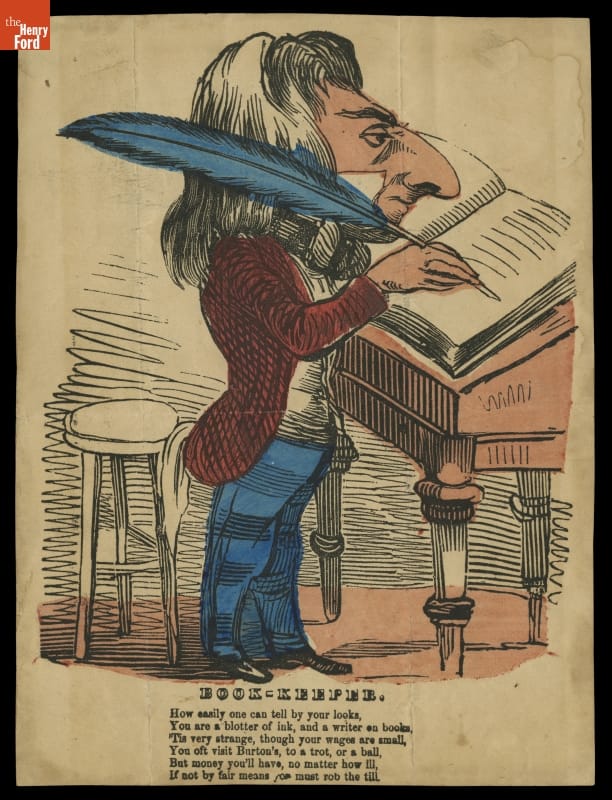
- circa 1855
- Collections - Artifact
Comic Valentine, "Book-Keeper," circa 1855
From the 1840s into the early 1900s, some people sent inexpensive Valentine's Day greetings that chided, warned, or insulted the recipient. An exaggerated, often garish cartoon and short verse described and dismissed someone's looks, intelligence, personality, or behavior. Within the atmosphere of a festive holiday, under the cover of humor, these "vinegar valentines" were acceptable critiques of behaviors that deviated from social norms.
- Balance Sheet for the Account of R. J. Arnold's Heirs, 1880 -
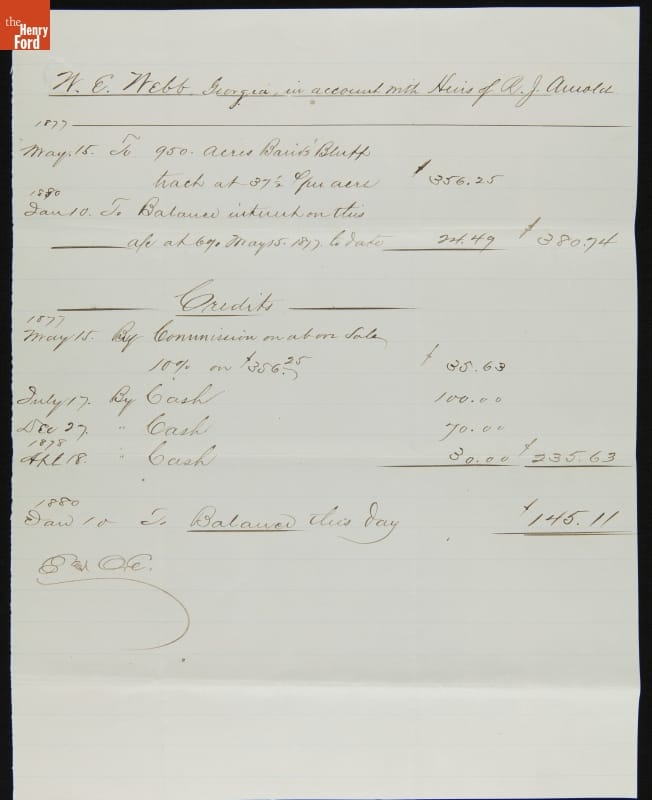
- 1877-1880
- Collections - Artifact
Balance Sheet for the Account of R. J. Arnold's Heirs, 1880
- Pay to Order Request from William E. Arnold to George Appleton, February 19, 1877 -
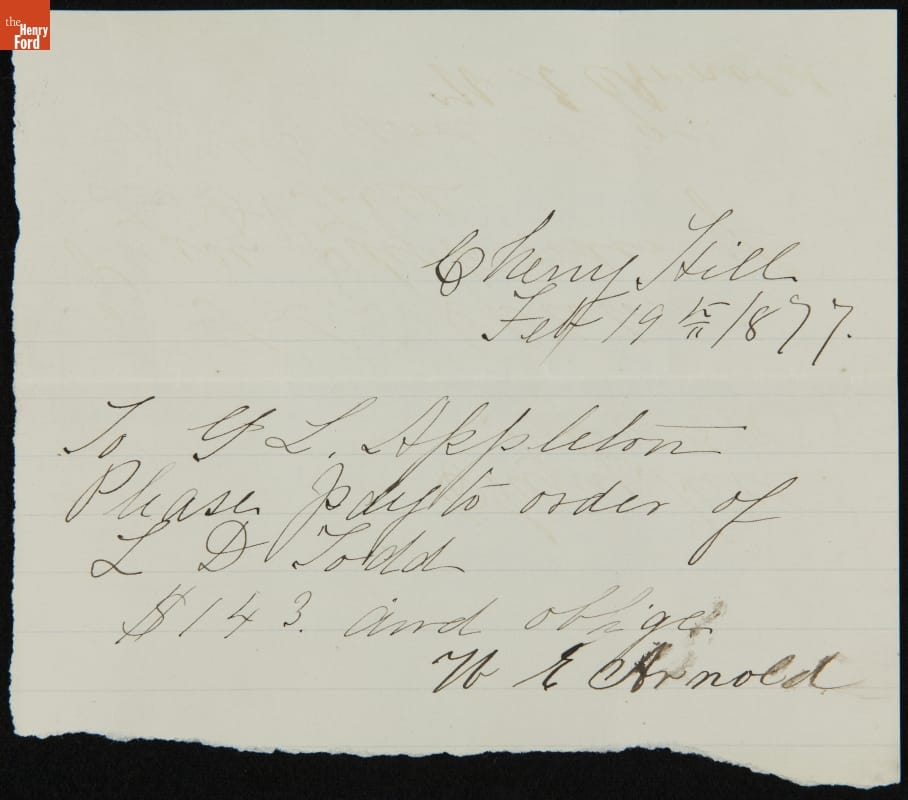
- February 19, 1877
- Collections - Artifact
Pay to Order Request from William E. Arnold to George Appleton, February 19, 1877
- Letter and R. J. Arnold Estate Records from William Talbot to George Appleton, March 29, 1877 -
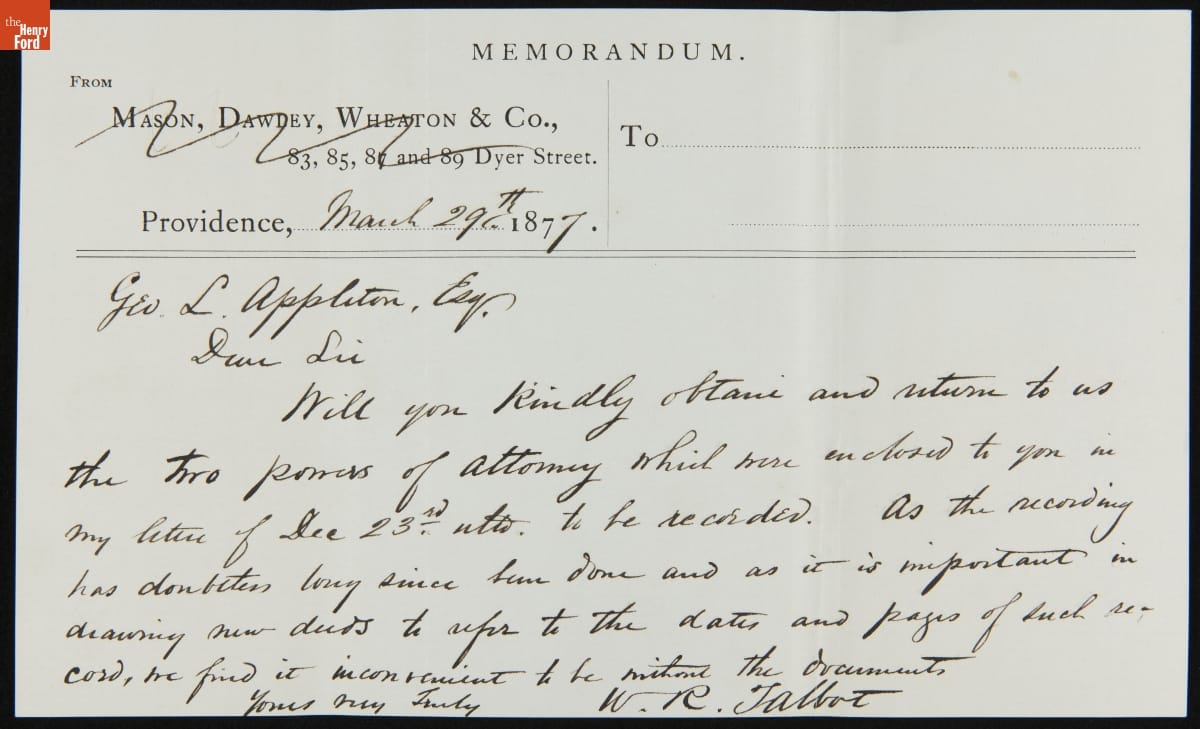
- March 29, 1877
- Collections - Artifact
Letter and R. J. Arnold Estate Records from William Talbot to George Appleton, March 29, 1877
- Champion Complete Accountant, 1914 - Bookkeeping machines were the precursors to the computer -- they processed and moved complex numeric and alphabetic data. Combining elements of typewriters, adding machines, and calculators, bookkeeping machines processed payroll, taxes, and recorded payments and billing. Efficient and reliable, these devices eased the workload of office workers. They were also used as vote tabulators and for complex calculation of scientific data.
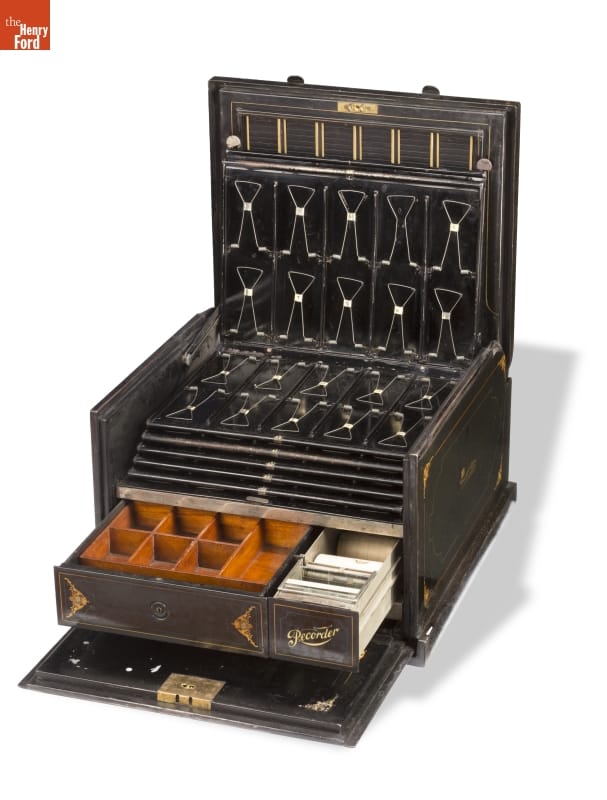
- 1914
- Collections - Artifact
Champion Complete Accountant, 1914
Bookkeeping machines were the precursors to the computer -- they processed and moved complex numeric and alphabetic data. Combining elements of typewriters, adding machines, and calculators, bookkeeping machines processed payroll, taxes, and recorded payments and billing. Efficient and reliable, these devices eased the workload of office workers. They were also used as vote tabulators and for complex calculation of scientific data.
- Portrait of Ernest J. Berggren, circa 1885 -
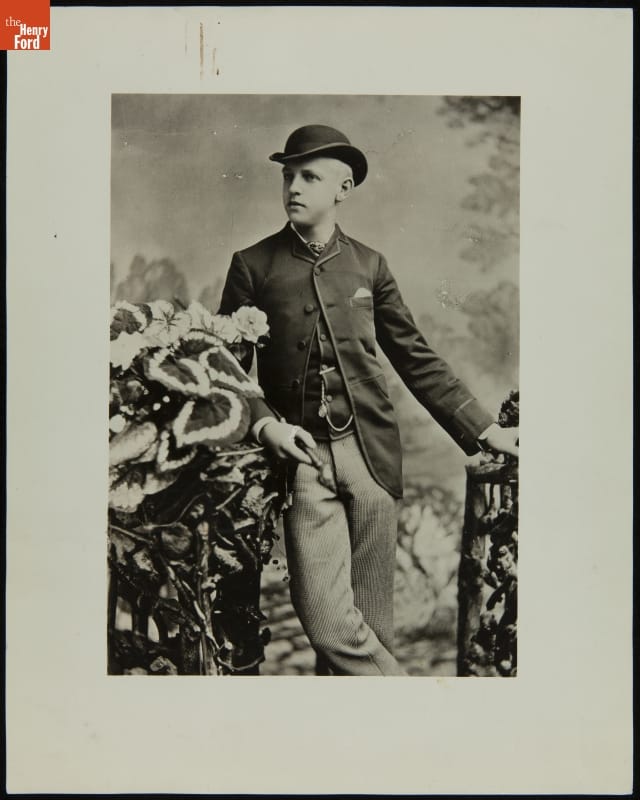
- circa 1885
- Collections - Artifact
Portrait of Ernest J. Berggren, circa 1885