
Search
- Steam Engine and Boiler, Used by Boston and Sandwich Glass Company, 1855-1872 -
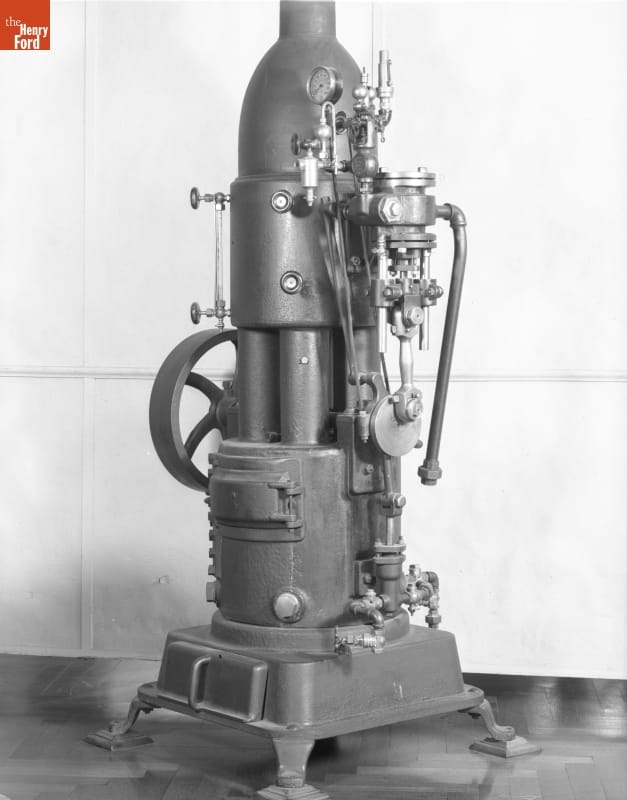
- 1855-1872
- Collections - Artifact
Steam Engine and Boiler, Used by Boston and Sandwich Glass Company, 1855-1872
- Glass Shop in Greenfield Village, circa 1933 -
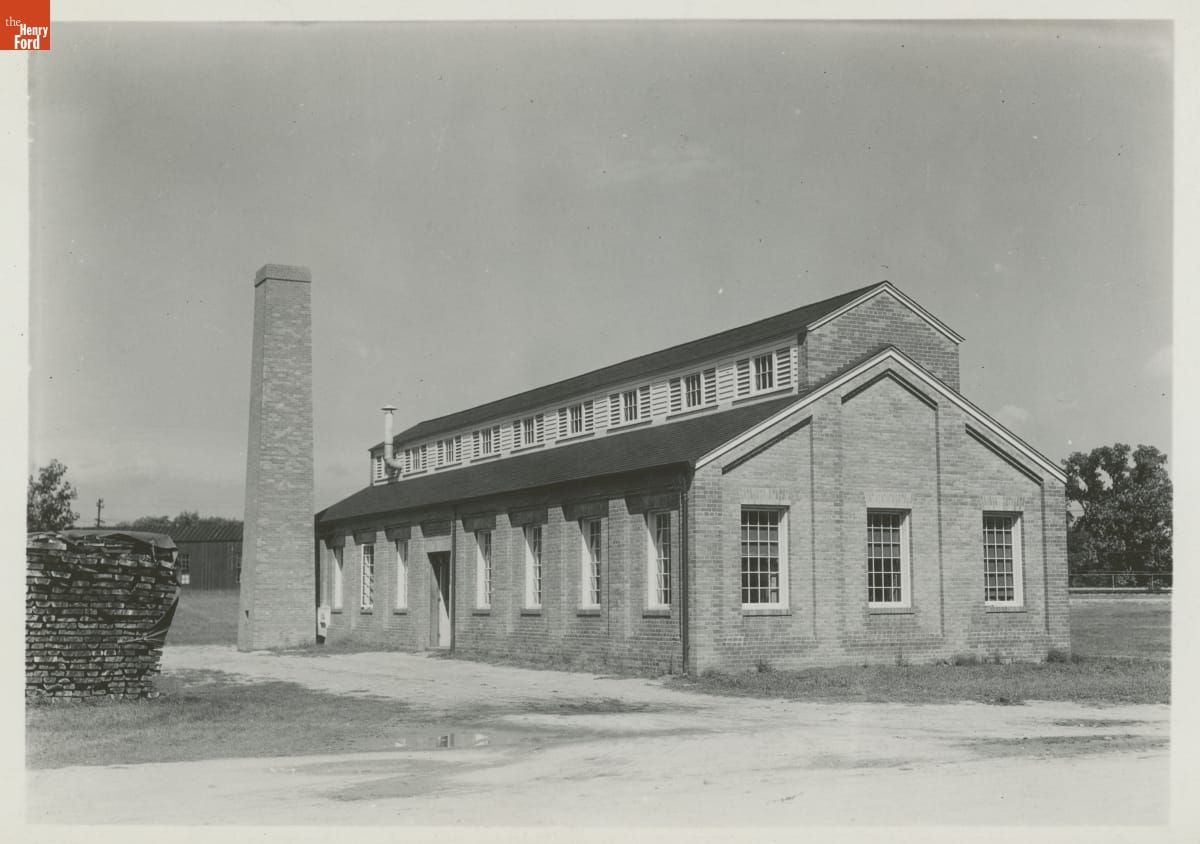
- circa 1933
- Collections - Artifact
Glass Shop in Greenfield Village, circa 1933
- Sandwich Glass on Display in Henry Ford Museum Promenade, March 1939 - This photograph documents the Museum's glass display on March 15, 1939. The collection was arranged in recessed cases lining the Promenade, the long marble corridor at the front of the Museum. Curators limited the display to examples representing Early American blown and pressed glass as well as English and Irish glass, then thought the most important for study and exhibit.
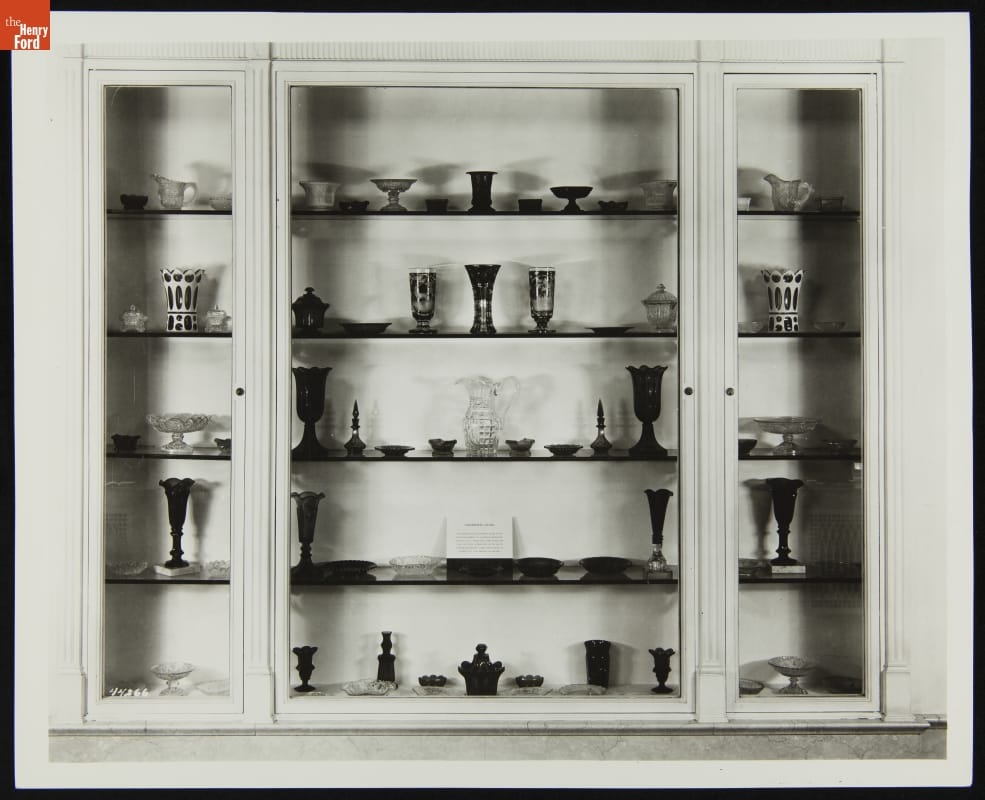
- March 15, 1939
- Collections - Artifact
Sandwich Glass on Display in Henry Ford Museum Promenade, March 1939
This photograph documents the Museum's glass display on March 15, 1939. The collection was arranged in recessed cases lining the Promenade, the long marble corridor at the front of the Museum. Curators limited the display to examples representing Early American blown and pressed glass as well as English and Irish glass, then thought the most important for study and exhibit.
- Article from "The Herald" Student Newspaper, "The Sandwich Glass Plant," circa 1950 -
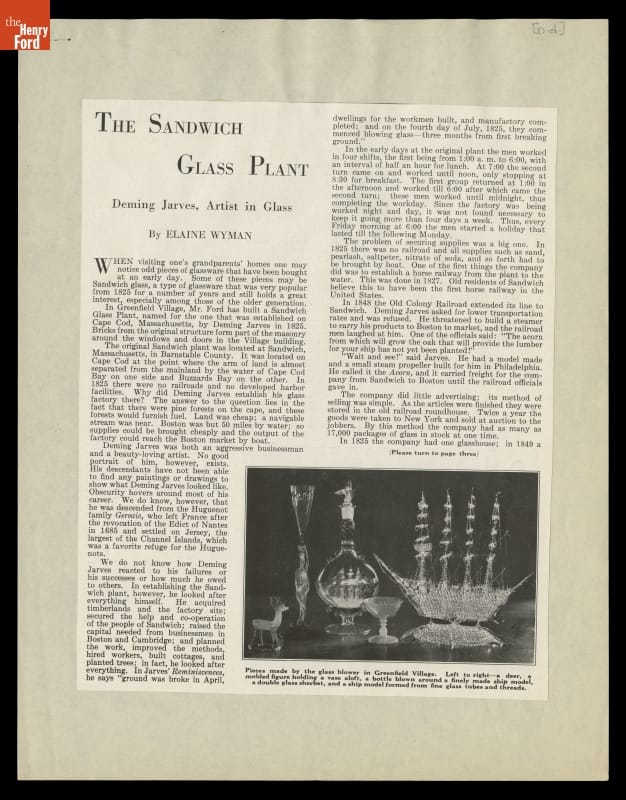
- circa 1950
- Collections - Artifact
Article from "The Herald" Student Newspaper, "The Sandwich Glass Plant," circa 1950
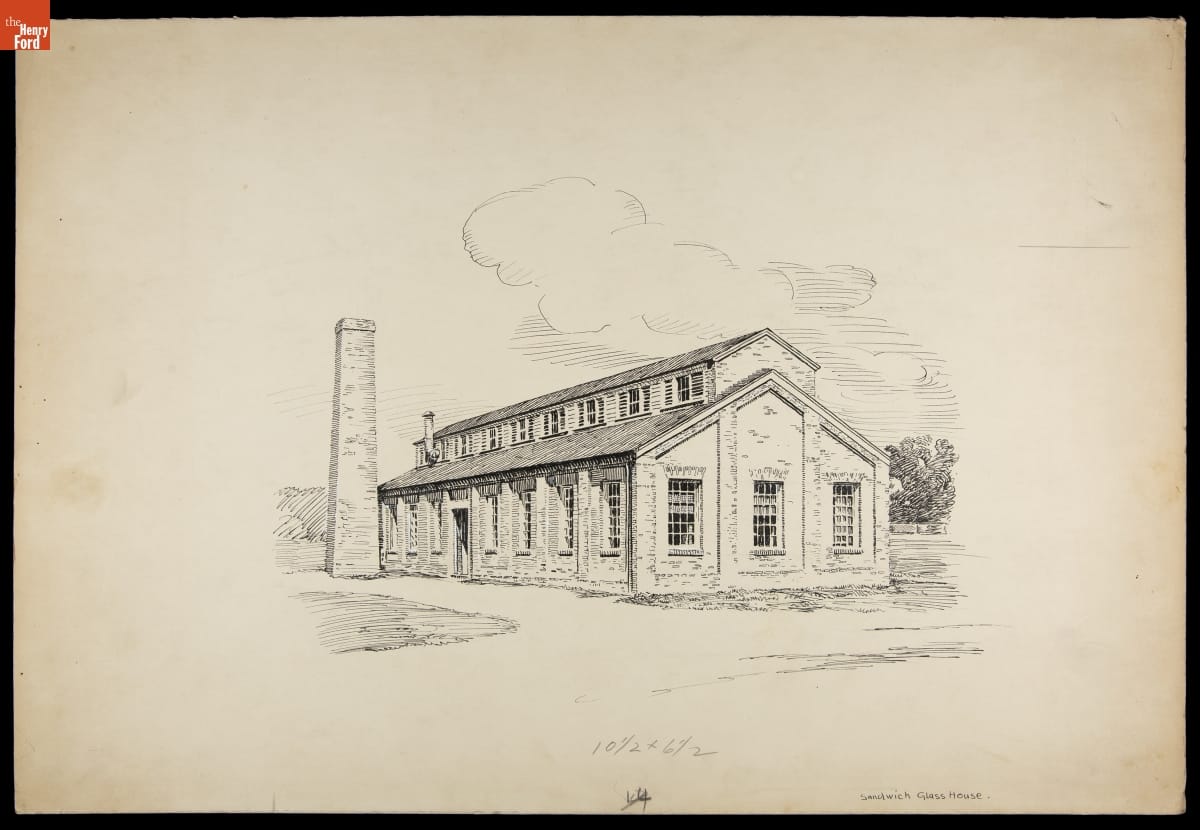
- Glass Shop in Greenfield Village, circa 1934 - Irving Bacon, a Ford Motor Company employee and Henry Ford's personal artist, created pen-and-ink drawings to illustrate guidebooks for the Edison Institute Museum and Greenfield Village (now The Henry Ford) when they officially opened to the public in 1933. An illustrated souvenir guidebook helped visitors navigate the exhibits and grounds. Ford also used these drawings in other company publications.
- circa 1934
- Collections - Artifact
Glass Shop in Greenfield Village, circa 1934
Irving Bacon, a Ford Motor Company employee and Henry Ford's personal artist, created pen-and-ink drawings to illustrate guidebooks for the Edison Institute Museum and Greenfield Village (now The Henry Ford) when they officially opened to the public in 1933. An illustrated souvenir guidebook helped visitors navigate the exhibits and grounds. Ford also used these drawings in other company publications.
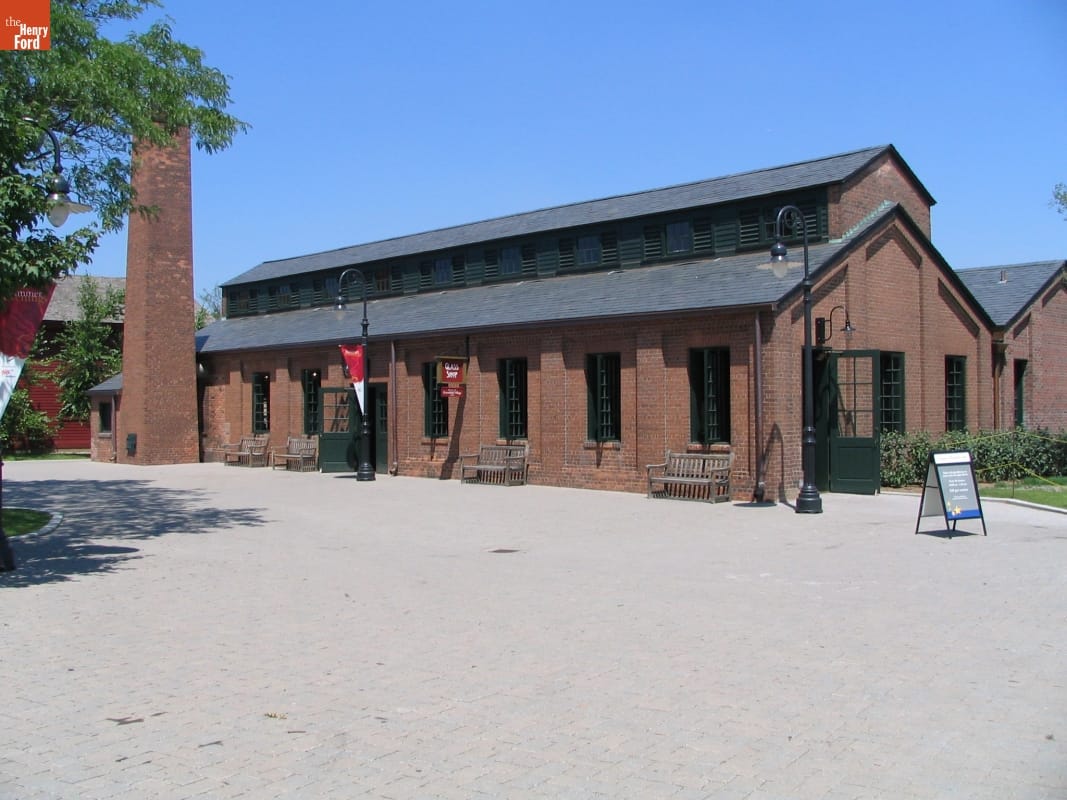
- Glass Shop - The Glass Shop was constructed in 1930 to demonstrate the art of glass making as practiced in nineteenth century America. It was modeled after the Boston and Sandwich Glass House, located in Cape Cod, Massachusetts. In 2005, the shop was rebuilt, enlarged and updated with modern equipment. Today, our artisans create up to 10,000 pieces of historic and contemporary Studio Glass annually.
- 1931
- Collections - Artifact
Glass Shop
The Glass Shop was constructed in 1930 to demonstrate the art of glass making as practiced in nineteenth century America. It was modeled after the Boston and Sandwich Glass House, located in Cape Cod, Massachusetts. In 2005, the shop was rebuilt, enlarged and updated with modern equipment. Today, our artisans create up to 10,000 pieces of historic and contemporary Studio Glass annually.
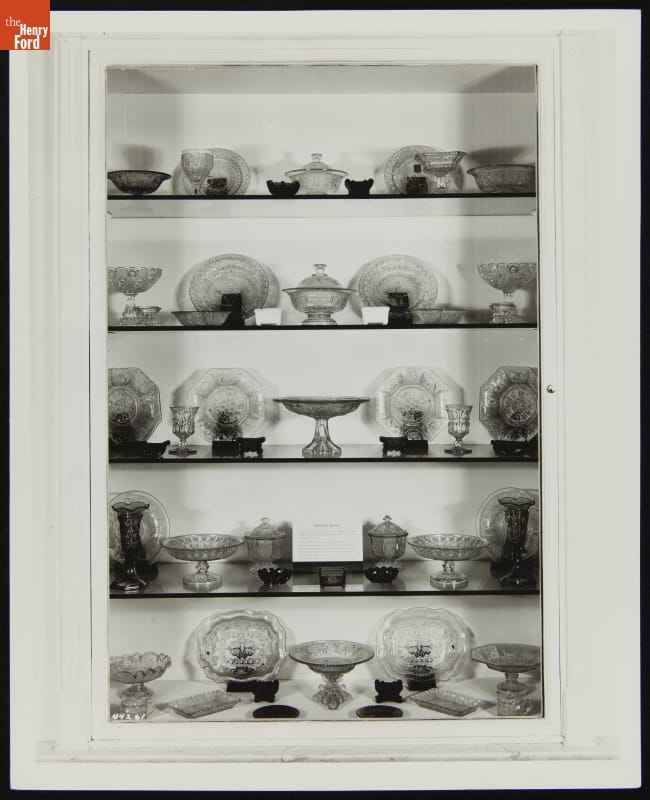
- Pressed Glass on Display in Henry Ford Museum Promenade, March 1939 - This photograph documents the Museum's glass display on March 15, 1939. The collection was arranged in recessed cases lining the Promenade, the long marble corridor at the front of the Museum. Curators limited the display to examples representing Early American blown and pressed glass as well as English and Irish glass, then thought the most important for study and exhibit.
- March 15, 1939
- Collections - Artifact
Pressed Glass on Display in Henry Ford Museum Promenade, March 1939
This photograph documents the Museum's glass display on March 15, 1939. The collection was arranged in recessed cases lining the Promenade, the long marble corridor at the front of the Museum. Curators limited the display to examples representing Early American blown and pressed glass as well as English and Irish glass, then thought the most important for study and exhibit.