
Search
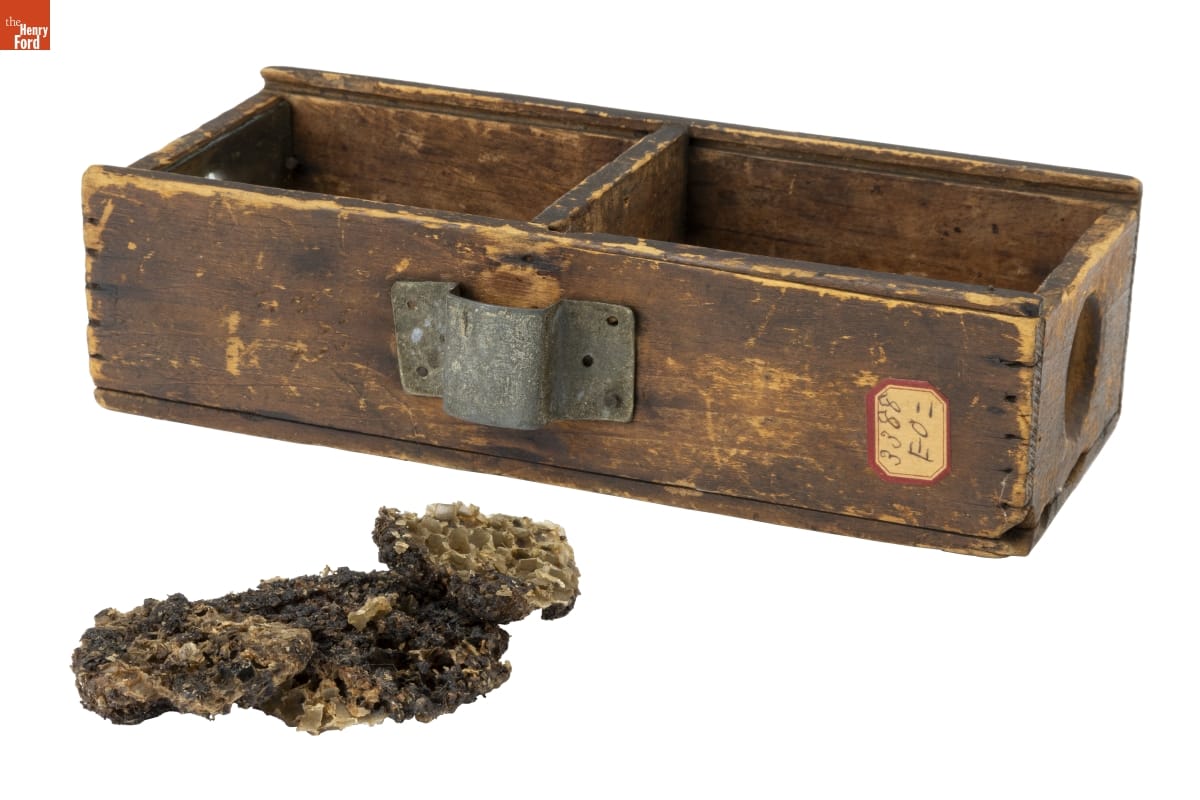
- Bee Box with Honeycomb -
- Collections - Artifact
Bee Box with Honeycomb
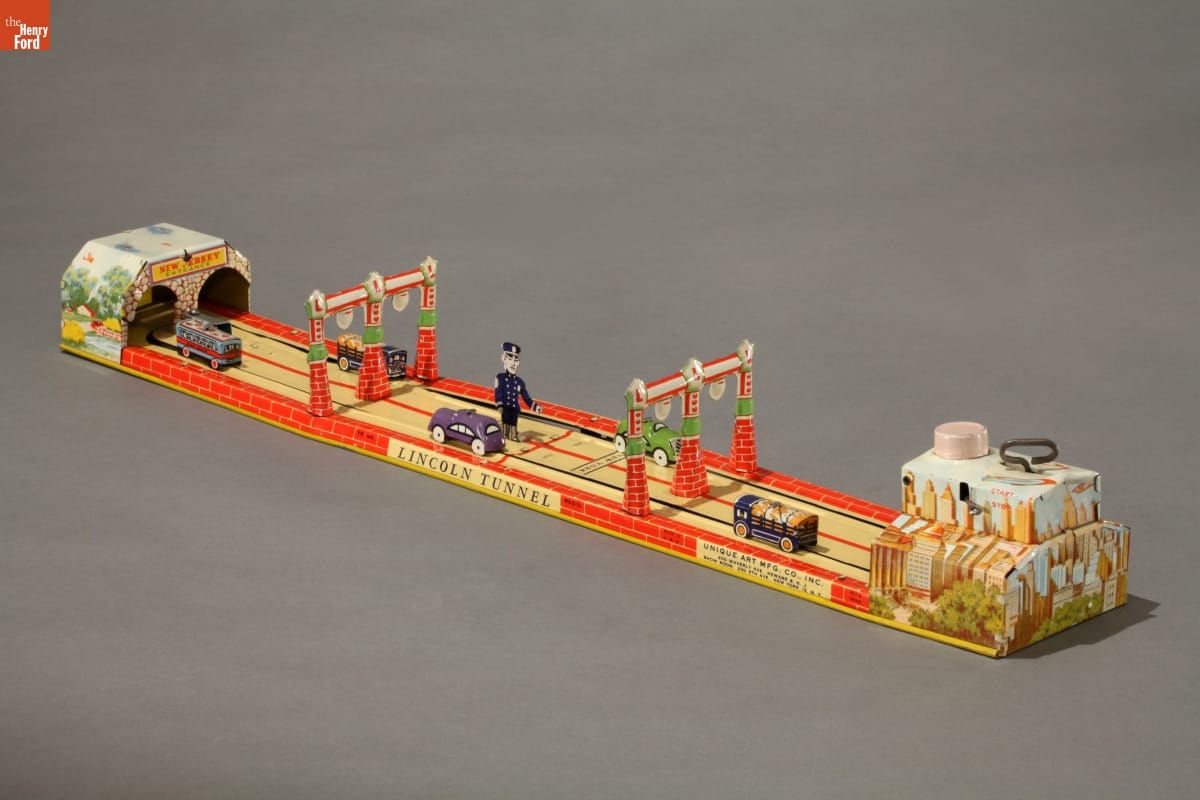
- Lincoln Tunnel Mechanical Toy, 1925-1940 - This lithographed, pressed metal toy by Unique Art Manufacturing Company, Inc., has vehicles traveling in and out of the Lincoln Tunnel. Cars enter either through rural New Jersey or urban New York. The Lincoln Tunnel opened in 1937 and runs under the Hudson River between New Jersey and Manhattan.
- 1925-1940
- Collections - Artifact
Lincoln Tunnel Mechanical Toy, 1925-1940
This lithographed, pressed metal toy by Unique Art Manufacturing Company, Inc., has vehicles traveling in and out of the Lincoln Tunnel. Cars enter either through rural New Jersey or urban New York. The Lincoln Tunnel opened in 1937 and runs under the Hudson River between New Jersey and Manhattan.
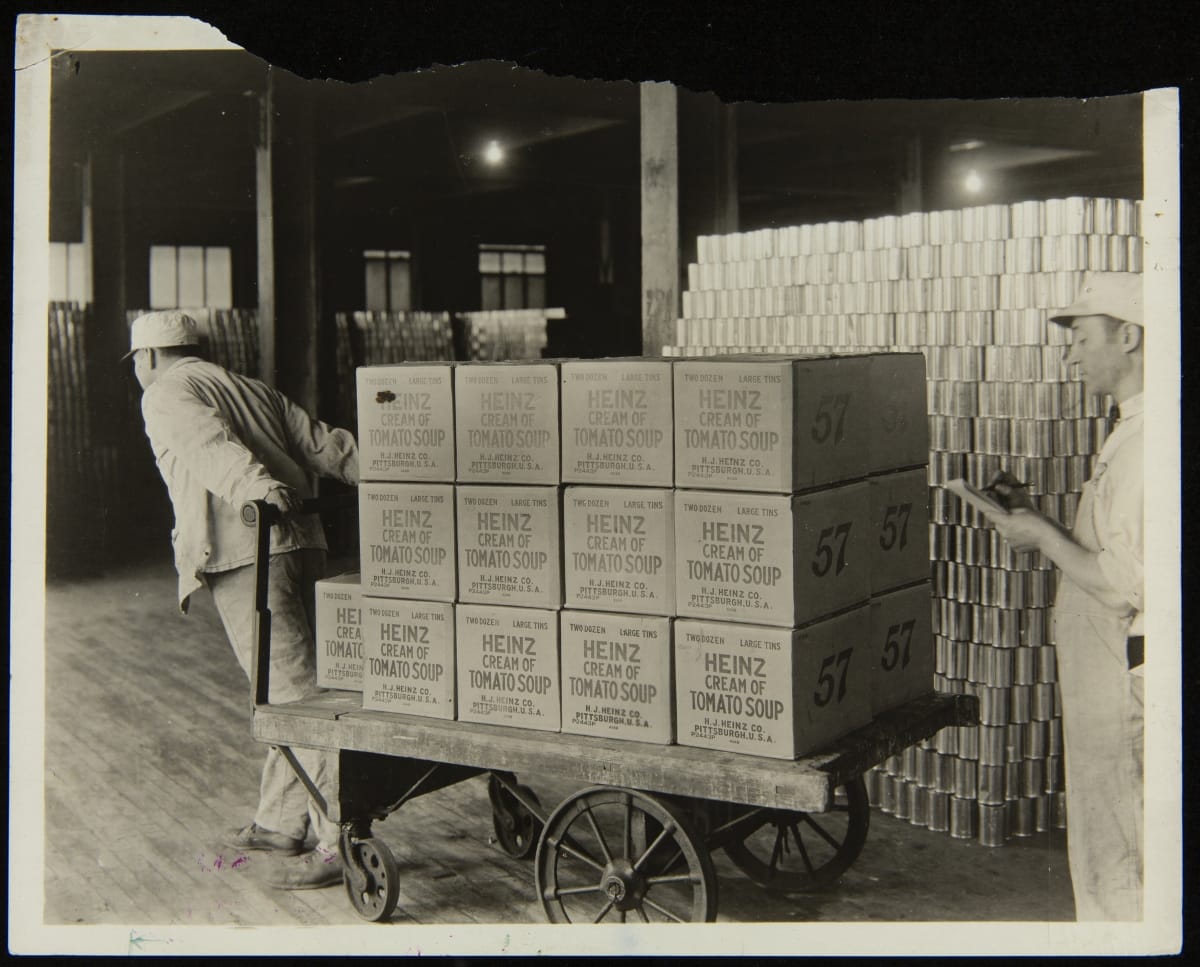
- Employee Moving Boxes of H. J. Heinz Cream of Tomato Soup, Pittsburgh, Pennsylvania, circa 1920 - Before complete mechanization of the manufacturing process, many tasks at the Heinz factory were done by hand. The H.J. Heinz Company documented the many departments of the manufacturing process through photographs. This photograph shows an employee moving boxes. These boxes were possibly heading for the shipping dock to be loaded onto a train or truck.
- circa 1920
- Collections - Artifact
Employee Moving Boxes of H. J. Heinz Cream of Tomato Soup, Pittsburgh, Pennsylvania, circa 1920
Before complete mechanization of the manufacturing process, many tasks at the Heinz factory were done by hand. The H.J. Heinz Company documented the many departments of the manufacturing process through photographs. This photograph shows an employee moving boxes. These boxes were possibly heading for the shipping dock to be loaded onto a train or truck.
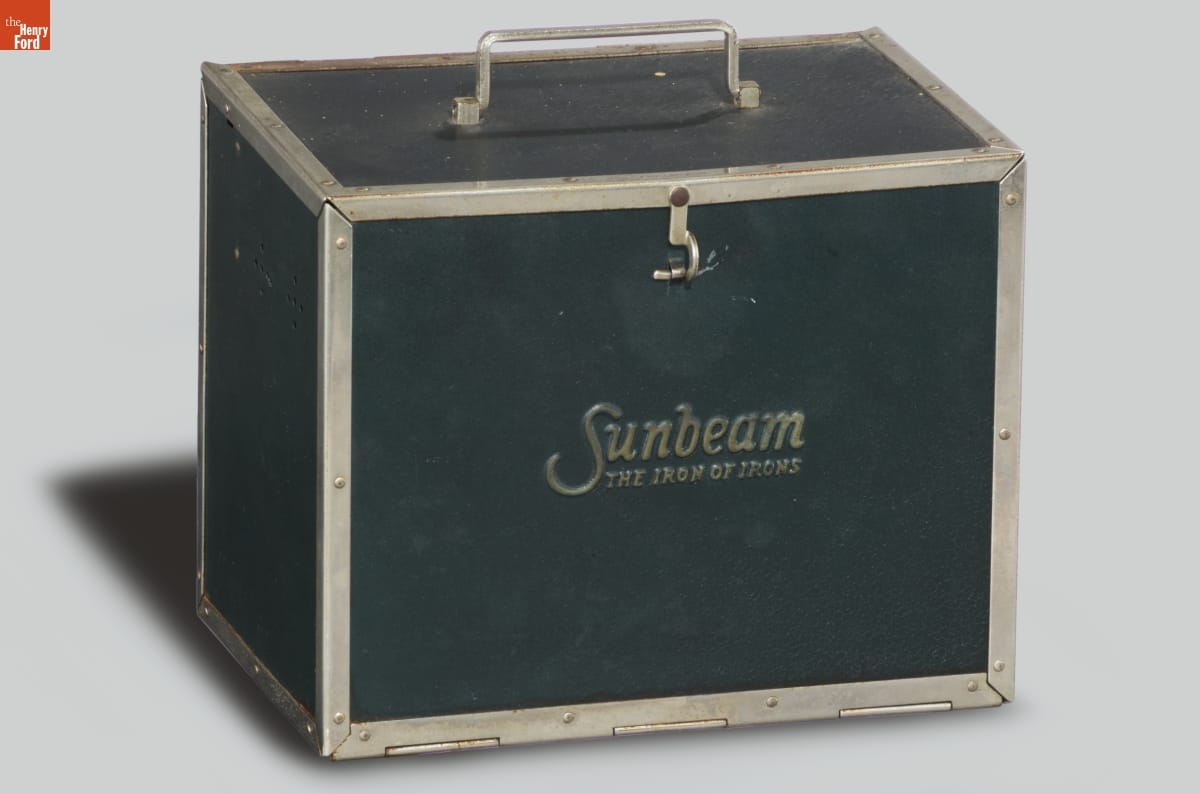
- Sunbeam Electric Iron Box, Used by the Harvey S. Firestone Family, circa 1932 -
- circa 1932
- Collections - Artifact
Sunbeam Electric Iron Box, Used by the Harvey S. Firestone Family, circa 1932
- Swerl, The Magic Suds, 1955-1965 -
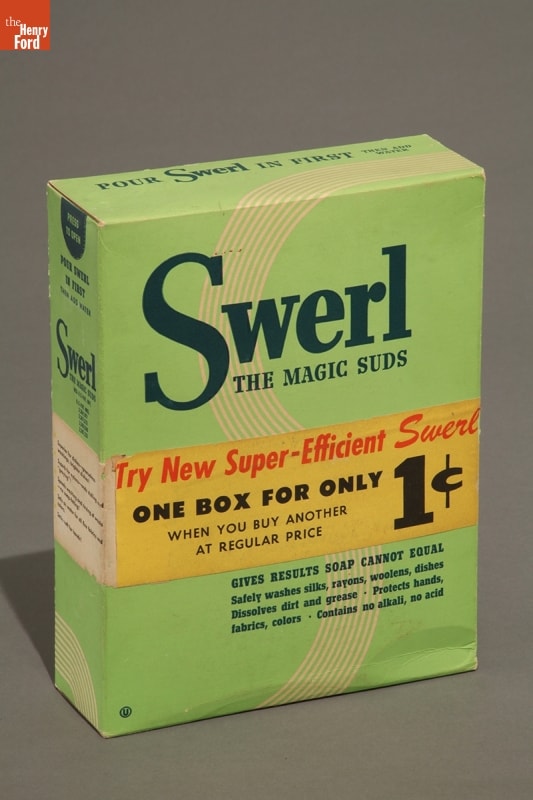
- 1955-1965
- Collections - Artifact
Swerl, The Magic Suds, 1955-1965
- Pantry Box, 1870-1885 -
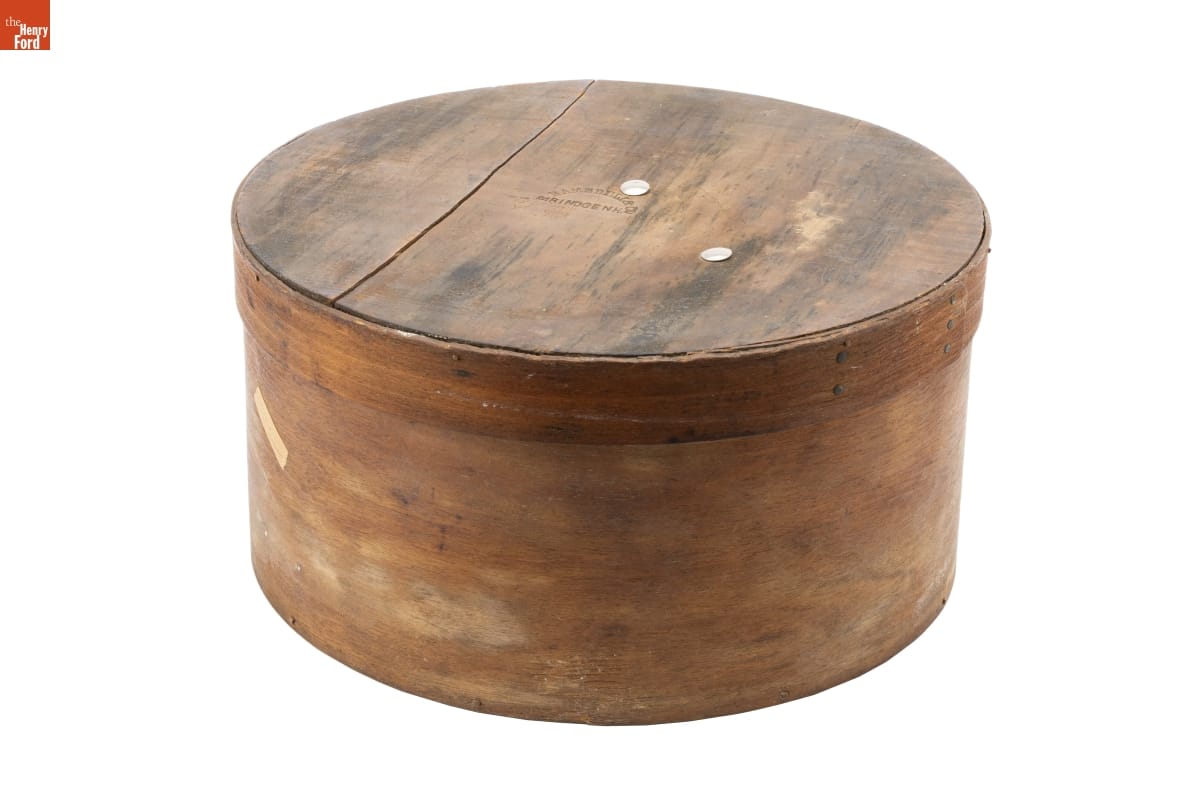
- 1870-1885
- Collections - Artifact
Pantry Box, 1870-1885
- Lunch Box, 1910-1956 -
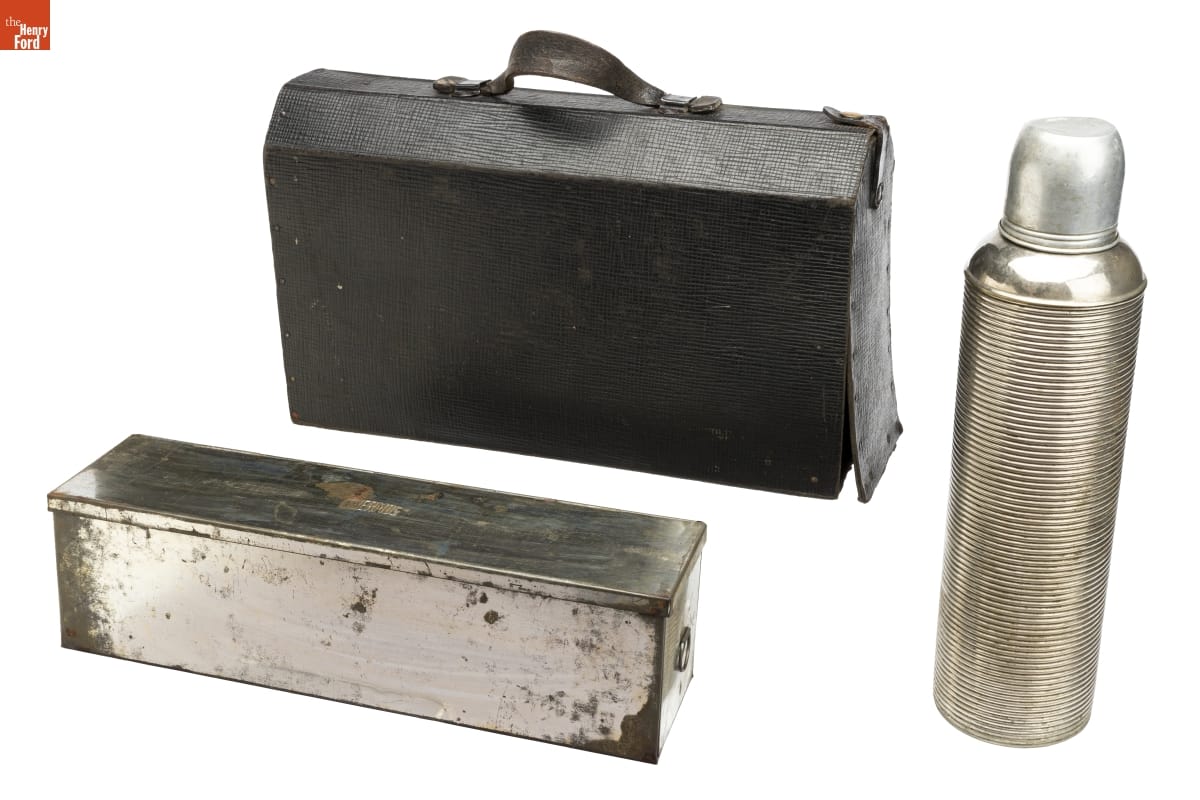
- 1910-1956
- Collections - Artifact
Lunch Box, 1910-1956
- Butter Box -
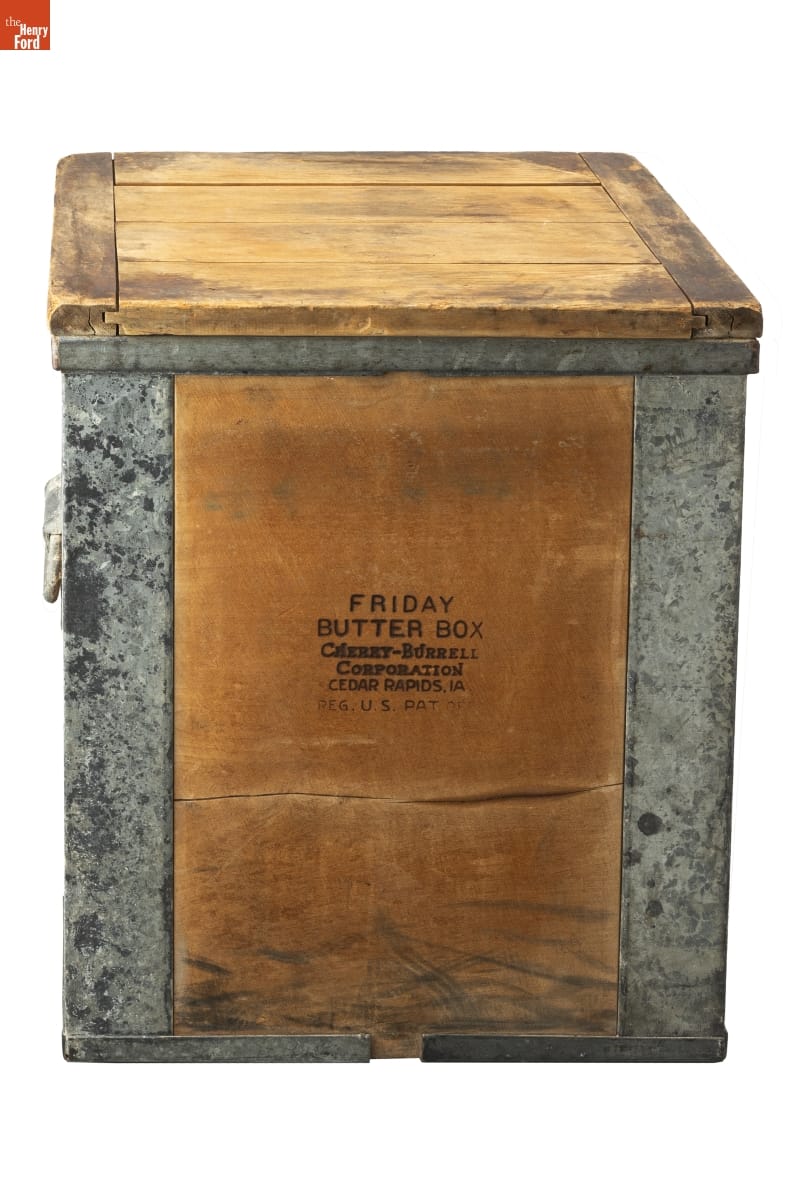
- Collections - Artifact
Butter Box
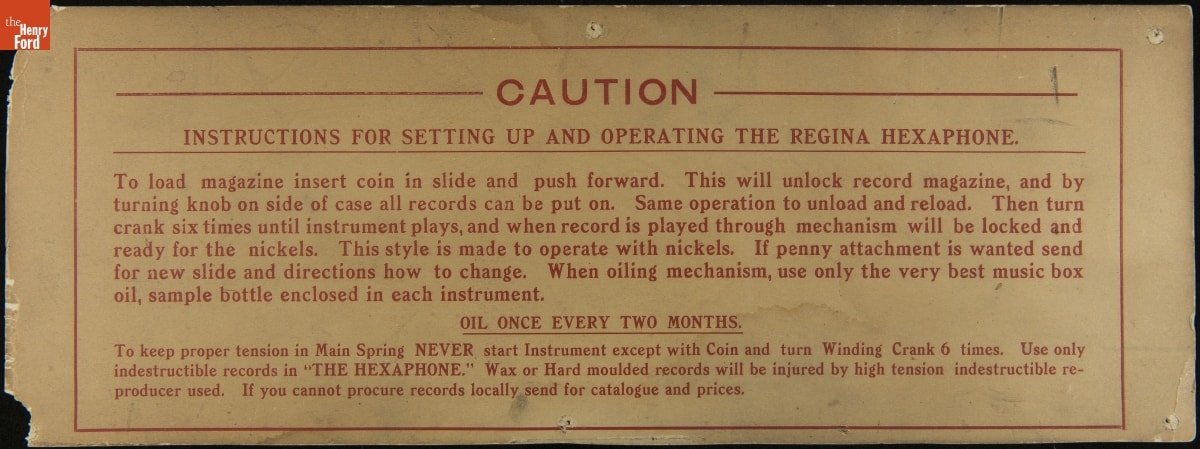
- Instructions for Setting Up and Operating the Regina Hexaphone, circa 1912 -
- circa 1912
- Collections - Artifact
Instructions for Setting Up and Operating the Regina Hexaphone, circa 1912
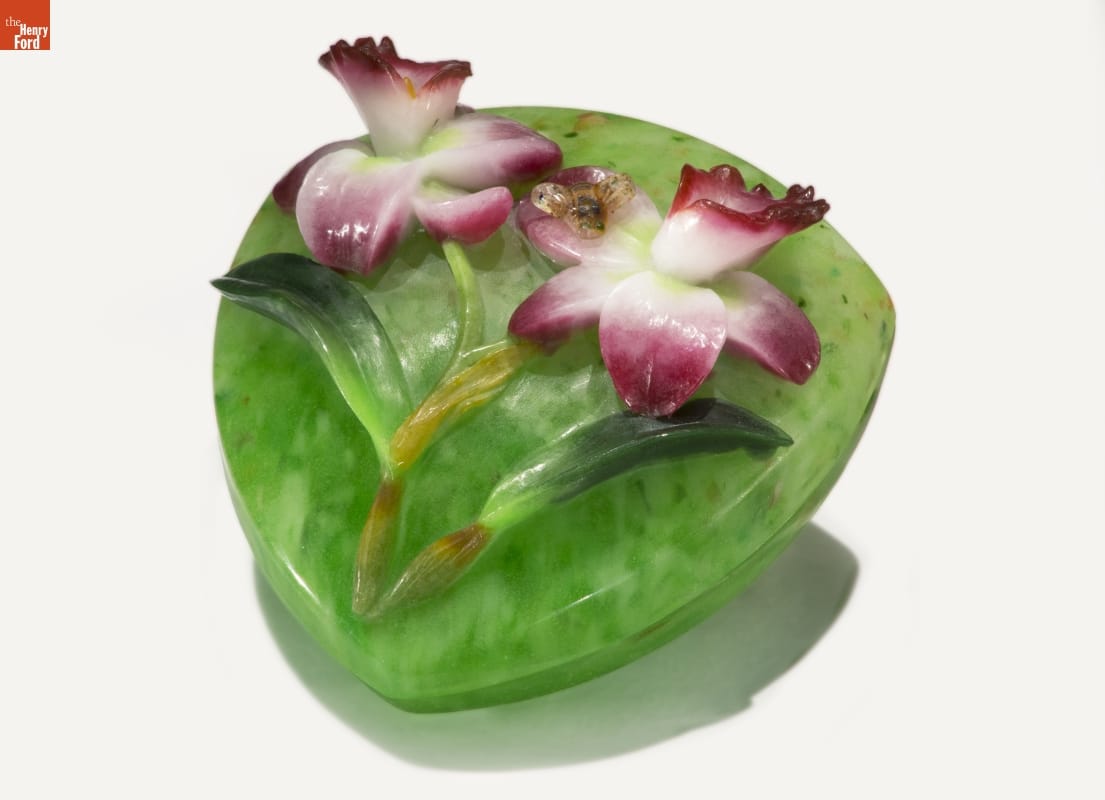
- Orchard Box by Kimiake Higuchi, 2007 - New centers of glassmaking emerged as studio glass spread in the 1980s, creating a truly international movement. In Japan, studio glass artist Kimiake Higuchi referenced the Art Nouveau style of the 1890s for inspiration. She revived a popular glassmaking technique known as "pate-de-verre" to achieve opaque finishes and used color schemes and botanical motifs that further echo the Art Nouveau.
- 2007
- Collections - Artifact
Orchard Box by Kimiake Higuchi, 2007
New centers of glassmaking emerged as studio glass spread in the 1980s, creating a truly international movement. In Japan, studio glass artist Kimiake Higuchi referenced the Art Nouveau style of the 1890s for inspiration. She revived a popular glassmaking technique known as "pate-de-verre" to achieve opaque finishes and used color schemes and botanical motifs that further echo the Art Nouveau.