
Search
- Correspondence between W.L. Schurz and the Office of Henry Ford regarding Brazil Expedition, July - August, 1925 -
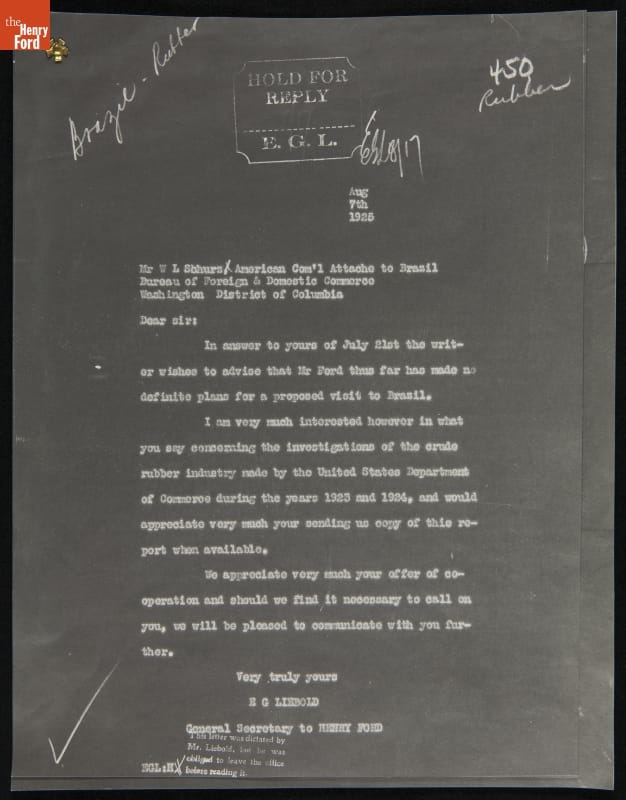
- 21 July 1925-07 August 1925
- Collections - Artifact
Correspondence between W.L. Schurz and the Office of Henry Ford regarding Brazil Expedition, July - August, 1925
- "Plant Samples--Sample #73--Java Sisal, Red Sisal and Current Sisal, 1931" - In 1928, Henry Ford established rubber tree plantations in the Brazilian rainforest to supply rubber for automobile production. He also explored how to profit from the native plants already growing on his land holdings. Samples of Brazilian plants like this were sent to Ford's Rouge factory in Dearborn, Michigan, to determine if they could be used to make commercially viable products.

- June 04, 1931
- Collections - Artifact
"Plant Samples--Sample #73--Java Sisal, Red Sisal and Current Sisal, 1931"
In 1928, Henry Ford established rubber tree plantations in the Brazilian rainforest to supply rubber for automobile production. He also explored how to profit from the native plants already growing on his land holdings. Samples of Brazilian plants like this were sent to Ford's Rouge factory in Dearborn, Michigan, to determine if they could be used to make commercially viable products.
- Radio Transmitter House, Fordlandia, Brazil -
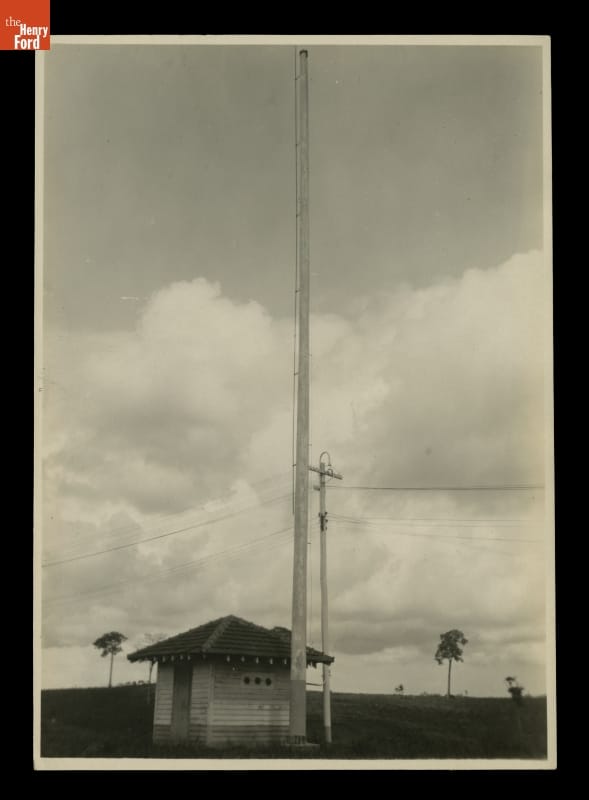
- 1926 - 1946
- Collections - Artifact
Radio Transmitter House, Fordlandia, Brazil
- Construction of Radio Transmitter House, Fordlandia, Brazil, March 1929 -
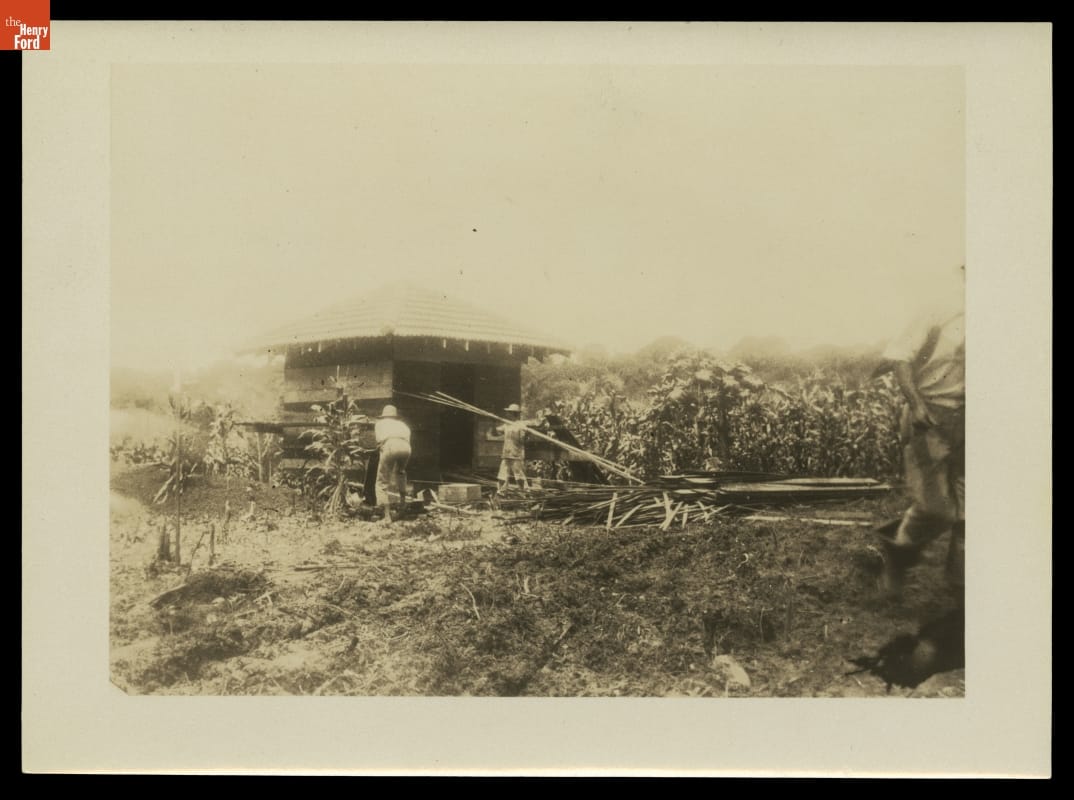
- March 23, 1929
- Collections - Artifact
Construction of Radio Transmitter House, Fordlandia, Brazil, March 1929
- Tree Bark and Wood Pulp Samples from Brazil, Sample #12, 1925-1928 - In 1928, Henry Ford established rubber tree plantations in the Brazilian rainforest to supply rubber for automobile production. He also explored how to profit from the native plants already growing on his land holdings. Samples of Brazilian plants like this were sent to Ford's Rouge factory in Dearborn, Michigan, to determine if they could be used to make commercially viable products.
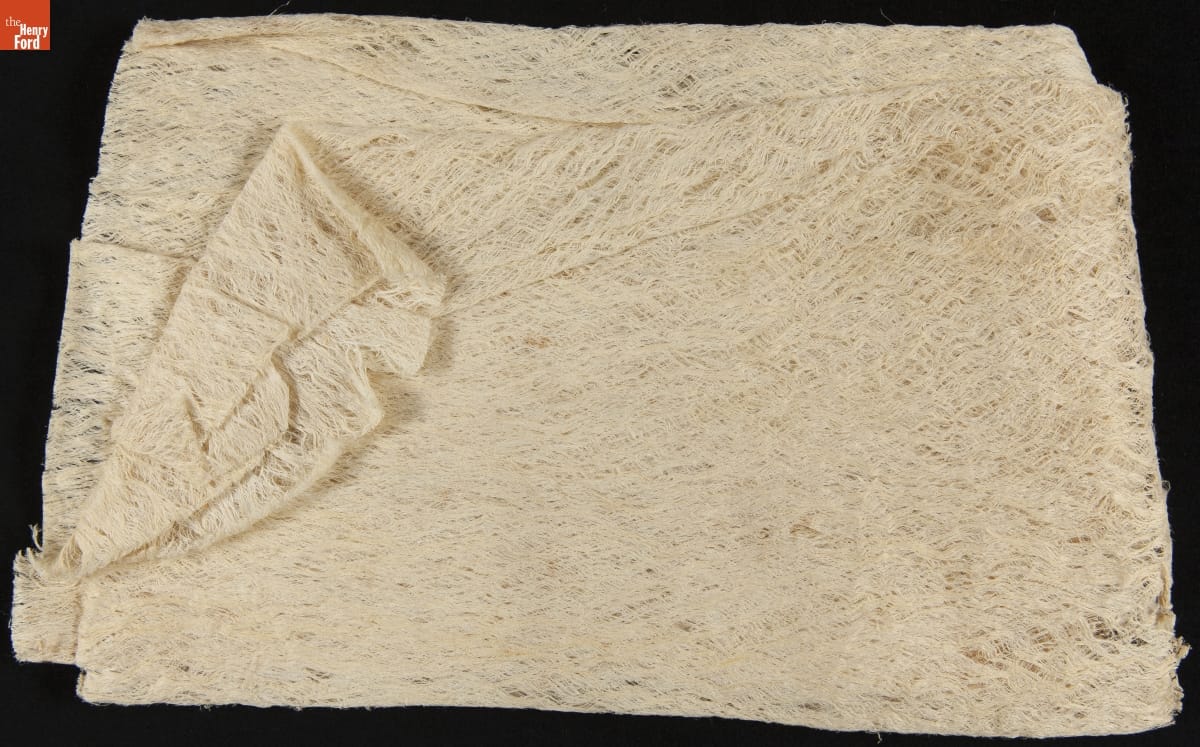
- 1925-1928
- Collections - Artifact
Tree Bark and Wood Pulp Samples from Brazil, Sample #12, 1925-1928
In 1928, Henry Ford established rubber tree plantations in the Brazilian rainforest to supply rubber for automobile production. He also explored how to profit from the native plants already growing on his land holdings. Samples of Brazilian plants like this were sent to Ford's Rouge factory in Dearborn, Michigan, to determine if they could be used to make commercially viable products.
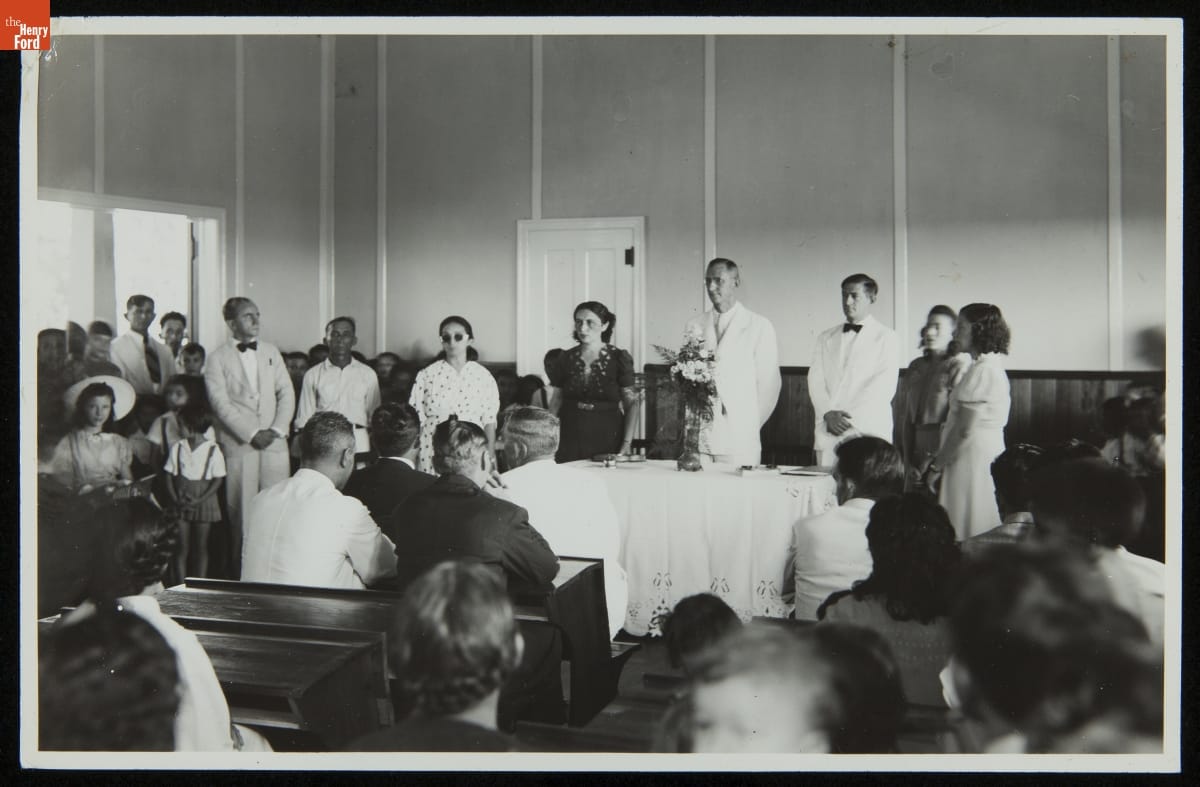
- Mrs. Braga, Principal, with Others at School Dedication Ceremony, Belterra, Brazil, July 4, 1942 - Along with Fordlandia, Belterra was established by Henry Ford in the Brazilian rainforest to supply rubber for automobile production. Modeled after small-town America, Belterra had a grid-like street system lined with American-style homes. The city was also equipped with recreational facilities, a hospital, a dentist's office, and a school that provided its students with pencils, books and uniforms.
- July 04, 1942
- Collections - Artifact
Mrs. Braga, Principal, with Others at School Dedication Ceremony, Belterra, Brazil, July 4, 1942
Along with Fordlandia, Belterra was established by Henry Ford in the Brazilian rainforest to supply rubber for automobile production. Modeled after small-town America, Belterra had a grid-like street system lined with American-style homes. The city was also equipped with recreational facilities, a hospital, a dentist's office, and a school that provided its students with pencils, books and uniforms.
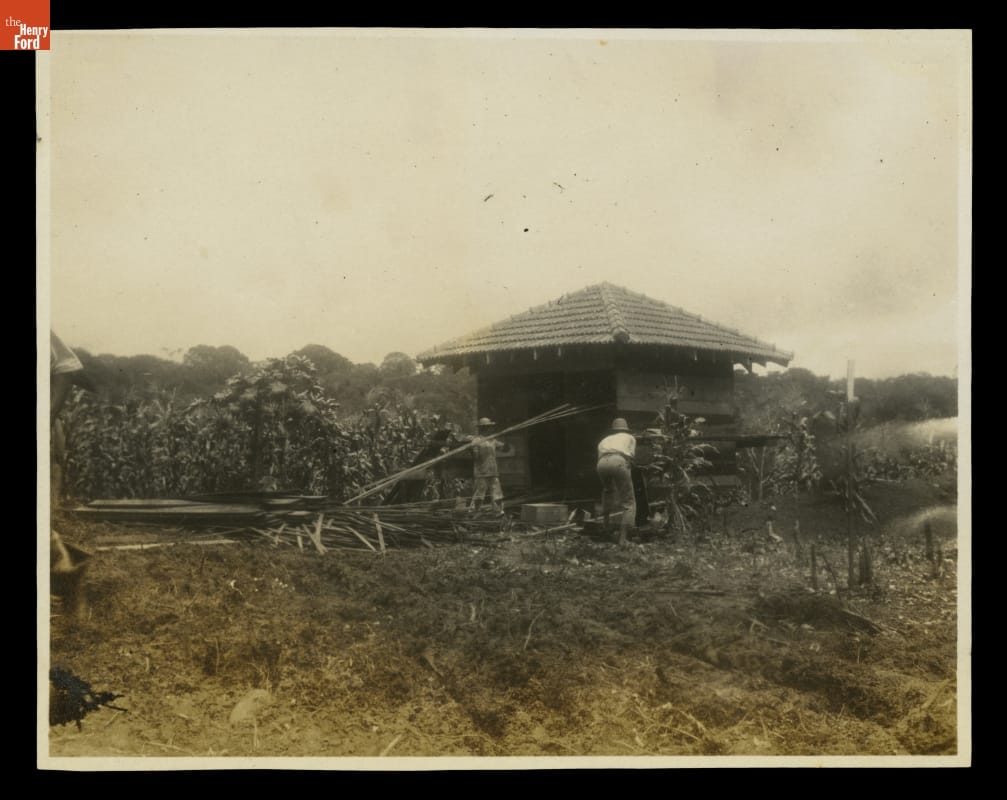
- Radio Transmitter House, Fordlandia, Brazil, 1929 -
- March 23, 1929
- Collections - Artifact
Radio Transmitter House, Fordlandia, Brazil, 1929
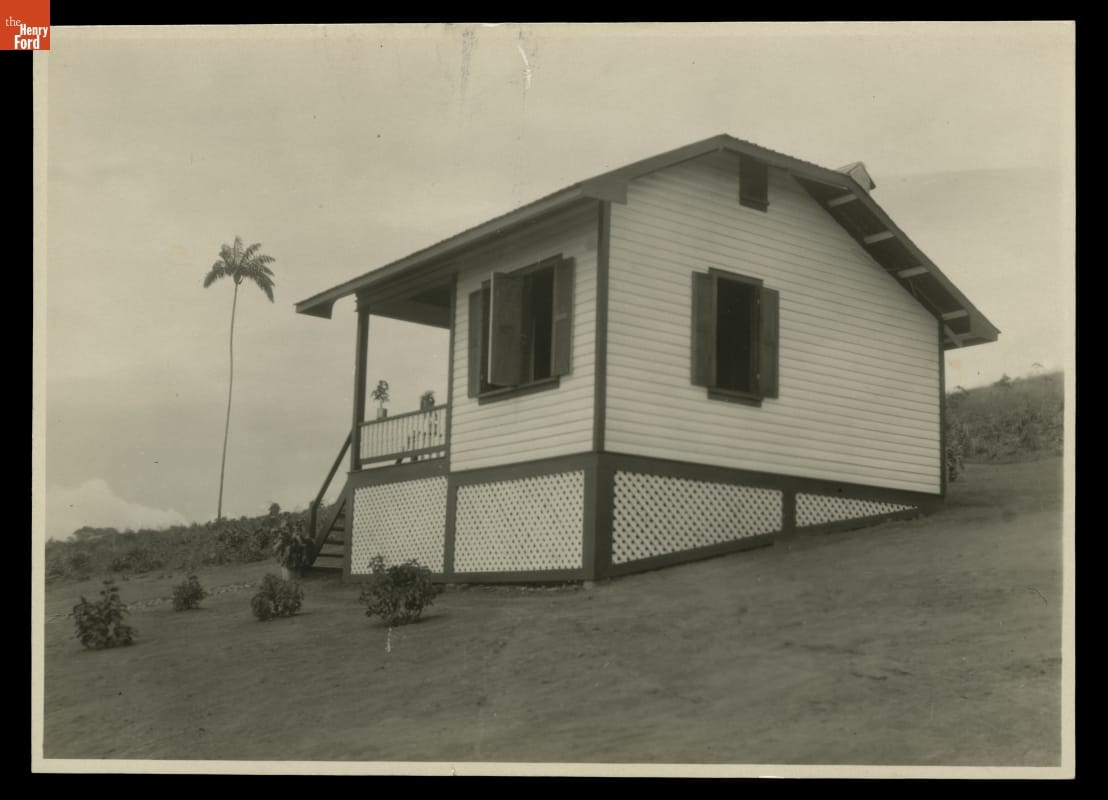
- Employee Housing, Fordlandia, Brazil, June 1932 - In 1928, Ford Motor Company established Fordlandia, a 2.5 million-acre rubber plantation and industrial town, in the Amazon Rainforest. Native workers rioted two years later against imposed American work rules and behavioral restrictions. To alleviate tensions, Ford began building new housing and other amenities. The building designs, however, were patterned after management's Midwestern American aesthetics -- inappropriate for Brazil's tropical climate.
- June 20, 1932
- Collections - Artifact
Employee Housing, Fordlandia, Brazil, June 1932
In 1928, Ford Motor Company established Fordlandia, a 2.5 million-acre rubber plantation and industrial town, in the Amazon Rainforest. Native workers rioted two years later against imposed American work rules and behavioral restrictions. To alleviate tensions, Ford began building new housing and other amenities. The building designs, however, were patterned after management's Midwestern American aesthetics -- inappropriate for Brazil's tropical climate.
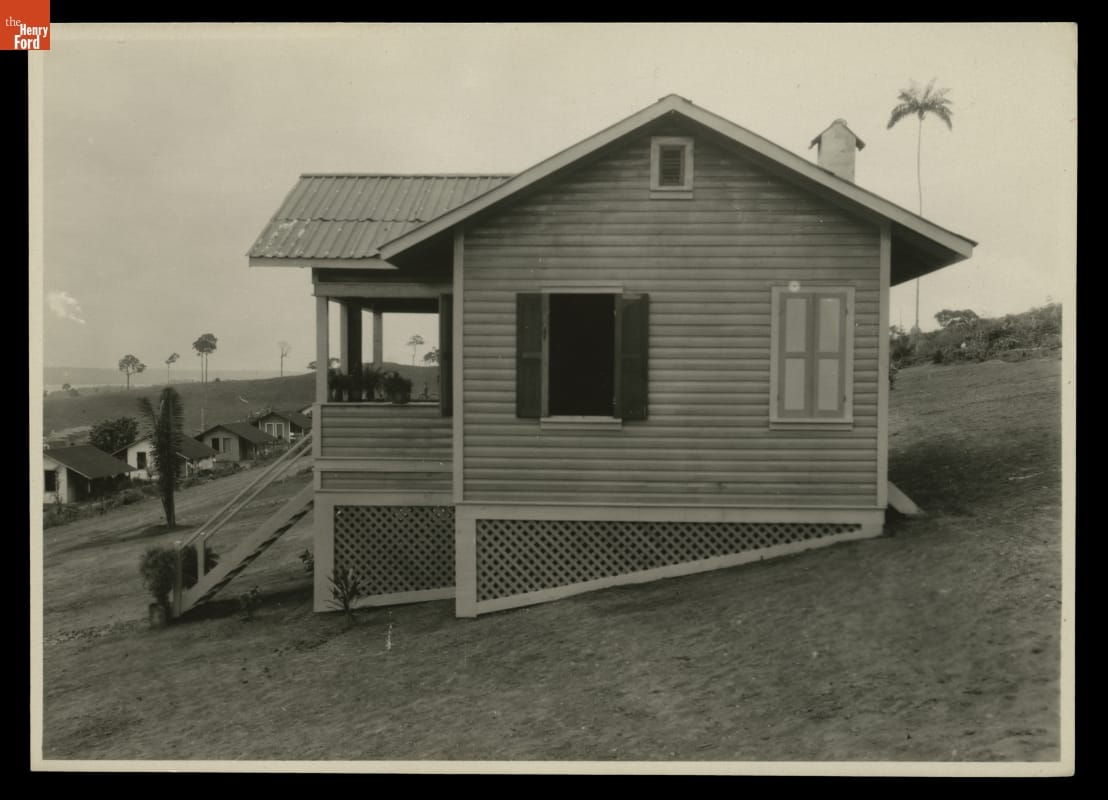
- Employee Housing, Fordlandia, Brazil, June 1932 - In 1928, Ford Motor Company established Fordlandia, a 2.5 million-acre rubber plantation and industrial town, in the Amazon Rainforest. Native workers rioted two years later against imposed American work rules and behavioral restrictions. To alleviate tensions, Ford began building new housing and other amenities. The building designs, however, were patterned after management's Midwestern American aesthetics -- inappropriate for Brazil's tropical climate.
- June 20, 1932
- Collections - Artifact
Employee Housing, Fordlandia, Brazil, June 1932
In 1928, Ford Motor Company established Fordlandia, a 2.5 million-acre rubber plantation and industrial town, in the Amazon Rainforest. Native workers rioted two years later against imposed American work rules and behavioral restrictions. To alleviate tensions, Ford began building new housing and other amenities. The building designs, however, were patterned after management's Midwestern American aesthetics -- inappropriate for Brazil's tropical climate.
- Employee Housing, Fordlandia, Brazil, June 1932 - In 1928, Ford Motor Company established Fordlandia, a 2.5 million-acre rubber plantation and industrial town, in the Amazon Rainforest. Native workers rioted two years later against imposed American work rules and behavioral restrictions. To alleviate tensions, Ford began building new housing and other amenities. The building designs, however, were patterned after management's Midwestern American aesthetics -- inappropriate for Brazil's tropical climate.
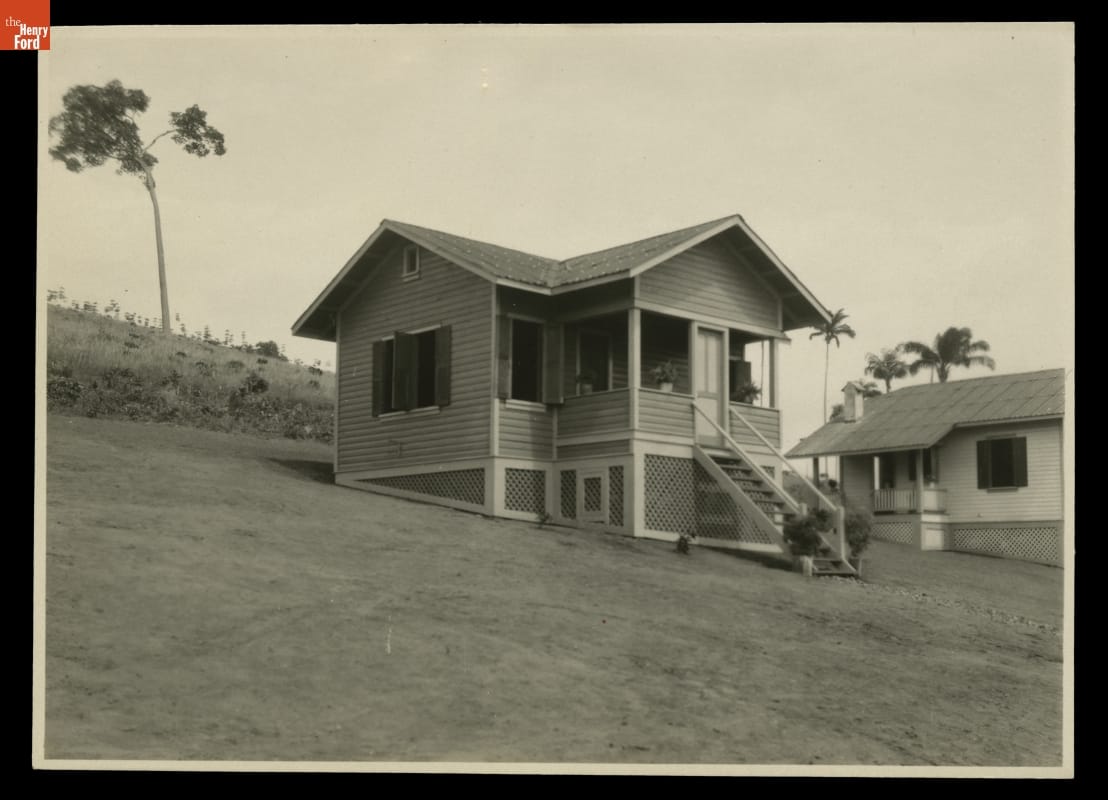
- June 20, 1932
- Collections - Artifact
Employee Housing, Fordlandia, Brazil, June 1932
In 1928, Ford Motor Company established Fordlandia, a 2.5 million-acre rubber plantation and industrial town, in the Amazon Rainforest. Native workers rioted two years later against imposed American work rules and behavioral restrictions. To alleviate tensions, Ford began building new housing and other amenities. The building designs, however, were patterned after management's Midwestern American aesthetics -- inappropriate for Brazil's tropical climate.