
Search
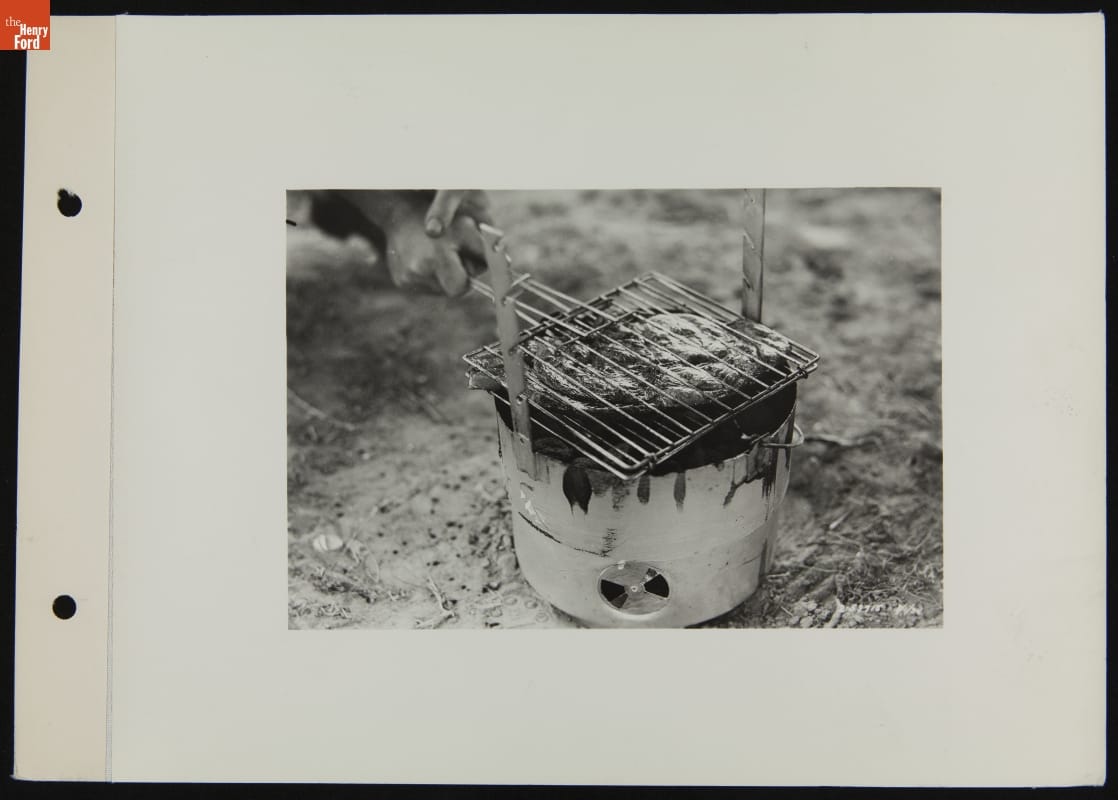
- Grilling Meat using Ford Charcoal Briquets, 1934 - Ford Motor Company sawmills created heaps of wood wastes. Some was used to produce steam for factory operations. The rest was carbonized and compressed into charcoal. Workers mixed charred hardwood chips with starch, forming nearly 100 tons of charcoal briquettes each day. Dealers sold branded bags of the popular briquettes in Ford dealerships across the country.
- July 01, 1934
- Collections - Artifact
Grilling Meat using Ford Charcoal Briquets, 1934
Ford Motor Company sawmills created heaps of wood wastes. Some was used to produce steam for factory operations. The rest was carbonized and compressed into charcoal. Workers mixed charred hardwood chips with starch, forming nearly 100 tons of charcoal briquettes each day. Dealers sold branded bags of the popular briquettes in Ford dealerships across the country.
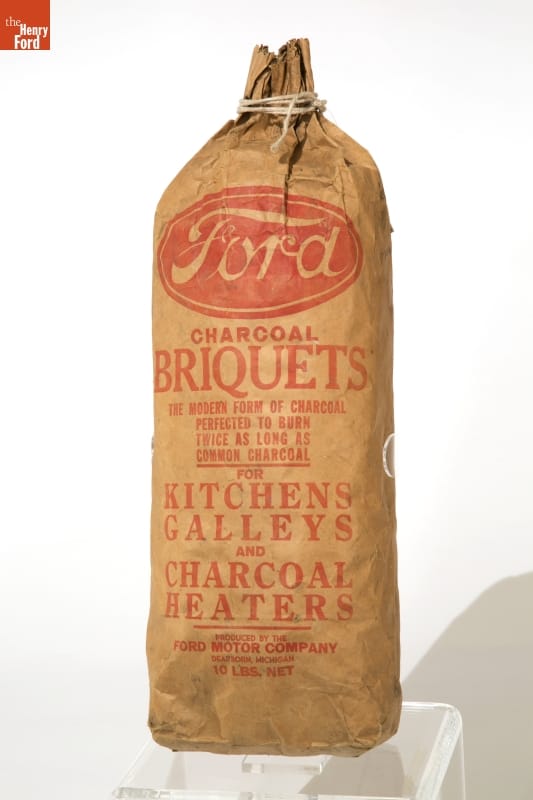
- Ford Charcoal Briquets Bag, 1929-1947 - Ford Motor Company sawmills created heaps of wood wastes. Some was used to produce steam for factory operations. The rest was carbonized and compressed into charcoal. Workers mixed charred hardwood chips with starch, forming nearly 100 tons of charcoal briquettes each day. Dealers sold branded bags of the popular briquettes in Ford dealerships across the country.
- 1929-1947
- Collections - Artifact
Ford Charcoal Briquets Bag, 1929-1947
Ford Motor Company sawmills created heaps of wood wastes. Some was used to produce steam for factory operations. The rest was carbonized and compressed into charcoal. Workers mixed charred hardwood chips with starch, forming nearly 100 tons of charcoal briquettes each day. Dealers sold branded bags of the popular briquettes in Ford dealerships across the country.
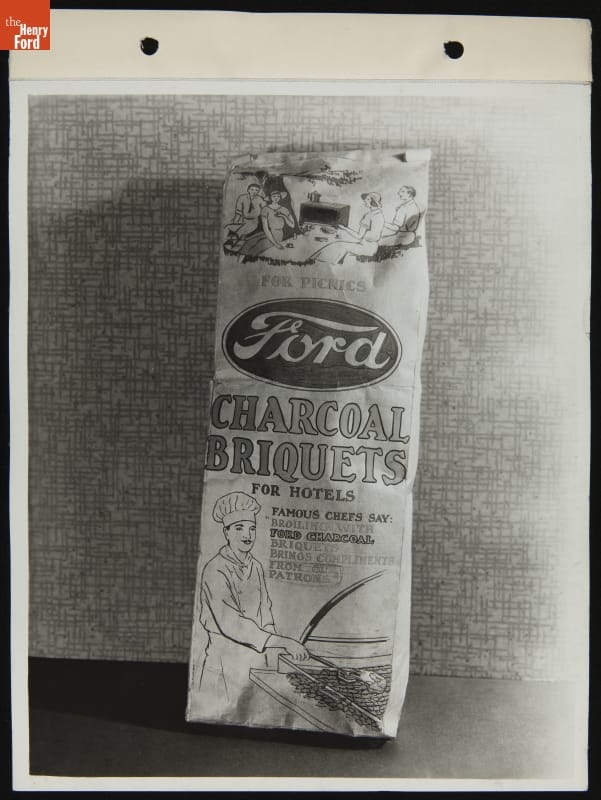
- Ford Charcoal Briquets in Package with Chef and Picnic Images, 1935 - Ford Motor Company manufactured charcoal briquettes from wood wastes generated by its lumber operations in Michigan's Upper Peninsula. This packaging promotes their use as a cooking fuel for family picnics as well as commercial restaurant kitchens. Ford boasted that the hardwood used in its charcoal gave a special aroma and flavor to any foods cooked over it.
- March 18, 1935
- Collections - Artifact
Ford Charcoal Briquets in Package with Chef and Picnic Images, 1935
Ford Motor Company manufactured charcoal briquettes from wood wastes generated by its lumber operations in Michigan's Upper Peninsula. This packaging promotes their use as a cooking fuel for family picnics as well as commercial restaurant kitchens. Ford boasted that the hardwood used in its charcoal gave a special aroma and flavor to any foods cooked over it.
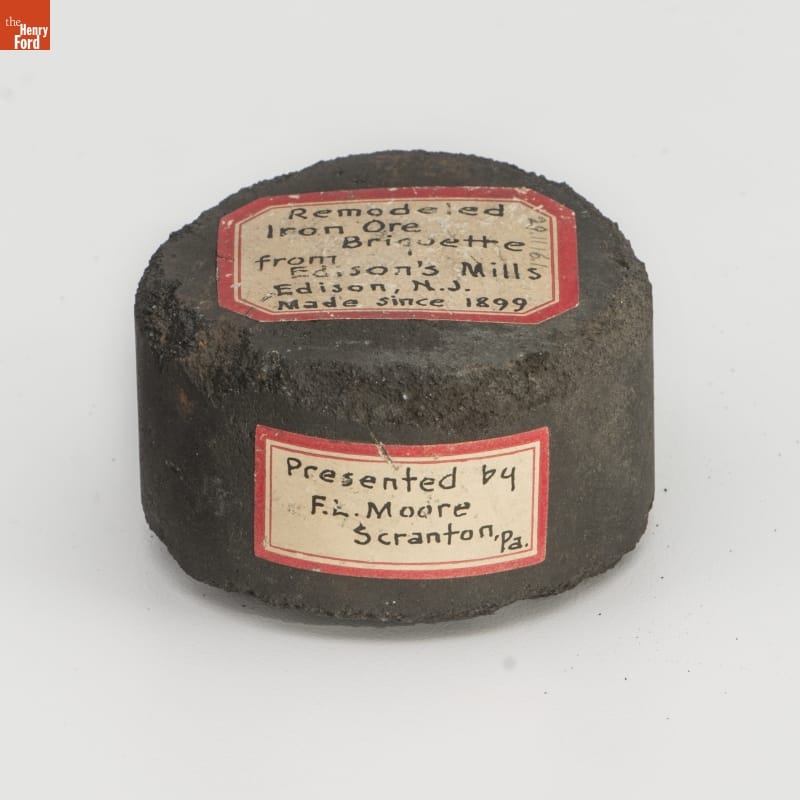
- Iron Ore Briquette from Edison Mines, New Jersey, 1899-1900 - During the 1890s, Thomas Edison launched a New Jersey mining operation to address an iron ore shortage. He designed rock-crushing technology and an electromagnetic ore separator to extract low-grade ore from crushed boulders. The final product -- a briquette made of powdered iron ore -- didn't do well commercially, especially after high-grade ore was discovered around Lake Superior. In 1899, Edison left the industry.
- 1899-1900
- Collections - Artifact
Iron Ore Briquette from Edison Mines, New Jersey, 1899-1900
During the 1890s, Thomas Edison launched a New Jersey mining operation to address an iron ore shortage. He designed rock-crushing technology and an electromagnetic ore separator to extract low-grade ore from crushed boulders. The final product -- a briquette made of powdered iron ore -- didn't do well commercially, especially after high-grade ore was discovered around Lake Superior. In 1899, Edison left the industry.
- Iron Ore Briquette from Edison Mines, New Jersey, 1890-1899 - During the 1890s, Thomas Edison launched a New Jersey mining operation to address an iron ore shortage. He designed rock-crushing technology and an electromagnetic ore separator to extract low-grade ore from crushed boulders. The final product -- a briquette made of powdered iron ore -- didn't do well commercially, especially after high-grade ore was discovered around Lake Superior. In 1899, Edison left the industry.
- 1890-1899
- Collections - Artifact
Iron Ore Briquette from Edison Mines, New Jersey, 1890-1899
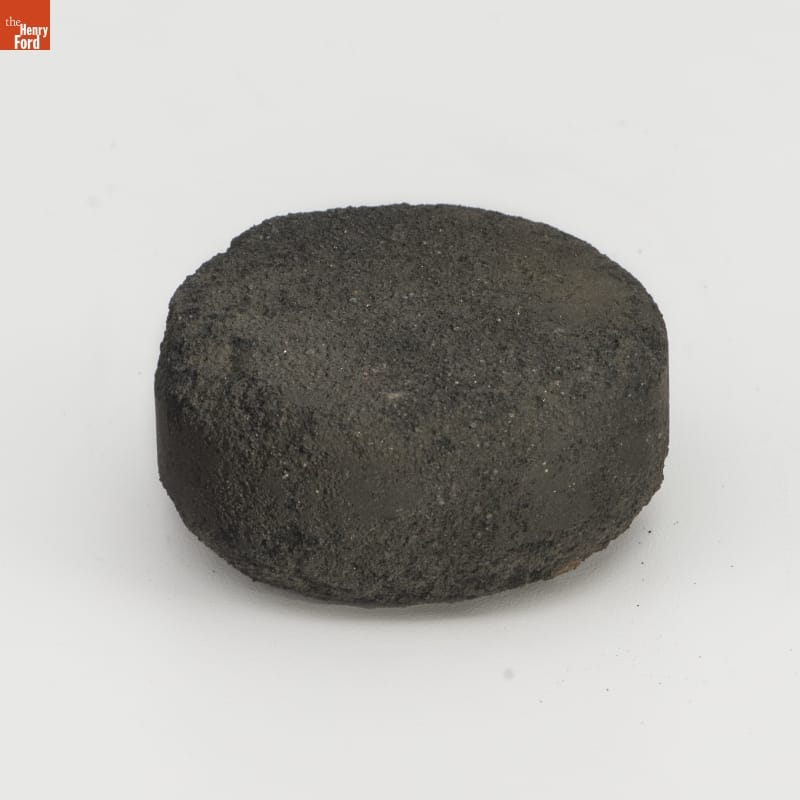
During the 1890s, Thomas Edison launched a New Jersey mining operation to address an iron ore shortage. He designed rock-crushing technology and an electromagnetic ore separator to extract low-grade ore from crushed boulders. The final product -- a briquette made of powdered iron ore -- didn't do well commercially, especially after high-grade ore was discovered around Lake Superior. In 1899, Edison left the industry.
- Chef Broiling Steak and Hot Dogs over Ford Charcoal Briquets, 1938 - Ford Motor Company promoted its charcoal briquettes to commercial restaurateurs as well as backyard barbeque chefs. The briquettes, made from wood wastes generated by Ford's sawmill operations, produced a steady and even heat ideal for broiling meats. Ford boasted that the hardwood used in its charcoal gave a special aroma and flavor to any foods cooked over it.
- January 07, 1935
- Collections - Artifact
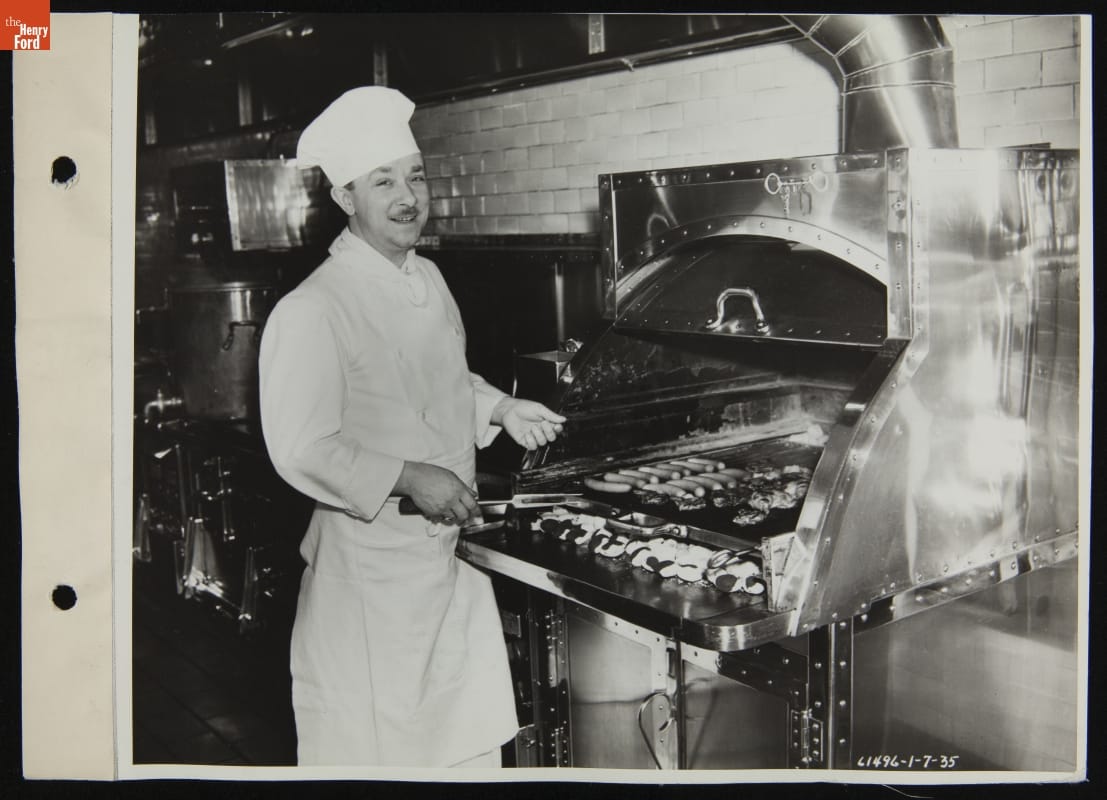
Chef Broiling Steak and Hot Dogs over Ford Charcoal Briquets, 1938
Ford Motor Company promoted its charcoal briquettes to commercial restaurateurs as well as backyard barbeque chefs. The briquettes, made from wood wastes generated by Ford's sawmill operations, produced a steady and even heat ideal for broiling meats. Ford boasted that the hardwood used in its charcoal gave a special aroma and flavor to any foods cooked over it.
- Ford Charcoal Briquets in Package with Chef and Picnic Images, 1935 - Ford Motor Company manufactured charcoal briquettes from wood wastes generated by its lumber operations in Michigan's Upper Peninsula. This packaging promotes their use as a cooking fuel for family picnics as well as commercial restaurant kitchens. Ford boasted that the hardwood used in its charcoal gave a special aroma and flavor to any foods cooked over it.
- May 15, 1935
- Collections - Artifact
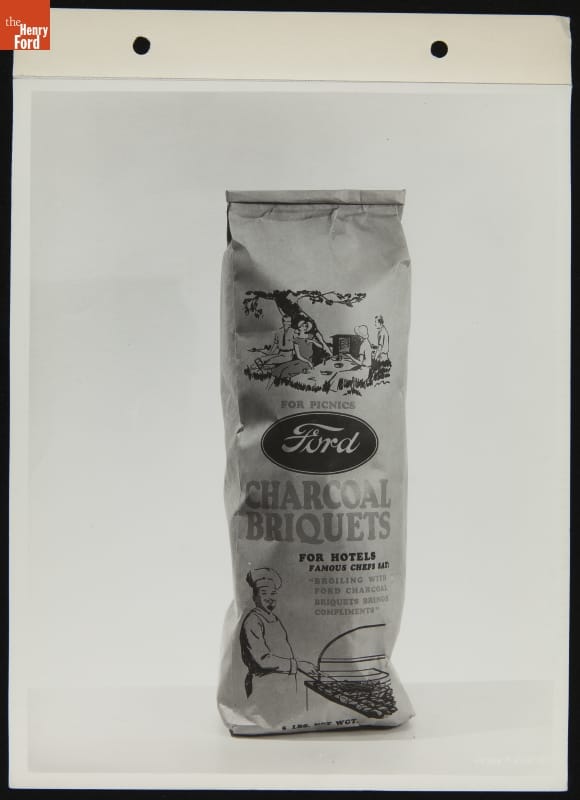
Ford Charcoal Briquets in Package with Chef and Picnic Images, 1935
Ford Motor Company manufactured charcoal briquettes from wood wastes generated by its lumber operations in Michigan's Upper Peninsula. This packaging promotes their use as a cooking fuel for family picnics as well as commercial restaurant kitchens. Ford boasted that the hardwood used in its charcoal gave a special aroma and flavor to any foods cooked over it.
- Roasting Hot Dogs over a Barbecue Using Charcoal Briquets, 1938 - Cars and cookouts were a natural fit in the 1920s and 1930s. As roads improved, Americans were eager to go exploring, whether on short day trips or longer journeys. A roadside picnic saved money for budget-conscious travelers, or it provided a destination in itself for a family on a Sunday drive. Ford used these themes to market its charcoal briquettes.
- 1938
- Collections - Artifact
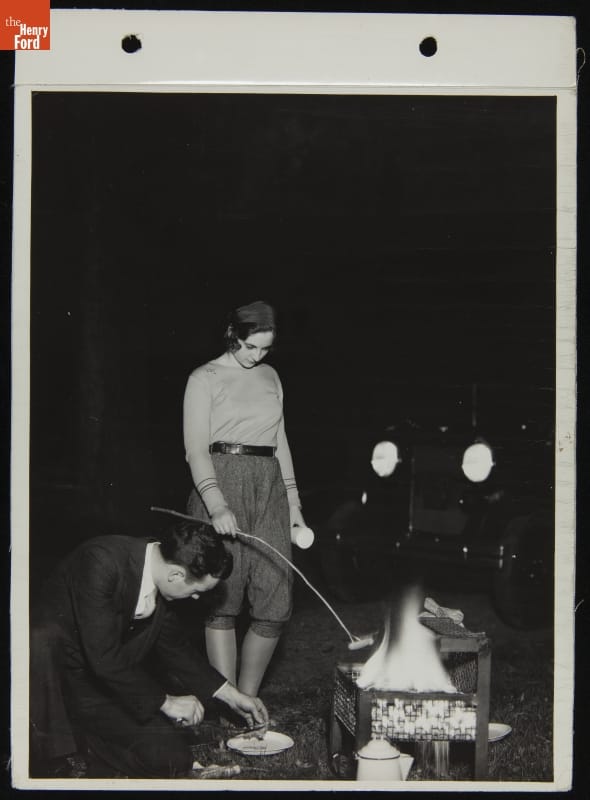
Roasting Hot Dogs over a Barbecue Using Charcoal Briquets, 1938
Cars and cookouts were a natural fit in the 1920s and 1930s. As roads improved, Americans were eager to go exploring, whether on short day trips or longer journeys. A roadside picnic saved money for budget-conscious travelers, or it provided a destination in itself for a family on a Sunday drive. Ford used these themes to market its charcoal briquettes.
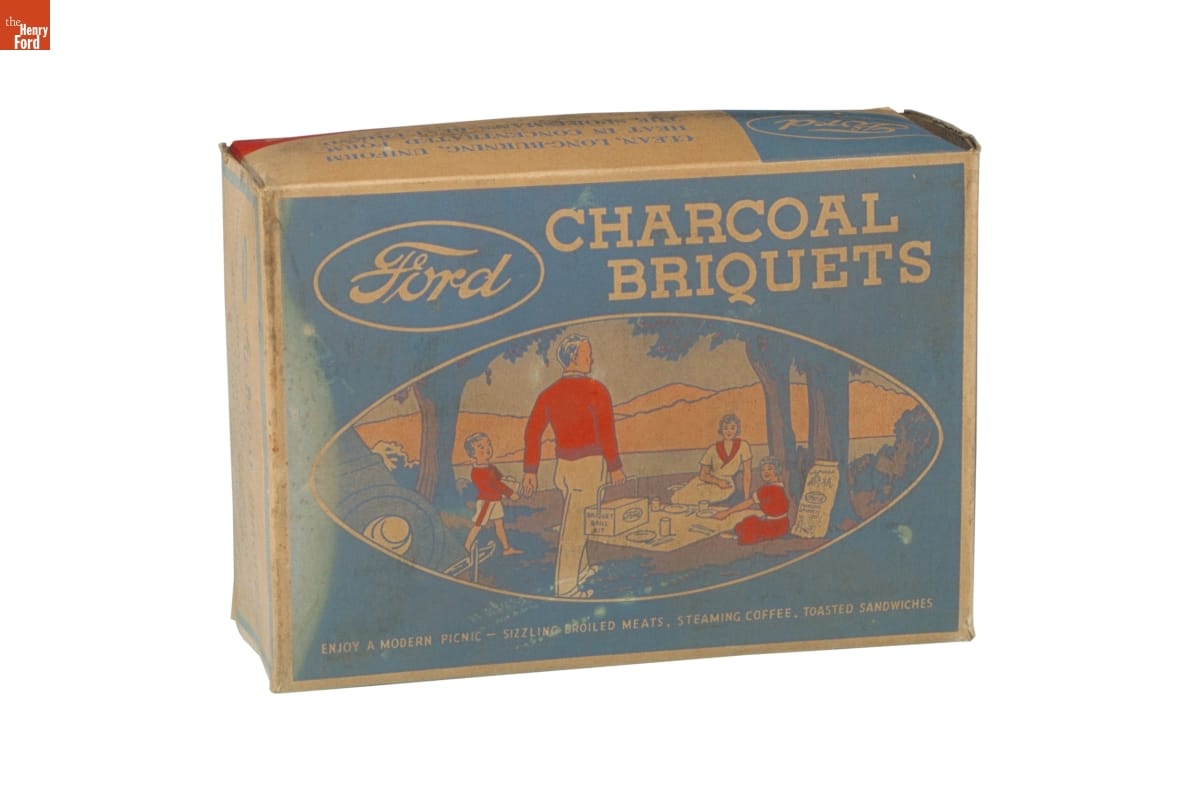
- Ford Charcoal Briquets and Packaging, 1935-1937 - Ford Motor Company sawmills created heaps of wood wastes. Some was used to produce steam for factory operations. The rest was carbonized and compressed into charcoal. Workers mixed charred hardwood chips with starch, forming nearly 100 tons of charcoal briquettes each day. Dealers sold branded barbecue accessories and packages of the popular briquettes in Ford dealerships across the country.
- 1935-1937
- Collections - Artifact
Ford Charcoal Briquets and Packaging, 1935-1937
Ford Motor Company sawmills created heaps of wood wastes. Some was used to produce steam for factory operations. The rest was carbonized and compressed into charcoal. Workers mixed charred hardwood chips with starch, forming nearly 100 tons of charcoal briquettes each day. Dealers sold branded barbecue accessories and packages of the popular briquettes in Ford dealerships across the country.
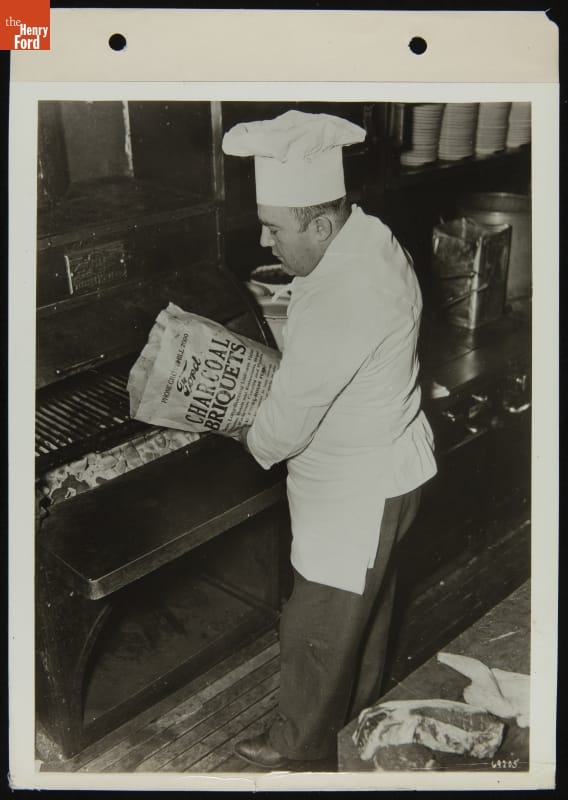
- Using Ford Charcoal Briquets for Grilling in Restaurant Kitchen, 1937 - Ford Motor Company promoted its charcoal briquettes to commercial restaurateurs as well as backyard barbeque chefs. The briquettes, made from wood wastes generated by Ford's sawmill operations, produced a steady and even heat ideal for broiling meats. Ford boasted that the hardwood used in its charcoal gave a special aroma and flavor to any foods cooked over it.
- October 29, 1937
- Collections - Artifact
Using Ford Charcoal Briquets for Grilling in Restaurant Kitchen, 1937
Ford Motor Company promoted its charcoal briquettes to commercial restaurateurs as well as backyard barbeque chefs. The briquettes, made from wood wastes generated by Ford's sawmill operations, produced a steady and even heat ideal for broiling meats. Ford boasted that the hardwood used in its charcoal gave a special aroma and flavor to any foods cooked over it.