
Search
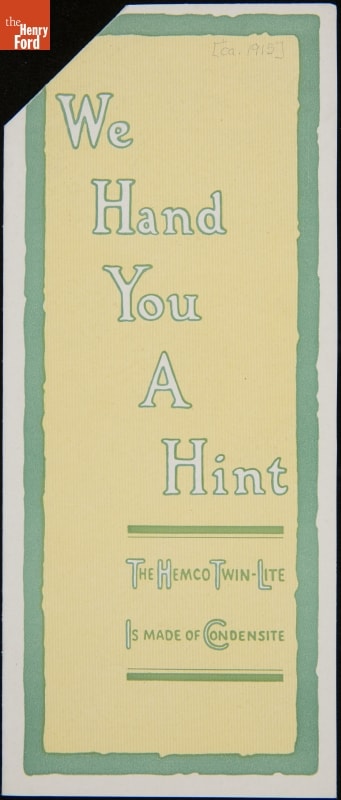
- We Hand You a Hint: The Hemco Twin-Lite is Made of Condensite, circa 1915 - Chemically synthetic plastics were developed in the early 1900s to replace shellac and hard rubber -- naturally derived substances increasingly in demand for various industrial applications. The Condensite Company of America formed in 1910 to sell a new material first developed at Thomas Edison's West Orange laboratory for phonograph records. Durable and nonconductive, Condensite was well suited for electrical products.
- circa 1915
- Collections - Artifact
We Hand You a Hint: The Hemco Twin-Lite is Made of Condensite, circa 1915
Chemically synthetic plastics were developed in the early 1900s to replace shellac and hard rubber -- naturally derived substances increasingly in demand for various industrial applications. The Condensite Company of America formed in 1910 to sell a new material first developed at Thomas Edison's West Orange laboratory for phonograph records. Durable and nonconductive, Condensite was well suited for electrical products.
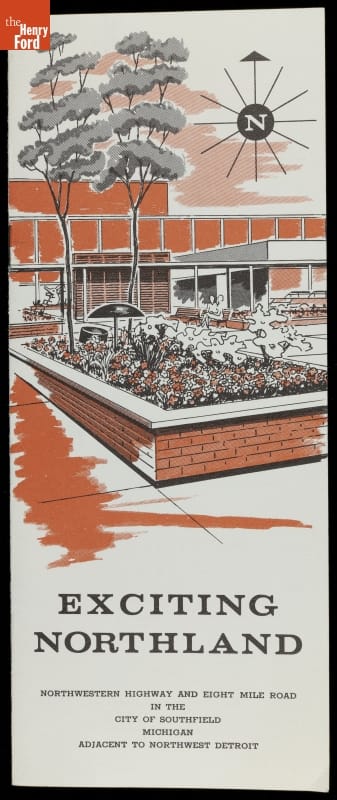
- "Exciting Northland," circa 1960 - Northland Center, completed in 1954 and the world's largest shopping center at the time, was the first of four planned malls to encircle Detroit's inner ring of suburbs. Northland Center both responded to and encouraged Detroit's growing suburban population.
- circa 1960
- Collections - Artifact
"Exciting Northland," circa 1960
Northland Center, completed in 1954 and the world's largest shopping center at the time, was the first of four planned malls to encircle Detroit's inner ring of suburbs. Northland Center both responded to and encouraged Detroit's growing suburban population.
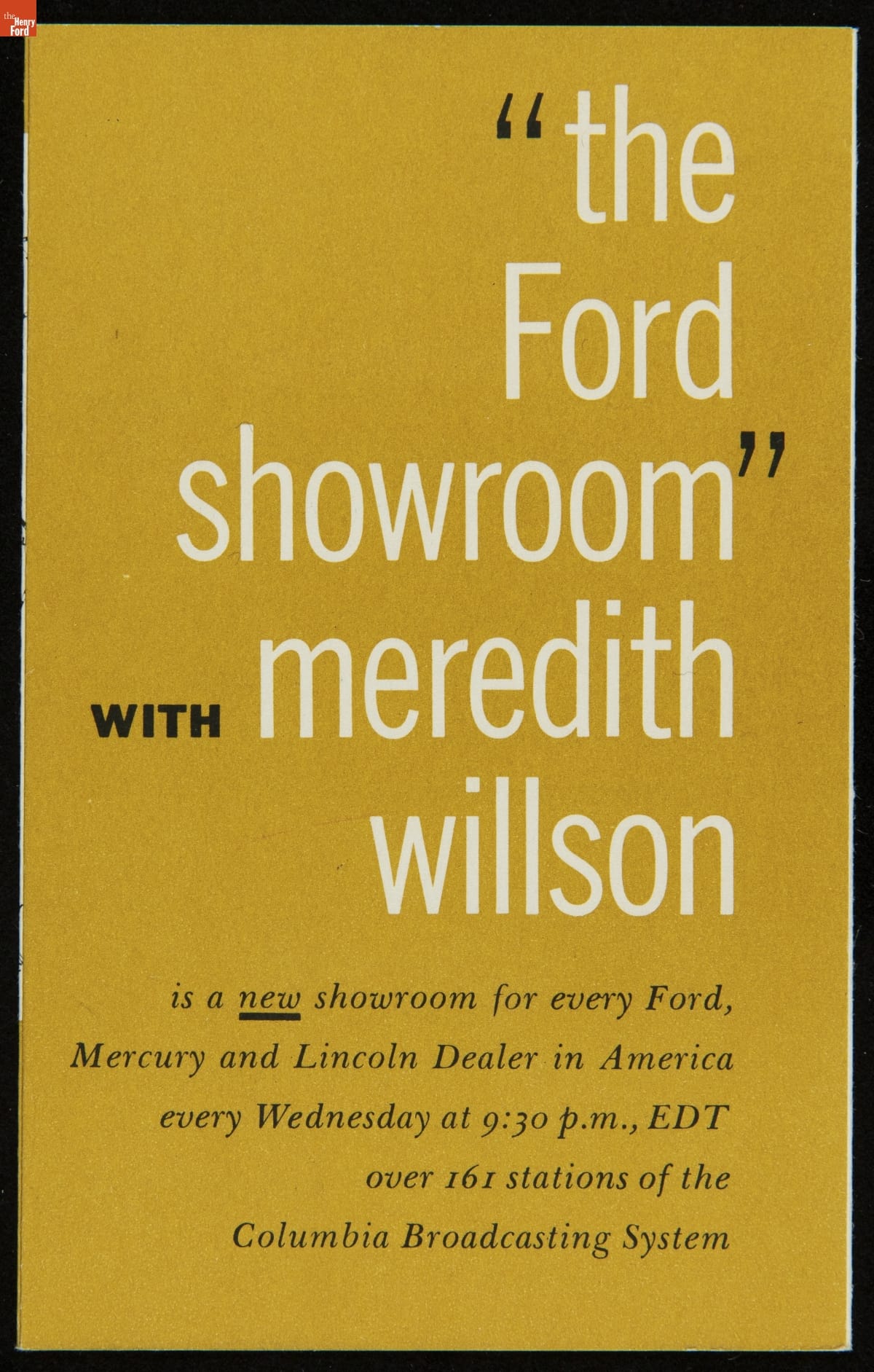
- "The Ford Showroom" with Meredith Willson, 1947 - Ford Motor Company sponsored the CBS radio show <em>The Ford Showroom</em> in 1947. The program featured bandleader Meredith Willson, a radio and film veteran. Willson reached greater heights ten years later, when his musical inspired by his Iowa childhood, <em>The Music Man</em>, opened on Broadway to critical and commercial success.
- 1947
- Collections - Artifact
"The Ford Showroom" with Meredith Willson, 1947
Ford Motor Company sponsored the CBS radio show The Ford Showroom in 1947. The program featured bandleader Meredith Willson, a radio and film veteran. Willson reached greater heights ten years later, when his musical inspired by his Iowa childhood, The Music Man, opened on Broadway to critical and commercial success.
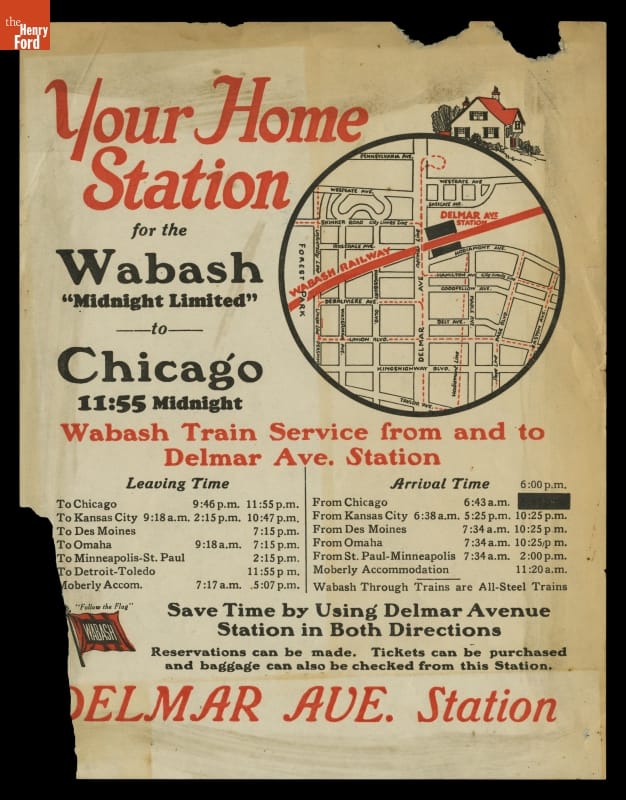
- Handbill and Timetable for Wabash Railway's "Midnight Limited," Leaving from Delmar Avenue Station, St. Louis, Missouri, 1929 - The Wabash Railway, with origins dating back to 1838, was a strong Midwestern carrier until Amtrak took over the national passenger railroad system in 1971. In 1928, the Wabash Railway erected the Delmar Avenue Station, providing west-end and suburban St. Louis residents -- particularly businessmen -- convenient access to their railroad system without having to go all the way downtown.
- 1929
- Collections - Artifact
Handbill and Timetable for Wabash Railway's "Midnight Limited," Leaving from Delmar Avenue Station, St. Louis, Missouri, 1929
The Wabash Railway, with origins dating back to 1838, was a strong Midwestern carrier until Amtrak took over the national passenger railroad system in 1971. In 1928, the Wabash Railway erected the Delmar Avenue Station, providing west-end and suburban St. Louis residents -- particularly businessmen -- convenient access to their railroad system without having to go all the way downtown.
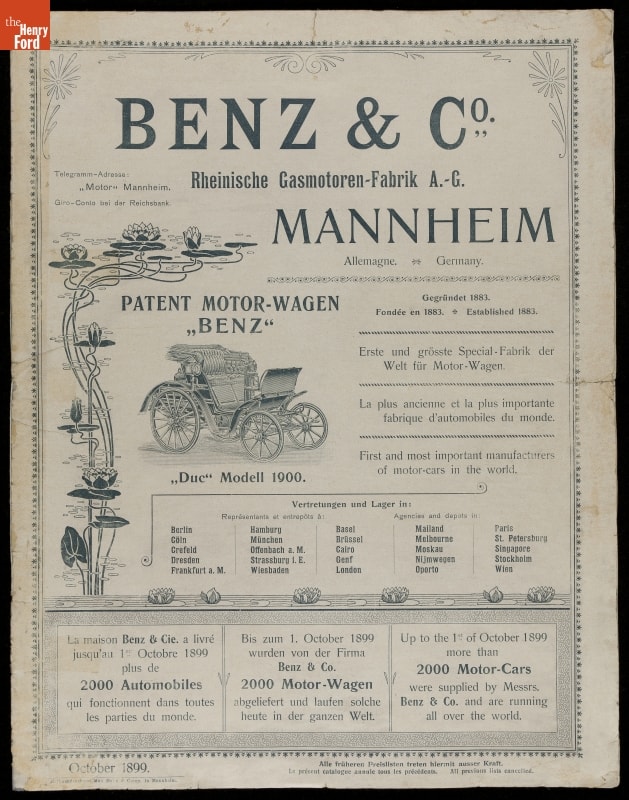
- Sales Brochure for the Patent Motor-Wagen "Benz," Benz & Company, 1899 - German engineer Karl Benz built his original Patent-Motorwagen in 1885, widely regarded as the first self-propelled vehicle designed around the internal combustion engine. Benz's design became the basis for the world's first production automobile in 1888. By the end of the 19th century, Benz's company was building more than 500 automobiles a year. Benz merged with Daimler Motors in 1926.
- October 01, 1899
- Collections - Artifact
Sales Brochure for the Patent Motor-Wagen "Benz," Benz & Company, 1899
German engineer Karl Benz built his original Patent-Motorwagen in 1885, widely regarded as the first self-propelled vehicle designed around the internal combustion engine. Benz's design became the basis for the world's first production automobile in 1888. By the end of the 19th century, Benz's company was building more than 500 automobiles a year. Benz merged with Daimler Motors in 1926.
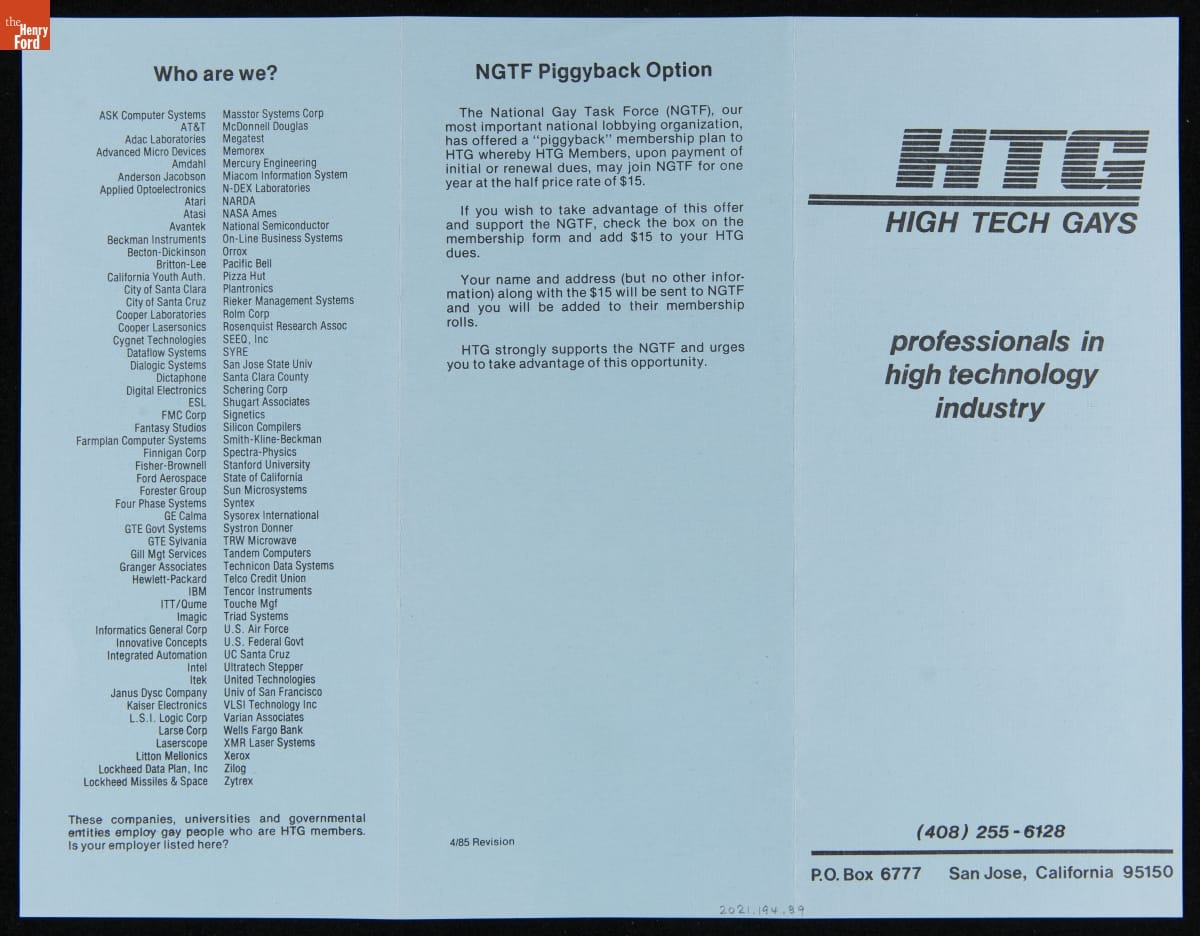
- High Tech Gays Brochure, 1985-1986 - High Tech Gays (HTGs) began in 1983 as a Silicon Valley-based social club and political action group. In 1984, the group was a co-defendant in a federal court case--High Tech Gays vs. DISCO--arguing that LGBTQ+ people were being denied access clearance to work in military and sensitive tech industries. The court ruled in favor of the High Tech Gays but was later overturned and appealed.
- 1985-1986
- Collections - Artifact
High Tech Gays Brochure, 1985-1986
High Tech Gays (HTGs) began in 1983 as a Silicon Valley-based social club and political action group. In 1984, the group was a co-defendant in a federal court case--High Tech Gays vs. DISCO--arguing that LGBTQ+ people were being denied access clearance to work in military and sensitive tech industries. The court ruled in favor of the High Tech Gays but was later overturned and appealed.
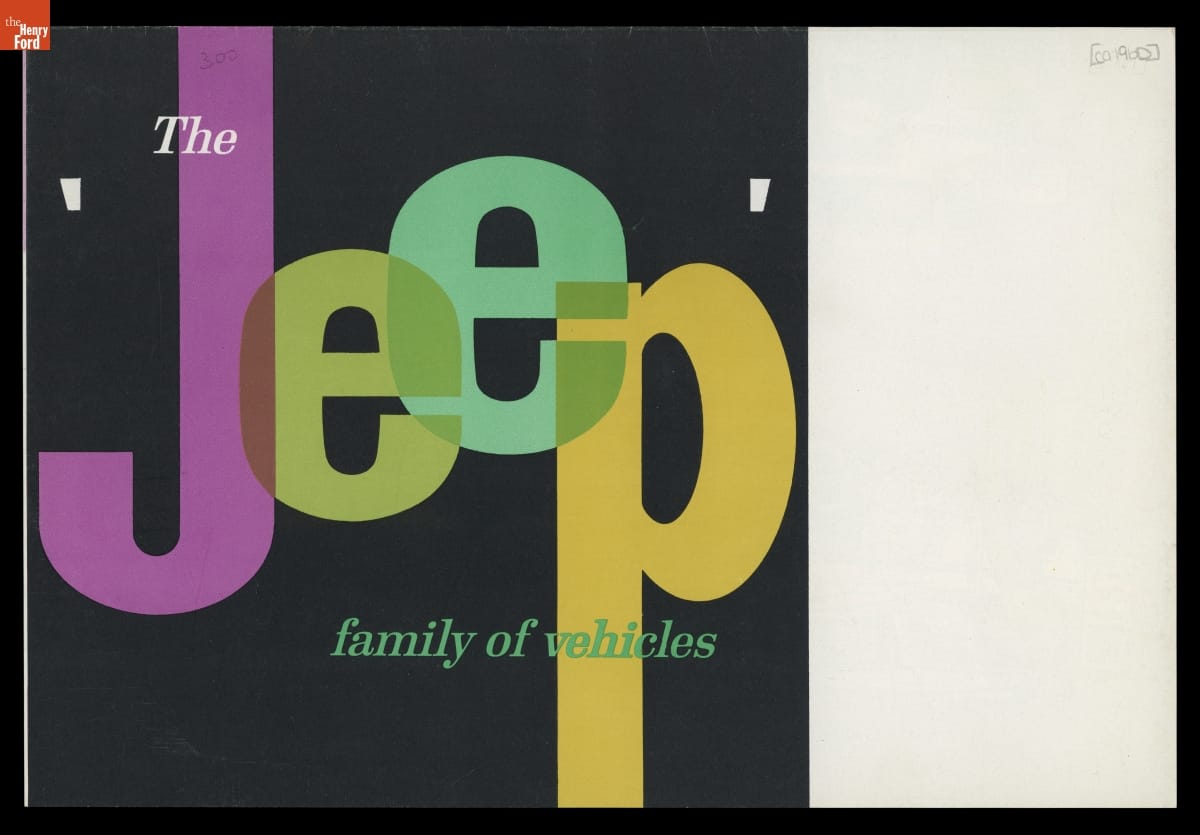
- "The Jeep Family of Vehicles," 1961 - Kaiser Motors purchased Willys-Overland, including its successful Jeep brand, in 1953. Kaiser ended passenger car production to focus on Jeep runabout, truck, and van models. Under Kaiser's ownership, Jeep introduced important models like the CJ-5, the Wagoneer and luxury Super Wagoneer, the Gladiator pickup, and the Jeepster and Jeepster Commando. American Motors purchased Kaiser Jeep in 1970.
- 1961
- Collections - Artifact
"The Jeep Family of Vehicles," 1961
Kaiser Motors purchased Willys-Overland, including its successful Jeep brand, in 1953. Kaiser ended passenger car production to focus on Jeep runabout, truck, and van models. Under Kaiser's ownership, Jeep introduced important models like the CJ-5, the Wagoneer and luxury Super Wagoneer, the Gladiator pickup, and the Jeepster and Jeepster Commando. American Motors purchased Kaiser Jeep in 1970.
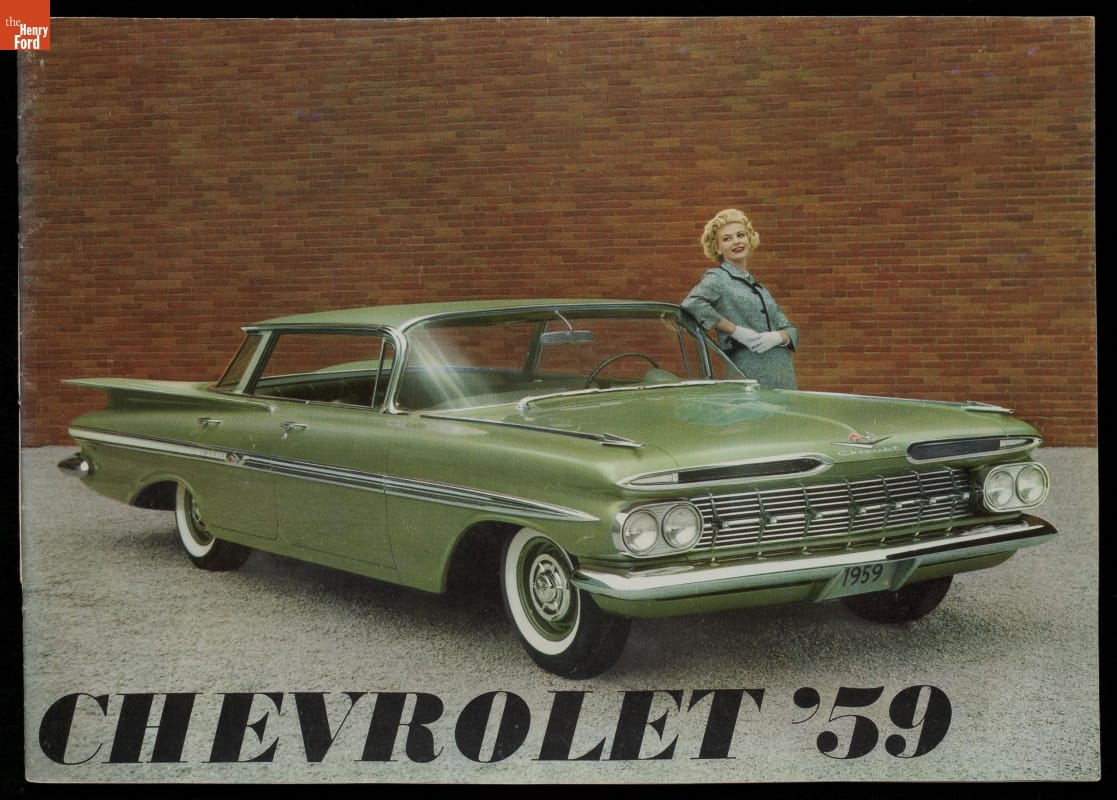
- "Chevrolet '59" Sales Catalog, 1959 - Chevrolet introduced wider, roomier bodies and new grilles on its 1959 cars, but the most dramatic styling updates were in back. "Spread wing" tailfins and cat's-eye taillights distinguished the automaker's Biscayne, Bel Air, and Impala models. "Magic-Mirror" lacquer and "Safety-Master" brakes debuted for 1959. Chevrolet's calendar year sales topped 1.5 million cars, and model year production surpassed 1.4 million.
- 1959
- Collections - Artifact
"Chevrolet '59" Sales Catalog, 1959
Chevrolet introduced wider, roomier bodies and new grilles on its 1959 cars, but the most dramatic styling updates were in back. "Spread wing" tailfins and cat's-eye taillights distinguished the automaker's Biscayne, Bel Air, and Impala models. "Magic-Mirror" lacquer and "Safety-Master" brakes debuted for 1959. Chevrolet's calendar year sales topped 1.5 million cars, and model year production surpassed 1.4 million.
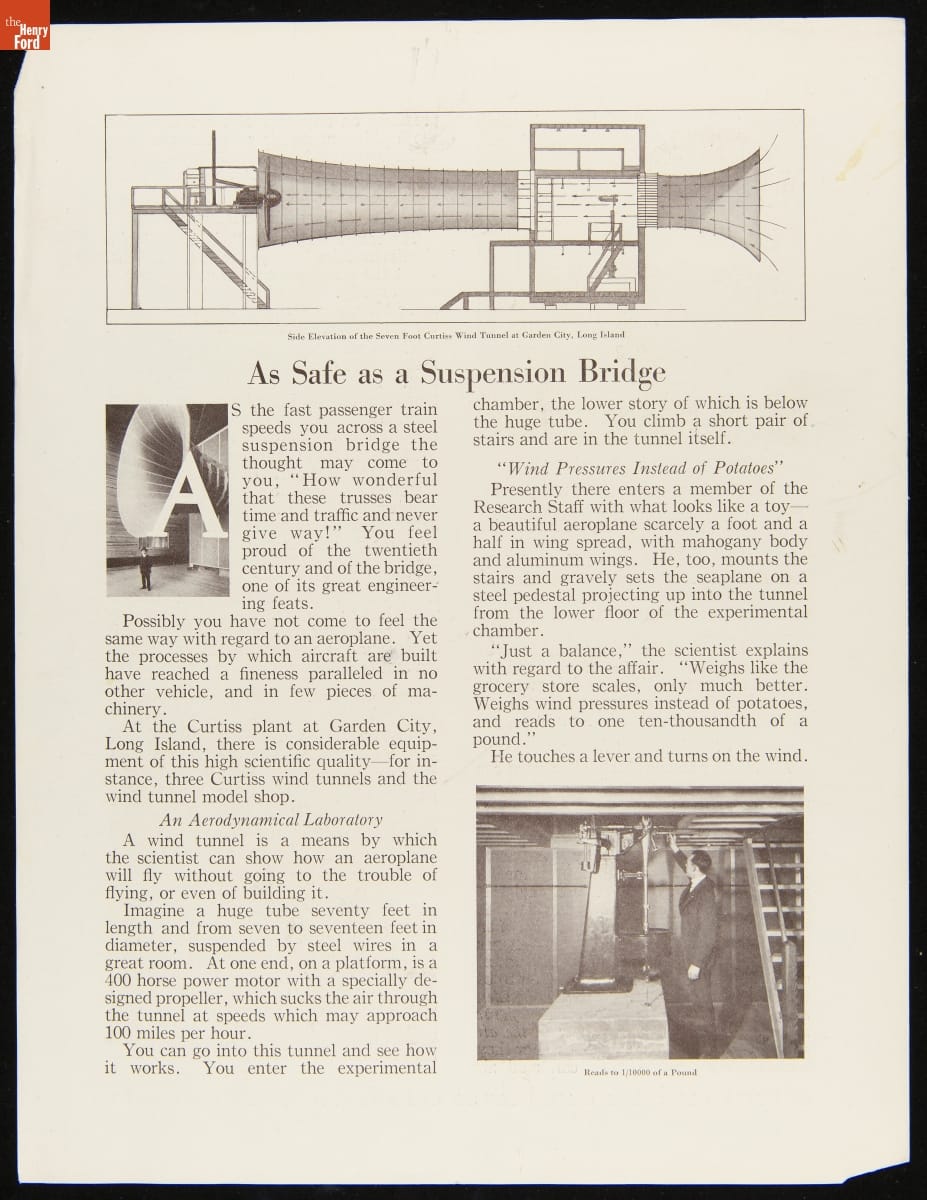
- As Safe as a Suspension Bridge, 1919-1920 - Glenn Curtiss, whose airplane business flourished during World War I, established a state-of-the-art research and experimentation facility on Long Island, New York, in 1917. At the Curtiss Engineering Corporation, a handpicked team built, tested, and refined propellers, engines, and airplanes. This brochure claimed a scientific approach made Curtiss airplanes as safe as the more established modes of transportation Americans already trusted.
- 1919-1920
- Collections - Artifact
As Safe as a Suspension Bridge, 1919-1920
Glenn Curtiss, whose airplane business flourished during World War I, established a state-of-the-art research and experimentation facility on Long Island, New York, in 1917. At the Curtiss Engineering Corporation, a handpicked team built, tested, and refined propellers, engines, and airplanes. This brochure claimed a scientific approach made Curtiss airplanes as safe as the more established modes of transportation Americans already trusted.
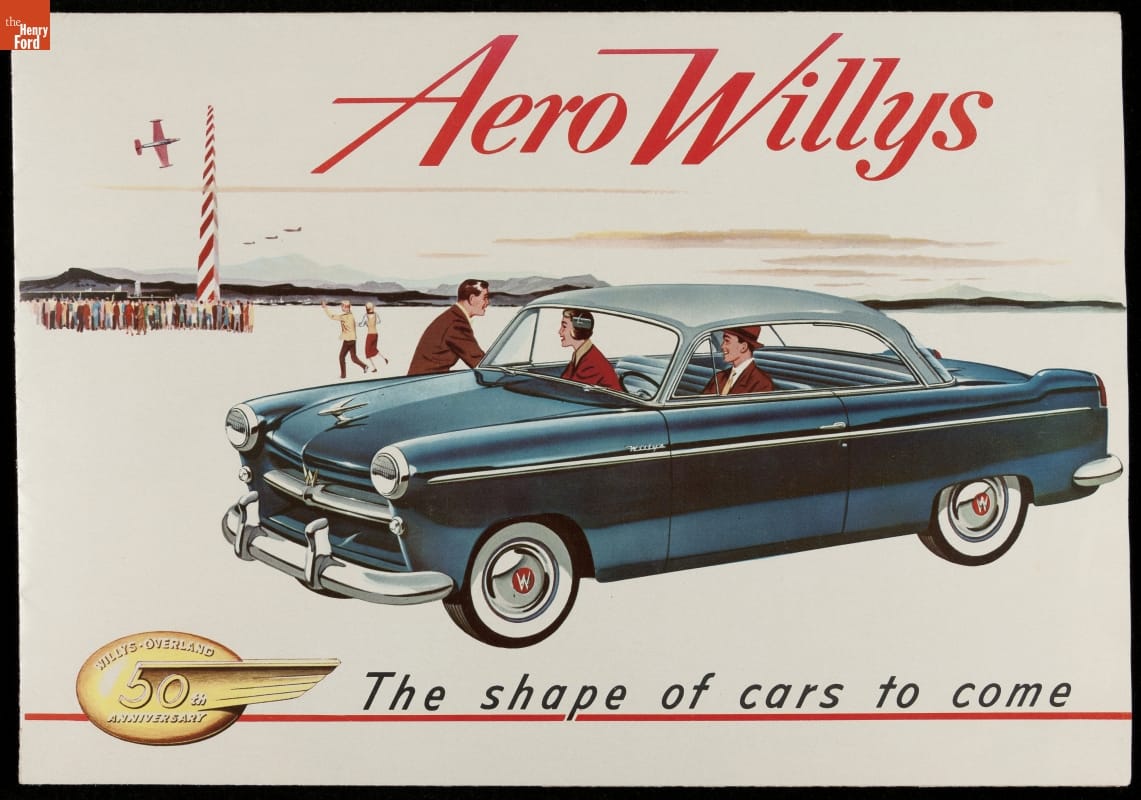
- "The Shape of Cars to Come" Sales Brochure for 1953 Aero-Willys - Willys-Overland introduced its Willys Aero line of cars for 1952. Designed by Phil Wright and engineered by Clyde Paton, the compact Aero featured unibody construction. Over its three-year run, Aero was variously available in Wing, Lark, Ace, Eagle, and Falcon models. Kaiser-Willys dropped Aero from the U.S. market after 1954, though versions were built in Brazil until 1971.
- 1953
- Collections - Artifact
"The Shape of Cars to Come" Sales Brochure for 1953 Aero-Willys
Willys-Overland introduced its Willys Aero line of cars for 1952. Designed by Phil Wright and engineered by Clyde Paton, the compact Aero featured unibody construction. Over its three-year run, Aero was variously available in Wing, Lark, Ace, Eagle, and Falcon models. Kaiser-Willys dropped Aero from the U.S. market after 1954, though versions were built in Brazil until 1971.