
Search
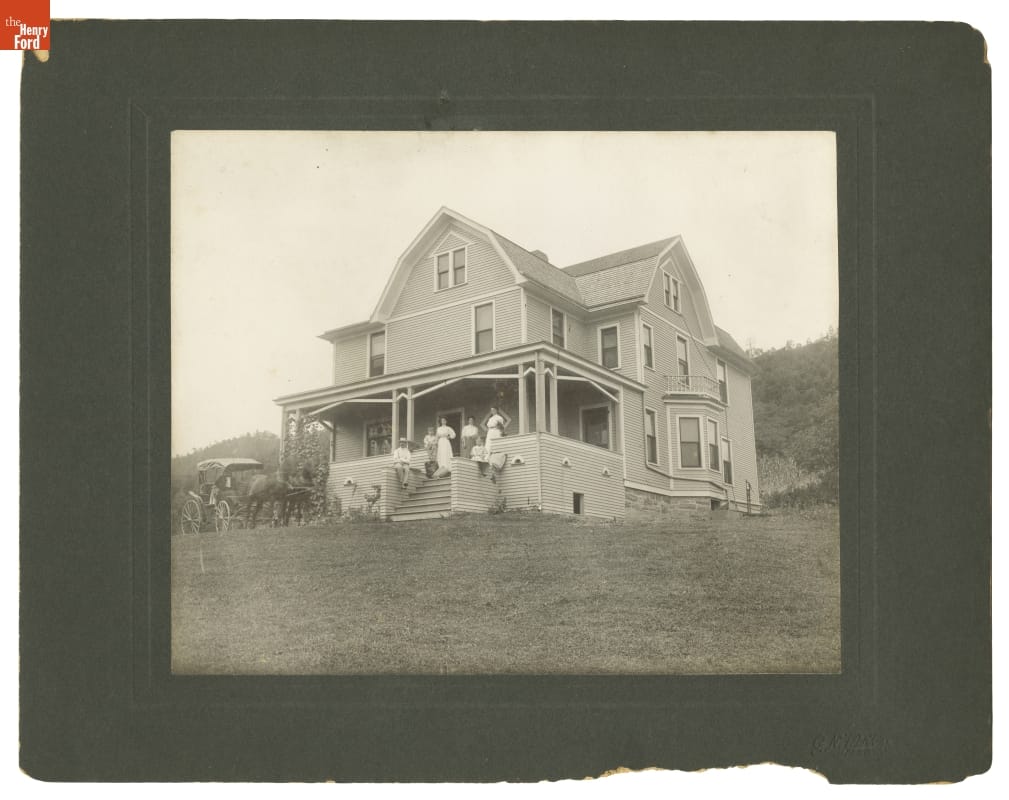
- House with People Gathered on the Porch and Horse-Drawn Buggy in Front, circa 1905 - Affordable, lightweight buggies began pouring out of factories in the late 1800s, making the pleasures of a personal vehicle available to many Americans for the first time. Rural families especially enjoyed owning buggies; they offered convenience and a sense of freedom to the growing middle class.
- circa 1905
- Collections - Artifact
House with People Gathered on the Porch and Horse-Drawn Buggy in Front, circa 1905
Affordable, lightweight buggies began pouring out of factories in the late 1800s, making the pleasures of a personal vehicle available to many Americans for the first time. Rural families especially enjoyed owning buggies; they offered convenience and a sense of freedom to the growing middle class.
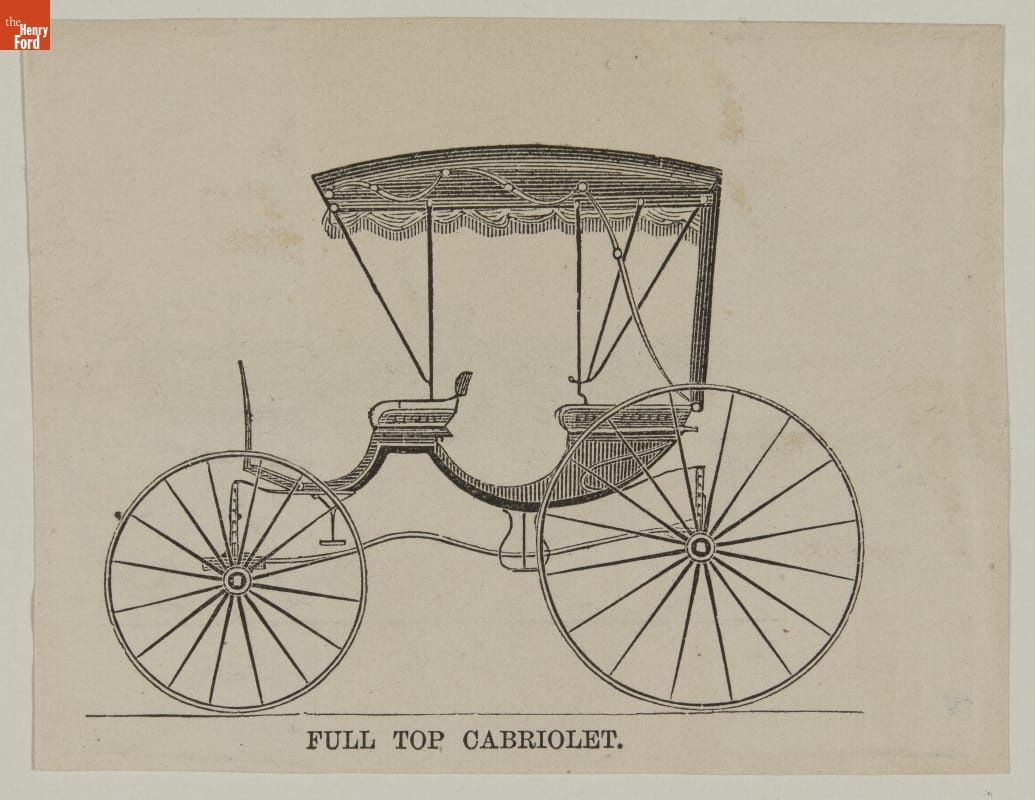
- "Full Top Cabriolet," circa 1850 - Many automotive body styles derive from horse-drawn origins. A cabriolet, as seen in this ca. 1850 wood engraving, was a light carriage with a collapsible top or roof. In automobile terminology, a cabriolet refers to a car with a folding roof.
- circa 1850
- Collections - Artifact
"Full Top Cabriolet," circa 1850
Many automotive body styles derive from horse-drawn origins. A cabriolet, as seen in this ca. 1850 wood engraving, was a light carriage with a collapsible top or roof. In automobile terminology, a cabriolet refers to a car with a folding roof.
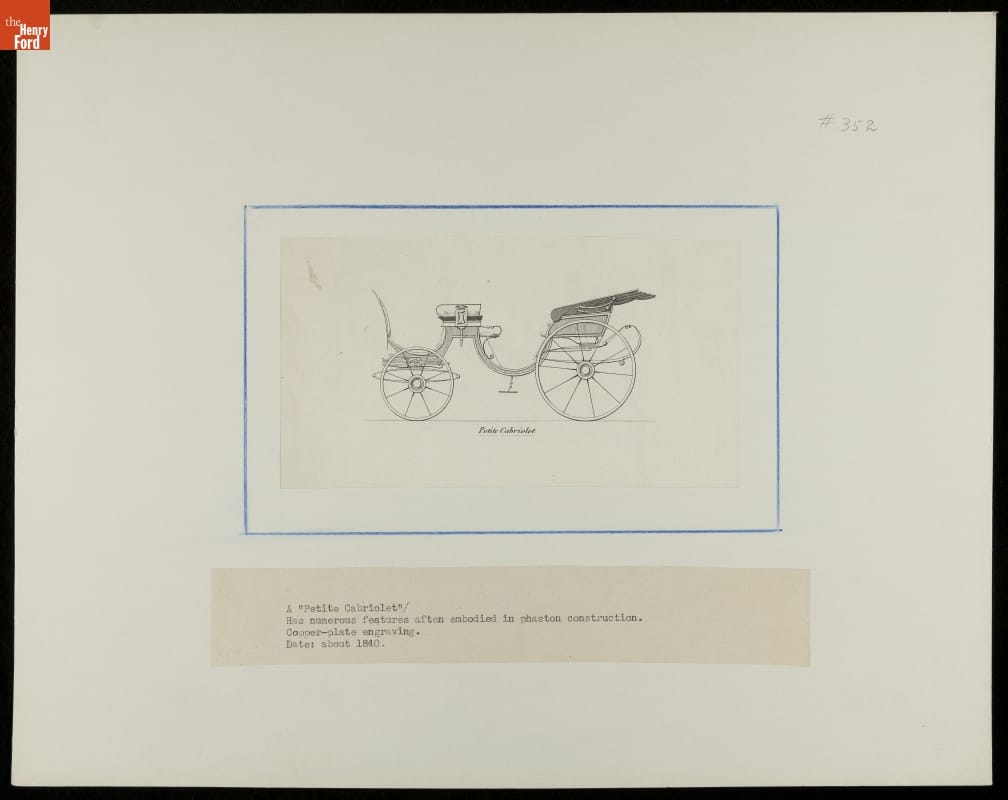
- "Petite Cabriolet," circa 1840 -
- circa 1840
- Collections - Artifact
"Petite Cabriolet," circa 1840
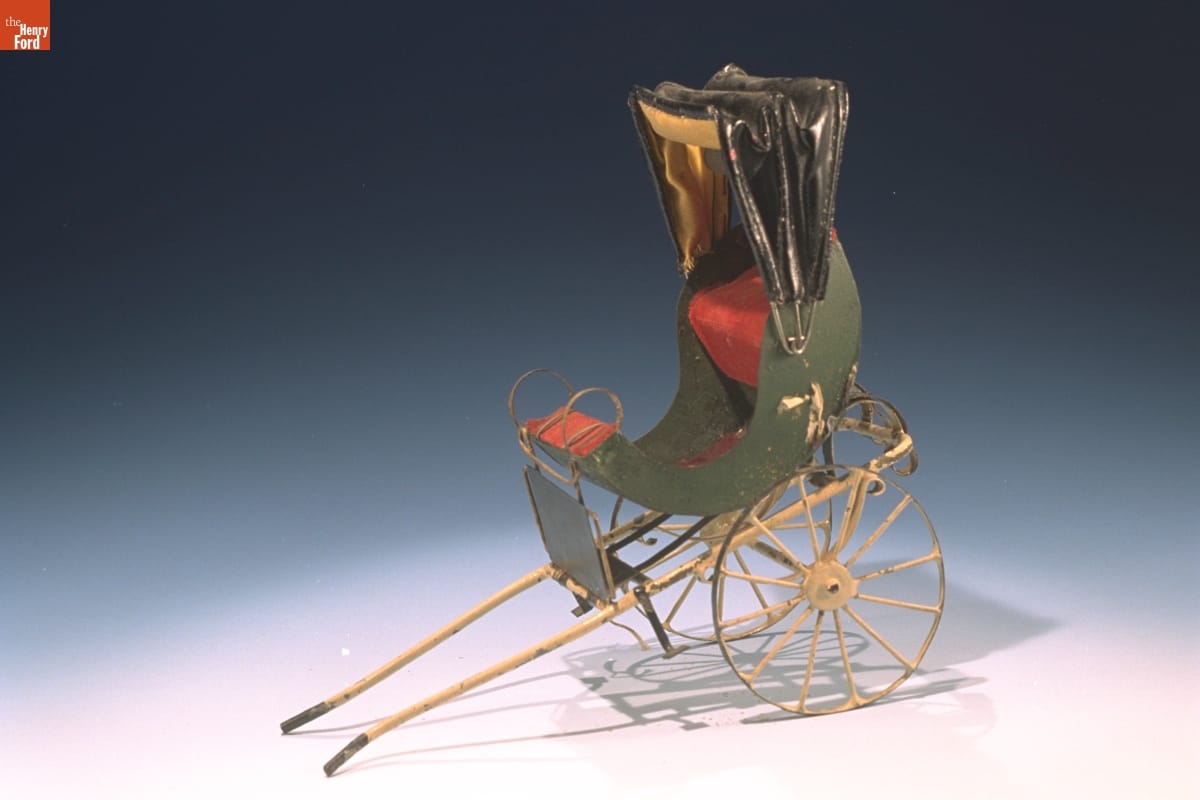
- Toy Horse-Drawn Buggy, 1860-1900 -
- 1860-1900
- Collections - Artifact
Toy Horse-Drawn Buggy, 1860-1900
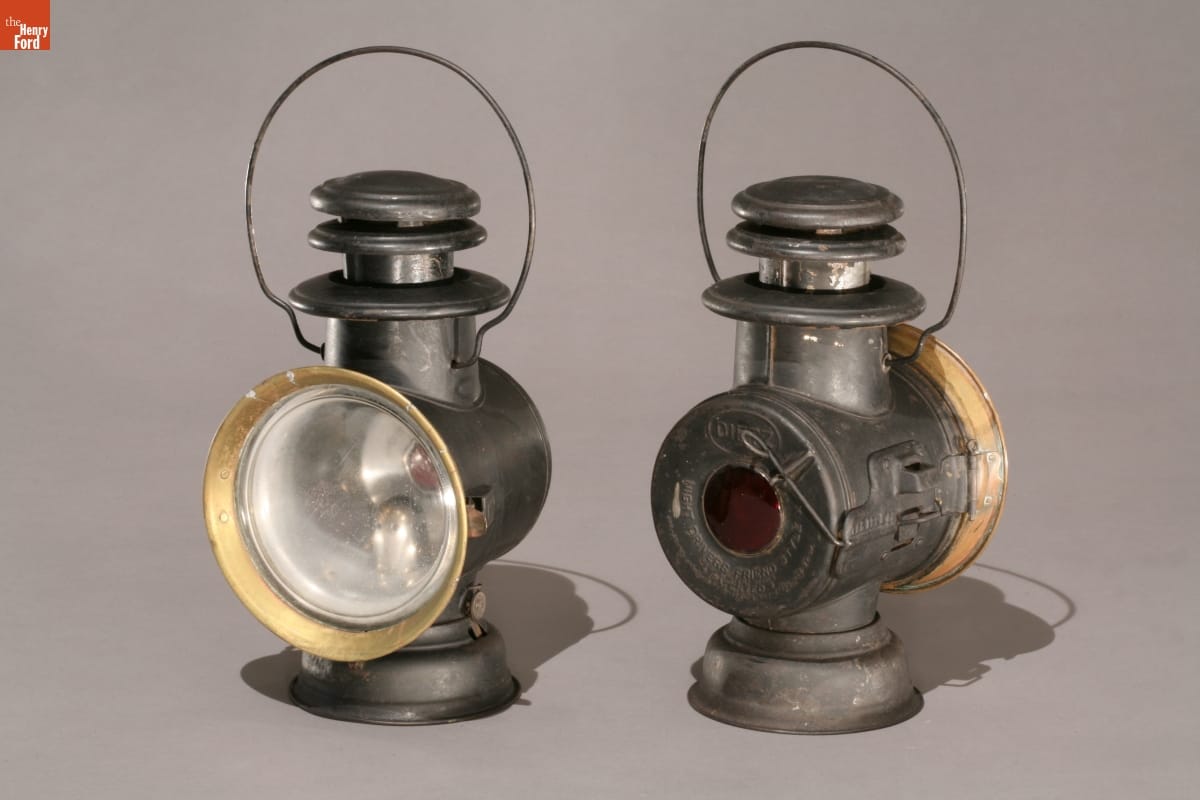
- Buggy Lamps, circa 1910 - Driving horse-drawn vehicles at night can be challenging. Lamps or lanterns could be mounted on buggies to help drivers find their way safely. These lamps made by the R. E. Dietz Company were appropriately named the "Night Drivers' Friend."
- circa 1910
- Collections - Artifact
Buggy Lamps, circa 1910
Driving horse-drawn vehicles at night can be challenging. Lamps or lanterns could be mounted on buggies to help drivers find their way safely. These lamps made by the R. E. Dietz Company were appropriately named the "Night Drivers' Friend."
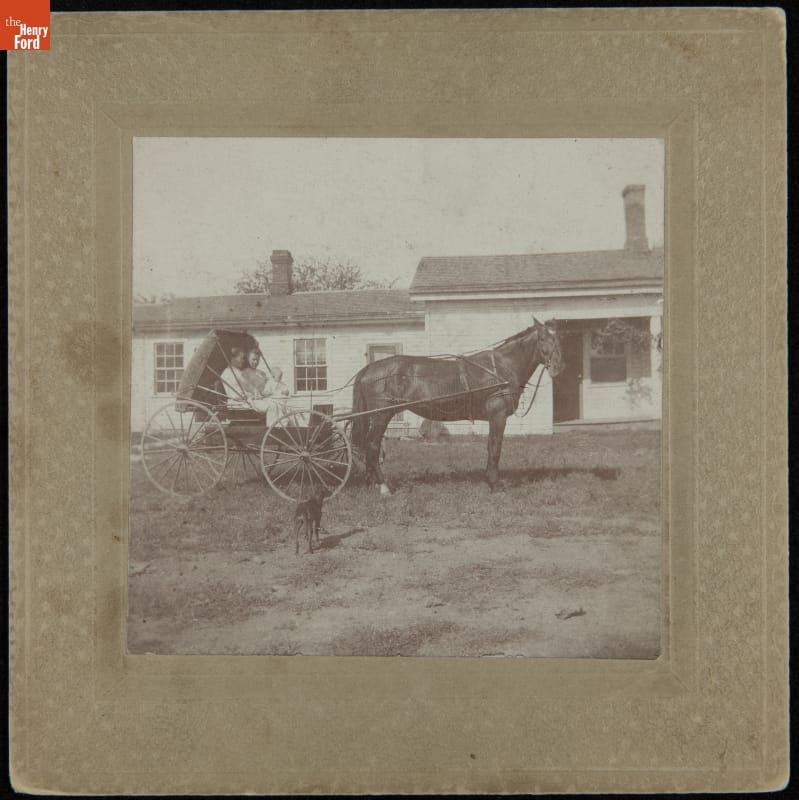
- Horse and Buggy outside Ford Homestead (Henry Ford's Birthplace) at Its Original Site, June 1899 -
- June 01, 1899
- Collections - Artifact
Horse and Buggy outside Ford Homestead (Henry Ford's Birthplace) at Its Original Site, June 1899
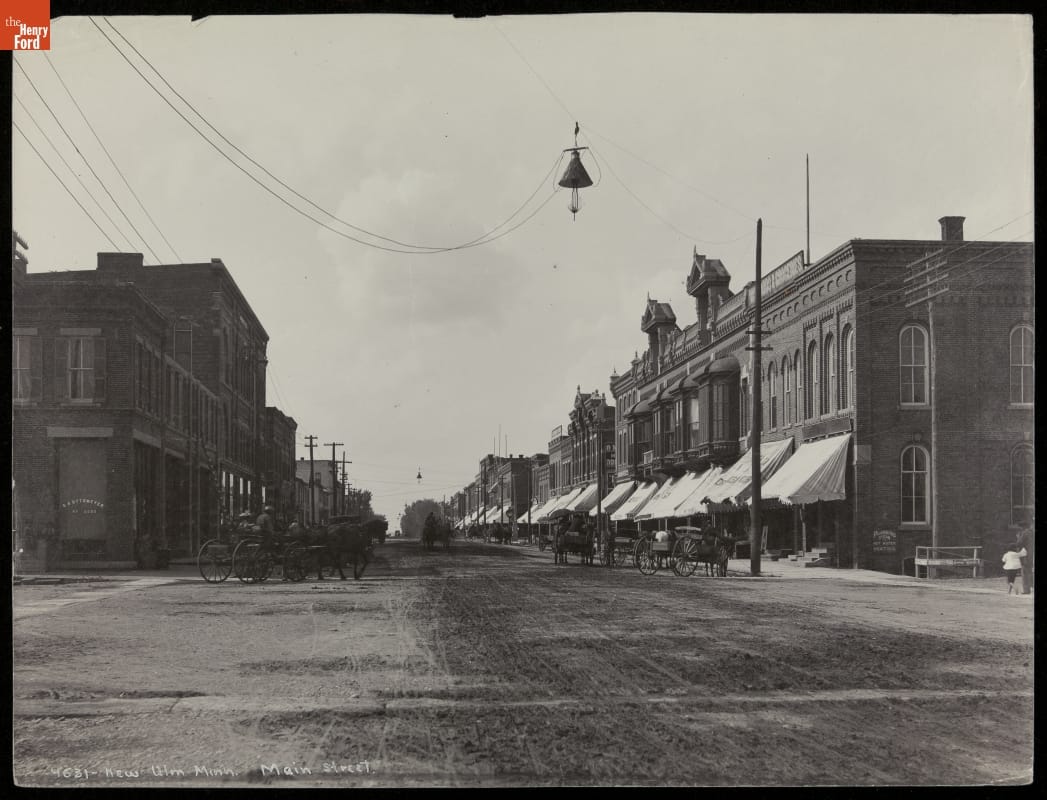
- Main Street, New Ulm, Minnesota, circa 1905 - This shadowy photograph of an unpaved street might make you think that this town was small, empty. But look again. The town of New Ulm was a brewing center in a fertile agricultural region in southern Minnesota. Several wagons are parked at the dry goods and groceries shop at right. Arc lights hang in the foreground, ready to illuminate the town.
- circa 1905
- Collections - Artifact
Main Street, New Ulm, Minnesota, circa 1905
This shadowy photograph of an unpaved street might make you think that this town was small, empty. But look again. The town of New Ulm was a brewing center in a fertile agricultural region in southern Minnesota. Several wagons are parked at the dry goods and groceries shop at right. Arc lights hang in the foreground, ready to illuminate the town.
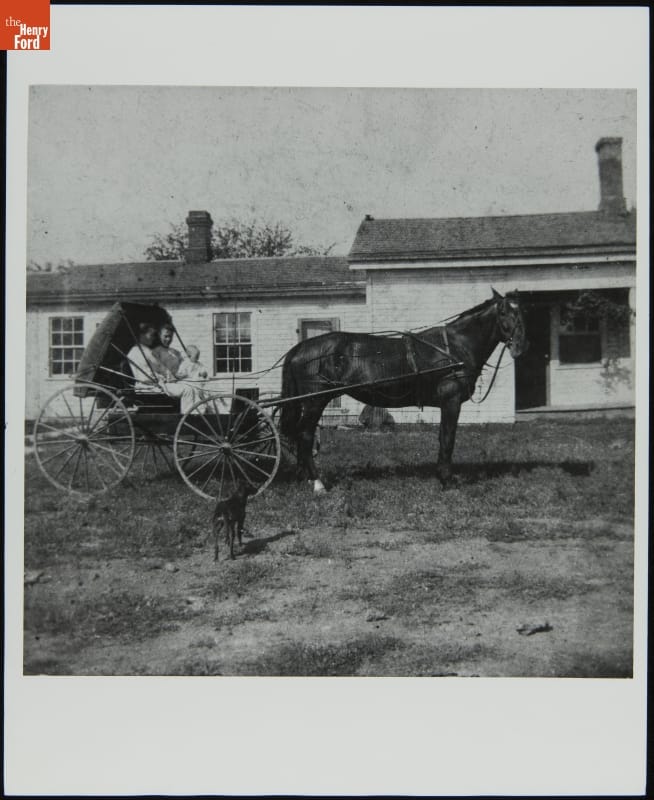
- Horse and Buggy outside Ford Homestead (Henry Ford's Birthplace) at Its Original Site, June 1899 - Henry Ford began restoration of his Dearborn, Michigan, birthplace in 1919. He repaired or replaced the farm buildings and filled the small, white clapboard house with original or similar furnishings he remembered from his boyhood. He dedicated the restoration to the memory of his beloved mother, Mary Litogot Ford, who died in 1876. In 1944, the house and outbuildings were moved to Greenfield Village.
- June 01, 1899
- Collections - Artifact
Horse and Buggy outside Ford Homestead (Henry Ford's Birthplace) at Its Original Site, June 1899
Henry Ford began restoration of his Dearborn, Michigan, birthplace in 1919. He repaired or replaced the farm buildings and filled the small, white clapboard house with original or similar furnishings he remembered from his boyhood. He dedicated the restoration to the memory of his beloved mother, Mary Litogot Ford, who died in 1876. In 1944, the house and outbuildings were moved to Greenfield Village.
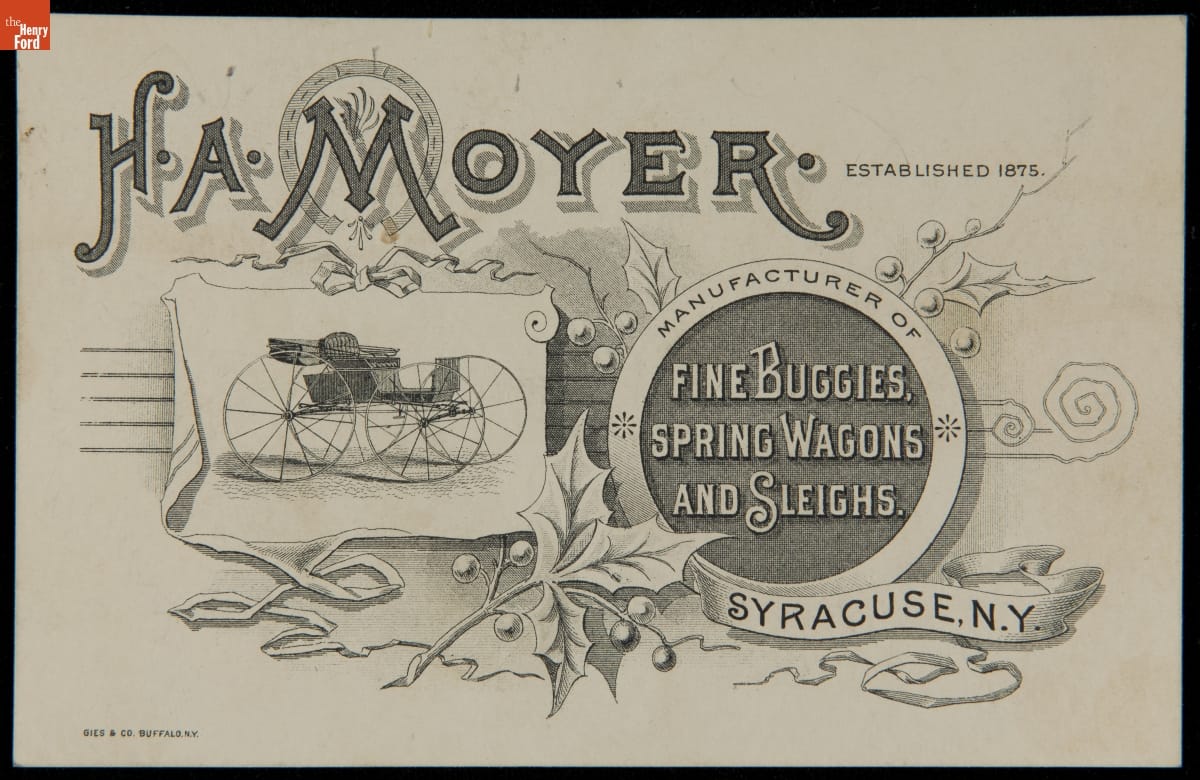
- Trade Card for H. A. Moyer, Manufacturer of Fine Buggies, Spring Wagons, and Sleighs, circa 1880 - In the last third of the nineteenth century, an unprecedented variety of consumer goods and services flooded the American market. Advertisers, armed with new methods of color printing, bombarded potential customers with trade cards. Americans enjoyed and often saved the vibrant little advertisements found in product packages or distributed by local merchants. Many survive as historical records of commercialism in the United States.
- circa 1880
- Collections - Artifact
Trade Card for H. A. Moyer, Manufacturer of Fine Buggies, Spring Wagons, and Sleighs, circa 1880
In the last third of the nineteenth century, an unprecedented variety of consumer goods and services flooded the American market. Advertisers, armed with new methods of color printing, bombarded potential customers with trade cards. Americans enjoyed and often saved the vibrant little advertisements found in product packages or distributed by local merchants. Many survive as historical records of commercialism in the United States.
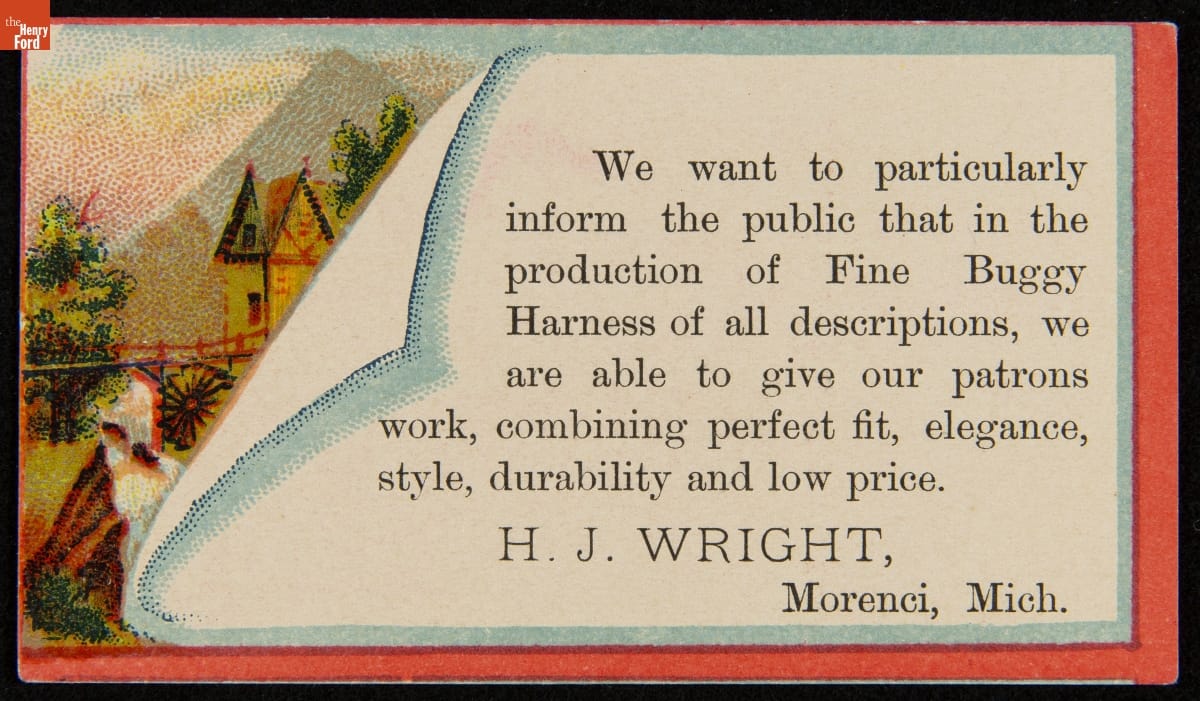
- Trade Card for H.J. Wright's Fine Buggy Harnesses, 1880-1890 - In the last third of the nineteenth century, an unprecedented variety of consumer goods and services flooded the American market. Advertisers, armed with new methods of color printing, bombarded potential customers with trade cards. Americans enjoyed and often saved the vibrant little advertisements found in product packages or distributed by local merchants. Many survive as historical records of commercialism in the United States.
- 1880-1890
- Collections - Artifact
Trade Card for H.J. Wright's Fine Buggy Harnesses, 1880-1890
In the last third of the nineteenth century, an unprecedented variety of consumer goods and services flooded the American market. Advertisers, armed with new methods of color printing, bombarded potential customers with trade cards. Americans enjoyed and often saved the vibrant little advertisements found in product packages or distributed by local merchants. Many survive as historical records of commercialism in the United States.