
Search
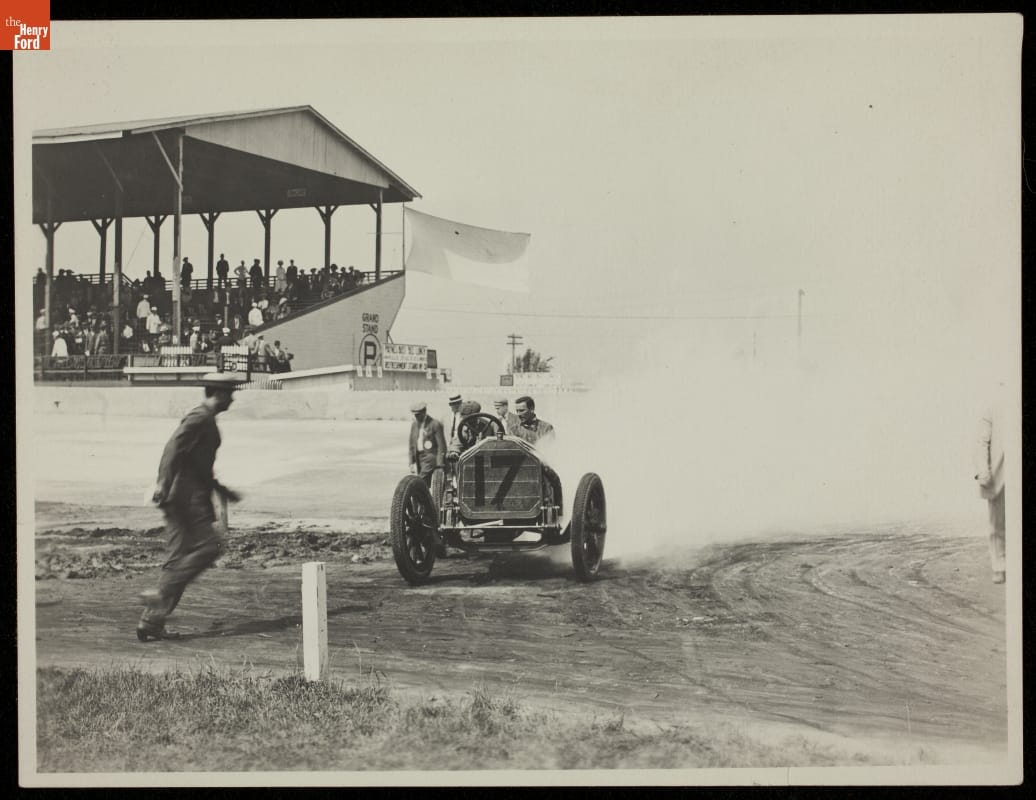
- Buick Race Car Driven by Charles Basle in the 1911 Indianapolis 500 Race, Photograph Taken by Henry Ford - Indianapolis Motor Speedway opened in 1909 with multiple races each season. In 1911, track promoters decided instead to host just one spectacular event each Memorial Day. The inaugural Indianapolis 500-Mile Race, with $27,500 in prizes, drew 40 qualifying cars and 80,000 spectators. Ray Harroun won with the yellow #32 Marmon Wasp, and the Indianapolis 500 became an American institution.
- 1911
- Collections - Artifact
Buick Race Car Driven by Charles Basle in the 1911 Indianapolis 500 Race, Photograph Taken by Henry Ford
Indianapolis Motor Speedway opened in 1909 with multiple races each season. In 1911, track promoters decided instead to host just one spectacular event each Memorial Day. The inaugural Indianapolis 500-Mile Race, with $27,500 in prizes, drew 40 qualifying cars and 80,000 spectators. Ray Harroun won with the yellow #32 Marmon Wasp, and the Indianapolis 500 became an American institution.
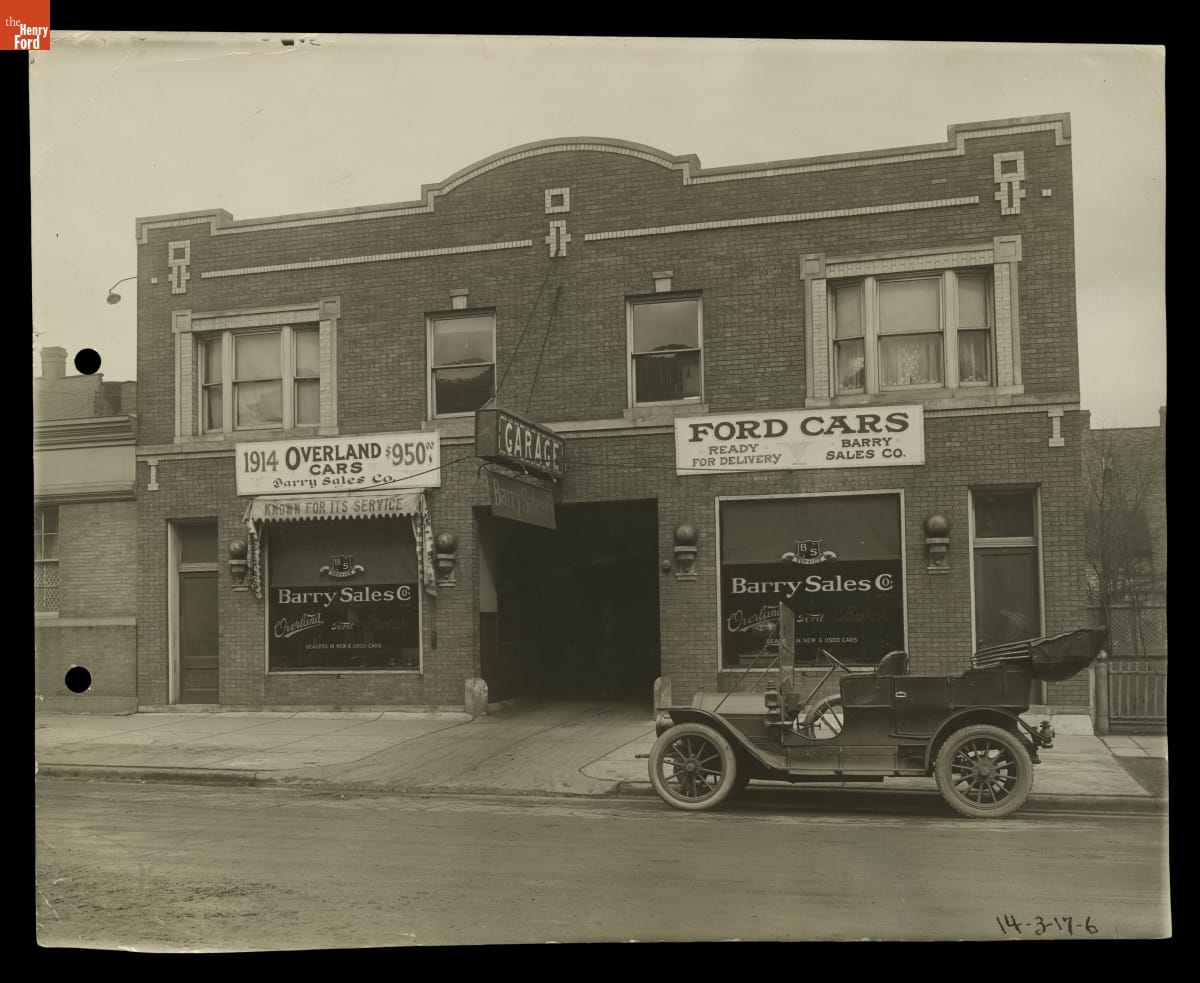
- Barry Sales Co. Automobile Dealership, Chicago, Illinois, 1914 - The franchise system, through which auto dealers had exclusive rights to sell a particular manufacturer's cars in a specific area, did not become common until about 1920. Prior to that, an independent dealer might carry several brands sourced from a distributor who, in turn, bought them from manufacturers. This Chicago dealership carried Overland, Ford and Buick automobiles in 1914.
- 1914
- Collections - Artifact
Barry Sales Co. Automobile Dealership, Chicago, Illinois, 1914
The franchise system, through which auto dealers had exclusive rights to sell a particular manufacturer's cars in a specific area, did not become common until about 1920. Prior to that, an independent dealer might carry several brands sourced from a distributor who, in turn, bought them from manufacturers. This Chicago dealership carried Overland, Ford and Buick automobiles in 1914.
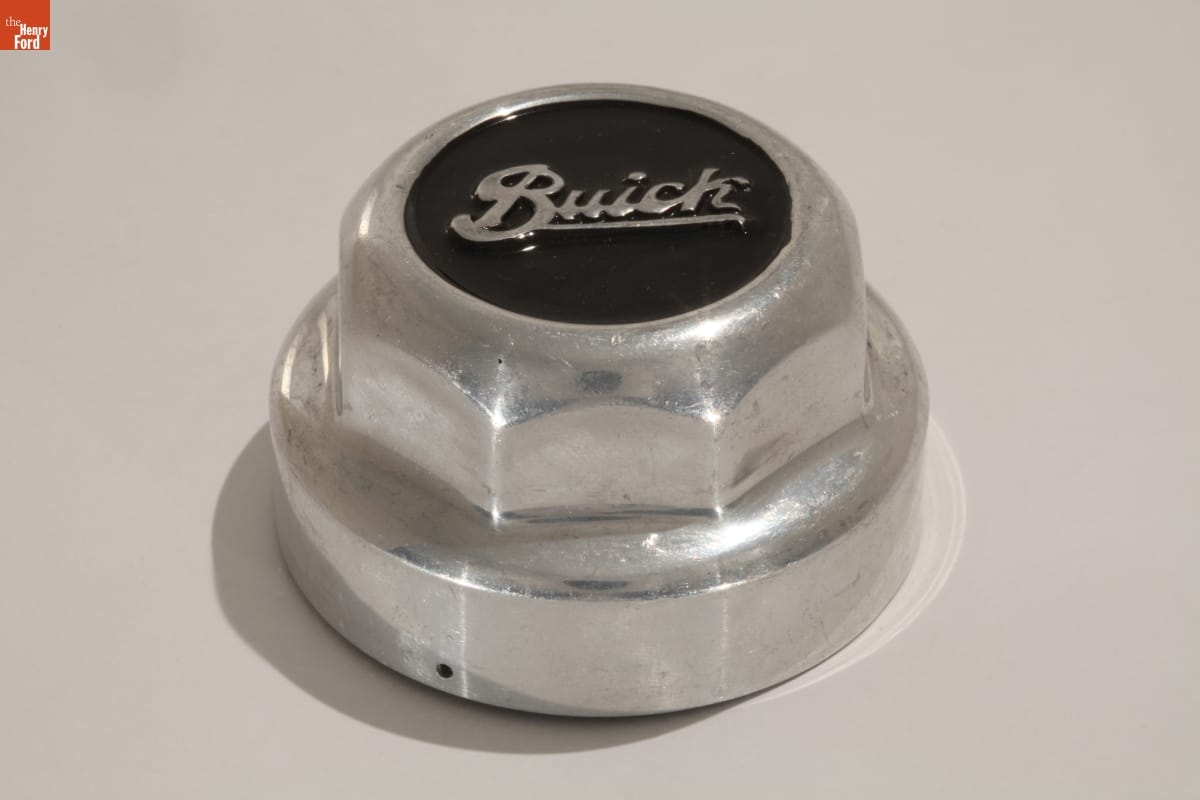
- Buick Hubcap, 1918-1929 - Early automobile wheels had a central hub with a greased wheel bearing. Hub caps kept grease in and dust out. As wheels evolved and hubcaps became functionally unnecessary, they remained important to both manufacturers -- who branded wheel covers with maker names or logos -- and consumers -- who identified with hubcaps as statements about their cars and themselves.
- 1918-1929
- Collections - Artifact
Buick Hubcap, 1918-1929
Early automobile wheels had a central hub with a greased wheel bearing. Hub caps kept grease in and dust out. As wheels evolved and hubcaps became functionally unnecessary, they remained important to both manufacturers -- who branded wheel covers with maker names or logos -- and consumers -- who identified with hubcaps as statements about their cars and themselves.
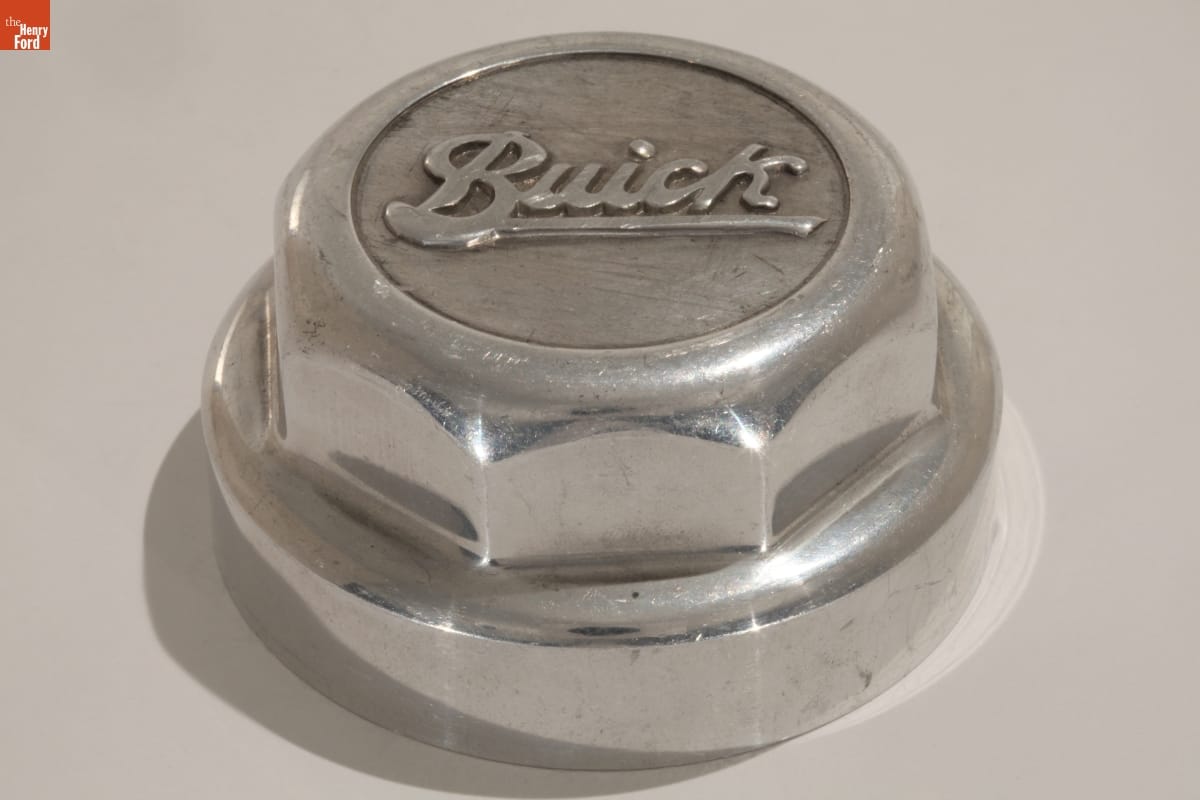
- Buick Hubcap, 1926 - Early automobile wheels had a central hub with a greased wheel bearing. Hub caps kept grease in and dust out. As wheels evolved and hubcaps became functionally unnecessary, they remained important to both manufacturers -- who branded wheel covers with maker names or logos -- and consumers -- who identified with hubcaps as statements about their cars and themselves.
- 1926
- Collections - Artifact
Buick Hubcap, 1926
Early automobile wheels had a central hub with a greased wheel bearing. Hub caps kept grease in and dust out. As wheels evolved and hubcaps became functionally unnecessary, they remained important to both manufacturers -- who branded wheel covers with maker names or logos -- and consumers -- who identified with hubcaps as statements about their cars and themselves.
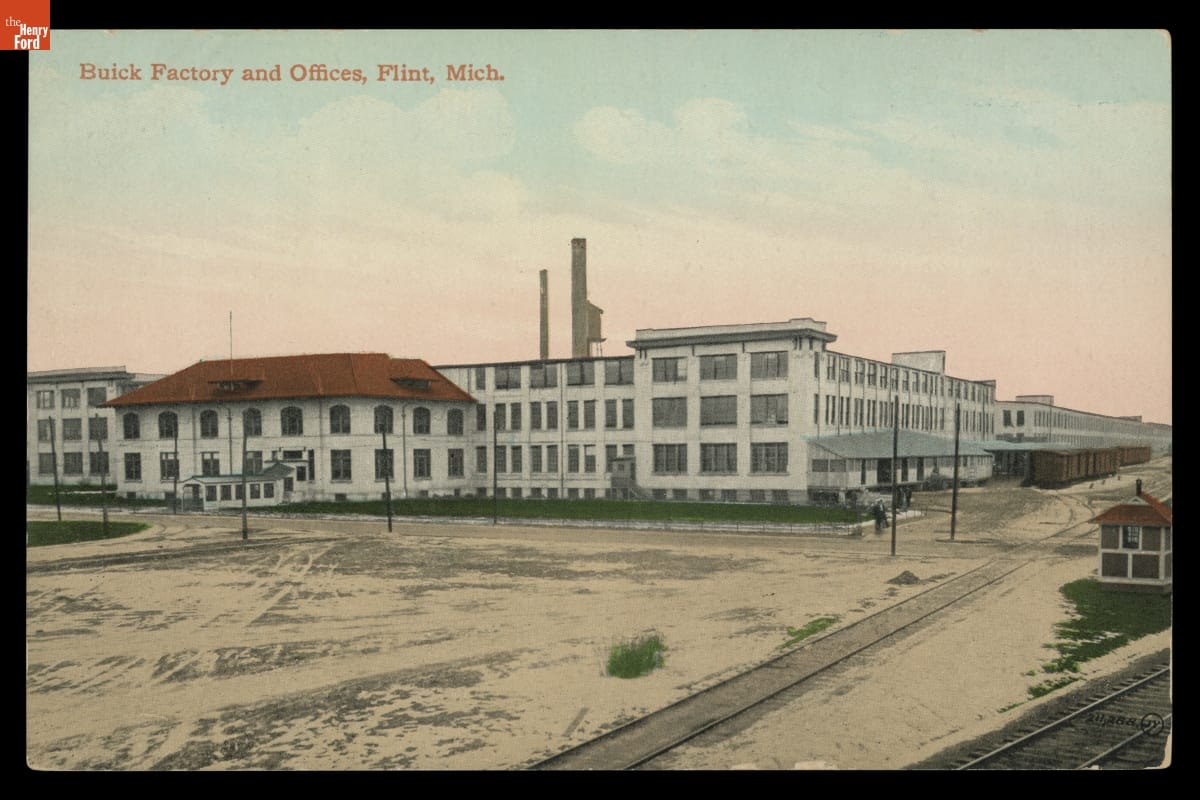
- "Buick Factory and Offices, Flint, Mich.," 1907-1909 - David Dunbar Buick built automobiles in Detroit before investors moved his company to Flint in 1903. Two years later, the firm broke ground on a new 14-acre factory on Flint's north side, where production began in the summer of 1906. Greatly expanded and updated over the years, the complex -- much later known as "Buick City" -- remained in operation until 1999.
- 1907-1909
- Collections - Artifact
"Buick Factory and Offices, Flint, Mich.," 1907-1909
David Dunbar Buick built automobiles in Detroit before investors moved his company to Flint in 1903. Two years later, the firm broke ground on a new 14-acre factory on Flint's north side, where production began in the summer of 1906. Greatly expanded and updated over the years, the complex -- much later known as "Buick City" -- remained in operation until 1999.
- Buick Hubcap, 1918-1929 - Early automobile wheels had a central hub with a greased wheel bearing. Hub caps kept grease in and dust out. As wheels evolved and hubcaps became functionally unnecessary, they remained important to both manufacturers -- who branded wheel covers with maker names or logos -- and consumers -- who identified with hubcaps as statements about their cars and themselves.
- 1918-1929
- Collections - Artifact
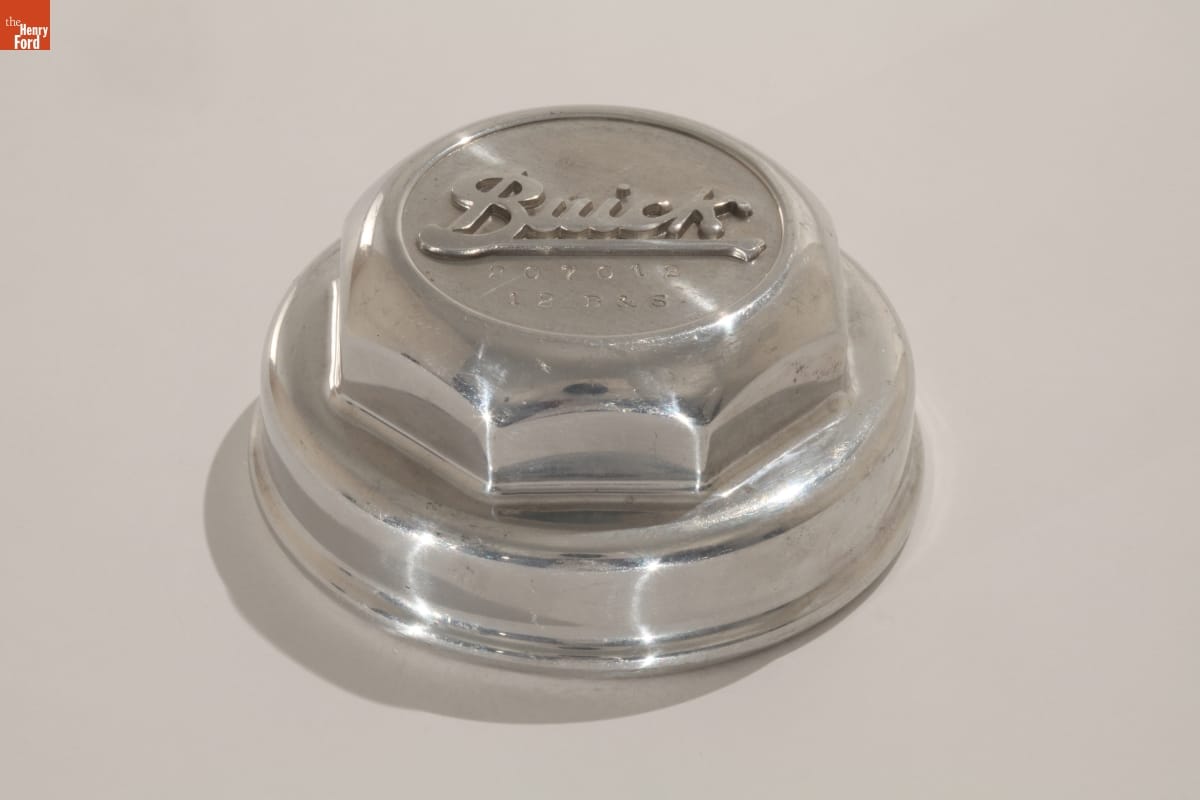
Buick Hubcap, 1918-1929
Early automobile wheels had a central hub with a greased wheel bearing. Hub caps kept grease in and dust out. As wheels evolved and hubcaps became functionally unnecessary, they remained important to both manufacturers -- who branded wheel covers with maker names or logos -- and consumers -- who identified with hubcaps as statements about their cars and themselves.
- Buick Hubcap, 1918-1929 - Early automobile wheels had a central hub with a greased wheel bearing. Hub caps kept grease in and dust out. As wheels evolved and hubcaps became functionally unnecessary, they remained important to both manufacturers -- who branded wheel covers with maker names or logos -- and consumers -- who identified with hubcaps as statements about their cars and themselves.
- 1918-1929
- Collections - Artifact
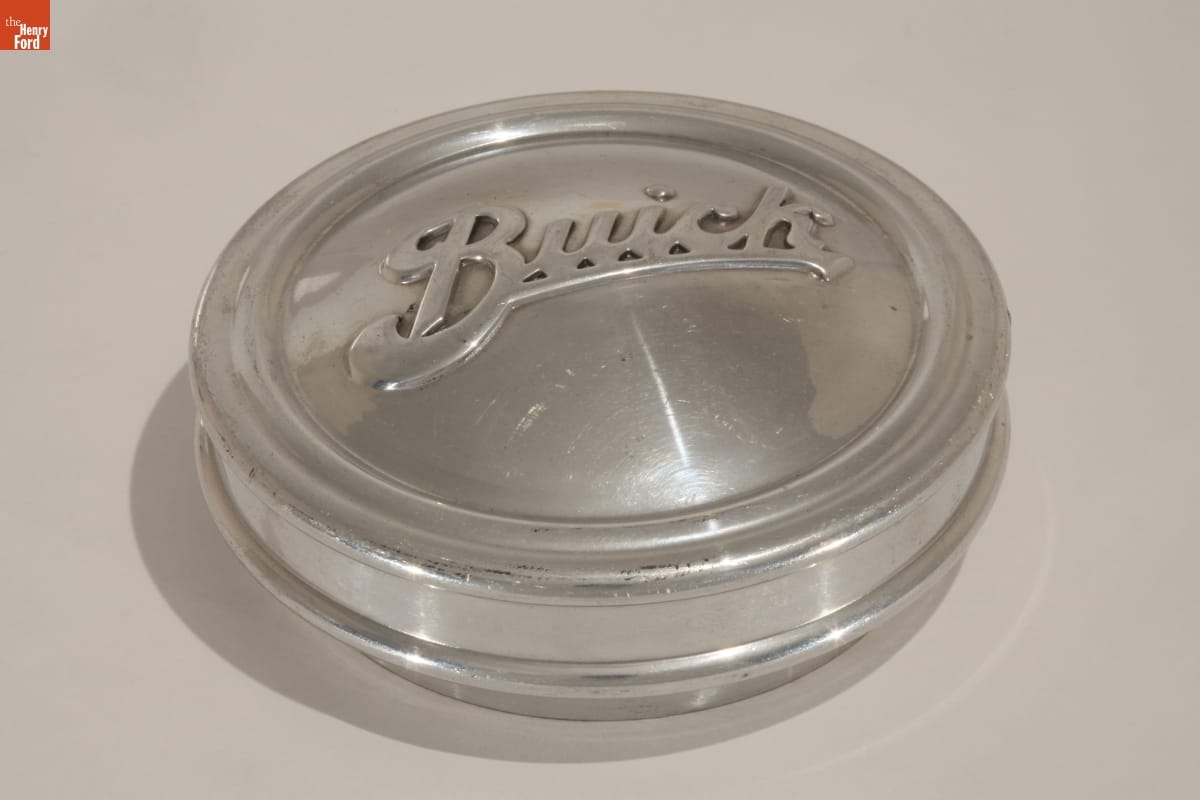
Buick Hubcap, 1918-1929
Early automobile wheels had a central hub with a greased wheel bearing. Hub caps kept grease in and dust out. As wheels evolved and hubcaps became functionally unnecessary, they remained important to both manufacturers -- who branded wheel covers with maker names or logos -- and consumers -- who identified with hubcaps as statements about their cars and themselves.
- Buick Hubcap, 1918-1929 - Early automobile wheels had a central hub with a greased wheel bearing. Hub caps kept grease in and dust out. As wheels evolved and hubcaps became functionally unnecessary, they remained important to both manufacturers -- who branded wheel covers with maker names or logos -- and consumers -- who identified with hubcaps as statements about their cars and themselves.
- 1918-1929
- Collections - Artifact
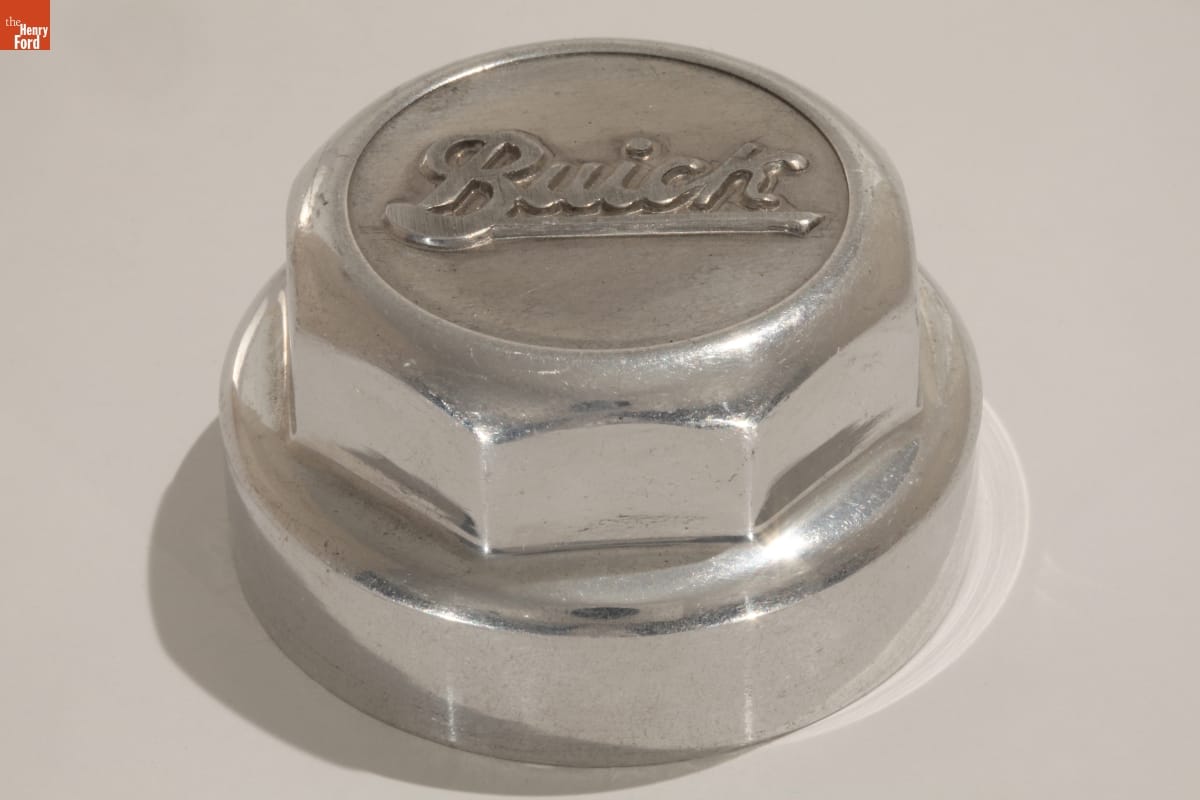
Buick Hubcap, 1918-1929
Early automobile wheels had a central hub with a greased wheel bearing. Hub caps kept grease in and dust out. As wheels evolved and hubcaps became functionally unnecessary, they remained important to both manufacturers -- who branded wheel covers with maker names or logos -- and consumers -- who identified with hubcaps as statements about their cars and themselves.
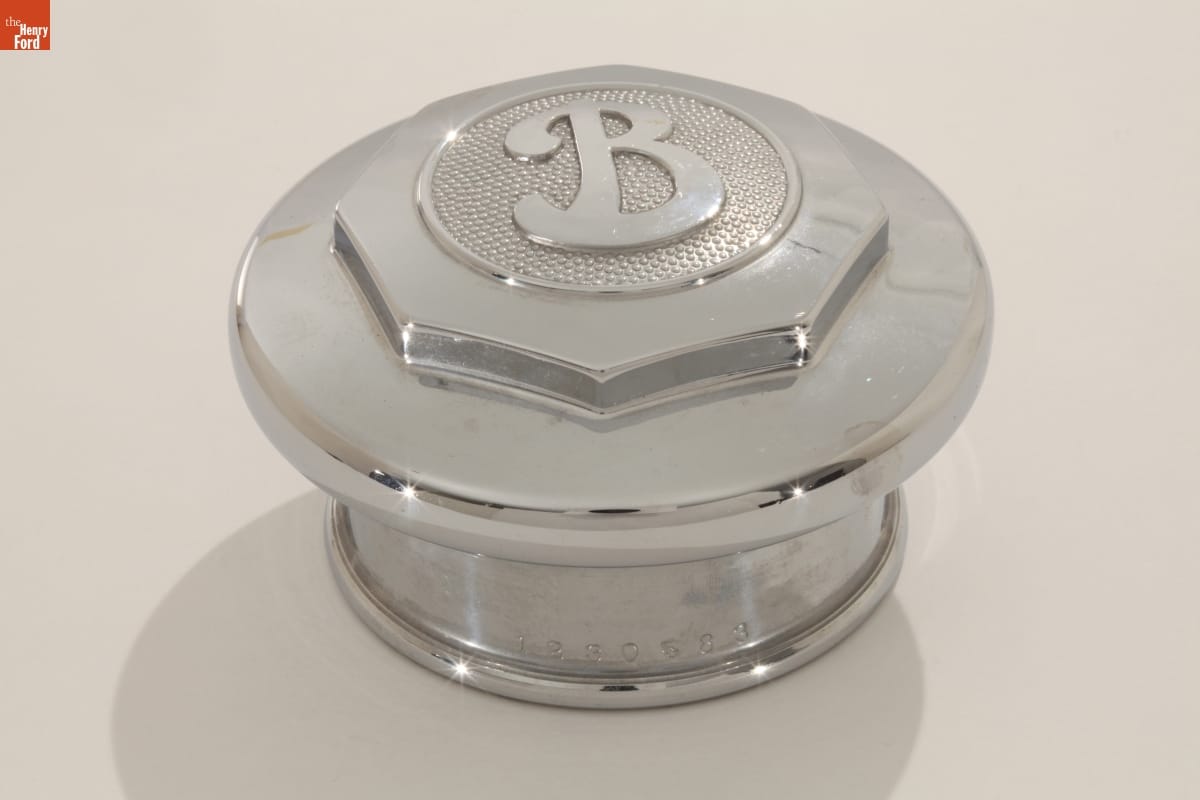
- Buick Hubcap, 1925-1929 - Early automobile wheels had a central hub with a greased wheel bearing. Hub caps kept grease in and dust out. As wheels evolved and hubcaps became functionally unnecessary, they remained important to both manufacturers -- who branded wheel covers with maker names or logos -- and consumers -- who identified with hubcaps as statements about their cars and themselves.
- 1925-1929
- Collections - Artifact
Buick Hubcap, 1925-1929
Early automobile wheels had a central hub with a greased wheel bearing. Hub caps kept grease in and dust out. As wheels evolved and hubcaps became functionally unnecessary, they remained important to both manufacturers -- who branded wheel covers with maker names or logos -- and consumers -- who identified with hubcaps as statements about their cars and themselves.
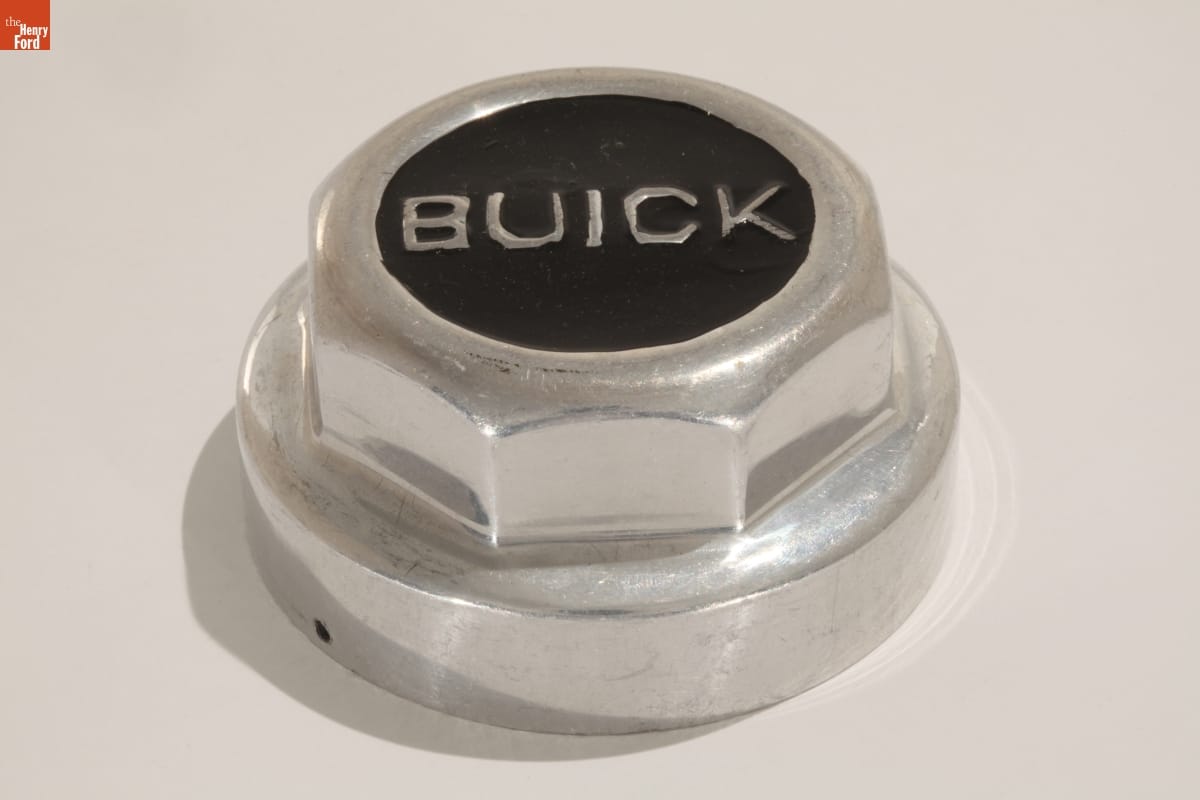
- Buick Hubcap, 1918-1929 - Early automobile wheels had a central hub with a greased wheel bearing. Hub caps kept grease in and dust out. As wheels evolved and hubcaps became functionally unnecessary, they remained important to both manufacturers -- who branded wheel covers with maker names or logos -- and consumers -- who identified with hubcaps as statements about their cars and themselves.
- 1918-1929
- Collections - Artifact
Buick Hubcap, 1918-1929
Early automobile wheels had a central hub with a greased wheel bearing. Hub caps kept grease in and dust out. As wheels evolved and hubcaps became functionally unnecessary, they remained important to both manufacturers -- who branded wheel covers with maker names or logos -- and consumers -- who identified with hubcaps as statements about their cars and themselves.