
Search
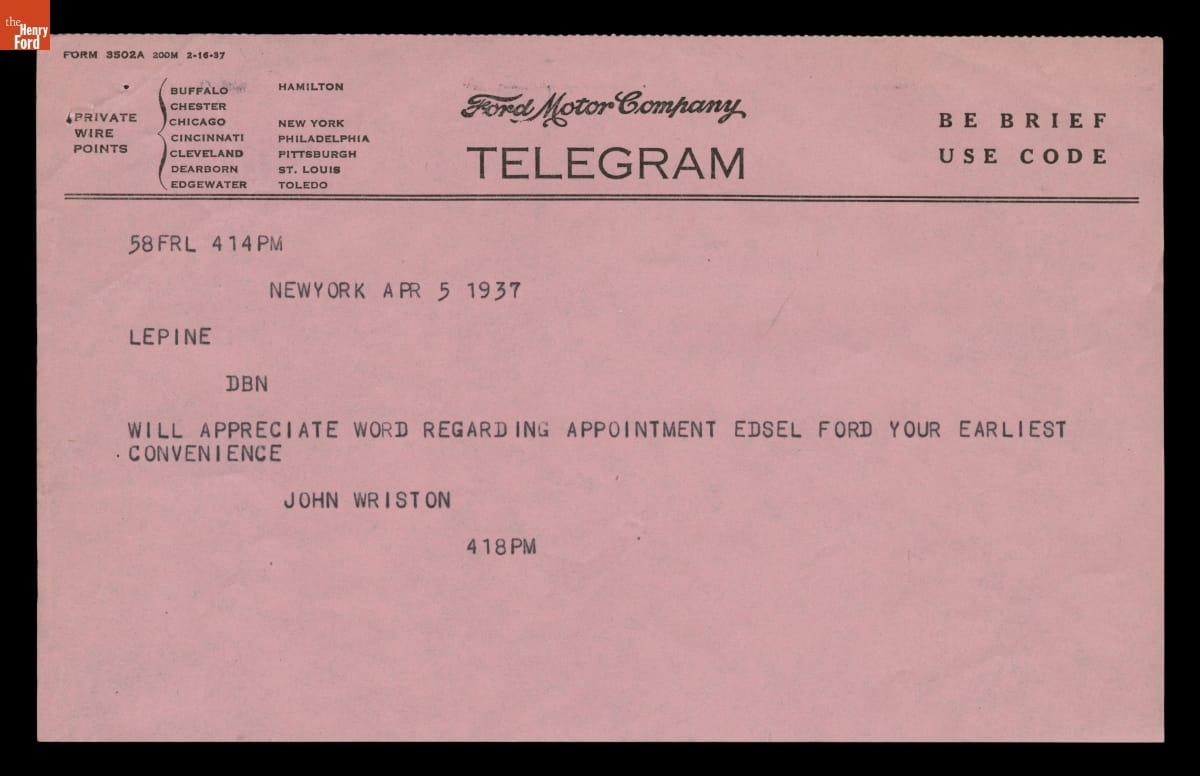
- Telegram from John Wriston to A. J. Lepine (for Edsel Ford) Arranging Meeting to Discuss Dearborn Inn Colonial Village, April 5, 1937 - By the mid-1930s, the Dearborn Inn, a popular luxury hotel, required additional accommodations to service travelers and visitors to the Edison Institute (later renamed The Henry Ford). The L.G. Treadway Service Corporation consulted with Edsel Ford about proposed upgrades that included a swimming pool, pool house, landscaping, and a "Colonial Village" of guest houses (replicas of homes famous in American history).
- April 05, 1937
- Collections - Artifact
Telegram from John Wriston to A. J. Lepine (for Edsel Ford) Arranging Meeting to Discuss Dearborn Inn Colonial Village, April 5, 1937
By the mid-1930s, the Dearborn Inn, a popular luxury hotel, required additional accommodations to service travelers and visitors to the Edison Institute (later renamed The Henry Ford). The L.G. Treadway Service Corporation consulted with Edsel Ford about proposed upgrades that included a swimming pool, pool house, landscaping, and a "Colonial Village" of guest houses (replicas of homes famous in American history).
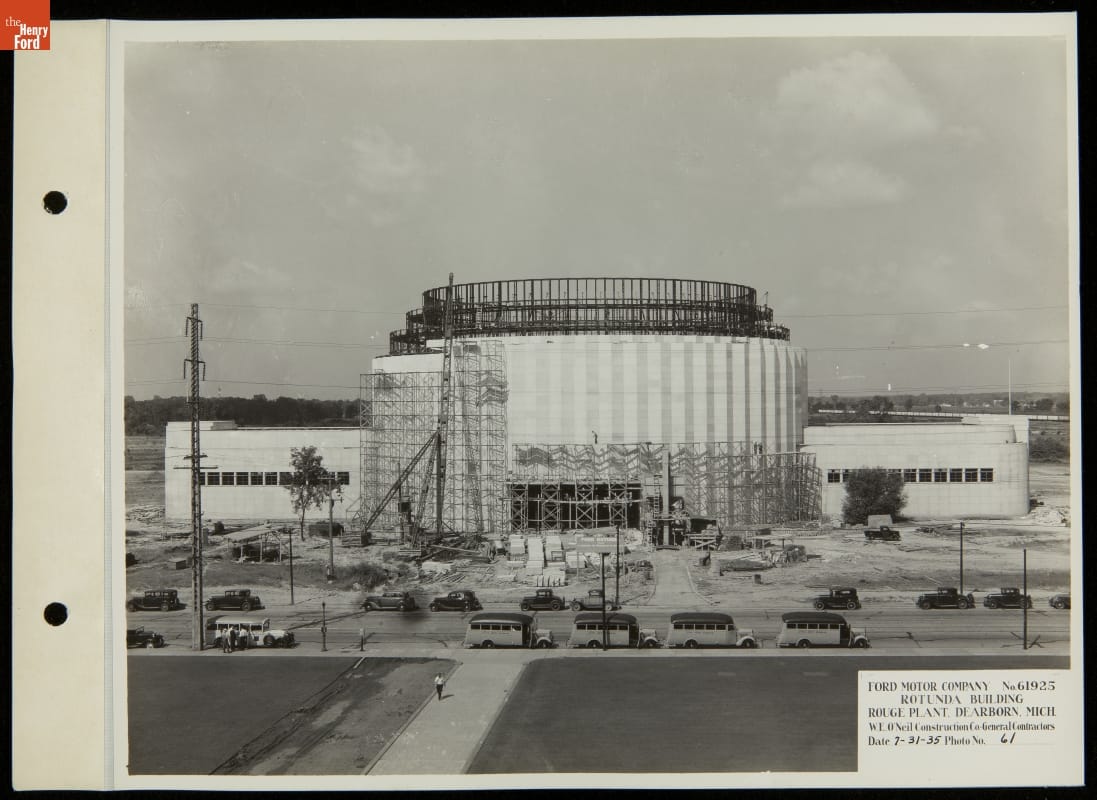
- Ford Rotunda Construction Site, Dearborn, Michigan, July 31, 1935 - After the Century of Progress Exposition ended in 1934, Ford Motor Company brought its central Rotunda building from that fair back to Dearborn. From 1936 to 1962, Ford recreated the excitement of a World's Fair exposition on its home turf. This photo, from July 31, 1935, shows the Ford Rotunda being constructed in Dearborn.
- July 31, 1935
- Collections - Artifact
Ford Rotunda Construction Site, Dearborn, Michigan, July 31, 1935
After the Century of Progress Exposition ended in 1934, Ford Motor Company brought its central Rotunda building from that fair back to Dearborn. From 1936 to 1962, Ford recreated the excitement of a World's Fair exposition on its home turf. This photo, from July 31, 1935, shows the Ford Rotunda being constructed in Dearborn.
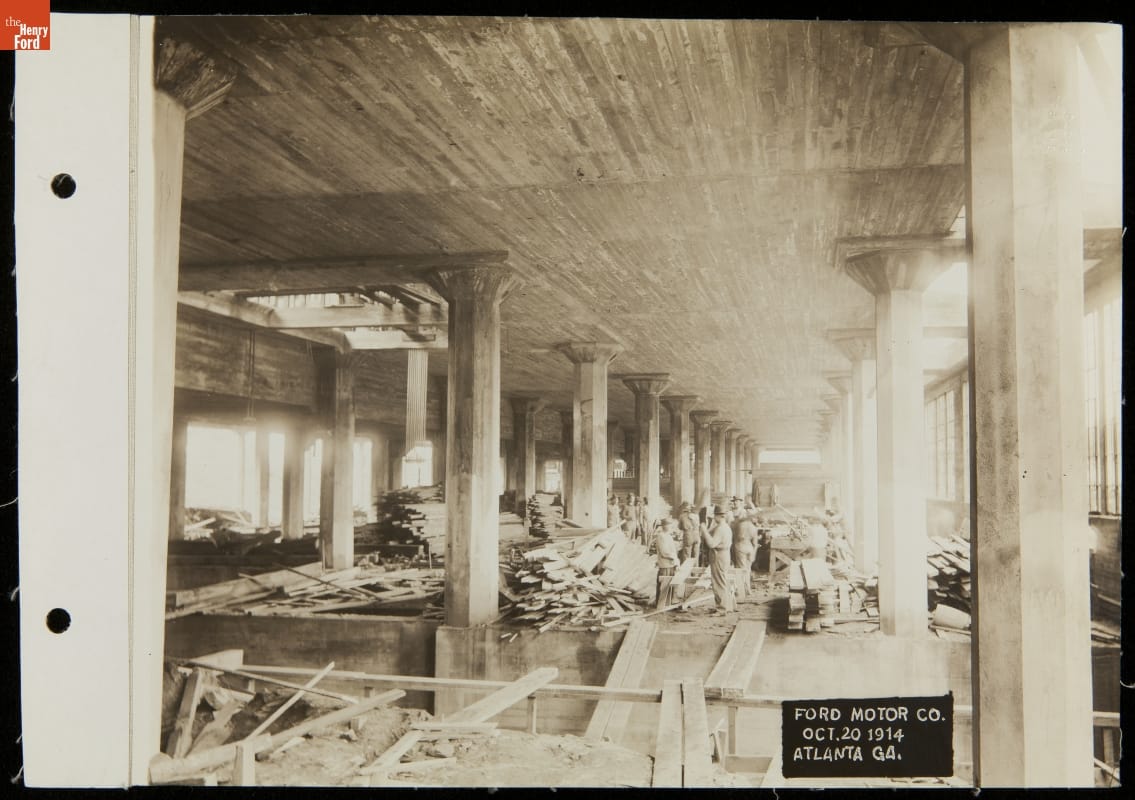
- Ford Motor Company--Plant Construction--Atlanta Georgia--1914--Item45 - Starting in the early 1910s, Ford Motor Company opened domestic assembly plants throughout the United States. Assembling automobiles closer to regional markets reduced shipping costs -- parts were cheaper to ship than completed automobiles. This photograph, part of a series, documents the construction of the Atlanta, Georgia, assembly plant. The plant served as Ford's southeastern operations headquarters from 1915 to 1942.
- October 20, 1914
- Collections - Artifact
Ford Motor Company--Plant Construction--Atlanta Georgia--1914--Item45
Starting in the early 1910s, Ford Motor Company opened domestic assembly plants throughout the United States. Assembling automobiles closer to regional markets reduced shipping costs -- parts were cheaper to ship than completed automobiles. This photograph, part of a series, documents the construction of the Atlanta, Georgia, assembly plant. The plant served as Ford's southeastern operations headquarters from 1915 to 1942.
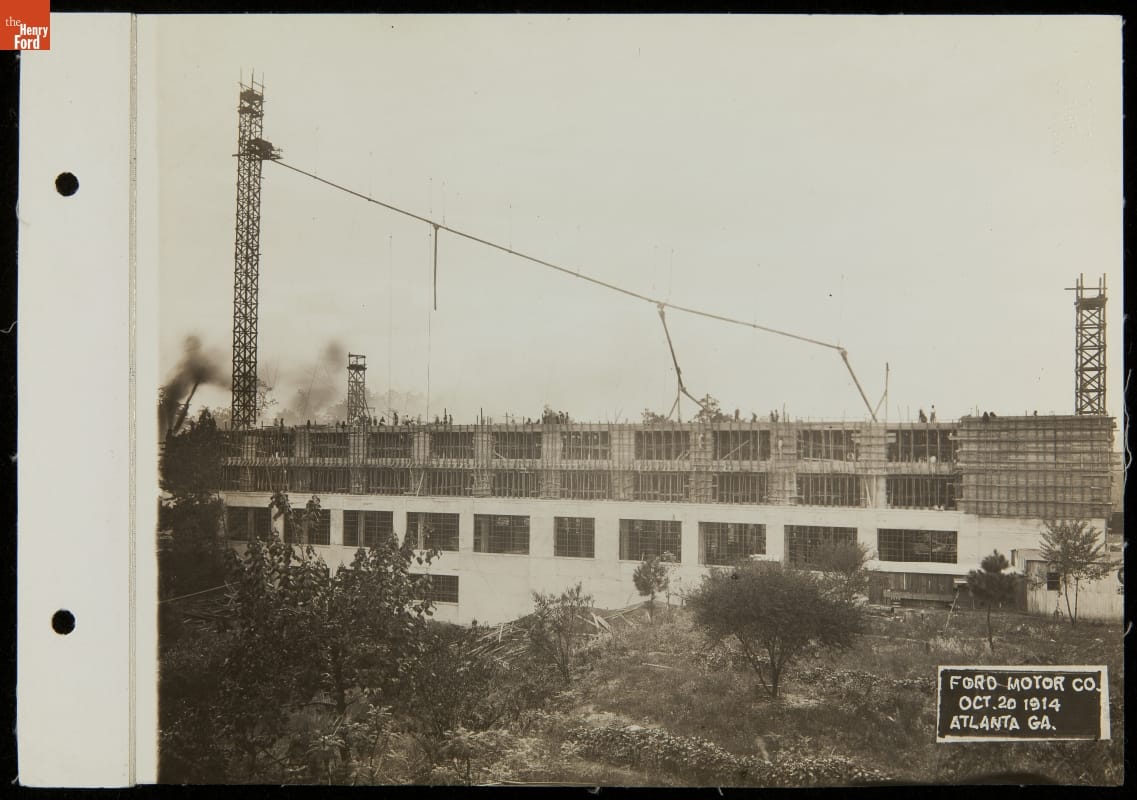
- Ford Motor Company--Plant Construction--Atlanta Georgia--1914--Item46 - Starting in the early 1910s, Ford Motor Company opened domestic assembly plants throughout the United States. Assembling automobiles closer to regional markets reduced shipping costs -- parts were cheaper to ship than completed automobiles. This photograph, part of a series, documents the construction of the Atlanta, Georgia, assembly plant. The plant served as Ford's southeastern operations headquarters from 1915 to 1942.
- October 20, 1914
- Collections - Artifact
Ford Motor Company--Plant Construction--Atlanta Georgia--1914--Item46
Starting in the early 1910s, Ford Motor Company opened domestic assembly plants throughout the United States. Assembling automobiles closer to regional markets reduced shipping costs -- parts were cheaper to ship than completed automobiles. This photograph, part of a series, documents the construction of the Atlanta, Georgia, assembly plant. The plant served as Ford's southeastern operations headquarters from 1915 to 1942.
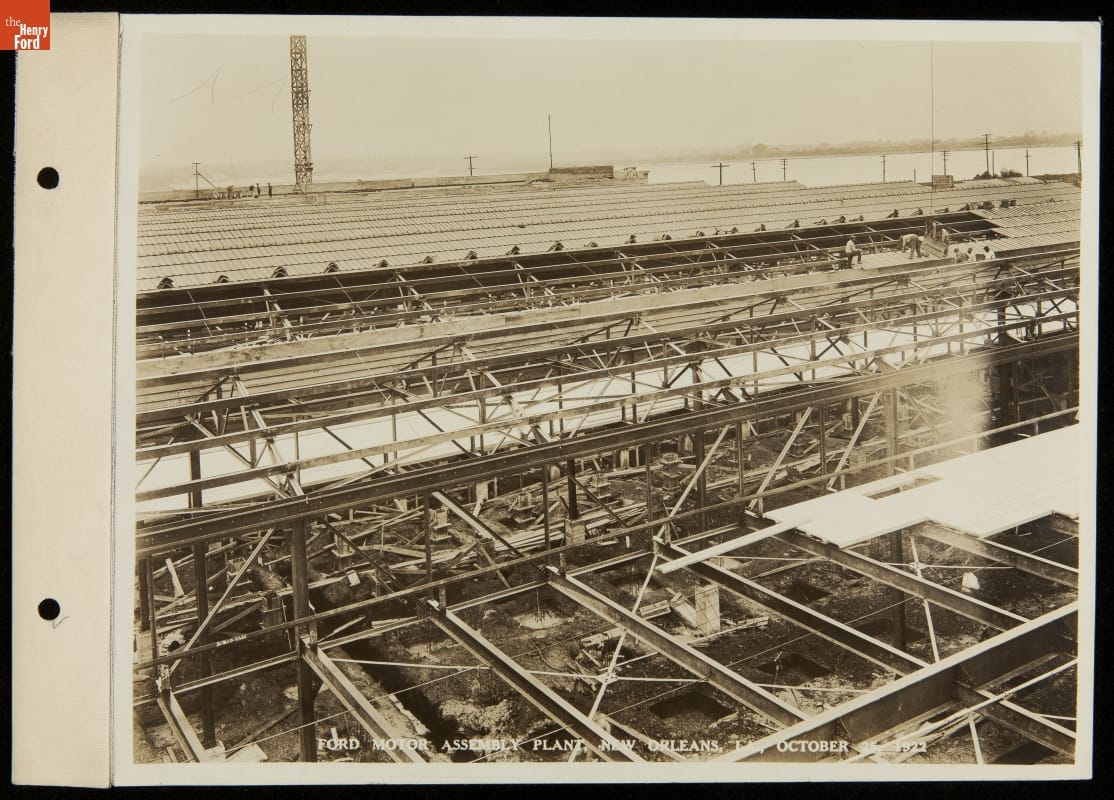
- Ford Motor Company--Plant Construction--New Orleans, Louisiana--1922-1923--Item25 - Starting in the early 1910s, Ford Motor Company opened domestic assembly plants throughout the United States. Assembling automobiles closer to regional markets reduced shipping costs -- parts were cheaper to ship than completed automobiles. Albert Kahn, America's foremost industrial architect, designed Ford's modern, one-story New Orleans Assembly plant. The plant, which opened in 1923, supplied automobiles to three states until it closed in 1933.
- October 25, 1922
- Collections - Artifact
Ford Motor Company--Plant Construction--New Orleans, Louisiana--1922-1923--Item25
Starting in the early 1910s, Ford Motor Company opened domestic assembly plants throughout the United States. Assembling automobiles closer to regional markets reduced shipping costs -- parts were cheaper to ship than completed automobiles. Albert Kahn, America's foremost industrial architect, designed Ford's modern, one-story New Orleans Assembly plant. The plant, which opened in 1923, supplied automobiles to three states until it closed in 1933.
- "Characteristics of Modern Woods," Second Edition, 1939 -

- 1939
- Collections - Artifact
"Characteristics of Modern Woods," Second Edition, 1939
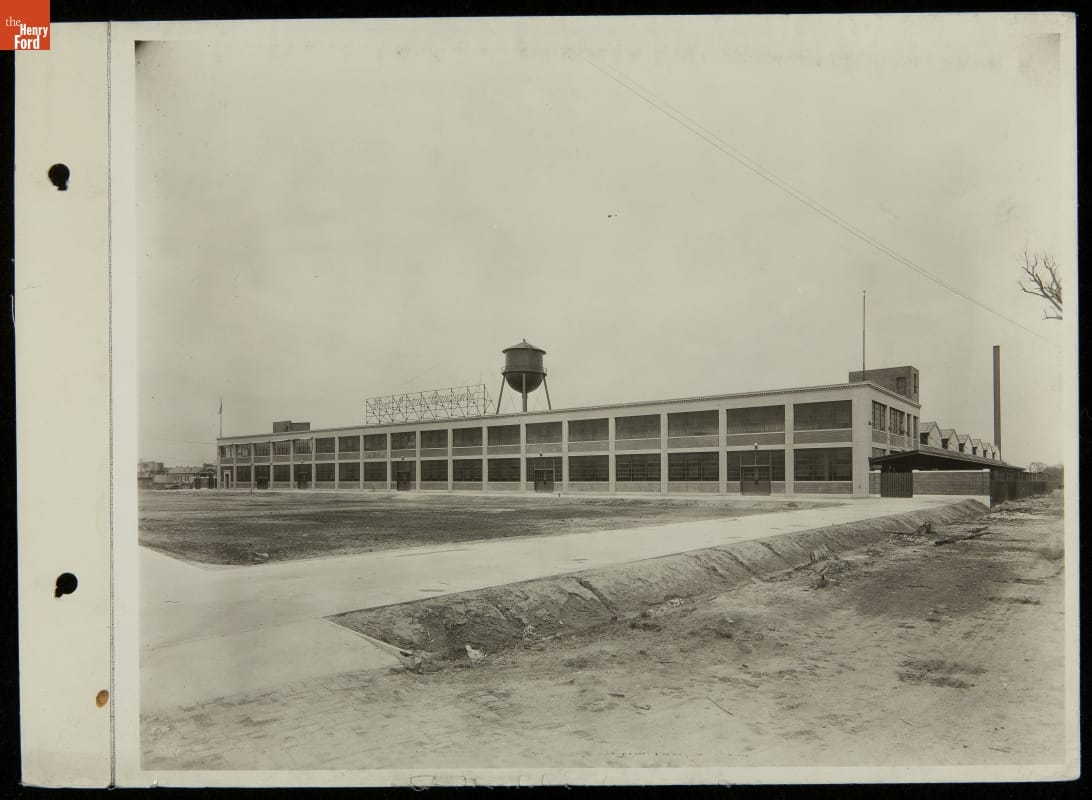
- Ford Motor Company--Plant Construction--New Orleans, Louisiana--1922-1923--Item1 - Starting in the early 1910s, Ford Motor Company opened domestic assembly plants throughout the United States. Assembling automobiles closer to regional markets reduced shipping costs -- parts were cheaper to ship than completed automobiles. Albert Kahn, America's foremost industrial architect, designed Ford's modern, one-story New Orleans Assembly plant. The plant, which opened in 1923, supplied automobiles to three states until it closed in 1933.
- April 14, 1923
- Collections - Artifact
Ford Motor Company--Plant Construction--New Orleans, Louisiana--1922-1923--Item1
Starting in the early 1910s, Ford Motor Company opened domestic assembly plants throughout the United States. Assembling automobiles closer to regional markets reduced shipping costs -- parts were cheaper to ship than completed automobiles. Albert Kahn, America's foremost industrial architect, designed Ford's modern, one-story New Orleans Assembly plant. The plant, which opened in 1923, supplied automobiles to three states until it closed in 1933.
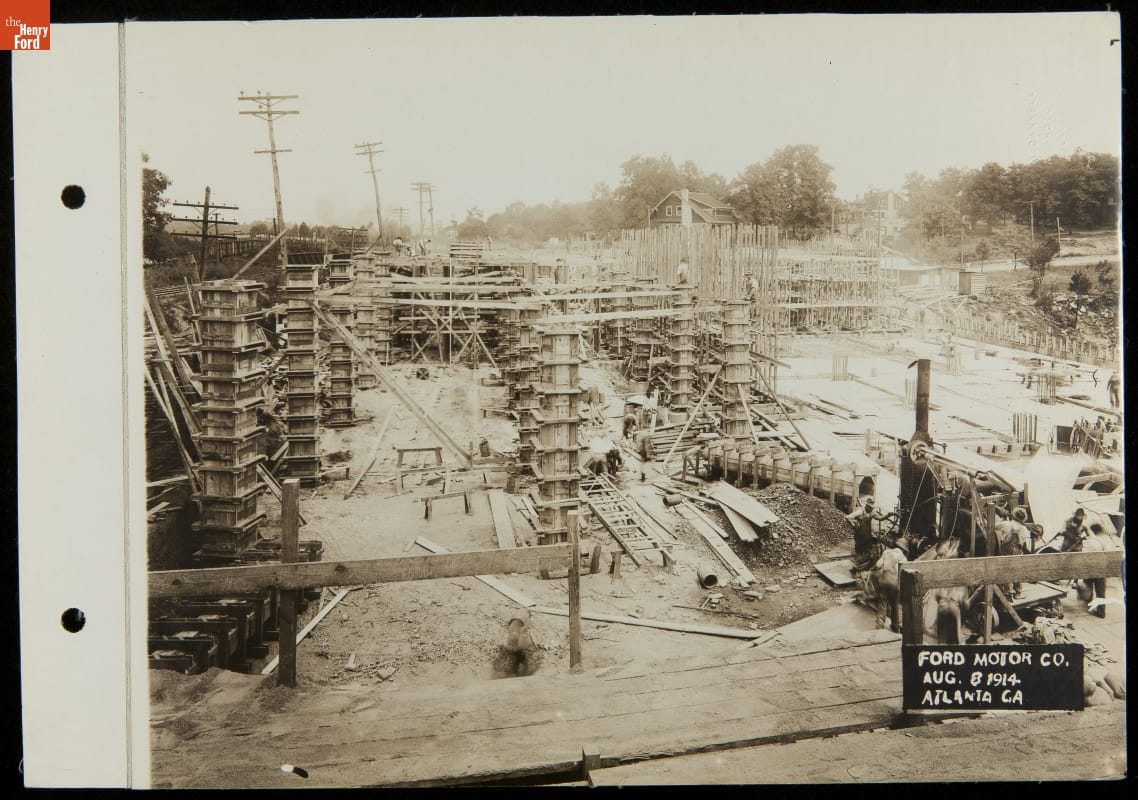
- Ford Motor Company--Plant Construction--Atlanta Georgia--1914--Item24 - Starting in the early 1910s, Ford Motor Company opened domestic assembly plants throughout the United States. Assembling automobiles closer to regional markets reduced shipping costs -- parts were cheaper to ship than completed automobiles. This photograph, part of a series, documents the construction of the Atlanta, Georgia, assembly plant. The plant served as Ford's southeastern operations headquarters from 1915 to 1942.
- August 08, 1914
- Collections - Artifact
Ford Motor Company--Plant Construction--Atlanta Georgia--1914--Item24
Starting in the early 1910s, Ford Motor Company opened domestic assembly plants throughout the United States. Assembling automobiles closer to regional markets reduced shipping costs -- parts were cheaper to ship than completed automobiles. This photograph, part of a series, documents the construction of the Atlanta, Georgia, assembly plant. The plant served as Ford's southeastern operations headquarters from 1915 to 1942.
- "Roddis Flush & French Doors" Sales Catalog, circa 1922 -

- circa 1922
- Collections - Artifact
"Roddis Flush & French Doors" Sales Catalog, circa 1922
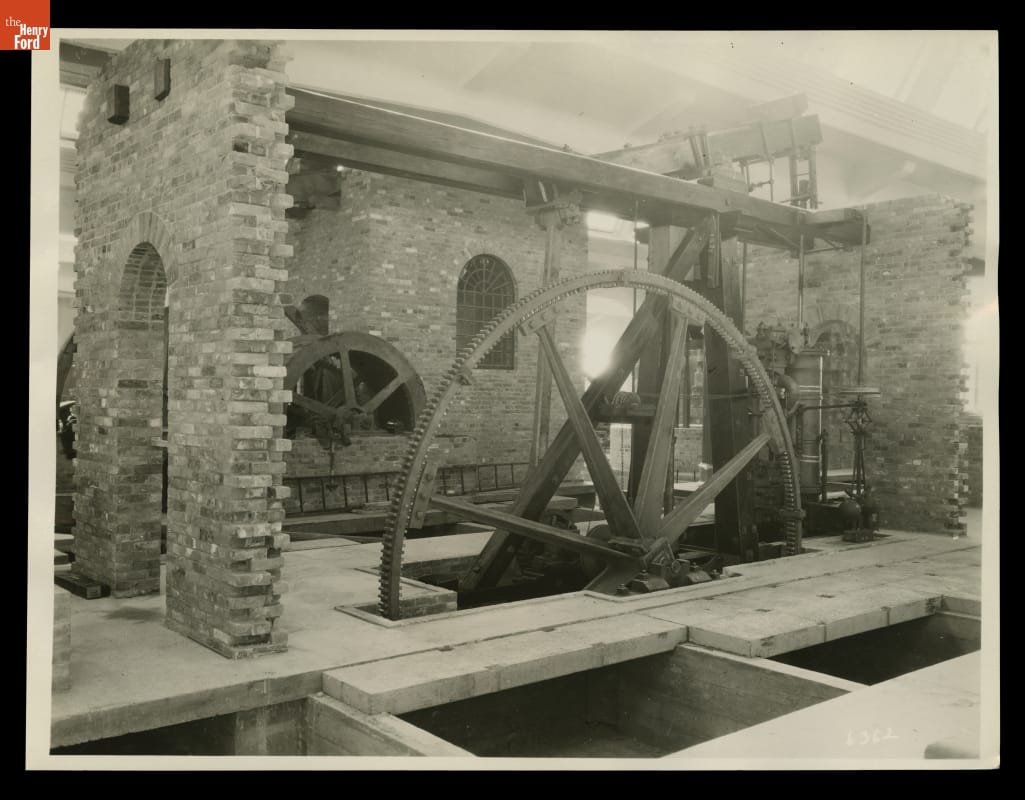
- 1788 Watt Rotative Steam Engine Being Installed inside Henry Ford Museum, April 1932 -
- April 15, 1932
- Collections - Artifact
1788 Watt Rotative Steam Engine Being Installed inside Henry Ford Museum, April 1932