
Search
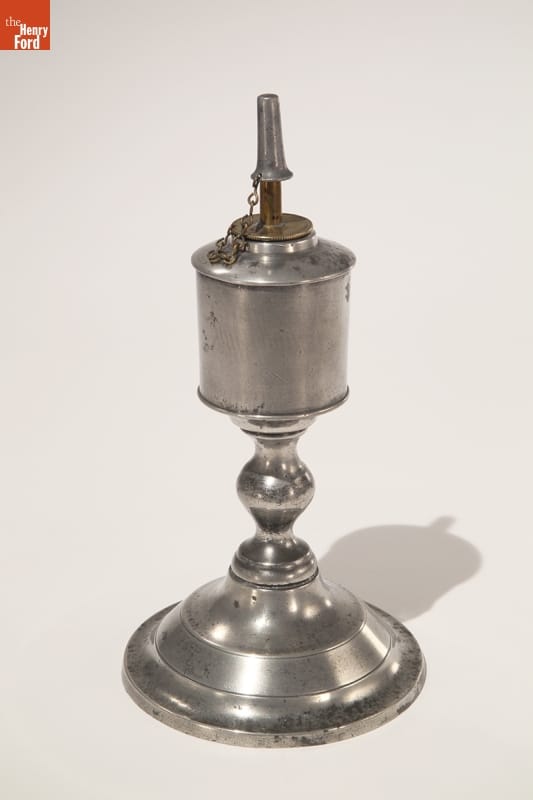
- Burning Fluid Lamp, 1835-1860 - Pewter goods could be found in many American homes and public buildings in the late 18th and early 19th centuries. Most Americans of modest means could afford to buy pewter spoons, tankards, dishes, plates, porringers, or other household items. Oil or burning fluid lamps provided light on cloudy days or after the sun went down.
- 1835-1860
- Collections - Artifact
Burning Fluid Lamp, 1835-1860
Pewter goods could be found in many American homes and public buildings in the late 18th and early 19th centuries. Most Americans of modest means could afford to buy pewter spoons, tankards, dishes, plates, porringers, or other household items. Oil or burning fluid lamps provided light on cloudy days or after the sun went down.
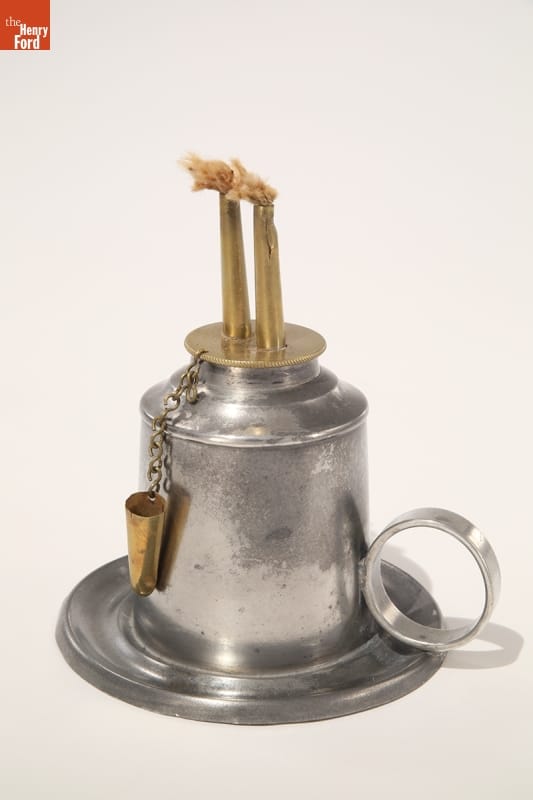
- Burning Fluid Lamp, 1846-1851 - Pewter goods could be found in many American homes and public buildings in the late 18th and early 19th centuries. Most Americans of modest means could afford to buy pewter spoons, tankards, dishes, plates, porringers, or other household items. Oil or burning fluid lamps provided light on cloudy days or after the sun went down.
- 1846-1851
- Collections - Artifact
Burning Fluid Lamp, 1846-1851
Pewter goods could be found in many American homes and public buildings in the late 18th and early 19th centuries. Most Americans of modest means could afford to buy pewter spoons, tankards, dishes, plates, porringers, or other household items. Oil or burning fluid lamps provided light on cloudy days or after the sun went down.
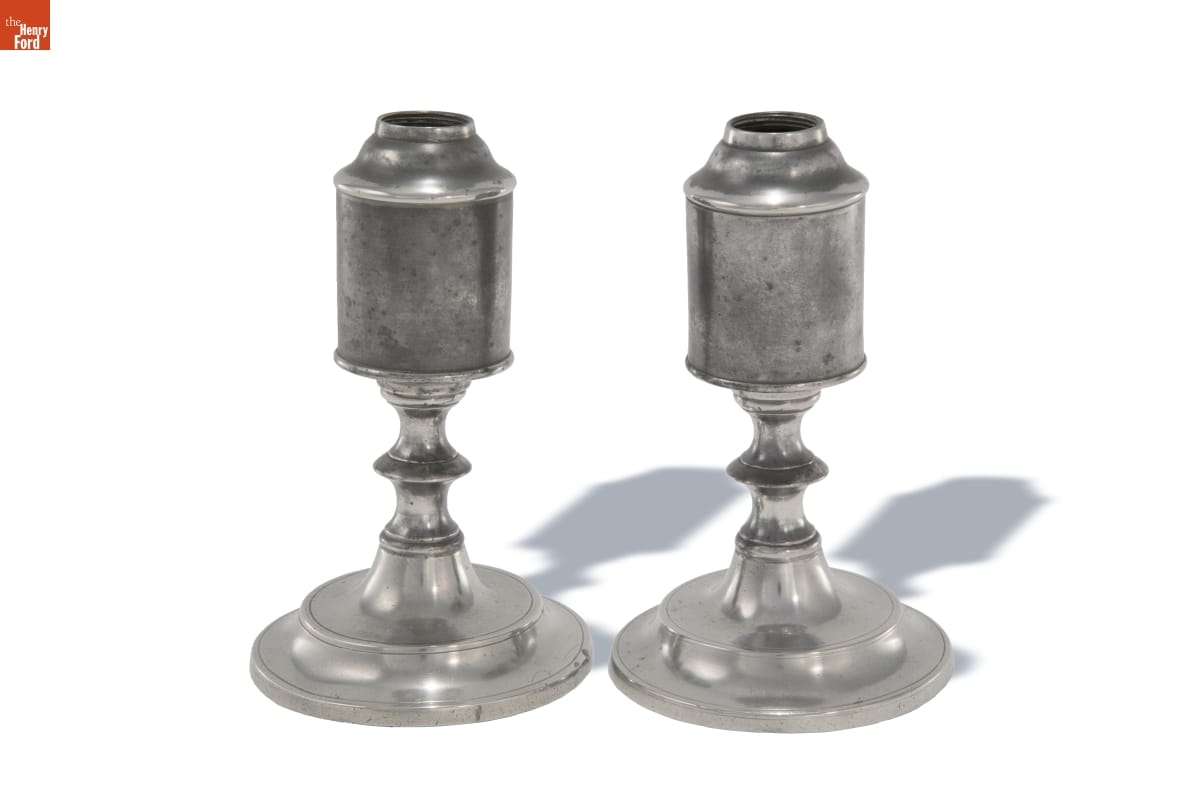
- Pair of Lamps, 1840-1860 - Pewter goods could be found in many American homes and public buildings in the late 18th and early 19th centuries. Most Americans of modest means could afford to buy pewter spoons, tankards, dishes, plates, porringers, or other household items. Oil or burning fluid lamps provided light on cloudy days or after the sun went down.
- 1840-1860
- Collections - Artifact
Pair of Lamps, 1840-1860
Pewter goods could be found in many American homes and public buildings in the late 18th and early 19th centuries. Most Americans of modest means could afford to buy pewter spoons, tankards, dishes, plates, porringers, or other household items. Oil or burning fluid lamps provided light on cloudy days or after the sun went down.
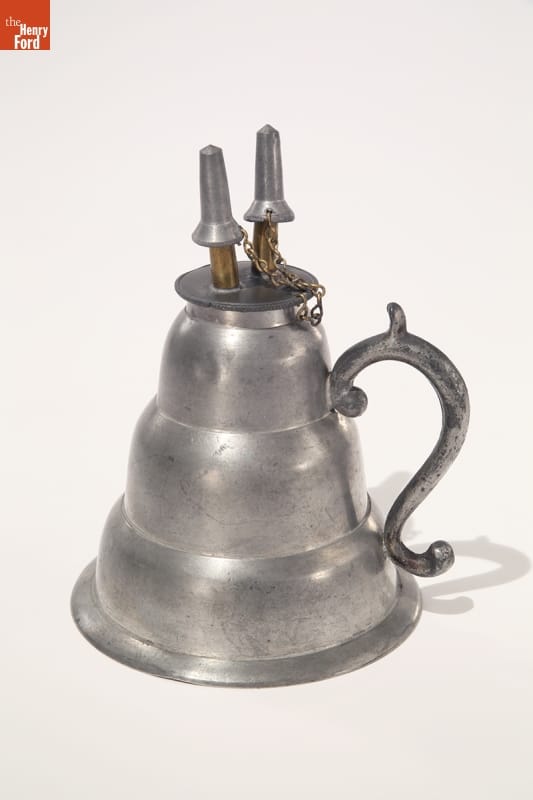
- Burning Fluid Lamp, 1820-1850 - Pewter goods could be found in many American homes and public buildings in the late 18th and early 19th centuries. Most Americans of modest means could afford to buy pewter spoons, tankards, dishes, plates, porringers, or other household items. Oil or burning fluid lamps provided light on cloudy days or after the sun went down.
- 1820-1850
- Collections - Artifact
Burning Fluid Lamp, 1820-1850
Pewter goods could be found in many American homes and public buildings in the late 18th and early 19th centuries. Most Americans of modest means could afford to buy pewter spoons, tankards, dishes, plates, porringers, or other household items. Oil or burning fluid lamps provided light on cloudy days or after the sun went down.
- Burning Fluid Lamp, 1848-1850 - Pewter goods could be found in many American homes and public buildings in the late 18th and early 19th centuries. Most Americans of modest means could afford to buy pewter spoons, tankards, dishes, plates, porringers, or other household items. Oil or burning fluid lamps provided light on cloudy days or after the sun went down.
- 1848-1850
- Collections - Artifact
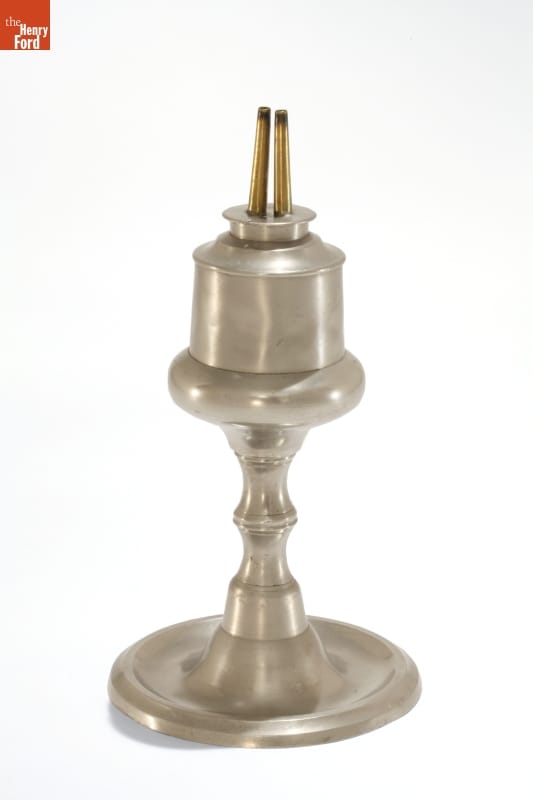
Burning Fluid Lamp, 1848-1850
Pewter goods could be found in many American homes and public buildings in the late 18th and early 19th centuries. Most Americans of modest means could afford to buy pewter spoons, tankards, dishes, plates, porringers, or other household items. Oil or burning fluid lamps provided light on cloudy days or after the sun went down.
- Burning Fluid Hanging Lamp, 1840-1860 - "Burning Fluid" chandeliers used highly explosive fluids that, though dangerous, were popular because they were inexpensive and burned brightly. The oil font is in the center and the three hooks surrounding it allowed the lamp to hang from the ceiling. The fancy painted decoration enhanced its appeal in a parlor or dining room.
- 1840-1860
- Collections - Artifact
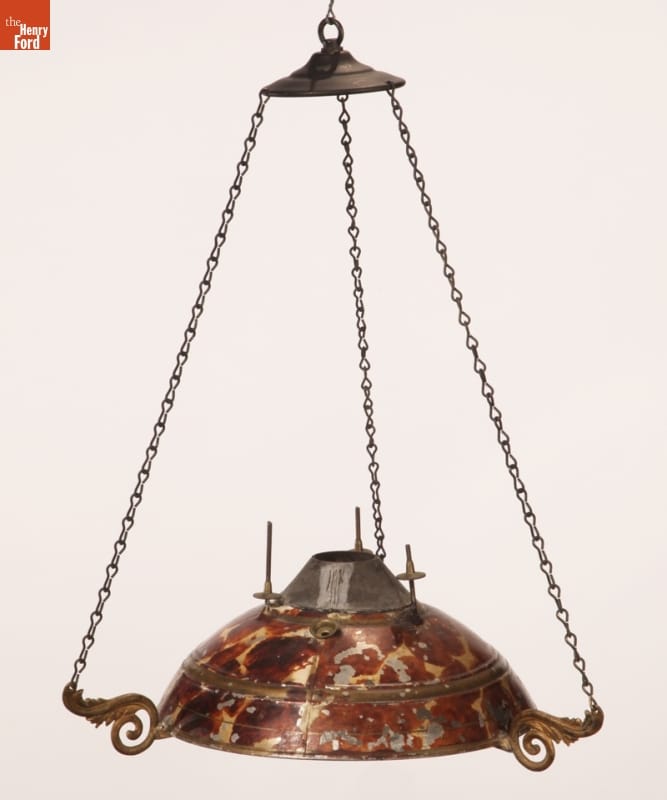
Burning Fluid Hanging Lamp, 1840-1860
"Burning Fluid" chandeliers used highly explosive fluids that, though dangerous, were popular because they were inexpensive and burned brightly. The oil font is in the center and the three hooks surrounding it allowed the lamp to hang from the ceiling. The fancy painted decoration enhanced its appeal in a parlor or dining room.
- Camphene or Burning Fluid Hanging Lamp, 1849 - Burning fluid hanging lamps were perfect for middle class families, burning Camphene, an inexpensive fuel similar to turpentine. Camphene and other "burning fluid" fuels were highly volatile. After the Civil War, kerosene took the place of these burning fluids because it burned brighter, was safer to use, and less expensive.
- 1849
- Collections - Artifact
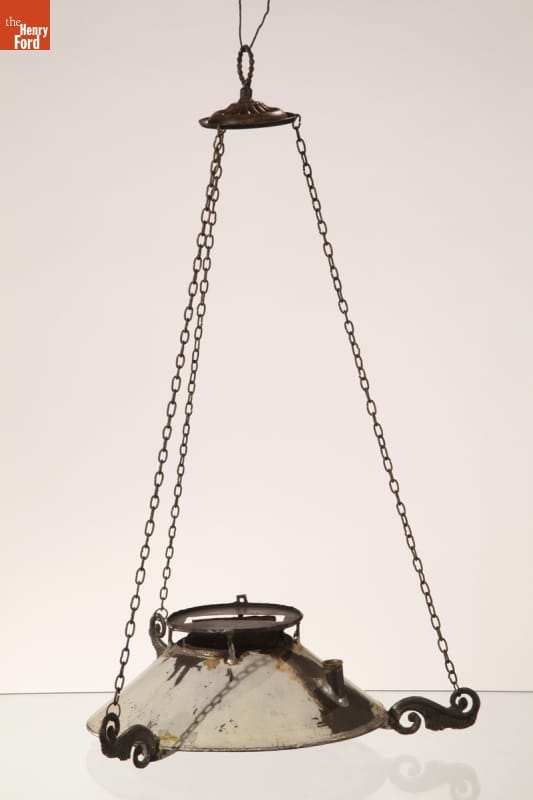
Camphene or Burning Fluid Hanging Lamp, 1849
Burning fluid hanging lamps were perfect for middle class families, burning Camphene, an inexpensive fuel similar to turpentine. Camphene and other "burning fluid" fuels were highly volatile. After the Civil War, kerosene took the place of these burning fluids because it burned brighter, was safer to use, and less expensive.
- India Rubber Safety Lamp, 1855 - Burning fluid lamps became popular in the mid-19th century as an alternative to expensive whale oil lamps. However, such fuels were highly explosive. Patented "safety" lamps consisted of a sealed elastic rubber bladder that expanded and contracted under the fluid's pressure. If the glass were broken, the bladder would retain the liquid, preventing the lamp from exploding.
- 1855
- Collections - Artifact
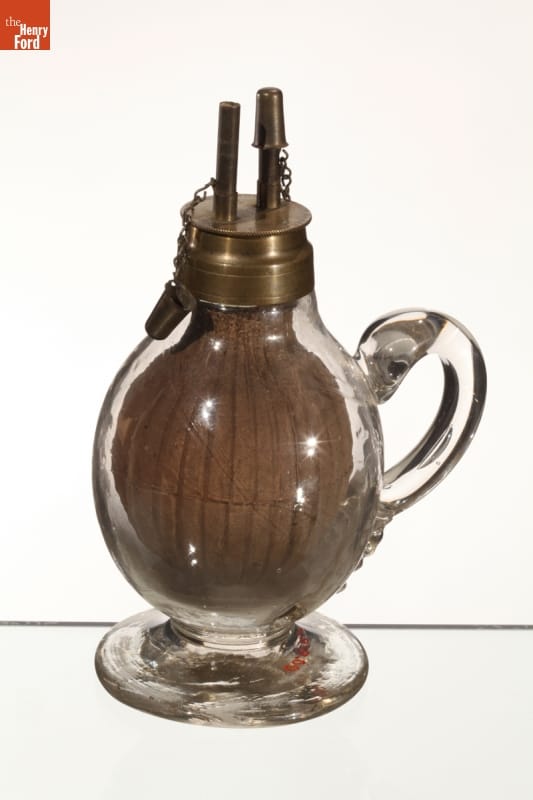
India Rubber Safety Lamp, 1855
Burning fluid lamps became popular in the mid-19th century as an alternative to expensive whale oil lamps. However, such fuels were highly explosive. Patented "safety" lamps consisted of a sealed elastic rubber bladder that expanded and contracted under the fluid's pressure. If the glass were broken, the bladder would retain the liquid, preventing the lamp from exploding.