
Search
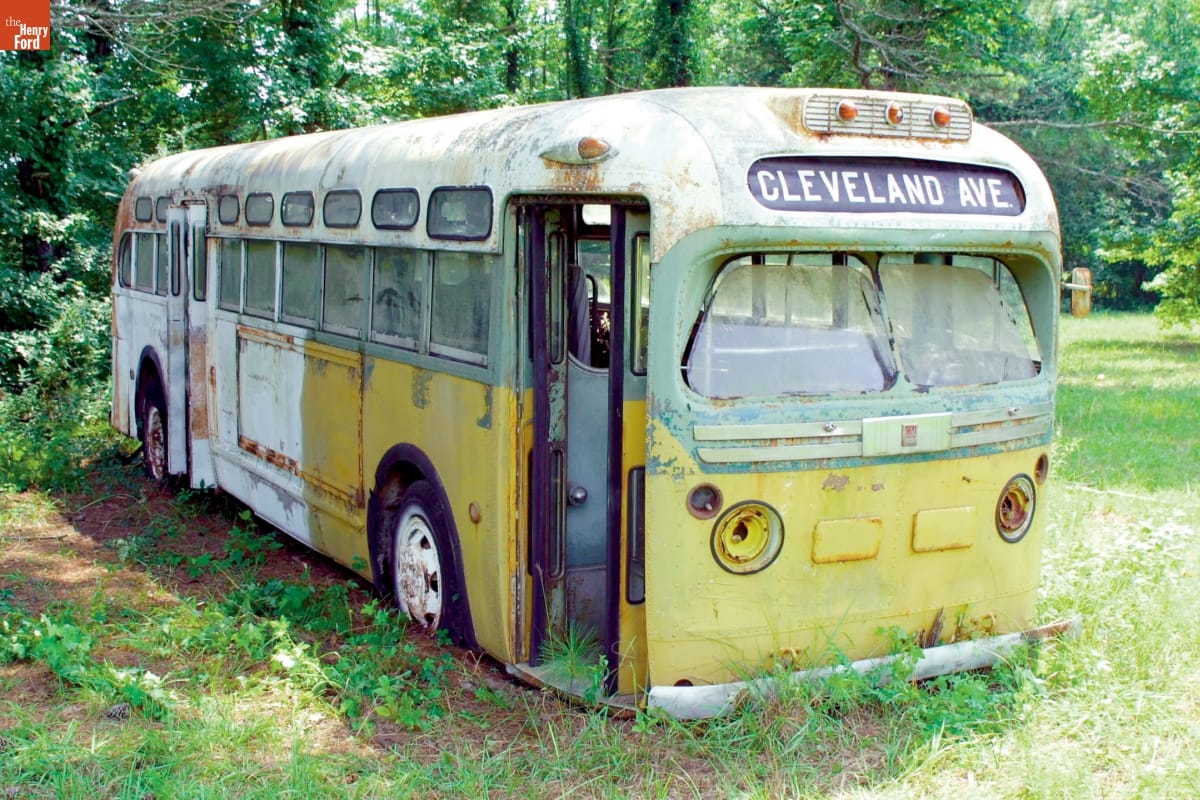
- Rosa Parks Bus in Montgomery, Alabama, 2000-2001, before Acquisition by The Henry Ford - This bus, the site of Rosa Parks's stand against segregation laws, sat as a rusted storage shed before The Henry Ford acquired it and began a full restoration. Parks's act of defiance on December 1, 1955, sparked the Montgomery Bus Boycott, which helped to ignite the Civil Rights Movement. Today, the restored bus survives as a reminder of her courageous activism.
- 2000-2001
- Collections - Artifact
Rosa Parks Bus in Montgomery, Alabama, 2000-2001, before Acquisition by The Henry Ford
This bus, the site of Rosa Parks's stand against segregation laws, sat as a rusted storage shed before The Henry Ford acquired it and began a full restoration. Parks's act of defiance on December 1, 1955, sparked the Montgomery Bus Boycott, which helped to ignite the Civil Rights Movement. Today, the restored bus survives as a reminder of her courageous activism.
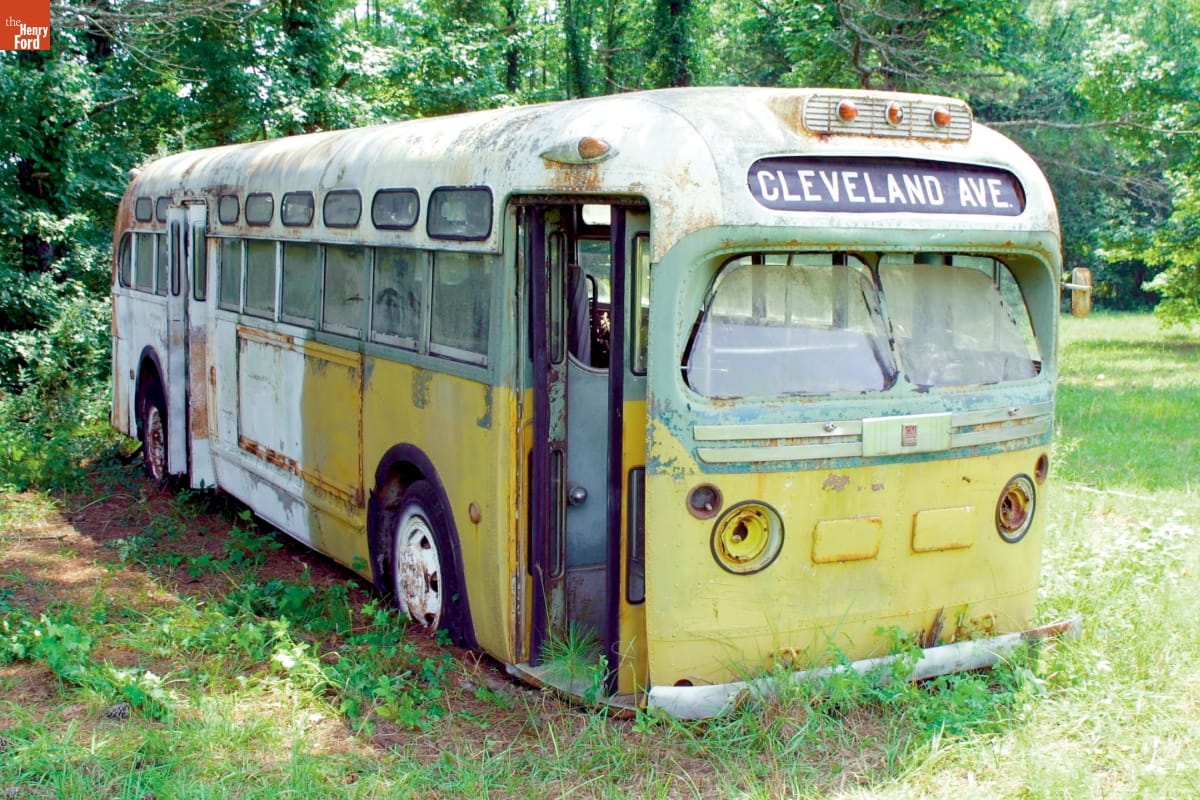
- Rosa Parks Bus in Montgomery, Alabama, 2000-2001, before Acquisition by The Henry Ford - This bus, the site of Rosa Parks's stand against segregation laws, sat as a rusted storage shed before The Henry Ford acquired it and began a full restoration. Parks's act of defiance on December 1, 1955, sparked the Montgomery Bus Boycott, which helped to ignite the Civil Rights Movement. Today, the restored bus survives as a reminder of her courageous activism.
- 2000-2001
- Collections - Artifact
Rosa Parks Bus in Montgomery, Alabama, 2000-2001, before Acquisition by The Henry Ford
This bus, the site of Rosa Parks's stand against segregation laws, sat as a rusted storage shed before The Henry Ford acquired it and began a full restoration. Parks's act of defiance on December 1, 1955, sparked the Montgomery Bus Boycott, which helped to ignite the Civil Rights Movement. Today, the restored bus survives as a reminder of her courageous activism.
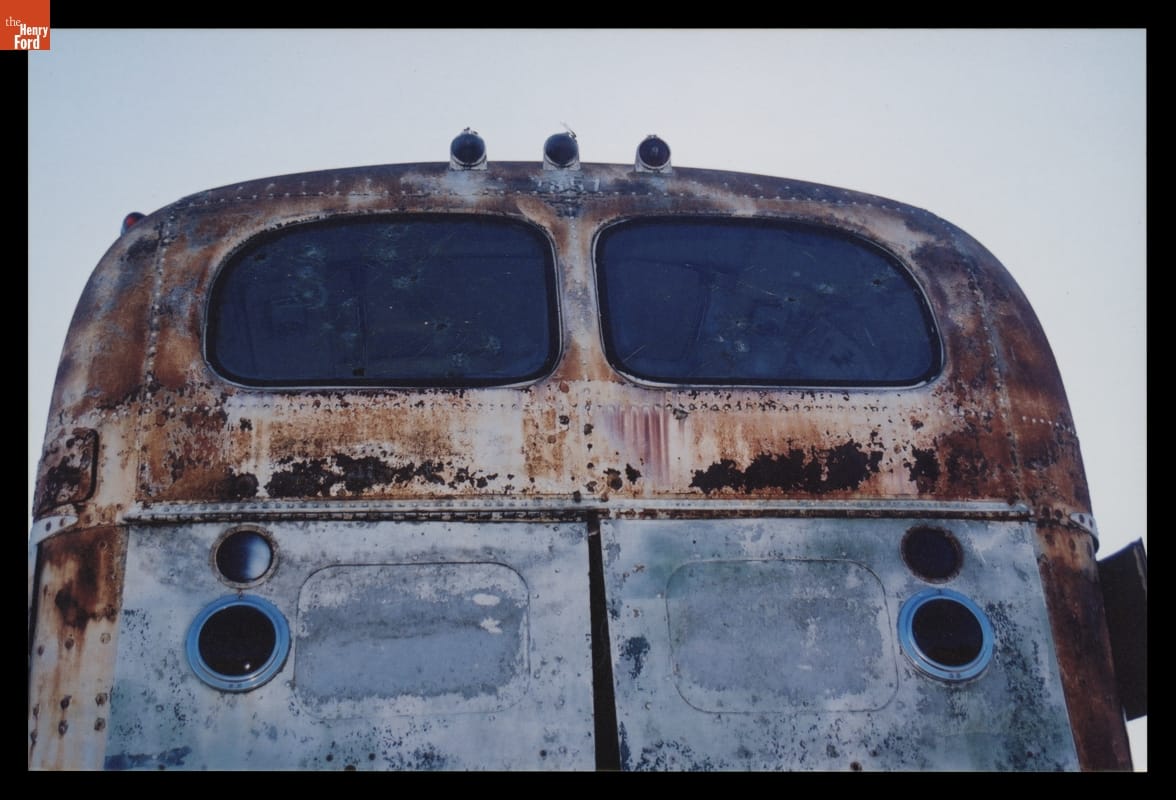
- Rosa Parks Bus before Restoration, outside Henry Ford Museum, September 12, 2002 - This bus, the site of Rosa Parks's stand against segregation laws, sat as a rusted storage shed before The Henry Ford acquired it and began a full restoration. Parks's act of defiance on December 1, 1955, sparked the Montgomery Bus Boycott, which helped to ignite the Civil Rights Movement. Today, the restored bus survives as a reminder of her courageous activism.
- September 12, 2002
- Collections - Artifact
Rosa Parks Bus before Restoration, outside Henry Ford Museum, September 12, 2002
This bus, the site of Rosa Parks's stand against segregation laws, sat as a rusted storage shed before The Henry Ford acquired it and began a full restoration. Parks's act of defiance on December 1, 1955, sparked the Montgomery Bus Boycott, which helped to ignite the Civil Rights Movement. Today, the restored bus survives as a reminder of her courageous activism.
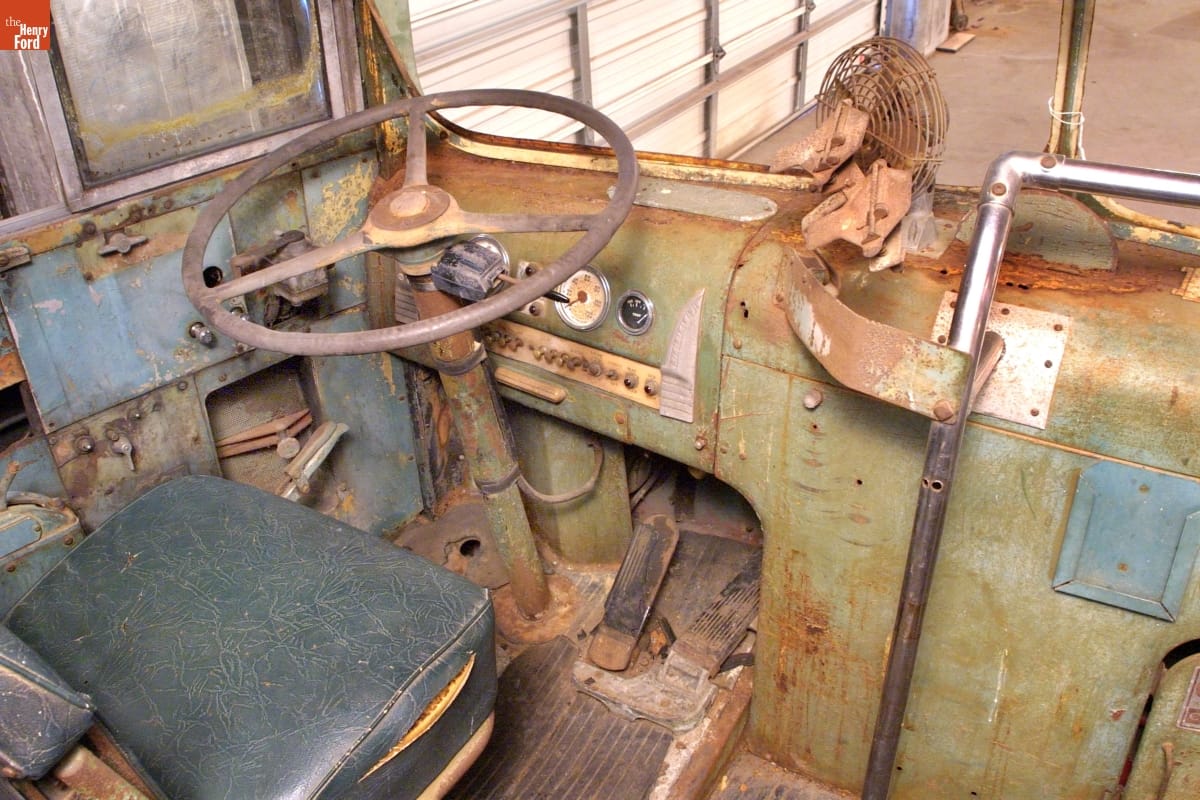
- Rosa Parks Bus before Restoration, Interior, Driver's Area, March 2002 - This bus, the site of Rosa Parks's stand against segregation laws, sat as a rusted storage shed before The Henry Ford acquired it and began a full restoration. Parks's act of defiance on December 1, 1955, sparked the Montgomery Bus Boycott, which helped to ignite the Civil Rights Movement. Today, the restored bus survives as a reminder of her courageous activism.
- March 01, 2002
- Collections - Artifact
Rosa Parks Bus before Restoration, Interior, Driver's Area, March 2002
This bus, the site of Rosa Parks's stand against segregation laws, sat as a rusted storage shed before The Henry Ford acquired it and began a full restoration. Parks's act of defiance on December 1, 1955, sparked the Montgomery Bus Boycott, which helped to ignite the Civil Rights Movement. Today, the restored bus survives as a reminder of her courageous activism.
- Rosa Parks Bus before Restoration, Rear Engine Compartment, March 2002 - This bus, the site of Rosa Parks's stand against segregation laws, sat as a rusted storage shed before The Henry Ford acquired it and began a full restoration. Parks's act of defiance on December 1, 1955, sparked the Montgomery Bus Boycott, which helped to ignite the Civil Rights Movement. Today, the restored bus survives as a reminder of her courageous activism.
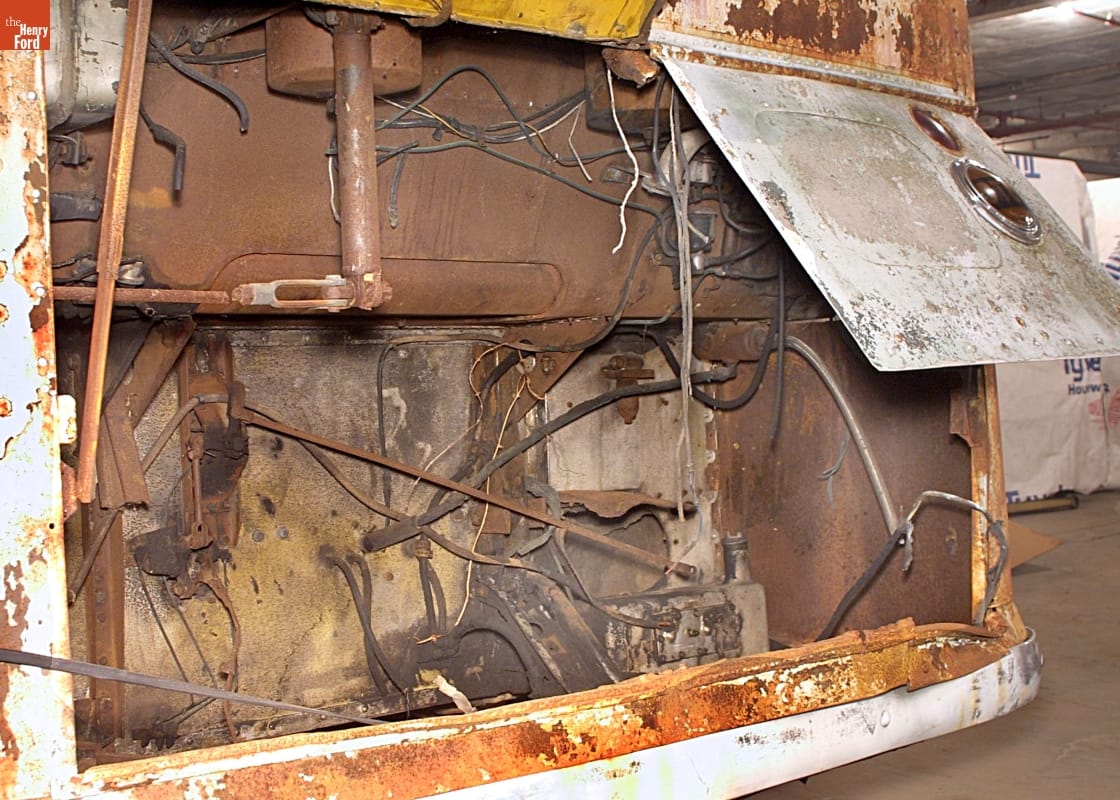
- March 01, 2002
- Collections - Artifact
Rosa Parks Bus before Restoration, Rear Engine Compartment, March 2002
This bus, the site of Rosa Parks's stand against segregation laws, sat as a rusted storage shed before The Henry Ford acquired it and began a full restoration. Parks's act of defiance on December 1, 1955, sparked the Montgomery Bus Boycott, which helped to ignite the Civil Rights Movement. Today, the restored bus survives as a reminder of her courageous activism.
- Rosa Parks Bus before Restoration, Exterior Detail, March 2002 - This bus, the site of Rosa Parks's stand against segregation laws, sat as a rusted storage shed before The Henry Ford acquired it and began a full restoration. Parks's act of defiance on December 1, 1955, sparked the Montgomery Bus Boycott, which helped to ignite the Civil Rights Movement. Today, the restored bus survives as a reminder of her courageous activism.
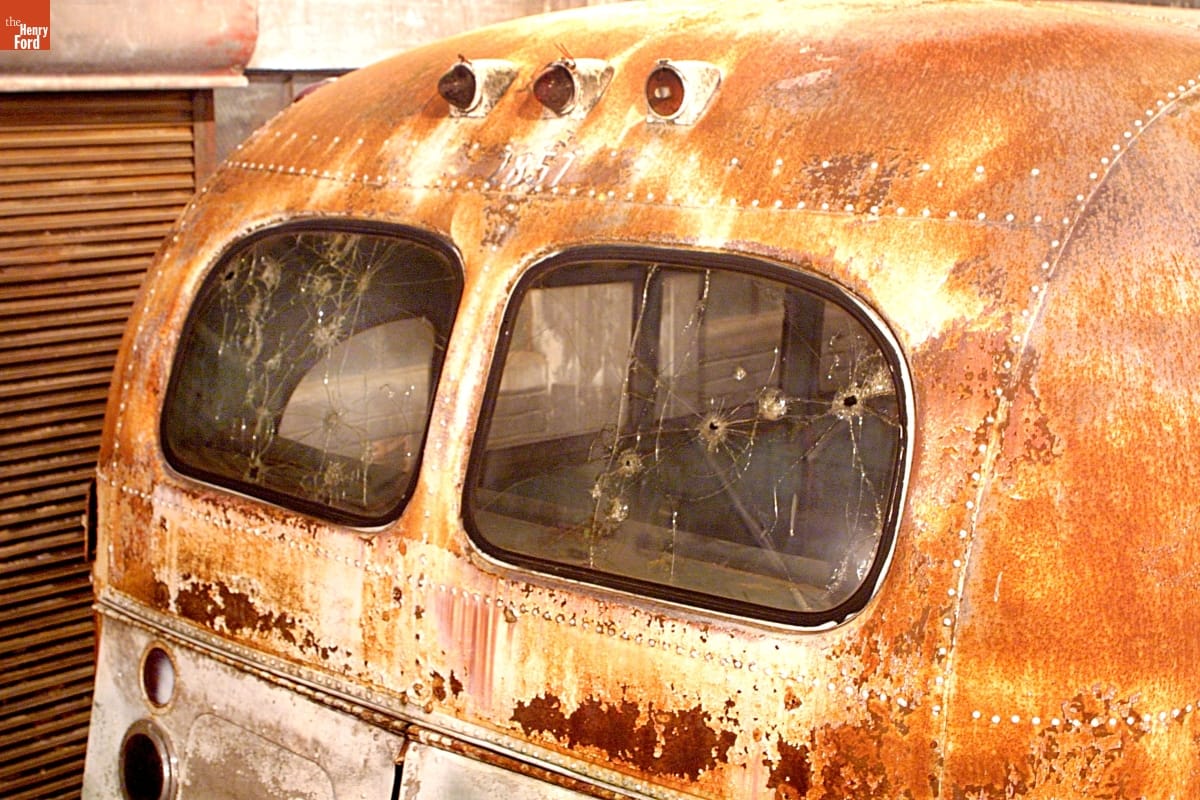
- March 01, 2002
- Collections - Artifact
Rosa Parks Bus before Restoration, Exterior Detail, March 2002
This bus, the site of Rosa Parks's stand against segregation laws, sat as a rusted storage shed before The Henry Ford acquired it and began a full restoration. Parks's act of defiance on December 1, 1955, sparked the Montgomery Bus Boycott, which helped to ignite the Civil Rights Movement. Today, the restored bus survives as a reminder of her courageous activism.
- Ford Bus Used by Midland Motor Bus Co., 1932 - Ford Motor Company added school buses to its lineup in 1931, and late that summer it introduced a modified version for general transit service. The Type 330-B bus featured metal window guards and a built-up roof panel to give more headroom for 21 adult passengers. Ford's bus bodies were supplied by Union City Body Company of Indiana.
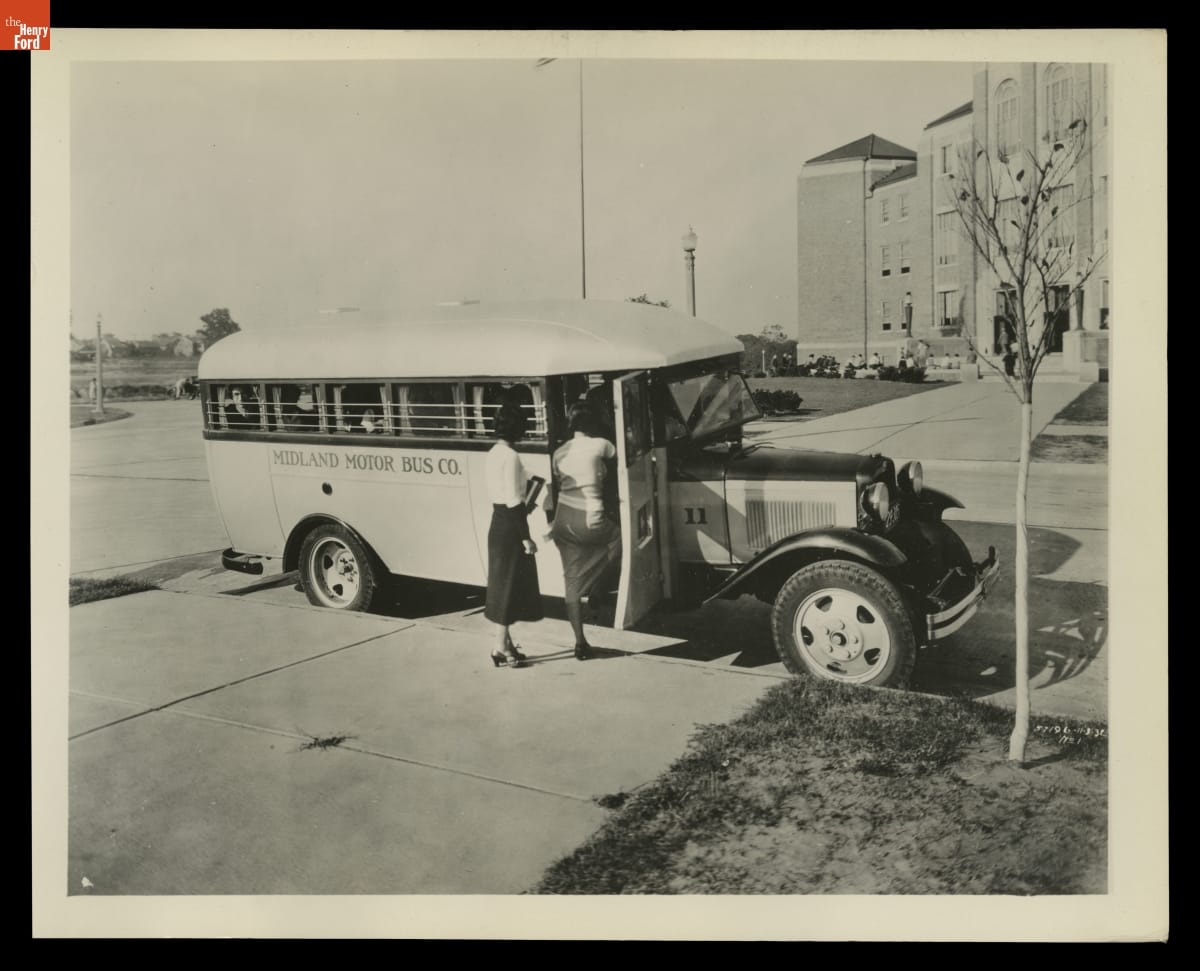
- November 03, 1932
- Collections - Artifact
Ford Bus Used by Midland Motor Bus Co., 1932
Ford Motor Company added school buses to its lineup in 1931, and late that summer it introduced a modified version for general transit service. The Type 330-B bus featured metal window guards and a built-up roof panel to give more headroom for 21 adult passengers. Ford's bus bodies were supplied by Union City Body Company of Indiana.
- Ford Bus, January 1932 - Ford Motor Company added school buses to its lineup in 1931, and late that summer it introduced a modified version for general transit service. The Type 330-B bus featured metal window guards and a built-up roof panel to give more headroom for 21 adult passengers. Ford's bus bodies were supplied by Union City Body Company of Indiana.
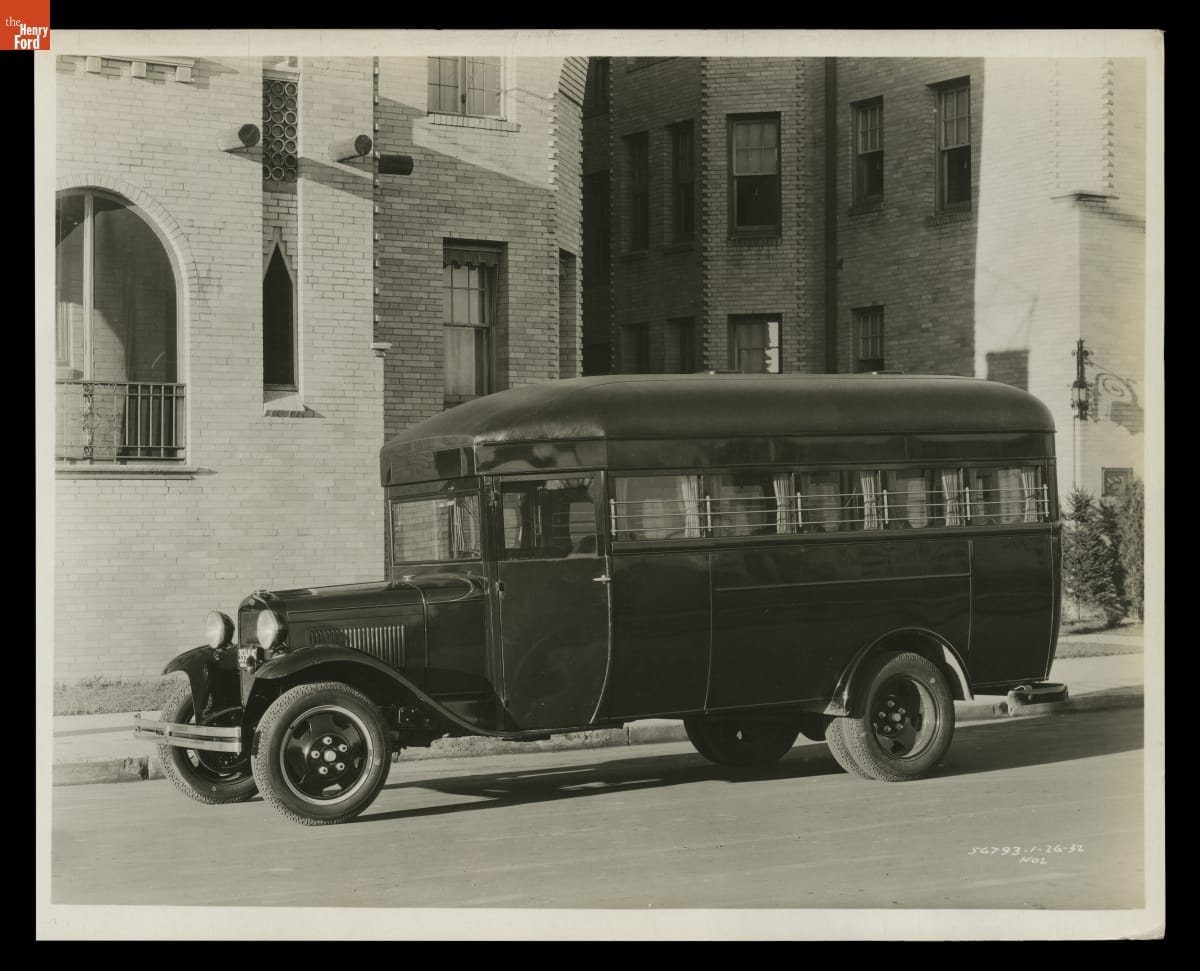
- January 26, 1932
- Collections - Artifact
Ford Bus, January 1932
Ford Motor Company added school buses to its lineup in 1931, and late that summer it introduced a modified version for general transit service. The Type 330-B bus featured metal window guards and a built-up roof panel to give more headroom for 21 adult passengers. Ford's bus bodies were supplied by Union City Body Company of Indiana.
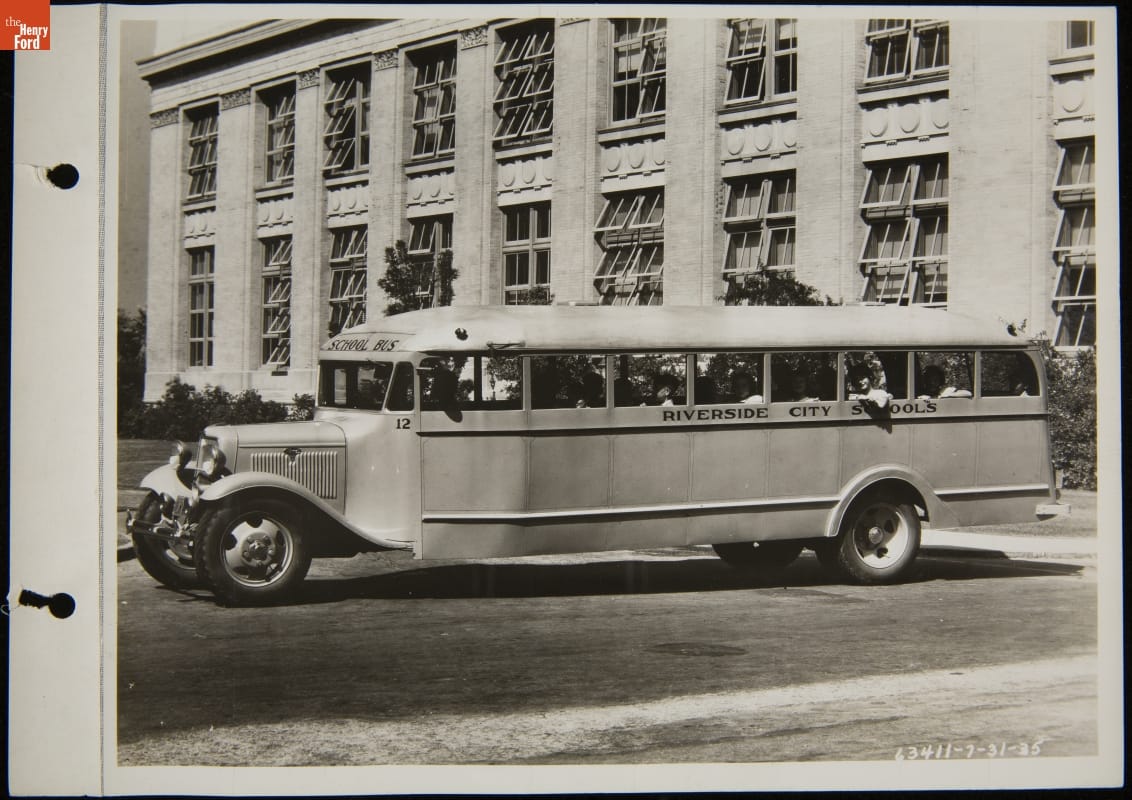
- Ford V-8 School Bus Used by Riverside City Schools, July 1935 - Ford initially offered its V-8 engine, introduced in 1932, only in its cars. But customer demand encouraged the company to make the low-priced V-8 available in its trucks and buses too. For 1935, Ford offered the V-8 in a standard 157-inch wheelbase bus chassis. Some body manufacturers lengthened Ford's standard chassis to accommodate larger bus bodies.
- July 31, 1935
- Collections - Artifact
Ford V-8 School Bus Used by Riverside City Schools, July 1935
Ford initially offered its V-8 engine, introduced in 1932, only in its cars. But customer demand encouraged the company to make the low-priced V-8 available in its trucks and buses too. For 1935, Ford offered the V-8 in a standard 157-inch wheelbase bus chassis. Some body manufacturers lengthened Ford's standard chassis to accommodate larger bus bodies.
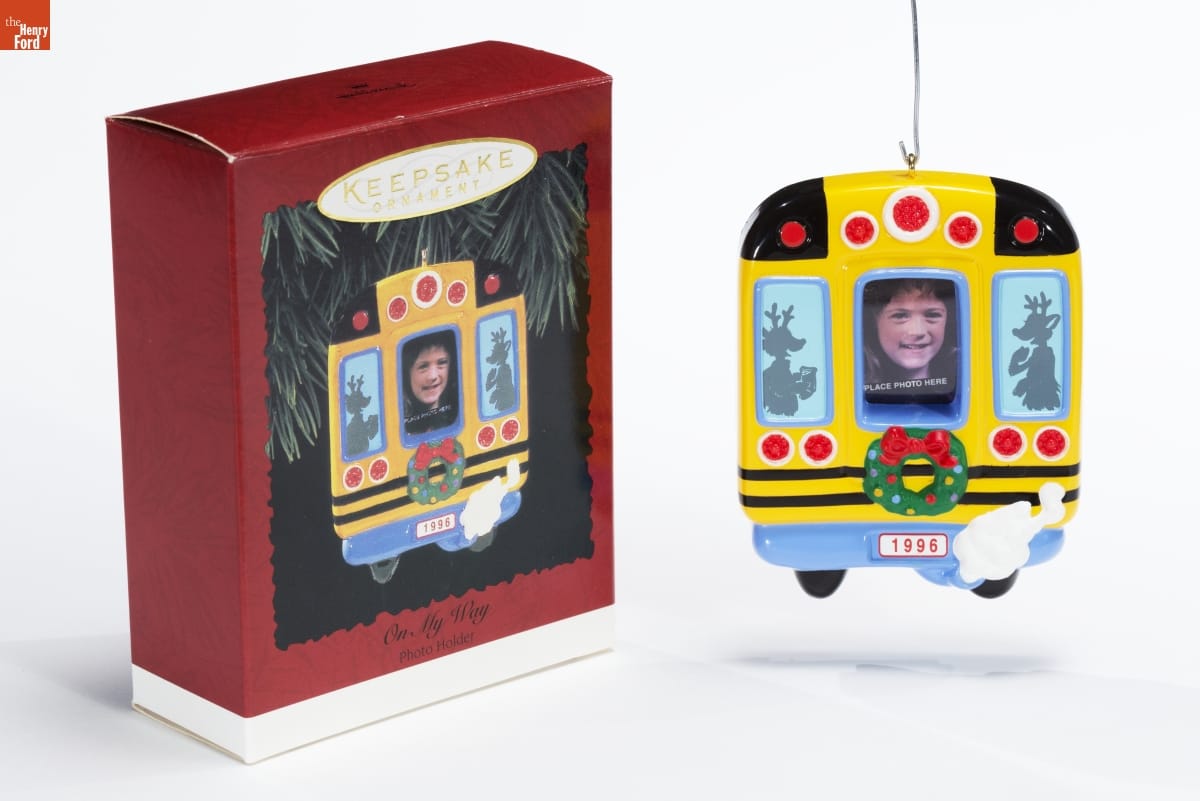
- Hallmark "On My Way Photo Holder" Christmas Ornament, 1996 - Already known for greeting cards, Hallmark introduced a line of Christmas ornaments in 1973. The company's annual release of an increasing array of ornaments revolutionized Christmas decorating, appealing to customers' interest in marking memories and milestones as well as expressing one's personality and unique tastes.
- 1996
- Collections - Artifact
Hallmark "On My Way Photo Holder" Christmas Ornament, 1996
Already known for greeting cards, Hallmark introduced a line of Christmas ornaments in 1973. The company's annual release of an increasing array of ornaments revolutionized Christmas decorating, appealing to customers' interest in marking memories and milestones as well as expressing one's personality and unique tastes.