
Search
- Vanderbilt Cup Race Lapel Pin, 1908 - William K. Vanderbilt, Jr., launched America's first great automobile race, the Vanderbilt Cup, in 1904. Top American and European drivers and cars came to Long Island, New York, for the annual event. After three consecutive victories by French cars, an American-built Locomobile won in 1908. Driver George Robertson and mechanician Glenn Ethridge earned the prize with their car "Old 16."
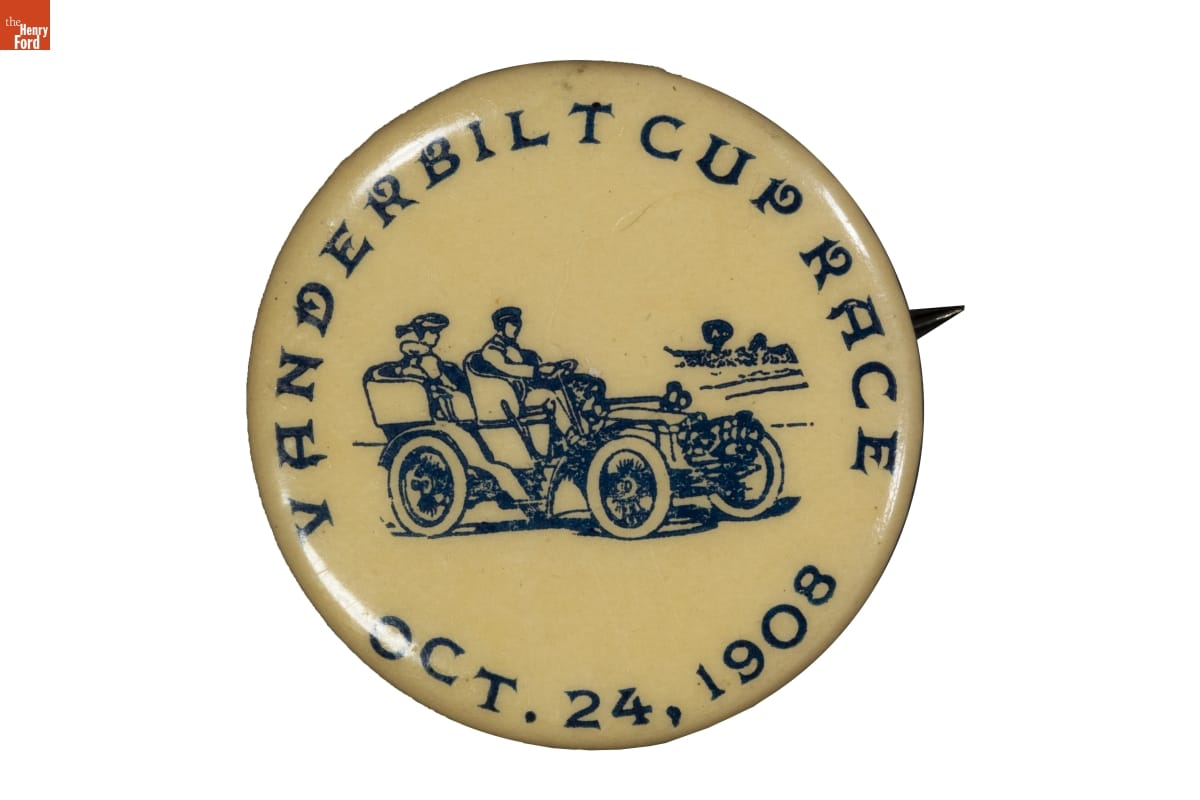
- October 24, 1908
- Collections - Artifact
Vanderbilt Cup Race Lapel Pin, 1908
William K. Vanderbilt, Jr., launched America's first great automobile race, the Vanderbilt Cup, in 1904. Top American and European drivers and cars came to Long Island, New York, for the annual event. After three consecutive victories by French cars, an American-built Locomobile won in 1908. Driver George Robertson and mechanician Glenn Ethridge earned the prize with their car "Old 16."
- Bryan-Watson Campaign Button, 1896 - In 1896, William Jennings Bryan captured both the Democratic and Populist Party's presidential nominations. Each party, however, nominated their own vice presidential candidates. The Democrats chose Arthur Sewall. The Populists chose Thomas E. Watson--pictured with Bryan on this campaign button. Neither ticket won. Bryan lost to the Republican nominee, William McKinley.
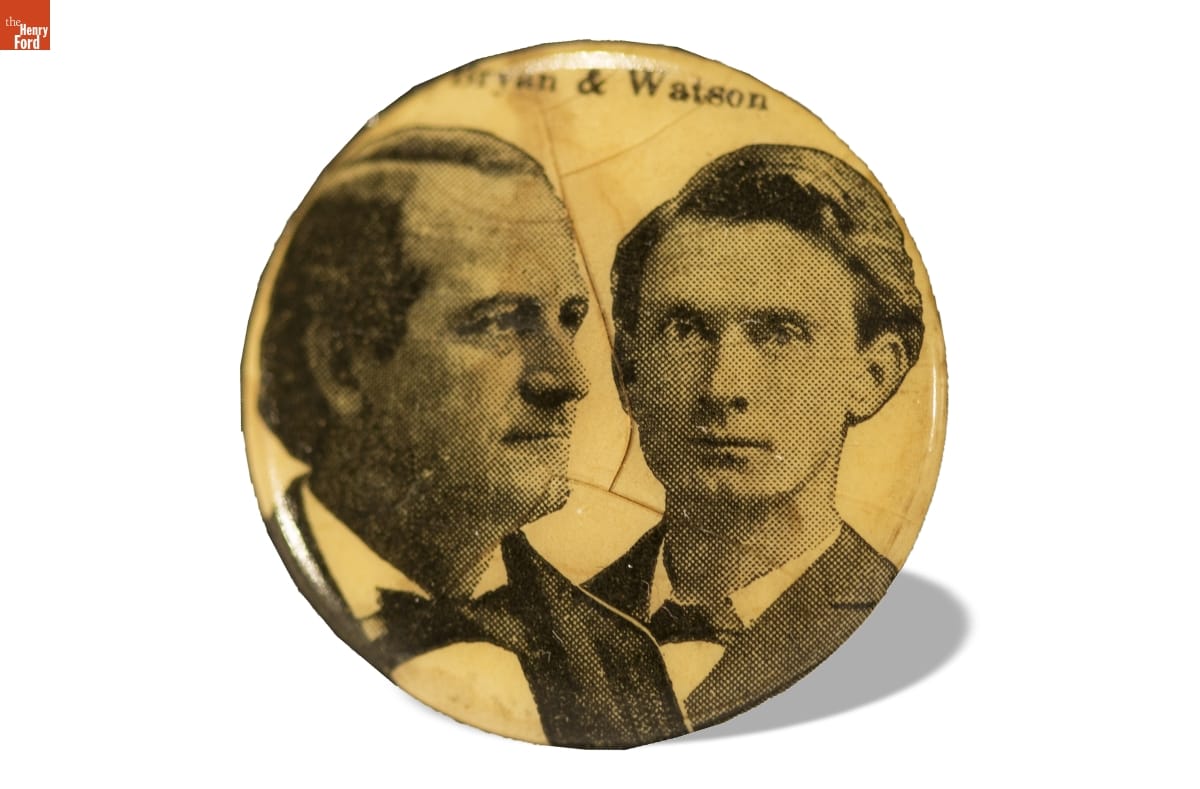
- 1896
- Collections - Artifact
Bryan-Watson Campaign Button, 1896
In 1896, William Jennings Bryan captured both the Democratic and Populist Party's presidential nominations. Each party, however, nominated their own vice presidential candidates. The Democrats chose Arthur Sewall. The Populists chose Thomas E. Watson--pictured with Bryan on this campaign button. Neither ticket won. Bryan lost to the Republican nominee, William McKinley.
- William Bryan Campaign Button, 1908 - William Jennings Bryan made his third and last attempt to become president in 1908. Bryan and his running mate, Indiana Senator John Kern, tried to distinguish themselves from their Republican opponents by championing a variety of domestic reforms. It didn't work. Voters chose the safe, well-qualified William Howard Taft -- President Roosevelt's hand-picked successor.
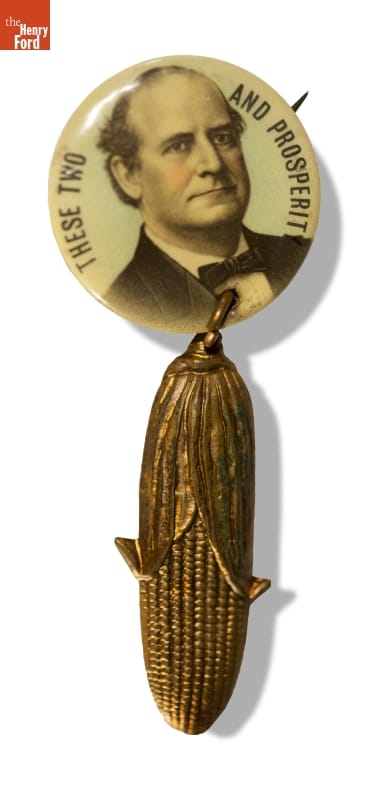
- 1908
- Collections - Artifact
William Bryan Campaign Button, 1908
William Jennings Bryan made his third and last attempt to become president in 1908. Bryan and his running mate, Indiana Senator John Kern, tried to distinguish themselves from their Republican opponents by championing a variety of domestic reforms. It didn't work. Voters chose the safe, well-qualified William Howard Taft -- President Roosevelt's hand-picked successor.
- William Linton Campaign Button, 1896 -
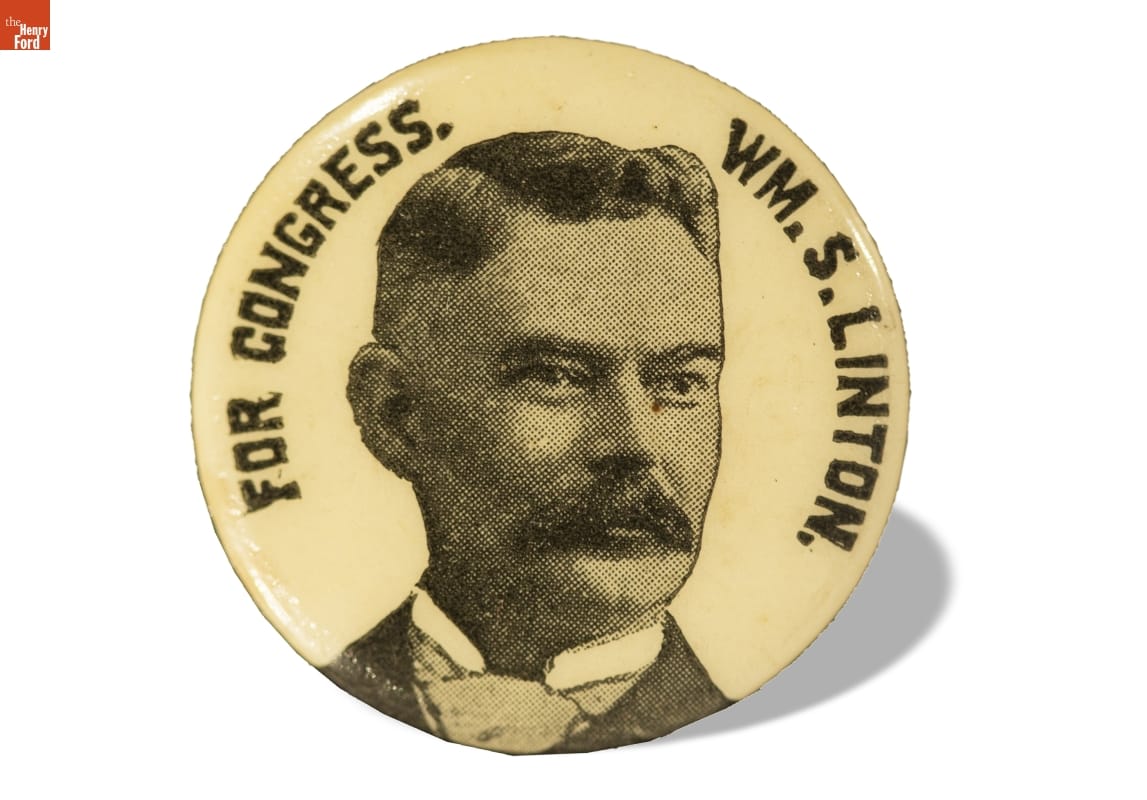
- 1896
- Collections - Artifact
William Linton Campaign Button, 1896
- Button, "National Welfare Rights Organization N.W.R.O. Member," 1966-1975 -
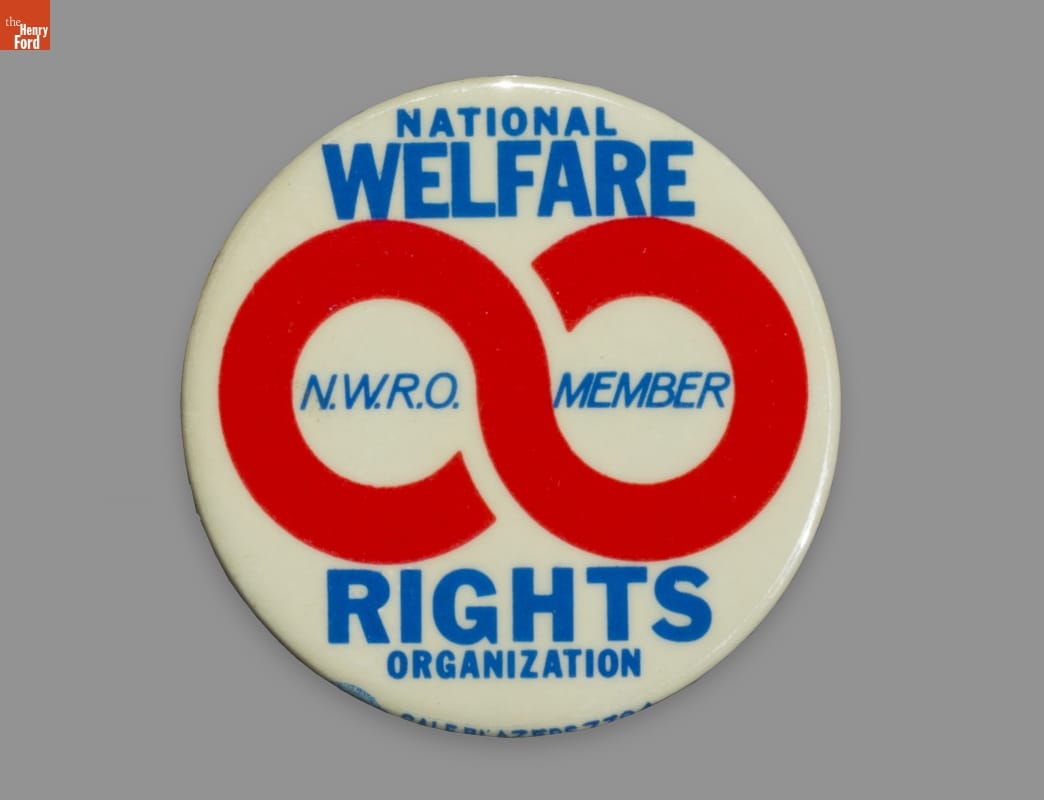
- 1966-1975
- Collections - Artifact
Button, "National Welfare Rights Organization N.W.R.O. Member," 1966-1975
- Button, "Washington DC, April 24-May 5 Come to Stay," 1971 -
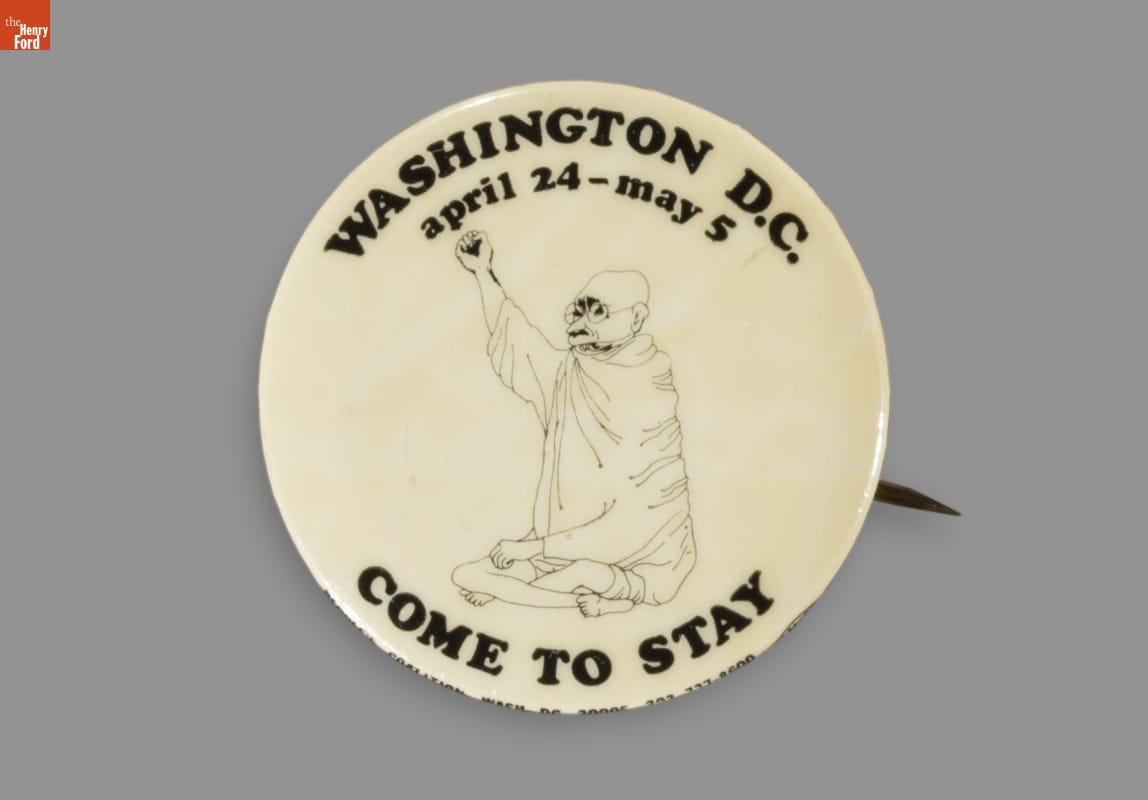
- 1971
- Collections - Artifact
Button, "Washington DC, April 24-May 5 Come to Stay," 1971
- Button, "I Won't Live with Jim Crow: Civil Rights Congress," circa 1948 - The term "Jim Crow" implied the systematic practice of discriminating against and segregating African Americans, especially in the American South, from the late 19th to the mid-20th centuries. The Civil Rights Congress (1946-1956) became a brief force in civil rights battles. However, with its ties to the American Communist Party, it became victim to Cold War anticommunism and government repression.
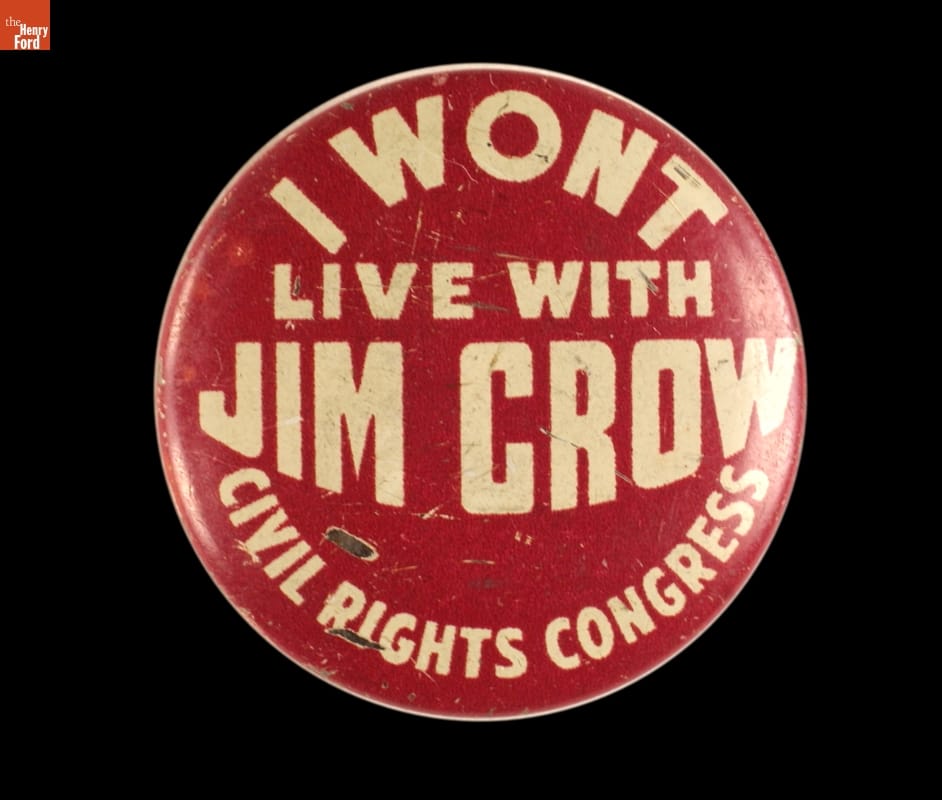
- circa 1948
- Collections - Artifact
Button, "I Won't Live with Jim Crow: Civil Rights Congress," circa 1948
The term "Jim Crow" implied the systematic practice of discriminating against and segregating African Americans, especially in the American South, from the late 19th to the mid-20th centuries. The Civil Rights Congress (1946-1956) became a brief force in civil rights battles. However, with its ties to the American Communist Party, it became victim to Cold War anticommunism and government repression.
- Convention Button, Presented at 2020 Democratic National Convention, August 2020 - Democrats held a shortened and downsized national convention in August 2020 in Milwaukee, Wisconsin, due to the COVID-19 pandemic. Many meetings and activities were held virtually during the three-day convention. Still, delegates arrived and received campaign material supporting their nominees, Joseph "Joe" Biden and Kamala Harris. The ticket went on to win the election.
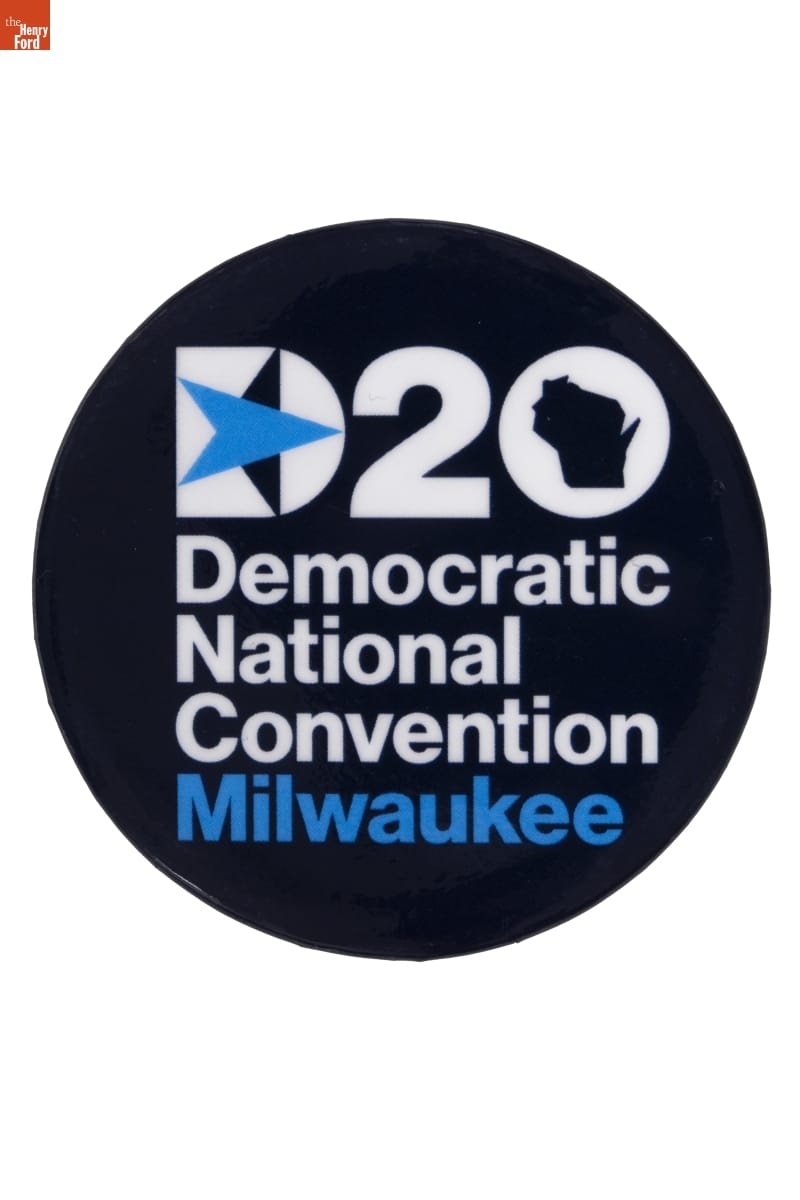
- 17 August 2020 - 20 August 2020
- Collections - Artifact
Convention Button, Presented at 2020 Democratic National Convention, August 2020
Democrats held a shortened and downsized national convention in August 2020 in Milwaukee, Wisconsin, due to the COVID-19 pandemic. Many meetings and activities were held virtually during the three-day convention. Still, delegates arrived and received campaign material supporting their nominees, Joseph "Joe" Biden and Kamala Harris. The ticket went on to win the election.
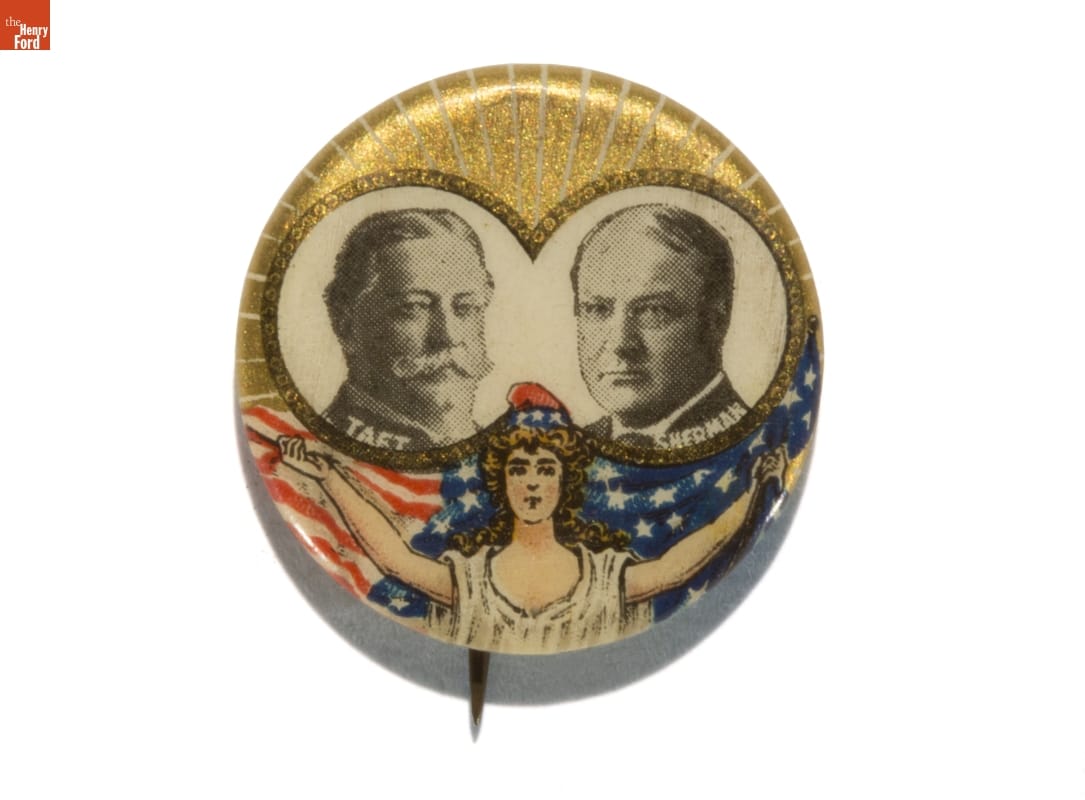
- Taft-Sherman Campaign Button, 1908-1912 - Republican William Howard Taft ran for president twice, in 1908 and 1912. Taft had the support of his friend President Theodore Roosevelt in 1908 and easily won. But by 1912 their friendship had ended. Roosevelt challenged Taft for the Republican nomination, then bolted from the Party after Taft secured enough delegates. The rift allowed Democrat Woodrow Wilson to sweep into the White House.
- 1908-1912
- Collections - Artifact
Taft-Sherman Campaign Button, 1908-1912
Republican William Howard Taft ran for president twice, in 1908 and 1912. Taft had the support of his friend President Theodore Roosevelt in 1908 and easily won. But by 1912 their friendship had ended. Roosevelt challenged Taft for the Republican nomination, then bolted from the Party after Taft secured enough delegates. The rift allowed Democrat Woodrow Wilson to sweep into the White House.
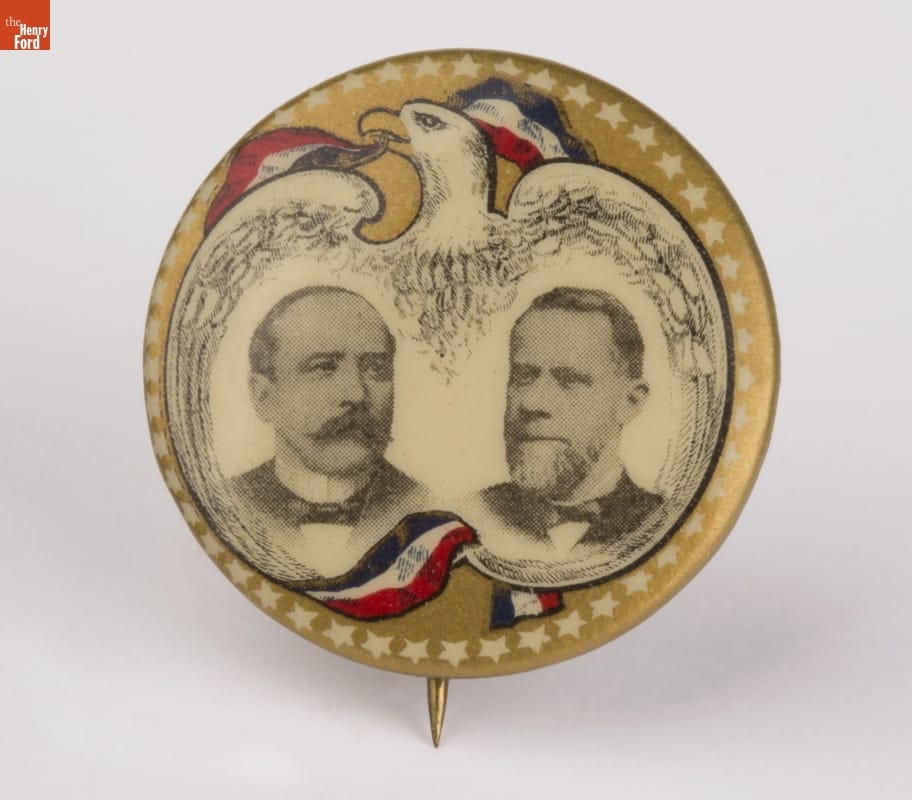
- Parker-Davis Campaign Button, 1904 - The Democrats nominated New Yorker Alton B. Parker for president in 1904. Parker never distinguished his political views from those of his Republican opponent during the campaign. This did not bode well for the virtually unknown Democratic candidate. Parker and his running mate, Henry Davis, lost to Theodore Roosevelt, the popular and energetic incumbent.
- 1904
- Collections - Artifact
Parker-Davis Campaign Button, 1904
The Democrats nominated New Yorker Alton B. Parker for president in 1904. Parker never distinguished his political views from those of his Republican opponent during the campaign. This did not bode well for the virtually unknown Democratic candidate. Parker and his running mate, Henry Davis, lost to Theodore Roosevelt, the popular and energetic incumbent.