
Search
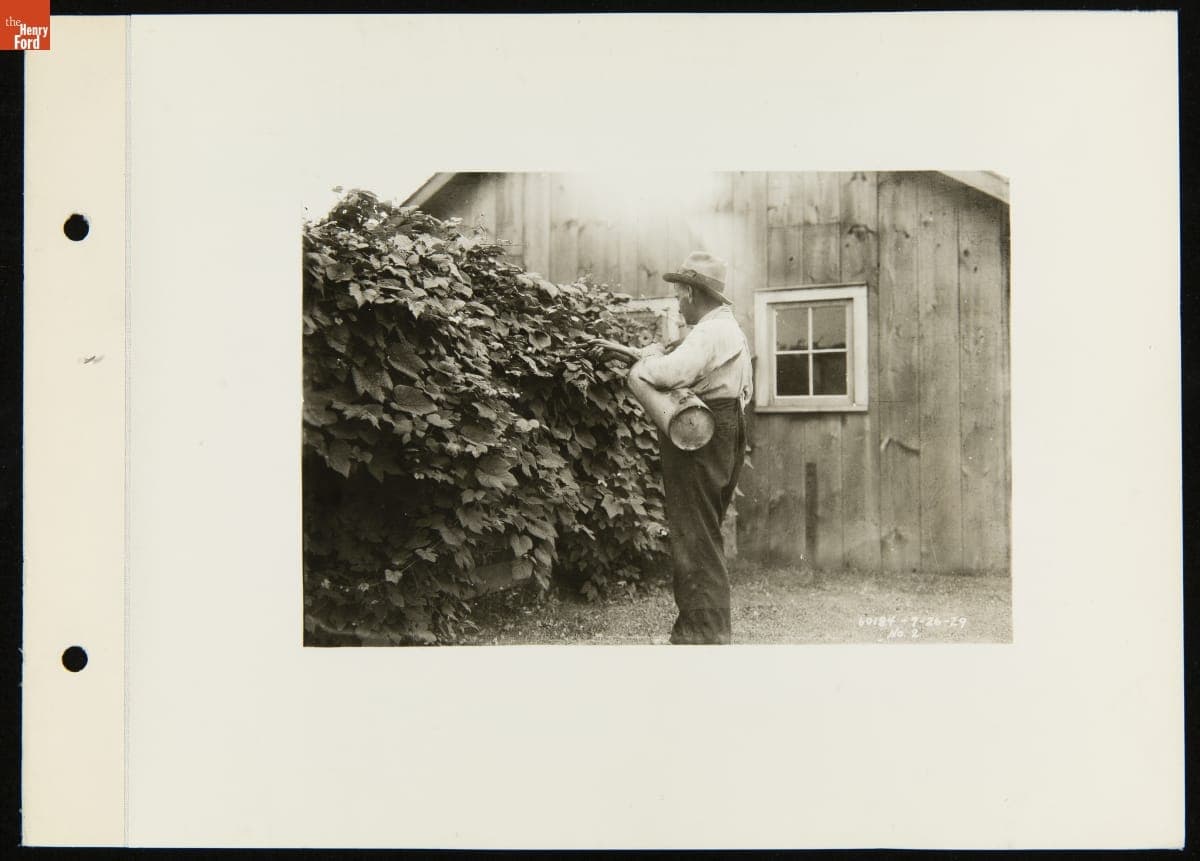
- Man Spraying Garden with Ford Ammonium Sulphate Fertilizer, July 26, 1929 -
- July 26, 1929
- Collections - Artifact
Man Spraying Garden with Ford Ammonium Sulphate Fertilizer, July 26, 1929
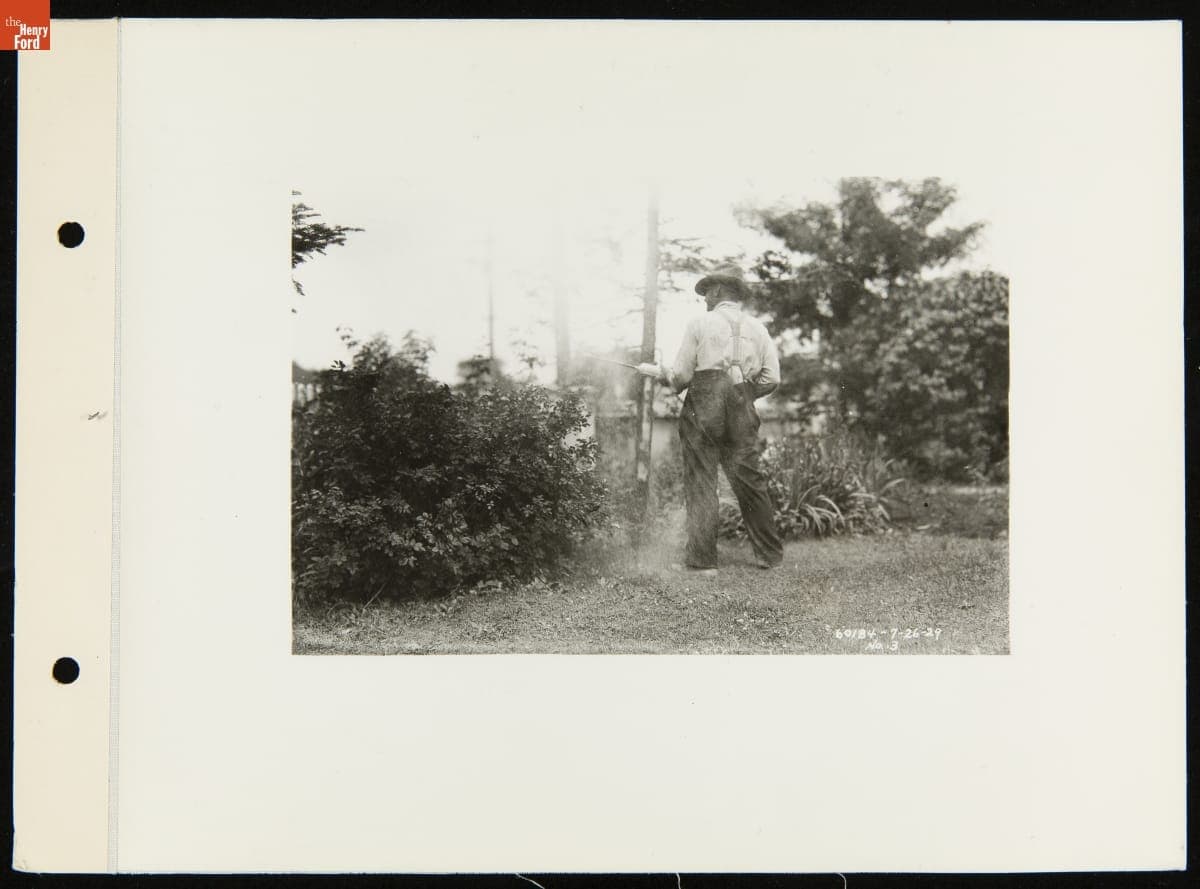
- Man Spraying a Garden with Ford Ammonium Sulphate Fertilizer, July 26, 1929 -
- July 26, 1929
- Collections - Artifact
Man Spraying a Garden with Ford Ammonium Sulphate Fertilizer, July 26, 1929
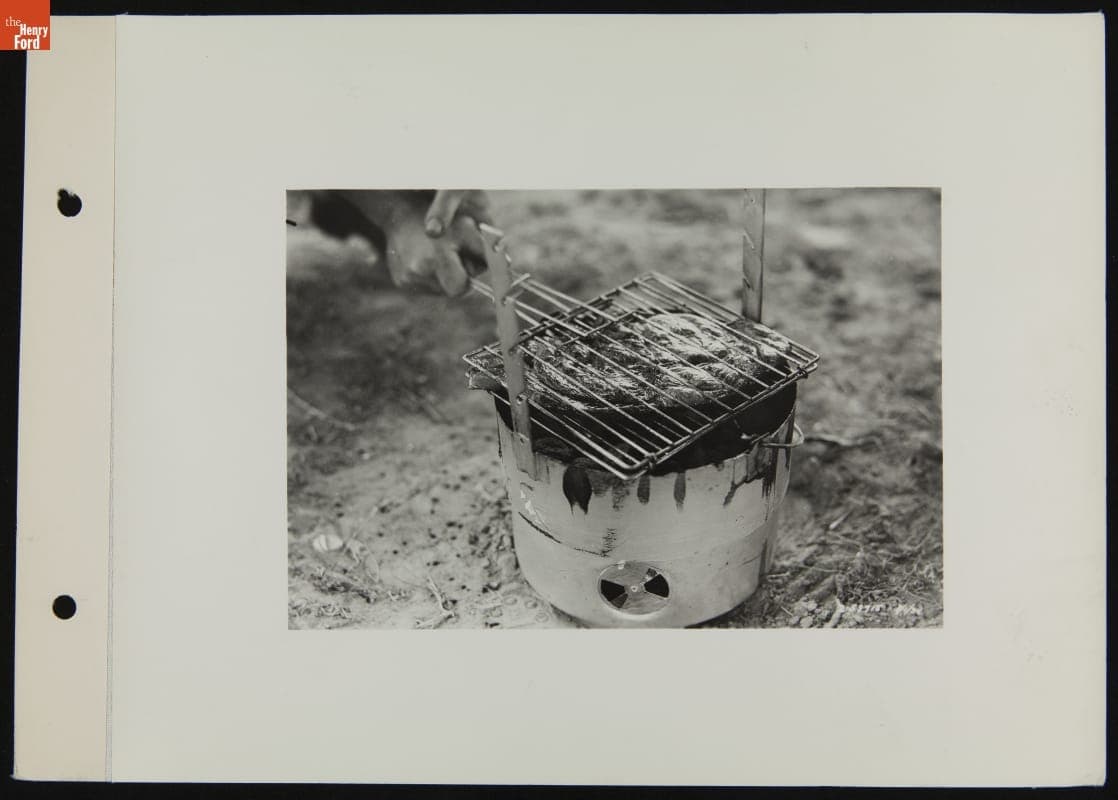
- Grilling Meat using Ford Charcoal Briquets, 1934 - Ford Motor Company sawmills created heaps of wood wastes. Some was used to produce steam for factory operations. The rest was carbonized and compressed into charcoal. Workers mixed charred hardwood chips with starch, forming nearly 100 tons of charcoal briquettes each day. Dealers sold branded bags of the popular briquettes in Ford dealerships across the country.
- July 01, 1934
- Collections - Artifact
Grilling Meat using Ford Charcoal Briquets, 1934
Ford Motor Company sawmills created heaps of wood wastes. Some was used to produce steam for factory operations. The rest was carbonized and compressed into charcoal. Workers mixed charred hardwood chips with starch, forming nearly 100 tons of charcoal briquettes each day. Dealers sold branded bags of the popular briquettes in Ford dealerships across the country.
- Chef Broiling Steak and Hot Dogs over Ford Charcoal Briquets, 1938 - Ford Motor Company promoted its charcoal briquettes to commercial restaurateurs as well as backyard barbeque chefs. The briquettes, made from wood wastes generated by Ford's sawmill operations, produced a steady and even heat ideal for broiling meats. Ford boasted that the hardwood used in its charcoal gave a special aroma and flavor to any foods cooked over it.

- January 07, 1935
- Collections - Artifact
Chef Broiling Steak and Hot Dogs over Ford Charcoal Briquets, 1938
Ford Motor Company promoted its charcoal briquettes to commercial restaurateurs as well as backyard barbeque chefs. The briquettes, made from wood wastes generated by Ford's sawmill operations, produced a steady and even heat ideal for broiling meats. Ford boasted that the hardwood used in its charcoal gave a special aroma and flavor to any foods cooked over it.
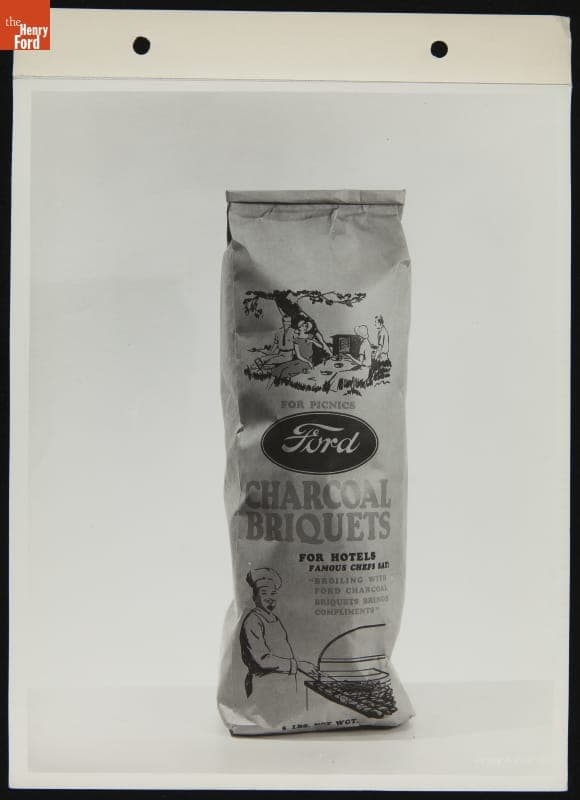
- Ford Charcoal Briquets in Package with Chef and Picnic Images, 1935 - Ford Motor Company manufactured charcoal briquettes from wood wastes generated by its lumber operations in Michigan's Upper Peninsula. This packaging promotes their use as a cooking fuel for family picnics as well as commercial restaurant kitchens. Ford boasted that the hardwood used in its charcoal gave a special aroma and flavor to any foods cooked over it.
- May 15, 1935
- Collections - Artifact
Ford Charcoal Briquets in Package with Chef and Picnic Images, 1935
Ford Motor Company manufactured charcoal briquettes from wood wastes generated by its lumber operations in Michigan's Upper Peninsula. This packaging promotes their use as a cooking fuel for family picnics as well as commercial restaurant kitchens. Ford boasted that the hardwood used in its charcoal gave a special aroma and flavor to any foods cooked over it.
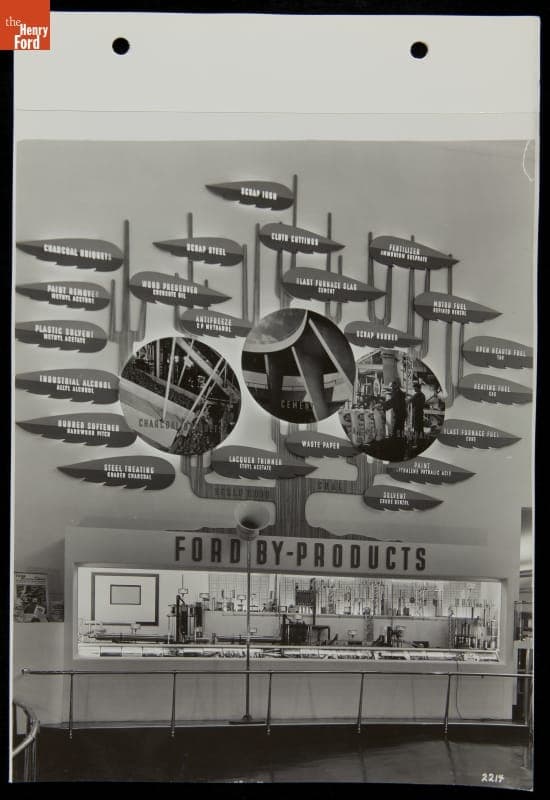
- Products Used in Automobile Manufacture Display, Ford Exposition, New York World's Fair, 1939 - Henry Ford viewed national expositions as business opportunities <em>and</em> platforms for public education. During the 1939-40 New York World's Fair, Ford Motor Company spent more than $5 million to build and maintain an elaborate exposition space. Informative displays and manufacturing demonstrations inside Ford's massive fair building offered visitors an in-depth, entertaining, and educational look at industrial processes.
- 1939
- Collections - Artifact
Products Used in Automobile Manufacture Display, Ford Exposition, New York World's Fair, 1939
Henry Ford viewed national expositions as business opportunities and platforms for public education. During the 1939-40 New York World's Fair, Ford Motor Company spent more than $5 million to build and maintain an elaborate exposition space. Informative displays and manufacturing demonstrations inside Ford's massive fair building offered visitors an in-depth, entertaining, and educational look at industrial processes.
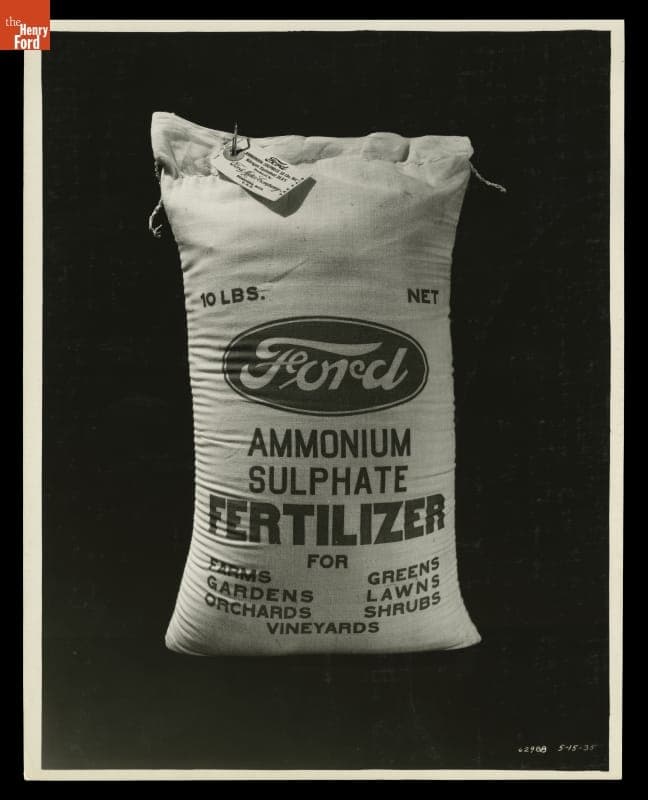
- Bag of Ford Ammonium Sulphate Fertilizer, May 1935 - The <em>New York Times</em> reported in 1924 that Ford Motor Company produced enough Ammonium Sulphate fertilizer to apply to 100,000 acres. The nitrogen-rich inorganic fertilizer was a byproduct of Ford's steel production process. Green, leafy plants need nitrogen to flourish. By 1935, the date of this bag, nitrogen-hungry hybrid corn and increasing acres of lawn grasses ensured consumer demand for this fertilizer.
- May 15, 1935
- Collections - Artifact
Bag of Ford Ammonium Sulphate Fertilizer, May 1935
The New York Times reported in 1924 that Ford Motor Company produced enough Ammonium Sulphate fertilizer to apply to 100,000 acres. The nitrogen-rich inorganic fertilizer was a byproduct of Ford's steel production process. Green, leafy plants need nitrogen to flourish. By 1935, the date of this bag, nitrogen-hungry hybrid corn and increasing acres of lawn grasses ensured consumer demand for this fertilizer.
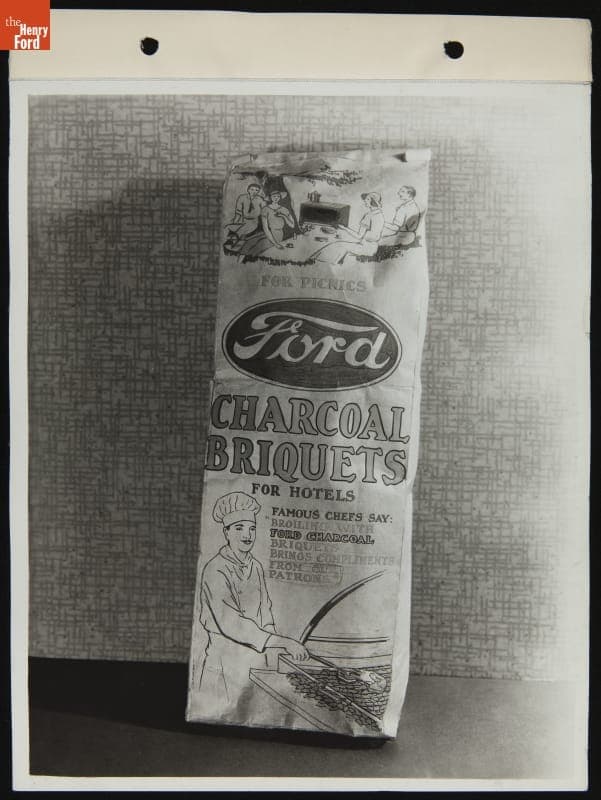
- Ford Charcoal Briquets in Package with Chef and Picnic Images, 1935 - Ford Motor Company manufactured charcoal briquettes from wood wastes generated by its lumber operations in Michigan's Upper Peninsula. This packaging promotes their use as a cooking fuel for family picnics as well as commercial restaurant kitchens. Ford boasted that the hardwood used in its charcoal gave a special aroma and flavor to any foods cooked over it.
- March 18, 1935
- Collections - Artifact
Ford Charcoal Briquets in Package with Chef and Picnic Images, 1935
Ford Motor Company manufactured charcoal briquettes from wood wastes generated by its lumber operations in Michigan's Upper Peninsula. This packaging promotes their use as a cooking fuel for family picnics as well as commercial restaurant kitchens. Ford boasted that the hardwood used in its charcoal gave a special aroma and flavor to any foods cooked over it.
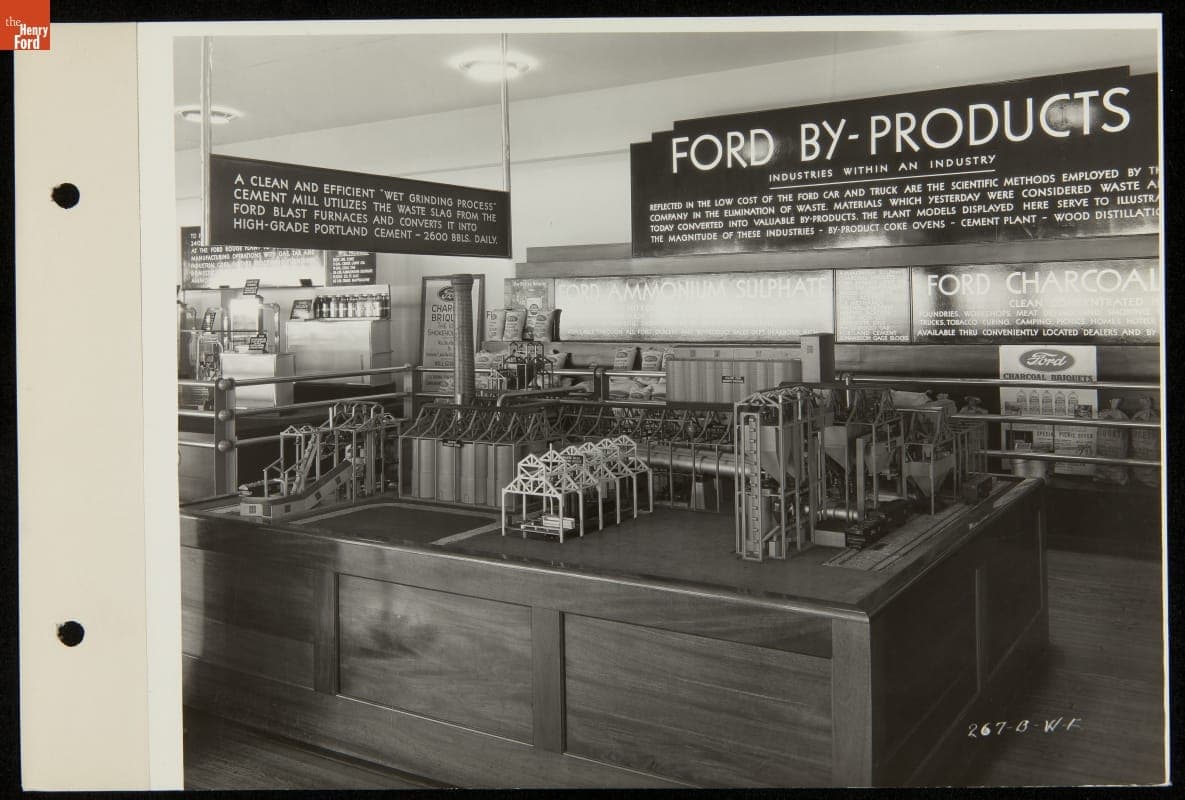
- Ford By-Products Display, Ford Exhibition Building, Century of Progress International Exposition, Chicago, Illinois, 1934 - Chicago's 1933-34 Century of Progress Exposition used the theme of progress to encourage optimism during the Depression. The Ford Exhibition Building, which sat on eleven acres at the fair and featured industrial demonstrations and informative displays like this, became the most talked-about exhibit of 1934.
- 1934
- Collections - Artifact
Ford By-Products Display, Ford Exhibition Building, Century of Progress International Exposition, Chicago, Illinois, 1934
Chicago's 1933-34 Century of Progress Exposition used the theme of progress to encourage optimism during the Depression. The Ford Exhibition Building, which sat on eleven acres at the fair and featured industrial demonstrations and informative displays like this, became the most talked-about exhibit of 1934.
- Ford Ammonium Sulphate Nitrogen Plant Food, February 19, 1941 -
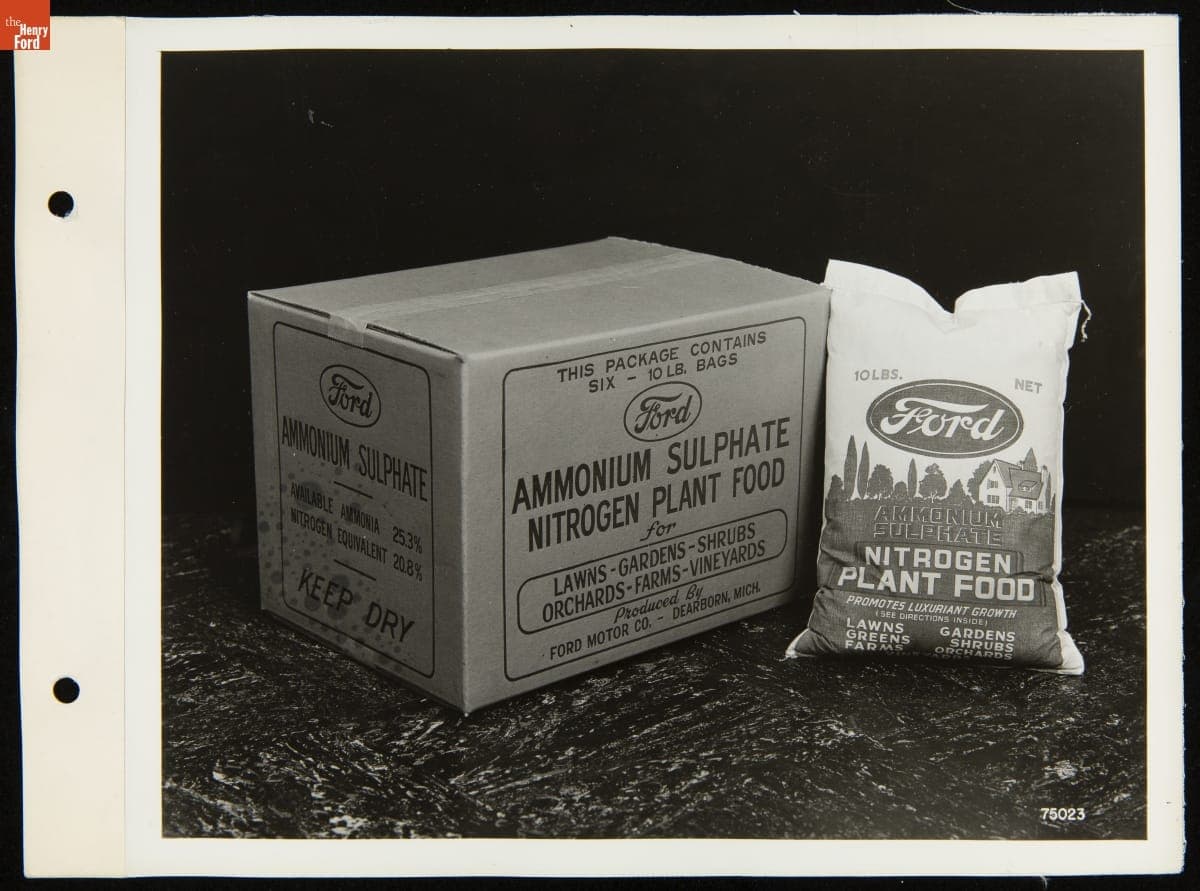
- February 19, 1941
- Collections - Artifact
Ford Ammonium Sulphate Nitrogen Plant Food, February 19, 1941