
Search
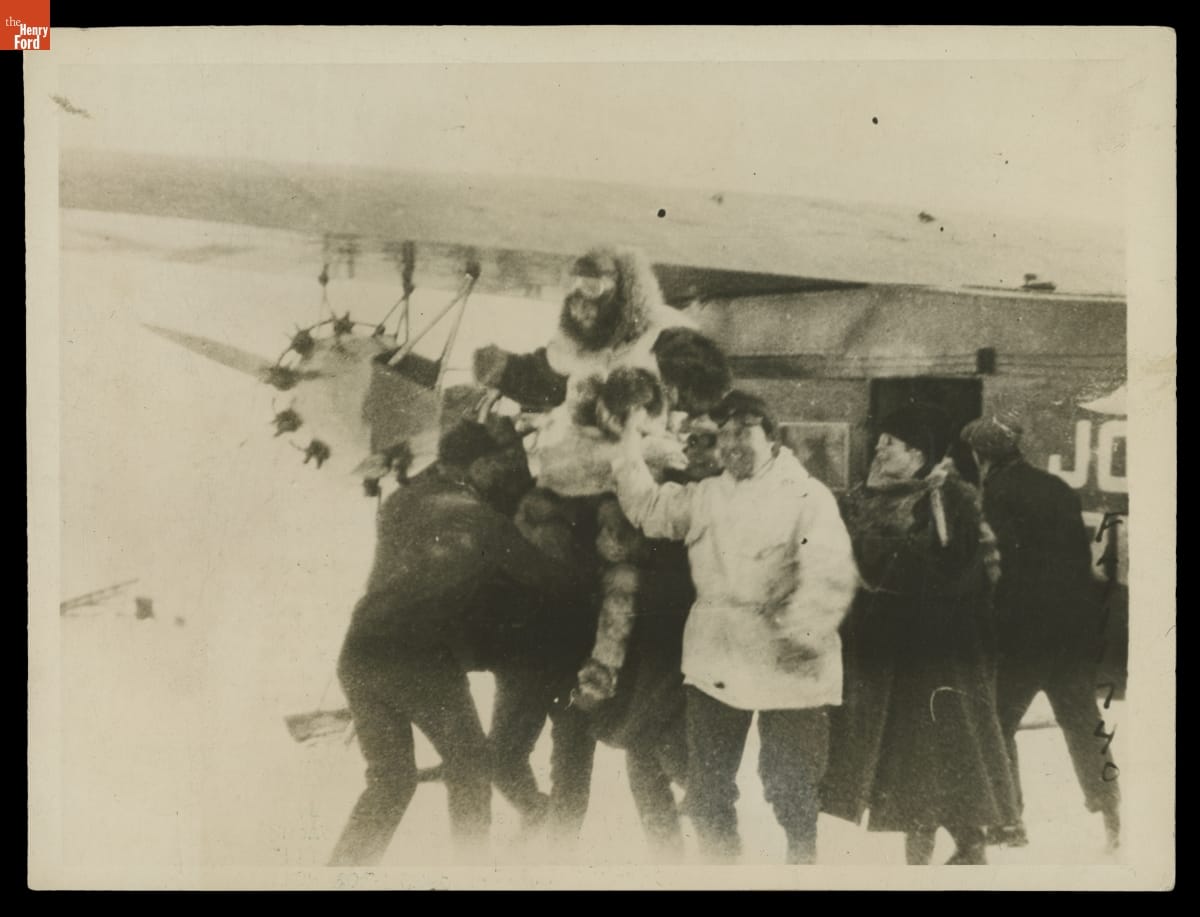
- Richard E. Byrd, Floyd Bennett, and Others Celebrate the Arctic Expedition beside the Fokker Airplane, the "Josephine Ford," June 2, 1926 - On May 9, 1926, explorer Richard Byrd and pilot Floyd Bennett flew toward the North Pole in a Fokker F.VII Tri-Motor airplane. Edsel Ford provided considerable financial support to the expedition, and Byrd named his airplane <em>Josephine Ford</em> to honor Mr. Ford's young daughter. Though Byrd is generally credited with reaching the pole, controversy remains.
- June 02, 1926
- Collections - Artifact
Richard E. Byrd, Floyd Bennett, and Others Celebrate the Arctic Expedition beside the Fokker Airplane, the "Josephine Ford," June 2, 1926
On May 9, 1926, explorer Richard Byrd and pilot Floyd Bennett flew toward the North Pole in a Fokker F.VII Tri-Motor airplane. Edsel Ford provided considerable financial support to the expedition, and Byrd named his airplane Josephine Ford to honor Mr. Ford's young daughter. Though Byrd is generally credited with reaching the pole, controversy remains.
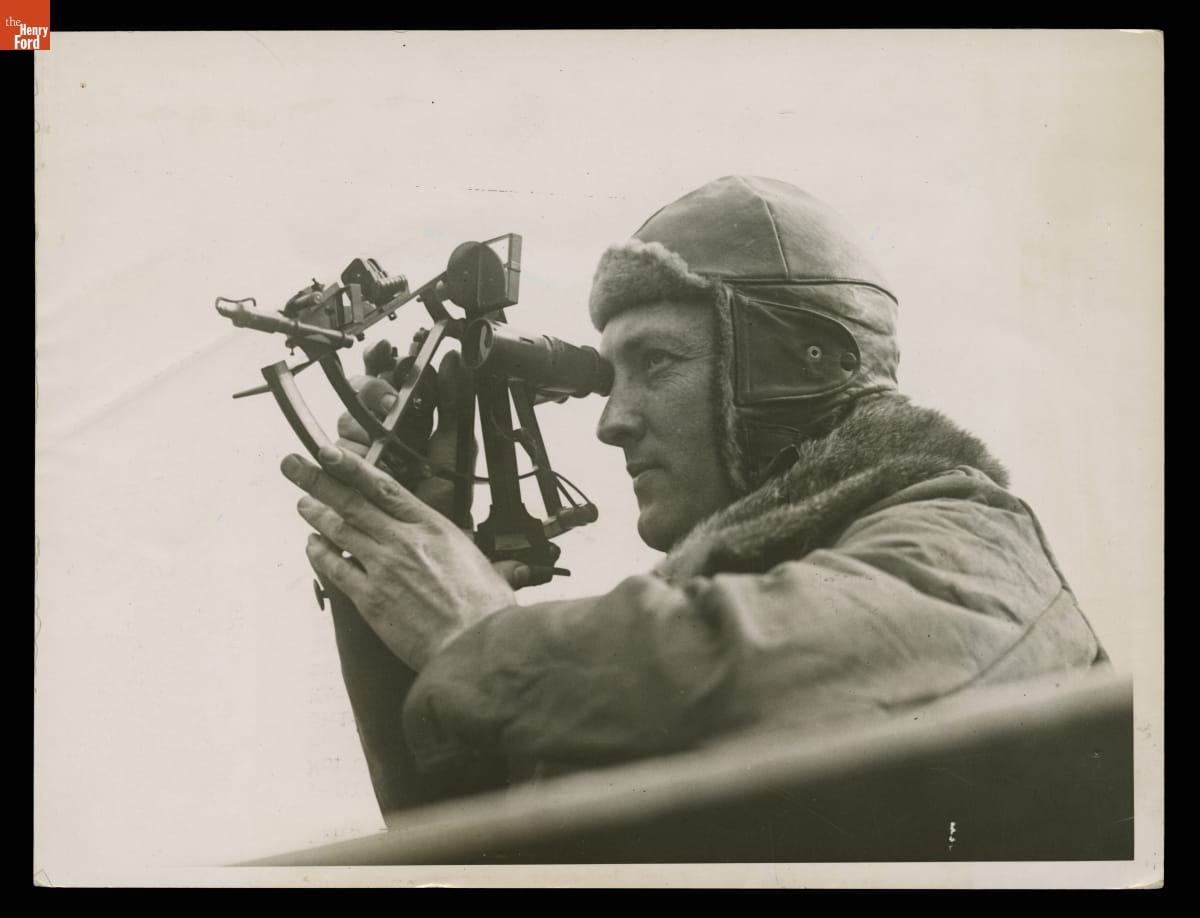
- Richard E. Byrd Using a Sextant, circa 1927 - During his polar expeditions, Richard E. Byrd relied on navigational instruments not much changed in 200 years. Byrd's sextant measured the angle between an astronomical object -- the Sun or a star -- and the horizon. Based on the time of day it was measured, this angle was used to determine Byrd's position on a navigational chart.
- circa 1927
- Collections - Artifact
Richard E. Byrd Using a Sextant, circa 1927
During his polar expeditions, Richard E. Byrd relied on navigational instruments not much changed in 200 years. Byrd's sextant measured the angle between an astronomical object -- the Sun or a star -- and the horizon. Based on the time of day it was measured, this angle was used to determine Byrd's position on a navigational chart.
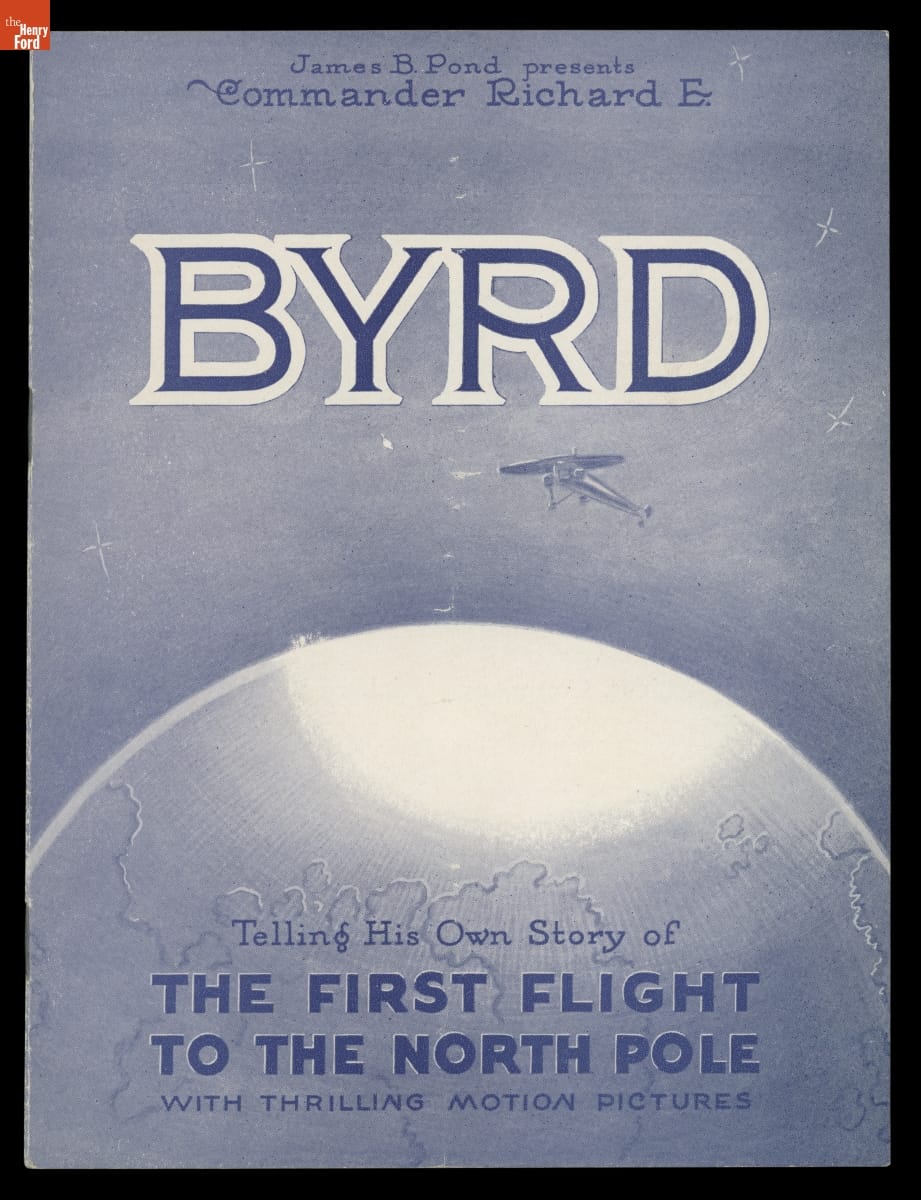
- Commander Richard E. Byrd: Telling His Own Story of the First Flight to the North Pole, June 25, 1926 - On May 9, 1926, explorer Richard Byrd and pilot Floyd Bennett flew toward the North Pole in the Fokker Tri-Motor <em>Josephine Ford</em>. Following their flight, Byrd and Bennett returned to the United States as heroes, and Byrd presented lectures recounting the polar journey. Though Byrd is generally credited with success, controversy remains over whether he reached the actual pole.
- June 25, 1926
- Collections - Artifact
Commander Richard E. Byrd: Telling His Own Story of the First Flight to the North Pole, June 25, 1926
On May 9, 1926, explorer Richard Byrd and pilot Floyd Bennett flew toward the North Pole in the Fokker Tri-Motor Josephine Ford. Following their flight, Byrd and Bennett returned to the United States as heroes, and Byrd presented lectures recounting the polar journey. Though Byrd is generally credited with success, controversy remains over whether he reached the actual pole.
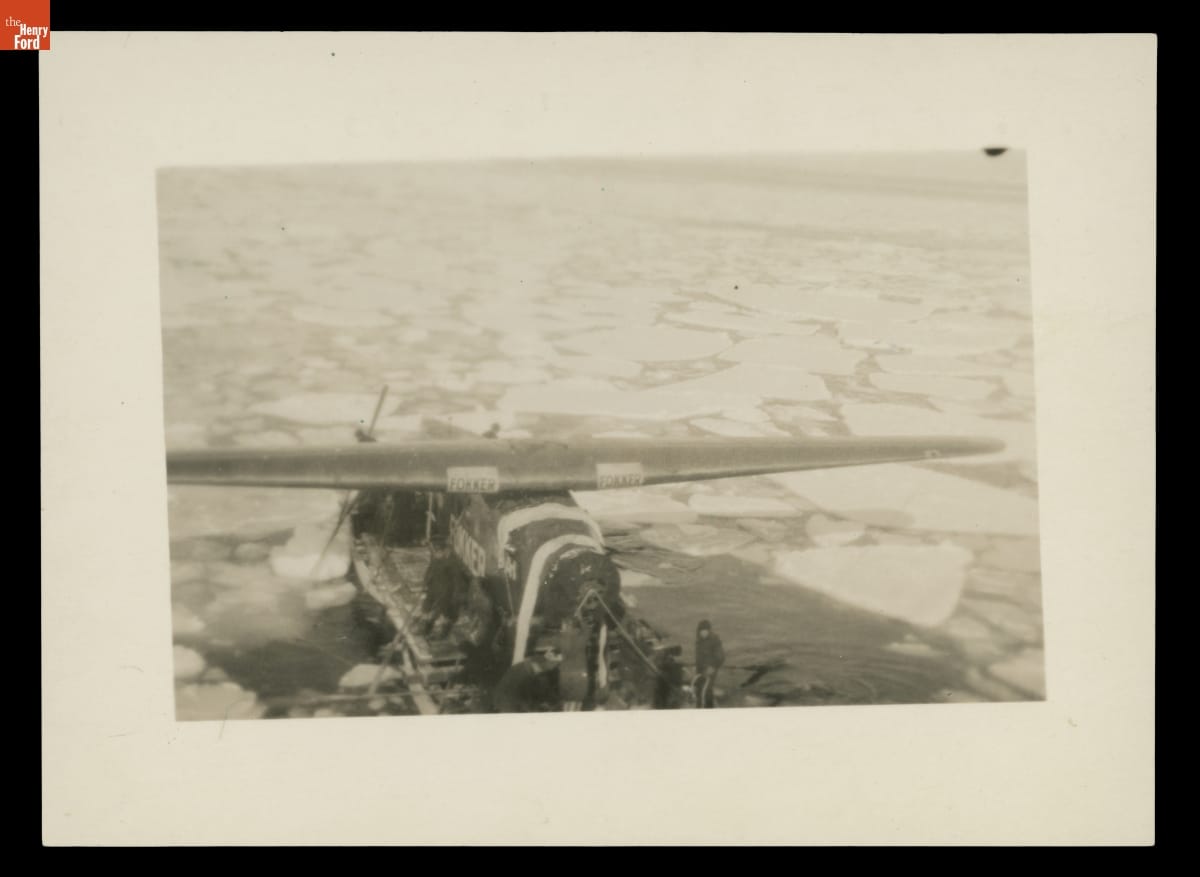
- The Fokker Airplane "Josephine Ford" in the Water during the Byrd Arctic Expedition, 1926 - Richard Byrd led an expedition to the Arctic in 1926, highlighted by a North Pole flight on May 9. When Byrd's ship <em>Chantier</em> arrived at Spitzbergen, Norway -- his base of operations -- a disabled vessel blocked the harbor's single pier. Undiscouraged, Byrd's crew built a raft from several small boats. They moved Byrd's airplane <em>Josephine Ford</em> ashore on their makeshift ferry.
- 1926
- Collections - Artifact
The Fokker Airplane "Josephine Ford" in the Water during the Byrd Arctic Expedition, 1926
Richard Byrd led an expedition to the Arctic in 1926, highlighted by a North Pole flight on May 9. When Byrd's ship Chantier arrived at Spitzbergen, Norway -- his base of operations -- a disabled vessel blocked the harbor's single pier. Undiscouraged, Byrd's crew built a raft from several small boats. They moved Byrd's airplane Josephine Ford ashore on their makeshift ferry.
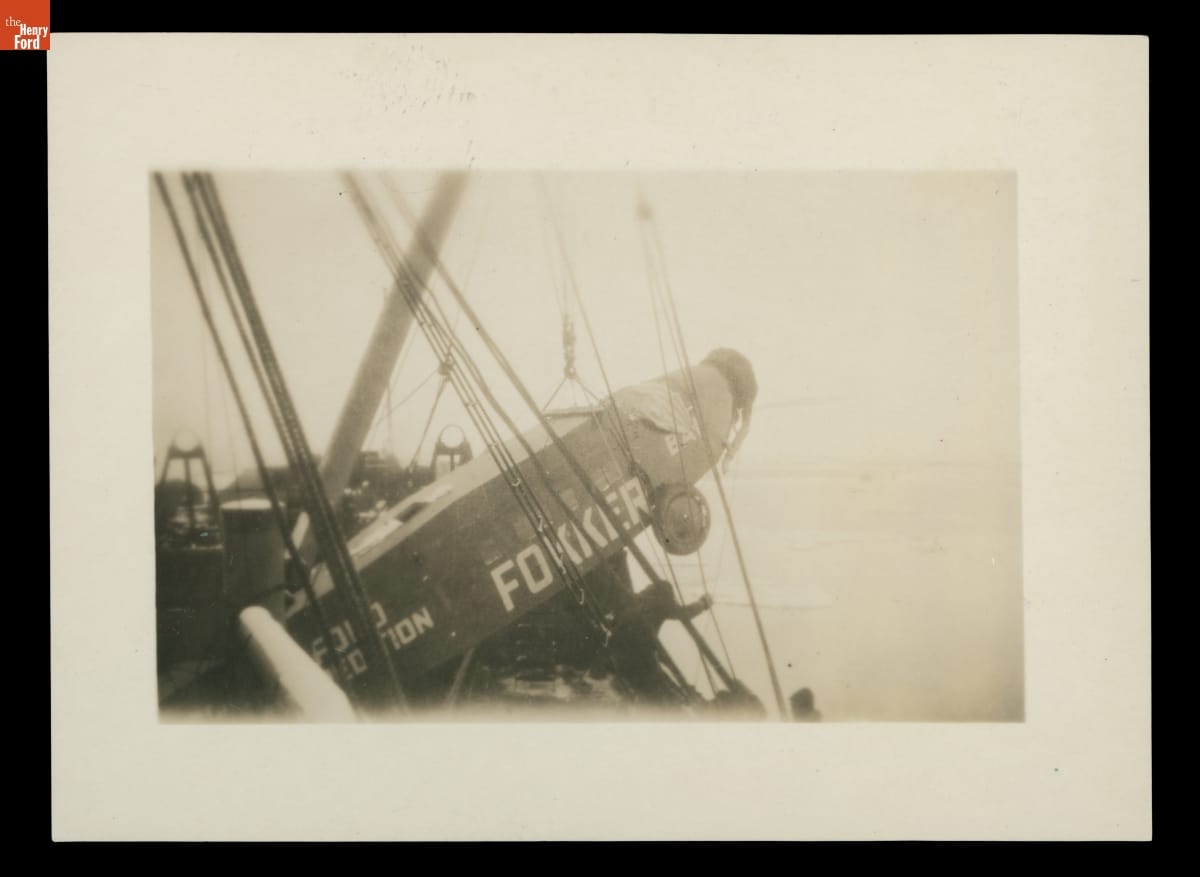
- The Fokker Airplane "Josephine Ford" during the Byrd Arctic Expedition, 1926 - Richard Byrd led an expedition to the Arctic in 1926, highlighted by a North Pole flight on May 9. When Byrd's ship <em>Chantier</em> arrived at Spitzbergen, Norway -- his base of operations -- a disabled vessel blocked the harbor's single pier. Undiscouraged, Byrd's crew built a raft from several small boats. They moved Byrd's airplane <em>Josephine Ford</em> ashore on their makeshift ferry.
- 1926
- Collections - Artifact
The Fokker Airplane "Josephine Ford" during the Byrd Arctic Expedition, 1926
Richard Byrd led an expedition to the Arctic in 1926, highlighted by a North Pole flight on May 9. When Byrd's ship Chantier arrived at Spitzbergen, Norway -- his base of operations -- a disabled vessel blocked the harbor's single pier. Undiscouraged, Byrd's crew built a raft from several small boats. They moved Byrd's airplane Josephine Ford ashore on their makeshift ferry.
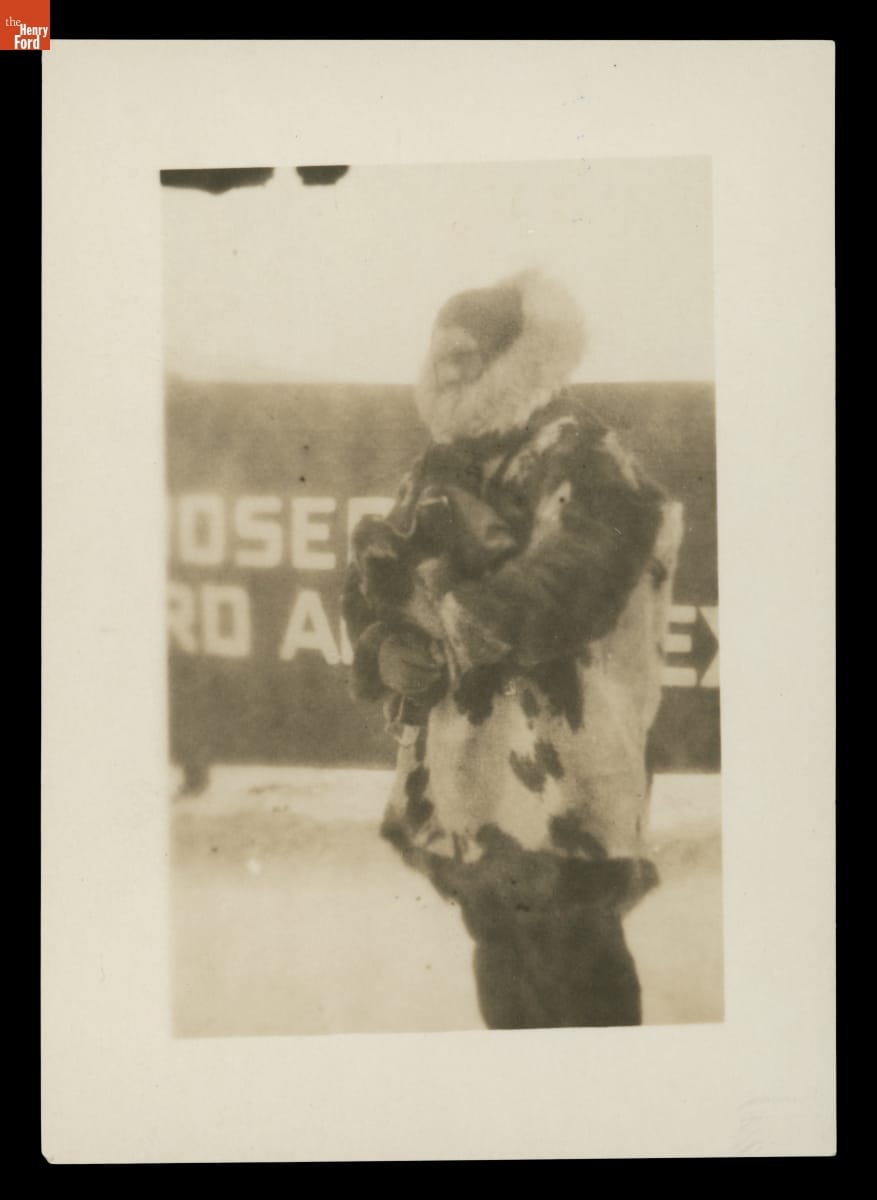
- Floyd Bennett with the Fokker Airplane, "Josephine Ford," during the Arctic Expedition, 1926 - Floyd Bennett enlisted in the U.S. Navy in 1917 and learned to fly. He joined explorer Richard Byrd on a trek to Greenland in 1925, and he piloted the <em>Josephine Ford</em> when it carried Byrd and Bennett toward the North Pole in 1926. Bennett died from pneumonia in 1928 -- his condition worsened by a selfless attempt to rescue stranded flyers.
- 1926
- Collections - Artifact
Floyd Bennett with the Fokker Airplane, "Josephine Ford," during the Arctic Expedition, 1926
Floyd Bennett enlisted in the U.S. Navy in 1917 and learned to fly. He joined explorer Richard Byrd on a trek to Greenland in 1925, and he piloted the Josephine Ford when it carried Byrd and Bennett toward the North Pole in 1926. Bennett died from pneumonia in 1928 -- his condition worsened by a selfless attempt to rescue stranded flyers.
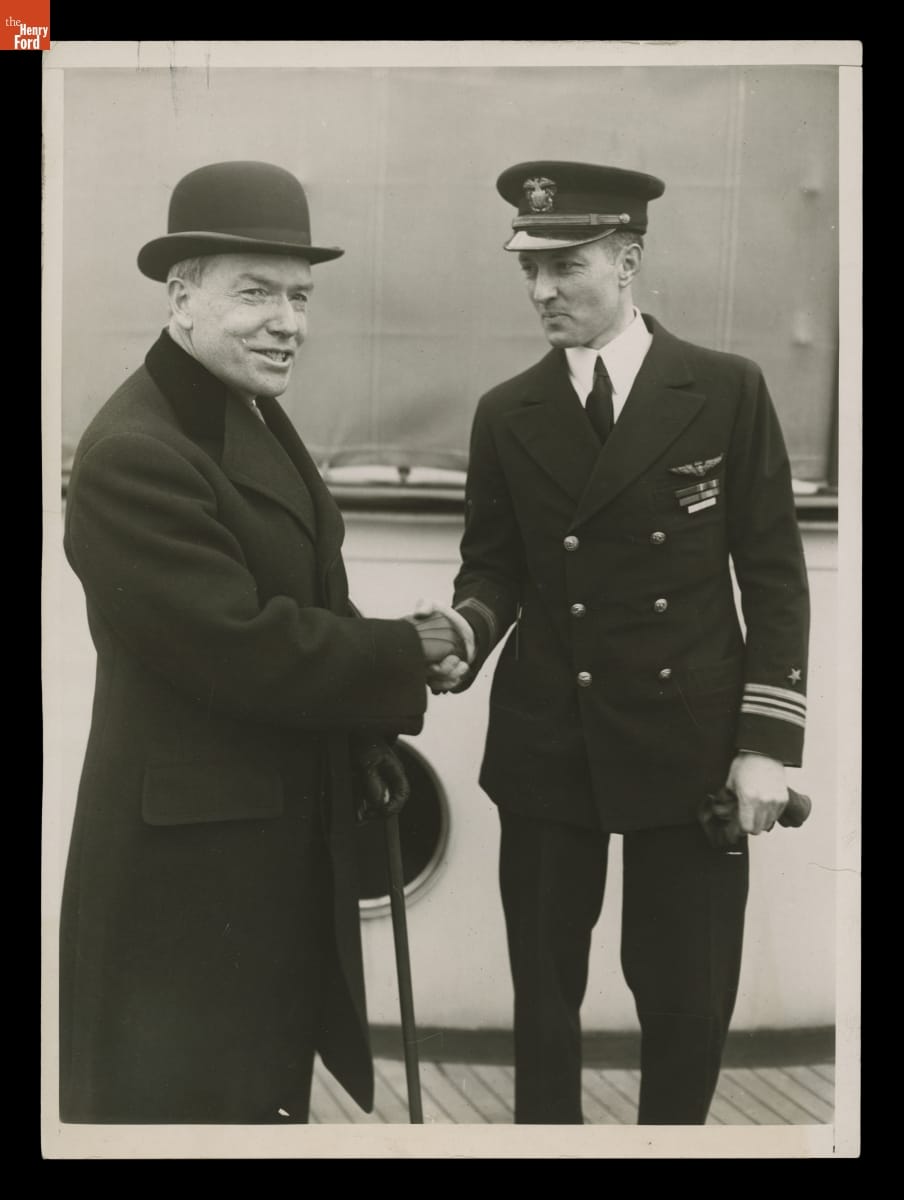
- John D. Rockefeller, Jr. and Rear Admiral Richard E. Byrd Shaking Hands before the Byrd Arctic Expedition, 1926 - When Richard E. Byrd proposed a flight over the North Pole in 1926, he turned to Edsel Ford for financial support. Not only did Ford provide considerable funding himself, he encouraged John D. Rockefeller, Jr., to contribute as well. Byrd is generally credited with reaching the pole on May 9, 1926, though controversy remains.
- 1926
- Collections - Artifact
John D. Rockefeller, Jr. and Rear Admiral Richard E. Byrd Shaking Hands before the Byrd Arctic Expedition, 1926
When Richard E. Byrd proposed a flight over the North Pole in 1926, he turned to Edsel Ford for financial support. Not only did Ford provide considerable funding himself, he encouraged John D. Rockefeller, Jr., to contribute as well. Byrd is generally credited with reaching the pole on May 9, 1926, though controversy remains.
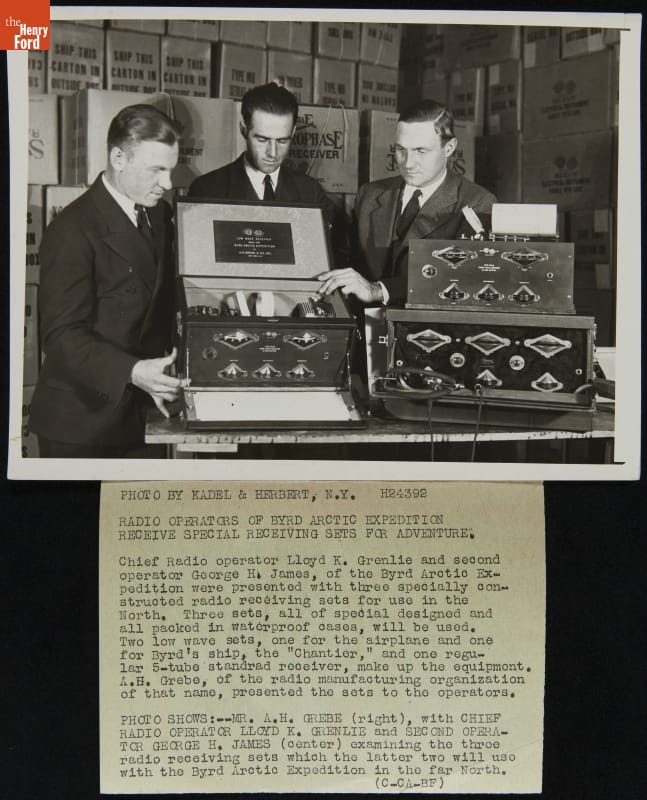
- A. H. Grebe Presents Radio Operators with Radio Receivers for Use on the Byrd Arctic Expedition, 1926 - Richard E. Byrd led an expedition to the Arctic in 1926, highlighted by a flight toward the North Pole on May 9. Special shortwave radio equipment allowed members of Byrd's team to communicate between their support ship, <em>Chantier</em>, and their Fokker Tri-Motor airplane, <em>Josephine Ford</em>. Though Byrd is generally credited with reaching the pole, controversy remains.
- 1926
- Collections - Artifact
A. H. Grebe Presents Radio Operators with Radio Receivers for Use on the Byrd Arctic Expedition, 1926
Richard E. Byrd led an expedition to the Arctic in 1926, highlighted by a flight toward the North Pole on May 9. Special shortwave radio equipment allowed members of Byrd's team to communicate between their support ship, Chantier, and their Fokker Tri-Motor airplane, Josephine Ford. Though Byrd is generally credited with reaching the pole, controversy remains.
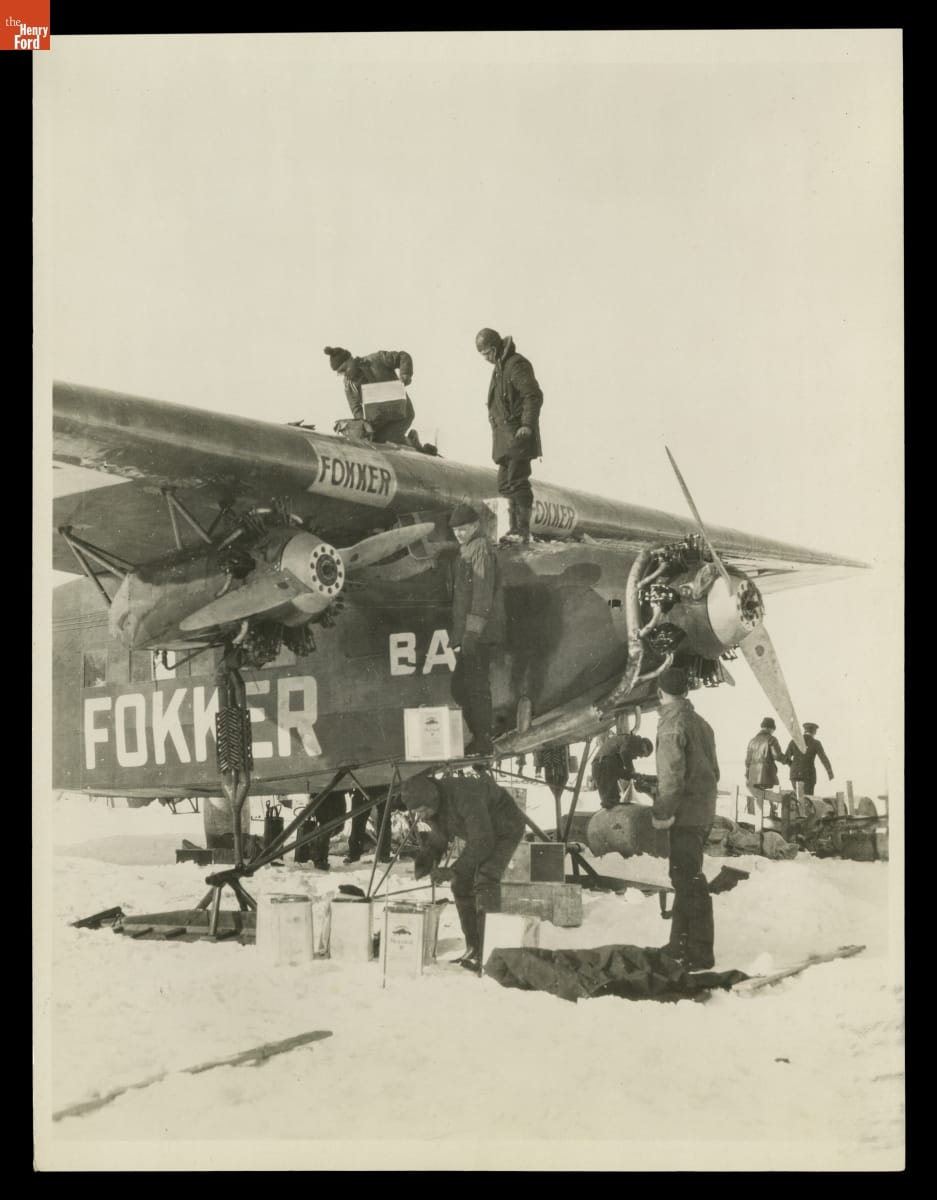
- Crew Member Adding Fuel to the "Josephine Ford," the Fokker Airplane Flown on the Byrd Arctic Expedition, 1926 - On May 9, 1926, explorer Richard Byrd and pilot Floyd Bennett flew toward the North Pole in a Fokker F.VII Tri-Motor airplane. Edsel Ford provided considerable financial support to the expedition, and Byrd named his airplane <em>Josephine Ford</em> to honor Mr. Ford's young daughter. Though Byrd is generally credited with reaching the pole, controversy remains.
- 1926
- Collections - Artifact
Crew Member Adding Fuel to the "Josephine Ford," the Fokker Airplane Flown on the Byrd Arctic Expedition, 1926
On May 9, 1926, explorer Richard Byrd and pilot Floyd Bennett flew toward the North Pole in a Fokker F.VII Tri-Motor airplane. Edsel Ford provided considerable financial support to the expedition, and Byrd named his airplane Josephine Ford to honor Mr. Ford's young daughter. Though Byrd is generally credited with reaching the pole, controversy remains.
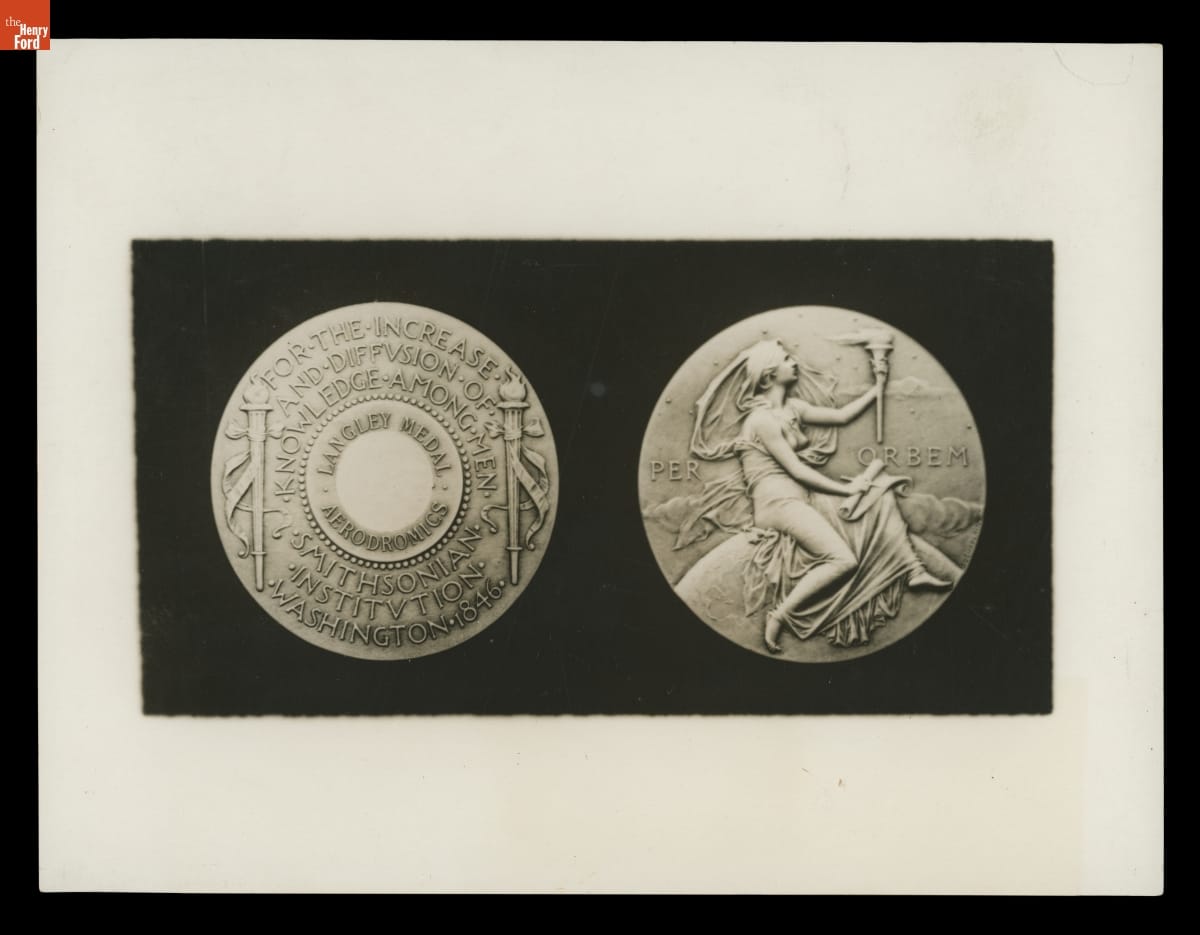
- Langley Gold Medal Awarded to Richard E. Byrd, 1929 - Explorer and U.S. Navy aviator Richard E. Byrd led a flight to the North Pole in 1926 and a flight to the South Pole in 1929. For his efforts, the Smithsonian Institution presented Byrd with its Samuel P. Langley Medal for Aerodynamics. Langley was the Smithsonian's third secretary and a pioneer aviator.
- 1929
- Collections - Artifact
Langley Gold Medal Awarded to Richard E. Byrd, 1929
Explorer and U.S. Navy aviator Richard E. Byrd led a flight to the North Pole in 1926 and a flight to the South Pole in 1929. For his efforts, the Smithsonian Institution presented Byrd with its Samuel P. Langley Medal for Aerodynamics. Langley was the Smithsonian's third secretary and a pioneer aviator.